Words Create Worlds.12: Caring Words/Caring Worlds, Uncaring Words/Uncaring Worlds

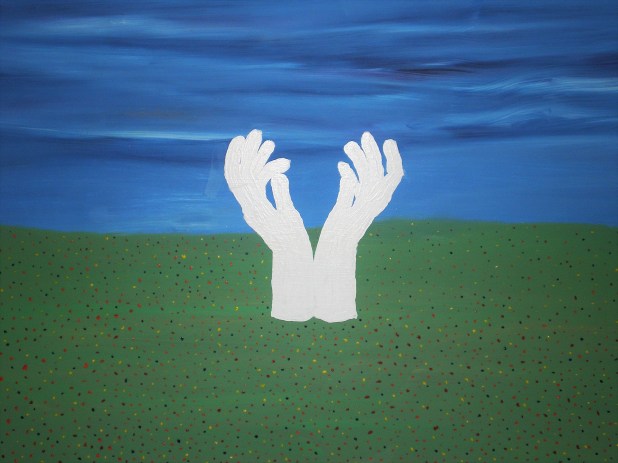
Helping Hands, D. Kopacz

What we are experiencing now is a predictable, straight line from the words that Donald J. Trump has spoken.

The uncaring world we are living in has been created, uncaring word by uncaring word of our current president and those who are drawn to him. It is as simple as that. It is as simple as that.

What we put into the world in words, what we bring forth from that deep inner place of creative power within ourselves, creates the world we live in. We are makers and unmakers of our reality.

The inspiration for this essay series, Words Create Worlds, comes from Rabbi Heschel. He said, as recounted by his daughter, Susannah Heschel:

“Words, he often wrote, are themselves sacred, God’s tool for creating the universe, and our tools for bringing holiness—or evil—into the world. He used to remind us that the Holocaust did not begin with the building of crematoria, and Hitler did not come to power with tanks and guns; it all began with uttering evil words, with defamation, with language and propaganda. Words create worlds, he used to tell me when I was a child. They must be used very carefully. Some words, once having been uttered, gain eternity and can never be withdrawn. The Book of Proverbs reminds us, he wrote, that death and life are in the power of the tongue.”[1]

Rabbi Heschel warns us of the power of words and how they can bring holiness or evil into the world. This is the power of choice that we have and the power of our breath shaped into meaning and symbolism through the sound of the letters that we string together into words.

Joseph Rael (Beautiful Painted Arrow) also has taught about the power of Sound – of Being & Vibration – and how the sounds of letters and words carry the power of meaning. In the Tiwa language of Picuris Pueblo, the word for God is Wah-Mah-Chi, Breath-Matter-Movement. We could say that Wah-Mah-Chi, Breath-Matter-Movement, is a Word that creates other words and these words create our world. Creator, Wah-Mah-Chi, is a Word that creates other words and worlds. Breath comes through Matter and becomes Movement.
I am invoking spiritual teachers, but the principle of words create worlds also holds for poets, artists, singers, teachers, educators, and politicians – people who can use their words for either bad or good, or as Rabbi Heschel says, for holiness or evil.

How to Write About What You Are Not Supposed to Write About (But Are Ethically and Professionally Bound to Speak)

I started this series of essays out of my concern about the rise of Donald J. Trump as a political figure. His words were so clearly uncaring: he bullied, he name called, he threatened, he spoke about America First, but he really meant Me-First. I have felt compelled to speak the truth, as a psychiatrist, but even more so as a human being.

Lies as Politics

Lies. Donald Trump lies,[2],[3] habitually, repeatedly, and knowingly. He is trying to shape a narrative, he is trying to create your reality, he is trying to create your world.

Lying is not just a personality quirk, there is also a history of lies as politics. Bruno Frank wrote Lüge as Staatsprinzip (The Lie as State Principle) about Hitler and the Third Reich. Frank wrote: “Never before in history has any public group lies with such absolute, voracious, and poisonous shamelessness as has this party for more than a decade;” and further that the essence of fascism is “the total deception of the nation.”[4] Lying is not just a way of life for an individual, it is a political principle for fascism.

Trump believes that he is above the law, even more so as president.  “On January 23, 2016, Donald Trump notoriously declared, ‘I could stand in the middle of Fifth Avenue and shoot somebody, and I wouldn’t lose any voters,’” quoted by Jonathan Chait in a piece entitled “The logical end point of Trump saying he could shoot somebody on Fifth Avenue,”[5] Trump’s words of getting away with murder are now creating our world. As Chait writes:

“That statement was understood at the time as a metaphorical expression of the depth of Republican voters’ commitment to him. Ten years and one day later, his administration’s agents shot a disarmed man on the street in full view of the public. Perhaps we should have taken him not only seriously but also literally.”[6]

The problem is, we didn’t know how to respond to Trump at the time in 2016, even though it was clear to me that his words were dangerous. As a physician, professional, and psychiatrist – I was (and am) concerned about the risk to the health of the populace and the health of our democracy, but I restrained myself out of an abundance of professional caution and also concern about the Goldwater Rule, which states that psychiatrists cannot “diagnosis” a public figure they have not met with clinically. But to warn about dangerousness is different than labelling a public figure with a diagnosis.

The Dangerous Case of Donald Trump

In 2017, Yale psychiatrist and expert in predicting violence, Bandy X. Lee convened a group of mental health professionals around the topic of The Dangerous Case of Donald Trump. The conference led to the publication of The Dangerous Case of Donald Trump: 27 Psychiatrists and Mental Health Experts Assess a President and then later expanded to a new edition with ten more experts, The Dangerous Case of Donald Trump: 37 Psychiatrists and Mental Health Experts Assess a President – Updated and Expanded with New Essays. Dr. Lee ended up losing her position at Yale, then she created the World Mental Health Coalition, and has dedicated her work to illuminating the dangerousness of the current president.
I watched the first Trump presidency with concern. I also recognized, as a psychiatrist and as a human being, how Trump’s words and actions were right out of the “fascist playbook.” In 2020 I was moved by the mosque shooting hate crime in Christchurch, New Zealand to start the Words Create Worlds column. (I will list each essay title with links at the end of this article). Looking back, I think the pandemic and Trump’s mishandling of it, and his use of it to divide the country rather than bring it together, helped tip my hand to write in a more open and critical way about the public health emergency of Donald J. Trump. While I was cautious back then and did not want to overstate the risk of “just words,” I now feel that my concerns are valid and vindicated by the second Trump presidency where his words are moving into action and creating our world. In fact, I called Trump the anti-Doctor as his words were not only hurtful of people’s feelings, but dangerous to people’s lives and to American democracy.

Fifth Avenue to Nicollet Avenue to Iran

Donald Trump did not shoot someone on 5th Avenue in New York City, but armed, masked men carrying out the orders of the president, shot and killed Renee Nicole Good in her car after dropping off her 6 year-old at school, near East 34th Street and Portland Avenue in Minneapolis on January 7th, 2026. This was, ominously, five years and a day after the January 6th 2021 attack on the United States Capitol.

Instead of Fifth Avenue, it was 34th Street and Portland Avenue. Instead of Fifth Avenue, it was Nicollet Avenue in Minneapolis, where Alex Jeffrey Pretti, an ICU nurse who worked at the VA (Veterans Affairs) was shot.

Trump and his team of ne’er do-wells immediately went into “blame-the-victim” mode. Homeland Security Secretary Kristi Noem lied about Renee Nicole Good, accusing her of “domestic terrorism.”[7] As with lies about Stephen Miller, Trump’s chief of staff, said that Pretti was an “assassin” who “tried to murder federal agents.”[8] Homeland Security Secretary Kristi Noem claimed Pretti “attacked” officers while “brandishing” a gun.”[9] However multiple eye witness reports and video footage showed that these were lies. The administration had to walk back its portrayal of a mother dropping off her child and a VA ICU nurse. The president even said he “felt bad” about the killings, but even worse about Renee Nicole Good’s killing as her parents were Trump supporters.[10]

Since I first started this essay, the United States of America and Israel have started a war with Iran. The lies continue…

“On February 28, during the opening hours of the assault on Iran, a missile struck a girls’ school in southern Iran, killing more than 170 people – most of them schoolgirls.”[11]

Rather than waiting for the truth of an investigation, Donald Trump immediately blamed Iran for using a US made missile to kill its own children. However, the evidence is pointing to the children being killed by the United States:

“Preliminary investigations suggest the school may have been hit by a US missile because of a targeting error, though the exact circumstances remain under investigation.

Analysts say the strike may have been caused by outdated targeting information, as the school is on the same block as buildings used by the IRGC’s navy and the site of the school was originally part of the base.”[12]

The Cusp Where Words Become Worlds

I have to keep writing this column on Words Create Worlds.

The risk of remaining silent, at this point, is greater  to my humanity than the risk of speaking is to my conservative professionalism or my safety.

We are on the cusp of words becoming worlds – actually we are beyond the cusp, beyond the event horizon pulling us into the black hole of fascism.  Donald J. Trump has told us, all along, what he intends to do. Republican politicians have minimized his words, saying “they are just words,” “that’s just who he is, he doesn’t really mean he is going to [fill in the blank: take over Greenland, make Canada the 51st state, invade Mexico to combat cartels, remove Palestinians from Gaza and build luxury hotels, jail his opponents, kill his opponents, run for a third term, invade Iran].

I have seen this coming. I did what I do as a writer, I wrote about it. I educated about fascism.

Yet, I feel I have not done enough. Is there anything one person can do to stop the steady slide from democracy into fascism? Actually, “steady slide” is a mischaracterization – the United States of America did not “fall” into fascism, it was pushed.

Politically, with the House, Senate, and White House controlled by Republicans, it seems to depend on Republican politicians who need to break with Trump before it is too late. But it is already too late. Trump began as much of a buffoon as Adolf Hitler was in the early 1930s – no one took him seriously. The power Trump has is the power of the tongue, the power of mass hypnosis, the power of lying to people, telling people what they want to hear and making them feel good about uncaring, and the power of intimidation. Republican politicians have colluded with him in deforming American Democracy into the power of American Empire.

Bruno Frank, the author of Lüge as Staatsprinzip (The Lie as State Principle), whom I introduced earlier, quotes Adolf Hitler’s Mein Kampf on how lying words can create worlds:

“All this was inspired by principle ─ which is quite true in itself ─ that in the big lie there is always a certain force of credibility; because the broad masses of a nation are always more easily corrupted in the deeper strata of their emotional nature than consciously or voluntarily; and thus in the primitive simplicity of their minds they more readily fall victims to the big lie than the small lie, since they themselves often tell small lies in little matters but would be ashamed to resort to large-scale falsehoods…For the grossly impudent lie always leaves traces behind it, even after it has been nailed down, a fact which is known to all expert liars in this world and to all who conspire together in the art of lying. These people know only too well how to use falsehood for the basest purposes.”[13]
Uncaring Words Create Uncaring Worlds

What we are living in the United States right now is the uncaring world created by the uncaring words of Donald J. Trump. These are the words of fascism, authoritarianism, totalitarianism, infantilism, and me-first-ism. I have often thought that if Republican politicians asked themselves “Am I being kind, am I being compassionate,” that they would make different decisions. But kindness and compassion seem to have lost their appeal to MAGA and the Republican party. Instead, they speak words of power, words of me-first, words of us vs. them, words of hate thine enemies, and words of vengeance and retribution. MAGA and the Republican party have become, in the words of Adolph Hitler, “expert liars…who conspire together in the art of lying.”

If we hold uncaring feelings in our hearts and we speak uncaring words into the world, we will create an uncaring world.

Caring Words Create Caring Worlds

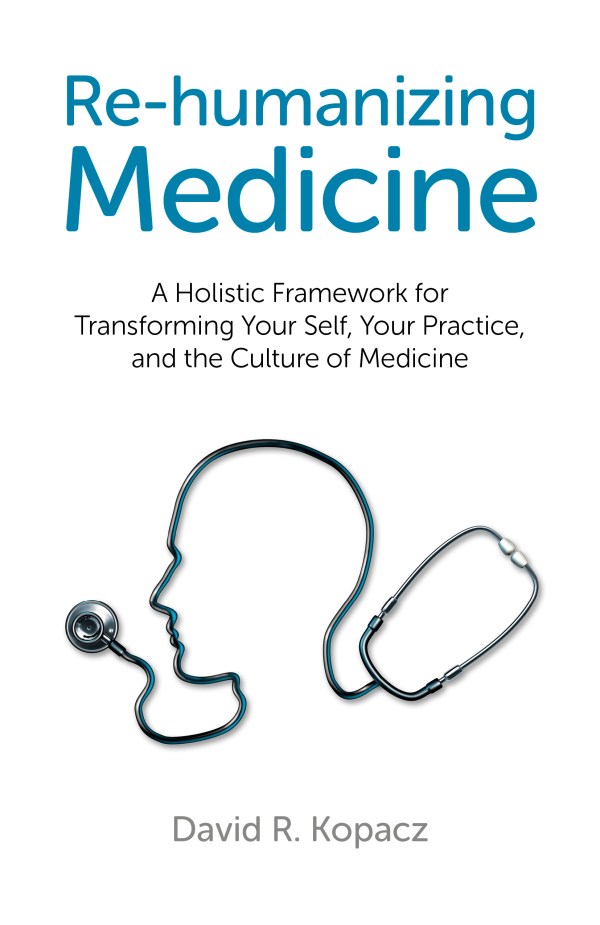
In 2025 I published my sixth book, Caring for Self & Others: Transforming Burnout, Compassion Fatigue, and Soul Loss. I wrote it as a follow-up to my first book, Re-humanizing Medicine (2014). I wrote Caring for Self & Others because I felt there was a need for a practical handbook for health care professionals, educators, and leaders – but it is really for anyone who cares for others as part of their life or jobs, which is most of us.
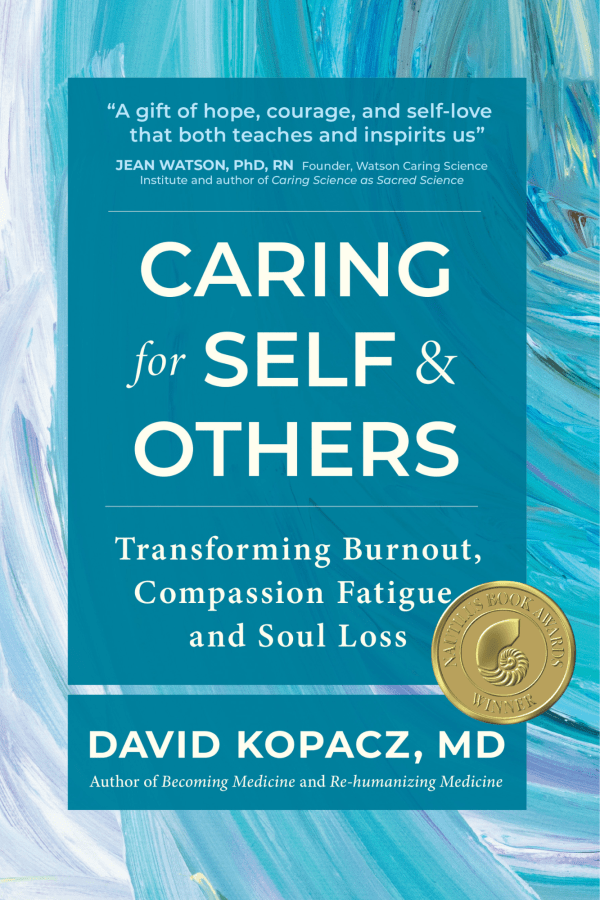
“Transforming burnout, compassion fatigue, and soul loss,” I wrote, “requires individual practices as well as institutional reform” (4). While I was mostly thinking about hospital and clinic settings as the place of institutional reform, we are in a place with our democracy that it also requires institutional reform in order to be a healthy place to live, love, and work.

Health Care Workers can burnout and develop compassion fatigue, where they feel they no longer have anything to give. The human imperative to resist fascism, you can call it activism if you like, also carries the risk of burnout and compassion fatigue – how can we keep caring when the suffering seems endless? We need to learn how to care for ourselves as we are caring for others. We need to learn how to replenish our own hearts of caring. The book has a number of exercises and meditations to help individuals to refill the cup of their hearts.

The Compassion Revolution & the Counter-Curriculum of Caring

In  Re-humanizing Medicine I called for a Compassion Revolution in health care and now we need a Compassion Revolution in politics. We need to not just think about ourselves, we need to think about others. We need to not just care about ourselves, we need to care about others. Actually, I would argue that “caring” only for self is not really caring, it is more selfishness. Caring breaks down the boundaries and walls between self and other. Caring naturally shifts us into a transpersonal space, what Thich Nhat Hanh called “interbeing” and Martin Luther King, Jr. called the “beloved community.”[14] Caring connects us – connects us to ourselves, our hearts, our souls; connects us to other human beings; and connects us to our environment and ecosystem.
In medical school, I felt I was losing an important part of myself, I felt like I was losing who I was, my kindness, my sensitivity, my caring – my soul. Over the years I have developed what I call a counter-curriculum of caring, or rehumanization, as an antidote to counter-act all the forces in our modern world that leave us feeling dehumanized.

“These counter-curriculum practices grew into the practices for the ten dimensions of caring in this book. This book is a counter-curriculum of caring, reminding us in the midst of our busy days as technicians, educators, and leaders to take the time to care. Our current curriculum and operating procedures are creating burnout, compassion fatigue, and soul loss. The proposed counter-curriculum transforms burnout, reigniting the heart of the healer, the soul of the educator, and the vision of the leader; it gives us an antidote for compassion fatigue by giving compassion to ourselves―refilling the medicine bags of our hearts; and it helps us recover and nourish our souls, revitalizing and reconnecting all the dimensions of our humanity.”[15]

Caring is the antidote to Uncaring

What are we going to do now?

It is one thing to define a problem, to understand it, but how do we address the problem of uncaring in the USA and the world? I wish I had an answer for you, but I think each person has to figure this out for themselves, consulting their own hearts in the darkness of sleepless nights. I do think the heart can guide us.

And our souls? What about our souls?

I use the concept of “soul loss” as a metaphor for burnout and compassion fatigue – for the costs of caring. How do we recover our souls when we feel we are losing them – as individuals and as a country? We have to search, we have to be still, we have to go into the darkness – our own and that of our times. As Michael Mead writes in Awakening the Soul:

“As the inner dynamic of transformation, initiation means the continuous breaking open of areas of the soul to reveal hidden capacities and inherent gifts. When life pulls at us from the outside and the soul pushes us from the inside, we reach the point where pain and longing requires that we change. … Whatever interrupts, breaks us open, or breaks us down―whether it is the trauma and shock of a loss in life or the drama and exhilaration of success―also initiates us into a greater knowledge of ourselves.”[16]

Meade’s book repeatedly reinforces the idea that the crisis can awaken the soul which then gives the support that is needed for the particular crisis. Caring for ourselves entails caring for our souls, which then give us the strength to further care for ourselves and then to care for others.

What can we do? When you find yourself in a dark place, when you feel you are at your limit, when you feel burnout and compassion fatigue, when you feel a sense of soul loss – that is the time to consult with your soul through inner practices that lead to outer actions and outer actions that lead to inner practices.

Q: What are we going to do now?
A: Whatever needs doing.

Q: How are we going to do it?
A: I’m not sure, but check with your heart, check with your soul. Let your heart and soul find the caring response as the antidote to the uncaring world we are living in. The answer is in caring. Caring for what? Caring for yourself & caring for others.

Inner Democracy

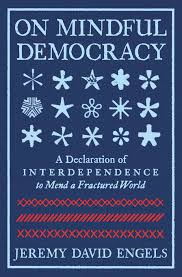
One way of caring for Self is cultivating Inner Democracy. I am starting another series of essays on this topic and will be posting them soon. In addition to the outer work of challenging words creating worlds of fascism, this inner work is an antidote to uncaring. Creating Inner Democracy is a practice of Caring for Self & Caring for Others.[17] This work owes a great deal to Steven Herrmann’s work on Spiritual Democracy and Jeremy David Engels On Mindful Democracy: A Declaration of Interdependence to Mend a Fractured World.[18]
I will leave you with an exercise from Caring for Self & Others, one that actually came to me when I was working with Joseph Rael on our book, Walking the Medicine Wheel: Healing Trauma & PTSD.

Compassioning Practice—Giving & Receiving Meditation[19]

Imagine and visualize what the heart does on a physiological level in the body.

The heart receives (through the right atrium) the blood that has traveled throughout the entire body. This blood has the lowest oxygen content; all the tissues of the body have already absorbed oxygen from this blood―it is blue, venous blood. From the perspective of tissues, it is “bad” blood, no longer oxygen-rich. As the heart receives and accepts this “bad blood,” it doesn’t complain or cling to it, but gives it away, lets it go, and it passes on to the lungs. There the blood is replenished with oxygen. The heart then receives again, only this time it is the “best blood,” the most oxygen-rich. Once again, however, the heart doesn’t cling or hoard the goodness for itself, but gives it away to the rest of the body.

Hopefully you are seeing the metaphor of how your heart works physiologically and how you can work with suffering in your life. How much do you cling to the good? How much to you reject “bad” life experiences, which could be blessings in disguise?

Sit back for a moment, closing your eyes. Focus on what your heart is doing an average of 60 to 80 times a minute. Receiving depleted blood, giving it away; receiving replenished blood, and giving it away. Become aware of this ongoing process within you.

If you would like, focus on this same movement in your life.

Think about a situation in which you experienced suffering. Remember to step back and use some of the grounding techniques discussed in chapter 2 if you feel overwhelmed.

Allow yourself to receive it. Once you have received it, give it away again, allow it to transform, and then allow yourself to receive it again, then give it away once again. Go through this cycle of giving and receiving for as long as feels right to you. Breathe in deeply―let it flow through you; breathe out―let it go. Practice this breathing in/letting go three more times. Feel the movement of the action of your heart throughout your being. Take a deep breath, and open your eyes.

This exercise of giving and receiving shows that compassion begins within our own hearts, that we must be willing to accept both the good and the bad in order to fully feel and fully live and fully love. Transformation occurs when we accept through receiving and let go through giving.


[1] Heschel, S. in “Introduction,” Heschel, Abraham Joshua. Moral Grandeur and Spiritual Audacity: Essays. Farrar, Straus and Giroux. Kindle Edition, 1997.

[2] “In 1,267 days, President Trump has made 20,055 false or misleading claims,” Updated July 9, 2020. The Washington Post’s Fact Checker’s ongoing database of the false or misleading claims made by President Trump since assuming office. https://www.washingtonpost.com/graphics/politics/trump-claims-database/?utm_term=.27babcd5e58c&itid=lk_inline_manual_2&itid=lk_inline_manual_2

[3] Daniel Dale, “Donald Trump’s top 25 lies of 2025, CNN (12/27/25) https://www.cnn.com/2025/12/27/politics/analysis-donald-trumps-top-25-lies-of-2025

[4] Cited in  László Földeényi, “Imprisoned in Cold Myth,” in The Quest for Vision in a Confused World, Cultura Animi VIII, Nexus Institute, p. 59.

[5] Jonathan Chait, “The logical end point of Trump saying he could shoot somebody on Fifth Avenue,” The Atlantic (1/25/26) https://www.msn.com/en-us/news/opinion/the-logical-end-point-of-trump-saying-he-could-shoot-somebody-on-fifth-avenue/ar-AA1UWa0h

[6] Ibid.

[7]  Maria Ramirez Uribe and Amy Sherman, (PolitiFact) “Experts question Noem calling Good a ‘domestic terrorist.’ Here’s what the term means” https://www.pbs.org/newshour/politics/experts-question-noem-calling-good-a-domestic-terrorist-heres-what-the-term-means

[8] Daniel Dale, “What Trump officials claimed about Alex Pretti — and what the evidence actually shows,” CNN (1/25/26) https://www.cnn.com/2026/01/25/politics/trump-officials-shifting-rhetoric-alex-pretti

[9] Ibid.

[10] Amy McCarthy, “Trump Says He Feels ‘Terrible’ About Alex Pretti but ‘Even Worse’ About Renee Good Since Her Parents Were ‘Tremendous Trump Fans” People, (1/27/26) https://people.com/trump-says-he-feels-terrible-about-alex-pretti-but-even-worse-about-renee-good-since-her-parents-were-tremendous-trump-fans-11893999

[11] Elizabeth Melimopoulos, “Who bombed the Iranian girls’ school, killing more than 170? What we know,” Aljazeera, March 12, 2026, https://www.aljazeera.com/news/2026/3/12/who-bombed-the-iranian-girls-school-killing-more-than-170-what-we-know

[12] Ibid.

[13] Cited in  László Földeényi, “Imprisoned in Cold Myth,” in The Quest for Vision in a Confused World, Cultura Animi VIII, Nexus Institute, p. 59-60.

[14] Discussed in Caring for Self & Others, p. 198-201, 171-173.

[15] Caring for Self & Others, p. 21.

[16] Michael Meade, Awakening the Soul: A Deep Response to a Troubled World (Vashon, WA: Greenfire Press, 2018), 72-73

[17] For now, you can reference my writings on spiritual democracy and caring for all:

Caring for Self & Others: Transforming Burnout, Compassion Fatigue, and Soul Loss (ch. 10, Becoming Caring: Caring for All). Becoming Medicine: Pathways of Initiation into a Living Spirituality (ch. 14, Spiritual Democracy) – this is available as a free pdf download: https://www.davidkopacz.com/becoming-medicine

[18] See our Becoming a True Human podcast interview with Jeremy David Engels, https://beingfullyhuman.com/2026/03/04/on-mindful-democracy-with-jeremy-david-engels/

[19] Caring for Self & Others, p. 83-84, adapted from David Kopacz and Joseph Rael, Walking the Medicine Wheel: Healing Trauma and PTSD (Tulsa, OK: Pointer Oak, 2016), 164–65.
The Art of Becoming Medicine.3

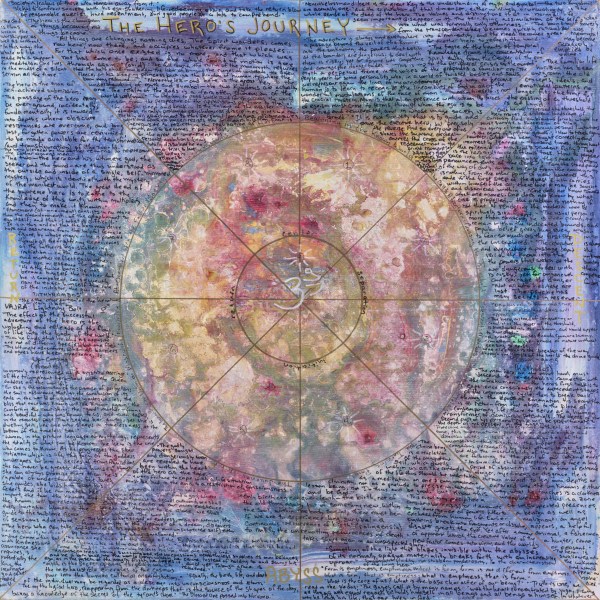
The “Introduction” to Becoming Medicine: Pathways of Initiation into a Living Spirituality is my story and path of how I came to meet and work with Joseph Rael (Beautiful Painted Arrow). Thus, more of the paintings in this chapter are mine. The two that follow are The Hero’s Journey and the Medicine Wheel of the Heart.

The Hero’s Journey, D. Kopacz, 2014

The Hero’s Journey painting was an example of the Hero’s Journey project that we invite veterans to do at the end of the 12-week Hero’s Journey class. The project invites the veteran to bring together the personal & universal into a creative project. Some veterans have done paintings, drawings, maps of their time in the service, writing and performing a song, and even multimedia art installations. I painted this as an example for the class. It is a 36″ x 36″ square canvas, divided into the stages of the Hero’s Journey and the quoted text around the circle is made up of various quotes by Joseph Campbell that pertain to that step of the journey.

Medicine Wheel of the Heart, D. Kopacz, c. 2016-2017

This was my attempt to bring together, in a visual format, Joseph Rael’s teachings about the medicine wheel. An earlier medicine wheel was published in Walking the Medicine Wheel: Healing Trauma & PTSD. The Medicine Wheel brings together the four outer directions of North, South, East, West, and the four inner directions of Mind, Emotions, Physical, and Spiritual. Each direction also has a corresponding vowel sound: A (ah), E (eh), I (ee), O (oh), U (uu) – pronounced as the vowels are in Spanish. There is also a princple idea associataed with each direction: Purity, Placement, Awareness, Innocence, and in the Center – Carrying.

As I was working on Becoming Medicine, I conceptualized it as a continuation of the journey started in Walking the Medicine Wheel. In Walking the Medicine Wheel, we worked to integrate the four outer and four inner directions and ended with connecting to the “held-back place of goodness” in the heart. In Becoming Medicine, I saw us as entering deeper into the heart center. I found Joseph’s comment about human beings as “medicine bags” to be useful here and that the purpose of the book was two-fold: to find the “sacred objects” which are hidden in our own hearts bringing them back for communal healing, and to go even deeper into a state of non-duality. In Walking the Medicine Wheel, Joseph said, “I am my brother’s keeper.” Joseph wanted to teach veterans that we are all brothers and sisters and we are all related. Becoming Medicine is about going beyond the affiliation of relation into a sense of oneness, non-duality – this is the state that mystics and visionaries know and it is the place of ultimate peace. This insight, or enlightenment about our non-separateness from other living beings and the material world is an initiation into a new relationship with the land and into spiritual democracy. As with many mystical traditions, when you make your secret journey you will find that what you were seeking is already within the medicine bag of your heart.

Happy World Book Day!

What a great week – Earth Day and World Book Day back to back!

The Earth gives us so much to be thankful for and her beauty is even more apparent and more easily appreciated during these times of a more inward focus. It is easier to hear the birds and working from home I look out my window often to see Stellar’s Jays, Chickadees, Juncos, and today I even saw an Audubon’s Warbler!

I’m grateful to have been able to bring forth, in these books, what is within me and to release this out into the world.

“If you bring forth what is within you, what you bring forth will save you. If you do not bring forth what is within you, what you do not bring forth will destroy you.” (The Gospel of Thomas, in The Gnostic Gospels, by Elaine Pagels)

Gratitude and thanks to Joseph Rael (Beautiful Painted Arrow) who has been my co-author on these last two books: Walking the Medicine Wheel: Healing Trauma & PTSD and Becoming Medicine: Pathways of Initiation into a Living Spirituality. All my books have the word “medicine” in the title, because they are all about healing the splits within our hearts, minds, societies, environment, and world. My first book, Re-humanizing Medicine: A Holistic Framework for Transforming Your Self, Your Practice, and the Culture of Medicine, calls for a counter-curriculum of re-humanization – learning practices that help us connect to, develop, and sustain our inner spiritual humanity; and also was an open call for everyone to join the compassion revolution – bringing the heart and caring back into our work with people in the world.

A Bowl Full of Ideas for Inventive Minds, Joseph Rael (BPA) 2009

Joseph and I are working on our next book together which will be a book of initiation and instruction for 10-12 year old children, drawing on Joseph’s experiences and what he thinks it is important for human beings growing up into this world to know about the world and themselves. We are calling it, A Bowl Full of Ideas for Inventive Minds. More to come…

May the books of all of the authors of the world contribute to realizing our inner spiritual humanity, our outer spiritual democracy, and helps us to remove obstacles and division to allow us all to live in peace, peace within our hearts and peace within the world.

Aho.

A Tree with A Lot to Teach Us, D. Kopacz (2020)

Healing Trauma with the Help of Ceremony from Lukas Budimir

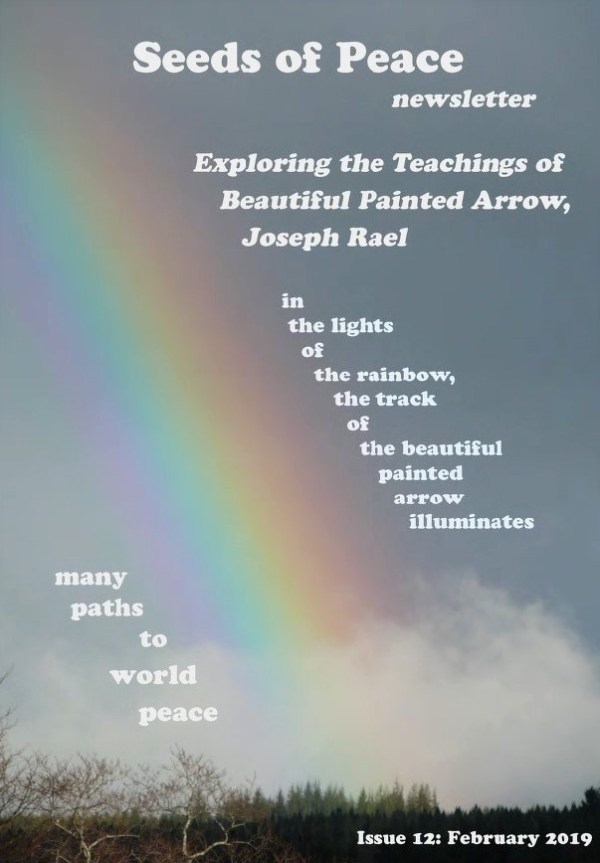
Thanks to Lukas Budimir for this wonderful piece from the Seeds of Peace Newsletter, Issue 12, February 2019, reprinted with his permission and the permission of the editors of Seeds of Peace. For information about the newsletter or to subscribe, please email Marina Budimir at mayarinabudimir61@gmail.com

Healing Trauma with the Help of Ceremony from Lukas Budimir

There are so many ways in which beautiful painted arrows have influenced my life and the way I do what I do that it’s difficult to start writing about it.

Basically everything changes; not so much what I do, but how I do it, because we are all connected with everything and everything comes back in circles. And changes on the inside show on the outside.

You can only access the past and the future in the eternal now – that is why ‘work is worship’ and the effort you put into things needs to be balanced through the connection to your heart so that the seeds of peace can grow out of the soil and bear fruit.

I am not special, I am like everybody else, with all the tasks we have in our lives, because the tasks are there for me to learn and become aware, to place myself in relations and to find a new beginning all the time so I can come back to my childlike innocence. Perhaps I’m just as special as everyone else.

Let’s look at an experience from my life: After caring for and working with people who have experienced severe brain damage for ten years, I decided to move from Denmark back to my native Germany and look for a new job. I thought, perhaps I could work with veterans, so I ordered the book Walking the Medicine Wheel: Healing trauma and PTSD by David Kopacz and Joseph Rael.

What I did find was a job at an institute that claimed to offer homes to youngsters that can’t live with their parents. What I found was that I was working with traumatized youngsters with behavioral problems. My primary goal was to build a relationship of confidence with them. In doing so, I realized they had been hurt on different levels and didn’t, or couldn’t, react appropriately to normal situations.

One example of this is:

A young refugee from Afghanistan comes down the stairs with a boom box on full blast. I tell him to turn it down. After telling him the same twice, I touch him on the shoulder and say it a third time. He turns around in combat mode with his eyes wide open, as if he wants to show me something. And then he grabs me by the throat. Our eyes are very close, and I look right into them. In a split of a second, I can see all the pain that he and his people have experienced.

Reading the above-mentioned book, I finally get to page 161 and read about healing the soldier’s heart.

Here Joseph explains that in every person there is a held back place in the heart where goodness is stored. No matter what we do or experience. He describes how to blow light into the heart, suck out what is in the way, and then, so that the hole does not stay open, seal the heart with your hands. David then explains that there are multiple ways of understanding Joseph´s exercise and how he uses it in his practice. I use it with the 17-year old and he starts to change, becoming more and more what he really is. It becomes one of my favorite ways to help people connect to the goodness that they always have within.

So thank you Grandfather and thank you David for doing what you do and being who you are. And a thank you to Life for its perfect timing, for always giving us a solution just when we need it.

Lukas Budimir, Germany: Soundchambereurope@gmail.com

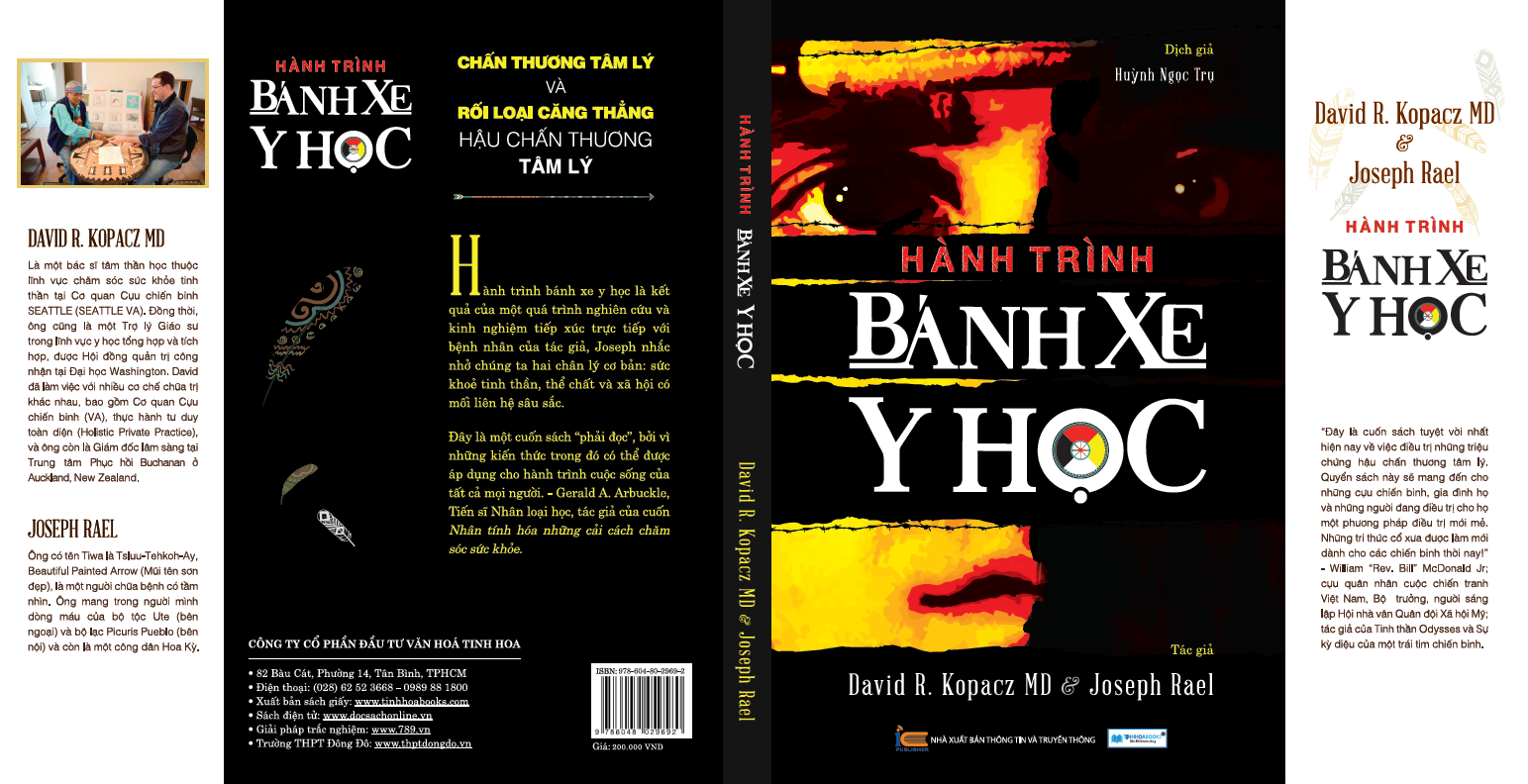
Bánh Xe Y Học: Hành Trình Walking the Medicine Wheel: Healing Trauma & PTSD – published in Vietnam!

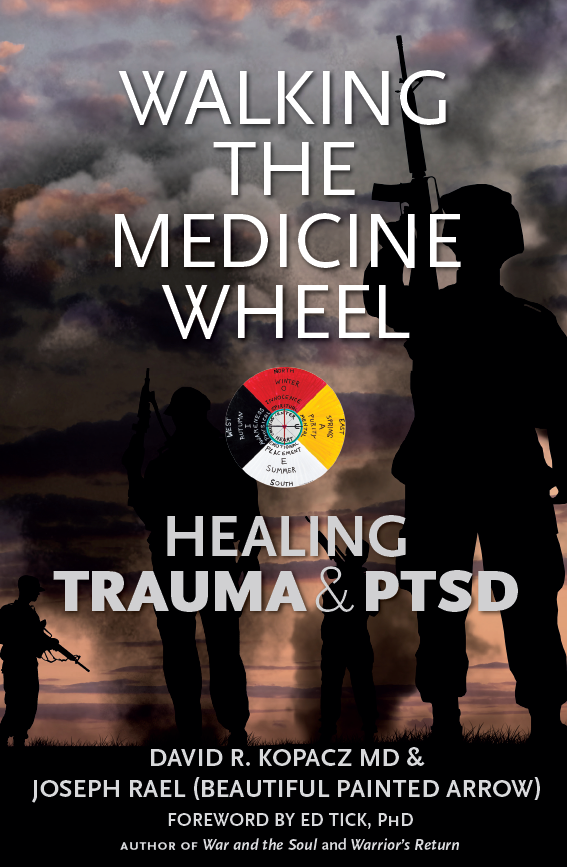
Walking the Medicine Wheel: Healing Trauma & PTSD, which Joseph Rael (Beautiful Painted Arrow) and I wrote in 2016 has been translated into Vietnamese – Bánh Xe Y Học: Hành Trình. This is important for healing the wounds of war and helping former enemies become brothers & sisters.

Review of 2018

IMG_20181225_124232371_HDR

Photo credit: Mary Pat Traxler

On this first day of the New Year, January 1st, 2019, I thought I would take a look back at this past year. 2018 was filled with a lot of travel. We took a trip to England, Wales, and Iceland in May that I have blogged about. I have continued my work as a Whole Health Education Champion with the national VA Office of Patient Centered Care & Cultural Transformation and teaching programs took me to Madison, WI; Portland, OR; Nashville, TN; St. Cloud, MN; and three times to the Boston area (including an evening visit to Walden Pond). My mother had a couple of surgeries, which went well, but took me back to Illinois three times during the year.

As far as writing goes, I continued to work on the next book with Joseph Rael (Beautiful Painted Arrow). My sister and I took a trip to visit him in October.

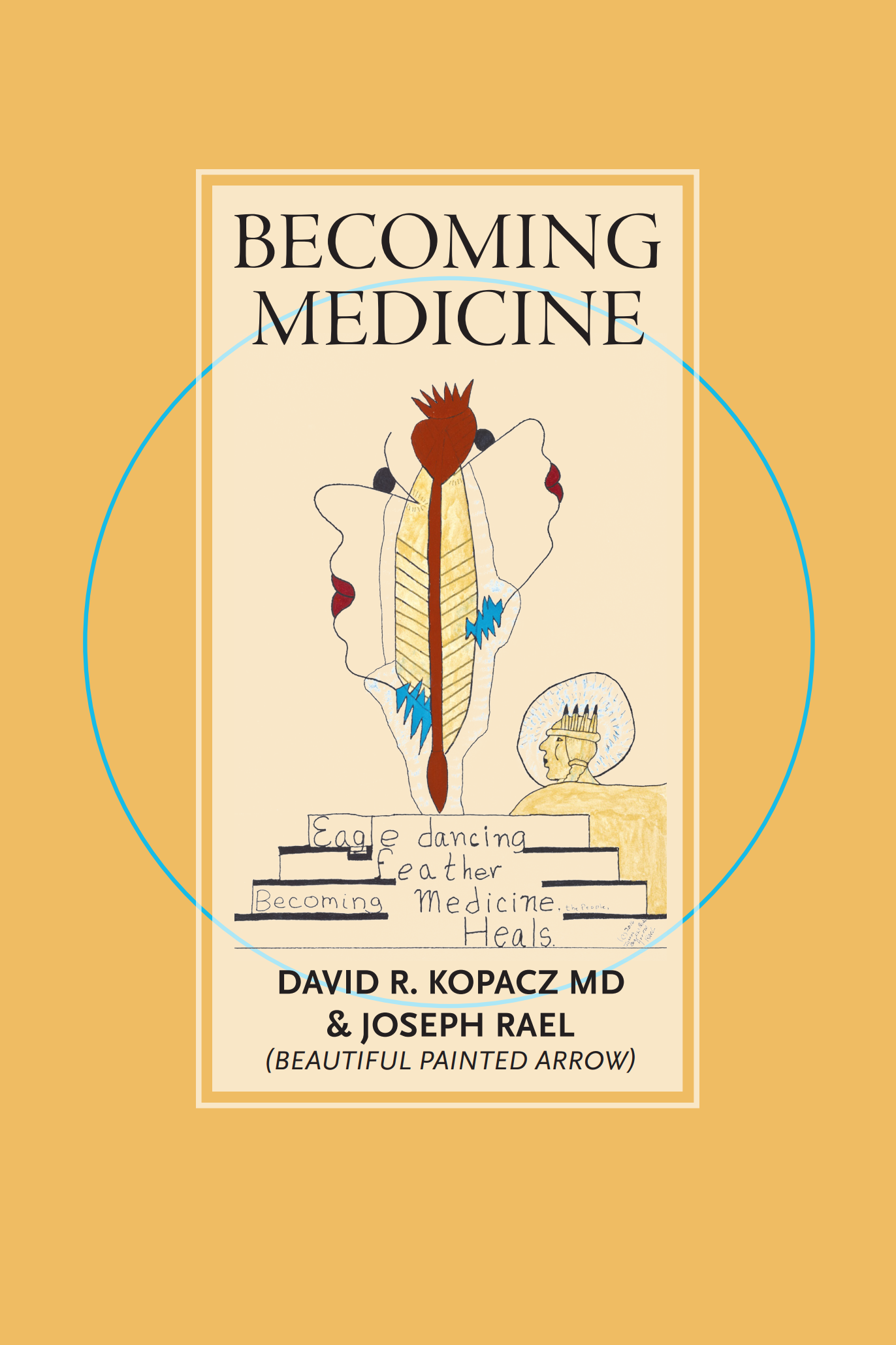
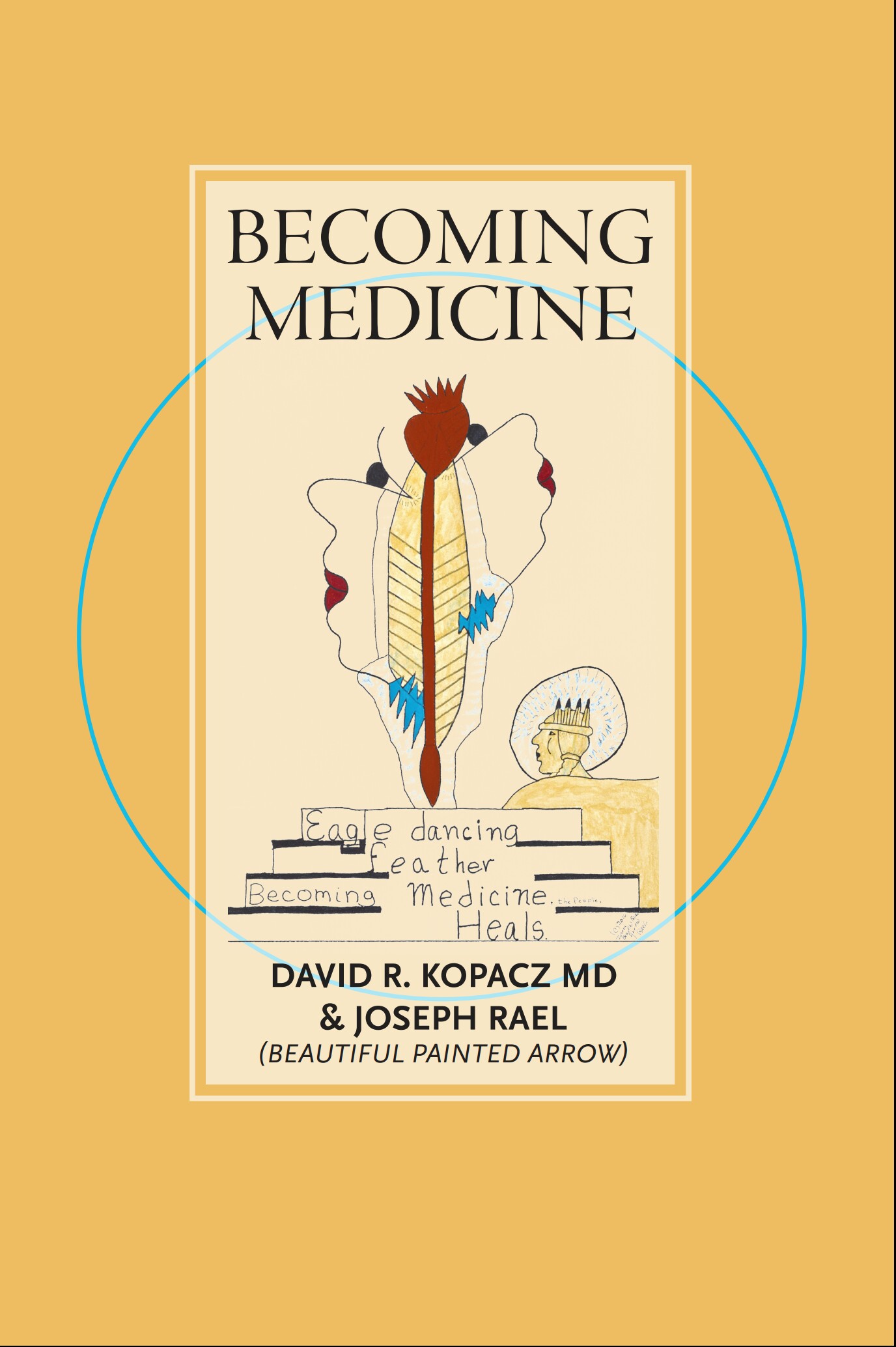
We finished the book on the Winter Solstice and I am now gathering a few endorsements for the book and we will be starting the publication process now. The new book is called Becoming Medicine: Pathways of Initiation into A Living Spirituality. Here is a copy of the table of contents, and the cover we are working with.

Cover Screen Shot

Joseph Rael’s painting, cover for Becoming Medicine


TABLE OF CONTENTS
Abbreviations
Foreword by Lewis Mehl-Madrona
Acknowledgements
Introduction: The Secret Journey
Part I: Separation (Seeking)
Chapter 1.         Becoming Medicine
Chapter 2          Circle Medicine
Chapter 3          Separation
Chapter 4          Becoming a Visionary
Chapter 5          Becoming a Shaman
Chapter 6          Becoming a Mystic
Part II: Initiation (Finding/Receiving)
Chapter 7          Story Medicine
Chapter 8          Entering the Doorway
Chapter 9          Guhā: Cave of the Heart
Chapter 10        Enlightenment & Endarkenment
Chapter 11         Initiation
Chapter 0          Na-yo ti-ay we-ah (We Do Not Exist)
Part III: Return (Giving)
Chapter 12        Returning to the Land
Chapter 13        We Are All Pangeans; We Are All Related
Chapter 14        Spiritual Democracy
Chapter 15        Refounding
Chapter 16        A Living Spirituality
Chapter 17        Returning to the Garden of Paradise
Chapter 18        Secret Journey to the Secret Garden
List of Sound Chambers

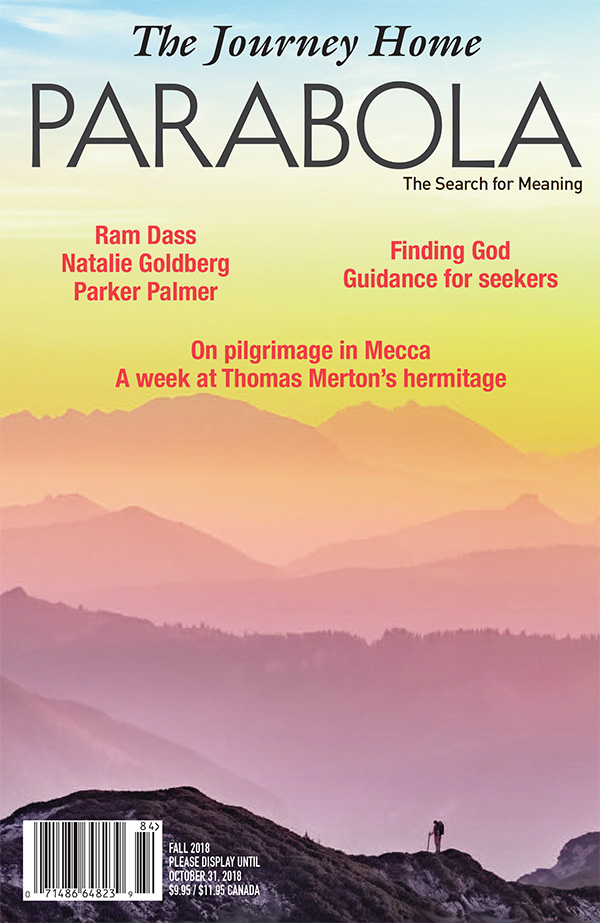
We had an excerpt from Walking the Medicine Wheel: Healing Trauma & PTSD published in Parabola magazine, which was very exciting. We’ve also given permission for the book cover to appear in a movie about someone healing from PTSD and we’ll give more information about that as it becomes available. We had an article called “Sage—the Wise One,” published in the International Journal of Professional Holistic Aromatherapy. I gave a workshop for Muckleshoot Indian Tribe Behavioral Health on “Circle Medicine for Healing Trauma.”

journey-home-cover-large

Mary Pat and I took a very restful trip to the Pacific coast near Copalis Beach just last week and I’ll post a few of those photos.

Corbin and I took a hike up Fletcher Canyon near Quinault. We couldn’t go far because there were a lot of trees down. We scrambled over a few before turning back after about an hour of walking up hill.

We stopped on the way back to take in the world’s largest Sitka Spruce tree, estimated to be 1000 years old.

DSCN5704

1000 year old Sitka Spruce

One morning, I heard a raucous cacophony of crows cawing. I quickly ran out to see what was happening. I saw a flutter of movement on the ground and an eagle flew off, leaving a stunned crow. I watched over the crow for a few minutes, eventually he flew off, a bit unsteadily, and then the eagle gave up and flew off in the other direction. These aren’t shots of that seen, but other photos of an eagle and some crows.

Who knows what 2019 will bring, likely lots of changes, as well as the publication of Becoming Medicine!

International Day of Peace

Today is the International Day of Peace and I would like to speak about the peace work I have been doing with Joseph Rael (Beautiful Painted Arrow).

DSC_9344_color_corrected

Joseph Rael (Beautiful Painted Arrow) & David Kopacz, photo by Karen Kopacz ©2016

Joseph had a vision in the 1980s of a circular structure, half in the ground, half out of the ground, with men and women chanting for world peace. He brought this vision into reality and over 50 sound peace chambers have been built on four continents: North America, South America, Europe, and Australia. Joseph has been received a letter of recognition from the United Nations for his work promoting world peace.

DSCN1693 (2)

Sound Chamber, Mike & Marie Pedroncelli caretakers

Peace work can take many forms. In my first book, Re-humanizing Medicine: A Holistic Framework for Transforming Your Self, Your Practice, and the Culture of Medicine (2014), I sought to help doctors and clinicians find a way back from dehumanization and burnout to feel more fully human and to create a health care system that addresses the whole person. I spoke of a compassion revolution that was occurring—many people in health care are working to bring the heart back into medicine.

front-cover.jpg

In our first book together, Joseph and I worked to help create a pathway from war to peace for returning veterans by walking the medicine wheel. This book is called Walking the Medicine Wheel: Healing Trauma & PTSD (2016). One of the things that Joseph talks about with veterans is that they should get their DNA tested so that they can remember that we are all brothers and sisters—because genetic and archaeological science tells us we all came from Africa originally. Scientists even tell us that we all have a common mother, Mitochondrial Eve, some 150,000 – 200,000 years ago. Many Native Americans and other indigenous people talk about Mother Earth. Mother Earth’s initials are ME—the same as Mitochondrial Eve—“ME” is the same thing that each of us call ourselves. Joseph says this just shows that everyone really is related.

Front Cover.final

In working with veterans, we wanted to help them in their walking around the medicine wheel, making the journey from being trained to protect us from the “other” to where we can all see each other as brother and sister.

Here is a link to a video of the two of us talking about peace, filmed by my sister, Karen Kopacz, from the website for the book.

I talked with Joseph this last week and he told me some things about peace. He said, “What we need to teach people about peace is open-mindedness. People are held back by their self-imposed limitations. The very thing that people are afraid of is what they should by trying to moving toward so that they can have an expanded awareness.”

I asked Joseph if he could say a few things about the dove as a symbol of peace.

Dove of Peace

Dove of Peace, Joseph Rael ©2018

“The dove is a waterbird and it is bird that flies in the air because that is what birds do. The dove of peace. It drinks water and when we drink water we are doing what birds do. When we drink water it makes the sound with every swallow “Soul. Soul. Soul.” You can listen as you swallow and you will hear it. We, ourselves, are 70% water, our blood is water that circulates through our bodies, so the dove is reminding us that we are soul and reminding us to connect to our hearts which pump the blood and water throughout our bodies. The work of the dove of peace is to bring us peace and harmony.

When someone dies at Picuris, we wash the body in the river and the soul goes out of the body and down the river. The soul goes down the river to the ocean. It goes out into the ocean, it goes out to Baja. Then from the ocean, the soul, with water goes up into the sky and then it becomes clouds, big white fluffy clouds. The dove of peace is white, just like the clouds that bring the rain. The clouds rain and the rain falls back to the earth and we say that the rain is the ancestors coming back to us because they are our caretakers.

At the beginning of many of my visions I see the white dove of peace which opens a circle of light. The circle of light gets bigger and then I am going through it and I am somewhere I have never been before and I am experiencing something other than what I can experience here. And then I am back to where I started and the circle closes but I have gone somewhere new and experienced something new.”

Joseph reminds us that peace is always right here in our hearts. Whether we are veterans or just a human being who has lost our way, we can reconnect back to what he calls a “held-back place of goodness” that we all have in our hearts. The dove of peace comes from above, falling like the rain that is our ancestors, returning to be our caretakers, reminding us that we are made of water, reminding us that we can bring peace and harmony to our souls. With every swallow of a glass of water, we make the sound “soul, soul, soul.” On this International Day of Peace, we should all remember that we are here to do the work of peace. Joseph says that his grandfather would always tell him, “work is worship,” so this work of peace is a kind of worship, in which we are trying to remind ourselves that we are all brothers and sisters of Mother Earth/Mitochondrial Eve and that we all have a “held-back place of goodness” within our hearts. The work of peace is seeking to find this reservoir of peace within our hearts and to release this into the world, like releasing a white dove from the cage of our hearts.

Dove of the Holy Spirit

Dove of the Holy Spirit, David Kopacz ©2017 

Joseph and I continue our work of peace in our forthcoming book, Becoming Medicine (due out early 2019) which plunges deep into the center of the medicine wheel, where not only are we all related, but ultimately we are all one.

A Review of the Work of Jaideva Singh: Dualism and Non-dualism in Indian Philosophy & Spirituality, PART I

PART I: Introduction

JS photo

This is a review (and expanded discussion) of two short books by Jaideva Singh (1893-1986), Indian musicologist, philosopher, and translator of many texts of Kashmiri Shaivism. Singh blended two careers in music and as a translator and philosopher of sacred texts. I could not find much in English about his life, the same biography appeared in Wikipedia and on a number of other sites. There is an edition of Sruti Magazine devoted to his life (Sruti, e-Issue 17, November 2013 – note that the page numbers are not always sequential in the pdf and some page numbers appear to be missing, e.g. #34). Dr. M.R. Gautam writes in an article, “A Great Savant of India,” that Singh was born in what is now known as Uttar Pradesh and that his grandfather, Udit Narayan Singh was beheaded by the British, his father was also supposed to be killed, but at 2 years of age, Gopal Narayan Singh was hidden under burnt wheat chaff in the village (21). During the course of Thakur Jaideva Singh’s studies he came under the influence of Theosophist, Annie Besant, as well as Babu Bhagwan Das, and that he became a vegetarian. In an odd twist, similar for Gandhi, it was through a Westerner that Singh came to a deeper study of Sanskrit and original sacred texts. He met a German scholar who encouraged him to study Sanskrit, which in fact he did. His life-long love of music led him to be the Chief Producer at All India Radio for about six years. In retirement he got down to studying and writing. He began to study tantra and yoga under Mahamahopadhyaya Pandit Gopinath Kaviraj. He also studied with Swami Lakshman Joo and this collaboration led to English translations of a number of Kashmiri Shaivite texts, including: Pratyabhijnahrdayam: The Secret of Self-Recognition, Vijnanabhairava or Divine Consciousness: A Treasury of 112 Types of Yoga, Siva Sutras: The Yoga of Supreme Identity, Spanda-Karikas: The Divine Creative Pulsation, Para-trisika-Vivarana by Abhinavagupta: The Secret of Tantric Mysticism. The two books that this review will focus upon are Vedanta and Advaita Shaivagama of Kashmir: A Comparative Study and An Introduction to Madhyamaka Philosophy. Both of these books are far more accessible than the major translations listed above.

Sruti Cover

Gautam writes:

Thakur Saheb was a voracious reader. His thirst for knowledge was so great that he wished to study the great works of renowned scholars on mysticism, music, philosophy and other subjects in their original versions. Therefore he learnt Greek, Latin, Persian, French and German in addition to English, Sanskrit, Pali, Hindi, Bengali, Marathi, Gujarati and Urdu…and his library consisted of 6000-7000 rare books, (Gautam, Sruti, 24-25).

Singh was a true scholar of world religions.

He found a striking closeness of spirit between Christian and Hindu mysticism, as also Sufism. His mind was thus marked by the openness and universality which are the signs of great spirits. Being rooted in his own tradition, he accepted the truth, from whichever source it came. This, his openness, was also connected with the fact that he was deeply influenced by the thought of A.K. Coomaraswamy, with whom he entertained correspondence, as well as by Rene Guenon and the traditionalist school. Besides, he was a theosophist of a very free and non-sectarian type,” (Unknown author as previous page missing in pdf, possibly Dr. Bettina Baumer, Sruti, 35).

I came to reading Jaideva Singh after a conversation with Richard Miller, PhD, the developer or iRest (Integrative Restoration), an adaptation of yoga nidra which has been studied with military veterans and active duty military personnel as well as other populations. After reading Richard’s books (Yoga Nidra: Awaken to Unqualified Presence Through Traditional Mind-Body Practices and The iRest Program for Healing PTSD: A Proven-Effective Approach to Using Yoga Nidra Meditation and Deep Relaxation Techniques to Overcome Trauma), I was curious as to the historical background and spiritual tradition that the concepts came out of and Richard mentioned a few different sources, including those of Jaideva Singh. I made my way, slowly through Pratyabhijnahrdayam, Vijñānabhairava, Siva Sutras, Spanda-Karikas, Para-trisika-Vivarana. These texts are dense with layers of the original Sanskrit texts (generally from around 800-1200 CE), commentaries by ancient sages, and then modern commentary. I found them difficult, but worthwhile and found various gems throughout. I then turned scholarly texts by Western professors on the subject and found Paul Muller-Ortega’s The Triadic Heart of Siva: Kaula Tantricism of Abhinavagupta in the Non-dual Shaivism of Kashmir and Mark Dyczkowski’s The Doctrine of Vibration: An Analysis of the Doctrines and Practices Associated with Kashmir Shaivism illuminating.

There are a number of contemporary authors studying these same ancient texts and offering contemporary translations for a more general, than academic and esoteric, audience. Daniel Odier’s Yoga Spandakarika: The Sacred Texts at the Origins of Tantra is very readable and accessible. I have recently read once through Lorin Roche’s The Radiance Sutras: 112 Gateways to the Yoga of Wonder and Delight, and this includes a review of previous translations and tracing the lineages from Lakshman Joo, including Jaideva Singh’s Vijñānabhairava. I am currently making my way through Christopher D Wallis’ The Recognition Sutras: Illuminating a 1,000-Year-Old Spiritual Masterpiece, which is strikes a middle ground between academic rigour and accessibility.

Why have I spent so much time reading through these translations of ancient texts of the Kashmiri Shaivite tradition? This tradition is also one of the major sources of the concept of “Tantra,” which is a more popular term. Tantric traditions are found in various branches of Hinduism and Buddhism. Two of the primary reasons I have immersed myself in these writings and teachings are: non-dualism and sound mysticism (the relationship of sound, word, creation, and reality). The primary focus of this review is on non-dualism, we will have a brief aside on sound mysticism and then focus on non-dualism and two of Jaideva Singh’s books for the remainder of the review.

DSC_9344_color_corrected

Joseph Rael (Beautiful Painted Arrow) & David Kopacz

My work with Joseph Rael (Beautiful Painted Arrow), a Native American mystic and visionary, who comes from the Southern Ute and Picuris Pueblo cultural traditions, has led me to expand my studies into various cultures and traditions to try to understand and contextualize some of his teachings. Joseph teaches that the sound energy of the word contains meaning. The signifier (the word sound) is not separate from the signified (the meaning of the word). Joseph teaches me to listen to, rather than think about, reality (this is a challenge for me as an academic and Westerner). Joseph often speaks about the differences between Western languages which are noun-based and focus on people, places, and things – this is great for science and for dividing reality up into separate pieces, but it loses something of the heart and soul and living spirituality of verb-based languages. Many indigenous languages are verb-based – they focus on processes, flow, and relationship rather than on fixed, separate objects. This has profound and far-reaching consequences, the most tangible being the European view of land as a “thing” to be owned” rather than Mother Earth being a living being who is our source and to whom we are all interconnected and interrelated. The most esoteric, and yet perhaps the most fundamental, of Joseph’s teachings is: “we do not exist.” This is a koan-like statement that I continually turn over in my mind and heart and which I have come to understand in many different, multi-layered ways. One way of understanding this statement that we do not exist is that we do not exist as nouns (as fixed, concrete, boundaried objects), but that we do exist as a kind of continually changing, flowing, and pulsating verb that is in relation with everything. The Native American concept of interrelation is quite well-known, for instance the Lakota saying mitakuye oyasin, often translated as “we are all related.” Joseph takes this interrelation a step further to the point that we do not exist in separation, but we do exist in a kind of unity in which there is no difference between the individual and what Joseph calls Vast Self (God, Creator, the One Being creating and observing reality).

Joseph is very interested in science and is always giving me references to articles he reads in various science magazines about dark matter and dark energy. These are forces that “don’t exist” from the perspective of our everyday senses, yet we can infer through scientific observation and study that these unseen forces do exist and influence visible reality. This parallels Joseph’s teachings around ordinary and non-ordinary reality. Ordinary reality is perceptual reality and non-ordinary is the reality that we can reach through intuitive and spiritual methods that exists in a different way. Much of his teaching with me has been on being able to move into a state of non-ordinary reality and then back. My sense is that, ultimately, non-ordinary reality is the source of the momentary manifestation of ordinary reality.

Sound is one way that we can travel from ordinary to non-ordinary reality. Ordinary reality is not separate from non-ordinary reality, it is a manifestation of it. The sound we hear with our ears contains within it esoteric teachings about reality. Joseph speaks of principle ideas that various sounds contain and that more complex concepts are created out of the building blocks of the principle ideas contained within the sounds. For instances, when Joseph teaches the medicine wheel each direction has a vowel sound associated with it and each vowel sound manifests a principle idea. A (ah) is east, mind, spring, purity; E (eh) is south, emotion, summer, placement; I (ee) is west, body, autumn, awareness; O (oh) is north, spirit, winter, innocence. Thus, the outer direction of east corresponds to the inner direction of mind, these are not two separate things, but inner and outer manifestations of the principle idea of purity.

Medicine Wheel.jpg

Joseph Rael’s Medicine Wheel, Rendition by David Kopacz ©2016

The four inner and outer directions of the medicine wheel are interrelated, just as the four seasons are interrelated – they are different “things” in a way, but they do not exist in and of themselves, but only in relationship to each other, just as what we call “winter” cannot exist without a relationship with “summer.” Joseph says that the reason we have war and violence is because we misperceive ourselves as existing and separate from “others,” whereas we do not really exist as separate beings, but only in relationship with others. We talk about the medicine wheel and coming home from war to peace in our book, Walking the Medicine Wheel: Healing Trauma & PTSD. Using the four directions of the medicine wheel, we can bring ourselves back into harmony internally and externally, bringing peace to ourselves and to the world as we come back into interrelationship and interbeing.

The next level of work I am doing with Joseph starts at the end of Walking the Medicine Wheel and continues on in our forthcoming book, Becoming Medicine. This is the movement from interrelationship to oneness and unity: non-duality. After walking the four inner and outer directions of the medicine wheel, there is a further journey – which is the journey of the mystic, the visionary, and the shaman – into the center of the medicine wheel, the very heart of reality. Joseph teaches that the sound of the center is: U (uu) center, heart, carrying. Moving into the heart of the medicine wheel first comes to the level of our personal heart, but as we go deeper it is revealed that our personal heart leads to the universal heart and it is through the universal heart that we are not only interconnected with all of reality, but we are one with it. This is a place of non-duality.

Becoming Medicine

© Joseph Rael

There is a common tension between the spiritual concepts of immanence and transcendence that seems to be found in all major religions. Immanence is the concept that all materially reality contains spirit within it. Transcendence is the concept that there is a spiritual realm that exists above and beyond material reality. As with all dualisms, immanence/transcendence leads to violence and we see this throughout the history of humankind and the history of religion. The ossified teachings of most religions teach that material reality is sinful, evil, or irrelevant (e.g. maya, illusion). The Fall in Christianity teaches us that the body is sinful and evil, that we are trapped in matter that is constantly trying to lead us to sin and that salvation leads to rejecting or controlling the body and being “good” and getting to heaven after death. In dualistic versions of Hinduism and Buddhism, material reality is considered maya, illusion, and that the religious path is found by detaching from the physical and focusing on the spiritual. We can look at secular materialism as a form of radical immanence (without the recognition of the sacred). Capitalism that is unbalanced by another belief/value system teaches us that the ultimate good and goal of life is to accumulate as many things and dollars as possible. Much of the blending of Christianity and Capitalism results in a dualism with a dissociation of business (Capitalism, Materialism) and spirituality (going to church and being “better” than those who don’t go to Church and being “better” than non-Christians). It is a puzzling observation that the “founders” of religions are generally mystics and visionaries, but later on the followers lose the mystical thread of living spirituality and fall prey to dualistic conceptions of us/them that leads to so many inequalities and wars. Consider the fact that Jesus in the Bible cannot in anyway be considered a Capitalist or Materialist. He is far more of a Socialist, but ultimately he was a renunciate (an anti-Materialist) – who rather than amass wealth and belongings taught that we should love one another and not cast the first stone of dualistic judgment. Sufis, Tantriks, Christian mystics all broke down the boundaries of dualism that divide us and separate us from the Ultimate spiritual Reality. Native American teachings highly value immanence, the sacredness of the physical world, which includes our physical being. Joseph Rael also includes transcendence, that physical reality is sacred, but it also does not exist and that there is another, non-ordinary reality, which is hidden within ordinary reality. He does this in a way that does not create dualism, but rather is non-dualistic.


“Coming Home to Peace” excerpt from Walking the Medicine Wheel published in Parabola Magazine, Fall 2018

Parabola Magazine has just published an abridged version of the “Coming Home to Peace” chapter from the book that Joseph Rael and I wrote, Walking the Medicine Wheel: Healing Trauma & PTSD.

journey-home-cover-large

I am so excited and honored that our work is being featured in this great magazine. I first read Parabola when I was in college. It is the journal of The Society for the Study of Myth and Tradition and always has great features on topics around “the search for meaning,” with past contributors including Joseph Campbell, Mircea Eliade, and Jacob Needleman. This current issue revolves around “The Journey Home,” and it is fitting to have our piece on the struggle of veterans to find their way home after military service. This issue features Parker Palmer, whose Center for Courage and Renewal has recognized my last two books as selections of their most courageous books of 2014 and 2016. I have also written guest blogs for their organization: “Recovering Hope, Poetry, and Connection in Health Care” and “Finding the Held-back Place of Goodness in the Broken Hearts of Veterans.” It is great to see Joseph’s and my work sharing space in Parabola with an excerpt from Parker Palmer’s new book, The Brink of Everything: Grace, Gravity & Getting Old. Another author I have great respect for is featured in this issue, Kabir Helminski, with an excerpt from his book, Holistic Islam: Sufism, Transformation & the Challenge of Our Time. Peter Kingsley, author of Reality and A Story Waiting to Pierce You, has also been interviewed by Parabola in the past.

How exciting and rewarding it is to have Walking the Medicine Wheel: Healing Trauma & PTSD – this work of the heart that Joseph Rael (Beautiful Painted Arrow) and I have done together – honored in this way, being published in a magazine that has inspired me since my days in college.

front-cover-final

I am also happy that we are able to promote the work of so many others in this Parabola essay. Ed Tick, John Wesley Fischer, Jonathan Shay, Bryan Doerries, Claude Anshin Thomas, Judith Herman, and Robert Jay Lifton are all cited and credited for their work. I am also happy that Buchanan Rehabilitation Centre, where I worked in New Zealand, is mentioned in the piece, as that is a place very dear to my heart.

Here is a quote from the article:

“We can assist returning veterans through creating an initiation and rehabilitation framework. In essence, we as a society, need to have some framework for accepting, understanding, and transforming veterans’ pain. Transformation means that we take something that exists in one state and transform it into another state. For instance, wee take something that is manifesting its energy in a ‘negative’ way and transform it so that it manifests in a positive way,” (Parabola, 88).

I wish we had a little more of Joseph’s words in this piece, but this was a section putting our work in the context of the work of others. Joseph says that we need to help veterans find the “held-back place of goodness” in their hearts. If you want to hear Joseph in his own words, you can watch one of the videos on the website for Walking the Medicine Wheel.

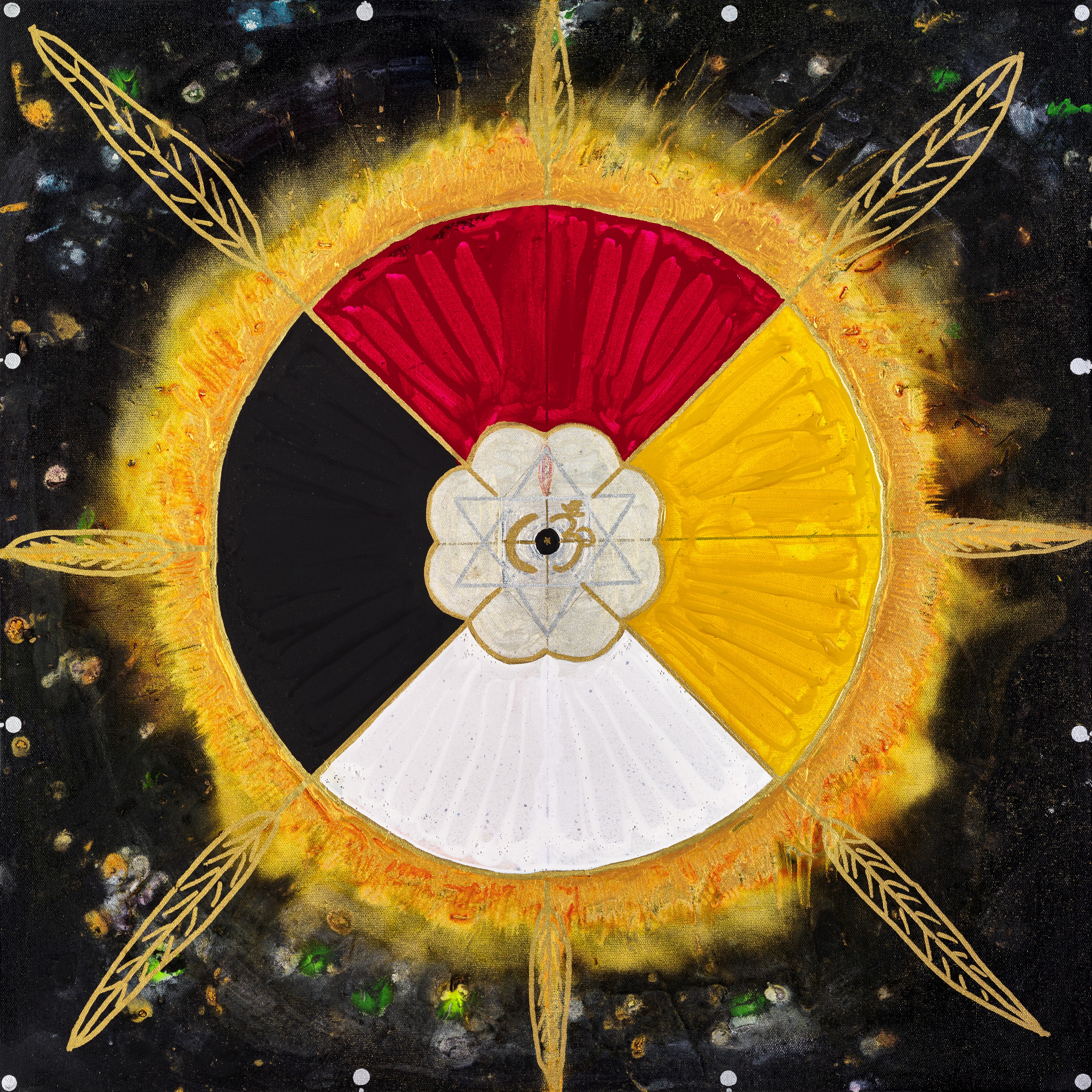
The Parabola editors choose one of our paintings from the book for the article. The painting below is my rendition of Joseph’s medicine wheel that I added some universal spiritual symbols to in the center.

Cosmic Medicine Wheel.jpg2

Cosmic Medicine Wheel, David R. Kopacz, © 2016

This issue of Parabola is not out on the newsstand yet, but you can see the cover and some of the current issue on their website and it should be on the newsstand soon!