Words Create Worlds.11: What Are We Going to Do Now?

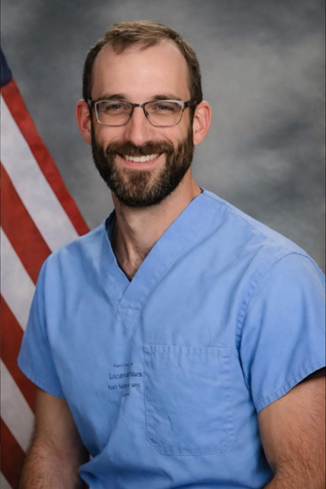
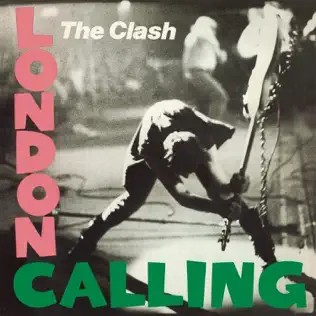
Images: Renee Nicole Good and Alex Pretti were shot and killed by ICE in January, 2026. ICE photo by David Guttenfelder/The New York Times/Redux. The cover of The Clash’s 1979 album London Calling.

The Clash song, “Clampdown,” from the 1979 double album Londong Calling, starts with the question: “What are we going to do now?”

I have had this song by The Clash going through my head this past week. Now after the second killing of American Citizens by ICE in the past month, I keep asking myself, asking us, “What are we going to do now?”

The shooting death by masked government agents of Alex Pretti strikes close to home as he was a VA ICU nurse. Having trained and worked in the VA system for close to 20 years, I know the kind of professional dedication and commitment that VA employees bring to caring for Veterans who have served their country.

Renee Nicole Good had just dropped off her 6-year old at school before she was shot by armed masked government agents. Her last words were reportedly, “That’s fine, dude. I’m not mad at you.”

“What are we going to do now?”

I always wondered what “the clampdown” was when I listened to this Clash song as a kid. I wasn’t sure what it was, but I knew I didn’t want to work for it – and I know I don’t want to work for it now.

Taking off his turban, they said, is this man a Jew?
‘Cause they’re working for the clampdown
They put up a poster saying we earn more than you!
When we’re working for the clampdown

I pictured something like Hitler’s paramilitary Brownshirts, or some other loosely organized group that came together to inflict violence on it’s own people. I suppose this queston of those working for the clampdown about “is this man a Jew” made me think of the Nazis.

We will teach our twisted speech
To the young believers
We will train our blue-eyed men
To be young believers

The Clampdown seems to require teaching “twisted,” violent speech to the young of the nation, and invoking “our blue-eyed men” again recalls the Nazis. It continues to confound me how many MAGA and now ICE believers there are, who don’t see how words create worlds. The deaths of Renee Nicole Good and Alex Pretti are the worlds that have been created by the words of name calling and bullying and “othering” of Americans.

The judge said five to ten, but I say double that again
I’m not working for the clampdown
No man born with a living soul
Can be working for the clampdown

At least some judges are finding for the rule of law, but what happens when the judges are working for the Clampdown? I hesitate to dehumanize others and say they don’t have a “living soul,” but dehumanization, scapegoating, projection, and “othering” are key psychosocial operations that pave the way for violence. I can see questioning the humanity of those working for the Clampdown when the Clampdown dehumanizes others.

Kick over the wall ’cause government’s to fall
How can you refuse it?
Let fury have the hour, anger can be power
D’you know that you can use it?

It does seem like government is falling. We have a crisis between the federal government’s masked paramilitary organization. The Feds are blocking city and state government from investigating these shooting deaths of American citizens. Who holds the power here? Why are there armed masked men kicking down doors and kicking over walls? The seem to encapsulate the fury of the hour, which is how I always heard that line. The current President seems to have a fury of the hour, but The Clash seem to say that those with the fury are carrying the hour. Anger can be power. That is true. Anger can be power. “Do you know that you can use it?” This could be giving permission for paramilitary organizations to channel their fury and anger into anti-democratic activities and violence. But we can also hear this line from the perspective of those asking “What are we going to do now?” We can channel our anger into peaceful protest, into not looking away from abuses of power and tyranny. But again, this line could also be from the hooligans who have risen to power, looking toward their leader, ready to carry out the fury of the hour.

The voices in your head are calling
Stop wasting your time, there’s nothing coming
Only a fool would think someone could save you

Here The Clash tell us that it would be foolish to think that someone is coming to save us, we each have to refuse to work for the Clampdown.

The men at the factory are old and cunning
You don’t owe nothing, so boy get running
It’s the best years of your life they want to steal

Now the Clampdown also takes the form of the “old and cunning” men who want to steal the “best years of your life.” The Clampdown takes away your rights, it takes away your soul, it can steal away the best years of your life, and, apparently, it can even take your life with impunity.

You grow up and you calm down
You’re working for the clampdown
You start wearing the blue and brown
You’re working for the clampdown

I heard this as a warning. It is one thing to be full of a piss and vinegar as a young punk, but there is a risk that you “grow up” and you “calm down” and end up working for the Clampdown, even though you resisted it in your youth. I knew about the Brownshirts, but I didn’t know about the Blueshirts – are The Clash singing about the Irish party of that name? I’m not sure. It is clear though, The Clash are warning you not to work for the Clampdown, no matter whether you are wearing a brown shirt, a blue shirt, or a red white and blue shirt.

So you got someone to boss around
It makes you feel big now
You drift until you brutalize
You made your first kill now

This is always a chilling stanza. I always think of the kids who I had been friends with in elementary school who became thugs and bullies in high school. People who feel small and have listened to the “twisted speech” and become “young believers” that the way to feel big and powerful is to find someone to “boss around.” Once you have given over your power to the fury of the hour, you cease to direct your own actions, you become a puppet who drifts “until you brutalize,” and from there the next step is making “your first kill now.” Words lead to action which leads to creating worlds of violence and when you are working for the Clampdown, you can easily end up killing.

I had to look this line up on The Clash website because Google Lyrics listed it as “Doesn’t make you first kill now,” which really doesn’t make any sense.

In these days of evil presidentes
Working for the clampdown
But lately one or two has fully paid their due
For working for the clampdown

Doesn’t that just capture it! It sure seems like we are living in the “days of evil presidentes/working for the clampdown.” We can only hope that one or two will fully pay their due. Right now it seems like the Clampdown is in charge and unrestrained.

Ha! Gitalong! Gitalong!
Working for the clampdown
Ha! Gitalong! Gitalong!
Working for the clampdown

Not much more to say here – sounds like a cattle drive with masked armed men who have immunity under the Federal government, trying to heard along protesters and killing the occasional one or two.

Yeah I’m working hard in Harrisburg
Working hard in Petersburg
Working for the clampdown

Everyone, no matter they are, they’re working – and either your working hard for the Clampdown, or your working hard against it.

Ha! Gitalong! Gitalong
Begging to be melted down
Gitalong, gitalong
(Work)
(Work)
(Work) And I’ve given away no secrets – ha!
(Work)
(Work)
(More work)
(More work)
(Work)
(Work)
(Work)
(Work)
Who’s barmy now?

The song just tails off with “work” and “more work,” finally asking “who’s barmy now?” Meaning who’s crazy, I suppose. “Clampdown” gives us much to think about in the United States at this moment. It gives us pause and reminds us that the Clampdown could be almost anything and could be almost anywhere, but right now it is here…now.

“What are we going to do now?”

Maybe the answer to that question is: you are either working for the Clampdown – or you are not.

Are you working for the Clampdown?

Clampdown, Live – Fridays 1980: shorturl.at/TdE5A

London Calling album, studio version: rb.gy/kdhzxe

Announcing the Becoming A True Human podcast!

I’ve been thinking about how we need to build a community of practitioners discussing the problems of burnout, compassion fatigue, and soul loss. Isolation and loneliness contribute to burnout, and social connection is an antidote to burnout. To this end, we are creating the Becoming A True Human podcast. Who is “we”? Well, for now, it is me and my good friend Chris Smith – therapist, meditation teacher, Whole Health educator, storyteller, author (Be a Good Story), founder of the Academy for Mindfulness consulting, and all-around wise guy (and I mean that in multiple senses of the phrase).

The audio of the episode 1, Lost, is at the bottom of this post.

What is burnout? Just what exactly is it that burns out? How can whatever is burned out be re-ignited?

What is compassion fatigue? How does compassion wear out? Should it really be called empathy fatigue? Is the problem that there is too much compassion going out? Or not enough coming in? Or could it be that institutional structures and protocols make us busy with so many things that there is little time left in the clinical encounter for caring?

What is soul loss? Could we think of the soul being the “thing” that burns out? Not necessarily in a religious or metaphysical sense – although it could be if that fits your belief system – but in a metaphorical and psychological sense. If in burnout we lose connection with our souls, how can we reconnect and either go on a quest to find our lost souls, or create a welcoming environment in our bodies and lives so that our souls can return and flourish?

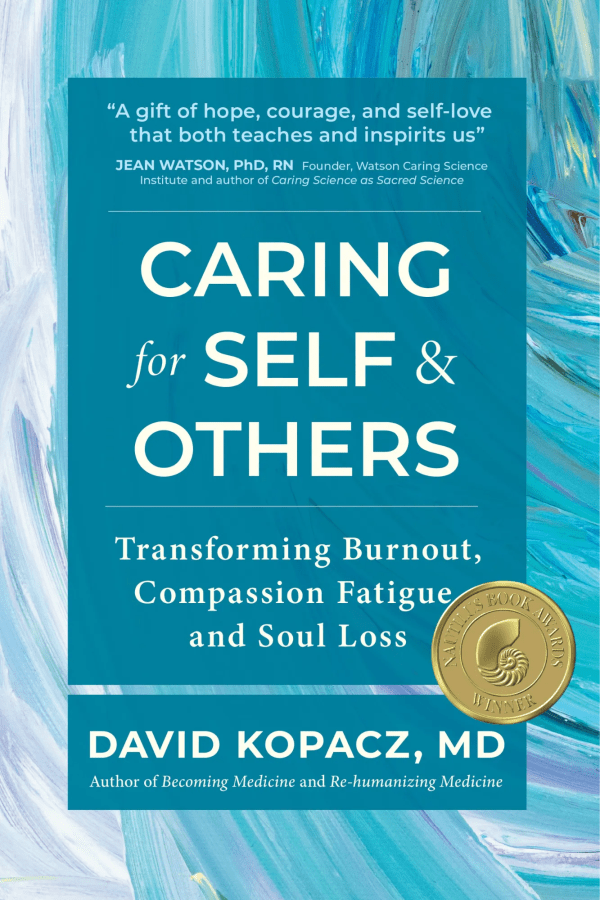
I address these questions in my book, Caring for Self & Others: Transforming Burnout, Compassion Fatigue, and Soul Loss, but we need to have further discussions around these topics as I feel strongly that we need a kind of ongoing practice, a yoga of burnout, in which we continually work in our own practices as well as in building communities of caring to support each other with this human, all too human dilemma.

Based on the topics we discussed in the first episode we titled this episode “Lost,” even before we realized that we somehow lost video of me and only recorded video for Chris! In this episode we explore topics of burnout as an initiation into becoming a wounded healer, soul loss, yoga for the health of healers, and we end with a meditation exercise and a poem, “Lost” by David Wagoner.

We don’t really know what we are doing with the technology aspect.

Let me tell you a story that illustrates the problem.

My high school friend Jack and I drove across the country after college. We were into the beat poets and writers, reading Kerouac’s On the Road, and envisoned a trip full of excitement and philosophical observations. We had a microcassette recorder and would talk into as we were driving, having many deep discussions and creating a record of what we saw.

Somewhere around South Dakota (having left from Chicago area) I noticed that the wheels of the recorder weren’t moving when we were recording. It was then that I noticed that there was a pause switch that was clicked on and prevented any recordings from being made! All of our bits, routines, observations, and experiences were lost! We were a bit crestfallen and we made half-hearted attempt to resume recording, but something had been lost – the energy, the enthusiasm. I think we eventually gave up on it. Maybe you could say we burned out on the idea after investing so much energy and enthusiasm and not having anything to show for it.

From a mindfulness perspective, there is surely some kind of lesson here – about not being attached to goals or outcomes, about being in the present moment versus memorializing experience, and maybe even that the organizing ego is an illusionary construct for creating a reduced and more manageable limited reality (if you want to take it that far!).

Well…I remembered this story after Chris Smith and I had just had our wide-ranging and enthusiastic discussion as we recoreded it on Zoom, only to realize that I had messed up the settings and we only had Chris’ video and both our audio. Well, crestfallen again! Urgh, technology failure again!

So, I think I have figured out how to share the audio of our video podcast, rather than have video of just Chris and my disembodied voice. Titling this episode, “Lost,” was prescient as we lost the video. Chris also spoke of his caring for self routine and how he purposefully skips some days so as not to get caught up in perfectionism, performance, and productivity. We’ll consider the lost video as a sacrifice to the Divine or the Cosmos, a giveaway, in addition to it being a bumbling failure of technology.

So, welcome to the first episode of the Becoming A True Human podcast – Lost it highlights the vulnerability and imperfection of being human, that we are all a work in progress and that our work is a yoga practice – yoking mind, emotions, body, soul. The practice of Becoming A True Human is an ongoing practice, we can only do it in the present moment and the next moment we are again lost, at sea, trying to figure it out and Keep It All Together (KIAT). We will attempt to have the next episode as video and hope to post it on the Becoming a True Human YouTube site.

Burnout: Soul Loss & Soul Recovery

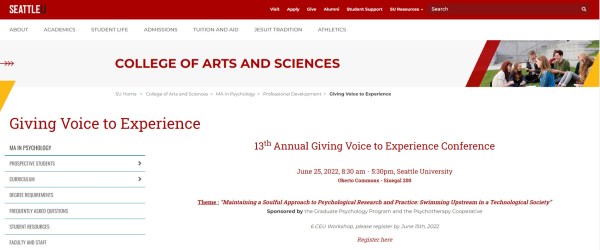
I will be giving a keynote presentation at the 13th annual Giving Voice to Experience conference, whose theme is “Maintaining a Soulful Approach to Psychological Research and Practice: Swimming Upstream in a Technological Society.”

13th Annual Giving Voice to Experience Conference

“Maintaining a Soulful Approach to Psychological Research and Practice: Swimming Upstream in a Technological Society”

June 25, 2022, 8:30 am – 5:30pm, Seattle University 

Oberto Commons – Sinegal 200

My talk on “Burnout: Soul Loss & Soul Recovery” seems even more relevant now than it did when the conference was originally planned for March of 2020 – at that time the pandemic was just evolving and we didn’t know one day to the next whether we would be gathering or not. I was already, at that time, beginning to look at the similarities between burnout in health care and the ancient concept of soul loss. After all, what is it that stops burning in burnout? What is it that we lose when we feel we are just pushing ourselves through the motions at work? Where have our hearts gone? Where have our souls gone? Now, after two years of pandemic life and social distancing, as well as the larger social injustice issues and division in the USA and war and conflict in the world, it seems even more vital than ever that we re-connect to that which makes us fully human.

For a number of years, Seattle University used to host the Search for Meaning Book Fesitval that I attended regularly. It saddens me that SU is no longer running that program since 2017, but I am honored to speak there and be part of the tradition of inquiry into life’s meaning and greater purpose. Here is the abstract for the talk:

Keynote Information 

“Burnout: Soul Loss & Soul Recovery in Mental Health Care”

presented by David R. Kopacz, MD

Burnout and compassion fatigue are becoming the norm in healthcare after two years of a pandemic. The World Health Organization recognizes burnout as an “occupational phenomenon,” with feelings of energy depletion; increased mental distance from one’s job, negativism, and cynicism; and reduced professional efficacy. While many perspectives on burnout focus on prevention through stress management techniques, we can look at burnout as “soul loss” which can then become the beginning of a transformational healer’s journey. A transformational perspective shifts our focus to the care of the soul and on how to recover soul once it is lost – this is a valuable skill for us as healers to use in our own lives as well as in our therapeutic work with clients.

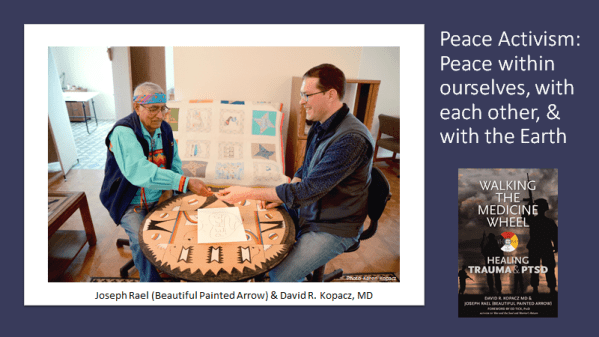
David Kopacz is a psychiatrist in Primary Care Mental Health at Seattle VA and a National Education Champion with the VA Office of Patient Centered Care & Cultural Transformation. He is an Assistant Professor at University of Washington and is certified through the American Boards of: Psychiatry & Neurology; Integrative & Holistic Medicine; and Integrative Medicine. David is a graduate of University of Illinois, undergraduate in Urbana-Champaign and medical school and psychiatric residency in Chicago. He has practiced in the US and New Zealand. His publications include: Re-humanizing Medicine: A Holistic Framework for Transforming Your Self, Your Practice, and the Culture of Medicine; Caring for Self & Others: Transforming Burnout, Compassion Fatigue, and Soul Loss (in press); and with Joseph Rael (Beautiful Painted Arrow) Walking the Medicine Wheel: Healing Trauma & PTSD; Becoming Medicine: Pathways of Initiation into a Living Spirituality; Becoming Who You Are: Beautiful Painted Arrow’s Life & Lessons for Children Ages 10-100.

Here is the link to the conference for registration and a flier for the conference. 6 CEUs are available for the one day conference. For further information about the conference, please contact Professor Steen Halling: shalling@seattleu.edu

Nature, Medical Humanities & Medical Activism

Jonathan McFarland, President of Doctor as Humanist, and I recently had the honor of presenting at the University of Washington Nature & Health conference on Thursday, October 14th, 2021. Our overall talk was Nature, Medical Humanities, and Medical Activism. Jonathan presented on Nature & Medical Humanities and I presented on Nature & Medical Activism. Here is the powerpoint from my talk.

Thanks so much to Josh Lawler, Star Berry, and the whole conference team from the University of Washington Nature & Health program. It all ran very smoothly and professionally and brought together great speakers from around the globe. There is a groundswell of interest in looking at the bi-directional effects of Nature & Health – we, at Doctor as Humanist, are planning a free, virtual symposium next month. Register for free for our Nature & Medicine: Restoring the Balance Between Earth & Health – we hope to see you next month!

Nature & Medicine: Restoring the Balance Between Earth & Health – Nov 12 & 13

I am on the Doctor as Humanist’s conference planning committee for our free, virtual, international symposium – Nature & Medicine: Restoring the Balance Between Earth & Health on November 12 & 13, 2021. Register here.

We’ve got a great line up of speakers and round table panelists, including Bob Lawrence, one of the founders of Physicians for Human Rights and Center for a Livable Future Professor Emeritus in the Department of Environmental Health and Engineering at the Johns Hopkins Bloomberg School of Public Health and the founding director of the Center for a Livable Future; Rachel Corby, author of ReWild Yourself: Becoming Nature; Julia Corbett, author of Out of the Woods: Seeing the Nature in the Everyday; Lewis Mehl-Madrona, author of Coyote Medicine and Narrative Medicine; Qing Li, author of Forest Bathing: How Trees can Help You Find Health & Happiness, amongst many others. Link to the program.

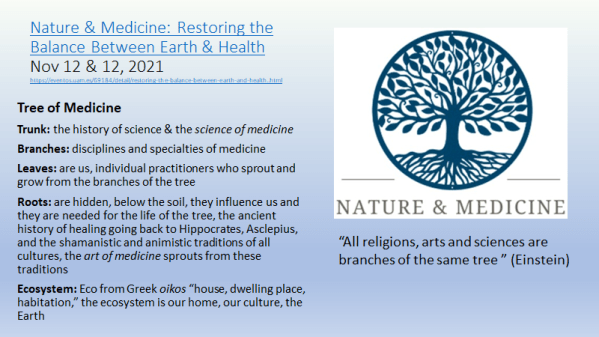
One of the projects we are doing as part of the symposium is the Tree of Medicine – a photomosaic on the Mosaically site. You can post on Instagram or Twitter with the hash tags: #NatureMed2021 and #DoctorHumanist and we’ll upload your photos into the Tree of Medicine. You can write a few words of why this photo is important to you and how it relates to Nature & Medicine. Here are a few of the photos I’ve posted.

An unexpected beautiful scene on a walk through Seattle – reminding me that Nature is here, now.
The face on this tree on San Juan Island’s Lime Kiln State Park reminds me of the sentience of nature.
Cannon Beach, Oregon, a breath-taking & invigorating view.

The idea behind this conference is to highlight the many benefits of nature & health while also expanding our idea of being a medical professional to including the health of the Earth. We are in a symbiotic relationship with Nature and cannot exist apart from Nature. In fact, we ourselves are nature, we are made up of nature, our backyards are nature. I’ll be giving a workshop on Saturday 11/13/21 with a focus on Nature is Here, Now. The care of Nature begins with the care of ourselves, the nature of our homes, the nature of our backyard, and breaks down the artificial separations of humans/nature and city/nature. I’ll be joined by a couple of great psychiatry residents I’ve been working with, Eunice Stallman, MD (who has been doing an elective on Narrative Medicine) and Lewis Kerwin, MD (who has been doing an elective on Nature, Health, and Design). We’ll be joined by my friend, photographer and author, John Riggs, author of Clear Cut – The Wages of Dominion. I wrote a review of his book on 5/8/20.

Each of us on the planning committee recorded a short video on the Tree of Medicine project and the Nature & Medicine: Restoring the Balance Between Earth & Health, here’s the link to my video.

We hope you join us!

Nature & Medicine: Restoring the Balance Between Earth & Health on November 12 & 13, 2021. Register here.

How are you doing…really?

How are you doing…really? New post on CLOSLER: Bringing Us Closer to Osler

This is a reflection piece on the challenge of answering this simple question, asked so many times a day, “How are you doing?” While this is usually asked in passing, the true answer to this question is increasingly complex for health care workers as the pandemic wears on.

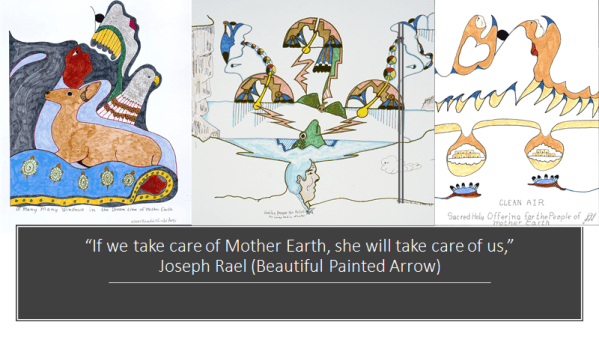
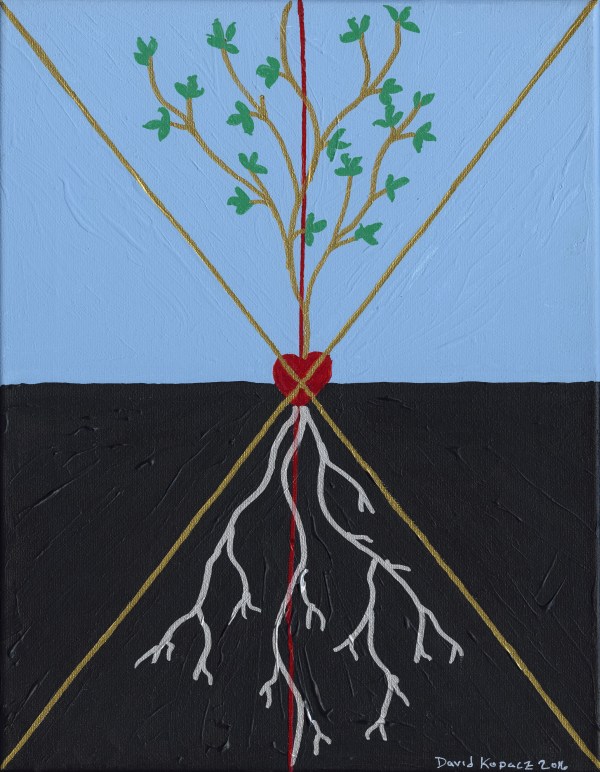
You can read the essay, here, and some past essays published on CLOSLER, here. The piece features a detail of my painting, “Planting the Seed of the Heart,” which was published in Walking the Medicine Wheel: Healing Trauma & PTSD.

Thanks again, CLOSLER, for all that you do for person-centered care & provider well-being!

Planting the Seed of the Heart, D. Kopacz (2016)

Haystack Rock & Cannon Beach, Oregon

Cannon Beach, looking South at Haystack Rock

We recently took a drive down the Oregon coast and I took a lot of photos of birds, sea, sky, and sand at Cannon Beach and Haystack Rock. A number of birds nest at Haystack Rock, including Tufted Puffins, Murres, Gulls, and Cormorants. I didn’t realize that we had puffins on the Pacific. I had tried to see them in Nova Scotia, without success. I had seen many at a relatively close distance in Iceland, but all the photos turned out slightly blurry, unfortunately. Here we got to where we could see the Tufted Puffins with our naked eye and then I zoomed in and took photos where they landed, somewhat blind. While you can definitely tell they are puffins, they are a bit blurry – so the challenge of getting a clear puffin photo continues! The more serious photographers had tripods and that would likely help. Here is a collage of a few blurry Tufted Puffin photos.

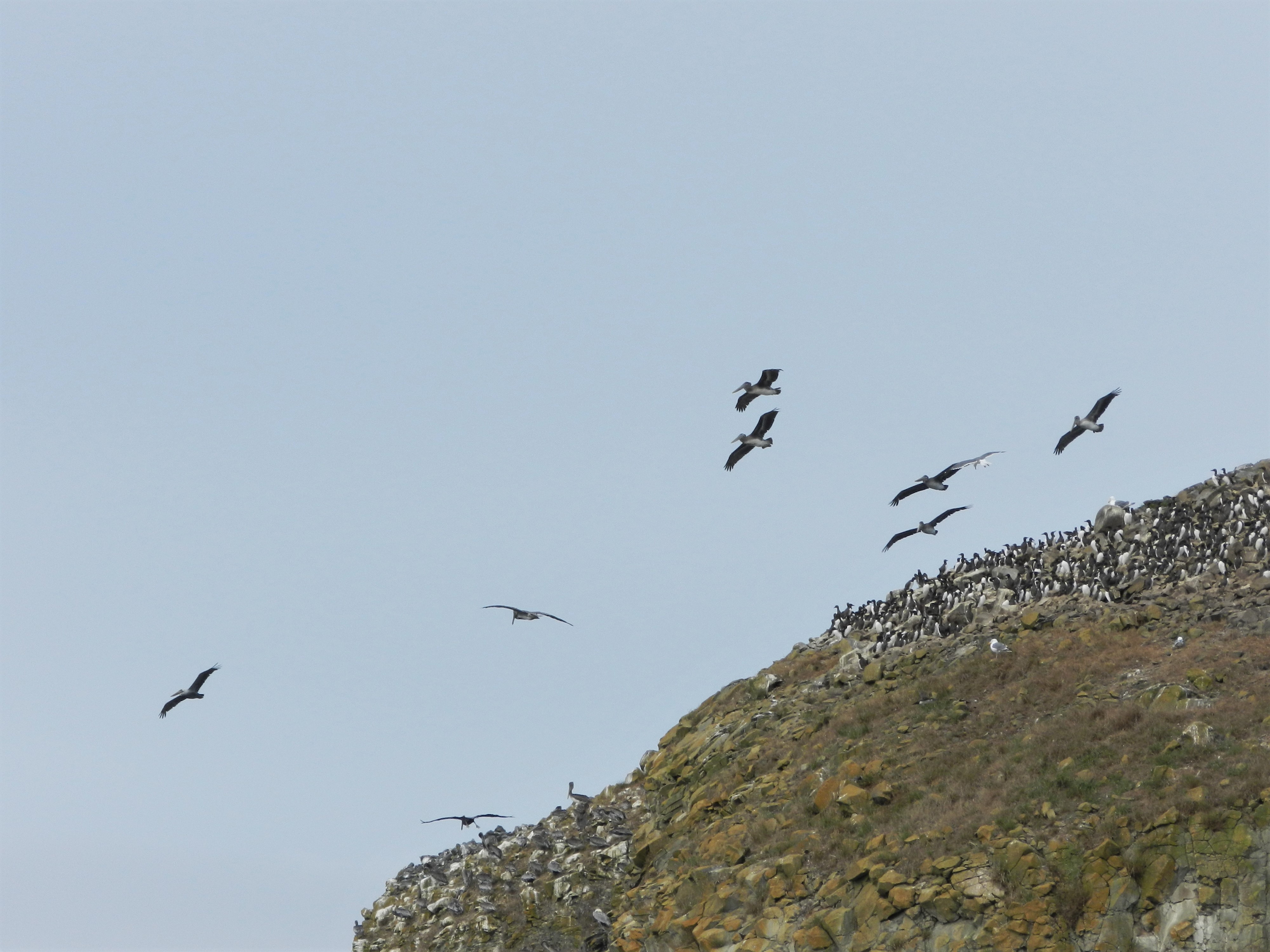
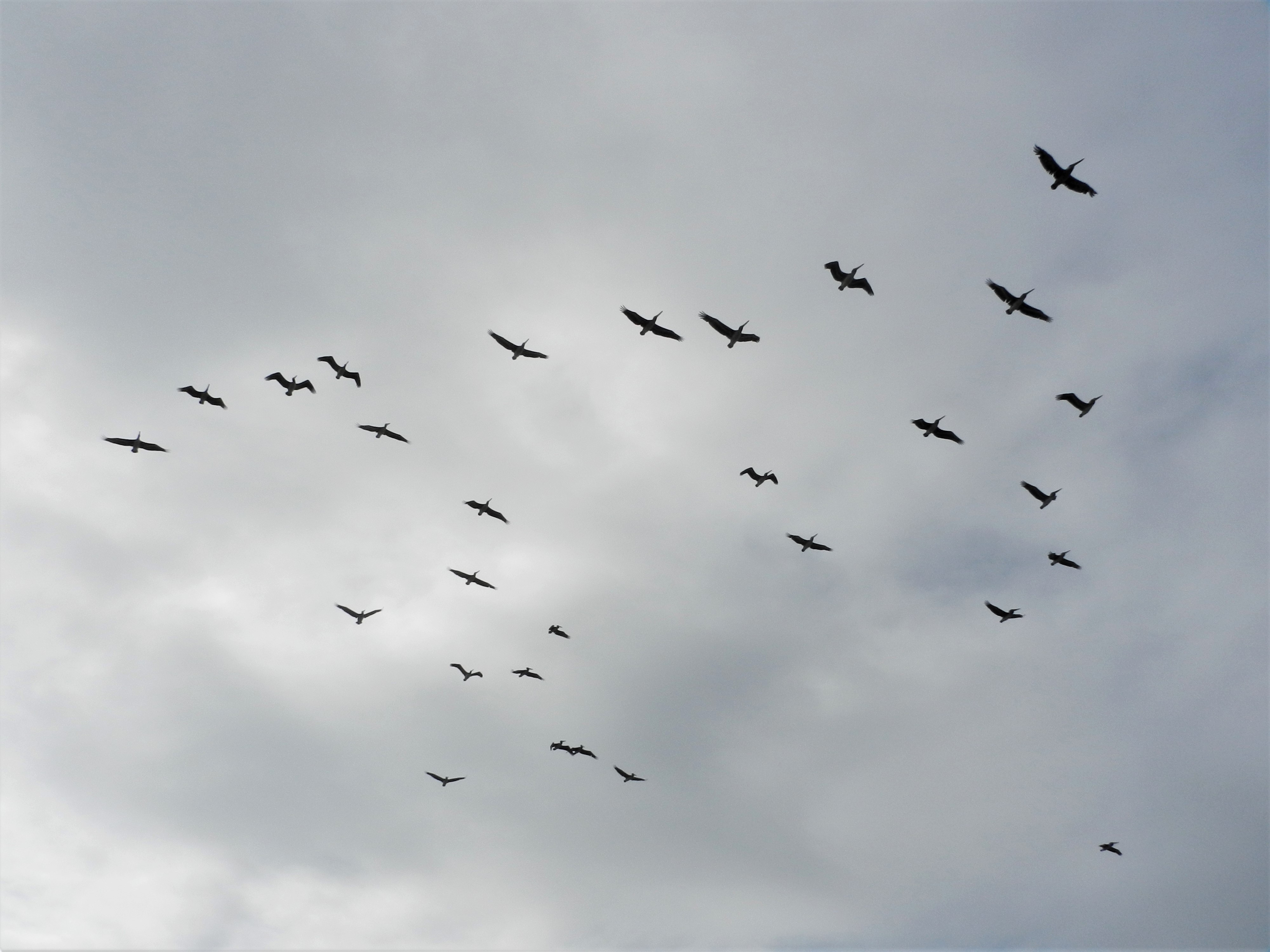
We also saw flocks of pelicans and I was able to get some better photos of these interesting birds. We also saw them diving and catching fish at times.

The beach was wide, the sand soft and good for walking barefoot. I can see why this beach is so popular and I didn’t expect the abundance of seabirds and other shore life. The light was amazing at times, one morning a continuous interplay of cloud and sunshine. I even saw a sun halo one day.

There was, of course, a lot of sealife in the tide pools, starfish and sea anemones.

All in all, a relaxing and invigorating trip! There is nothing like walking barefoot on the sand for hours each day!

Every Thought Leads to Infinity:

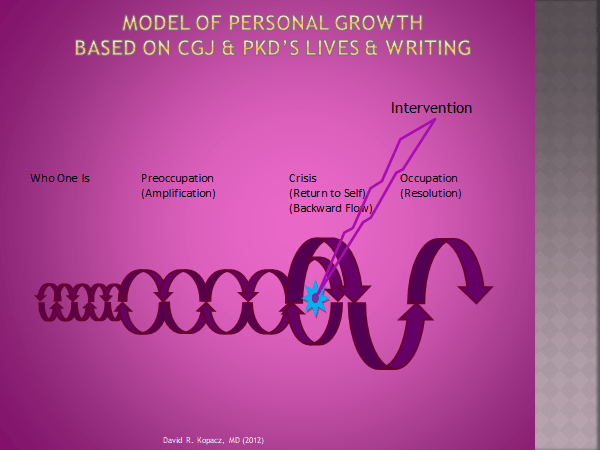
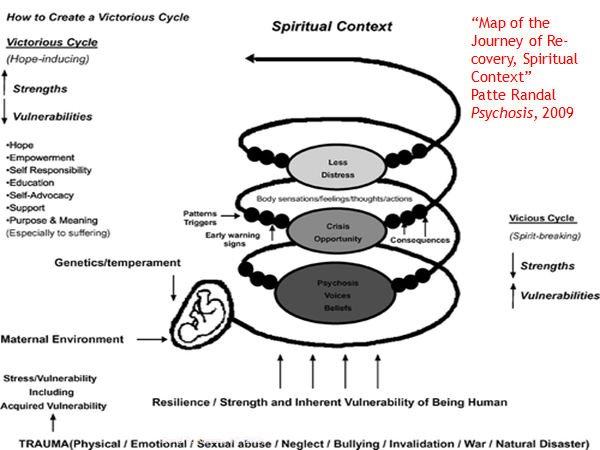
Perspectives on Personal Growth, Psychosis & Spirituality:

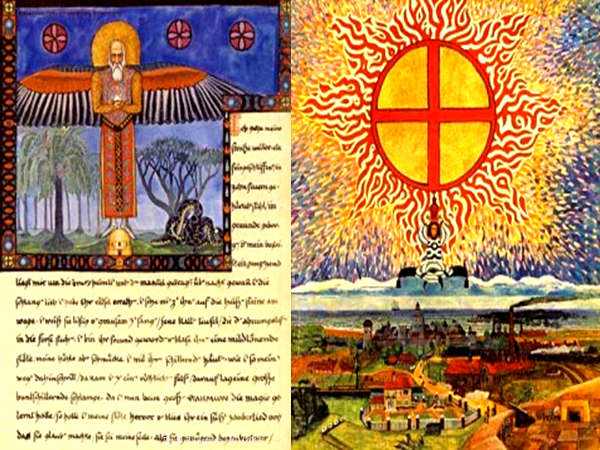
Carl G. Jung’s Red Book & Philip K. Dick’s Exegesis

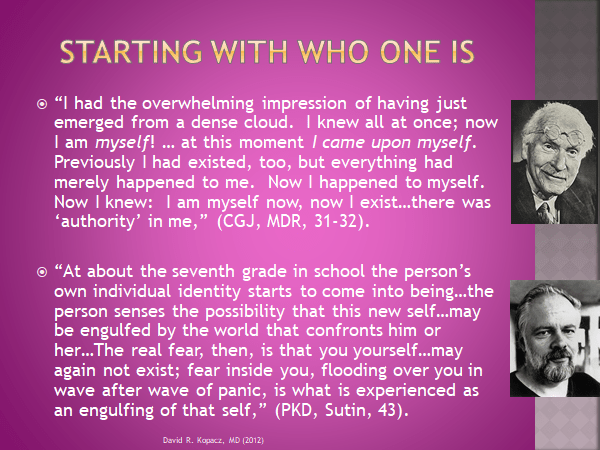
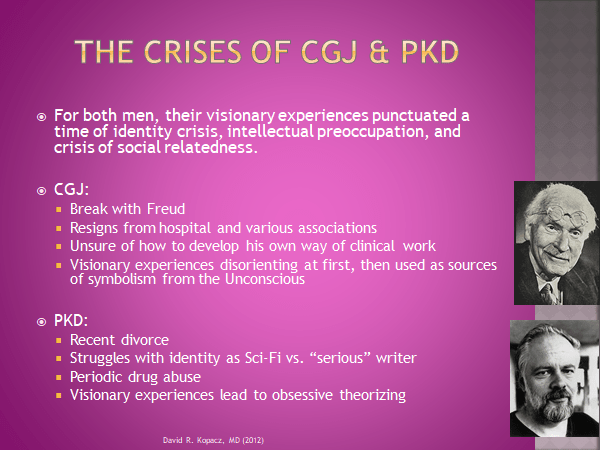
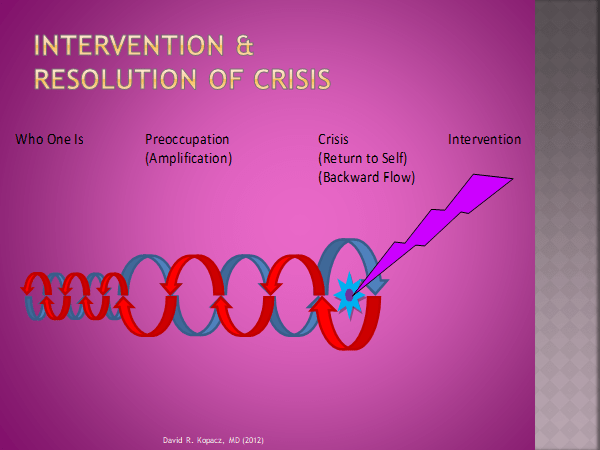
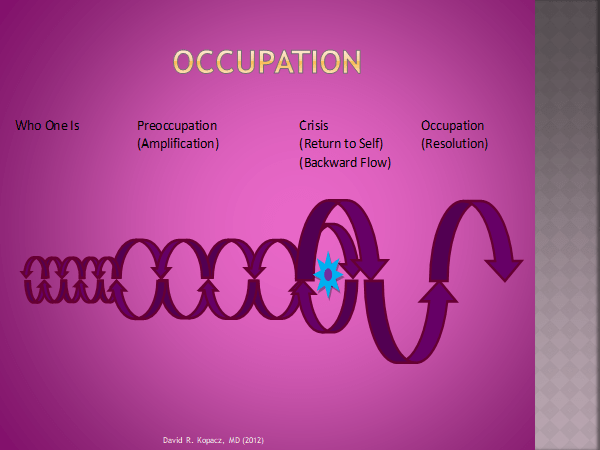
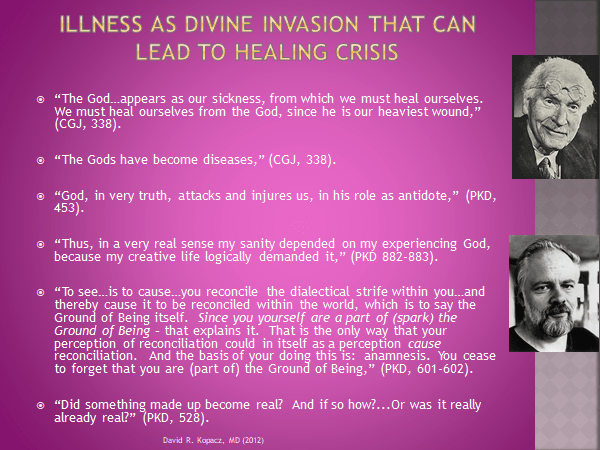
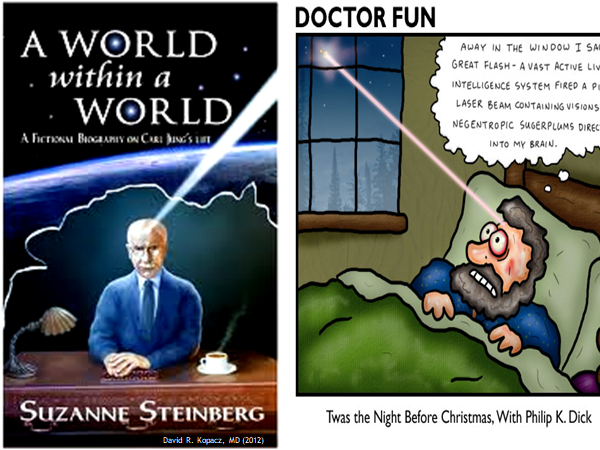
I presented this paper at the International Society for Psychological and Social Approaches to Psychosis, New Zealand/Australia annual conference, August 2012 in Auckland, New Zealand. I thought I would share the slides from the talk.

Caring for Self & Others – before, during (and after) a Pandemic

As we enter into a new phase of the pandemic, I worry about myself and my colleagues in health care – how will we come out of this? How will health care change? When will we feel like we have recovered from the constant changes and worries about our personal and collective health?

I’ve been working for a while on a workbook adaptation of Re-humanizing Medicine. I’ve been seeing if I can get this published or figure out a way to get it out to the larger world as a resource for caring for ourselves & others. I’m not sure exactly what form this will take, but in the meantime, I thought it might be worth revisiting some of the concepts and topics of Re-humanizing Medicine: A Holistic Framework for Transforming Yourself, Your Practice, and the Culture of Medicine that I published in 2014.

I’d like to give a few quotes from the book and put them out into the world as a small offering to address the suffering, burnout, compassion fatigue, soul loss, and moral injury of health care colleagues. The experience of dehumanization is all to prevalent in contemporary medicine and the need for re-humanization is just as needed as ever! Here is the introduction to the book:

Introduction

Only connect! … Live in fragments no longer.

E.M. Forster1

The great error of our day in the treatment of the human body is that physicians first separate the soul from the body.

Plato2

Dehumanization in Contemporary Medicine

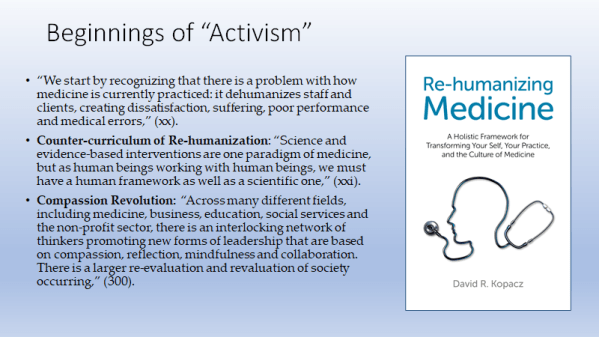
This book takes on the task of re-humanizing medicine. We start by recognizing that there is a problem with how medicine is currently practiced: it dehumanizes staff and clients, creating dissatisfaction, suffering, poor performance and medical errors. Dehumanization is an iatrogenic effect of the dominant paradigms in contemporary medicine – the economic/business model and the reductionist and materialistic approach of biomedicine. In the day-to-day practice of medicine, doctors are expected to see more patients in less time and to efficiently reduce people to symptoms, diagnostic codes, prescriptions, procedures and billing codes. This leaves little time or space for people – physician or patient.

Future doctors are attracted to medicine for idealistic and humanitarian reasons, but through training they often lose this idealism.3,4 How can we preserve idealism and humanitarianism in medicine? Practicing physicians have high rates of burnout and job dissatisfaction. How can we reinvigorate the practice of medicine and make it sustainable?

A Counter-Curriculum of Re-Humanization

In medical school, I realized that I had to engage in a parallel education process in addition to the standard scientific curriculum. We could even call this a ‘counter-curriculum’, focusing on re-humanization. At times I found teachers, mentors, and fellow students who practiced this counter-curriculum, but often I had to seek it out on my own in order to balance my education. This book is about that counter-curriculum of re-humanization. Science and evidence-based interventions are one paradigm of medicine, but as human beings working with human beings, we must have a human framework as well as a scientific one.

As a medical student, the first research project I worked on was with Deb Klamen and Linda Grossman at the University of Illinois at Chicago. Our study examined symptoms of Posttraumatic Stress Disorder (PTSD) in relation to medical training and found that 13% of trainees in the study reported sufficient symptoms (relating to their internship year) to potentially qualify for a PTSD diagnosis.5 The findings provide evidence supporting the need to change postgraduate medical education to reduce stress and to enhance the well-being of trainees. I went on to work with Linda and Deb on three other papers that examined medical students’ beliefs and their attitudes toward the controversial issues of homosexuality, abortion, and AIDS.6,7,8 These papers examined how medical student beliefs can shape attitudes that adversely impact medical care. The studies also allude to the fact that people are not purely rational beings, and beliefs, fears and stigma can undermine scientific reasoning or professional ethics. Even my student research experience was concerned with the counter-curriculum of exposing dehumanization and seeking re-humanization.

To re-humanize medicine, the people who work in medicine must be well-rounded, well-developed human beings, as well as safe and effective technicians. A great deal of time, energy, and money is spent in making sure that physicians are good technicians, but are they good human beings? Being a good technician (objective, detached, unaffected by emotion, protocol-driven) can actually interfere with being a good human being. Clinicians should not stop being technicians or scientists, but they have a responsibility to attend to their own humanity, as well as that of the client. The counter-curriculum provides a holistic framework for being a human being, for working with human beings, and for creating systems that deliver care by human beings to human beings.

A Holistic Framework for Medicine

A holistic framework is founded on multiple interacting and mutually influencing sub-systems. Scientific medicine and the objective, observable body make up just one dimension of human health. Sometimes the physical dimension is primary, for instance in physical trauma and surgery. Sometimes other human dimensions are more important. Emotion, mind, love, self-expression, intuition, spirituality, context and time all play a role in health and illness.

A holistic framework is a paradigm for understanding and interacting with human beings. It is a human systems approach and a way of being in the world. Holistic medicine is a philosophy, or a paradigm for understanding what it is to be human, to suffer, to be ill, to be healthy; what it is to change, grow and live. It helps us understand how disconnection can lead to suffering and how connection can lead to healing. Holistic medicine is not defined by using an herb instead of a medication, or by any specific technique or intervention. Being a good technician (whether biomedical or ‘natural’) is part of being a good physician, but being a good physician is more than just being a good technician.

It is hard work to maintain a complex identity that includes being a technician and a human being, but that is what being a medical professional involves: balancing different roles for the purpose of alleviating suffering and treating disease. Re-humanization reconnects the art and science of medicine, the heart and the mind. A holistic framework encourages integration.

When you start to connect in a different way, you change the health care delivery system in which you work. What starts as personal dissatisfaction can become personal transformation, which changes systems. Institutions will always drift toward promoting their own interests over human interests. It is the responsibility of health professionals to ensure that they stay human, help their clients stay human, and ensure that health care delivery systems promote humanization rather than dehumanization.

Intended Audience and Purpose of the Book

I wrote this book for people who are looking for different ways of thinking about and practicing medicine. Dehumanization in medicine occurs throughout the world, particularly as business models replace humanitarian models of care. Many of the examples in the book are specific to the United States or New Zealand, drawing on my experience of practicing medicine in various settings in both countries; but whether dehumanization results from the profit motive of an insurance company (as in the US) or the bureaucratic processes of a national health system (as in New Zealand), the effect is the same. Re-humanizing medicine is a universal need.

This book is written specifically for clinicians, doctors, and physicians,9 who face daily humanitarian10 challenges in their roles, but is of interest to any health care professional or administrator. There are many fields where the application of a trained technique interferes with human connection, so teachers, trainers, educators and business people will find it relevant too. Of course, so will anyone interested in being a whole human being!

Since holistic medicine is a philosophy and a mode of being, I do not list diagnoses and alternative treatments. There are already a number of excellent books that review various complementary, alternative, and integrative medical techniques. The foundation of a holistic medical practice is you, not the services and techniques that you offer. Therefore, this is a book for people who are willing to change at a personal level in order to be better doctors and clinicians.

Contemporary medicine and holistic medicine are not inherently in conflict. My hope is that by defining holistic medicine as a paradigm, rather than as a specific technique, its benefits can be integrated with those of contemporary medicine. My primary argument is that the human elements of medicine need to be valued so that technical interventions occur within a human context.

Holistic Medicine, Re-humanization and the Quality Revolution in Health Care – A Convergence?

There is a worldwide trend in health care that, interestingly, overlaps with the philosophy of holistic medicine. This trend is a focus on quality, efficacy and safety, stimulated by the continual increase in the cost of health care. Experts are calling for a ‘revolution in health care delivery,’11 and ‘system-wide change.’12

Many of the suggestions involve cost-cutting and standardization of treatment. The ‘Quality Revolution’ also raises issues related to re-humanization, such as putting the patient at the center of treatment, making decisions collaboratively, and establishing a ‘continuous healing relationship.’13 These are the strengths of a holistic framework – not only is it patient-centered, but it includes the concept of healing in addition to treatment, and it often encourages low-cost, low-risk lifestyle changes and preventative medicine. It may be that it is time for a Compassion Revolution and a Quality Revolution to join forces in order to make medicine more affordable, safe and effective, as well as more compassionate, caring and human.

Structure of the Book

The book is divided into five major parts. The first discusses the underlying paradigms of the biomedical and economic models of contemporary medicine and how these models have side effects of dehumanization. This critique does not mean that there is no benefit in the contemporary paradigm; rather it is an examination of the strengths and weaknesses of the underlying paradigms of the current system. The second part describes the paradigm of holistic medicine as a way of understanding the whole person. The third part is a ‘self-help’ section that outlines how you, as a clinician, can develop a more holistic and deeper sense of your own humanity. The fourth part is a ‘how-to’ component that describes how to create a holistic practice in any setting and how to re-humanize your practice. The last part describes the benefits of a holistic paradigm for re-humanizing the culture of medicine.

Video available from Toward a New Way of Being with Plants conference!

My sister, Karen, and I presented at last month’s Toward a New Way of Being with Plants conference.

The video of our presentation is available here.

Our overall presentation was called, “Remembering Our Living Relationship with Plants,” my talk was entitled “Toward an Ancient Way of Being with Plants,” and we also featured video that Karen created with Joseph Rael, “Becoming Medicine Initiation Ceremony,” and Karen’s talk was “Shifting Into a Relational Mindset With Nature.”

The conference was great! Very interesting, bringing together scientists, artists, poets, writers, and naturalists from around the world. There is a YouTube channel for the conference where you can watch the presentations.

Thanks to all the organizers and people who brought this great event together! It was very enjoyable, inspirational, and educational.