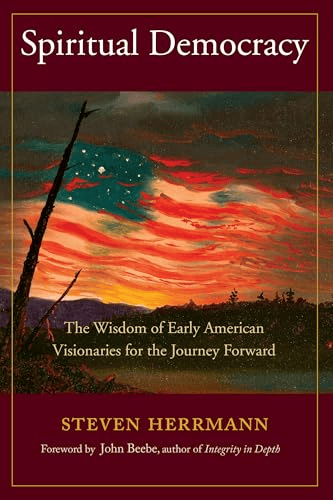
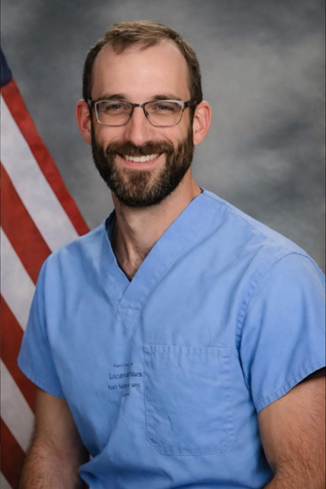
Steven Herrmann is a Marriage & Family Therapist, Jungian Analyst, and author of ten books with a central theme of Spiritual Democracy. His book, Spiritual Democracy: The Wisdom of Early American Visionaries (2014), was the inspiration for David Kopacz & Joseph Rael’s chapter on Spiritual Democracy in Becoming Medicine: Pathways of Initiation into a Living Spirituality. Steven’s books often have Carl G Jung as a counterpoint to an indepth study of William James, Vivekananda, Meister Eckhart, and Emily Dickinson.
In this twentieth episode of the Becoming A True Human podcast, Chris and Dave talk with Steven around the concept of Spiritual Democracy as a nondual or trans-dual inner experience that leads to the outer manifestation of political democracy. Steven traces the concept of Spiritual Democracy back to Walt Whitman’s essay Democratic Vistas and his description of Religious Democracy and the three levels of democracy: economic, political, and spiritual. Broadening the concept to Spiritual Democracy, we also speak of Jeremy David Engel’s concept of Mindful Democracy, and the idea of Inner Democracy and Outer Democracy.
We can think of Spiritual Democracy as a Medicine of equality, respect, and care for all people and all creatures of the Earth. Steven Herrmann’s books and work can be considered a kind of Yoga of Spiritual Democracy and even an Upanishad of Spiritual Democracy. Steven speaks of Spiritual Democracy as an archetype that can manifest in different ways in different people and at different times. From a Jungian perspective, we could view our current turbulent times as living out the shadow of democracy, particularly American democracy. If we do not integrate our personal and collective shadows, we live them out, projected into the physical world. The hope for the future lies in the work of Spiritual Democracy that each of us can practice – in our hearts, in our minds, and in our souls.
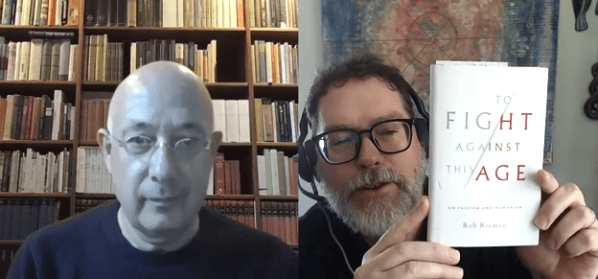
This was meant to be a Becoming a True Human podcast episode – but technology failed us and humanity prevailed. Jonathan McFarland was going to join me as a co-host, but he was exhausted from traveling from his home in Spain to England to help care for his brother whose dementia is progressing.
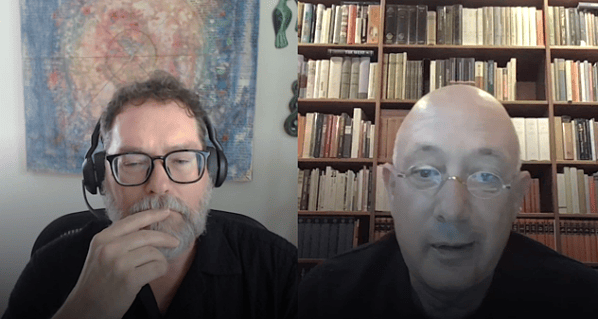
Rob and I made several attempts to record the session, but technology glitched every time, in multiple ways. In the end, this became an old school interview where I tried to scribble down Rob’s words as fast as he said them (which is a lot faster than you might expect from reading his writing, which is measured and rich with interconnections). In the end, I think that this interview is the interview that needed to happen – which is good, as it happened this way…
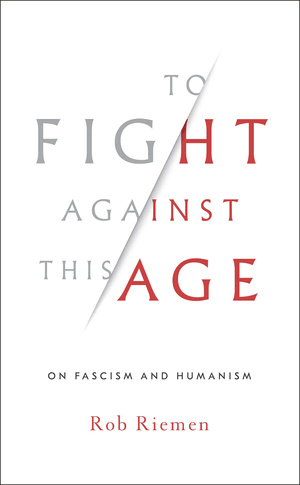
David R. Kopacz (DRK): Hi, I’m David Kopacz, one of the hosts of the Becoming a True Human podcast. With us today is Rob Riemen – Storyteller, a Gatherer of People, Scholar, Reader, Founder of Nexus Institute, Author of Nobility of Spirit: A Forgotten Ideal and To Fight Against This Age: On Fascism and Humanism, and the editor of the Cultura Animi Nexus book series.
I first came across Rob’s name in 2019 when I was at Taylor’s Books, in Charleston, West Virginia – teaching Whole Health to Veterans Affairs staff – when the title and style of his book, To Fight Against This Age: On Fascism and Humanism, caught my eye. The first essay in the book was based on your 2010 essay published in the Netherlands entitled “The Eternal Return of Fascism.”
I bought To Fight Against This Age and read it on the flight back home – the first of a number of times I have read this book.
Your discussion of the screen word of “populism” for what should rightly be called fascism really spoke to me. In a way, you were diagnosing the social ills of our age and prescribing the remedy of humanism for the plague of fascism sweeping the globe. Your writing, along with that of Rebecca Solnit, Bandy Lee, and Robert Jay Lifton, helped encourage me to start my blog series, “Words Create Worlds,” where at first cautiously, but then more openly began to use the word fascism to describe what is going on currently in the United States. You draw frequently on the work and life of Thomas Mann and also Albert Camus, and his book, The Plague, in which Dr. Rieux works tirelessly to fight against an infectious, unnamed plague – which can be read as an allegory of the fight against fascism. I wrote about “Doctors Against Fascism” and “The Public Health Crisis of Fascism” in the Words Create Worlds essay series.
So, I’d like to thank you for your work and to welcome you to the Becoming a True Human podcast.
Rob Riemen (RR):
Okay, so well, here’s the issue, David. I wrote this essay indeed in 2010 because what I saw was happening here in the Netherlands. And I realized that if the return of fascism can happen in a very small, prosperous country as the Netherlands, that can happen unfortunately everywhere. Why was I so upset by the ongoing use of the word populism by the pundits and the academics and the politicians? Because words matter. Words matter to be able to understand what’s the case. And the whole argument that fascism is such a misused word, is irrelevant if you realize that there is one word which is even more misused, which is the word democracy. Does that mean that we stop using the term ‘democracy’? No of course not. Though it is high time that we start to rediscover what the original meaning of ‘democracy’ is – and then realize that there’s no democracy more today in the USA. Anyway, back to ‘fascism’. In my book I explain, quite clearly I think, that ‘fascism’ is a political phenomenon one recognizes by it’s characteristics. And as the saying goes: ‘If it walks like a duck and it quacks like a duck – the probably is a duck’. So, let’s use the term fascism to describe what’s happening in the West because this is what it is.
What is not in the book, because I came across it much later, is that in on February 18th, 1933, Winston Churchill – the Winston Churchill – gave a lecture in London, you can find it on YouTube, where he says Mussolini is the hero of our time, he’s our genius, and fascism is the way out of all the troubles we are facing.
This was Winston Churchill in 1933, right? I mean Hitler was already in power. If somebody like Churchill can say these things, it says something about the temptation of fascism, it says something about you know the way out for people in this complicated in this complicated world. but we are supposed to know better, right? I mean we know now what fascism is all about. And I think the big mistake which was made by my friends in the academic world is that they stick to a certain scientific paradigm which does not work for phenomena like fascism or socialism or left or right or whatever. The scientific paradigm is perfect for modern nature, but the scientific paradigm does not work for us human beings in the society in which we are living.
Anyway, this was 2010. We are now in 2026. When the book was published in the United States in 2018, I got a lot of criticism from the Americans. You cannot say this. The New York Times was terrible at that time. And they told me you cannot say that Trump is a fascist because, one, he’s not a Hitler. I said, well, you know, I didn’t say he’s a Hitler. I said he’s a fascist, which is something different. Yes, but for us Americans, a fascist is a Hitler because that’s what we see in the movies. I said, “Well, what about reading books?” The second argument was, yes, but he’s not violent. And then I told him that look, if it’s in the language, it will come out. Always. Which was also an argument in my book. I truly wished that I would have been the greatest fool. Unfortunately, I was right, and all my critics were wrong. And the reason why I became really upset and also angry – look, those people, those pundits, those academics, those politicians, they are supposed to have a commitment to the truth and it is their responsibility to tell the truth.
What did the popular academics have to say? Well, they debated – what kind of populism is it? Is it extreme populism? Is it radical populism? Is it blah blah blah populism? That’s only for, you know, the new PhD they want to write to say, “I invented this term.” It’s all bullshit. So anyway, they were all more interested in staying in line, secure their own position instead of speaking truth to power.
DRK:
Yes. Which, you know, again echoes what happened in in Germany in the thirties, and in Italy too. You write about the loyalty oath in Italy – that Leone Ginzburg was one of the few academics who didn’t sign Mussolini’s loyalty oath – and I was worried that there was going to be a loyalty oath where I was working. I was at the VA, so federal federally employed psychiatrist working with veterans, and you know, when Elon Musk came in and started the whole DOGE, the Department of Governmental Efficiency, they started to just create chaos within all the federal organizations and they started having us report on ourselves. “What did you do this week?” “What did you do this week?” And then they said, “It’s optional if you’ll report on yourself, but we can’t tell you what the consequences will be if you don’t report on yourself.” Then they said we’re not going to prompt you to report on yourself each week, but you’re still expected to report on yourself every week.
Then they banned a bunch of words, but they wouldn’t tell us exactly what the words were. But there were a hundred words in listed in The New York Times, things like “women” and “indigenous,” and “Native American,” “activism,” and “climate science,” and “social justice,” and “trauma.” You know, I’m a trauma psychiatrist working with veterans with posttraumatic stress disorder, and I can’t use the word “trauma.” I was sitting in on meetings where we’re searching for words that we think we need to eliminate, we’re removing studies, like “cardiovascular risk in men versus women” for whatever. And we were told, well, we’ve got to take that out because the word “women” is in the study. The study isn’t controversial at all, it is not about feminism or trans or whatever. It’s just mentioning the word “women.” And, so, I felt that in a very short time we were in Orwell’s 1984 and I was Winston Smith, working at the Ministry of Truth and deciding which words we could use and which words we couldn’t. So, I left the VA.
But you know, what you helped me with earlier on, so going back to 2019, I started a column called Words Create Worlds. I was inspired by a Rabbi Heschel quote – it’s like what you said earlier – “if it’s in the language, it will come out.”
“Words, he often wrote, are themselves sacred, God’s tool for creating the universe, and our tools for bringing holiness—or evil—into the world. He used to remind us that the Holocaust did not begin with the building of crematoria, and Hitler did not come to power with tanks and guns; it all began with uttering evil words, with defamation, with language and propaganda. Words create worlds, he used to tell me when I was a child. They must be used very carefully. Some words, once having been uttered, gain eternity and can never be withdrawn. The Book of Proverbs reminds us, he wrote, that death and life are in the power of the tongue.” (from Susannah Heschel’s introduction to The Moral Grandeur and Spiritual Audacity: Essays).
I saw that same thing with Donald Trump, that the words he was using were violent. They were xenophobic, they were words that “othered” people, and they created the distance and separation that can lead to violence. Apologists would be given time in the media to say, “Those are just words, that is just how he talks. He doesn’t mean those things.” And, unfortunately, we’ve seen come to pass that everything that he said – well, maybe not everything, he hasn’t taken over Greenland or Canada yet – but so much of what he said he would do, he has done.
So let me ask you this. As a psychiatrist and a doctor, I diagnose things and I say what the prognosis is and then I say what the treatment is. And reading your book, I saw the diagnosis of fascism and the treatment of humanism. But what would you say our prognosis is right now? You’ve been working, you’ve been, a Cassandra, a man crying out in the wilderness.
RR:
Well, we just finished the preparations for the next issue of my journal Nexus, which is a journal I started in 1991 with an old Jewish publisher, Johan Polak, who by miracles survived World War Two, and then after the war decided that everything he had, he had you know he read a relatively sum of money that he wanted to devote all his resources, all his energy to protect everything that Hitler wanted to destroy. So, he started the publishing house, Athenaeum, he started a bookshop. He was befriended with Max Brod, Elias Canetti, an old school publisher. Anyway, so now 35 years later, Johan never knew the Nexus institute because he died very unexpectedly by a heart attack after the first issue came out, in 1992.
But anyway, this issue is finally here, it will be presented in early October. And I gave it the titled A New Song of the Earth from the Wasteland. And it’s a beautiful book with 27 contributions from all over the world, including Wole Soyinka and many others. And I thought, well, it is exactly this – this is what we are waiting for. We are waiting for a New Song of the Earth from the Wasteland.
DRK:
Like Brecht’s “singing about the dark times.”
RR:
I guess that everybody now has a sense of how bad things are. How bad things are. And the irony of things. That you have a Jewish guy in the White House, Stephen Miller, who’s copy-pasting Eichmann all the time. How’s that possible? But it is possible.
You know, the party once founded by Abraham Lincoln is to put it mildly completely dysfunctional. And the Democrats are even more unpopular than the GOP, which is also an achievement, but that’s America. You know, if you see things happening over here, the picture is not much better. If Le Pen wins the election or Mélanchon wins the elections next year in May, the EU is over. With the new fascist party in Germany. So, we are in a very, very difficult situation and so my prognosis is pretty bleak to give your answer. I don’t see any serious developments to take this out of this mess unless we go back to the foundation.
A book you may know, that saved my life when I was at high school, Robert Pirsig’s Zen and the Art of Motorcycle Maintenance. It’s a brilliant book. As a consolation to everybody who’s writing books who have trouble publishing, ninety-nine publishers turned it down. But this guy, the young editor who obtained the publishing rights was very smart, he sent it to the new a literary critic at the New Yorker at that time, called George Steiner, the famous cultural philosopher so often accused about being ‘elitist’ and ‘a conservative” And George Steiner saw the book, and he told his editor-in-chief look, I will review a book which is not there yet, but it should be there, so I’ll write about it. George Steiner made the publication of this book possible in 1974. It became a cult book and eventually : 25 million copies sold. It’s the story about, a man with an IQ of 174, and he got this treatment by your predecessors (psychiatrists), like in One Flew Over the Cuckoo’s Nest. But it’s the most brilliant book I’ve ever read about the quest for quality. And what he refers to is the following because that’s the point I want to make.
The current paradigm we have demands that everything fits into a rationalistic technocratic paradigm. But it’s the rationalistic technocratic paradigm that does not recognize moral or spiritual values. It doesn’t because they are beyond that paradigm.
So quality is replaced by quantity.
Now, what is the best in quantity? It’s the bigger number. And the biggest number. So, if you understand these things, you understand first of all why everything has to be useful, because usefulness you can quantify. Then you also start to understand why the economists are the high priest of our society, because they are in charge of the numbers.
You also start to understand why everything that is not useful, which is the whole world of culture and the whole world of spirituality, doesn’t count anymore. It also explains why on social media it’s all about how many followers you have and we’re now having this new phenomenon of influencers with the most silly things, but if you have one million followers, you know you’re an influencer.
For me, it says it all because within this paradigm in which everything has to be useful, in which everything is reduced to an economic value, in which the whole education is reduced to what’s good for the economy or what’s good for the state, we have lost the quality of life. We have lost a sense of what life is all about, and we have lost the meaning of words because numbers are more important than words.
And then this – Nietzsche was for many reasons brilliant, but one of the things he understood better than anybody else is that there was one thing nobody can deal with. And you as a psychiatrist will understand it better than anybody else, which is people cannot deal with emptiness. It’s impossible. When you wake up every morning, you look into the mirror and you and you think my life is fucking empty, brother. There is only one way out. Only one way out. Well, no, there are two ways out.
DRK:
“Man would rather will nothingness than not will.”
RR:
The second way out, okay, there are three ways out.
One is you jump from the bridge.
Second is, you escape.
Third is you go to you, a psychiatrist, and they hope that you can help them! But it is impossible to deal with emptiness. Now, we have created a world which is completely empty because people cannot deal with this.
Here is where the fascist world comes in.
Because it’s the biggest mistake from the left or the liberals or the Democrats or whatever you want to call them. People cannot live by bread alone. The biggest issue is no longer or not solely an economic issue. The biggest issue is a cultural issue. And the left stupidly gave everything away to the right, and even worse than the right. Right? Because the right still wants to speak about God and religion and things of quality. So, it’s this phenomenon of how to turn this around before we are facing even more disaster. I simply do not know. You do your thing, I do my thing, but we are like little drops in a desert. because the general response, you will hear, I will hear is that many people realize – this is not going well.
But they will always tell you when they are working at the university or somewhere else, well, look, I have to pay my mortgage, you know, I’m dealing with two or three kids. What is it I can do? I cannot afford to lose my job. And it goes on to the highest levels. So, now, look, we do what we can do.
My mother, who was a prisoner of war in the Japanese internment camp during the war, always taught us, “there is no there is no energy in pessimism.” Right? And we cannot do our work when we are pessimists. Does that mean we are optimists? No, we are not optimist. I’m not an optimist. I want to be a realist. But it’s a fight and we have to continue this fight and one of the interesting things in Zen and the Art of Motorcycle Maintenance was to blow up an educational system. To blow up this idea that you are there to get grades. That’s why he decided, I won’t give out any grades. But then what good is the university if you don’t get the quantity of being graded? Let them do something else with their life. Go to a bookshop. Don’t go to Amazon, go to a bookshop and educate yourself. Spinoza did it that way, Nietzsche did it that way, Schopenhauer did it that way.
One of my statements when I give lectures is that the elite will not solve the crisis because they are the crisis. They are the incarnation of the crisis. So, they don’t have any incentive to change anything.
I say almost as a joke, but it’s not really a joke, if people would be a little bit less ignorant only a little bit, would any of those people still be in office? None of them. None of them. Well, maybe two or three.
And what kind of products will disappear if people would be a little bit more sensitive about quality? Well, a lot will disappear. So it seems as if it is organized to keep people as ignorant as they are. That’s what they’re doing. And it’s on and this way, and this is why I’m very angry about The New York Times. To Fight Against This Age came out in 2018, The New York Times and asked me if I could write an op ed, and in the op ed I wrote that with Trump, you have the classic contemporary fascist – and they refuse to publish it. Because the number one argument was that it goes against our business model. For The New York Times, the business model comes always first, right? So again, the people are focused on continuing the financial corruption. Financial corruption is a terrible thing, but much worse is the intellectual and moral corruption, and the intellectual and moral corruption comes from our world.
DRK:
It’s like what happened to Dr. Bandy Lee when she wrote her book about The Dangerous Case of Donald Trump. The American Psychiatric Association stepped in and tried to silence her, and The New York Times wouldn’t publish her, then no paper would publish her, and she lost her professorship at Yale.
RR:
Yes, that is what is going wrong so deeply with the so-called universities. Our response has to start in the intellectual world.
DRK:
Well, you know, Rob, I’m on the steering committee for the Doctor as a Humanist, and Jonathan McFarland was going to join us today, but he’s got family issues that he’s been dealing with, his brother. Our idea, the reason we think that there needs to be humanism in medicine or what we could call the medical humanities, is because, in our focus on technology (the quantity as you say), we often lose the quality of the human being.
This happens both with the human being of the doctors, who have up to 50% rates of burnout, as do many healthcare professionals, but even worse, we lose the humanity of the patient we’re working with. In technological medicine we run people through protocols and evidence-based production lines.
So, with the medical humanities, I think of a distinction between the technician and the healer. Most of medical education is about becoming a technician. There is very little about becoming a healer. This would fit with your quantity versus quality schema – what can you put into numbers versus what is unquantifiable?
Let’s go back to the basics in our discussion. How would you define humanism?
RR:
Well, we’re dealing with the fundamental questions. The fundamental question everybody is asking, the question at the heart, is the question “Who am I?” Who am I? It’s a question everybody asks and must ask at a certain moment. Now again, if within this paradigm I just described – that’s a rationalistic technocratic paradigm.
Here is where the counter-revolution comes in, right? I mean, in the ‘60s and in the ‘70s, when they started to realize that people are being reduced to numbers, that people are being reduced to consumers, who benefited from this approach?
The financial world and everything related to it. This was so beautiful in One Flew Over the Cuckoo’s Nest, when we have this reductionism taking place. and when the scientific paradigm becomes the main paradigm to look at a certain person – you start to look for this illness, we give it this name, this definition, etc. etc. But we’re forgetting the person behind it.
DRK:
That’s what we hope to do in the medical humanities – to remember the human person of the patient and the human person of the doctor.
My education included a tradition that was socially engaged, socially aware psychiatry. I studied trauma, genocide, the holocaust. Eli Wiesel came to speak at my university and we read Night with the psychiatric faculty and discussed it before his talk. Also, for instance, the work of Robert Jay Lifton, who wrote about the “witnessing professional,” the idea that as professionals we had a responsibility that went beyond the four walls of the consulting room, beyond a narrow role of being a technician, to include being a witness, bearing witness to the traumatic experiences our patients had been through.
And this I struggle with, and it is what your book, To Fight Against This Age helped me with. What are we to do? What are educated professionals to do in the face of the new epidemic of fascism? How do we fight against dehumanization and how do we promote re-humanization – for ourselves, our patients, and society?
RR:
In the 70s, in your profession there was a very famous book, maybe, I guess it was translated into English as Not Made of Wood: A Psychiatrist Discovers His Own Profession. Well, I mean, we are not from wood. You know, we are people with emotions, with feelings, with things we find very difficult to express. We are full of frustrations, we are afraid, we are afraid of ourselves. Already the Greek Socrates and all the others knew – it’s about the human soul. It’s about the human soul. And how to reach the human soul, how to be able to give expression to the human soul. Well, here’s where the muses come in, right? And this is why we need the world of literature, this is why we need poetry and music, so that you suddenly can see there is a difference between the muses and amusement. The muses will tell you something about yourself. Whereas, amusement is taking away from yourself, right?
You’re with Tom Cruise or Batman or whatever. But what the muses will tell you is to develop the imagination. But again, we have taken away the muses, we have taken away philosophy, we have taken away the concept of the soul. All these things, so the only thing we have to do is to go back to the basics. That’s all and it’s not that difficult. Is there a big business model behind it? Probably not. But it will make the whole world much more humane.
And again, one of the most frightening phenomena of our time. We see it in Israel and Gaza. We see it on the West Bank. We see it in the Ukraine. We see it with this whole AI thing, the dehumanization. The dehumanization. We’re all educated, you quoted Heschel, well, we all were all educated by Eli Wiesel and Primo Levy and we read Anne Frank. It was the main thing in our education: never again. Never again, this dehumanization because you’re a different race or a different religion or whatever. It’s the one thing that should never ever happen again. This craziness of übermenschen und untermenschen. But now in the third decade of the 21st century – the dehumanization. For me, you know, I’m 64. I grew up with the America – well in awe of Franklin Roosevelt, of Truman, of John F. Kennedy and even Reagan, we thought he was a little bit strange figure, but you know, but America was always the big brother we could count on. I mean we know the whole story, America wasn’t perfect, but a source of liberty, right? That’s no longer the case.
DRK:
Sometimes I think that we have become the barbarians we were warning others about. The Jungian shadow – what we hate in others is what we do not acknowledge ourselves. Or the old Pogo cartoon – “We have met the enemy and he is us.”
RR:
But it is not just the United States. Look what’s happening in Israel. I mean, can you imagine what’s happening over there? And, look in Western Europe – how are we dealing with refugees? How are dealing with immigration? We created the Mediterranean as a huge graveyard. And it’s politics, right? Just to make sure that those people cannot come here. So, again, this dehumanization. There are no easy solutions for things. The Palestine crisis is a big thing. How to deal with immigration? A big thing. I recognize that, right? I’m not stupid. But there is no excuse for dehumanization. That’s what’s so interesting about your profession. Again, I’m not a psychiatrist. I’m only fascinated by it. When I was much younger, I read the books of R.D. Laing – anti-psychiatry, right? A kind of movement against everything being reduced to science.
DRK:
That is what I was writing about in my first book, Re-humanizing Medicine – how to recognize the inherent reductionism of the technician compared to the undeveloped compassion of the healer.
RR:
Yes, this goes way back, already in the eighteenth century, Giambattista Vico explained that the paradigm of Descartes is a wonderful paradigm, but it doesn’t work for us human beings and it doesn’t work for society. But it’s a terrific paradigm to make a lot of money with it. You see, that’s the whole issue. And now, I mean, God knows what will happen with this artificial intelligence stuff. I always use now, in talks about this issue, I say, okay, let’s talk about artificial intelligence. What do you think about an artificial friend? Or what do you think about artificial love? Or what about artificial justice? Well, you realize it’s fake. Okay, so artificial intelligence is fake. It’s not intelligent at all. It’s a huge machinery which can make calculations a trillion times faster than we can. But a whole lot of nonsense is coming out of it. Those talk. The chatbots are completely ridiculous. But again, how to defend yourself against it? Well, the only defense is the same defense as we have with fake news. You have to have a critical mind. I mean, and so, I mean, I don’t know if I have to laugh or cry or what is acceptable, yes or no.
But when people that that that now many people already died because they start a relationship with the chatbot. Well, when you start a relationship with your chatbot, you must be very lonely and probably never read a book. Okay? So then you start to talk to the machine. And so you talk to the machine is my life is miserable, you know, I’m lonely, I hate my job, I hate everything. What shall I do? And then the chatbot said, “Well, you know, you better make an end of your life.”
And people make an end of their life. Now, to tell your audience how funny the Netherlands is. Not that long ago it was reported that a family of somebody who committed suicide because of the chatbot now wants to sue the chatbot and we have the discussion if we can put the chatbot in jail. That would be funny, right? We have a machine in jail.
It’s, again, unfortunate that the book is only out in Italian and in French. The Americans don’t want to publish my books anymore. But the longest chapter is about stupidity and lies. And this stupidity thing is a really frightening phenomenon. It’s a really frightening phenomenon. Because again the if we can stop the stupidity, we can stop a lot of things.
DRK:
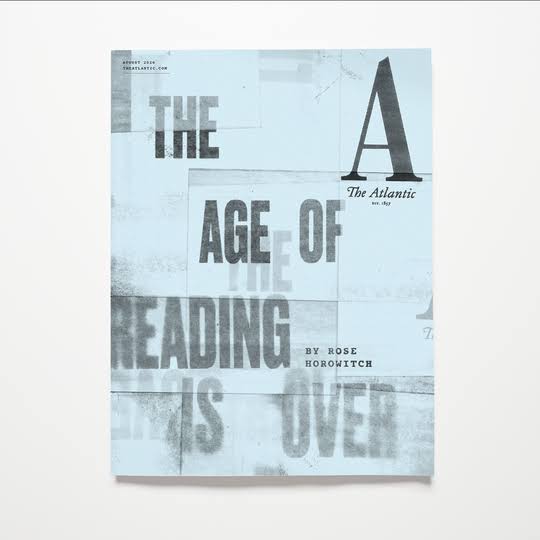
So yes, I was just thinking about that article in The Atlantic on “The Age of Reading is Over.” I felt worse, as far as the prognosis goes, I felt worse after reading that. Have you read that article?
RR:
It was a brilliant article. A frightening article. It seems to me a very honest article. It only underscores what I just said about the total collapse of education in America, whatever they may call themselves or however many Nobel Prize laureates they have. But the main thing is the following.
Our culture is a book culture. And not only because the Biblical connection, the connection to our Jewish and Christian heritage, or the works of Plato for that matter, but if we if we realize that we’re human beings and you know we are the next generation or we are the generation that will be the next generation or a generation before them. What about the continuity? The continuity is a thing called the human spirit. And this human spirit continues in written works.
It’s so fascinating. Why is it that everybody wants to see the movie, The Odyssey? I haven’t seen it. I read the book, which is fine with me. But, because on a deep level, on the deep level, people have this idea that they are in need of myths. Myths are extremely important because the myths are the expression of something extremely basic. The Odyssey is the myth of going out, the quest of life, adventures, and returning home. Or Faust is the myth of trying to reconnect to the person who passed away and try to bring her back to life. Faust is the myth of striving for absolute knowledge and the absolute. Every culture has these myths.
Now, when you take away a book culture, when you take away this whole cultural legacy, you get where we are now, which is we’ve lost our ground. We’ve lost our fundamental foundation. We no longer know who we are. And this was also a famous statement by the German Jewish philosopher Max Scheler in 1928, just before he died. He said, “In 10 years, in not the last 10,000 years, the human being has become such a problem for himself. Because we no longer know who we are.”
It’s this phenomenon of what’s happening now, to the book culture, is completely self-destructive. We’ve lost the basic, enduring foundation of what it means to be human. The loss of book culture, not only in America, but all over the world is a complete self-destruction of culture and who we are as human beings. We can blame Amazon, we can blame publishing houses, for only putting out celebrity biographies instead of works that focus on what is truly important for us as human beings. All the -isms are reductionisms.
Fascism: are you in my “tribe” or not.
Communism: are you in the proletariat or the bourgeoisie?
Capitalism: do you have money or do you not?
All the -isms are totalitarianisms, they are reductionistic fundamentalisms.
DRK:
You write a lot about the soul, and spiritual nobility, and seem to favor a spiritual humanism– this contrasts to many secular humanists who veer away from ideas of the soul and spirit and say that we must be materialists and scientists.
RR:
Well, to put it bluntly, they are wrong. They are deeply wrong.
For me, it is not about a belief in this God or that God, but like Primo Levi wrote, we need the transcendent. We need the notion of the soul, the idea of spirit. Thomas Mann understood this. Nietzsche, of course Nietzsche understood this. Nietzsche’s “death of God” was not about an old man with a beard up in the sky suddenly having a heart attack. No. It was about the loss of the Transcendent and without that we are left with only the will to power, a world of power. Without the Absolute, there is no Truth, no Goodness, there is loss of the fundamental thing that makes us human. The idea of Man, or of Humankind, only that Transcendent notion can unify us as human beings. Without the Transcendent, we fall into categories, identities – we are more than our skin color, more than our gender, or pronouns. Humanism, humanity, is what we all have in common. Without the Transcendent there is no Justice, no Beauty.
The so-called secular humanists are just wrong. They miss the riddle of being a human being. They miss our Nature and our Destiny. It is dangerous when you take away spirit and take away soul – that only leads back into the reductionism and destruction.
This is why the left is so stupid – I think about writing something with that title – I mean, I am the left, I am considered a Social Democrat in the Netherlands, but the left is being incredibly stupid turning to quantity rather than quality. The left has surrendered quality to the right and the more than right. Trump has an instinct to exploit this, a cruel, evil instinct. You can’t be a fascist unless you are a populist. You have to be a demagogue.
CNN, the media, they all made billions on Trump. They could have said, “this is a dangerous guy and we’ll just ignore him,” but they amplified his destructive voice and made billions.
What makes us human is what we have in common, not what is different about us. We need to go back to school, maybe read a little philosophy.
DRK:
Nietzsche wrote about “becoming who you are” and the Greeks spoke about this too. How did you, Rob Riemen, become who you are?
RR:
In a new book – that hasn’t been translated into English yet but it is in Spanish, Italian and French (is not the Cultura Animi publication) – students in Mexico, they were reading my books, To Fight Against This Age and The Nobility of Spirit during the covid period had all kind of questions about the meaning of their lives because of what they had read in these books of my. I was most pleasantly surprised that my books – like a letter in a bottle – arrived in the classroom of philosophy department in Mexico. So I responded to their questions yet not much later I realized I had made a mistake. I should have told them: these are your questions, you have to find an answer yourself – don’t ask me. Yet as I explained in Becoming Human is an Art, I read Nietzsche’s essay, “Schopenhauer as Educator,” in which he argues that to get to know yourself starts with reflecting on the important people in your life who have influenced you. Some of the people with the biggest impact on our lives are our parents, so I began to write about my mother. When she was 12-15 years old she was in a Japanese internment camp in Indonesia. She and her sisters never spoke about it. My mother died in 2000. Then, during the Covid-era, I was talking with her sisters who were in their ‘90s and I got to know who my mother was as a person and what she had gone through. And I understood why she educated me the way she did. I grew up in what you could call a sober labor class family, with six kids. My father was a labor organizer, he organized strikes – he was always fighting for social justice and that was very ingrained into me.
My mother taught me to read when I was three years old. I wasn’t very good at anything else, I wasn’t good at soccer, for instance. But reading readily became my passion. When I read Thomas Mann’s Magic Mountain, I recognized myself in Hans Castorp. That book inspired Nexus – we are just a place where people from all different philosophical perspectives come to sit down to have conversations.
Books were considered holy in our family. We didn’t have much money, so we would have to save up to buy a book. To be educated is a privilege and that privilege comes with a responsibility.
High school felt like a prison to me. It took me eight years instead of six to graduate. When I graduated, I wanted to be free. I wanted to study something completely useless. So I studied Theology for ten years. I read Thomas Mann and all of those around him – Nietzsche, Goethe, the Russians. I met a publisher named Johan Polak, I mentioned him earlier, and we started a journal of European Judaism in 1988. It was difficult to get funding, but finally someone gave us a little money. In 1991 we started the journal, Nexus, but in 1992 Johan suddenly died.
I never applied for the job. Instead of being “editor,” I thought I will be the “founder” and the “president.” So, we started Nexus, and Edward Said was our first Nexus lecturer a year later Amartya Sen and then we have had former President Richard von Weizsäcker from Germany I wanted to only do things that were interesting. I didn’t want to have to rely on funding that constrained what we did. Nexus is the most independent institute in the world. We bring in people who disagree with each other. My father, a union leader, always taught me any siblings said that when the strike is over, you should be able to sit down with the other side and have a glass of wine, that they were opponents, but not enemies. I don’t believe in “cancel culture,” we all need to sit down and talk together.
DRK:
Well, Rob, we’ve had some technical difficulties, and I’ve switched to doing this old school transcription style, which is why I am furiously scribbling notes as you talk. Our video broke down, our audio broke down, our transcription broke down – so I am doing this the old school human way, like I do with Joseph Rael.
RR:
Well, sorry for my technology karma!
That reminds me, Stephen Greenblatt has a book, The Swerve: How the World Became Modern, where he traces the journey of a 11th century monk from Italy to Germany where he finds a manuscript of Lucretius and transcribes it fifty times.
So, we are doing this interview the human way!
DRK:
Thank you for being patient and I think that this ended up being a good way to do this interview.
To close, Rob, we call this podcast, Becoming a True Human, and this phrase comes from my mentor Joseph Rael (Beautiful Painted Arrow) who teaches from his own experience and comes out of the Southern Ute and Picuris Pueblo Indigenous cultures of the Southwestern United States. We like to ask our guests, what does “Becoming a True Human” mean to you?
RR:
Once, all of us will inevitably die. Hopefully after a long life, after not too heavy of a burden of illness. And in old age we will be lying in our bed – and in those last moments – what are you going to think back to in your life? Will it be like Tolstoy’s The Death of Ivan Illich, a life of regrets? Or, will I have lived the life that I was supposed to do, the life that I was given, that I had the talent, and that my parents had the expectation of. Or, will it be other way, the life of less than the True Human Being? Maybe there will have been money, fame, power – only to realize that you had only accumulated a whole bunch of zeros in your bank account?
Johan Polak, who helped found Nexus, he had a small fortune from his family, but he put it all in the publishing house Athenaeum and bookstore. He died in 1992.
In “The Idea of Europe,” George Steiner wrote that we are fortunate people. The only thing you have to do is find and follow your passion. You may be poor, but you will be happy.
We can still do something in which we believe.
Most people are not happy.
DRK:
Thoreau’s “The mass of men lead lives of quiet desperation…”
RR:
It is important to realize that with fortune comes moral responsibility. This is Thomas Mann, as well. Gifts come with responsibilities.
Now, the stakes are higher than ever. There is endlessly more going wrong on the supply side than on the demand side. There are too many people afraid to step outside, to step outside of the paradigm. People focus on being popular, on numbers of followers, on being an influencer and they forget about quality. When you are on your death bed, only quality matters. The Transcendent is not to be found in quantity, in numbers; the Transcendent is only found in quality and that is the spirit and the soul – and we only find that by knowing who we are, by reading books, by having discussion with others.
In this series of essays, in the 250th year of the United States of America, I will develop the idea of Inner Democracy – a democracy of mind and heart and soul – to complement our outer democracy.
We are at a crisis of democracy, there is extreme polarization, accusations of “the other side” being “fascist” or “socialist/communist,” and levels of mistrust in each other and in our democratic institutions that have not been seen in generations.
As Parker Palmer has written, in Healing the Heart of Democracy: The Courage to Create a Politics Worthy of the Human Spirit (2011),
“If American democracy fails, the ultimate cause will not be a foreign invasionor the power of big money or the greed and dishonesty of some elected officials or a military coup or the internal communist/socialist/fascist takeover that keeps some Americans up at night. It will happen because we—you and I—became so fearful of each other, of our differences and of the future, that we unraveled the civic community on which democracy depends, losing our power to resist all that threatens it and calls it back to its highest form,” (8).
We think of democracy as a form of government, as something outside of the individual person, but Palmer reminds us that democracy is ultimately about “you and I,” and not about something “out there.” Democracy is a “government by the people,”[1] and we are the people. The kind of democracy that Palmer envisions, one that is “worthy of the human spirit,” is the kind of democracy that moves us from Me to We. This Journey from Me to We is a difficult one, and it starts inside each of us.
Jeremy David Engels, in his book, On Mindful Democracy: A Declaration of Interdependence to Mend a Fractured World, defines “true democracy” as “ working together to care for each other and for the life we share,” (4). Democracy, for Engels, is about collaborating and caring, not just for ourselves but for our shared life together on our only ecosystem of the Earth.
There is a crisis of democracy in what we even mean by “democracy.” Is democracy a libertarian ethos of being able to maximize one’s own life, liberty, and, happiness, regardless of the consequences to others and the environment; or, is democracy a higher, spiritual calling of caring and collaboration?
Engels brings our focus on democracy from the individual to the community through synthesizing the spiritual traditions of yoga, Buddhism, and Christianity. He draws on Vietnamese Zen Buddhist Thich Nhat Hanh’s, “interbeing,” an intellectual/spiritual understanding of the interconnectedness of life, and the Christian community building of Martin Luther King Jr.’s “beloved community,” which then leads to democratic action. Engels re-writes the Declaration of Independence into a Declaration of Interdependence, recognizing the inherent interconnectedness of life.
Mindful democracy is a pathway and practice for developing the experience of inner democracy which can then be practiced in its outer form as building the beloved community and democratic action in the world. Inner democracy is an inner experience within the individual that can then lead to an outer democratic citizenship and government. We can think of inner democracy as a variety of spiritual democracy.
Steven Herrmann has written about the idea of “spiritual democracy:”
“Adopting the big idea of Spiritual Democracy, the realization of oneness of humanity with the universe and all its forces, can help people feel joy, peace, and interconnectedness on an individual basis. It can also inspire us to undertake sacred activism, the channeling of such forces into callings that are compassionate, just, and of equitable heart and conscience, and give us some tools to start solving some of these grave global problems, while uniting people on the planet.”[2]
Spiritual democracy, as defined by Herrmann, is founded upon an experience or realization of “oneness” and “interconnectedness.” He believes that this experience of inner democracy can lead to outer action, “sacred activism.”
Joseph Rael (Beautiful Painted Arrow) and I wrote about Spiritual Democracy in our book, Becoming Medicine: Pathways of Initiation into a Living Spirituality. We drew upon Herrmann’s ideas and combined these with Joseph’s perspectives, we spoke about the “inner journey of the democratic shaman,” and summarized a version of the Hiawatha story about Bringing the New Mind of the Great Peace. We made this chapter available as a free pdf download.
In a Becoming a True Human podcast interview with Jeremy David Engels, Chris Smith and I spoke with him about his book, On Mindful Democracy, and ideas about spiritual democracy, mystical democracy, inner democracy, and he had an idea of putting together a group of writers and thinkers to talk about The Varieties of Democratic Experience, with a nod to William James’ Varieties of Religious Experience.
I would like to further develop some ideas around inner democracy, drawing upon the work of other writers and some of my past writing. Joseph Rael (Beautiful Painted Arrow) and I wrote a chapter on “Spiritual Democracy” in our book, Becoming Medicine: Pathways of Initiation into a Living Spirituality. This draws heavily on Steven Herrmann’s work as well as Joseph’s teachings on peace and the idea that we are cosmic citizens. As Engels did, I drew upon Thich Nhat Hanh’s concept of interbeing and Martin Luther King Jr.’s beloved community in my book, Caring for Self & Others: Transforming Burnout, Compassion Fatigue, and Soul Loss, particularly in chapter ten, “Becoming Caring: Caring for All.” I am indebted to Jeremy David Engels for his book and for such an inspiring discussion in our podcast interview.
The perspective on democracy I would like to develop is the idea that the greater sense of “oneness” (or interbeing, interdependence, nondualism) that an individual experiences, the more fully they will be able to embrace the idea of democracy, which will lead to more vigorous outer expressions of democracy. A practice of inner democracy would, thus, be a contemplative path of the development of a conscious experience of oneness. This leads to a tripartite structure:
Inner Experience of Oneness
Idea of Democracy
Outer Expression of Democracy
This tripartite structure follows the paths of the hero or heroine’s journey (as developed by Joseph Campbell), and the structure of initiation (separation/initiation/return) that Joseph Rael and I followed in Becoming Medicine. It also follows the structure of Jeremy David Engels’ book, On Mindful Democracy (xi-xii):
Stand on Common Ground (Interbeing)
Walk the Path of Interdependence in Community (Beloved Community)
Practice Democracy with Hands and Heart
The idea of mindful or inner democracy can be grasped with the mind, but a mental concept may not be as resilient as an inner experience of democracy – of interbeing, oneness, interdependence – which then leads to outer expression. In this sense, mindful democracy can be a pathway to creating a foundation of inner democracy that then supports the idea and what Engels calls the “hands and heart” of outer democracy.
Inner Democracy could be taught through practices of reflection, contemplation, deliberation, dialogue, meditation, experiences in nature, or any experience in which the individual developed an expanded sense of self beyond the limitations of the ego and the flesh.
The movement of the individual from an identity of “me” to an identity of “we” underlies the inner practice of democracy.
Interestingly, there are many names for an experience of Oneness: nondualism, interbeing, unity, transpersonal, and nondifference, to name a few. There are also many names for interrelationship and interdependence: I/Thou, Me/We, beloved community, and others.
One of the reasons I am excited about following this thread of Inner Democracy is that it provides a positive focus and practices that can be done irrespective of outer events in the world. In my Words Create Worlds series, I have focused more on resistance and opposition to words – uncaring words, words of Me-First, and words of fascism. Through Inner Democracy I am seeking to focus on building inner strength during difficult times. Perhaps chaotic and painful experiences in the outer world could even lead one to fall back upon practices of inner democracy. Inner democracy builds hope, resilience, post-burnout growth, post-traumatic growth. I agree with Jeremy David Engels’ view of democracy as caring and collaboration.
Ultimately, democracy isn’t something done “out there;” democracy is also, perhaps even originally, about doing something “in here,” in the inner space of the psyche, the work of cultivating inner democracy.
“government by the people, system of government in which the sovereign power is vested in the people as a whole exercising power directly or by elected officials; a state so governed,” 1570s, from French démocratie (14c.), from Medieval Latin democratia (13c.), from Greek dēmokratia “popular government,” from dēmos “common people,” originally “district” … + kratos “rule, strength.”
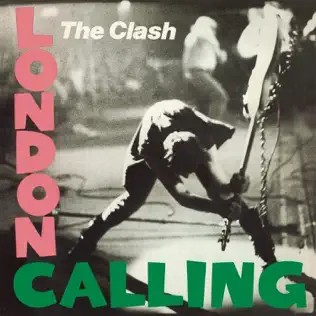
Images: Renee Nicole Good and Alex Pretti were shot and killed by ICE in January, 2026. ICE photo by David Guttenfelder/The New York Times/Redux. The cover of The Clash’s 1979 album London Calling.
The Clash song, “Clampdown,” from the 1979 double album Londong Calling, starts with the question: “What are we going to do now?”
I have had this song by The Clash going through my head this past week. Now after the second killing of American Citizens by ICE in the past month, I keep asking myself, asking us, “What are we going to do now?”
The shooting death by masked government agents of Alex Pretti strikes close to home as he was a VA ICU nurse. Having trained and worked in the VA system for close to 20 years, I know the kind of professional dedication and commitment that VA employees bring to caring for Veterans who have served their country.
Renee Nicole Good had just dropped off her 6-year old at school before she was shot by armed masked government agents. Her last words were reportedly, “That’s fine, dude. I’m not mad at you.”
I always wondered what “the clampdown” was when I listened to this Clash song as a kid. I wasn’t sure what it was, but I knew I didn’t want to work for it – and I know I don’t want to work for it now.
Taking off his turban, they said, is this man a Jew? ‘Cause they’re working for the clampdown They put up a poster saying we earn more than you! When we’re working for the clampdown
I pictured something like Hitler’s paramilitary Brownshirts, or some other loosely organized group that came together to inflict violence on it’s own people. I suppose this queston of those working for the clampdown about “is this man a Jew” made me think of the Nazis.
We will teach our twisted speech To the young believers We will train our blue-eyed men To be young believers
The Clampdown seems to require teaching “twisted,” violent speech to the young of the nation, and invoking “our blue-eyed men” again recalls the Nazis. It continues to confound me how many MAGA and now ICE believers there are, who don’t see how words create worlds. The deaths of Renee Nicole Good and Alex Pretti are the worlds that have been created by the words of name calling and bullying and “othering” of Americans.
The judge said five to ten, but I say double that again I’m not working for the clampdown No man born with a living soul Can be working for the clampdown
At least some judges are finding for the rule of law, but what happens when the judges are working for the Clampdown? I hesitate to dehumanize others and say they don’t have a “living soul,” but dehumanization, scapegoating, projection, and “othering” are key psychosocial operations that pave the way for violence. I can see questioning the humanity of those working for the Clampdown when the Clampdown dehumanizes others.
Kick over the wall ’cause government’s to fall How can you refuse it? Let fury have the hour, anger can be power D’you know that you can use it?
It does seem like government is falling. We have a crisis between the federal government’s masked paramilitary organization. The Feds are blocking city and state government from investigating these shooting deaths of American citizens. Who holds the power here? Why are there armed masked men kicking down doors and kicking over walls? The seem to encapsulate the fury of the hour, which is how I always heard that line. The current President seems to have a fury of the hour, but The Clash seem to say that those with the fury are carrying the hour. Anger can be power. That is true. Anger can be power. “Do you know that you can use it?” This could be giving permission for paramilitary organizations to channel their fury and anger into anti-democratic activities and violence. But we can also hear this line from the perspective of those asking “What are we going to do now?” We can channel our anger into peaceful protest, into not looking away from abuses of power and tyranny. But again, this line could also be from the hooligans who have risen to power, looking toward their leader, ready to carry out the fury of the hour.
The voices in your head are calling Stop wasting your time, there’s nothing coming Only a fool would think someone could save you
Here The Clash tell us that it would be foolish to think that someone is coming to save us, we each have to refuse to work for the Clampdown.
The men at the factory are old and cunning You don’t owe nothing, so boy get running It’s the best years of your life they want to steal
Now the Clampdown also takes the form of the “old and cunning” men who want to steal the “best years of your life.” The Clampdown takes away your rights, it takes away your soul, it can steal away the best years of your life, and, apparently, it can even take your life with impunity.
You grow up and you calm down You’re working for the clampdown You start wearing the blue and brown You’re working for the clampdown
I heard this as a warning. It is one thing to be full of a piss and vinegar as a young punk, but there is a risk that you “grow up” and you “calm down” and end up working for the Clampdown, even though you resisted it in your youth. I knew about the Brownshirts, but I didn’t know about the Blueshirts – are The Clash singing about the Irish party of that name? I’m not sure. It is clear though, The Clash are warning you not to work for the Clampdown, no matter whether you are wearing a brown shirt, a blue shirt, or a red white and blue shirt.
So you got someone to boss around It makes you feel big now You drift until you brutalize You made your first kill now
This is always a chilling stanza. I always think of the kids who I had been friends with in elementary school who became thugs and bullies in high school. People who feel small and have listened to the “twisted speech” and become “young believers” that the way to feel big and powerful is to find someone to “boss around.” Once you have given over your power to the fury of the hour, you cease to direct your own actions, you become a puppet who drifts “until you brutalize,” and from there the next step is making “your first kill now.” Words lead to action which leads to creating worlds of violence and when you are working for the Clampdown, you can easily end up killing.
I had to look this line up on The Clash website because Google Lyrics listed it as “Doesn’t make you first kill now,” which really doesn’t make any sense.
In these days of evil presidentes Working for the clampdown But lately one or two has fully paid their due For working for the clampdown
Doesn’t that just capture it! It sure seems like we are living in the “days of evil presidentes/working for the clampdown.” We can only hope that one or two will fully pay their due. Right now it seems like the Clampdown is in charge and unrestrained.
Ha! Gitalong! Gitalong! Working for the clampdown Ha! Gitalong! Gitalong! Working for the clampdown
Not much more to say here – sounds like a cattle drive with masked armed men who have immunity under the Federal government, trying to heard along protesters and killing the occasional one or two.
Yeah I’m working hard in Harrisburg Working hard in Petersburg Working for the clampdown Working for the clampdown
Everyone, no matter they are, they’re working – and either your working hard for the Clampdown, or your working hard against it.
Ha! Gitalong! Gitalong Begging to be melted down Gitalong, gitalong (Work) (Work) (Work) And I’ve given away no secrets – ha! (Work) (Work) (More work) (More work) (Work) (Work) (Work) (Work) Who’s barmy now?
The song just tails off with “work” and “more work,” finally asking “who’s barmy now?” Meaning who’s crazy, I suppose. “Clampdown” gives us much to think about in the United States at this moment. It gives us pause and reminds us that the Clampdown could be almost anything and could be almost anywhere, but right now it is here…now.
“What are we going to do now?”
Maybe the answer to that question is: you are either working for the Clampdown – or you are not.