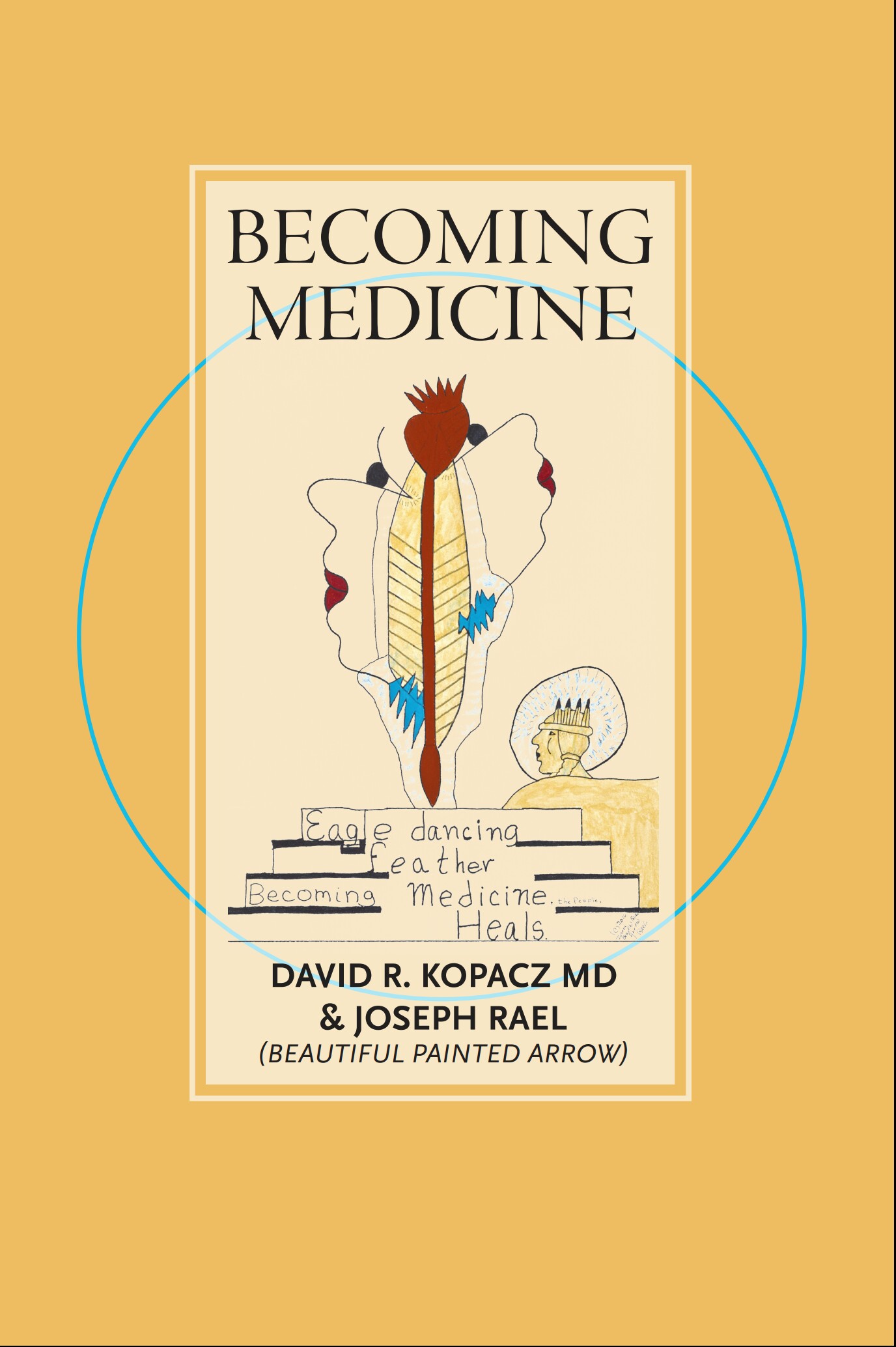
Becoming Initiated to See Light in the Darkness – An Overview of Becoming Medicine, Part II

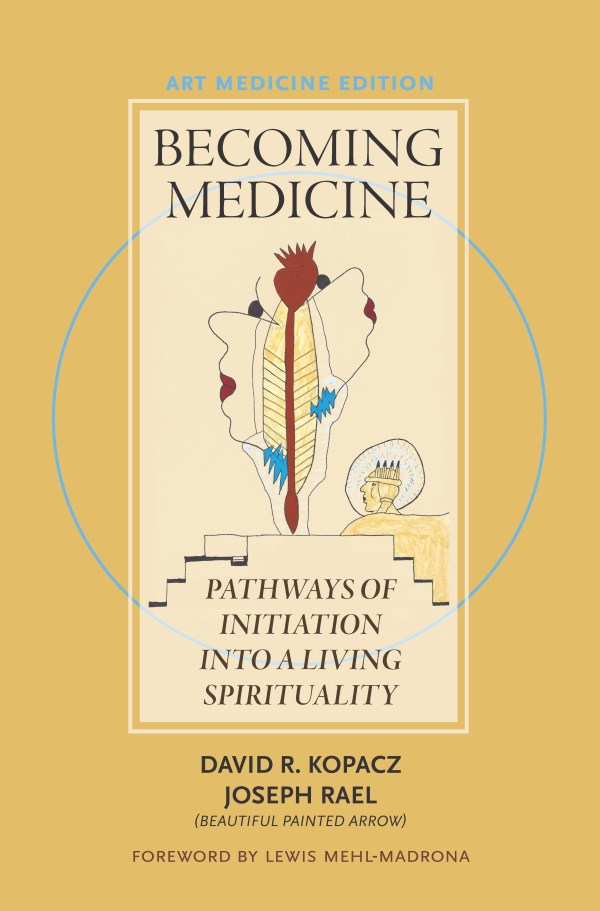
Overview, Part II of Becoming Medicine: Pathways of Initiation into a Living Spirituality, by David R. Kopacz, MD & Joseph Rael (Beautiful Painted Arrow).

After seeking comes finding & receiving, but this gift transforms us in ways we could not imagine. The old falls away in what can be a painful birthing process as we are born into a new state of being – this is the initiation process.

Table of Contents for Part II:

Part II: Initiation (Finding/Receiving)

  • 7  / Story Medicine
  • 8  /  Entering the Doorway
  • 9  / Guhā: Cave of the Heart
  • 10  / Enlightenment & Endarkenment
  • 11 / Initiation
  • 0   /  Na-yo ti-ay we-ah (We Do Not Exist)

Story Medicine

Transformation is difficult to put into words and that is why stories are so often used to capture that which cannot be explained and yet somehow it can and must be told. We begin the second part of Becoming Medicine by telling various stories from various parts of the world. As Joseph and I write,

“There is a growing field of medicine which is not new, but is rather the rediscovering and remembering of how speaking words and listening to stories can be transformational for the individual and society,” (175).

The stories we tell each other and that we tell ourselves have real effects. Stories are where our imaginations are activated where we can contextualize suffering and learn hope and healing. As Lewis Mehl-Madrona (who incidentally wrote a wonderful foreword to the book) has written,

“I saw that we create our own world . . . if we refuse to believe in healing, healing does not exist. If we sing and dance only of molecules and drugs, then molecules and drugs determine our fate and drugs will be our only hope. What we believe in is what comes true. . . . What we sing and dance is what will be,” (Coyote Medicine, 111).

We can look at the creation stories of the world as metaphorical descriptions of becoming initiated into being fully human.

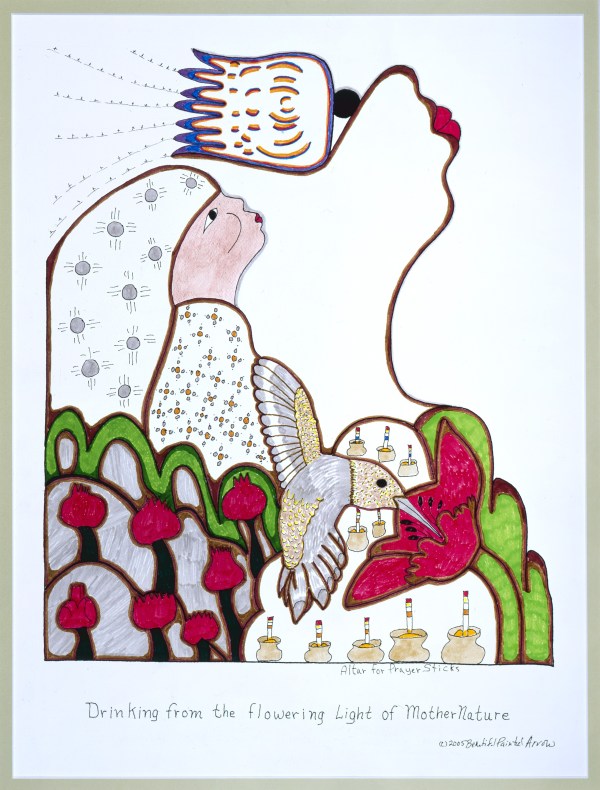
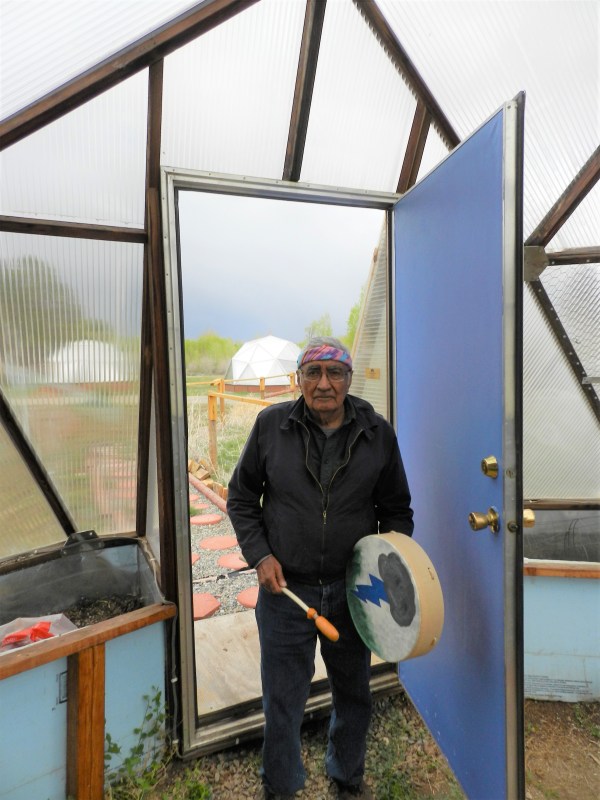
Joseph Rael walking through Doorway

Entering the Doorway

To get from here to there, we need to find some entrance, some passageway. There are many different paths, but they only appear with seeking. A person can be a doorway, a book can be a doorway, even the solid walls of a solitary cave can become a doorway.

“When I first met Joseph Rael and thought about our writing a book together, the thought came to me: ‘We are doorways for each other.’ It was not a conscious, logical decision, more an instantaneous intuition that holds many levels of meaning. For me, Joseph is a doorway into a deeper spirituality. . . . I am able to bring elements of spirituality into our book that would be difficult to do as a psychiatrist trying to maintain a balance on the edge of medicine and healing,” (194).

When the Knights of the Round Table were setting off in search of the grail

“They thought it would be a disgrace to go forth as a group. Each entered the forest at a point that he himself had chosen, Where it was darkest and there was no path. Where there’s a way or path, It is someone else’s path; each human being is a unique phenomenon” (Joseph Campbell, in Phil Cousineau, ed., The Hero’s Journey: Joseph Campbell on His Life and Work, viii).

Heart Meditation, David Kopacz, 2014

Guhā: Cave of the Heart

As I was following leads and threads that sometimes disappeared into mist, or sometimes became tangled knots that seemed to lead nowhere, I came across the Sanskrit word, guhā, which can be translated as “the cave of the heart.” I stumbled upon a thread of Christian-Hindu mysticism through the writings of Wayne Teasdale, Bede Griffiths, and Abhishiktananda. All three wrote about the cave of the heart and of finding the Divine within the darkness of one’s own heart. As I thought about the heart, I realized that our physical heart, as all of our inner organs, are immersed in the darkness of the inner body. While we often think of the heart, metaphorically, as a place of light and love, it is physically and literally in the dark. One of the aspects of initiation is being able to see the light within the darkness deep within the heart. The depths of the heart also are the place where our identity shifts from individual to universal, as Wayne Teasdale wrote, “the deepest center of ourselves is one with the deepest center of the universe,” (The Mystic Heart, 53).

Joseph Rael frequently will say, “We are the microcosm of the macrocosm,” and I have always struggled to understand how the personal becomes the universal. In many ways this is the more amazing thing to me. I have come to terms with the fact that there is light in the darkness, but how incredible it is that when we go into our deepest heart center we reach the Divine and a state of non-duality/unity with all things!

In this chapter we look at various holy people who went into the darkness of caves in order to see the light: Abhishiktananda, Ramana Maharshi, Saint Benedict, Saint Francis, and Saint John of the Cross who went into the metaphorical cave of the “dark night of the soul.” In Pueblo tradition, initiates would go into the darkness of the kiva and Joseph had those experiences as he was growing up. There is also the ceremony of the sweat lodge which is done in darkness.

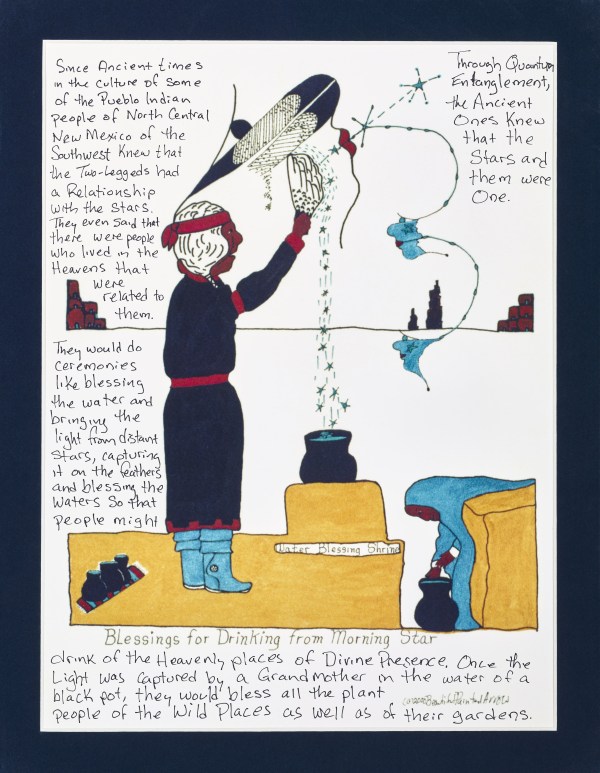
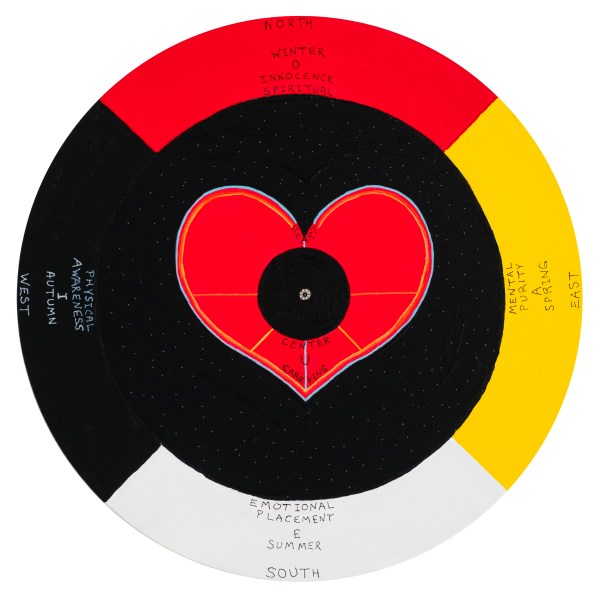
Joseph Rael teaches that the center of the medicine wheel is the heart and that the heart is a “medicine bag” which is an empty, dark pouch, which carries “sacred objects.” With the guhā we add the cave of the heart.  Joseph told me about the meaning of the word “cave.”

“Nah au kwee leh neh is the Tiwa word for cave. Nah means ‘self.’ Au kwee – means ‘curved.’ Leh neh means ‘straight like a fence.’ Nah means that when we enter a cave, we are entering into ourselves and we should think of the cave as our self. We should expect that when we first enter the cave it will turn every which way and it can get confusing, but eventually it will straighten out and you will then find what you are seeking,” (210).

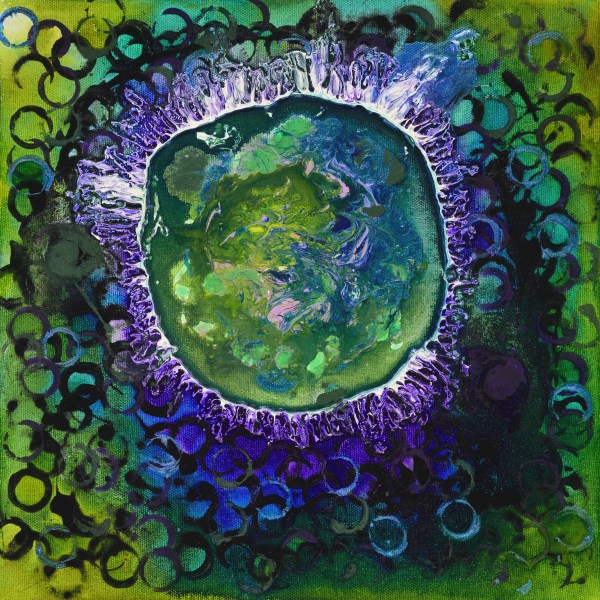
Heart at the Center of Dark Matter, David Kopacz, 2016

Enlightenment & Endarkenment

In this chapter we look at different traditions relationships to wisdom found in the light and wisdom found in the dark. Perhaps enlightenment is the transformational realization that light is found even in the dark. Joseph is always talking about what he learns about physics and astronomy and how that fits with the traditions he comes from and from his visionary experiences. We also look at dark matter and dark energy in this chapter and draw on the work of physicists like David Bohm and Stephon Alexander. Alexander wrote The Jazz of Physics: The Secret Link Between Music and the Structure of the Universe and this leads to a nice riff on physics, metaphysics and jazz and we blend in a bit about John and Alice Coltrane. From everything I have learned from Joseph and everything I have read, at the core of enlightenment is non-duality, coming into unity with all beings and creation.

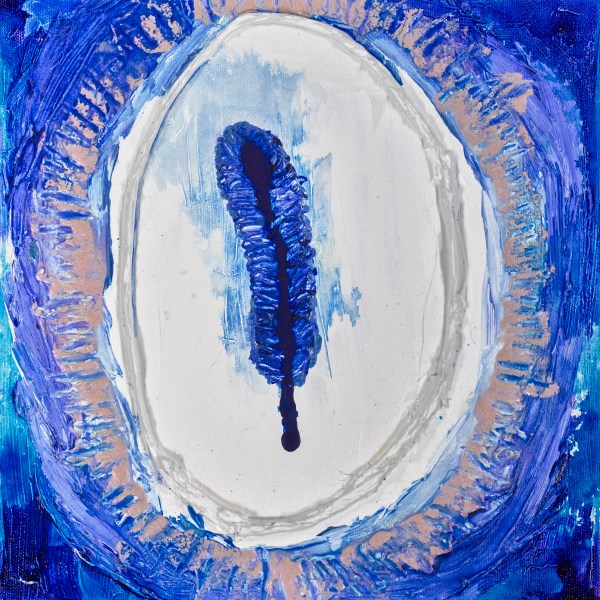
Blue Feather, David Kopacz, 2017

Initiation

Initiation represents one of the most significant spiritual phenomena in the history of humanity. It is an act that involves not only the religious life of the individual . . . it involves his entire life. It is through initiation that . . . man becomes what he is and what he should be – a being open to the life of the spirit, hence one who participates in the culture into which he was born,” (Mircea Eliade, Rites and Symbols of Initiation, 27).

The entire book, really, is about initiation. In this chapter we look at the role of ceremony in initiation, as a way of connecting two different elements or realities into one wholeness. We review the concept of liminality (the space between two states of being) and liminal beings (those like mystics, visionaries, and shamans who become at home in these in-between states and serve as guides for those being initiated).

As I worked with Joseph, I began to realize that the whole process of writing the book was an initiation.

“Writing this book is part of my initiation with Joseph. Initiation is a new state of being and a new sense of one’s interrelationship and nonduality. Initiation is to realize that each of us is “the light of the Ancient Ones shining forth into the present.” Initiation is entering into a living spirituality where there is no separation between mind and body or between spirit and matter. Initiation is not something you do once and are done with; rather it is an understanding that “we do not exist” and yet we are perpetually coming into being and being reborn every moment.”

Crow Flying through Dark Matter, David Kopacz, 2018

Na-yo ti-ay we-ah (We Do Not Exist)

This is an often repeated saying of Joseph’s. In this chapter I look at it in context with concepts from Buddhism and Hinduism on the nature of reality being maya, illusion. I open the chapter with a discussion with Joseph on the word “zero” and this phrase “we do not exist.” Joseph became energized and did some heartfelt explanation, at some point saying, “There’s something going on here that I’m not even going to try to explain,” (309). While he kept on talking with only a brief pause, I am going to stop with that statement!

Next week I will publish Part III of this overview of Becoming Medicine: Pathways of Initiation into a Living Spirituality.

How can we Transform Suffering, Fragmentation, and Painful Inner & Outer Separation? An Overview of Becoming Medicine – Part I

How can we transform suffering, fragmentation, and painful inner & outer separation? This is the central question that Joseph Rael (Beautiful Painted Arrow) and I address in our new book, Becoming Medicine: Pathways of Initiation into a Living Spirituality. Suffering is the flip side of initiation and enlightenment. If you are seeking to become enlightened, the door that you often enter through is some form of suffering, separation, and fragmentation.

Initiation is the process of becoming more fully human. It is a common process in indigenous societies and in religious traditions. Anthropologists, such as Victor Turner studied initiation, as well as scholars of world religions, for instance, Mircea Eliade. Joseph Campbell popularized the process of initiation as the Hero’s Journey, comprising three primary stages of separation, initiation, and return.  Campbell sought to find a way that we “modern” people, who lack religious and sociocultural ritual frameworks for initiation, could transform suffering into personal and spiritual growth. Psychologists and psychiatrists became interested in the concept, as it applies to the presenting common concerns of those seeking psychotherapy. Carl Jung saw the need for initiation and transformation, as he wrote about throughout his career in books such as Modern Man in Search of a Soul, Memories, Dreams, Reflections, and his posthumous journal, The Red Book.

We live in a disorienting time and we seek to get our bearings again. In our first book together, Joseph Rael and I wrote about his practices of using the medicine wheel as a kind of compass for inner and outer orientation. When we find ourselves disoriented, we need some organizing framework to help us re-orient. The outer directions are North, South, East, and West. There are also the inner directions of spirit, emotion, mind, and body. Joseph also teaches that the center of the medicine wheel is the heart and embodies the principle of carrying. When we enter into the center of the medicine wheel, we realize that our hearts are medicine bags and they are filled with sacred objects. The initiation is the process of “finding the held-back place of goodness,” as Joseph called it in our book, Walking the Medicine Wheel: Healing Trauma & PTSD. Initiation is when we go into the center of the medicine wheel to find our medicine, which we come to realize is an ongoing process of becoming medicine – becoming the very thing that we so desperately need.
David Kopacz’s adaptation of Joseph Rael’s Medicine Wheel

We structure the book around the framework of initiation that Joseph Campbell, Victor Turner, Mircea Eliade, and others have described: separation, initiation, return. However, Joseph Rael comes from what he calls a verb language tradition – a language that is full of verbs like breathing, transforming, and becoming. It is a language of connecting, rather than how he describes noun language (English and German, for example) as languages that separate our living and interconnecting world into separate and discrete: people, places, and things. (The process of turning people into things is the topic of dehumanization that I explored in my first book, Re-humanizing Medicine: A Holistic Framework for Transforming Your Self, Your Practice, and the Culture of Medicine). Given Joseph’s predilection for verb language, we adapted separation, initiation, return into: seeking, finding/receiving, and giving. What one seeks with and within one’s heart, one eventually finds and receives, becoming healing medicine, and then as one is fulfilled with this, one overflows with fullness, giving to others what it was that we were seeking. In part III we examine how the personal medicine is also the universal medicine. The medicine that we become is the medicine that the world needs, and we find it through the journey of initiation into our hearts.

We live in a disorienting time and yet maybe instead of trying to go back to the way things were, we can go deeper into transformation, into the way things might be. The idea of initiation is consistent with Jack Mezirow’s model of transformative learning – that one enters into transformation through first becoming disoriented. And we have plenty of disorientation that we find ourselves in the midst of at this present time. Mezirow studied ten stages of transformation and we can break these down into three stages that parallel the stages of separation, initiation, and return. One way to understand transformation is that it is a change of who you are. This can be contrasted with simple change – where you remain the same, but you just change something you do. One can change without being transformed, but transformation is the ultimate change. Disorientation is the first step, according to Mezirow, for transformation. In that sense, maybe we are exactly where we need to be and things are exactly as they should be in order for us, as individuals and collectively, transform.

Adapted from Mezirow, Jack. “Transformational Learning Theory,” in Jack Mezirow, Edward Taylor, and Associates eds., Transformative Learning in Practice. San Francisco: Jossey-Bass, 2009.

Here is the table of contents of Part I of Becoming Medicine:

Part I: Separation (Seeking)
1 / Becoming Medicine
2 / Circle Medicine
3 / Separation
4 / Becoming a Visionary
5 / Becoming a Shaman 
6 / Becoming a Mystic

After studying the various forms of separation/seeking, we look at how ancient and modern people have gone through the process of initiation of becoming visionaries, mystics, and shamans. We define visionaries, shamans, and mystics broadly, with the understanding that anyone can develop these human capacities. We examine my experiences learning from Joseph, as well as Joseph’s life experiences. We review a number of different spiritual teachers, musicians, and healers and their processes of initiation and becoming, including Carl Jung, Henry Corbin, Hildegard of Bingen, Miles Davis, Ben Lee, Evelyn Underhill, Dorothee Soelle, Juan Mascaró, Krishnamurti, and Matthew Fox.

In the next blog post, I will give a brief overview of Part II: Initiation (Finding/Receiving).

Becoming Medicine Has Arrived!!!

I just received five boxes of books! It is so exciting to see Becoming Medicine in finally in print. Two editions, one color (the Art Medicine Edition) and one in black & white! I keep flipping through the two editions, side by side and comparing how the artwork looks! I’m too excited to read it and I already know what it says, anyway…

It is available directly through Itasca Books (the same price as on Amazon). I ordered a copy through Amazon, myself, and anticipated delivery date is 3/31/20 – 5/30/20, for some reason, although it says it is in stock. At this point I’d recommend getting it directly through Itasca as I know someone has already received it that way. It is also available on Barnes & Noble, but I am just seeing the more expensive Art Medicine Edition there at this point.

Here are the links to Itasca:

Standard Edition

Art Medicine Edition

The foreword is by Lewis Mehl-Madrona, MD, PhD and a number of people have written some lovely endorsements that I’ll include in this post:

Becoming Medicine is a great compilation of contemporary medical science and ancient spiritual wisdom. This book is written from the heart like a prayer, if you are a seeker of a living spirituality and want to magnify your power to heal, read this book. — CARL HAMMERSCHLAG, M.D., author of The Dancing Healers, The Theft of the Spirit, and Healing Ceremonies.

This is a remarkable and deeply engaging account in which a Native American shaman and his psychiatrist apprentice plunge deep into the heart centre of a living wisdom. Replete with questor myths and mystical adventures, this passionate, richly cross-referenced and spiritually inclusive book becomes a vibrant junction of intersecting journeys from diverse wisdom traditions. Circling age-old themes of separation, quest and spiritual homecoming, it is an invitation to trust the non-linear journey of inner transformation — one that turns us, eventually, into our own medicine. Marked by an authenticity that readers will instantly recognize, here is a genuine watering-hole at which seekers of all persuasions can pause and ‘drink the light’. — ARUNDHATHI SUBRAMANIAM, M.A., author of When God is a Traveller, Sadhguru: More Than A Life, and with Sadhguru, Adiyogi: The Source of Yoga, editor of Eating God: A book of Bhakti Poetry.

Behind the words and images of Becoming Medicine is the wisdom of a man fearless enough to break down all the barriers between what he knows and what he is. Joseph Rael is a unique island of beauty and sanity in our crazy, uncultured culture. And that island that he is, is vaster than the whole world. — PETER KINGSLEY, Ph.D., author of Catafalque: Carl Jung and the End of Humanity, A Story Waiting to Pierce You: Mongolia, Tibet and the Destiny of the Western World, and In the Dark Places of Wisdom

In this wonderful book, Picuris/Ute medicine man Joseph Rael reveals that each of us is an embodied human being who is in fact a medicine bag, a container in which we carry sacredness. By walking into the center of ourselves, into the center of our hearts, we cease to be ourselves and are instead becoming medicine. It is something that is done every moment. Becoming Medicine means that we are becoming capable of being a place for the Breath-Matter-Movement of the vast spirit to manifest and reside for a moment. This is a fabulous book for our times. — HANK WESSELMAN Ph.D., anthropologist and author of nine books on shamanism including The Re-Enchantment: A Shamanic Path to a Life of Wonder, The Bowl of Light: Ancestral Wisdom from a Hawaiian Shaman, the award winning Awakening to the Spirit World (with Sandra Ingerman) and the Spiritwalker trilogy.

Tragically the odious divisive social diseases of the 1930s are returning. Nationalistic, racist and fundamentalist movements are rapidly dividing communities. Innocent people feel more and more lost, alienated, powerless, lonely. They yearn for healing. But how can this healing begin? This is why Becoming Medicine by David Kopacz and Joseph Rael (Beautiful Painted Arrow) is so timely. It is a truly remarkable book, so relevant, so grounded in experience. The medicine of healing begins within each one of us. There we discover our true selves, our unified oneness with all humankind and the universe itself. This is not a healing that is confined to one event. On the contrary, it is a call to a transformative, ongoing, lifelong initiation of discovery. Each discovery leads to a deeper personal and social healing. — GERALD A. ARBUCKLE, Ph.D., Refounding and Pastoral Development Unit, Sydney, Australia. Author of Fundamentalism at Home and Abroad: Analysis and Pastoral Responses (2017), Loneliness: Insights for Healing in a Fragmented World (2018), and Humanizing Healthcare Reforms (2012). 

Like the wondrous journeys of the spirit it describes, this book escorts the reader along a path to new understanding and, ultimately, transformation. Along the way, we are reminded of our true nature, our kinship with everything around us, and our power to navigate through our own tumultuous times. The path can be bumpy. It can be circular.  Sometimes it is dark. This book helps light the way, and every page is a step toward something meaningful. Where will your journey take you? — J. ADAM RINDFLEISCH, M.Phil., M.D., Medical Director, Integrative Health, University of Wisconsin School of Medicine and Public Health, Associate Professor, Department of Family Medicine and Community Health.


Becoming Medicine 
will help you think in circles, dream-journey in technicolor, speak your vowels with mystic awareness, listen to music with more heart, and feel your heartbeat with more awe. The wonderful paintings of Joseph Rael (Beautiful Painted Arrow) and David Kopacz are a generous offering to linger over. I am grateful for their creative friendship and commitment to share a depth of spiritual, psychological, quantum physics, and visionary teachings. Becoming Medicine is a call to community, not only so that we seek out companions to slowly explore the insights and stories in this book. But so that we each take an inner journey into our hearts and return as the visionary healers the community of earth is calling for. — SHELLY L. FRANCIS, author of The Courage Way: Leading and Living With Integrity (2018). 

This is a book that can really change your life. David Kopacz and Joseph Rael’s Becoming Medicine is a remarkable collaboration between two brilliant and courageous pioneers. The information they provide opens a doorway to a healing path that unveils the hidden potential of the human spirit. Blending together knowledge that is ancient and sacred within the backdrop of modern day psychiatry, it is deeply illuminating. It is a must read for anyone interested in embarking on a journey of transformation and becoming medicine for the world. — SHILAGH MIRGAIN, Ph.D., Assistant Professor, Distinguished Psychologist, University of Wisconsin – Madison.

Becoming Medicine byDavid R. Kopacz, & Joseph Rael (Beautiful Painted Arrow) is a powerful illustration of the title through the authors’ sharing of their own stories, beautiful art and text, using examples from scientific and humanistic/spiritual literature. Its message is not about becoming a doctor or a healer, but the path to becoming the medicine itself. This is a profound exploration of the journey to Become More — Medicine to self, others and the world, integrating personal examples with multiple cultural traditions present and past. In Becoming Medicine, Kopacz and Rael detail not only the journey for individuals but a path for a disoriented and fragmented world to engage in transformation towards wholeness and unity. Health workers and all seekers alike will benefit from this work.— MICHAEL HOLLIFIELD, M.D., (Long Beach, California & Angel Fire, New Mexico), President and CEO, War Survivors Institute, Clinical Professor of Psychiatry and Behavioral Sciences at the George Washington University School of Medicine and Health Sciences.


Becoming Medicine 
is a bridge between many dualities including: the conscious and the unconscious, the scientific and the spiritual, the ordinary and the non-ordinary, and the Western and the Indigenous. Intricately referenced and yet personal in narrative, David and Joseph weave us through distinct world traditions to reveal the interconnectedness in stories of healing. This bridge is likely to most benefit those of us educated in western contexts, where our minds have been trained to neglect the wisdom of circles and spirit. Whether readers begin as healers or seekers, they will realize the congruence of these paths. Becoming Medicine inspires us into our own shamanic journeys. — NEETA RAMKUMAR, Ph.D., Lecturer, School of Social Sciences, University of the South Pacific, Fiji.

Dr. Kopacz holds the space between the mystery and majesty of shamanic tradition and the study of anthropology and medicine. His writing brings the reader into sublime experiences that Dr. Kopacz holds in his body. He walks the walk between the seen and the unseen, transforming life along the way. Prepare to be fascinated. Prepare to be amazed. You’ll return over and over to the information on the pages and between them. — HENRI ROCA, M.D., Functional Medicine Specialist, Shamanic Journeyer, Clinical Assistant professor, family and community health, Louisiana State University School of Medicine, University of Arkansas for Medical Sciences.

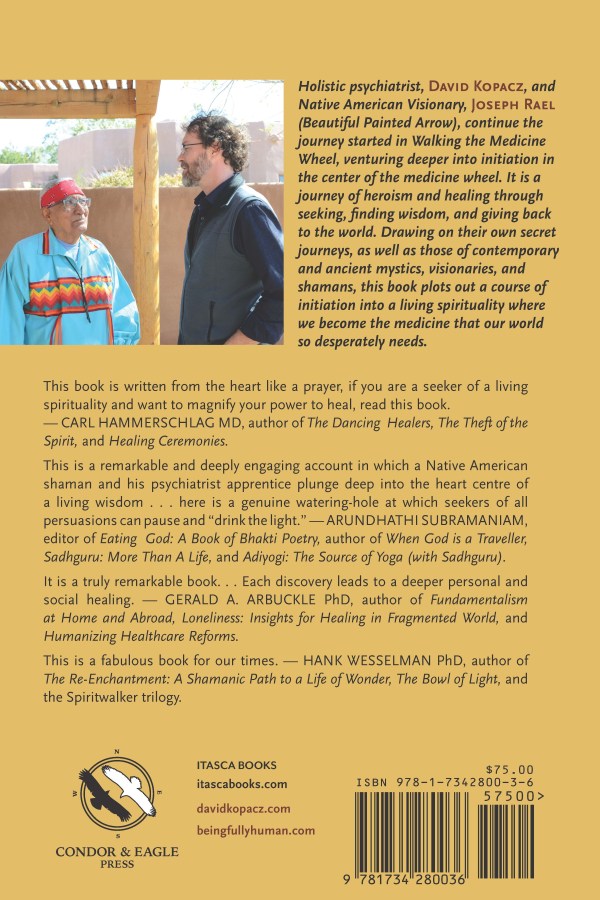
Becoming Medicine Now Available for Pre-Order at Itasca Books & Amazon!

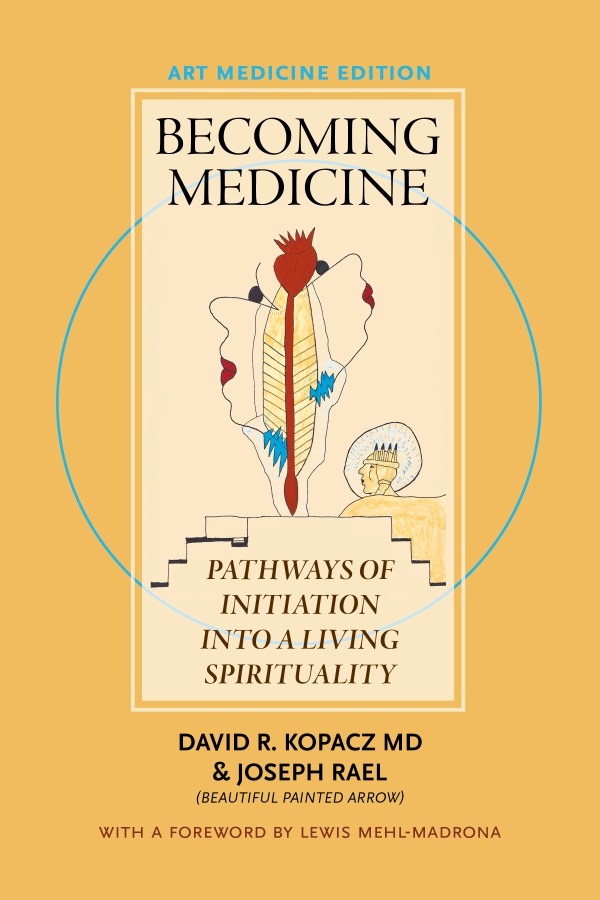
Becoming Medicine: Pathways of Initation into a Living Spirituality is now available for pre-order!

By David R. Kopacz, MD & Joseph Rael (Beautiful Painted Arrow), with a foreword by Lewis Mehl-Madrona.

From Itasca Books: full color Art Medicine Edition and Standard Edition in black & white.

From Amazon: full color Art Medicine Edition and Standard Edition in black & white.

Following the Teachings of Beautiful Painted Arrow (in Circles) from Seeds of Peace Newsletter

I recently had an article published in the Seeds of Peace Newsletter, which is dedicated to exploring the teachings of Joseph Rael (Beautiful Painted Arrow). I wrote about how I came to meet Joseph. I will paste a copy of the article below. Please email Marina Budimir if you would like to be on the mailing list of the newsletter: mayarinabudimir61@gmail.com.

Following the Teachings of Beautiful Painted Arrow (in Circles):

I have been listening to Joseph Rael (Beautiful Painted Arrow) since I first met him in 2014, although I had already been learning from him through his books since the year 2000 when I saw the cover of Being & Vibration by Joseph Rael and Mary Elizabeth Marlow. I was entranced by Joseph’s eyes peering through the opacity of the dust jacket and the book opened up a doorway into a living spirituality.

I spent some years living my life, then moving from Champaign, Illinois, to Auckland, New Zealand, where I was working as a psychiatrist at Buchanan Rehabilitation Centre. I was writing a monthly newsletter called, “Thoughts from the Clinical Director.” I remembered Joseph’s section on “Becoming a True Human,” in Being & Vibration, and I wrote my penultimate “Thoughts” on that, as I was getting ready to move back to the United States, taking a job in Seattle working with veterans at the VA.

Back in the United States, I was going through reverse culture shock. As I sat listening to veteran after veteran come into my office and telling me that they felt out of place, that they could not relate to civilians, and that they felt lost, I could relate, in some small way, to what they were feeling. In New Zealand, I had been talking with my friend and colleague Bernie Howarth about using Joseph Campbell’s concept of the Hero’s Journey and developing a class to help clients find themselves and their purpose as part of the rehabilitation process. We never got that going before I left, but I thought it would be perfect for helping veterans find their way home from war to peace and I started working on that.

In Powell’s Books in Portland, Oregon, I came across another book that caught my eye—The Visionary: Entering the Mystic Universe of Joseph Rael Beautiful Painted Arrow, by Kurt Wilt. I quickly read through the book, noticing that Kurt described Joseph, at times, using Campbell’s Hero’s Journey framework. I sent Kurt an email, he sent one back, saying that he thought Joseph Rael would be interested in my work. Joseph and I exchanged a couple of emails and he invited me to Colorado. I thought I could maybe add a chapter to the hero’s journey on indigenous approaches to reintegration after war, and I set off for three days with Beautiful Painted Arrow in October, 2014.

Joseph Rael (Beautiful Painted Arrow) and David Kopacz, photo by Karen Kopacz (2018)

My first day with Joseph was confusing and disorienting. What were we doing and why were we doing it? Why were we driving around in circles? Why were we sitting by the side of the road as trucks whizzed by, looking at a barren hill where a house used to be? Joseph said some things that first day that I am still trying to understand. One thing he said that sticks with me was, “You and I are both crazy, you can tell that, we both love life!” I thought, “Who is this guy? I can tell at least one of us is crazy!” Although I am still coming to understand Joseph Rael’s kind of crazy (as well as David Kopacz’s kind of crazy) that statement and laugh of Joseph’s warmed my heart and I felt like we were two adventurers setting off to God only knows where.

After the first day of going in circles with Joseph, I was writing up all my notes and I thought, “We should write a book together!” When I mentioned this to Joseph, he simply said, “That’s what I was thinking.”

Working with Joseph Rael has been a disorienting process. The writing flowed smoothly, but when I turned it in to Paulette Millichap, our publisher, she said, “This is a very interesting book, but where is the book about the veterans?” “Oh no,” I thought, “Joseph kept me going in circles, writing about Pope Francis and St. Francis, about ETs, and how we don’t exist and we gradually shifted away from what we were supposed to be writing about!” I was learning that working with Joseph Rael was similar to what he said it was like being around his grandfather, “living with the unpredictable,” (Being & Vibration, 39). I went back to the drawing board with the book, kept part of it, wrote some new material based on a review of theories of trauma and my clinical experience, and then Joseph told me about a vision he had that God holds back a place of goodness in all of our hearts, no matter what we do or what is done to us. “Beautiful!” I thought, but then, “Gee, it would have been really helpful if Joseph told me that before we started the book because it is the perfect framework for healing trauma!”

David Kopacz and Joseph Rael, photo by Karen Kopacz (2018)

One thing I am learning from Joseph is that we need to move beyond thinking of people as “other” and start thinking of each other as “brother and sister.” Joseph often says to me, “I am my brother’s keeper.” Eventually we published Walking the Medicine Wheel: Healing Trauma & PTSD in 2016, a book that helps us re-orient when we become lost in life. Our next book, Becoming Medicine: Pathways of Initiation into a Living Spirituality, is due out later 2019. In this book I see us moving beyond even brother and sister to a place of mystical, visionary oneness that has something to do with the fact that we do not exist. We have a chapter on “Circle Medicine,” because I think this is one of the key points that Joseph is teaching me: thinking and being in a different way than the linear, separated, and reductionistic way that most of us live our lives. I am still following Joseph around in circles and still working toward being a true human. Joseph teaches us, “A true human is a person who knows who he is because he listens to that inner listening-working voice of effort,” (Being & Vibration, 68).

David Kopacz and Joseph Rael, photo by Karen Kopacz (2018)

David Kopacz is a holistic and integrative psychiatrist who works at Puget Sound VA in Seattle. He is a national VA Whole Health Education Champion and an Assistant Professor at University of Washington. He is the author of Re-humanizing Medicine: A Holistic Framework for Transforming Your Self, Your Practice, and the Culture of Medicine and, with co-author Joseph Rael, Walking the Medicine Wheel: Healing Trauma & PTSD and the forthcoming Becoming Medicine: Pathways of Initiation into a Living Spirituality. His website is davidkopacz.com and blog, beingfullyhuman.com

Review of 2018

IMG_20181225_124232371_HDR

Photo credit: Mary Pat Traxler

On this first day of the New Year, January 1st, 2019, I thought I would take a look back at this past year. 2018 was filled with a lot of travel. We took a trip to England, Wales, and Iceland in May that I have blogged about. I have continued my work as a Whole Health Education Champion with the national VA Office of Patient Centered Care & Cultural Transformation and teaching programs took me to Madison, WI; Portland, OR; Nashville, TN; St. Cloud, MN; and three times to the Boston area (including an evening visit to Walden Pond). My mother had a couple of surgeries, which went well, but took me back to Illinois three times during the year.

As far as writing goes, I continued to work on the next book with Joseph Rael (Beautiful Painted Arrow). My sister and I took a trip to visit him in October.

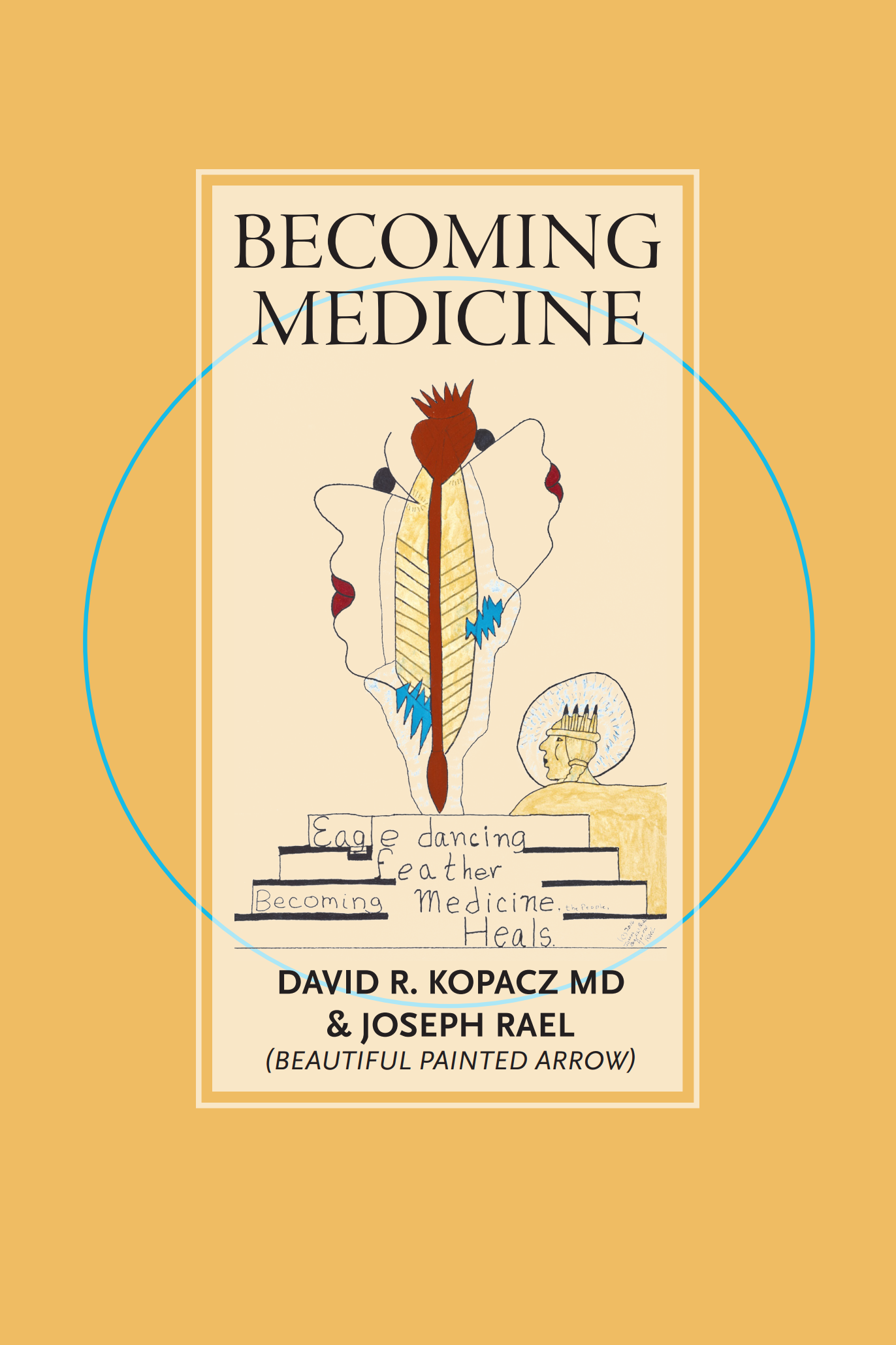
We finished the book on the Winter Solstice and I am now gathering a few endorsements for the book and we will be starting the publication process now. The new book is called Becoming Medicine: Pathways of Initiation into A Living Spirituality. Here is a copy of the table of contents, and the cover we are working with.

Cover Screen Shot

Joseph Rael’s painting, cover for Becoming Medicine


TABLE OF CONTENTS
Abbreviations
Foreword by Lewis Mehl-Madrona
Acknowledgements
Introduction: The Secret Journey
Part I: Separation (Seeking)
Chapter 1.         Becoming Medicine
Chapter 2          Circle Medicine
Chapter 3          Separation
Chapter 4          Becoming a Visionary
Chapter 5          Becoming a Shaman
Chapter 6          Becoming a Mystic
Part II: Initiation (Finding/Receiving)
Chapter 7          Story Medicine
Chapter 8          Entering the Doorway
Chapter 9          Guhā: Cave of the Heart
Chapter 10        Enlightenment & Endarkenment
Chapter 11         Initiation
Chapter 0          Na-yo ti-ay we-ah (We Do Not Exist)
Part III: Return (Giving)
Chapter 12        Returning to the Land
Chapter 13        We Are All Pangeans; We Are All Related
Chapter 14        Spiritual Democracy
Chapter 15        Refounding
Chapter 16        A Living Spirituality
Chapter 17        Returning to the Garden of Paradise
Chapter 18        Secret Journey to the Secret Garden
List of Sound Chambers

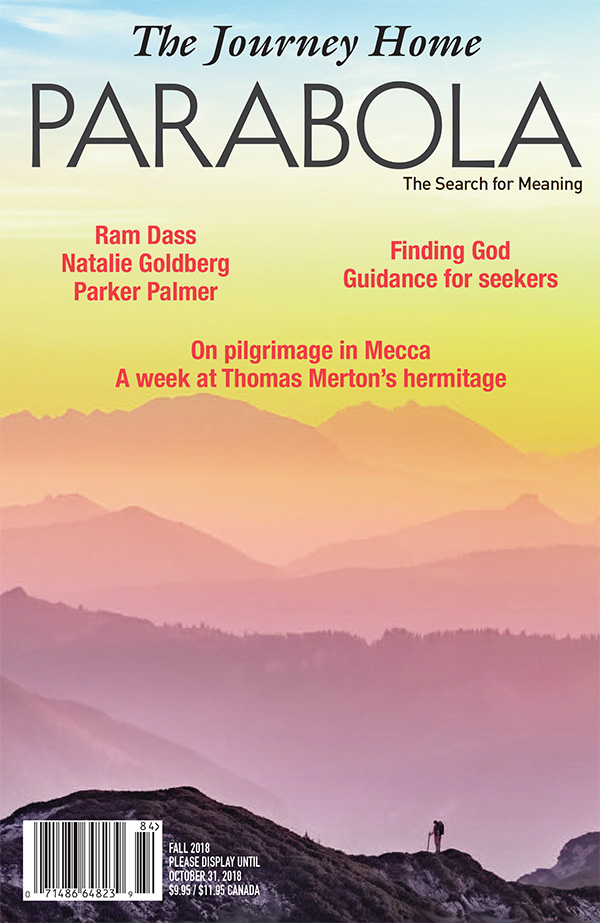
We had an excerpt from Walking the Medicine Wheel: Healing Trauma & PTSD published in Parabola magazine, which was very exciting. We’ve also given permission for the book cover to appear in a movie about someone healing from PTSD and we’ll give more information about that as it becomes available. We had an article called “Sage—the Wise One,” published in the International Journal of Professional Holistic Aromatherapy. I gave a workshop for Muckleshoot Indian Tribe Behavioral Health on “Circle Medicine for Healing Trauma.”

journey-home-cover-large

Mary Pat and I took a very restful trip to the Pacific coast near Copalis Beach just last week and I’ll post a few of those photos.

Corbin and I took a hike up Fletcher Canyon near Quinault. We couldn’t go far because there were a lot of trees down. We scrambled over a few before turning back after about an hour of walking up hill.

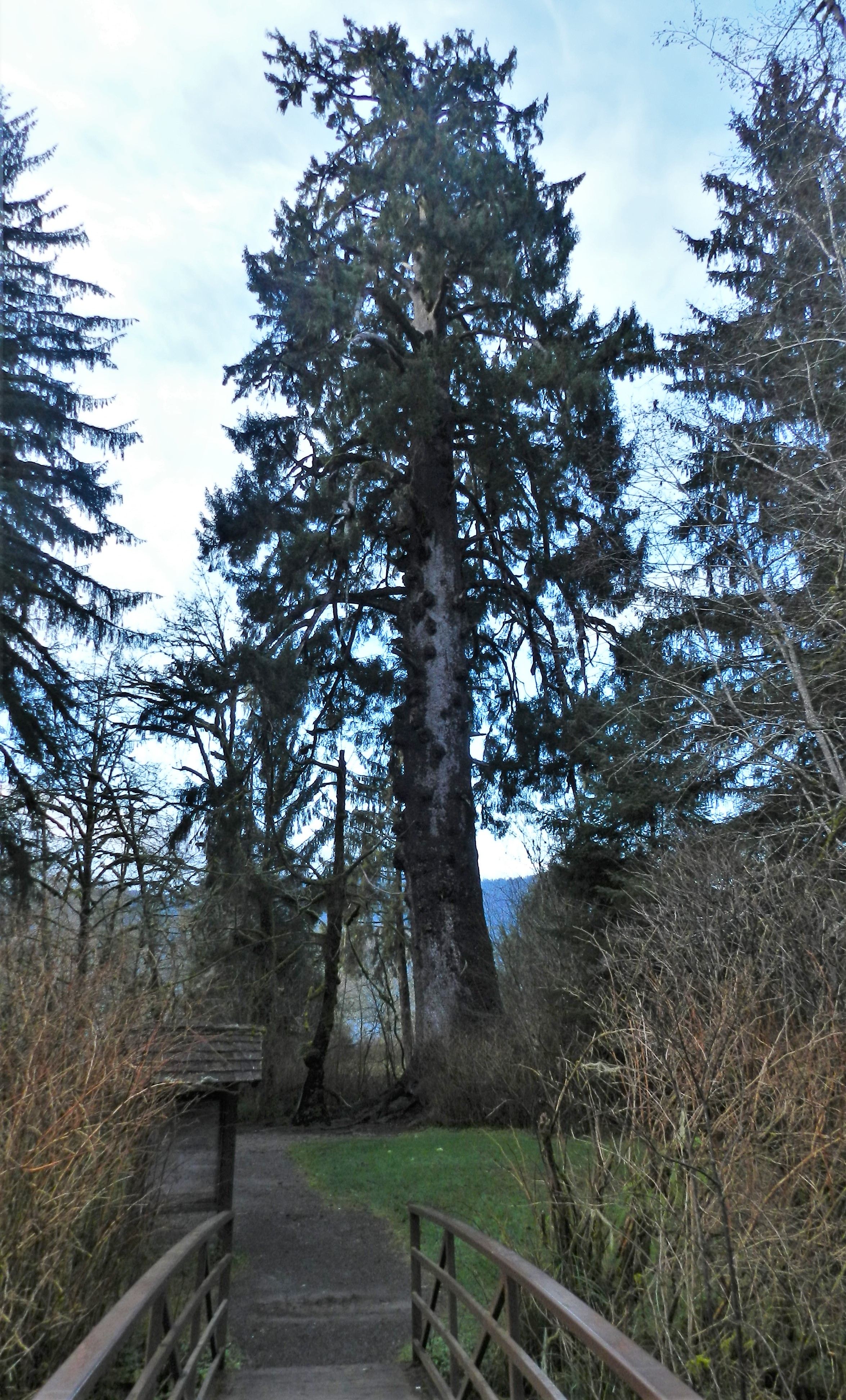
We stopped on the way back to take in the world’s largest Sitka Spruce tree, estimated to be 1000 years old.

DSCN5704

1000 year old Sitka Spruce

One morning, I heard a raucous cacophony of crows cawing. I quickly ran out to see what was happening. I saw a flutter of movement on the ground and an eagle flew off, leaving a stunned crow. I watched over the crow for a few minutes, eventually he flew off, a bit unsteadily, and then the eagle gave up and flew off in the other direction. These aren’t shots of that seen, but other photos of an eagle and some crows.

Who knows what 2019 will bring, likely lots of changes, as well as the publication of Becoming Medicine!

International Day of Peace

Today is the International Day of Peace and I would like to speak about the peace work I have been doing with Joseph Rael (Beautiful Painted Arrow).

DSC_9344_color_corrected

Joseph Rael (Beautiful Painted Arrow) & David Kopacz, photo by Karen Kopacz ©2016

Joseph had a vision in the 1980s of a circular structure, half in the ground, half out of the ground, with men and women chanting for world peace. He brought this vision into reality and over 50 sound peace chambers have been built on four continents: North America, South America, Europe, and Australia. Joseph has been received a letter of recognition from the United Nations for his work promoting world peace.

DSCN1693 (2)

Sound Chamber, Mike & Marie Pedroncelli caretakers

Peace work can take many forms. In my first book, Re-humanizing Medicine: A Holistic Framework for Transforming Your Self, Your Practice, and the Culture of Medicine (2014), I sought to help doctors and clinicians find a way back from dehumanization and burnout to feel more fully human and to create a health care system that addresses the whole person. I spoke of a compassion revolution that was occurring—many people in health care are working to bring the heart back into medicine.

front-cover.jpg

In our first book together, Joseph and I worked to help create a pathway from war to peace for returning veterans by walking the medicine wheel. This book is called Walking the Medicine Wheel: Healing Trauma & PTSD (2016). One of the things that Joseph talks about with veterans is that they should get their DNA tested so that they can remember that we are all brothers and sisters—because genetic and archaeological science tells us we all came from Africa originally. Scientists even tell us that we all have a common mother, Mitochondrial Eve, some 150,000 – 200,000 years ago. Many Native Americans and other indigenous people talk about Mother Earth. Mother Earth’s initials are ME—the same as Mitochondrial Eve—“ME” is the same thing that each of us call ourselves. Joseph says this just shows that everyone really is related.

Front Cover.final

In working with veterans, we wanted to help them in their walking around the medicine wheel, making the journey from being trained to protect us from the “other” to where we can all see each other as brother and sister.

Here is a link to a video of the two of us talking about peace, filmed by my sister, Karen Kopacz, from the website for the book.

I talked with Joseph this last week and he told me some things about peace. He said, “What we need to teach people about peace is open-mindedness. People are held back by their self-imposed limitations. The very thing that people are afraid of is what they should by trying to moving toward so that they can have an expanded awareness.”

I asked Joseph if he could say a few things about the dove as a symbol of peace.

Dove of Peace

Dove of Peace, Joseph Rael ©2018

“The dove is a waterbird and it is bird that flies in the air because that is what birds do. The dove of peace. It drinks water and when we drink water we are doing what birds do. When we drink water it makes the sound with every swallow “Soul. Soul. Soul.” You can listen as you swallow and you will hear it. We, ourselves, are 70% water, our blood is water that circulates through our bodies, so the dove is reminding us that we are soul and reminding us to connect to our hearts which pump the blood and water throughout our bodies. The work of the dove of peace is to bring us peace and harmony.

When someone dies at Picuris, we wash the body in the river and the soul goes out of the body and down the river. The soul goes down the river to the ocean. It goes out into the ocean, it goes out to Baja. Then from the ocean, the soul, with water goes up into the sky and then it becomes clouds, big white fluffy clouds. The dove of peace is white, just like the clouds that bring the rain. The clouds rain and the rain falls back to the earth and we say that the rain is the ancestors coming back to us because they are our caretakers.

At the beginning of many of my visions I see the white dove of peace which opens a circle of light. The circle of light gets bigger and then I am going through it and I am somewhere I have never been before and I am experiencing something other than what I can experience here. And then I am back to where I started and the circle closes but I have gone somewhere new and experienced something new.”

Joseph reminds us that peace is always right here in our hearts. Whether we are veterans or just a human being who has lost our way, we can reconnect back to what he calls a “held-back place of goodness” that we all have in our hearts. The dove of peace comes from above, falling like the rain that is our ancestors, returning to be our caretakers, reminding us that we are made of water, reminding us that we can bring peace and harmony to our souls. With every swallow of a glass of water, we make the sound “soul, soul, soul.” On this International Day of Peace, we should all remember that we are here to do the work of peace. Joseph says that his grandfather would always tell him, “work is worship,” so this work of peace is a kind of worship, in which we are trying to remind ourselves that we are all brothers and sisters of Mother Earth/Mitochondrial Eve and that we all have a “held-back place of goodness” within our hearts. The work of peace is seeking to find this reservoir of peace within our hearts and to release this into the world, like releasing a white dove from the cage of our hearts.

Dove of the Holy Spirit

Dove of the Holy Spirit, David Kopacz ©2017 

Joseph and I continue our work of peace in our forthcoming book, Becoming Medicine (due out early 2019) which plunges deep into the center of the medicine wheel, where not only are we all related, but ultimately we are all one.

A Review of the Work of Jaideva Singh: Dualism and Non-dualism in Indian Philosophy & Spirituality, PART I

PART I: Introduction

JS photo

This is a review (and expanded discussion) of two short books by Jaideva Singh (1893-1986), Indian musicologist, philosopher, and translator of many texts of Kashmiri Shaivism. Singh blended two careers in music and as a translator and philosopher of sacred texts. I could not find much in English about his life, the same biography appeared in Wikipedia and on a number of other sites. There is an edition of Sruti Magazine devoted to his life (Sruti, e-Issue 17, November 2013 – note that the page numbers are not always sequential in the pdf and some page numbers appear to be missing, e.g. #34). Dr. M.R. Gautam writes in an article, “A Great Savant of India,” that Singh was born in what is now known as Uttar Pradesh and that his grandfather, Udit Narayan Singh was beheaded by the British, his father was also supposed to be killed, but at 2 years of age, Gopal Narayan Singh was hidden under burnt wheat chaff in the village (21). During the course of Thakur Jaideva Singh’s studies he came under the influence of Theosophist, Annie Besant, as well as Babu Bhagwan Das, and that he became a vegetarian. In an odd twist, similar for Gandhi, it was through a Westerner that Singh came to a deeper study of Sanskrit and original sacred texts. He met a German scholar who encouraged him to study Sanskrit, which in fact he did. His life-long love of music led him to be the Chief Producer at All India Radio for about six years. In retirement he got down to studying and writing. He began to study tantra and yoga under Mahamahopadhyaya Pandit Gopinath Kaviraj. He also studied with Swami Lakshman Joo and this collaboration led to English translations of a number of Kashmiri Shaivite texts, including: Pratyabhijnahrdayam: The Secret of Self-Recognition, Vijnanabhairava or Divine Consciousness: A Treasury of 112 Types of Yoga, Siva Sutras: The Yoga of Supreme Identity, Spanda-Karikas: The Divine Creative Pulsation, Para-trisika-Vivarana by Abhinavagupta: The Secret of Tantric Mysticism. The two books that this review will focus upon are Vedanta and Advaita Shaivagama of Kashmir: A Comparative Study and An Introduction to Madhyamaka Philosophy. Both of these books are far more accessible than the major translations listed above.

Sruti Cover

Gautam writes:

Thakur Saheb was a voracious reader. His thirst for knowledge was so great that he wished to study the great works of renowned scholars on mysticism, music, philosophy and other subjects in their original versions. Therefore he learnt Greek, Latin, Persian, French and German in addition to English, Sanskrit, Pali, Hindi, Bengali, Marathi, Gujarati and Urdu…and his library consisted of 6000-7000 rare books, (Gautam, Sruti, 24-25).

Singh was a true scholar of world religions.

He found a striking closeness of spirit between Christian and Hindu mysticism, as also Sufism. His mind was thus marked by the openness and universality which are the signs of great spirits. Being rooted in his own tradition, he accepted the truth, from whichever source it came. This, his openness, was also connected with the fact that he was deeply influenced by the thought of A.K. Coomaraswamy, with whom he entertained correspondence, as well as by Rene Guenon and the traditionalist school. Besides, he was a theosophist of a very free and non-sectarian type,” (Unknown author as previous page missing in pdf, possibly Dr. Bettina Baumer, Sruti, 35).

I came to reading Jaideva Singh after a conversation with Richard Miller, PhD, the developer or iRest (Integrative Restoration), an adaptation of yoga nidra which has been studied with military veterans and active duty military personnel as well as other populations. After reading Richard’s books (Yoga Nidra: Awaken to Unqualified Presence Through Traditional Mind-Body Practices and The iRest Program for Healing PTSD: A Proven-Effective Approach to Using Yoga Nidra Meditation and Deep Relaxation Techniques to Overcome Trauma), I was curious as to the historical background and spiritual tradition that the concepts came out of and Richard mentioned a few different sources, including those of Jaideva Singh. I made my way, slowly through Pratyabhijnahrdayam, Vijñānabhairava, Siva Sutras, Spanda-Karikas, Para-trisika-Vivarana. These texts are dense with layers of the original Sanskrit texts (generally from around 800-1200 CE), commentaries by ancient sages, and then modern commentary. I found them difficult, but worthwhile and found various gems throughout. I then turned scholarly texts by Western professors on the subject and found Paul Muller-Ortega’s The Triadic Heart of Siva: Kaula Tantricism of Abhinavagupta in the Non-dual Shaivism of Kashmir and Mark Dyczkowski’s The Doctrine of Vibration: An Analysis of the Doctrines and Practices Associated with Kashmir Shaivism illuminating.

There are a number of contemporary authors studying these same ancient texts and offering contemporary translations for a more general, than academic and esoteric, audience. Daniel Odier’s Yoga Spandakarika: The Sacred Texts at the Origins of Tantra is very readable and accessible. I have recently read once through Lorin Roche’s The Radiance Sutras: 112 Gateways to the Yoga of Wonder and Delight, and this includes a review of previous translations and tracing the lineages from Lakshman Joo, including Jaideva Singh’s Vijñānabhairava. I am currently making my way through Christopher D Wallis’ The Recognition Sutras: Illuminating a 1,000-Year-Old Spiritual Masterpiece, which is strikes a middle ground between academic rigour and accessibility.

Why have I spent so much time reading through these translations of ancient texts of the Kashmiri Shaivite tradition? This tradition is also one of the major sources of the concept of “Tantra,” which is a more popular term. Tantric traditions are found in various branches of Hinduism and Buddhism. Two of the primary reasons I have immersed myself in these writings and teachings are: non-dualism and sound mysticism (the relationship of sound, word, creation, and reality). The primary focus of this review is on non-dualism, we will have a brief aside on sound mysticism and then focus on non-dualism and two of Jaideva Singh’s books for the remainder of the review.

DSC_9344_color_corrected

Joseph Rael (Beautiful Painted Arrow) & David Kopacz

My work with Joseph Rael (Beautiful Painted Arrow), a Native American mystic and visionary, who comes from the Southern Ute and Picuris Pueblo cultural traditions, has led me to expand my studies into various cultures and traditions to try to understand and contextualize some of his teachings. Joseph teaches that the sound energy of the word contains meaning. The signifier (the word sound) is not separate from the signified (the meaning of the word). Joseph teaches me to listen to, rather than think about, reality (this is a challenge for me as an academic and Westerner). Joseph often speaks about the differences between Western languages which are noun-based and focus on people, places, and things – this is great for science and for dividing reality up into separate pieces, but it loses something of the heart and soul and living spirituality of verb-based languages. Many indigenous languages are verb-based – they focus on processes, flow, and relationship rather than on fixed, separate objects. This has profound and far-reaching consequences, the most tangible being the European view of land as a “thing” to be owned” rather than Mother Earth being a living being who is our source and to whom we are all interconnected and interrelated. The most esoteric, and yet perhaps the most fundamental, of Joseph’s teachings is: “we do not exist.” This is a koan-like statement that I continually turn over in my mind and heart and which I have come to understand in many different, multi-layered ways. One way of understanding this statement that we do not exist is that we do not exist as nouns (as fixed, concrete, boundaried objects), but that we do exist as a kind of continually changing, flowing, and pulsating verb that is in relation with everything. The Native American concept of interrelation is quite well-known, for instance the Lakota saying mitakuye oyasin, often translated as “we are all related.” Joseph takes this interrelation a step further to the point that we do not exist in separation, but we do exist in a kind of unity in which there is no difference between the individual and what Joseph calls Vast Self (God, Creator, the One Being creating and observing reality).

Joseph is very interested in science and is always giving me references to articles he reads in various science magazines about dark matter and dark energy. These are forces that “don’t exist” from the perspective of our everyday senses, yet we can infer through scientific observation and study that these unseen forces do exist and influence visible reality. This parallels Joseph’s teachings around ordinary and non-ordinary reality. Ordinary reality is perceptual reality and non-ordinary is the reality that we can reach through intuitive and spiritual methods that exists in a different way. Much of his teaching with me has been on being able to move into a state of non-ordinary reality and then back. My sense is that, ultimately, non-ordinary reality is the source of the momentary manifestation of ordinary reality.

Sound is one way that we can travel from ordinary to non-ordinary reality. Ordinary reality is not separate from non-ordinary reality, it is a manifestation of it. The sound we hear with our ears contains within it esoteric teachings about reality. Joseph speaks of principle ideas that various sounds contain and that more complex concepts are created out of the building blocks of the principle ideas contained within the sounds. For instances, when Joseph teaches the medicine wheel each direction has a vowel sound associated with it and each vowel sound manifests a principle idea. A (ah) is east, mind, spring, purity; E (eh) is south, emotion, summer, placement; I (ee) is west, body, autumn, awareness; O (oh) is north, spirit, winter, innocence. Thus, the outer direction of east corresponds to the inner direction of mind, these are not two separate things, but inner and outer manifestations of the principle idea of purity.

Medicine Wheel.jpg

Joseph Rael’s Medicine Wheel, Rendition by David Kopacz ©2016

The four inner and outer directions of the medicine wheel are interrelated, just as the four seasons are interrelated – they are different “things” in a way, but they do not exist in and of themselves, but only in relationship to each other, just as what we call “winter” cannot exist without a relationship with “summer.” Joseph says that the reason we have war and violence is because we misperceive ourselves as existing and separate from “others,” whereas we do not really exist as separate beings, but only in relationship with others. We talk about the medicine wheel and coming home from war to peace in our book, Walking the Medicine Wheel: Healing Trauma & PTSD. Using the four directions of the medicine wheel, we can bring ourselves back into harmony internally and externally, bringing peace to ourselves and to the world as we come back into interrelationship and interbeing.

The next level of work I am doing with Joseph starts at the end of Walking the Medicine Wheel and continues on in our forthcoming book, Becoming Medicine. This is the movement from interrelationship to oneness and unity: non-duality. After walking the four inner and outer directions of the medicine wheel, there is a further journey – which is the journey of the mystic, the visionary, and the shaman – into the center of the medicine wheel, the very heart of reality. Joseph teaches that the sound of the center is: U (uu) center, heart, carrying. Moving into the heart of the medicine wheel first comes to the level of our personal heart, but as we go deeper it is revealed that our personal heart leads to the universal heart and it is through the universal heart that we are not only interconnected with all of reality, but we are one with it. This is a place of non-duality.

Becoming Medicine

© Joseph Rael

There is a common tension between the spiritual concepts of immanence and transcendence that seems to be found in all major religions. Immanence is the concept that all materially reality contains spirit within it. Transcendence is the concept that there is a spiritual realm that exists above and beyond material reality. As with all dualisms, immanence/transcendence leads to violence and we see this throughout the history of humankind and the history of religion. The ossified teachings of most religions teach that material reality is sinful, evil, or irrelevant (e.g. maya, illusion). The Fall in Christianity teaches us that the body is sinful and evil, that we are trapped in matter that is constantly trying to lead us to sin and that salvation leads to rejecting or controlling the body and being “good” and getting to heaven after death. In dualistic versions of Hinduism and Buddhism, material reality is considered maya, illusion, and that the religious path is found by detaching from the physical and focusing on the spiritual. We can look at secular materialism as a form of radical immanence (without the recognition of the sacred). Capitalism that is unbalanced by another belief/value system teaches us that the ultimate good and goal of life is to accumulate as many things and dollars as possible. Much of the blending of Christianity and Capitalism results in a dualism with a dissociation of business (Capitalism, Materialism) and spirituality (going to church and being “better” than those who don’t go to Church and being “better” than non-Christians). It is a puzzling observation that the “founders” of religions are generally mystics and visionaries, but later on the followers lose the mystical thread of living spirituality and fall prey to dualistic conceptions of us/them that leads to so many inequalities and wars. Consider the fact that Jesus in the Bible cannot in anyway be considered a Capitalist or Materialist. He is far more of a Socialist, but ultimately he was a renunciate (an anti-Materialist) – who rather than amass wealth and belongings taught that we should love one another and not cast the first stone of dualistic judgment. Sufis, Tantriks, Christian mystics all broke down the boundaries of dualism that divide us and separate us from the Ultimate spiritual Reality. Native American teachings highly value immanence, the sacredness of the physical world, which includes our physical being. Joseph Rael also includes transcendence, that physical reality is sacred, but it also does not exist and that there is another, non-ordinary reality, which is hidden within ordinary reality. He does this in a way that does not create dualism, but rather is non-dualistic.


Becoming Medicine in The Badger

The Badger is an on-line magazine on spirituality and the arts out of Italy published by Antonella Vicini. Antonella has worked with Joseph Rael in the past and I will be writing a quarterly column in the magazine under the title, “Becoming Medicine.”

year-2-vol-4-cover

Click on the Badger link to check out the column which talks about how Joseph and I met and came to write our first book together, Walking the Medicine Wheel: Healing Trauma & PTSD.