Listen to Part 3 of Alice’s interview with me on the Holistic Psychiatrist podcast. This segment shifts to looking at the importance of medical activism and our social responsibility for professionals.
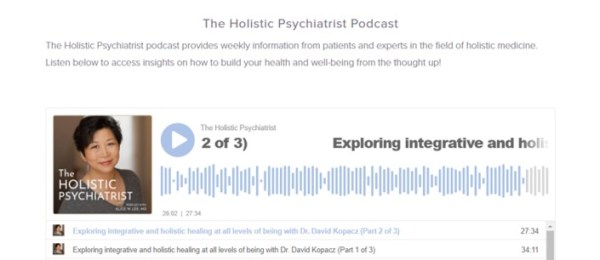

Listen to Part 3 of Alice’s interview with me on the Holistic Psychiatrist podcast. This segment shifts to looking at the importance of medical activism and our social responsibility for professionals.
Whidbey Island poet, Judith Adams’ new book of poems, A Place Inside, covers the full range of human emotions & experiences, bearing witness to the tragedies and celebrating the joys of life.

Poems such as “Visit to the Doctor” and “Letter to my CPA” bear witness to the dehumanizing mania of turning human beings into numbers. The poems are rooted in the earth, not only in harvesting potatoes in “Pommes de Terre,” but walks through the ferns and forest with grandchildren, rescuing a hummingbird that got into the house, and a poem “For Mary Oliver.” Death and life come into full circle relationship in poems such as “Two Reasons for Weeping,” when attending a Covid-era “circular drive-by” funeral, the poet gets a call from her daughter about new life, “Mom, I’m having a girl.” The poems look backward and forward, remembering the pain of leaving a mother behind in the UK, burying her under quince tree, and the birth of granddaughter, Brigid.
What could be more natural and human than giving birth and dying, gardening, mourning, rejoicing, kayaking―the land, the body, roots and bones, growth and hibernation? “All the things I have loved, as I love the human face,” ends the poem, “Roots.” The poet imagines a God who wants you to have “a wild night on the town” and not to try to get into Heaven with “love letters/you never sent,” (“Love Letters Only”). The poet reminds us that we need the trickster as much as the saint to keep us human and sane in a world that tries to classify the complex interweaving of suffering & joy into the question, “What is my pain level out of ten?” To the young doctor/computer technician, asking questions to quantify and reduce complexity to certainty, “Her fast fingers wait to classify my/existence on a screen,” while “oblivious/to the bend I have just rounded,” the poet suggests questions instead that open and deepen into life:
“Ask me instead who I am,
what my mornings are like,
if I am working towards a future,
who in my life has just died?
If you don’t have time, and you are
backing out of the room with your computer,
at least ask me if I drink alone.”
Judith Adams knows what healing and comforting the soul is, in contrast to the often cold, heartlessness of contemporary medicine. She created The Poetic Apothecary project, offering “poems for healing and comfort,” throughout Washington State via the Humanities Washington program. A video of this talk can be found on Judith Adams’ website.
The center of the book, and the title as well, is “A Place Inside,” a poem, brief and wonderful, which embodies a love of life, bringing inside/outside, human/divine, and body/spirit together.
“You have a place inside you
no one can touch.
It’s where your tools are kept.
In this divine workshop
you chisel at a raw day
in deep devotion to yourself,
and there you allow some unruliness,
your share of sore complaint.
And there you follow
your own footsteps
through the dark”
(A Place Inside)
A Place Inside is a wonderful book that reminds it what it is to be human, to be alive, to be grounded in the Earth, and to breathe starlight.
Watch for an interview I did with Judith Adams to be up on The-POV soon!

The second part of Alice Lee’s interview of me is up on her Holistic Psychiatrist Podcast!
This second part covers transforming suffering, the Hero’s Journey, the movie Groundhog Day, Joseph Rael’s teachings on the Medicine Wheel, and a discussion of circular models of healing.
Part 1 is available through the same link.
Part 3 will air next week. While you are on the site you can check out some of Alice’s other podcast interviews!
Thanks to Dr. Alice W. Lee for interviewing me on the “Holistic Psychiatrist Podcast!”
You can visit Dr. Lee’s website here, Alice is also a great photographer and shares some of her photographic work on the site as well.
In her newsletter announcing the podcast, Dr. Lee writes:
Thank you Dr. Lee for these kind words and for featuring my words and work on your podcast! I look forward to part II & III.
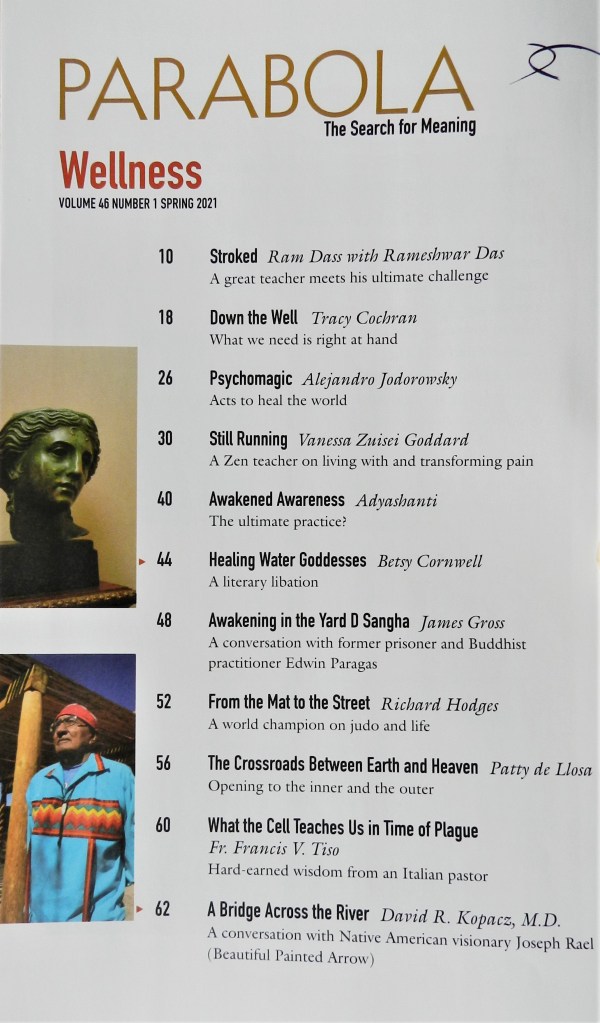
I interviewed Joseph Rael (Beautiful Painted Arrow) for The-POV, the new interview site that Usha Akella and I have started. Parabola magazine has picked up this interview and published it in their Spring 2021 issue entitled “Wellness.” The interview is called “A Bridge Across the River.”
Please support Parabola magazine and pick up a copy of the Spring 2021 Issue!



I’ve posted a new interview with Bill Laswell about his album, Against Empire, and the role of music in political protest. You can read the interview, here at The-POV. It was conducted by phone on 9/11/20. I have an earlier interview from 2017 that I haven’t posted yet – watch for that in the next couple months…


Read the rest of the interview here, at The-POV
This interview from September 13, 2017 with anthropologist and Marist priest, Gerald Arbuckle, is as timely and relevant as ever. This is just a small selection from our talk and focuses on culture, loneliness, and fundamentalism.
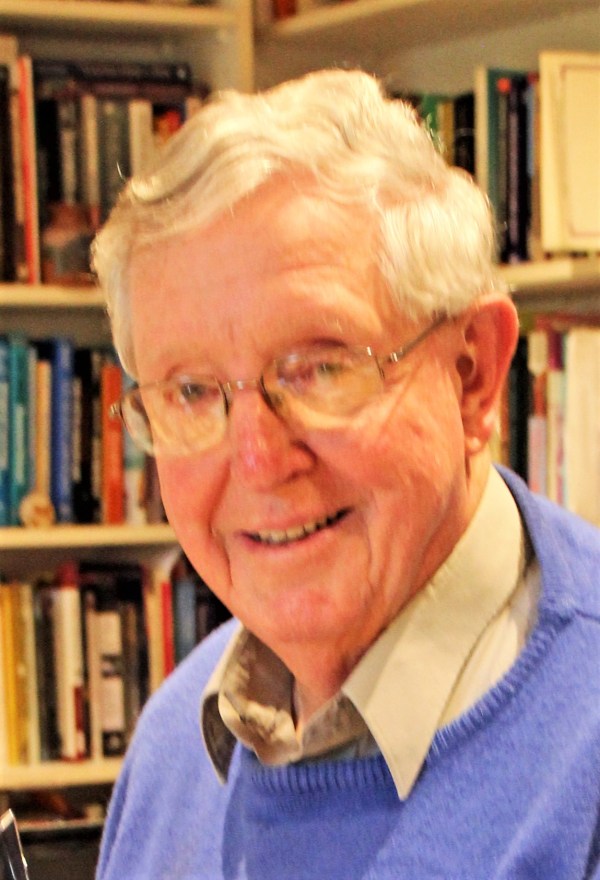

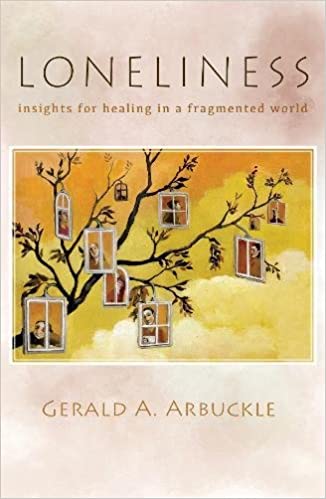
Gerry’s concept of refounding plays prominently in Becoming Medicine: Pathways of Initiation into a Living Spirituality. I also drew from his Humanizing Healthcare Reforms in my book, Re-humanizing Medicine. This 2017 chat I had with Gerry in Sydney, Australia was the basis for what we put in the book on refounding: how organizations and cultures go through the process of reconnecting to their founding visions, while navigating the risk of fundamentalism.
It was a pleasure to have this conversation with Marianela Medrano and Anjana Deshpande. The conversation ranged across topics of post-traumatic growth, creativity, resilience, and vulnerability.
You can watch the video of the conversation here
For more information about the discussants:

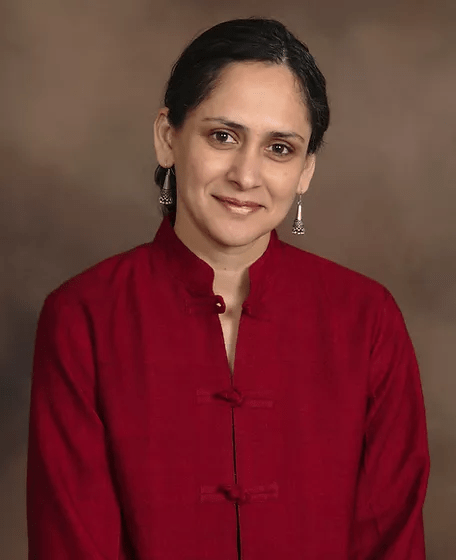
Marianela said we might have a follow-up conversation, so stay tuned!
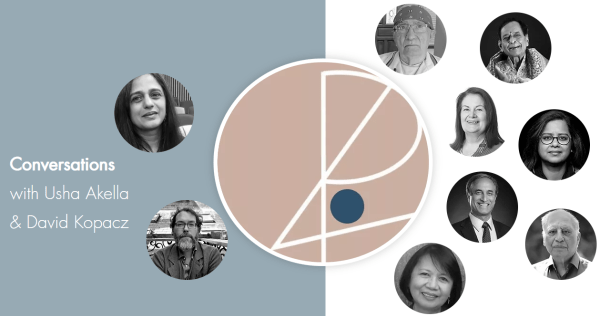
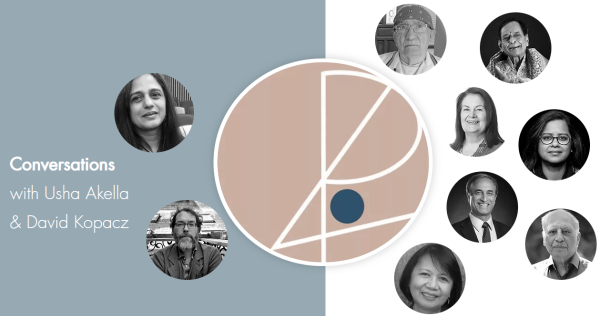
I met Usha Akella when she was doing a keynote presentation at the Power of Words conference in 2019, put on by the Transformative Language Arts Network. We both were interested in writing, poetry, creativity, and the spiritual path. Usha has long had a dream of developing an interview site online and I have been doing various interviews for my work – so it seemed like a good fit and less than a year later The-POV was born and launched into the world!
Usha’s first new interview is with Ann Ciccolella, Artistic Director of Austin Shakespeare since 2007. One of the things Usha has been impressed with is the depth and breadth of cultural programming Ann has curated.


My first interview for The-POV is with my friend and mentor, Joseph Rael (Beautiful Painted Arrow). Joseph is of the Southern Ute tribe through his mother and of Picuris Pueblo through his father. Joseph is the author of a number of books and he and I have written two books together, Walking the Medicine Wheel: Healing Trauma & PTSD (2016) and Becoming Medicine: Pathways of Initiation into a Living Spirituality (2020).


You can read the full interviews at The-POV.


It was a great pleasure and honor to be interviewed by Joanna Harcourt-Smith on the Future Primitive Podcast!
We talked about Joseph Rael’s and my new book, Becoming Medicine: Pathways of Initiation into A Living Spirituality and many other things as well…

Joanna turned fourteen in 1960, she was in love with Marlon Brando and Rock and Roll. During her adolescence she was torn between a desire to die and an intense love of life. Because she felt lost between despair and passion she wrote poetry and continues to do so up to this day. During the early 1960s she lived in Spain and wrote “The Little Green Book” an answer to Mao Tse Tong’s “Little Red Book”. The Book was published in 4 languages and widely sold in France, the Netherlands, England and Germany.
In 1968 moved by the music of the times and the spirit of revolution sweeping through her generation she emigrated to the United States. Her exploration of mind liberating substances led her to find Dr. Timothy Leary who was a fugitive from prison in the US. They became in love and were kidnapped by American authorities in Afghanistan and returned to California where Timothy Leary went back to prison to serve a sentence of possession of 0.01 grams of marijuana. During TL’s three and a half years in prison Joanna worked tirelessly to secure his release, she lived in San Francisco where she collaborated, published and distributed the 6 books he wrote in prison. In addition, Joanna traveled to England, Italy and across the United states lecturing about the imprisonment of Dr. Leary.
In 1977 Timothy and Joanna’s love affair came to an end after he was released from prison. She then went down to the Caribbean and bough a magnificent wooden sailboat named Kentra. For several years she lived on her boat and sailed around the islands attempting to heal her broken heart. In 1983 she returned to the United States, surrendered herself into the path of life long sobriety and became a celebrated chef in Philadelphia and Santa Fe.
She practices Buddhism and the elusive way of loving kindness and compassion mainly for herself and for others around her. Joanna’s great question in life is “What is true Kindness?”
In October 2013 Joanna published a memoir about her adventures with Timothy Leary entitled “Tripping the Bardo with Timothy Leary” . Her book been has been optioned by the Oscar winner director Errol Morris. Filming began in December 2019.
She his currently writing another book entitled “Change your beliefs, change your life” Surviving Timothy Leary“.
She is also featured in Gay Dillingham’s movie “Dying to Know”, a documentary about Leary and Ram Dass’ lifelong exploration and friendship.
She is the author of several articles published in the online magazine “Reality Sandwich”.
The co-founder of the podcast is her partner, José Luis G. Soler.
Joanna has three amazing children.
She likes to remember that “if you don’t like the media, be the media”.
Life is short, but it’s wide!
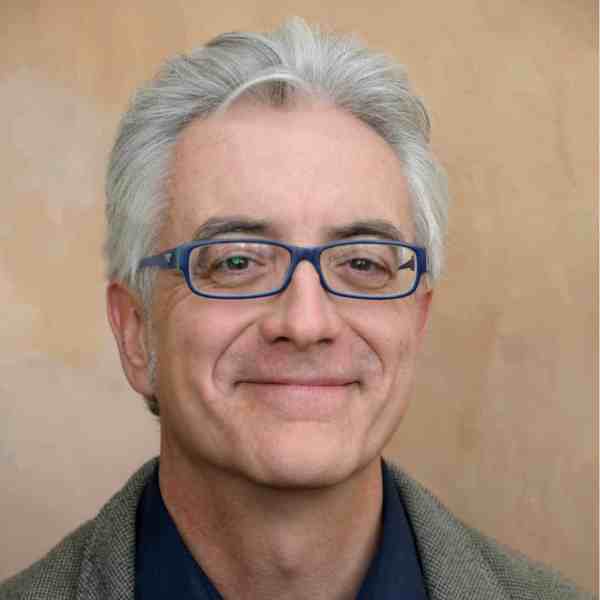
José Luis studied Audiovisual Media Studies at the University of Sevilla, Spain. Since a young age, he has been deeply interested in mysticism and Nature.
 Being Fully Human