We are getting close to the day!
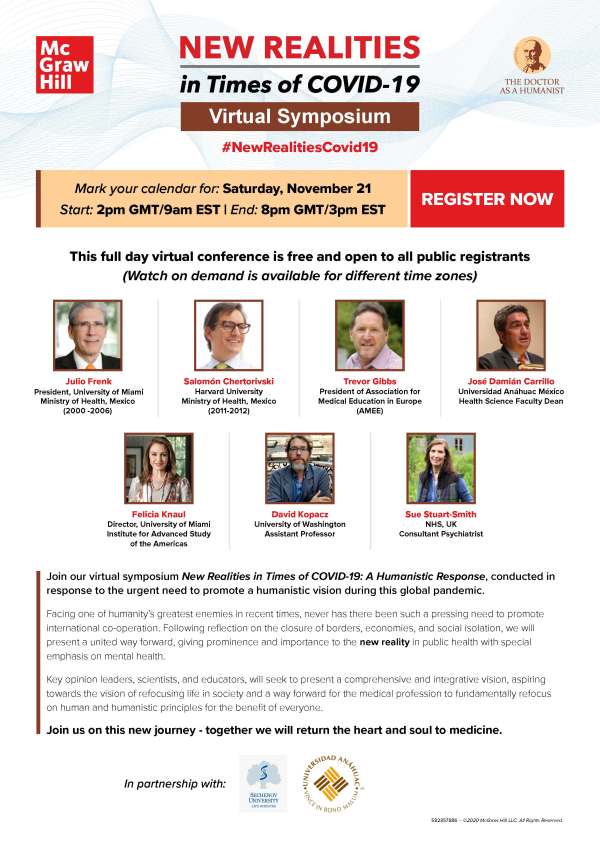
Saturday, 21 November, 6 AM Pacific Time/ 9 AM Eastern Time
Register for this free international symposium here


The talk I am giving is “Burnout: Soul Loss & Recovery in Health Care”


We are getting close to the day!
Saturday, 21 November, 6 AM Pacific Time/ 9 AM Eastern Time
The talk I am giving is “Burnout: Soul Loss & Recovery in Health Care”
David R. Kopacz, MD
The idea of medical activism has been criticized lately, from both inside[2] and outside[3] of the medical field. However, medical activism is a foundational element of professional identity – it defines who we are as professionals as opposed to being technicians, prescribers, protocol managers, or employees.
Activism can take many forms, but its essence is when professional responsibility extends beyond the individual to the community, the country, and the world. Medical activism occurs when we look up from our computer screens and electronic medical records and look outside the four walls of the clinic to be moral agents promoting health & wellness in the world. Medical activism is what Dr. Berwick is encouraging in his recent article, “The Moral Determinants of Health,” where he argues for an expansion of the role of professionals to include societal reform. “Healers are called to heal. When the fabric of communities upon which health depends is torn, then healers are called to mend it. The moral law within insists so.”[4]
Medical activism is always needed, but sometimes it is needed more than others. The times of the Covid-19 pandemic demand that we take a fresh look at ourselves as physicians and professionals to determine the scope of our responsibilities. With political attacks, anti-public health measures, and anti-science propaganda during the pandemic, physicians and health care professionals need to speak up now more than ever. If we do not use our voices, we may lose them.
Two broad categories of medical activism are: 1) the reform of health care delivery systems, and 2) action in the political, cultural, legal, relational, and natural environments. These can also be conceptualized as internal (delivery of care in the clinic & hospital) and external (medicine in the world).
The practice of medicine has changed greatly over the last 75 years, shifting from a practice of largely general practitioners who knew their patients over their whole lives to a fragmentation into sub-specialties, and the proliferation of multiple profit-deriving entities: the pharmaceutical industry, the insurance industry, and for-profit hospital and medical industry. During this time, doctors’ roles have shifted from independent healers engaged and embedded in communities to interchangeable and expendable bit-workers on ever more “efficient” medical assembly lines. Medicine has shifted from a focus on long-term healing relationships to a transactional, technician-based delivery system in which doctors are protocol-managers and data entry clerks.
With the rise of productivity medicine we have seen the deprofessionalization[5] and dehumanization[6] of physicians and health care professionals. Corporate medicine is not interested in moral agents or medical activists, but rather what Foucault called “docile bodies,” to play limited roles within the institution. Moral agents and medical activists function independently or semi-autonomously, rather than as interchangeable technicians who dispense the same, generic, non-individualized treatment interventions. While corporate medicine pushes propaganda of customer service – true caring, compassion, and patient-centered care can only be given human being to human being. Individuality and humanity are extraneous and problematic variables to corporate, machine medicine.
To be a professional means that one is constantly professing – similarly if one is a profess-or. The roots of the word “profession” have to do with taking vows and declaring openly and to make public statement. The etymology of the word is related to “profess” and “prophet” going back to the ancient Proto-Indo-European root, *bha-, meaning “to speak, tell, say.”[7] What we are doing as professionals is continual professing – to declare openly and to speak, tell, say.
Our job as professionals is to be prophets of health (which is different than the profits of the health). The industry, the organization, the institution is not an inherently moral creation, it is more like a machine than a holder of morality, and it is the job of professionals within the system to be the moral leadership of the institution. To become moral agents in our world, we need to tear ourselves away from the never-ending demands of the Electronic Medical Records system, and raise our gaze from the computer screen to the world we all live in. To be a professional is to be more than a technician blindly following orders. To be professional means that we answer to a higher calling and we engage our hearts as well as our minds to become moral agents for public health. This is what psychiatrist Carl Bell called, “getting rid of the rats.”[8] He learned that a good doctor won’t just treat a rat bite, but will help to get rid of the rats in the neighborhood. He thus saw the role of the doctor and psychiatrist as not a technician in an office, but as an engaged professional intervening in the world.
Throughout his career, Robert Jay Lifton has written about the idea of the witnessing professional. He describes the shift toward “malignant normality,” “the imposition of a norm of destructive or violent behavior, so that such behavior is expected or required of people.”[9]
In order to teach the next generation of doctors, healers, and clinicians, we need to provide good role models for students to emulate. This is the transmission of knowledge and wisdom that happens from one generation to the next. Without medical professionalism, students may become technically proficient and yet not be true professionals and healers. We teach students science, but we do not teach them to use what Stevan Weine calls “the witnessing imagination.”[11]
Author and educator, Parker Palmer speaks of the new professional, “a person who not only is competent in his or her discipline but also has the skill and the will to resist and help transform the institutional pathologies that threaten the profession’s highest standards.”[12]
Palmer states that “the very institutions in which we practice our crafts pose some of the gravest threats to professional standards and personal integrity. Yet higher education does little if anything, to prepare students to confront, challenge, and help change the institutional conditions under which they will soon be working.”[13]
Wash your hands – this seems obvious to us now – but in 1850 Semmelweis tried to convince doctors that they should wash their hands after leaving off doing autopsies and before examining mothers who had just given birth. He was ridiculed, lost his appointment, and died in a mental institution.[15]
In the late 1800s, Virchow was tasked by the Prussian government to research an outbreak of typhus. His prescription was social and political: elimination of social inequality.[16] He came back with recommendations regarding poverty, services, and even political recommendations. He was fired and later wrote, “Medicine is a social science and politics is nothing more than medicine on a large scale,”[17] and that doctors “are the natural attorneys of the poor.”[18]
In 2015, pediatrician Mona Hanna-Attisha noticed that the children in her practice in Flint, Michigan, had high levels of lead. She wrote about her work as a medical activist in her book, What the Eyes Don’t See.[19]
Dr. Fauci.
There are many different levels of health care reform – from the way a doctor is present with a patient, to how clinics are structured, to how reimbursement occurs, and to how we, as a society, value (or de-value) health care as a human right as all other modern democracies do. An ongoing critique of the contemporary practice of medicine is a moral duty of physicians. It is up to us, as professionals, to hold true to the mission and purpose of health care: caring for people who are suffering. Institutions may have vision and mission statements but they are incapable of moral agency and compassion because those are human traits, not bureaucratic functions.
I have written about dehumanization in medicine and the need for re-humanizing ourselves, our practices, and the culture of medicine – calling for a compassion revolution and a counter-curriculum of re-humanization in my book Re-humanizing Medicine.[20] Many others have called for bringing caring back into health care: Robin Youngson,[21] Victor Montori,[22] Arthur Kleinman,[23] Mukta Panda,[24] and Rana Awdish,[25] to name a few.
Other levels of health care reform can be found in the work of L. Gordon Moore’s idea of the micropractice,[26] and Dr. Quentin Young’s work with Physicians for a National Health Program.[27]
Samuel Shem, in his essay, “Fiction as Resistance,” writes of turning to fiction writing as a resistance to “brutality and inhumanity, to isolation and disconnection.” His recommendations on how to resist “the inhumanities in medicine” are four suggestions:
There are many kinds of medical activism needed for our current ills, here are just a few examples:
Meanwhile, back at the pandemic, we just topped 160,000 new cases in one day and the United States of America has no coordinated national policy to control the pandemic. The president has come out against science,[29] has accused doctors of profiting from the pandemic by diagnosing Covid-19 to make money,[30] and there have been many coordinated political propaganda campaigns by the president and one political party to discourage people from following basic public health measures (masking and social distancing)[31],[32],[33] and have actively encouraged unhealthy behavior (large gatherings without masks or social distancing).[34] The activist response by individual physicians through social media as well as of professional medical and scientific organizations has been swift and strong.[35],[36],[37]
We stand at a unique time in history – a global pandemic, smear campaigns against public health experts, attempts to silence or manipulate science for political ends, and the politicization of basic, scientific principles of public health. Now, more than ever, we as physicians, we as clinicians, need to re-claim activism as a core identity. We need to speak, tell, say, to speak openly, to speak publicly about the public health threats of this time in history. We have guidance of those physicians and clinicians who have gone before us and how they have spoken up for the health of the people and the public. Lifton’s witnessing professional and Palmer’s new professional give us a framework for social, moral, and political involvement of professionals as part of the practice of medicine and health care. We are called to become moral agents for social change as we diagnosis and treat the moral determinants of health and the public health threats of the day.
This paper only just scratches the surface of the topic of medical activism. We need classes, conferences, and an edited textbook on the topic, written by expert activists and covering the various levels of the work. Bassuk’s 1996, The Doctor-Activist: Physicians Fighting for Social Change, is a great start – but we need to move beyond the idea of medical activism as something that exceptional individuals do, to see it as a normative part of professional identity – something we all do for the health of all.
[1] Foucault M. The Birth of the Clinic. New York: Vintage Books, 1994, 38.
[2] Goldfarb S. Take Two Aspirin and Call Me by My Pronouns: At ‘woke’ medical schools, curricula are increasingly focused on social justice rather than treating illness. Wall Street Journal, 9/12/19.
[3] Haag M. Doctors Revolt After N.R.A. Tells Them to ‘Stay in Their Lane’ on Gun Policy. The New York Times, Nov. 13, 2018. The original criticism was in a Tweet from the NRA, “Someone should tell self-important anti-gun doctors to stay in their lane. Half of the articles in Annals of Internal Medicine are pushing for gun control. Most upsetting, however, the medical community seems to have consulted NO ONE but themselves.” https://twitter.com/NRA/status/1060256567914909702
[4] Berwick DM. The Moral Determinants of Health. JAMA. 2020;324(3):225–226. doi:10.1001/jama.2020.11129.
[5] http://www.professionalsaustralia.org.au/blog/deprofessionalisation-matter/
[6] Kopacz, D. Re-humanizing Medicine: A Holistic Framework for Transforming Your Self, Your Practice, and the Culture of Medicine. Washington DC: Ayni Books, 2014.
[7] Online Etymology Dictionary for “profession,” “profess,” “prophet.” https://www.etymonline.com/search?q=profession
[8] https://beingfullyhuman.com/2020/07/18/carl-bell-md-medical-activist-human-rights-champion-with-an-indomitable-fighting-spirit/. Bell C. The Sanity of Survival: Reflections on Community Mental Health and Wellness. Chicago: Third World Press, 2004, xx.
[9] Lifton RJ. Losing Reality: On Cults, Cultism, and the Mindset of Political and Religious Zealotry. New York: The New Press, 2019, 189.
[10] Lifton RJ. Losing Reality: On Cults, Cultism, and the Mindset of Political and Religious Zealotry. New York: The New Press, 2019, 190.
[11] Weine S. (1996). The Witnessing Imagination: Social Trauma, Creative Artists, and Witnessing Professionals. Literature and Medicine, 15, 167 – 182.
[12] Palmer P. The Courage to Teach: Exploring the Inner Landscape of a Teacher’s Life. San Francisco: Jossey-Bass, 2007, 202.
[13] Palmer P. The Courage to Teach: Exploring the Inner Landscape of a Teacher’s Life. San Francisco: Jossey-Bass, 2007, 199.
[14] Palmer P. A New Professional: The Aims of Education Revisited. Change, Vol. 39, No. 6 (Nov-Dec, 2007), 6-12.
[15] https://www.pbs.org/newshour/health/ignaz-semmelweis-doctor-prescribed-hand-washing
[16] Mackenbach J. (2009). Politics is nothing but medicine at a larger scale: Reflections on public health’s biggest idea. Journal of Epidemiology and Community Health (1979-), 63(3), 181-184. Retrieved August 8, 2020, from http://www.jstor.org/stable/20720916
[17] Quoted in Vicente Navarro. What we mean by social determinants of health. Global Health Promotion Vol. 16 (1):5-16; 2009. Original reference: Virchow R. Die medizinische Reform, 2 in Henry Ernest Sigerist, Medicine and Human Welfare 1941:93.
[18] Mackenbach J. (2009). Politics is nothing but medicine at a larger scale: Reflections on public health’s biggest idea. Journal of Epidemiology and Community Health (1979-), 63(3), 181-184. Retrieved August 8, 2020, from http://www.jstor.org/stable/20720916
[19] https://www.npr.org/sections/health-shots/2018/06/25/623126968/pediatrician-who-exposed-flint-water-crisis-shares-her-story-of-resistance
[20] Kopacz D. Re-humanizing Medicine: A Holistic Framework for Transforming Your Self, Your Practice, and the Culture of Medicine. Washington DC: Ayni Books, 2014.
[21] Youngson R. Time to Care: How to Love Your Patients and Your Job. Raglan: RebelHeart, 2012.
[22] Montori V. Why We Revolt: A Patient Revolution of Careful and Kind Care. Rochester: Patient Revolution, 2017.
[23] Kleinman A. The Soul of Care: The Moral Education of a Husband and a Doctor. New York: Viking, 2019.
[24] Panda M. Resilient Threads: Weaving Joy and Meaning into Well-Being. Palisade: Creative Courage Press, 2020.
[25] Awdish R. In Shock: My Journey from Death to Recovery and the Redemptive Power of Hope. New York: Picador, 2018.
[26] Moore LG. ‘Going Solo: Making the Leap,’ Family Practice Management. February 2002, American Academy ofFamily Physicians website, accessed April 7, 2012.http://www.aafp.org/fpm/2002/0200/p29.html .
[27] https://pnhp.org/news/dr-quentin-young-selected-obituaries-stories/
[28] Shem S. Fiction as Resistance. Annals of Internal Medicine. Vol 37(11):934-937; 2002.
[29] https://www.scientificamerican.com/article/trumps-5-most-ldquo-anti-science-rdquo-moves/
[30] https://www.forbes.com/sites/brucelee/2020/10/27/trump-claims-doctors-overcounting-covid-19-coronavirus-deaths-to-make-more-money/?sh=7439b2836cb9
[31] https://www.reddit.com/r/SeattleWA/comments/jduz3x/culp_antimask_propaganda/
[32] https://www.vox.com/the-goods/2020/8/7/21357400/anti-mask-protest-rallies-donald-trump-covid-19
[33] https://www.vox.com/2020/6/20/21297693/trump-rally-tulsa-masks
[34] https://apnews.com/article/donald-trump-rallies-virus-surges-50e79fabd46472c51ecc1444184082de
[35] https://www.forbes.com/sites/brucelee/2020/10/27/trump-claims-doctors-overcounting-covid-19-coronavirus-deaths-to-make-more-money/?sh=7439b2836cb9
[36] https://www.scientificamerican.com/article/leading-scientists-urge-voters-to-dump-trump/
[37] https://www.medicalnewstoday.com/articles/respected-scientific-journals-publicly-oppose-trump


Vaclav Havel, Disturbing the Peace, 181-182

I will be presenting “Burnout: Soul Loss & Recovery in Health Care” at this free virtual international symposium sponsored by The Doctor as Humanist, McGraw Hill, Sechenov University, and Universidad Anáhuac México.

I’ve posted a new interview with Bill Laswell about his album, Against Empire, and the role of music in political protest. You can read the interview, here at The-POV. It was conducted by phone on 9/11/20. I have an earlier interview from 2017 that I haven’t posted yet – watch for that in the next couple months…


Read the rest of the interview here, at The-POV

We are in the midst of a public health crisis – the Covid-19 coronavirus pandemic. We are also in the midst of another global public health crisis – fascism. We are in the midst of a pandemic of the body and a pandemic of the mind.
The first reported cases of Covid-19 were in Wuhan, China on December 31, 2019.[1] The first case in the United States was January 19, 2020.[2] Viruses teach us that we are all connected. As human beings we are all connected, but we are also interconnected with nature – a bat was thought to be the vector for the virus into humans through the wet markets in China. Other viruses have come through birds and pigs to humans. This is the first teaching of the virus – we are all interconnected.

Covid-19 magnified the cracks in our infrastructures of interconnection. In the US, our health system was quickly overwhelmed in areas of high virus concentration. We thought that because we have the most expensive health care system in the world that we were protected – actually our health care system is ranked 37th in the world.[3] World economies ground to a halt. We realized how many people were living paycheck to paycheck, despite the economy appearing healthy on the surface. We thought our democracy was strong and healthy – but it was already suffering since 2016, since 2001.[4] We thought we had a multi-cultural democracy, but we suffered outbreaks of xenophobia, racism, white supremacy, and nationalism.

There were problems with our health care system even before Covid-19, the pandemic just magnified our vulnerabilities. Timothy Snyder writes of the short-comings of commercial medicine: “We would like to think we have a health care that incidentally involves some wealth transfer; what we actually have is wealth transfer that incidentally involves some health care,” (Snyder, Our Malady, 14). Victor Montori also diagnosed the sickness in our health care system in his 2017 book, Why We Revolt: A Patient Revolution for Careful and Kind Care. He describes the cruelty of systems, policies and procedures, and greed that drives dehumanization in medicine. I wrote about the pandemic of burnout and suffering in physicians, the dehumanization of both health care workers and patients, and a way of healing our system in my 2014 book, Re-humanizing Medicine: A Holistic Framework for Transforming Your Self, Your Practice, and the Culture of Medicine.
Our health care system was already sick, and then the pandemic hit, and then fascism revealed itself and turned a public health pandemic into an opportunity for consolidation of power. Montori starts his book by citing George Orwell, “Orwell proposed that one must write, among other reasons, to ‘see things as they are, to find out true facts and store them up for the use of posterity.’ This book arises out of my need to do just that,” (Montori, 1). Montori evokes facts, revolution, and caring as treatments for our health care system.
Timothy Snyder did not have Covid-19, but his journey of illness took him through five hospitals in two countries, and two states from December 2019 to March 2020. His notes and observations on his illness and recovery started with a focus on the health care system, but became inextricably entangled within the broader politics of our age. Whereas Camus wrote about a plague as an allegory for fascism. Snyder sees how fascism and health are interwoven. “Our malady is physical illness and the political evil that surrounds it. We are ill in a way that costs us freedom, and unfree in a way that costs us health. Our politics are too much about the curse of pain and too little about the blessings of liberty,” (Snyder, 4).
The health of the individual, the health of the population, the health of a country, the health of global democracy, and the health of the Earth are all interconnected. These are truths that should be self-evident, and yet we have somehow forgotten them. We have not only forgotten them, large numbers of people across the globe are embracing the opposite idea – concentration of wealth in the hands of the few, us vs them thinking, policies of exclusion, wall building, name calling, dividing and conquering rather than uniting and preserving. This philosophy of me-ism, of unbridled and unchecked capitalism, of unbalanced materialism is now blossoming forth as fascism – in the United States of America, England, Philippines, Russia, Turkey, India, Hungary, Brazil, Poland, and many countries across the globe.

Charles Darwin described two contradictory approaches to natural observation. Some naturalists he described as “lumpers” and some as “splitters.” Lumpers looked at two birds and saw similarities and called them the same species. Splitters looked at two birds and saw differences and called them different species. The intellect and science functions by discrimination and division of one thing from the other. Materialism and capitalism extract numbers, in the form of dollar signs, from every possible interaction. What of the Lumpers? What is that drives some people to see similarities and other people to see only differences? We can see lumpers as holistic thinkers, systems thinkers, ecological philosophers who see the underlying similarities beneath the surface differences.
Splitting is not just something that is happening on the right, it is happening on the left as well. On the left there is also a kind of political correctness of seeing every group as so different that there is an unbridgeable gap between human beings. Splitters on the left argue that this gap is unbridgeable and compassion is an aggressive act. If this is taken to the extreme, everyone will end up isolated monads. I do not believe our healing will come through splitting. Respecting and acknowledging differences is important, but it must be balanced with acknowledging our common underlying similarities as well, our common humanity.
This hypervigilant splitting and focus on differences has been carried over to the natural world as well. Many argue that animals are so irrevocably other that we cannot presume to understand them. Those who try to bridge this gulf are accused of anthropomorphizing animals. While it is wise to be cautious to attributing your own emotions or motives to other humans or to animals, it is foolish to think that we are so different as to all live within unbridgeable and unbreachable walls. This social-intellectual wall building is dangerous, as is the real-world wall-building and caging of individuals. I don’t mean to say they are equal offences, but they both create fear, separation, isolation, and alienation.
Charles Foster, in his book Being a Beast: Adventures Across the Species Divide, is a lumper, although he recognizes and honors differences as well. He believes that we can cross the species divide. He does this through literally walking in the footsteps of the other, to live as the other, to take the perspective of the other. To this end, he builds a burrow underground and eats earthworms as a badger does, he tries to catch a fish with his hands and mouth like an otter does, he sleeps on the ground and eats out of rubbish bins as an urban English fox does. And then he tries to take the perspective of the flying swift and he still finds commonalities.
As human beings, we have our differences, but if we stop focusing on our similarities we become dehumanized. Foster tells us with effort we can cross the species divide, if that is possible, we can definitely cross the divides and heal the splits that separate us as human beings. To only see differences leads down the slippery slope of xenophobia, fascism, and genocide.
Science fiction writer, Philip K. Dick, was concerned with two questions in his work: what is real and what is human? Both of these are relevant in our present age. Reality is under continual assault for political reasons – fake news, propaganda, and lies spew from the mouth of our current president: 20,055 lies as of July, 2020.[5] Reality is also under siege in the assault on science and the silencing of journalists. What is human is also under assault as fascism eats away at our souls, disconnecting us from other human beings and other living beings. PK Dick cautions us about becoming overly enamored with splitting and seeing ourselves as separate from the environment:
What is it that allows us to feel alive and vibrant? What is it that allows us to feel interconnections with other human beings, to recognize us all as brothers and sisters in the human family? What is it that allows us to feel communion with nature and our animal brothers and sisters? I will call this ability: soul. I do not mean this in a religious sense and yet I do not use it in only in a metaphorical sense, for it is real. I mean it in the sense that PK Dick illustrates. We have the choice to be lumpers or splitters. True enough, we need both abilities to survive in this world – we must be able to distinguish between an oncoming bus and a friendly dog. However, for human things, we need to be able to make the choice to see our common humanity, our common shared soul. And for dealing with the Earth we need to be able to see the anima mundi, the soul of the world. These are human capacities and capabilities that we have, but first we must acknowledge their non-material reality and then we must practice them, lest we lose them and end up at the end of Martin Niemöller’s poetic warning:

Foucault wrote, the “first task of the doctor is therefore political: the struggle against disease must begin with a war against bad government.”[8] Virchow wrote, “Medicine is a social science and politics is nothing more than medicine on a large scale,”[9] and that doctors “are the natural attorneys of the poor.”[10] While it may seem radical and revolutionary, and some may say “stay in your lane,”[11],[12] the health of the individual and the health of the population are inextricably and irrevocably interconnected.
Snyder wrote from his personal experience as a patient and his professional experience as a historian of fascism and totalitarianism about the intersections of politics and health.
To speak of human rights brings together discussions of medicine and politics. Snyder sees that we are unfree if we are unwell and we are unfree if we are “othered.” We must strive to be brothered and sistered rather than othered. The Lakota understood this with their saying mitakuye oasin, all of our relations. Joseph Rael often tells me that we are all brothers and sisters and we write of this brotherhood and sisterhood in Walking the Medicine Wheel: Healing Trauma & PTSD. This is simple ecology – we are all related and interrelated. Genetic science tells us this through our common ancestors, who lived at different times, Mitochondrial Eve and Y Chromosome Adam. We also all come from Africa – the common home of ancient humanity. Snyder tells us, “A virus is not human, but it is a measure of our humanity,” (Snyder, 16). The virus is reminding us – we are all connected, even while the fascists say it is us versus them. When we enter the non-ordinary realm of the shaman, the visionary, the mystic – we move beyond even the separation of interconnection to the experience of non-dual Oneness. It is as the virus teaches, we are all One, what happens to another happens to us and our shared Earth.

Human rights recognizes us all as equal. Let us turn to the Declaration of Independence of the United States of America, July 4, 1776. While the United States cannot, by any means, show that it has enacted universal human rights for all people (women, blacks, the indigenous population were originally excluded), still this is an important document in the history of modern democracy.
While I initially was just going to quote the beginning of this paragraph on what unalienable Rights and self-evident truths are – equality and Life, Liberty and the pursuit of Happiness – the later part of the paragraph starts to sound a lot like our current age a long train of abuses and usurpations, which has been leading down the slippery slope toward absolute Despotism. Let’s take a look at the list of abuses and usurpations of the King against the colonies, reading with an eye toward the list of abuses and usurpations of the President against the people.
…
…
…
…
Apologies to the Indigenous peoples of this land for the slur of “Indian Savages” in our Declaration of Independence and for all of the past abuses and genocides that the United States perpetrated under the guise of its own freedom.
A quick read of these offences of King George bear some resemblances to our current tyrant-in-training: subverting the laws of the land, convening people in unsafe rallies, not filling government positions, undermining government institutions, he has been impeached for “abuse of power and obstruction of Congress,”[15] he has stacked the courts with loyalists, he has pardoned criminal cronies, he has instructed witnesses to ignore requests to testify in Congress, he has sent in federal officers into states without their consent, he has attempted to decriminalize the actions of white supremacists and tried to criminalize those he disagrees with, he has interfered with trade agreements, global treaties, and membership in international organizations, he has abandoned responsibility for the country during a pandemic – denying help to those he disagrees with politically, he has excited domestic insurrections amongst us, and he has perpetuated “works of death, desolation and tyranny, already begun with circumstances of Cruelty & perfidy scarcely paralleled in the most barbarous ages, and totally unworthy the Head of a civilized nation.”
In the days of the American Revolution tyranny was the word of the day. In this age we have more words to describe abuses of power: authoritarianism, totalitarianism, and fascism.

The other component to our public health crisis is fascism. It compounds the adverse health effects of the pandemic and it infects the minds of the people, undermining the health of our democracy.
Even back in 2018, before the pandemic, Freedom House reported that we were in the 13th consecutive year of decline in freedom and that “Democracy is in retreat.”[16] In 2020, Freedom House warned of the “Dropping of the Democratic Façade.”[17] That same report also documented links between lack of democracy and poorer health.
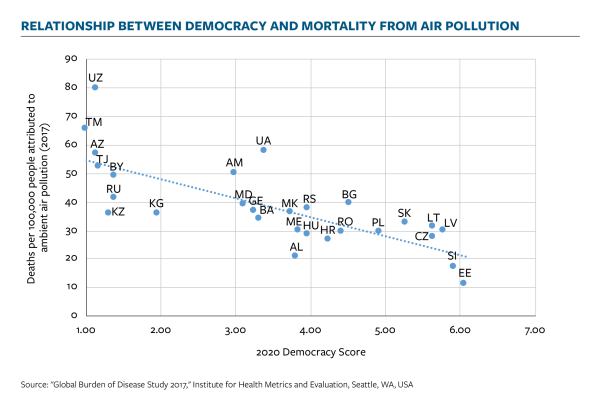
Snyder summarizes a number of studies that showed that:
A phenomenon has been noted in recent years called “deaths of despair”[19] in which people in certain regions in the United States are dying at younger ages, decreasing the average lifespan statistics. They are called deaths of despair because they are linked to overdose, suicide, and liver disease related to drinking. This increased mortality over the past 20 years cannot be blamed on fascism – rather it is linked to capitalism without a human face: income inequality, joblessness, unemployment and underemployment, breakdown of support mechanisms and the social safety net, social isolation, and the loss of hospitals and health care in rural areas. Scutchfield and Keck describe the political causes of this public health crisis:
While fascism did not cause this despair, it is making good use of it and a despairing population appears to be infected with fascism, voting in an autocrat, liar, and rule-breaker. These votes of desperation still appear to be strong as the base of the current president holds despite a constant stream of lies and catastrophic mismanagement of the pandemic. This population appears to value strong talk over reality and not to value objective science or objective facts in politics and the media. Over Truth and complex reality, many prefer a “strong man” who “gets things done” (the end justifies the means).

When a little kid lords power over others in the school yard, he is a bully. When the President of the United States bullies others, he is on the slippery slope of colluding with foreign governments to get his way, authoritarianism, totalitarianism, and fascism. John W. Dean and Bob Altemeyer authored the book, Authoritarian Nightmare: Trump and His Followers. Dean, a member of the Nixon administration, testified against Nixon and helped lead to his resignation. Altemeyer is a psychologist, researcher on authoritarianism, and the author of The Authoritarians and Enemies of Freedom: Understanding Right-Wing Authoritarianism. In their book they focus more on Trump’s followers than on Trump himself – because a bully without any followers is just a loud-mouth you can ignore, but a bully with a bunch of loyalist followers is the start of a fascist movement. Dean & Altemeyer summarize the research on American authoritarianism:

Dean & Altemeyer describe the difficulty of bridging the divide between those using rationality and facts and those using emotionality and anger in their decision-making. They summarize research on the Right-Wing Authoritarianism Scale that persons who score highly on this scale:
We see then a kind of social pathology in authoritarianism that can lead to fascist behavior through demonizing and othering groups of people. This dehumanization is very concerning because it is the basic building block for violence against others and can lead to a spectrum of bigoted and racist speech, hate speech, individual violence based on ideology, the formation of vigilante justice groups,[24] to organized genocide.
Any student of history would have been worried upon hearing Mussolini’s words “drain the swamp,” and Stalin’s, Hitler’s, and Mao’s words “enemy of the people.” “Words create worlds”[25] said Rabbi Heschel, warning of how the words of a bully ended up creating genocide.

Authoritarianism leads to fascist action when all the ills of the world are projected on to the other. Thus, the current president’s use of the phrases, the “Wuhan virus,” and the “Chinese virus.”[26] If the problem is out there, it can’t be in here. If I’m all good (narcissism) then if something bad happens it must be someone else’s fault. Here is how Snyder summarizes the current president’s response to the pandemic:

Psychiatrist, public health advocate, and violence researcher Carl Bell thought we should consider racism as a psychological disorder.
Snyder, in describes the current president’s apparent reasoning and illogical actions that
There is a psychiatric disorder called “Delusional Disorder,” with delusions defined as “false beliefs based on incorrect inference about external reality that persist despite the evidence to the contrary; these beliefs are not ordinarily accepted by other members of the person’s culture or subculture.”[28] By this definition, if others in your sub-culture believe the same as you do, you are not delusional. Right Wing Authoritarians and Conspiracy Theorists are not delusional, in the strictest sense, even though what they believe is not true. Jung, trying to understand how so much of Europe went along with fascist dictators, used the terms “mass psychosis” and “mob psychology.”[29] He saw that entire nations could become sick and lose touch with reality.

Forensic psychiatrist, Bandy X. Lee, was minding her own business, researching violence, until one day she found that “politics had invaded my area of expertise,” (Bandy Lee).[30] She convened a conference of mental health professionals on the topic of the president’s mental state and his risk of being a danger to self or others. They felt he was an unprecedented danger and that, under the law of “duty to warn” and under professional ethics and public health, that they were obligated to speak out. This led to the publication of The Dangerous Case of Donald Trump: 37 Psychiatrists and Mental Health Experts Assess the President, then The World Mental Health Coalition Documents, and most recently, Profile of a Nation: Trump’s Mind, America’s Soul. Duty to warn does not require making a diagnosis, it is a professional assessment of a person’s words and actions. Dr. Lee makes her statement:
Whether we consider racism, authoritarianism, and fascism as mental disorders or not – they all occur in the mind – tyranny’s battleground and psychiatrists are the doctors of the mind. If the battle against fascism, racism, authoritarianism, and tyranny is fought in the human mind, then we need doctors against racism, doctors against authoritarianism, doctors against fascism.
Snyder warns us of the interconnection of health and democracy, “Our failure during a public health crisis is a sign of how far our democracy has declined,” and that “Where democracy is limited, citizens die,” (Snyder, 98). This leads us to the conclusion that fascism is a public health emergency that compounds the emergency of the pandemic. Snyder’s solutions are that, “We should regard health care as a right, take medical and local knowledge seriously, make time for children, and put doctors in charge,” (Snyder, 139).
I don’t know about you, but I voted for Dr. Howard Dean in the 2004 primaries. At that time, it was tragic that one whoop of excitement was overblown in the media and lost him the primary.[31] How different would history have been if we had a Democrat and doctor in the White House instead of the second Bush term. Torture[32] would likely have been taken off the menu. How much of where we are now started after 2001 with the advent of Homeland Security, the militarization of the police, the authorization of torture, and the Kafka-esque fate of “unlawful combatants” detained now going on decades? How ironic that Dean’s one “scream” was amplified by the media to disqualify him as unpresidential, and yet the current president spews forth an unceasing, undignified scream that leaves us all like the figure in Edvard Munch’s The Scream?

Maybe the United States of America was never what we thought it was. Maybe it was always hypocritical in declaring some people free and equal and others “savages” and “slaves.” Maybe we are experiencing the unveiling of what has always been there. Maybe we go through times when we are closer to living up to the ideals of democracy and other times where we struggle with the basic foundations of what it means to be a citizen of the United States of America.
The Great Seal of the United States features an eagle with a talon gripping a bundle of arrows and talon holding an olive branch. On the seal, the eagle is looking toward the olive branch, toward peace, but the head of our eagle seems to be looking more toward the arrows lately.
How do we, collectively, turn the head of the eagle from war and division to unity and peace? Snyder, despite his concerns and warnings, feels that it is possible to heal from this crisis, to heal our health care system and to heal our democracy.
To address this global pandemic, we need doctors. To heal our individual and collective minds, we need not just doctors against fascism and violence, we need doctors for peace and compassion.
[1] https://www.who.int/news/item/27-04-2020-who-timeline—covid-19
[2] https://www.nejm.org/doi/full/10.1056/NEJMoa2001191
[3] https://worldpopulationreview.com/country-rankings/best-healthcare-in-the-world
[4] https://www.hrw.org/report/2011/07/12/getting-away-torture/bush-administration-and-mistreatment-detainees#
[5] “In 1,267 days, President Trump has made 20,055 false or misleading claims,” Updated July 9, 2020. The Washington Post’s Fact Checker’s ongoing database of the false or misleading claims made by President Trump since assuming office. https://www.washingtonpost.com/graphics/politics/trump-claims-database/?utm_term=.27babcd5e58c&itid=lk_inline_manual_2&itid=lk_inline_manual_2
[6] Philip K. Dick, “The Android and the Human,” (1972), in The Shifting Realities of Philip K. Dick: Selected Literary and Philosophical Writings, ed. Lawrence Sutin, 183.
[7] “Martin Niemöller: ‘First they came for the Socialists…’”. Holocaust Encyclopedia. United States Holocaust Memorial Museum. Archived from the original on 23 July 2018. Retrieved 25 July 2018. Cited on Wikipedia, https://en.wikipedia.org/wiki/First_they_came_…#cite_note-3
[8] Michel Foucault, The Birth of the Clinic (New York: Vintage Books, 1994), 38.
[9] Quoted in Vicente Navarro. What we mean by social determinants of health. Global Health Promotion Vol. 16 (1):5-16; 2009. Original reference: Virchow R. Die medizinische Reform, 2 in Henry Ernest Sigerist, Medicine and Human Welfare 1941:93.
[10] Mackenbach, J. (2009). Politics is nothing but medicine at a larger scale: Reflections on public health’s biggest idea. Journal of Epidemiology and Community Health (1979-), 63(3), 181-184. Retrieved August 8, 2020, from http://www.jstor.org/stable/20720916
[11] “Take Two Aspirin and Call Me by My Pronouns: At ‘woke’ medical schools, curricula are increasingly focused on social justice rather than treating illness,” Stanley Goldfarb, Wall Street Journal, 9/12/19
[12] Matthew Haag, “Doctors Revolt After N.R.A. Tells Them to ‘Stay in Their Lane’ on Gun Policy,” The New York Times, Nov. 13, 2018. The original criticism was in a Tweet from the NRA, “Someone should tell self-important anti-gun doctors to stay in their lane. Half of the articles in Annals of Internal Medicine are pushing for gun control. Most upsetting, however, the medical community seems to have consulted NO ONE but themselves.” https://twitter.com/NRA/status/1060256567914909702
[13] https://www.archives.gov/founding-docs/declaration-transcript
[14] https://www.archives.gov/founding-docs/declaration-transcript
[15] https://www.npr.org/2019/12/10/786579846/read-articles-of-impeachment-against-president-trump
[16] https://freedomhouse.org/report/freedom-world/2019/democracy-retreat
[17] https://freedomhouse.org/report/nations-transit/2020/dropping-democratic-facade
[18] J. Wasfy et al., “Community Health Associations of Net Voting Shift in the 2016 U.S. Presidential Election,” PLOS ONE 12, no. 10(2017).
Shannon Monant, “Deaths of Despair and Support for Trump in the 2016 Presidential Election,” Research Brief, 2016.
Kathleen Frydl, “The Oxy Electorate,” Medium, November 16, 2016.
Jeff Guo, “Death Predicts Whether People Vote for Donald Trump,” Washington Post, March 3, 2016.
Harrison Jacobs, “The Revenge of the ‘Oxy Electorate’ Helped Fuel Trump’s Election Upset,” Business Insider, November 23, 2016.
[19] Scutchfield FD, Keck CW. Deaths of Despair: Why? What to Do?. Am J Public Health. 2017;107(10):1564-1565. doi:10.2105/AJPH.2017.303992 https://www.ncbi.nlm.nih.gov/pmc/articles/PMC5607684/
[20] Scutchfield FD, Keck CW. Deaths of Despair: Why? What to Do?. Am J Public Health. 2017;107(10):1564-1565. doi:10.2105/AJPH.2017.303992 https://www.ncbi.nlm.nih.gov/pmc/articles/PMC5607684/
[21] https://www.npr.org/2020/10/20/925895703/they-took-a-gamble-and-voted-trump-in-2016-whom-are-they-going-to-vote-for-in-20
[22] John W. Dean and Bob Altemeyer, Authoritarian Nightmare: Trump and His Followers, 224-225.
[23] Dean & Altemeyer, 128.
[24] “Trump’s ‘LIBERATE MICHIGAN!’ tweets incite insurrection. That’s illegal.” https://www.washingtonpost.com/outlook/2020/04/17/liberate-michigan-trump-constitution/
[25] Life Between the Trees blog, https://lifebetweenthetrees.wordpress.com/2012/08/06/words-create-worlds-monday-morning-parable/
[26] https://www.cnbc.com/2020/03/18/coronavirus-criticism-trump-defends-saying-chinese-virus.html
[27] Carl Bell, The Sanity of Survival: Reflections on Community Mental Health and Wellness, 406. Also see my blog post, “Racism & Narcissism: The Work of Carl Bell, MD,” https://beingfullyhuman.com/2020/07/21/racism-narcissism-the-work-of-carl-bell-md/
[28] https://emedicine.medscape.com/article/292991-overview
[29] See my blog, “Words Create Worlds.6 Doctors Against Fascism,” https://beingfullyhuman.com/2020/10/16/words-create-worlds-6-doctors-against-fascism/
[30] Bandy X. Lee, Profile of a Nation: Trump’s Mind and America’s Soul, 9.
[31] https://www.nbcnews.com/politics/meet-the-press/howard-dean-s-scream-turns-15-its-impact-american-politics-n959916
[32] https://www.hrw.org/report/2011/07/12/getting-away-torture/bush-administration-and-mistreatment-detainees
These essays have been a warning about how Words Create Worlds and the dangerous words that create fascism. If words create worlds, then we have the power to create and the responsibility for creation. There are spiritual traditions in which the world is created anew – every moment, every day, every season, every year. Joseph Rael (Beautiful Painted Arrow) teaches from such a tradition. Na-yo ti-ay we-ah, “I do not exist,” “we do not exist.” To me these words of Joseph’s tell us that we do not exist when we strive to persist as fixed, permanent objects, rather, we do exist when we are flowing and changing within an infinite field of interconnected relationship. We flash into and out of existence, like Joseph’s concept of being & vibration, or the Hindu concept of spanda, the divine creative pulsation. We are ancient, but we are not a thing of the past. We are eternal, but we are always becoming. We always in a state of becoming: becoming human, becoming medicine, becoming spiritual humanity.
We have choice in every moment, in the words we use to describe ourselves and our world. Like Adam in the Garden, we are continually naming our reality and using our words to create our worlds. If Rebecca Solnit tells us that “one of the crises of this moment is linguistic,”[1] then the cure is also linguistic as well. Solnit tells us she thinks “of the act of naming as diagnosis,” and “sometimes what’s diagnosed can be cured.”[2] Diagnosis reminds us of the need for Doctors Against Fascism – but we cannot only be against something, we also need to be for something. This is when we use our words to reach deep for goodness, to use words of unity, and to speak of spiritual humanity. This essay will introduce a number of words, different ways of describing alternative word choices to fascist words – words that remind us that we are both matter and spirit, we are both body and soul, we are both shadow and light.

One more caution. We must take care that we do not create new dogmatisms in trying to fight against fascism. Our minds must be dynamic, as must our hearts. Think about the heart – four chambers, multiple valves – it keeps us alive through continual motion and adjustment. So too, our spiritual heart – it is always in a state of interrelationship, it is always balancing and adjusting.
“Whoever fights monsters should see to it that in the process he does not become a monster. And when you look long into the abyss, the abyss also looks into you,” (Nietzsche).[3]
Nietzsche cautioned us – when you fight something you can end up becoming that very thing which you fight. He goes on to say that when you gaze into the darkness of the abyss, the abyss gazes back into you. In your fight, in your resistance, you need to continually be reconnecting to your spiritual humanity, to your inner gentle nature.
Ceremonial Elder of the Veterans Sweat Lodge, Mike Lee, of the Blackfeet People, teaches that we are inherently gentle human beings. When we fight with others we can develop iwauzan azuyeya, “sickness as a result of being in battle with people.”[4] We are not meant to fight, we are not meant to be at war, but it is part of what occurs, as we live our lives. While Mike works with veterans and is speaking of physical battle, during these times we are in battle throughout the day. Whenever we forget our gentle nature, our original instructions, whenever we forget our spiritual humanity, we become sick with iwauzan azuyeya. We become sick through being materialists, because spiritual humanity means that we always are embodying spirit in matter, we are always materializing spirit and spiritualizing matter. Henry Corbin learned there is a word for the place that this occurs which comes from esoteric Islam, ‘ālam al-mithāl.

In our book, Walking the Medicine Wheel: Healing Trauma & PTSD, Joseph Rael taught me that there is a held-back place of goodness in our hearts. No matter what we do, no matter what is done to us, God keeps a held-back place of goodness in our hearts. That means that we can never be wholly bad, we are never a lost cause. No matter how far off track we go, there is a source of goodness within the depths of our heart. The Hindus have a word for this place of divinity within the heart, gūha – the cave of the heart. The way that we re-humanize and re-spiritualize ourselves is through the quest to rediscover and reconnect to our divine humanity, our spiritual humanity – the held-back place of goodness within the human heart.

Father Gerald Arbuckle, anthropologist and Marist priest, has taught me about the principle of refounding – returning, recapturing, and re-enlivening the original vision, the original instructions of an institution or organization. Refounding is a dynamic process, it is never completed once and for all. Fundamentalisms, of various forms, teach that the future is fixed by a law from the past. Fundamentalism is a distorted form of refounding. Refounding requires recognizing that the words we are using in the present are no longer living. Then there is a movement, a return, back to the past to find once again the Living Word. Fundamentalism gets stuck at this point, concretizing and solidifying the word into a rigid dogma that is used as a stick to beat people with, to divide rather than to heal and unite. Refounding has a next step, the Living Word is brought back and spoken in the present. The vision or transmission that occurred in the past now happens in the present – the Dove of the Holy Spirit is not kept in a cage, but is released like a tongue of fire to dance in the present moment, investing it with sacredness and divinity. While Gerald Arbuckle speaks of organizations needing to be re-invigorated by a refounding person, perhaps when speaking of the individual we can call this refinding – refinding the held-back place of goodness within the gūha, the cave of our heart, the place of the ‘ālam al-mithāl, the place where we are continually refinding our spiritual humanity.

The band, The Police, have a song called “Rehumanize Yourself” on their 1981 album Ghost in the Machine. The song is about fascism and the need to counter it by rehumanizing yourself. In 2014 I published a book called, Re-humanizing Medicine: A Holistic Framework for Transforming Your Self, Your Practice, and the Culture of Medicine. I felt that in the process of learning the words of medicine, which focus so much on pathology, I was becoming dehumanized, I was losing my soul, my sense of spiritual humanity. I developed the idea of a counter-curriculum – a curriculum of Continuing Human Education that was as necessary as our technical Continuing Medical Education. At the end of the book, I came to the conclusion that anything that separates, divides, or disconnects – takes away our humanity. To be human is to be connected (both inner & outer). I learned the word antakolouthia – that every virtue requires others to complete it. In a way, that is what this essay is about – learning a vocabulary of virtues.

The conclusion I came to in Re-humanizing Medicine, was that we could not appeal to concrete things like numbers and studies and objective reasons why we should strive to re-humanize ourselves. I have felt there is a need for a second book after Re-humanizing Medicine – Re-spiritualizing Medicine. Medicine was once a physical practice grounded in the spiritual. When we practice only the medicine of matter, we are practicing dehumanized medicine, because human beings are more than just matter. I would say that we would be practicing veterinary medicine, but even most veterinarians treat their patients with humanity. The justification for becoming human comes from elsewhere, like Havel said of hope, it comes from beyond. The “thing” that makes us most human is not a thing. Maybe this is why Joseph Rael teaches that we do not exist – we are not things, we are processes of becoming medicine.
In our most recent book, Becoming Medicine: Pathways of Initiation into a Living Spirituality, Joseph Rael and I introduce a lot of different words and stories. The purpose is to understand the process of initiation, which is a process of transformation. We can work at becoming visionaries, becoming mystics, becoming shamans, but what we were really getting at was that we should be working at becoming True Humans. To be a True Human is not to exist in a dogmatic fundamentalism, but to be continually refounding and refinding our gentle human nature, releasing the held-back place of goodness into the world. To return to who we are and to release it into the world is both heroic and healing.

Heroism and healing are two virtues of the True Human Being. Yet, when you think about it, heroism is only needed when there is darkness and healing is only needed when there is wounding. These two virtues are only needed when we are wounded in the dark. We find ourselves in such a place, now, where the untrue words of fascism are darkening the world and wounding us.

In Black Elk’s vision, the tree at the center of the Earth was sick and dying and the sacred hoop of the medicine wheel was broken. Joseph Rael often reminds me, we are all working on repairing the medicine wheel – it has been broken. He doesn’t tell me why it is broken, but it seems obvious: genocide, theft, greed, environmental degradation, selfishness, dehumanization, and now we can add fascism as well. Joseph tells me that in his visions he sees the ancestors repairing the medicine wheel. We can help in this work – by choosing our words carefully, by choosing words of heroism and healing, by choosing words of becoming medicine, by refinding our spiritual humanity and becoming True Human Beings. We can repair the sacred hoop and the good red road. We can assist humanity’s ancestor, Black Elk, in repairing the sacred hoop and tending to the tree at the center of Mother Earth until she blooms again.
Another word I learned in writing Becoming Medicine was spiritual democracy. I learned this word from Steven Herrmann who learned it from Walt Whitman. Joseph uses this word, too. Joseph was taught that there is a world above this world, a spirit world, and that what exists here has its counter-part there. I always think of the idea of archetypes when he talks about this, a set of ideal forms that gives rise to particulars here on Earth. I think of this as a place of goodness from which we can always draw strength. There are the various national democracies in the world, but there is also a spiritual democracy, an idea of democracy that we are all striving for. Sometimes we are struggling toward this idea, this ideal in the dark, and other times it is illuminating the way for us. Spiritual Democracy is an idea that reminds us of our spiritual humanity and it is also a place that we reach when we are refinding our spiritual humanity. Spiritual humanity is both a path and a destination. Is it a destination, though? Perhaps spiritual democracy is more like a mirage that draws us into the uncertainty of the future, or maybe spiritual democracy is like the torch of Lady Liberty, illuminating darkness. When the torch goes out, how can you re-ignite it? By speaking words of spiritual humanity – the fire that dwells in the cave of your heart.

To be a True Human we must be continually on the path, on the good red road. It is a path of continuous epiphany and theophany. Joseph Rael teaches that we should strive to be hollow bones – not identifying as solid matter, but matter as a vehicle for spirit to flow through. That is how a shaman heals, not be being important, but by being nothing – a space which the divine can flow through. Oddly enough, we are most spiritual when our humanity is in service of the divine, which is also the service of others. We are most human when caring for human being – and that means caring for self and others.

Rob Riemen’s To Fight Against This Age: On Fascism and Humanism was one of the inspirations for the words that I have been writing. It makes sense to pair fascism and humanism and to see a choice between them, as fascism could be said to be dehumanism. A good book is a doorway into other books, and so it was with To Fight Against This Age, it led me to Riemen’s earlier book, Nobility of Spirit. Here he speaks of the German word, bildung, which translates as education and self-cultivation. This word gets at the idea of spiritual humanity as a responsibility to cultivate our nature. Cultivation has no end and is continual adaptation as seasons change. To cultivate means to combine care and labor. Joseph Rael teaches us that “work is worship,” the work of humanity is spiritual. The Proto-IndoEuropean root of cultivate is *kwel, which means to revolve, move around. This reminds us of the medicine wheel, of the sacred hoop, of the refounding and refinding of our spiritual humanity.

Another inspiration for these words I am writing comes from Rebecca Solnit’s Call Them By Their True Names. This book is where she writes that one of the crises we are facing is linguistic. In this 2018 book, she argues that we should call the president’s words by their true name and we call these words fascist. Solnit tells us that naming is like diagnosis. We can also say that naming is like the cure as well. In magic, such as in Ursula Le Guin’s Wizard of Earthsea books, to know someone’s true name gives power over them. Words are power, words can be disease, words can be healing, words are creative, words create worlds. This phrase comes from Rabbi Heschel and he cautions about the little words that led to big words and to the terrible word, Holocaust. Holocaust comes from the Latin holocaustum, and the Greek holokauston, and was originally a sacred offering of a thing burnt whole. Our words are sacred offerings, they come from the fire of our hearts or the divine dancing doves of flame of the Holy Spirit. Our original instructions for using our words was to focus on the whole, not to divide, to subdivide, to disconnect. To speak words of spiritual humanity is to bring together and heal. We are not meant to burn others, although many traditions teach that we are to burn ourselves, that we our bildung requires that we bake and burn, becoming hollow bones through which spirit can flow.
To revivify, to cultivate our spiritual humanity, the matter of our bodies must be continually composting to become fertile ground for the seed of the spirit to sprout and take root. As Nietzsche said, humanity is something that is to be overcome.[6]
Rumi tells us to die before you die.[7] Rumi says, “We are pain and what cures the pain.”[8] A Vocabulary of Virtues could be a Rumi poem that lists the many virtues – perhaps both the absurd and the profound. I imagine the end of this poem would say, “And of all the virtues, there is one word that contains them all, that word, and as always, is Love.”
[1] Rebecca Solnit, Call Them by Their True Names, 4.
[2] Ibid., 1.
[3] Friedrich Nietzsche, Beyond Good and Evil, transl Walter Kaufman, 89.
[4] Mike Lee in Kopacz & Rael, Walking the Medicine Wheel, 56.
[5] Rumi in Omid Safi, Radical Love: Teachings from the Islamic Mystical Tradition, xxx.
[6] Friedrich Nietzsche in The Portable Nietzsche, transl Walter Kaufman, 124.
[7] Rumi “Die Before You Die,” in The Soul of Rumi, transl Coleman Barks, 168.
[8] Rumi, “We are the mirror as well as the face in it,” The Essential Rumi, trans. Coleman Barks, 106.
“Words create worlds,” Rabbi Abraham Joshua Heschel.[1]
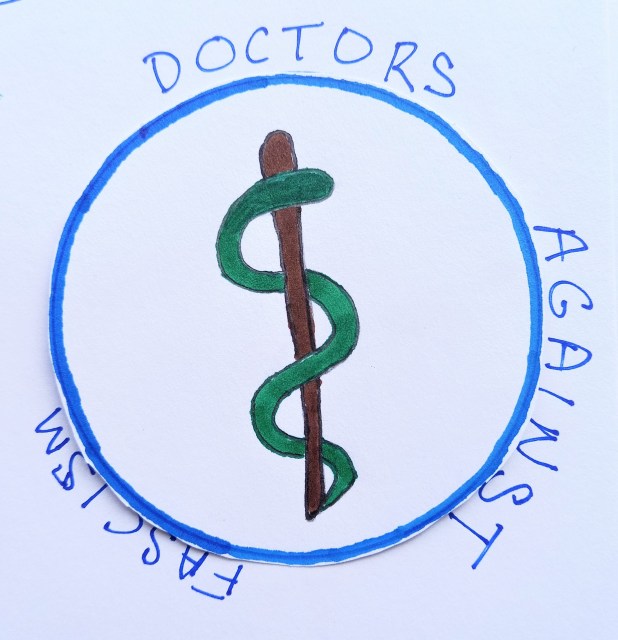
“Words create worlds.” These are the words of Rabbi Abraham Joshua Heschel, here is the full quote, remembered by his daughter, Susannah Heschel:
I have been writing this series, Words Create Worlds, based on the words and writing of Rebecca Solnit, Rob Riemen, Timothy Snyder, Madeleine Albright, Jason Stanley, and physicians: Bandy Lee, Robert Jay Lifton, and Judith Herman. I was inspired by these authors and particularly by Riemen’s To Fight Against this Age: On Fascism and Humanism and Rebecca Solnit’s Call Them by Their True Names and their discourse about how words shape our reality. The title for this series of essays comes from Rabbi Heschel who cautions us to be careful with the words we use. I fear that these last four years we have been over-cautious in coming to call the words of the current president of the United States of America fascist. Dr. Bandy Lee’s Twitter profile states, “Uninvolved in politics until politics invaded my area of expertise. I take my professional responsibility to protect society seriously.” Similarly to Dr. Lee, I feel compelled to speak up politically because fascism is a public health crisis. As Foucault wrote, the “first task of the doctor is therefore political: the struggle against disease must begin with a war against bad government.”[3]

As I was working on Becoming Medicine: Pathways of Initiation into a Living Spirituality with Joseph Rael, I began to see that while the spiritual path may lead away from society at first, it eventually leads back – one returns after initiation with a new found sense of responsibility for the land and all the creatures that live on it: four-leggeds, two-leggeds, fin-ed and wing-ed. The spiritual path leads to a sense of Oneness, of non-duality. When you start to feel One with creation, you realize that you are responsible for creation. Words create worlds. The etymology of the word “responsible” goes back to a similar word, “answerable.” To be on a spiritual path, which Joseph would say is the same as the path of being a True Human Being, is to be answerable to the Earth. This led me to feel that we had to write a section of the book on the responsibility of the spiritual seeker.
Joseph Campbell taught that the hero’s or heroine’s journey had three stages: separation from the known world, initiation into the new world, and then return to the old world, but now transformed and carrying a responsibility for healing and transforming the world. For our book, this meant writing about our interrelationship with the land; about moving from “other” to “brother and sister;” about Oneness and non-difference; and about the concept of spiritual democracy – the spiritual responsibility we have for all beings. This responsibility led to us losing our publisher as the book turned out to be 500 pages long.
Joseph Rael, in the early 1980s had a vision of men and women sitting in a circular structure, half above ground, half below, singing and chanting for world peace. He followed this vision across the globe, helping to create over 60 Sound Peace Chambers on four different continents. He was recognized by the United Nations for this work on world peace. It is this spirit of peace that leads to my now needing to speak words of peace to counter the 20,005[4] divisive words of fascism.

Words Create Worlds. To be silent or neutral is to take the side of the bully. There are times that one can lose one’s humanity through inaction. Yes, it is true that one can act without humanity as well, that is a definition of fascism: actions without humanity and against humanity. When I was going through medical school in the early 1990s, struggling with the dehumanizing aspects (Perri Klass described medical school as, A Not Entirely Benign Procedure), I was also reading the Chicago Tribune regularly, trying to understand what was happening in the former Yugoslavia and Rwanda. I had read about World War II extensively when I was younger, I knew about fascism and genocide – but I struggled to make sense of what it meant to be a human being in the late 20th Century as I was immersed in learning the language of pathology and despair as I learned to diagnose and treat illness. I was overwhelmed by with the feeling that I was not being taught how to be human and present with either my suffering, my patients’ suffering, of the suffering of the world.

I brought my friends together to write and to bear witness to the age. I was reading the Beats in those days, Kerouac, Ginsberg, Burroughs, and I loved how they created their own interpretive community and supported each other. The Beats didn’t shy away from suffering or madness, but bore witness to it, as Ginsberg wrote in Howl, “I saw the best minds of my generation destroyed by madness, starving hysterical naked…” Or as William S. Burroughs wrote to Allen Ginsberg, “Whether you like it or not, you are committed to the human endeavor. I cannot ally myself with such a purely negative goal as avoidance of suffering. Suffering is a chance you take by the fact of being alive.”[5] My friends and I put together an unpublishable manuscript that included cut-up art, multiple perspectives, and no coherent theme, other than a bunch of twenty-somethings let loose in the big city and reading a lot of books and trying to find their way in the world. I titled this collection, In the Shadow of the Slaughterhouse: Silence is the Only Real Crime Against Humanity. It included essays I wrote on the Native American genocide (from Dee Brown’s Bury My Heart at Wounded Knee) and an essay on witnessing and the survivor (from reading Terrence des Pres’ The Survivor: An Anatomy of Life in the Death Camps). In a way, these essays on Words Create Worlds are a continuation of In the Shadow of the Slaughterhouse: Silence is the Only Real Crime Against Humanity. I cannot remain silent as the shadow of fascism falls across the country.
This is not the succinct entry into the topic of Doctors Against Fascism that I envisioned – but then, the fight against fascism is not through bullets or bullet points, but through re-humanization. What is more re-humanizing than stories about human beings trying to make sense of suffering and bear witness? It is our humanity, our shared humanity, that protects us against the dehumanization of fascism. All of us, as human beings, are responsible for humanity because we are part of humanity. Similarly, as creatures of the Earth we are all responsible for the Earth, as we are part of Her.
I have been thinking about the idea of medical activism and what it means to be a professional.[6] In my work on re-humanizing medicine through the compassion revolution,[7] I have argued that much of what we are taught in contemporary medicine is how to be a technician rather than on how to be a healer. A technician is not a professional, necessarily, but someone who performs a set of route protocols and techniques. A healer, on the other hand, is someone who learns techniques, but who also learns humanity – for it is our human presence that we must bring to suffering. While a technique or protocol might treat a disease, suffering needs humanity and compassion. To this end I have continued to argue that as physicians we should be good technicians, but that we must also be good human beings. To be a good medical technician, we are required to engage in Continuing Medical Education. To be a good human being we have to seek out our own Continuing Human Education – this is what I call the counter-curriculum of re-humanization.[8]
To be a professional means that we answer to a higher calling than just simply doing our jobs or staying in our lanes,[9],[10] it means that we are responsible to humanity. This means that our job does not end at the walls of our exam room – our job as healers is to attend to the public health of humanity.

In an interview with Bill Moyers, Robert Jay Lifton describes the concept of health care providers as “witnessing professionals” who have a responsibility to confront malignant normality (such as when lies and cruelty become normality). Lifton ends the interview with the following statement:
Robert Jay Lifton is psychiatrist and psychohistorian I greatly admire, he is a living example of a witnessing professional who has worked at both the individual and the societal level for healing. He and Judith Herman (another psychiatrist I respect) wrote a letter to the editor of The New York Times March 8, 2017.[12]

Dr. Bandy Lee organized an April 20, 2017 conference at Yale, entitled, “Does Professional Responsibility Include a Duty to Warn?” From this conference grew the first edition of The Dangerous Case of Donald Trump: 27 Psychiatrists and Mental Health Experts Assess a President, and then the second edition with 37 experts, The Dangerous Case of Donald Trump: 37 Psychiatrists and Mental Health Experts Assess a President. Dr. Lee and colleagues then formed the World Mental Health Coalition and published The World Mental Health Coalition Documents, which collects conference transcripts, media transcripts, letters and statements, a report on the Mueller Report, and a Prescription for Survival. Dr. Lee writes:
There are precedents of psychiatrists using their skills for public health and safety. Robert Jay Lifton’s career as a psychohistorian is an example – understanding dangerous movements such as: Nazi Germany, Chinese thought reform, Aum Shinrikyō, climate deniers, and the current president of the USA. Swiss psychiatrist, Carl G Jung (aka Agent 488)[14] was recruited by the United States during World War II to provide psychological profiles of Hitler. Jung’s descriptions of Hitler’s psychology and behavior are eerily similar to the current president of the United States:
Jung cautioned about Hitler’s systematic lying which he described as pseudologia phantastica. Is our current president’s 20,055 falsehoods (as of 7/9/20) another example of pseudologia phantastica?[16]
After World War II, many professionals wondered, “Why would so many apparently rational, even educated people, follow a fascist?”[18] Jung would say that those who do not deal honestly with their own shadow project it on to “others” who are then seen as bad, dangerous, untrustworthy. Jung saw Hitler as an inferior personality who was over-taken by his own shadow, projecting his own darkness on to the world and then trying to destroy his own darkness by destroying others. From that perspective, a fascist movement is a giant psychological experiment and a fight between those who have little self-awareness and do not take responsibility for their own darkness and those who are committed to truth and reality and are willing to introspect. Jung describes the formation of mass psychosis and mob psychology:

As I have watched this regime unfold over the past four years, my early uneasiness has gradually turned to alarm. I think it is time for the Doctor to make the diagnosis: fascism, prognosis: serious.
In 1947, Albert Camus wrote his allegory on fascism, The Plague. Camus cautioned us, through his indefatigable Dr. Rieux,
Dr. Rieux’s commitment to defend sick people as best he can reminds us of the professional commitment of Drs. Lee, Lifton, and Herman, as well as Dr. Fauci and all the frontline health care workers doing the best they can during this pandemic. Just as Lifton encourages us to be witnessing professionals, Rieux’s writing bears witness to the peoples’ suffering:
Camus’ choice of a plague as an allegory of fascism resonates with our current situation. We are currently in an actual viral pandemic of Covid-19 and this viral plague has further illuminated the plague of fascism. The president’s deplorable and counter-scientific handling of the pandemic has led to the United States of America, the country with the most expensive health care system in the world, and with 4% of the world population, to account for roughly 25% of the cases of Covid-19 worldwide. The president has contradicted and undermined scientists and physicians, he has encouraged the opposite of public health measures (ridiculing masks and those who wear them), he has preached economy over public health, and has spread over one-third of the global misinformation on the virus.[22] And, as of 10/2/20, the president himself is now infected with Covid-19, a carrier of the plague of the pandemic and the plague of fascism. However, we knew all along that we were electing a sick individual who is a plague – a plague of lies, a plague of bullying, a plague of divisiveness, a plague of crookedness, a plague of Covid-19 and, ultimately, a plague of fascism.

The way you learn how to diagnose something in medical school is to see case after case after case – until it becomes automatic. At the first signs or symptoms, you see the incipient signs of a more serious illness. This is why we need Doctors Against Fascism – to diagnose and warn us that the fascist bacillus is starting to dehumanize our population and make it vulnerable to fulminant fascism.
The Doctor is in and has bad news for you – the prognosis of our nation’s health is serious. We are infected with fascism – it has taken hold in the brains of many of our citizens and it is spreading through our institutions. Words Create Worlds and we are surrounded by 20,055 and counting words of fascism. Every lie is an assault on reality and every bit of reality that is eroded weakens the immune system of democracy, making us vulnerable to infection with the unreality of fascism.

…
This series, Words Create Worlds, grows out of my work with Joseph Rael on peace. In Becoming Medicine: Pathways of Initiation into a Living Spirituality, I felt compelled to write about the responsibility of mystical, visionary, and shamanic experience—that we must work toward “Spiritual Democracy.” At its deepest point, mystical experience leads to an awareness that we are all one and this comes with a responsibility to challenge words of separation which ultimately lead to fascism. Mystical experience is a pathway that leads us to question who we are and gives us a responsibility to use our words wisely to create worlds where we are becoming the medicine that our world needs. As Rumi says, “We are pain and what cures the pain.”[23]
[1] Life Between the Trees blog, https://lifebetweenthetrees.wordpress.com/2012/08/06/words-create-worlds-monday-morning-parable/. I first came across a shorter instance of this quote in the Omid Safi reference below.
[2] Ibid.
[3] Michel Foucault, The Birth of the Clinic (New York: Vintage Books, 1994), 38.
[4] “In 1,267 days, President Trump has made 20,055 false or misleading claims,” Updated July 9, 2020. The Washington Post’s Fact Checker’s ongoing database of the false or misleading claims made by President Trump since assuming office. https://www.washingtonpost.com/graphics/politics/trump-claims-database/?utm_term=.27babcd5e58c&itid=lk_inline_manual_2&itid=lk_inline_manual_2
[5] William S. Burroughs, letter to Allen Ginsberg The Letters of William S. Burroughs, Vol. 1: 1945-1959, p. 227.
[6] David Kopacz, “Medical Activism: A Draft Working Paper,” (8/11/20) in the Being Fully Human Blog, https://beingfullyhuman.com/2020/08/11/medical-activism-a-draft-of-a-working-paper/.
[7] David Kopacz, Re-humanizing Medicine: A Holistic Framework for Transforming Your Self, Your Practice, and the Culture of Medicine, Washington DC: Ayni Books, 2014.
[8] Ibid. Also see David Kopacz, “A Proposition for a Counter-Curriculum in Healthcare Education and Practice,” (9/10/16), Being Fully Human blog, https://beingfullyhuman.com/2016/09/10/a-proposition-for-a-counter-curriculum-in-healthcare-education-and-practice/
[9] “Doctors Revolt After N.R.A. Tells Them to ‘Stay in Their Lane’ on Gun Policy,” Matthew Haag, The New York Times, Nov. 13, 2018. The original criticism was in a Tweet from the NRA, “Someone should tell self-important anti-gun doctors to stay in their lane. Half of the articles in Annals of Internal Medicine are pushing for gun control. Most upsetting, however, the medical community seems to have consulted NO ONE but themselves.” https://twitter.com/NRA/status/1060256567914909702.
[10] “Take Two Aspirin and Call Me by My Pronouns: At ‘woke’ medical schools, curricula are increasingly focused on social justice rather than treating illness,” Stanley Goldfarb, Wall Street Journal, 9/12/19.
[11] http://billmoyers.com/story/dangerous-case-donald-trump-robert-jay-lifton-bill-moyers-duty-warn/
[12] Robert Jay Lifton and Judith Herman, “‘Protect Us From This Dangerous President,’ 2 Psychiatrists Say,” The New York Times, March 8, 2017, https://www.nytimes.com/2017/03/08/opinion/protect-us-from-this-dangerous-president-2-psychiatrists-say.html
[13] Bandy X Lee, “American Psychiatry’s Complicity with the State,” in Bandy Lee (ed) The World Mental Health Coalition Documents, 299.
[14] Jung was recruited by the Office of Strategic Services (OSS), the organization that eventually grew into the CIA and INR, to provide psychological profiles of political leaders, foremost among them Adolf Hitler. Deirdre Bair, Jung: A Biography. New York: Back Bay Books, 2003, pages 481-495.
[15] CG Jung, “After the Catastrophe” (1945) in CW 10 Civilization in Transition, page 203.
[16] The Washington Post Fact Checker, 7/9/20, https://www.washingtonpost.com/graphics/politics/trump-claims-database/?utm_term=.27babcd5e58c&itid=lk_inline_manual_2&itid=lk_inline_manual_2
[17] Ibid., 203-204.
[18] For a recent analysis of this question, see John Dean and Bob Altemeyer’s Authoritarian Nightmare: Trump and His Followers.
[19] CG Jung, “The Fight With the Shadow” (1946) in CW 10 Civilization in Transition, 220-223.
[20] Albert Camus, The Plague, New York: Vintage International, 1991, p. 127.
[21] Ibid., 308.
[22] Sarah Evanega, Mark Lynas ,Jordan Adams, Karinne Smolenyak, “Corona virus misinformation: quantifying sources and themes in the COVID-19 ‘infodemic’”
[23] Rumi, “We are the mirror as well as the face in it,” The Essential Rumi, trans. Coleman Barks, 106.
To Fight Against this Age: On Fascism and Humanism[2] by Rob Riemen

The Words Create Worlds series of essays was inspired by Rabbi Heschel’s warning of the way certain words led to the Holocaust, Riemen’s To Fight Against this Age, and Rebecca Solnit’s Call Them by Their True Names. I felt compelled as a health professional to speak up about fascism, based on the warning flags of the current US presidency and other world movements. In my youth, I was fascinated with World War II, later as a professional I became interested in trauma and the role of the trauma therapist as a moral agent – not just a neutral technician, but a human being who takes a moral stand against human rights abuses, what Robert Jay Lifton calls a “witnessing professional.”[3] As I have watched this regime unfold over the past four years, my early uneasiness has gradually turned to alarm. As physicians, we need to remember our higher calling to function as witnessing professionals for the health of society.
Fascism is a sickness, an illness, a disorder. It spreads through false-fixed beliefs (delusions), scapegoating (projection), and its continuous stream of lies creates unreality (impaired reality testing). Fascism infects the individual, but it spreads through the community. As a doctor, I am trained to diagnosis and treat sickness. As a doctor, I am trained to attend to individual health as well as public health. Some would say that doctors need to shut up and “stay in their lanes.”[4],[5] However, as someone who has read Nietzsche,[6] has read Robert Jay Lifton, Jason Stanley, Timothy Snyder, Rebecca Solnit, Madeleine Albright, and Rob Riemen – I have learned from history and I have studied epidemiology – people staying in their lane and just following orders leads down a deadly road.
Could it really be happening again? Right here in the USA? The erosion of democracy and the growth of fascism and totalitarianism. I think it is time we started calling it anti-democracy and fascism. Umair Haque thinks so, see his article “What Does it Take to Fight Authoritarianism? The One Thing Americans Still Won’t Do,” in which he writes:
The Leader spews a continuous stream of “false statements,” otherwise known as lies, propaganda – to confuse and disorient opposition and to mobilize a base of followers into a false-fixed state of loyalty and unreality. There are so many lies that the footnotes start to eclipse the text. During his presidency, the president of the United States had made more than 20,000 “false statements,”[8] which we should just start calling lies and propaganda because there is a method behind the madness – the method of the fascist playbook.
It sounds like a constant stream of gibberish, (just try to read this two hour speech), it makes no logical sense, but it appeals to biases and emotions. It is propaganda: “othering” and demonizing of groups of people: Mexicans, immigrants, Muslims, and women, “Antifa,” “radical leftists,” “anarchists.” Every event is amplified and weaponized to create divisiveness. He casts doubt on the institution of elections and hints that he will not honor the results or submit to a peaceful transfer of power if he loses.

Let us turn to Rob Riemen’s To Fight Against the Age: On Fascism and Humanism (2018). Riemen is the Founder, President, and CEO of the Nexus Institute, “a leading international center for intellectual reflection to inspire the Western cultural and philosophical debate,” and is the editor of the journal Nexus.
I picked up Riemen’s book, by chance, when I was traveling for work and was in Charleston, West Virginia. I found it at a nice little bookstore, Taylor Books. I bought it on impulse and then was fascinated by it and finished it on the flight home. The book consists of two essays, “The Eternal Return of Fascism,” (originally published in 2010) and “The Return of Europa.” In keeping with the theme of Words Creating Worlds, Riemen writes that “to be able to understand something,” you have to “call it by its proper name,” specifically, “populism…will not provide any meaningful understanding,” (18). Even more specifically:
I have personally been concerned with the objectification and dehumanization that happens in medical education and medical practice (see Kopacz, Re-humanizing Medicine – 2014). The antidote to dehumanization is quite simple in theory: re-humanization. The more difficult questions are: What is a human being? How is the soul of the human being lost? How is the soul of the human being regained? Riemen reaches a conclusion similar to mine about the limitations of numbers and the scientific method and the need for the humanities and a whole person philosophy.
How does fascism return to civilized democracies? Germany, itself was a democracy, Hitler was elected and then gradually did away with democratic institutions, consolidating power. Riemen puts it bluntly, “the main reason fascism can return so easily in mass democracies: ignorance,” (21). The ignorance of history. The ignorance of social psychology. The ignorance of power and fascism. If we don’t call it by its true name, as Riemen and Solnit both implore us, we will have no chance of confronting and stopping it.
Riemen takes his title of his book, To Fight Against this Age from Nietzsche, whom he paraphrases, “we should not accept the blind power of the actual and that instead of conforming to the whole noisy sham-culture of our age, we have to be fighters against this age…It is now upon us to fight against a zeitgeist that destroys the spirit of the democratic civilization,” (27).

Riemen writes about Camus’ allegory of fascism, The Plague,[9] commenting on the “fascist bacillus,” he tells us that if “we want to put up a good fight, we first have to admit that it has become active in our social body and call it by its name: fascism,” (34). We must diagnose the problem before we can treat it correctly.
Riemen’s book was published in 2018. Now we have the strange juxtaposition of an actual pandemic being used as a fascist tool for promoting divisiveness and effecting the first purge of this regime, 200,000+ dead in the United States as of late September – 25% of the global deaths for 4% of the global population, at least we are “great” at something. Even stranger, now we have a president who is actually infected with a virus he is hell-bent on spreading to others.
Riemen, following Nietzsche’s critique, sees a problem with European and Western culture – that we have lost spiritual values. “With the loss of spiritual values,” he writes, “not only did morals disappear but so did culture in the original meaning of the word: cultura animi, the ‘cultivation of the soul,’” (38). We have become the barbarians. Barbarian originally meant “unintelligible speech,”[10] again, just try reading through this transcript.
This “cultivation of the soul” and the recognition of our common humanity is what humanism is founded upon. Fascism is the opposite of humanism – it is about the degradation of the soul, it is about exaggerating the differences between human beings into a false and superficial sense of sameness rather than seeing “out of many, one,” e pluribus unum.
Writing in the mid-1930s, Menno ter Braak noted that fascist movements were focused on “stimulating aggression and anger.” Riemen summarizes that a fascist movement:
If we look at the current US presidency, we might be tempted to call it incompetent – and from a perspective of democracy it would be right to do so. However, if we view the current president through the lens of fascism – he is hypercompetent. He is lousy at democracy, but he is super-good at fascist.
Menno ter Braak focused on the use of “social resentment vented on a scapegoat who was blamed for everything: the Jew.” Riemen further summarizes ter Braak’s view:

Fascism is “semi-civilization” and promotes “the cult of resentment.” These are the rules that the current US president is very good at, he consults the fascist playbook at every turn and fascism is winning and democracy is losing.
How did fascism gain hold in European democracies? By using those democracies against themselves. Both Hitler and Mussolini were voted into power. Riemen writes that both the liberals and the conservatives caved in to fascism because they thought they could gain something from it. It is the classic devil’s bargain of “the end justifies the means.” This is based, or maybe we should say de-based, on the idea that getting power or money (the ultimate materialist focus) is more important than human values, civility, decency, or humanity.
We see this today – somehow the stock market in the US seems to give permission for fascism, as long as we can earn money.
We see this today, the conservatives going along with the president, even when it seems to violate their own principles, as long as they can preserve power and social order. This is the definition of fascism: power and order become more important than principles, ideals, more important than human beings.
After World War II, after Mussolini and Hitler were defeated, some still worried that we had not learned the lessons of history. Riemen reminds of that both Albert Camus and Thomas Mann, both Nobel Prize winners, warned of the return of fascism.
Riemen warns us, as early as 2010, that “this is a new outbreak of the plague,” (60). But just as you cannot treat a disease you cannot name and diagnose, you cannot appropriately respond to a movement if you cannot call it by its true name – fascism. We, in the US, were sick, even before the Covid-19 pandemic, we were in the throes of a revival of an old illness – the pandemic of fascism. We entered into a realm where “words were separated from their meanings and reduced to slogans,” (61).
Again and again, throughout this essay, Riemen reminds us that the cure to fascism is the medicine of our human unity and spiritual/moral values. This is not about religion – many of the most vocal followers of the president are “religious” people who are more interested in power than in human goodness.
What is needed is not a political solution, but a human solution. We need to remember our original instructions and the principles and tenets of spiritual democracy. While fascism is a political movement based in materialism (money and power), its cure is a spiritual movement based in humanism (soul and spirit).
Riemen describes the Party for Freedom (PVV, Partij voor de Vrijeheid) in his native Netherlands in words that sound like the current US president’s playbook. Fascism is not creative, it is not novel, it is really just the same damn thing, over and over again – the basest aspects of our material nature. It is the propagation of dehumanization through dehumanization. The PPV offers

The way you learn how to diagnose something in medical school is by seeing case after case after case – until it becomes automatic, at the first signs or symptoms, you see the incipient signs of a more serious illness. This is why we need Doctors Against Fascism – witnessing professionals to diagnose and warn us that the fascist bacillus is starting to dehumanize our population and make it vulnerable to fulminant fascism. In the USA, there has been a growing concern about the signs and symptoms of fascism since 2016. Riemen has been seeing it in Europe since at least 2010 and we see it spreading all over the globe – a pandemic of fascism in Poland, Hungary, Turkey, Russia, Philippines, England, Brazil, India, and the United States of America.
The Doctor is in and has bad news for you – the prognosis of our nation’s health is serious. We are infected with fascism – it has taken hold in the minds of many of our citizens and it is spreading through our institutions. Words Create Worlds and we are surrounded by continuous lies as politics.
This essay seems to have found a natural ending-point here. I will pick up with the rest of the review of Rob Riemen’s book, To Fight Against This Age: Fascism and Humanism, in the next installment of Words Create Worlds. Perhaps I will develop this theme of Doctors Against Fascism more.
…
This series, Words Create Worlds, grows out of my work with Joseph Rael on peace. In Becoming Medicine: Pathways of Initiation into a Living Spirituality, I felt compelled to write about the responsibility that grows out of mystical, visionary, and shamanic experience—that we must work toward “Spiritual Democracy.” At its deepest point, mystical experience leads to an awareness that we are all one and this comes with a responsibility to challenge words of separation which can ultimately lead to fascism. Mystical experience is a pathway that leads us to question who we are and gives us a responsibility to use our words wisely to create worlds where we are becoming the medicine that our world needs. As Rumi says, “We are pain and what cures the pain.”[11]
[1] Life Between the Trees blog.
[2] Rob Riemen, To Fight Against This Age: On Fascism and Humanism, New York: W. W. Norton & Company, 2018.
[3] Robert Jay Lifton, “Foreword to the First Edition: Our Witness to Malignant Normality,” in Bandy Lee (ed) The Dangerous Case of Donald Trump: 37 Psychiatrists and Mental Health Experts Assess a President, New York: Thomas Dunne Books, 2019.
[4] “Doctors Revolt After N.R.A. Tells Them to ‘Stay in Their Lane’ on Gun Policy,” Matthew Haag, The New York Times, Nov. 13, 2018. The original criticism was in a Tweet from the NRA, “Someone should tell self-important anti-gun doctors to stay in their lane. Half of the articles in Annals of Internal Medicine are pushing for gun control. Most upsetting, however, the medical community seems to have consulted NO ONE but themselves.” https://twitter.com/NRA/status/1060256567914909702.
[5] “Take Two Aspirin and Call Me by My Pronouns: At ‘woke’ medical schools, curricula are increasingly focused on social justice rather than treating illness,” Stanley Goldfarb, Wall Street Journal, 9/12/19.
[6] Richard Huelsenbeck, German-American psychiatrist and Dada-ist who was investigated by the Nazis and forbidden to write, once said, “We are psychiatrists; we are Germans; we have read Nietzsche; we know that to gaze too long at monsters is to risk becoming one―that’s what we get paid for!” (Greil Marcus, Lipstick Traces: A Secret History of the Twentieth Century, p. 211). Marcus’ book traces the spirit of protest from punk rock back to earlier art movements that were cultural and political critiques of the times.
[7] Umair Haque, “What Does it Take to Fight Authoritarianism? The One Thing Americans Still Won’t Do.” Eudamoinia & Co, Sept 25, 2020, https://eand.co/what-does-it-take-to-fight-authoritarianism-the-one-thing-americans-still-wont-do-676dfb86794b
[8] Glenn Kessler, Salvador Rizzo, Meg Kelly, “President Trump has made more than 20,000 false or misleading claims.” The Washington Post, July 13, 2020 at 12:00 a.m. PDT
[9] Albert Camus, The Plague, New York: Vintage International, 1991.
[10] https://www.etymonline.com/word/barbarian
[11] Rumi, “We are the mirror as well as the face in it,” The Essential Rumi, trans. Coleman Barks, 106.
This interview from September 13, 2017 with anthropologist and Marist priest, Gerald Arbuckle, is as timely and relevant as ever. This is just a small selection from our talk and focuses on culture, loneliness, and fundamentalism.
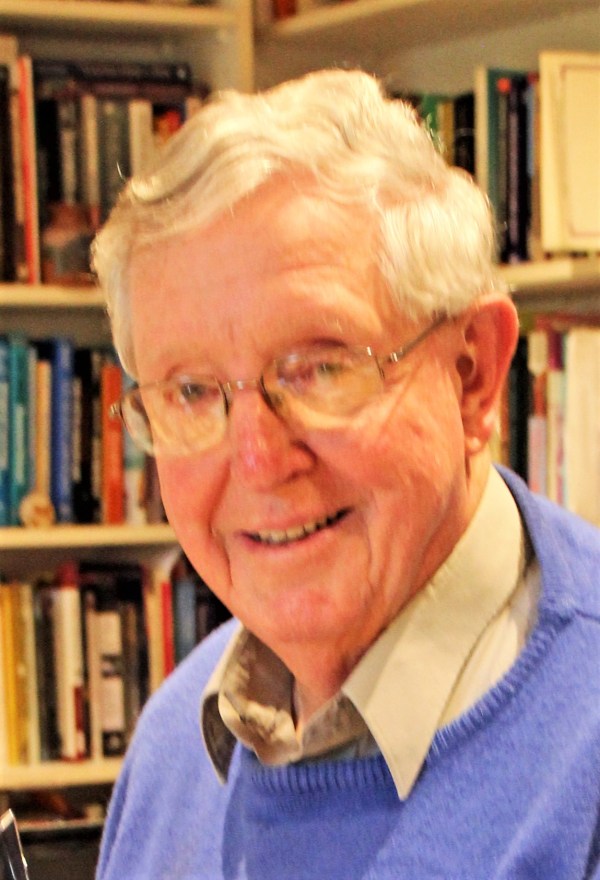

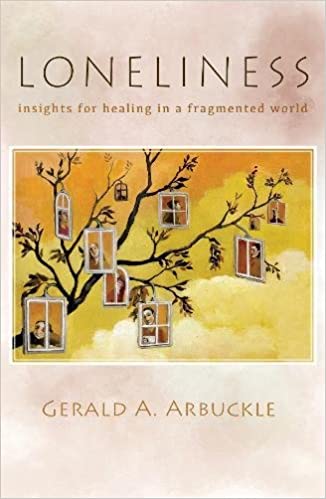
Gerry’s concept of refounding plays prominently in Becoming Medicine: Pathways of Initiation into a Living Spirituality. I also drew from his Humanizing Healthcare Reforms in my book, Re-humanizing Medicine. This 2017 chat I had with Gerry in Sydney, Australia was the basis for what we put in the book on refounding: how organizations and cultures go through the process of reconnecting to their founding visions, while navigating the risk of fundamentalism.
 Being Fully Human