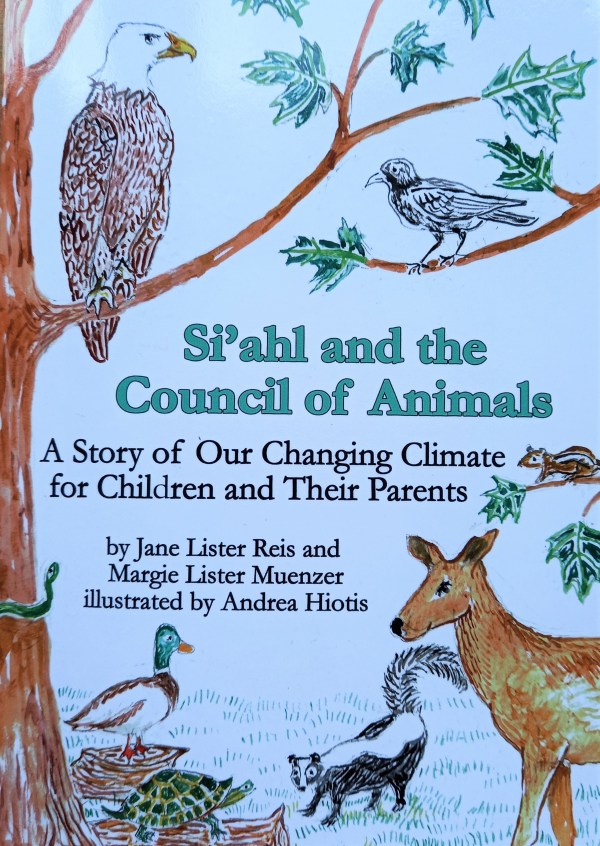
Jane Lister Reis and her sister, Margie Lister Muenzer have created a great book for kids on listening to the environment and caring for it. When the animals of the forest begin to suffer from the changing climate, Si’ahl, a bald eagle, calls a council of the animals. (The authors engaged in dialogue with the Duwamish Tribe about using the name Si’ahl, which is the Duwamish name of Chief Seattle, and honor him with this story). When the animals cry out for help, one family learns to listen to the animals and to work to care for our common home, Mother Earth. The book is illustrated with line drawings by Andrea Hoitis and it could be used as a small coloring book – although there is a larger “Si’ahl & Friends Coloring and Activity Book,” that is a great companion to the story book.
The Activity & Coloring Book has puzzles, mazes, even a grid for backyard birdwatching!
John Wesley Fisher, DC, asked if I would review and write an endorsement for his new book, Dak To Rx: A Travelogue – A Veteran Returns to the Land of His Nightmares. John is a Vietnam veteran and the Founding Director of CORE (Community Reconciliation)Viet Nam. Dak To is the name of a town in Vietnam that John had been in during the Vietnam War. Returning to engage with the land and the people, now from a state of peace, rather than war, leads to healing and the formation of many friendships. One Vietnamese veteran tells John, “Now all survivors are the same…we didn’t kill each other, so now we can be friends and teach the world about peace together.” Here is my endorsement of the book:
Dak To RX is just what the doctor ordered for healing PTSD and coming home from war to peace. John Wesley Fisher is a man of many places and roles: seeker, chiropractor, surfer, traveler, and Vietnam Veteran.
Dak To RX is a journal of his journeys throughout Vietnam in 2011-2012 where he finds compassion, acceptance, peace, and healing from the people he meets and the places where he walks up on the land. His nightmare becomes a dream of peace and healing.
Fisher notes that it is “a sacred time being on the road,” and his journey is a sacred journey of healing. He meets many Veterans (both former allies and enemies) and survivors of the American War in Vietnam along the way. What he learns from one former enemy is, “Now all survivors are the same…we didn’t kill each other, so now we can be friends and teach the world about peace together.”
David R. Kopacz, MD
Psychiatrist, Seattle VA National VA Education Champion – Office of Patient Centered Care & Cultural Transformation Assistant Professor, University of Washington
Is fight the right word? Maybe there is a time to fight, even if you are a pacifist, but what does it mean to fight?
Maybe fight is not the right word, as it conjures up opposition and separation – and that is the very thing that we are “fighting” against. There is a quote, often attributed to Mother Teresa, “I was once asked why I don’t participate in anti-war demonstrations. I said that I will never do that, but as soon as you have a pro-peace rally, I’ll be there.”[3] This captures the danger of fighting against something. Nietzsche warns us, “Whoever fights monsters should see to it that in the process he does not become a monster. And when you look long into an abyss, the abyss also looks into you.”[4] And yet, how do we respond to the growing fascism in the world and our history of colonialism and racial oppression and genocide? We have never recovered from racism, we have never fully addressed it. We are in the midst of a pandemic from Coronavirus COVID-19, and yet we are suffering from a re-infection of “the plague bacillus” of fascism.[5] Are not the risks of racism and fascism such that all human beings with a heart must necessarily “Get up, stand up, stand up for your rights?”
Tree, Lime Kiln State Park, WA, D. Kopacz (2015)
Carl Jung’s 1946 essay, “The Fight Against the Shadow,” actually argues not so much for a fight against something outside in the world, but rather an internal struggle to acknowledge, own, and integrate one’s own shadow. While Jung comments on mass psychology and group psychosis following a fascist leader. He wrote that Hitler had an “unadapted, irresponsible, psychopathic personality, full of empty, infantile fantasies, but cursed with the keen intuition of a rat or a guttersnipe.” He also wrote that the reason that Hitler was so successful was because he “represented the shadow, the inferior part of everybody’s personality…and this was another reason why they fell for him.”[6] Jung seems to assume that the fight had to be done in the outside world, but that the cause and the ultimate cure had to do with each individual’s inner fight against their own shadow, to acknowledge, to accept, and to integrate so that one is conscious of this inner darkness within the heart of humanity rather than unconsciously acting it out in the world. He calls this a “moral evaluation,” and an “ethical responsibility.” He notes that the people who are capable of this are often not the political leaders, but the “moral leaders of mankind.” The “maintenance and further development of civilization depends on such individuals” to act in these roles of moral evaluation and ethical responsibility.[7]Jung’s defense against mass movements and collective psychosis resides in the strength of individuals to face their own darkness, for only one who has stood up to one’s own darkness can stand up to another’s darkness. As Jung wrote, “One does not become enlightened by imagining figures of light, but by making darkness conscious. The latter procedure, however, is disagreeable and therefore not popular.”[8]
Jung reorients us to the inner fight as well as the outer fight. From this perspective, we are the barbarians, they are not out there. The word barbarian originally meant “all that are not Greek,” and came from the Proto-Indo-European root “*barbar- echoic of unintelligible speech of foreigners.”[9] A barbarian was originally just someone “other” than you whose speech you were to ignorant to understand. Somewhere along the way, though, we projected our shadow onto the other and imagined they were the ignorant and dangerous one. Look at the murder and pillage that the colonial empires of Europe let forth upon the world. When Jung met Ochwiay Biano (Mountain Lake) of the Taos Pueblo in Southwestern United States, he was told how the non-European sees the European.
“See…how cruel the whites look. Their lips are thin, their noses sharp, their faces furrowed and distorted by folds. Their eyes have a staring expression; they are always seeking something. What are they seeking? The whites always want something; they are always uneasy and restless. We do not know what they want. We do not understand them. We think they are mad.”[10]
Binding Sites of Coronavirus Covid-19, D. Kopacz (2020)
Perhaps Western civilization is not only barbaric and mad, but also sick. We evaluate the health of countries primarily by their economies. Economies are not people. As we have seen with the Coronavirus COVID-19, our health care systems, educational systems, our systems of justice, even our economic systems – were all in ill health and fractured. A few weeks of interruption of the economic machine and everything was revealed to be so very fragile and weak where we thought it was strong. “Civilized” people look with disdain and horror at earlier civilizations that sacrificed animals or people to the gods, however the Economy demands human sacrifices – homelessness, underfunded health care systems, underfunded education systems, the rape of the environment. If another civilization comes after this one, surely they will see us as mad, primitive, barbaric, worshipping false idols of money and profit at all costs, even the cost of our own humanity and our own home, Mother Earth.
Rebecca Solnit writes “Who Will Win the Fight for a Post-Coronavirus America?” in The New York Times, 3/29/20:
Every disaster shakes loose the old order: The sudden catastrophe changes the rules and demands new and different responses, but what those will be are the subject of a battle. These disruptions shift people’s sense of who they and their society are, what matters and what’s possible, and lead, often, to deeper and more lasting change, sometimes to regime change. Many disasters unfold like revolutions; the past gives us many examples of calamities that led to lasting national change.
How can we fight against this inner and outer madness that is the very structure of our economic civilization? As Charles Eisenstein writes, all the problems that we are facing are all part of one root problem: separation; and the only solution is that we need to move from separation to “interbeing.”
This book is a guide from the old story, through the empty space between stories, and into a new story. It addresses the reader as a subject of this transition personally, and as an agent of transition—for other people, for our society, and for our planet. Like the crisis, the transition we face goes all the way to the bottom. Internally, it is nothing less than a transformation in the experience of being alive. Externally, it is nothing less than a transformation of humanity’s role on planet Earth.[11]
Jung and Eisenstein point out that we do not know who we are and this ignorance is killing us – it leads to fascism, racism, plundering the environment, it leads to us seeing human beings and the environment as “other” as we only focus on this littlest, meanest little part of our larger humanity, our ego. We do not know who we are and this ignorance is killing us and turning our lives and world into a living hell.
Rob Riemen picks up this theme that we have forgotten our humanity. His book, To Fight Against this Age: On Fascism and Humanism takes on the task of a response to the growing rise of fascism and the response being to reinvest in a kind of spiritual humanism. Perhaps, then, our fight is not against fascism so much as it is for every individual to have the right to choose the human, to choose humanism. This is not the kind of humanism that fundamentalists fear – although I am not exactly sure what they have to be afraid of, other than losing control of control.
Our true identity is determined not by nationality, origin, language, belief, income, race, or any way in which people differ from one another, but precisely by what unites us and makes the unity of mankind possible: universal spiritual values that shape human dignity and that every man can adopt.[12]
This kind of humanism recognizes our sacred nature – a sacred humanism, a sacralizing of humanity. Riemen writes that some of the ways we can continue to rehumanize ourselves is through the arts, the humanities, and by learning from history. He also writes that we must have qualitative values, valuing the things that can be felt, but cannot be counted. He critiques a purely business or scientific view of humanity reduced to dollars, numbers, and percentages.
The religions tell us about the sacred, but if a religion leaves out the sacredness of humanity, it literally has no place on Earth. In promoting the idea of a sacred humanity, I am not speaking of one people’s religion, I am speaking of the religion of One people, a religion of humanity that recognizes the sacred in all human beings, in all beings, and in all the Earth.
I am working with Joseph Rael (Beautiful Painted Arrow) over the last six years. The kind of work I do with him is listening, writing, and reading. The work that is most important to him is world peace and he was recognized by the United Nations for this work. Joseph’s grandfather used to say to him, “work is worship,” and that is the kind of work we do together – worship.
When Joseph had his vision of a Sound Peace Chamber in 1983 (a circular structure, half above ground, half below, with men and women sitting in a circle and chanting for world peace), he took a year looking for the best place to build it. After one year, the Spirit Elders came to him and asked why he hadn’t built it yet. Joseph said he was looking for the perfect place. The response was a beam of light that came from the Heavens to Earth and landed in his backyard. It turns out that the work for peace begins at home – in your own backyard!
Joseph learned, in the Tiwa language of Picuris Pueblo, that the name for God is Wah-Mah-Chi, which translates as Breath-Matter-Movement. This tells us that our breath, inspiration and expiration is sacred and holy. This also tells us that our matter, far from being dead or a neutral resource, is alive as well, and full of vital spirit. Movement, too, all of our movements and the way we touch each other is meant to be inspired and full of divinity. In the Tiwa linguistic world, everything is God – just as in the non-dual philosophies such as tantra and Non-dual Shaivism. God is not out there, God is everywhere. The question then is on what do we place value? What do we invest in?
Earth Child of Spiritual Democracy, J. Rael (1997)
Our contemporary civilization invests in money, economic growth, building capital. While the United States of America is often considered by many to be a “Christian” nation, it is actually a nation of heretics if money is placed before God and before humanity, because humanity is one of the homes of God on Earth. In The Heart of Darkness, Joseph Conrad wrote, “This also has been one of the dark places of the earth.” The question is what “this” refers to – is it inner Africa; up river; is it the pagan African people who are physically “dark;” is it King Leopold’s Ghost, the colonial conquest of Africa; or is it simply the darkness in our own hearts when we cease to honor the spiritual humanity of ourselves and others?
Psychoanalyst Robert Stoller describes the motivation behind dehumanization and objectification of others: “we anatomize them … we deprive others of their fullness.”[13] As I wrote in Re-humanizing Medicine,
“Stoller believes that reducing the other to a body part or replacing a relationship with an object is a psychological defense against the anxiety of relationship. The risk is that the process of dehumanization goes both ways. One cannot dehumanize someone and remain human oneself. It is not a human action to treat someone else as an object.”[14]
Stoller writes that the act of dehumanizing another “dehumanizes the dehumanizer.”[15] The colonial project of conquest, plundering resources, slavery, forced conversion to Christianity, the outlaw of indigenous languages and religions, and genocide, both cultural and literal, against indigenous peoples created a vast dead zone on the planet Earth, a vast zone of dehumanization and de-spiritualization, a hell on Earth. What does it matter if one is rich if one lives in hell? The outlaw of indigenous languages and spiritual practices, as in the United States until 1978, was a war against words because it was known on some level that words create worlds. The colonizers took the words right out of the indigenous peoples’ mouths and substituted their own words as they renamed and over-named the landscape in an attempt to make pale copies of the places they came from and from rulers, kings, and queens. Colonizers and colonized were both, thus, dehumanized.
How do we fight against dehumanization? Is it ever human to fight? Or is the method, rather to get up, stand up, stand up for your rights – your human rights? We must choose the human, not the dehumanized. We must choose to re-invest in humanity by seeing the divinity within Breath-Matter-Movement. Is it possible to get up, stand up, stand up for your rights without turning it into a fight? What does it mean to fight?
fight (v.)
Old English feohtan ”to combat, contend with weapons, strive; attack; gain by fighting, win” … from Proto-Germanic *fe(u)hta … probably from PIE *pek- (2) “to comb, to pluck out” wool or hair (source also of Lithuanian pėšti”to pluck,” Greek pekein ”to comb, shear,” pekos ”fleece, wool;” Persian pashm ”wool, down,” Latin pectere ”to comb,” Sanskrit paksman- ”eyebrows, hair”). Apparently the notion is “pulling roughly,” or “to tear out one another’s hair.”[16]
How do we make sense of the etymology of the word, fight, referring to pulling hair? We can turn to Ayenwathaaa or Aiionwatha, whom we know in English as Hiawatha. While his life and words and legend belong to the Haudenosaunee, the six nations of the Iroquois Confederacy: Mohawk, Onondaga, Oneida, Cayuga, Seneca, and Tuscarora peoples, The Great Law of Peace (Kayanerenkó:wa) is said to be one of the inspirations for the Constitution of the United States of America (See the enlightening new book by Glenn Aparicio Parry, Original Politics: Making America Sacred Again).[17]
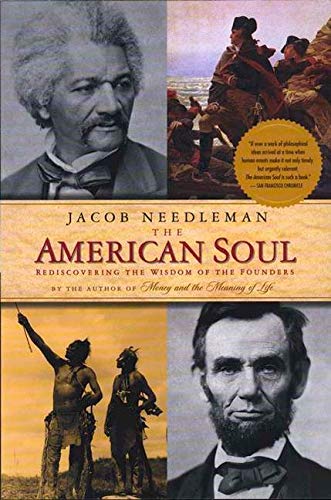
War & peace, fighting & working are all tangled up. Hiawatha can be translated as “He Who Combs.” He is called this because he was tasked with helping Great Peacemaker bring the New Mind, the Great Law of Peace, to the minds of humanity – however, he must first comb the snakes out of the greatest opponent to the New Mind, Atotarho.[18] Hiawatha was living a life of dehumanization and depravity prior to meeting Great Peacemaker, in some version of the story he was even a cannibal – a thing that feeds on humanity. When Great Peacemaker explained the Great Law of Peace to him, Hiawatha said, “I take hold, I grasp it. . . . Now what work is there for us to do?”[19] The work he takes on is to bring the New Mind of to those who have become dehumanized, who have lost their connection and memory of their own divinity. There are no enemies to the Great Law of Peace, only opponents, because once a human being makes the choice to be a spiritual human, to grasp a hold of the New Mind and the Great Law of Peace, that person becomes a carrier of Peace. Jacob Needleman, in discussing this story, writes that “man must experience himself as the force that resists the good.”[20] The beauty of this story, and by story I do not mean fiction, I mean medicine,[21] is that no one is forever lost, even the most depraved has the hope of redemption. As Joseph Rael says, Wah-Mah-Chi holds back a place of goodness in our hearts, no matter what we have done, no matter what we have seen.[22] Needleman sees in Hiawatha’s struggle to re-find this goodness within his heart the struggle that we, as citizens of the United States of America, must go through as well for our crimes against humanity.
Here…the legend speaks of a human crime for which no ordinary action can atone. Here the story may well be heard as speaking to our own remorse as we see in a clear light what has been done to an entire people. And here the tale echoes the constitutive legend of our own culture—the crime for which no ordinary action can atone, a level of self-remorse which demands of man an action of an entirely new quality. And for this action the man needs now to turn to the greatness he has seen in himself.[23]
In Joseph Campbell’s hero’s journey model one of the stages before being able to return home is atonement, or as Campbell sometimes wrote, at-one-ment. We must do the work of the heart to atone for our own sins as well as those of our ancestors and culture. To do this means we must become at-one with them, we must bring together both sides of the wound, as was done in the Truth & Reconciliation work in South Africa after apartheid. Perhaps this is a way to look at our culture and society know, the places where we see separation are really two sides of the whole which the wound has cut apart. To pull further from each other only leads to deeper wounding. Also, continuing with this metaphor, we cannot simply force the edges of the wound together, without cleaning and what surgeons call “approximating” the edges of the wound, full-thickness from the base of the wound to the superficial edges – together. We are all wounded and we are all part of the wound and our healing cannot be done individually, it is only through collective healing that we can bring the division of the wound back together into a whole. Needleman and Hiawatha learn that the wound will be healed through the new idea of peace, an idea that is a power.
The New Mind has come to you . . . and you are miserable because the New Mind does not live at ease with old memories . . . Now you will work with me to bring justice and peace to those places where you have done injury to man. We will work together to bring to the earth the new idea of the peace that is power. Such is the work given to man by the Creator of Life.[24]
Needleman sees that we need a re-spiritualization of ourselves as human beings and or our democracy. Joseph Rael and I talk about the idea of Spiritual Democracy, in our book, Becoming Medicine: Pathways of Initiation into a Living Spirituality. I came across this term in Steven Herrmann, Spiritual Democracy: The Wisdom of Early American Visionaries for the Journey Forwardand Herrmann found it in Walt Whitman’s writing.
Adopting the big idea of Spiritual Democracy, the realization of oneness of humanity with the universe and all its forces, can help people feel joy, peace, and interconnectedness on an individual basis. It can also inspire us to undertake sacred activism, the channeling of such forces into callings that are compassionate, just, and of equitable heart and conscience, and give us some tools to start solving some of these grave global problems, while uniting people on the planet.[25]
“The written word, the spoken word,” writes psychiatrist Paul Fleischman, “is like a hand feeling its way into a dark room, looking for a switch.”[26] The switch that we are looking for is the one that turns on and illuminates our shared sacred humanity. We are not alone in this quest, as Fleischman writes in his book, Cultivating Inner Peace: Exploring the Psychology, Wisdom and poetry of Gandhi, Thoreau, the Buddha and Others,
Shakers corresponded with Count Leo Tolstoy. Tolstoy’s book was one that transformed Gandhi, and Shaker and Gandhian ideas re-molded Count Tolstoy into a Christian peasant Tolstoy. Whitman and Thoreau met and influenced each other, and Thoreau’s “Civil Disobedience” became the manifesto for Gandhi’s social action. Scott and Helen Nearing read Whitman and Thoreau, as did Rabindranath Tagore. Tagore and Gandhi had a long relationship. John Muir’s favorite author was Thoreau. Thoreau “carried Leaves of Grass around Concord like a red flag.” Seekers of peace read each other, write to each other, influence each other. The quiet life of inner peace isn’t a vacuum.[27]
In Walking the Medicine Wheel: Healing Trauma & PTSD, Joseph told us that we are all brothers and sisters. He says, “I am my brother’s keeper,” thus contradicting the first documented murder in the Biblical tradition. After Cain has killed his brother, Abel, God asks Cain where his brother is. Cain says “Am I my brother’s keeper?” Joseph would say, “Yes, I am my brother’s keeper!” In Becoming Medicine, we move from us being brothers and sisters to us all being One, an identity of non-duality.
Joseph told me, when we were working on Walking the Medicine Wheel for veterans, that every veteran should get their DNA analyzed through National Genographic’s program, so that they would learn that we are all brothers and sisters, we all originally come from Africa. We know this is true through genetic science and the migrations of peoples. We also, literally, all have common human ancestors. We are all the sons and daughters of Mitochondrial Eve, who lived in Africa about two hundred thousand years ago. We also are all the sons and daughters of Y Chromosome Adam who lived between 150,000 and 300,000 years ago. Mitochondrial Eve’s initials are ME – this reminds us that we are all not just one family, but we are all One. Mother Earth’s initials are also ME, thus we are all relatives of the Earth and are One with the Earth. We are made of the Earth and the Earth moves from place to place through our Breath-Matter-Movement.[28]
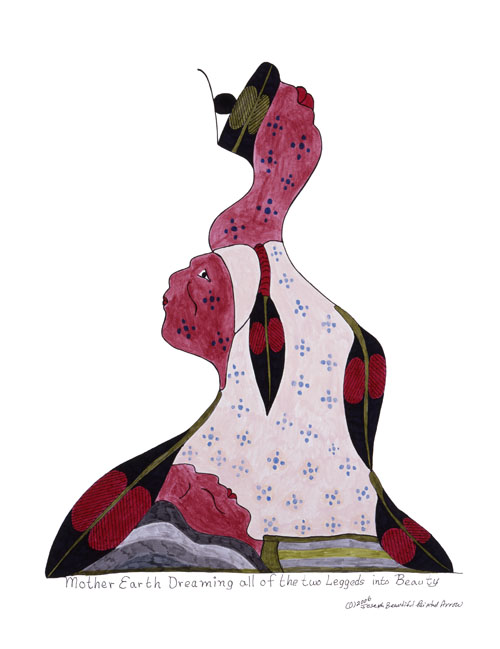
Mother Earth Dreaming all of the Two Leggeds into Beauty, J. Rael (2006)
We all come from Africa and Joseph says that when he was growing up the Pueblo people would refer to Black people as “our ancestors,” recognizing that we are all related and honoring the Black people and Africa as our common homeland. And where did Africa come from? Africa and all the continents were once all part of One continent, Pangea, which slowly broke apart and is slowly coming back together to reunite in Pangea Ultima.[29]
We have a choice in this life, do we want to be Lumpers and Splitters? This is a concept Charles Darwin described in determining whether two individuals are part of one species or two different species. He noticed that some biologists tended to focus on small difference and others focused on large similarities. Science works, largely, through separation and differences. When you are doing science, it can be good to be a Splitter. However, when you are doing humanity, it is better to be a Lumper, and to see our common spiritual humanity. Another word for “doing humanity” is mysticism. Mysticism is the spiritual practice of being a Lumper, of attaining a sense of peace and unity – what is sometimes called, non-duality. Joseph Rael and I have chapters devoted to becoming a visionary, becoming a shaman, and becoming a mystic and really all of these are about another thing that Joseph often says, becoming a true human.
We must reinvest in our humanity, in our spiritual humanity. To reinvest means we need to take what we consider “mine” and we need to think of it, instead as “ours.” We are out of balance. We have too much energy going into separation, isolation, and hoarding. Our view of the economy and life as always moving toward some imagined future of better profits and no pain is obsolete. Our economy and civilization is based upon expansion. There never was any “empty” land to expand into, it was only other people’s land that we took, stole, signed treaties for and then broke later when convenient. Western civilization has stolen, pilfered, raped, and mutilated the earth and in doing this we have tortured and distorted our own humanity. Who will stand up for humanity? Who will get up, stand up for humanity. We must re-invest in humanity and that begins with you, that begins with me, that begins with us.
I have been writing on this topic of how our “words create worlds” in relation to our spiritual and political situation. In working with Joseph Rael, writing Becoming Medicine: Pathways of Initiation into a Living Spirituality, I felt compelled to write about the responsibility of mystical, visionary, and shamanic experience—that we must work toward “Spiritual Democracy.” At its deepest point, mystical experience leads to an awareness that we are all one and this comes with a responsibility to challenge words of separation which ultimately lead to fascism. Mystical experience is a pathway that leads us to question who we are and gives us a responsibility to use our words wisely to create worlds where we are becoming the medicine that our world needs. As Rumi says, “We are pain and what cures the pain.”[31]
[3] This quote is popularly attributed to Mother Teresa. The Mother Teresa of Calcutta Center site says that it is falsely attributed to her and that it is “significantly paraphrased versions or personal interpretations of statements Mother Teresa made; they are not her authentic words.” However the page does not say what the original quote or statement was. https://www.motherteresa.org/08_info/Quotesf.html She did speak out for peace, as in this letter to George Bush and Saddam Hussein in January 1991, “Please choose the way of peace… In the short term there may be winners and losers in this war that we all dread. But that never can, nor never will justify the suffering, pain and loss of life your weapons will cause.” “10 inspiring quotes by Mother Teresa,” curated by Jessica Durando, USA Today, published August 26, 2014, https://www.usatoday.com/story/news/nation-now/2014/08/26/mother-teresa-quotes/14364401/
[4] Nietzsche, Beyond Good and Evil, p. 134? What edition? Kaufmann translation?
[13] Robert Stoller, Observing the Erotic Imagination (New Haven:Yale University Press, 1992), 32.
[14] David R. Kopacz, Re-humanizing Medicine: A Holistic Framework for Transformation of Your Self, Your Practice, and the Culture of Medicine, 2014, 34-35.
[29] See Kopacz & Rael, Becoming Medicine, 361-379.
[30] Bob Marley & Peter Tosh, “Get Up, Stand Up,” from the album, Burnin’ (1973). “‘Get Up, Stand Up’ was also the last song Marley ever performed on stage, on 23 September 1980 at the Stanley Theater, now the Benedum Center in Pittsburgh, Pennsylvania,” (Wikipedia, “Get Up, Stand Up,” https://en.wikipedia.org/wiki/Get_Up,_Stand_Up, accessed 6/6/20.
[31] Rumi, “We are the mirror as well as the face in it,” The Essential Rumi, trans. Coleman Barks, 106.
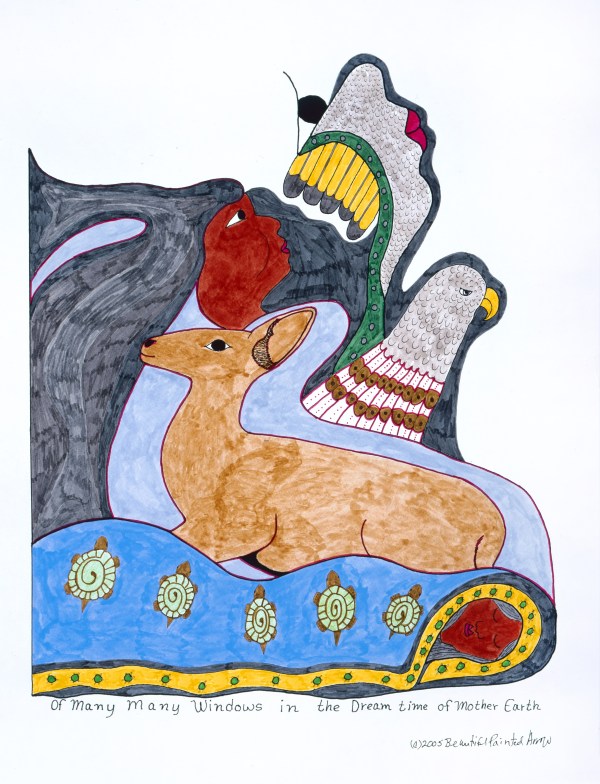
Of Many Many Windows in the Dream Time of Mother Earth, J. Rael (2005)
This painting reminds me of a passage I write about in the book where a deer bedded down for the night right outside my tent when I was backpacking on the way to Black Elk Peak in South Dakota. Here is what Joseph Rael (Beautiful Painted Arrow) says about the Deer:
Deer means peh ney. Peh means straight forward. Ney means a space in front of, before creation was made. What this is saying is that if we as a people are going to have peace, we have to go to that space beyond, before creation where Peace was. I did the Deer Dance when I was younger and I think that added to my medicine. That is an important point. The last time we were working a book, my father came in a vision and gave me permission to go forward. Now with this work with the deer medicine, the earlier dances are supporting us to go forward. True Peace is that space before there was anything that could create un-peace. (Joseph Rael, p. 298)
The next artwork in the book is also by Joseph, another great one, “Puma Giver of th Visionary Life to the People of Mother Earth.” These paintings are in chapter 11, “Initiation,” and we speak of the relationship between animals and humans and animals as guides.
Puma Giver of the Visionary Life to the People of Mother Earth, J. Rael (2005)
“I felt like something was pulling me toward the stream and I went down there and I just washed myself, blessed myself with the water, but I knew that this place belonged to me and I was turning around and I saw at least five or six puma tracks, lion tracks and some had crossed the river, right where I was drinking water and maybe that was the vibration that was I picking up of the lions and I didn’t know that I was going to have a relationship with them.”
“Picuris Pueblo seemed so far away then, because now I was in Colorado and so I noticed that right there at the river, you remember where we did the visionquest that night with the tree spirits? Right there. There were tracks coming from the other side but they were going the other direction and so there were like two separate little pathways. It was an east-west crossing of the river and I had just drank from the energy of the tracks that were the lion’s. So somehow that seemed like a different vibration, but I saw the cat tracks. I wanted to know where are these lions from, so later I went to the top of the hill and I saw that if you go far enough in that direction, you will get to the mountains where the lions were that I had left a deer for. So here I got the sense that I was dealing with a family of lions, not lions in general, but the Puma; there was a family.” (Joseph Rael, p. 292-294)
“Words create worlds.” These are the words of Rabbi Abraham Joshua Heschel, here is the full quote, remembered by his daughter, Susannah Heschel:
“Words, he often wrote, are themselves sacred, God’s tool for creating the universe, and our tools for bringing holiness — or evil — into the world. He used to remind us that the Holocaust did not begin with the building of crematoria, and Hitler did not come to power with tanks and guns; it all began with uttering evil words, with defamation, with language and propaganda. Words create worlds he used to tell me when I was a child. They must be used very carefully. Some words, once having been uttered, gain eternity and can never be withdrawn. The Book of Proverbs reminds us, he wrote, that death and life are in the power of the tongue.”[1]
Remembering the Past & Learning from History
“Those who cannot remember the past are condemned to repeat it.” (George Santayana)[2]
Are we witnessing a rise of fascism and totalitarianism? Many say we are, and it is worth looking at what these words mean and if they apply to our current situation, which Rebecca Solnit calls a linguistic crisis.[3]
Are we justified in using such a strong word as “fascism” for the language and ideas that are being tossed about under the guise of a resurgent nationalism? The Director of the McMaster Centre for Research in the Public Interest, Henry Giroux, believes so.
“I have no apologies whatsoever for using the word fascist politics. And I think that people who are afraid to do that become complicit with the very politics they condemn. Because if you can’t learn from history, then it seems to me that you end up in the dark,” (Henry Giroux).[4]
In this next installment of the Words Create Worlds series, we will turn to the work of two authors who warn us against a global movement into fascism. Both authors have familial roots in the persecution of the Jewish people during the holocaust and the Soviet take over of Eastern Europe after World War II. We will first discuss former US Secretary of State, Madeleine Albright’s book, Fascism: A Warning. Then we will turn to Yale professor, Jason Stanley’s book, How Fascism Works: The Politics of Us and Them. I do not intend this to be polemical, partisan politics, but rather to objectively document the current resurgence of fascistic rhetoric, in the United States and globally, in light of the history of fascism in the 20th Century.
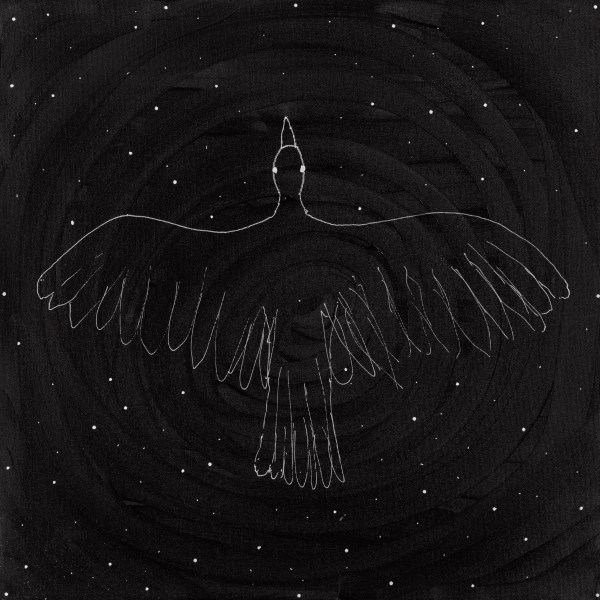
“Crow Flying through Cosmos,” D. Kopacz
Fascism: A Warning
Former US Secretary of State, Madeleine Albright published her book by this name in 2018. She starts with describing her family’s experience with fascism, escaping to London in 1939 from the Nazi invasion of Czechoslovakia. The family returned to Czechoslovakia after the war, only to have to flee in 1948 from the communists, this time to the USA. The family lost numerous members to the Holocaust.
Albright sees a worldwide movement of leaders “intentionally undermining the institutions and democratic principles that have held the world together,” (xvii). She has chapters focusing on the rise of Hitler in Germany, Mussolini in Italy, Franco in Spain, Stalin in the Soviet Union, Putin in Russia, Erdoğan in Turkey, Milošević in the former Yugoslavia, Chávez in Venezuela, Orbán in Hungary, Kaczyński in Poland, the Supreme Leaders in North Korea, and Trump in the USA. She defines a fascist as “someone who claims to speak for a whole nation or group, is utterly unconcerned with the rights of others, and is willing to use violence and whatever other means are necessary to achieve the goals that he or she might have,” (245-246).
Albright includes Trump in this group of leaders leaning into fascism as “we have not had a chief executive in the modern era whose statements and actions are so at odds with democratic ideals,” (5). She points out that he has “systematically degraded political discourse in the United States, shown an astonishing disregard for facts, libeled his predecessors, threatened to ‘lock up’ political rivals, referred to mainstream journalists as ‘the enemy of the American people,’ spread falsehoods about the integrity of the US electoral process, touted mindlessly nationalistic economic and trade policies, vilified immigrants and the countries from which they come, and nurtured a paranoid bigotry toward the followers of one of the world’s foremost religions,” (5).
Albright notes that, in 2016, “fascism” was the most searched for word in the online Merriam-Webster Dictionary, except for the word “surreal,” showing a popular interest in understanding the meanings of these words. She describes the history of the word fascism, going back to Mussolini’s revival of the Roman consul’s emblem, the fasces, a “bundle of elm rods coupled with an ax,” (19-20). Mussolini is also credited with coining the term, “drain the swamp” (drenare la palude) by firing 35,000 civil servants (20). Albright traces the history of the words, “America First,” back to Charles Lindbergh and the America First Committee of 1940, which included “Nazi sympathizers” to resist entry into World War II (216). One of the things we are looking at in this column is how words create worlds and to echo and mimic the words of a fascist is to risk recreating a fascist state. She quotes George Orwell’s one-word description of a Fascist, a “bully,” (209). We can look to see if the current president of the United States qualifies as a bully – does he call people names, does he push people around and try to intimidate them and always get his way?
The question is whether what we are seeing in the United States, which seems to resonate on larger geopolitical trends, deserves to be called fascism. Albright states that “Trump is the first antidemocratic president in modern U.S. history,” and that on “too many days, beginning in the early hours, he flaunts his disdain for democratic institutions, the ideals of equality and social justice, civil discourse, civic virtues, and America itself. If transplanted to a country with fewer democratic safeguards, he would audition for dictator, because that is where his instincts lead,” (246). She writes that leaders around the world “observe, learn from, and mimic one another,” and that they see “where their peers are heading, what they can get away with, and how they can augment and perpetuate their power,” (246). She describes how this happened historically in the Twentieth Century and she fears that history is repeating itself and that “the herd is moving in a Fascist direction,” (246). Albright is issuing a warning, as her book’s subtitle states, she feels that in the US, we “are not there yet, but these feel like signposts on the road back to an era when Fascism found nourishment and individual tragedies were multiplied millions-fold,” (224).
Albright’s Antidotes to Fascism
Albright mentions a few antidotes to fascism, such as “caring about others” and “the proposition that we are all created equal” which neutralizes the “self-centered moral numbness that allows Fascism to thrive,” (66). She also says that we need to develop world views that see similarities, rather than us and them, that we need “a way of looking at the world that recognizes the humanity that we share with one another, and the interests that nations have in common,” (187). This is similar to the idea of “spiritual democracy” that Joseph Rael and I develop in our forthcoming book, Becoming Medicine: Pathways of Initiation into a Living Spirituality.
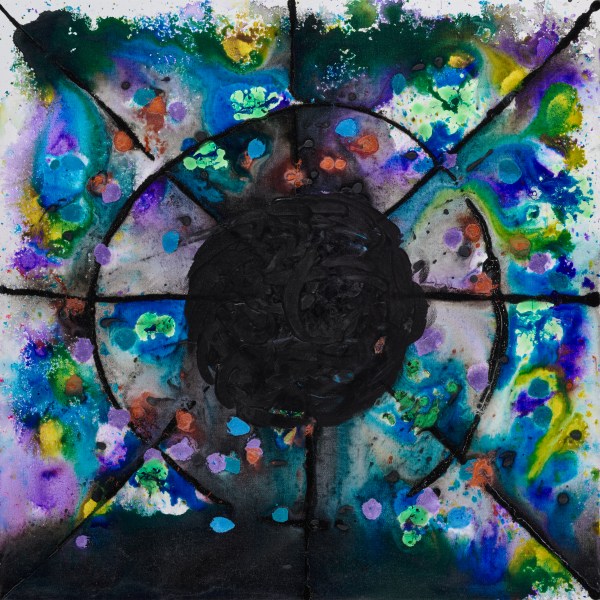
“Medicine Wheel of Dark Matter,” D. Kopacz
How Fascism Works: The Politics of Us and Them
Jason Stanley is a Yale professor and author of the book, How Propaganda Works and his recent How Fascism Works: The Politics of Us and Them. Stanley was born in the US, but his parents fled Europe as Jewish refugees. His father lived through Kristallnacht in Germany and his mother, from Eastern Poland, was in a Siberian labor camp during the war.
Stanley also speaks of the history of the America First movement (“the public face of pro-fascist sentiment”) and its roots in anti-immigration policy. He defines fascism as “ultranationalism of some variety,” with the nation “represented in the person of an authoritarian leader who speaks on its behalf,” (xiv). As does Albright, he sees the United States in a dangerous moment. A hallmark of fascist politics “comes from the particular way in which it dehumanizes segments of the population,” which leads to limiting “the capacity for empathy among other citizens, leading to the justification of inhumane treatment, from repression of freedom, mass imprisonment, and expulsion to, in extreme cases, mass extermination,” (xv). He points out that dehumanization can exist without overt fascism, but that “it should concern all Americans that as a candidate and as president, Donald Trump has publicly and explicitly insulted immigrant groups,” (xv).
Dehumanization
Dehumanization is the process of treating a person as a thing, as something less than human. I have written about this process in medical and health care settings in my book, Re-humanizing Medicine. Dehumanization can spread like an epidemic. Psychoanalyst, Robert Stoller, has written that the act of dehumanizing another “dehumanizes the dehumanizer,”[5] (Stoller, 32). The dehumanized individual has lost touch with what it means to be human and thus treats others as objects rather than as people. This recalls Martin Buber’s distinction between the I-Thou and the I-It relationships. The I-It relationship is a dehumanized relationship, it is profane and materialistic, treating human beings as raw material. The I-Thou relationship, on the other hand, sacralizes and spiritualizes the relationship between two human beings, it is a subject-subject relationship.[6] The reason that fascism is a spiritual as well as political issue is because fascism despiritualizes human beings and the world. Just as I called for Re-humanizing Medicine, we need a Re-humanizingPolitics, and a Re-spiritualizing Politics after the resurgence of fascist rhetoric and action. Two of the antidotes that I describe in Re-humanizing Medicine are developing a personal counter-curriculum of re-humanization (an action plan to reinvest in one’s being fully human: body, emotions, mind, heart, creativity, intuition, and spirituality), and to join the compassion revolution – a global movement of bringing heart back into health care. We could use these processes in our current geopolitical climate.
Stanley’s 10 Common Features of Fascism:
Political invocation of a mythic past – e.g. “Make America Great Again”
Propaganda – to distort reality and create alternate narratives and “realities” of control
Anti-intellectualism – “the liberal New York Times,” casting free speech and scholarship as liberal agendas
Unreality – “fake news” and “alternative facts,” creating a state news organ
Hierarchy – us/them, the deserving and the undeserving
Victimhood – seeing oneself as a victim can lead to victimizing others before they victimize you
Law and order – warn about dangerous “others” and the need to control and contain “them”
Sexual anxiety – fears of racial purity and appeal to need for “strong men” for protection
Sodom and Gomorrah – decadent “coastal elites”
Arbeit Macht Frei – This German phrase, meaning “work will set you free” was inscribed over the entrance to the Nazi concentration camp, Auschwitz[7]
“Out of One, Many,” D. Kopacz
Stanley’s book follows chapters on each of these different topics, but he reminds us that:
“The most telling symptom of fascist politics is division. It aims to separate a population into an ‘us’ and a ‘them,’” (xvi).
The antidote to fascism can also be found in the poison of it. Stanley writes that the “suffering of strangers can solidify the structure of fascism,” but that “it can also trigger empathy once another lens is clicked into place,” (xix).
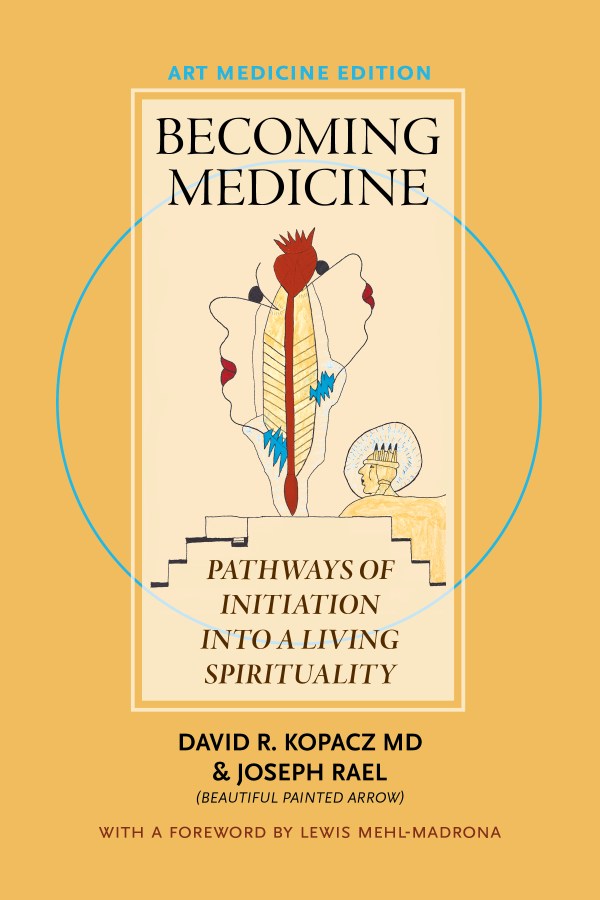
This is the much-needed compassion revolution. I often find myself musing about what would happen if all these politicians who are spreading hatred and division simply asked themselves before they spoke, “Am I speaking from the heart and out of love?” Stanley sees the root power of fascism in the separation of people into us and them. Many spiritual practices cultivate the opposite of us and them, seeking states of peace, unity, and interconnection. For example, the Tibetan Buddhist practice of tonglen and Loving Kindness focus on breaking down the barriers between self and other. Hindu Kashmiri Shaivism seeks the understanding and experience that all is Śiva, that we are all God, and that there is no “us and them.” In our forthcoming book, Becoming Medicine: Pathways of Initiation into a Living Spirituality,[8] Joseph Rael (Beautiful Painted Arrow) and I discuss the concept of Spiritual Democracy, of cultivating different ways that we can move from self and other, to brother and sister, and even further to the non-dual point where we are all one. Through exploring different pathways of initiation we come to the conclusion that the spiritual path leads to a state of oneness and from this state of oneness, one feels a responsibility for all life. After seeking initiation, comes finding & receiving wisdom, and this wisdom comes with the responsibility to return to the world and to find ways of giving compassion and wisdom to others.
Sun Through Trees Near Sol Duc River, Washington state, D. Kopacz (2019)
In the next installment of Words Create Worlds we will be, “The Fight for Humanity – or should we say – Working for Humanity.” Throughout 2019 I was writing these Words Create Worlds essays that appeared in The Badger. In working with Joseph Rael, writing our next book, Becoming Medicine: Pathways of Initiation into a Living Spirituality, I felt compelled to write about the responsibility of mystical, visionary, and shamanic experience—that we must work toward “Spiritual Democracy.” At its deepest point, mystical experience leads to an awareness that we are all one and this comes with a responsibility to challenge words of separation which ultimately lead to fascism. Mystical experience is a pathway that leads us to question who we are and gives us a responsibility to use our words wisely to create worlds where we are becoming the medicine that our world needs. As Rumi says, “We are pain and what cures the pain.”[9]
[5] Robert Stoller, Observing the Erotic Imagination (New Haven: Yale University Press, 1992), 32.
[6] Robert Audi ed., ‘Martin Buber,’ The Cambridge Dictionary of Philosophy, 104.
[7] These are the chapters from, Jason Stanley, How Fascism Works: The Politics of Us and Them. New York: Random House, 2018. I have provided my own brief elaborations after the topic headings of Stanley’s chapters. For a quick review of Stanley’s 10 elements of fascism, which also comments on the rise of Hindutva in India, see “The ten indicators of fascist politics,” Kanishk Tharoor, The Hindu Business Line, 5/17/19, https://www.thehindubusinessline.com/blink/talk/the-ten-indicators-of-fascism/article27158525.ece
[8] David Kopacz and Joseph Rael. Becoming Medicine: Pathways of Initiation into a Living Spirituality. Seattle & Marvel: Condor & Eagle Press, 2020.
[9] Rumi, “We are the mirror as well as the face in it,” The Essential Rumi, trans. Coleman Barks, 106.
Joseph’s painting is called “Spirits of Chimney Rock,” and is the second painting we have of this ancient site designed for lunar observation.
Spirits of Chimney Rock, J. Rael (2016)
“Stars shine in the darkness of space. Joseph speaks a lot about space and the cosmos, using the sun and moon to orient us, and about our relationship and responsibility to the cosmos—because he keeps telling me We are cosmic citizens. There is a strong tradition in amongst the Southwestern Native American tribes of referring to the stars and the movements of the sun and the moon. I felt it was important for me to visit Chimney Rock, where two pillars of rock were used to track the changing patterns of the moon. Joseph told me to ‘note the mindset of how the ancient moon watchers used their insights regarding how they used the knowledge from moon observations.’ I visited Chimney Rock National Monument in 2015 for a dusk ceremony. As I sat listening to the Native American flute player, a small lizard climbed on to my backpack and then jumped on to my leg and sat there for a little bit. It felt good to gaze off at the pillars of Chimney Rock accompanied by this little rascal.” (Kopacz & Rael, 261)
Little Rascal, D. Kopacz (2015)Chimney Rock, Colorado, D. Kopacz (2015)
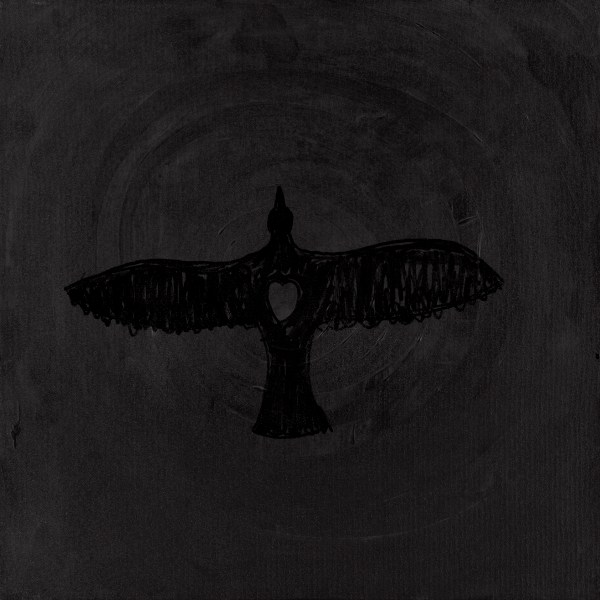
I had painted a couple of different crow paintings and this is the second in the series, “Crow Flying Through Dark Matter.”
The first painting is “Crystal Chamber Taken Up into the Sky.” This painting represents a vision Joseph had of his first Sound Chamber that he built north of Albuquerque, New Mexico. He had embedded various crystals in the wall of the chamber, which is why it is called a “crystal chamber.” He had a vision of the chamber being taken up into the sky where it continued to be availalbe in non-ordinary reality. When Joseph left that land, the physical chamber was taken down. This is also one of the first paintings that Joseph had me do some finishing work on – he asked that I paint in the water and table when he gave it to me.
Crystal Chamber Taken Up into the Sky, Joseph Rael (2017)
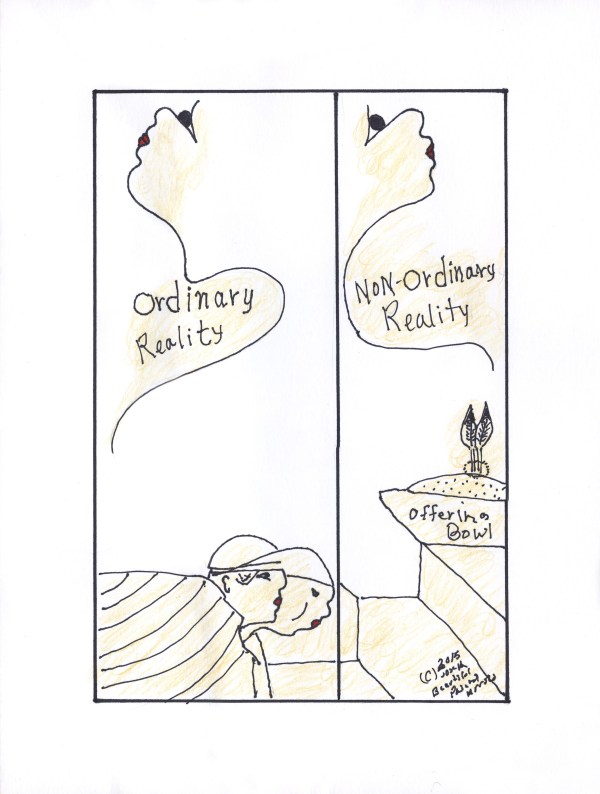
The next painting by Joseph is a favorite of mine that I keep above my writing desk. It shows two people whose heads are inclining from ordinary reality toward non-ordinary reality. It shows that the separation between ordinary and non-ordinary reality is but a thin line.
Ordinary, Non-Ordinary Reality Offering Bowl, Joseph Rael (2015)
“When I built the sound chamber here in Bernalillo I created a ceremony where I did a rainbow from the chamber that I had here with the chamber there at the monument where we went (the Painted Kiva). But when the people bought the place here I guess they tore it down. People call it a crystal chamber because I buried crystals in the wall. One day it became a crystal chamber and it went straight up into the sky and it is still there. So it didn’t bother me when they tore it down because it was just the physical structure. The little boy went with it up into the sky, 10,000 feet up. So it is sitting up there in the sky over Albuquerque, New Mexico.” (As part of the vision, Joseph was also given a little boy, a spirit child, who grows as the Sound Chambers grow.) (Joseph Rael, Becoming Medicine, p. 257).
What we call things creates not just discourse, but reality. The words that we use and the words that we do not use lead us in certain directions and have different effects. Words are not just words, they are tools that shape, and give expression to, reality.
Words are Spiritual & the World is Spiritual
In the beginning was the Word, and the Word was with God, and the Word was God. He was in the beginning with God; all things were made through him, and without him was not anything that was made, (John 1:1).[2]
Advaita Vedanta of Hinduism also recognizes the importance of the Word, as Nataraja Guru has written in The Word of the Guru: The Life and Teachings of Narayana Guru:
There is nothing to know beyond the Word. The known, knowledge, and the knower meet in one presence in the Word…In never-ending beats, it continues in quantum pulsations of energy, to be calculated in split seconds or in millions of light-years, while new and unknown galaxies leap within the ken adding to wonder that is dumbfounding.[4]
Similarly, Southern Ute mystic, Joseph Rael (Beautiful Painted Arrow) sees the connection between sound and reality, as he writes, the “true basis for Universal Intelligence is sound. Out of sound comes everything.” It is through perception that creation comes into being. “We are perceivers, and it is in our act of perceiving that vibrations become sounds, smells, feelings and colors. In our act of perceiving, things take form.”[5]
Sun Through Trees Near Sol Duc River, Washington state, D. Kopacz (2019)
Words create our reality and our current reality is in crisis.
Across the world, in many different countries, politicians are rising to power using words of separation rather than words of union. This political crisis is a spiritual crisis because using words to create reality is a spiritual act.
In our book, Becoming Medicine: Pathways of Initiation into a Living Spirituality,[1] Joseph Rael and I felt that we had to include something about the pathway that the world is heading down, a pathway that can lead to a loss of peace, to the start of war. The world is currently on a pathway that is being paved with words of separation: racist words, belittling words, disrespectful words, manipulative words, fundamentalist words, totalitarian words, and fascist words. Common to all of these words is an underlying attempt to recreate a world of separation, isolation, and hate. Joseph has long been committed to world peace and he has worked toward this through the development of his Sound (Peace) Chambers on four continents. In Becoming Medicine we write about Spiritual Democracy (you can download that chapter here), which is the opposite of fundamentalism―it is about opening our hearts to others and seeking to act in such a way that encourages others to open their hearts. Fundamentalism is idolatry―the worship of a fixed thing. Spiritual Democracy is about allowing ourselves to be shaped and continually reshaped by Breath-Matter-Movement, by Wah-Mah-Chi (the Tiwa word for God). I came across Walt Whitman’s concept of Spiritual Democracy in the work of Stephen Herrmann in his book, Spiritual Democracy.
Adopting the big idea of Spiritual Democracy, the realization of oneness of humanity with the universe and all its forces, can help people feel joy, peace, and interconnectedness on an individual basis. It can also inspire us to undertake sacred activism, the channeling of such forces into callings that are compassionate, just, and of equitable heart and conscience, and give us some tools to start solving some of these grave global problems, while uniting people on the planet.[6]
Sun Through Trees, Mt. Muller, Washington State, D. Kopacz (2019)
The Crisis of this Moment is Linguistic
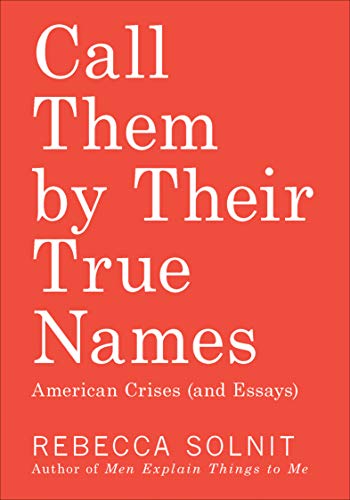
Rebecca Solnit’s Call Them by Their True Names (2018) examines the uses and abuses of language in politics, stating that “one of the crises of this moment is linguistic.” The linguistic crisis confuses us about what is real, what is true, about who we are, and about our relationships with each other and the natural world. “Calling things by their true names,” Solnit writes, “cuts through the lies that excuse, buffer, muddle, disguise, avoid, or encourage inaction, indifference, obliviousness. It’s not all there is to changing the world, but it’s a key step.” Solnit has long been concerned with the use of language and power in her writings on hope, trauma, community, and environment. She writes artful and thoughtful memoir that weaves in the political and the creative spirit. Her writings are not overtly spiritual, but I imagine she would be comfortable with the concept of spiritual democracy as she writes about human rights, human dignity, environment, and on women’s and indigenous rights. Her writing is a form of activism and she encourages us to make the world a better place. She sees that we are currently going down a pathway of brutality and if we do not start calling this pathway by its true name, we risk being swept into deeper brutality. “Once we call it by name, we can start having a real conversation about our priorities and values. Because the revolt against brutality begins with a revolt against the language that hides brutality.”[7]
One of the elements of the current pathway the United States (as well as many other countries across the world) is walking down is a pathway of isolation. Isolation and separation are based on dividing people into the “good and the bad,” those who belong and those who do not, those who have rights and those who do not. Anyone with a sense of history can pick out words and phrases that were used in racist, totalitarian, fascist regimes: “enemy of the people,” “those are some very bad people,” and “send them back.”
Glorious Disconnect
Solnit writes about what she calls a “Glorious Disconnect:”
If you boil the strange soup of contemporary right-wing ideology down to a sort of bouillon cube, you find the idea that things are not connected to other things, that people are not connected to other people, and that they are all better off unconnected.[8]
Solnit points out how this underlying philosophy of disconnection and separation, which results in concrete policies, is also behind the current proliferation of “fake news.” “Taken to its conclusion,” she writes, “this worldview dictates that even facts are freestanding items that the self-made man can manufacture for use as he sees fit.”[9] This worldview influences our interdependence and interrelatedness with each other and the environment. In the mania to deregulate social and environmental protection, she sees the attempt to “deregulate meaning.”
If you begin by denying social and ecological systems, then you end by denying the reality of facts, which are, after all, part of a network of systematic relationships among language, physical reality, and the record, regulated by the rules of evidence, truth, grammar, word meaning, and so forth. You deny the relationship between cause and effect, evidence and conclusion; or, rather, you imagine both as products on the free market that one can produce and consume according to one’s preferences. You deregulate meaning.
. . .
And this is how the ideology of isolation becomes nihilism, trying to kill the planet and most living things on it with a confidence born of total destruction.[10]
This pathway of isolation is rooted in and creates loneliness, in fact, Solnit has an essay entitled, “The Loneliness of Donald Trump.” She writes about this loneliness coming out of power and privilege that insulates and isolates, until,
In the end there is no one else in their world, because when you are not willing to hear how others feel, what others need, when you do not care, you are not willing to acknowledge others’ existence.. . . When you don’t hear others, they become unreal, and you are left in the wasteland of a world with only yourself in it. That surely makes you starving, though you know not for what, if you have ceased to imagine that others exist in any true, deep way.[11]
Gerald Arbuckle, a New Zealander living in Australia who is a Catholic priest and anthropologist, also sees the current crisis of global political and religious fundamentalism as being rooted in loneliness and creating loneliness. His follow-up book to Fundamentalism at Home and Abroad (2017) is Loneliness: Insights for Healing in a Fragmented World (2018). Arbuckle points out that the United States is extreme in its individualism and that the “American Dream” includes contradictory values of competitive utilitarian individualism and egalitarianism. This pits the “rights of the individual” against the “common good.” The founding “myth” of the United States includes this tension between individualism (which when extreme creates isolationism and loneliness) and egalitarianism (which can create community and equality).
Arbuckle draws on his training as a cultural anthropologist to understand how groups function and to diagnose the various forces leading to our current epidemic of loneliness and fundamentalist totalitarianism. He points out how and why people use tactics of scapegoating, splitting and separating people into us and them, into “member” and “stranger.” He also draws on his training as a Catholic priest to point out how we can treat the current epidemic through creating love between neighbors. “The universal call to love one’s neighbor commits us to struggle for the common good. Individualism and individual and corporate greed contradict this imperative,” he points out. He quotes Pope Francis calling for a revolution of tenderness. “A single individual is enough for hope to exist, and that individual can be you. And then there will be another ‘you,’ and another ‘you,’ and it turns into an ‘us.’ . . . When there is an ‘us’ there begins a revolution [of tenderness].”[12]
Rialto Beach, Washington state, D. Kopacz (2019)
Doing the Work that Matters
Both Solnit and Arbuckle tells us that our civil society and spiritual values are being degraded and negated. They point out how our current global epidemic of loneliness and totalitarianism is rooted in our use of language and how we use words to create worlds. We have a choice between worldviews of separation and worldviews of union. Making this choice begins with the words we use to describe and create reality. One of our choices is whether we focus on “me” or “we.” ME and WE are actually mirror images of each other, if you place WE over ME, you can see that they both are reflections as in a lake. There is a saying, which I have seen variously attributed, that “When you replace I with We, Illness becomes Wellness.” The words that we use create different stories, and we need to choose whether we want stories of inclusion (we) or stories of exclusion (me). As Rebecca Solnit writes:
The only power adequate to stop tyranny and destruction is civil society, which is the greater majority of us when we remember our power and come together. The job begins with opposition to specific instances of destruction, but it is not ended until we have made deep systemic changes and recommitted ourselves, not just as a revolution, because revolutions don’t last, but as a civil society with values of equality, democracy, inclusion, full participation—a radical e pluribus unum, plus compassion. This work is always, first and last, a storytelling work, or what some of my friends call ‘the battle of the story.’ . . . To sustain it, people have to believe that the myriad small, incremental actions matter.
. . .
To believe it matters—well, we can’t see the future, but we have the past. Which gives us patterns, models, parallels, principles, and resources; stories of heroism, brilliance, and persistence; and the deep joy to be found in doing the work that matters. With those in hand, we can seize the possibilities and begin to make hopes into actualities.[13]
Doing the work that matters, this is what we are called to do. Joseph Rael reminds us that work is worship, so this work of activism, this work of story, this work of loving our neighbors, is a sacred work that we are called to do and that we are called to put into words so that we can create (instead of a world of hate, separation, and war) a world of love and peace.
Rialto Beach, Washington state, D. Kopacz (2019)
Next:
Worlds Create Worlds.3
Madeleine Albright’s Fascism: A Warning.
Jason Stanley’s How Fascism Works: The Politics of Us and Them.
Throughout 2019 I was writing these Words Create Worlds essays that appeared in The Badger. In working with Joseph Rael, writing our next book, Becoming Medicine: Pathways of Initiation into a Living Spirituality, I felt compelled to write about the responsibility of mystical, visionary, and shamanic experience—that we must work toward “Spiritual Democracy.” At its deepest point, mystical experience leads to an awareness that we are all one and this comes with a responsibility to challenge words of separation which ultimately lead to fascism. Mystical experience is a pathway that leads us to question who we are and gives us a responsibility to use our words wisely to create worlds where we are becoming the medicine that our world needs. As Rumi says, “We are pain and what cures the pain.”[14]
[1] David Kopacz & Joseph Rael (Beautiful Painted Arrow), Becoming Medicine: Pathways of Initiation into a Living Spirituality. Seattle & Marvel: Condor & Eagle Press, 2020.
Joseph phoned me one night (2/18/16) as I was getting off of work and told me he had a dream or a vision in which God told him that there is a heldback place of goodness in everyone’s heart, no matter what you have done and no matter what has been done to you. When he told me this I knew we had the organizing framework and ending of the book! I grumbled a little, internally, thinking, “Gee it would have been nice to have had this vision when we started writing the book,” but I got over that pretty quickly. This vision meant that trauma did not destroy our goodness and innocence, although we can lose touch with it. It is waiting right there in the heart and all we have to do is make the inner journey to that place of heldback goodness. We further develop this idea in chapter 9, “Guhā: Cave of the Heart,” in Becoming Medicine: Pathways of Initiation into a Living Spirituality.
“Dreaming a New Future,” Joseph Rael (2005)
The chapter starts off with a painting of Joseph’s, “Dreaming a New Future.” After Joseph phoned me about his vision of the heldback place of goodness, I quickly wrote out a number of related concepts in trauma and healing work: Peter Levine’s work on healing through embodiment; Donald Kalsched’s The Inner World of Trauma, and Trauma & the Soul; Richard Miller’s concept of the “inner resource” in iRest (Integrative Restoration/yoga nidra); Lewis Mehl-Madrona’s “inner healer;” Hindu traditions about the guhā (cave of the heart); and Martia Nelson’s Coming Home: The Return to True Self. Many different writers and traditions speak of an inner source of healing in the heart.
Here are some excerpts from chapter 14 “Return to the Place of Heldback Goodness:”
I madly scribbled down his words in a notebook. In talking about this held-back place of Goodness, Joseph spoke about how the sweat lodge can help veterans reconnect with this hidden place. He says that this goodness is hidden within the “cloak of Divine Energy,” and that, through the symbolic rebirthing of the sweat lodge processes, it can be brought back into a person’s life. Joseph describes how, in the sweat lodge, you sit on the ground in the darkness. At the end of the ceremony, you move from sitting to crawling on your hands and knees out through the flap of the sweat lodge door, moving from darkness and re-emerging into light. We do not remember our original birth, but this recreates our birth, crawling on hands and knees, struggling to our feet, and then staggering in our steps…
Joseph used to perform the sweat lodge ceremony at Indian Health Service hospital and clinics. He worked a lot with addictions. In the sweat lodge, there is first “placement,” in sitting, then crawling out into the light, the re-birthing process. He says that this is a “going back to Goodness, to the Source of Renewal.” This is the pathway to our inner home, which has been waiting for us and for veterans as they have journeyed forth into the world of war and trauma. We have to “repeat what we did as a baby” and this helps us reconnect to our inner home, to that place of held-back Goodness.
Joseph reminds me again to put in the book that he uses lava rocks for the sweat lodge and that these are “from the core of the Earth, the Mother of all of us. We reach through the center of her to her heart to heal.” The Earth’s heart, Mother Nature’s heart, our heart, are all the same. In connecting to Mother Nature’s heart, we can reconnect back to our own heart and heal. Joseph then said of veterans that the “Divine Mother loves them, and can wipe away their pain . . . all that is needed is a second or one or two seconds, or even no seconds, and just instantly we are forgiven.” Joseph reminisces that when he was growing up, he would meet people from many different tribes, but the Native American people were always the “most nature-oriented people.” He says that we must “Understand that we all belong to Mother Nature. We look like a beautiful man, or a beautiful woman, or a beautiful child, but still we are all Mother Nature’s children.”