In this series of essays, in the 250th year of the United States of America, I will develop the idea of Inner Democracy – a democracy of mind and heart and soul – to complement our outer democracy.
We are at a crisis of democracy, there is extreme polarization, accusations of “the other side” being “fascist” or “socialist/communist,” and levels of mistrust in each other and in our democratic institutions that have not been seen in generations.
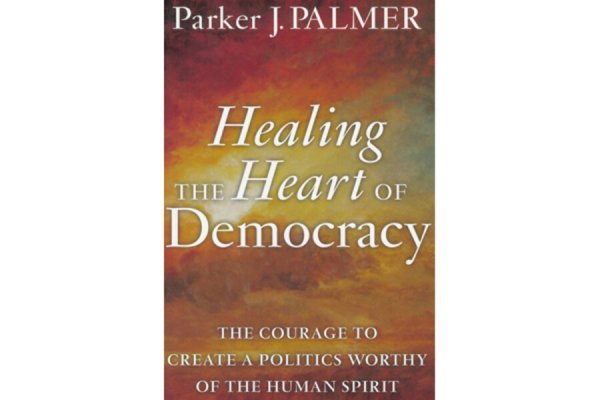
As Parker Palmer has written, in Healing the Heart of Democracy: The Courage to Create a Politics Worthy of the Human Spirit (2011),
“If American democracy fails, the ultimate cause will not be a foreign invasionor the power of big money or the greed and dishonesty of some elected officials or a military coup or the internal communist/socialist/fascist takeover that keeps some Americans up at night. It will happen because we—you and I—became so fearful of each other, of our differences and of the future, that we unraveled the civic community on which democracy depends, losing our power to resist all that threatens it and calls it back to its highest form,” (8).
We think of democracy as a form of government, as something outside of the individual person, but Palmer reminds us that democracy is ultimately about “you and I,” and not about something “out there.” Democracy is a “government by the people,”[1] and we are the people. The kind of democracy that Palmer envisions, one that is “worthy of the human spirit,” is the kind of democracy that moves us from Me to We. This Journey from Me to We is a difficult one, and it starts inside each of us.
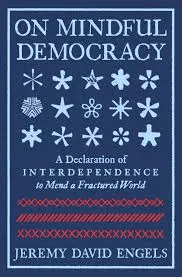
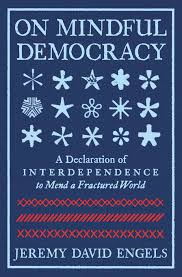
Jeremy David Engels, in his book, On Mindful Democracy: A Declaration of Interdependence to Mend a Fractured World, defines “true democracy” as “ working together to care for each other and for the life we share,” (4). Democracy, for Engels, is about collaborating and caring, not just for ourselves but for our shared life together on our only ecosystem of the Earth.
There is a crisis of democracy in what we even mean by “democracy.” Is democracy a libertarian ethos of being able to maximize one’s own life, liberty, and, happiness, regardless of the consequences to others and the environment; or, is democracy a higher, spiritual calling of caring and collaboration?
Engels brings our focus on democracy from the individual to the community through synthesizing the spiritual traditions of yoga, Buddhism, and Christianity. He draws on Vietnamese Zen Buddhist Thich Nhat Hanh’s, “interbeing,” an intellectual/spiritual understanding of the interconnectedness of life, and the Christian community building of Martin Luther King Jr.’s “beloved community,” which then leads to democratic action. Engels re-writes the Declaration of Independence into a Declaration of Interdependence, recognizing the inherent interconnectedness of life.
Mindful democracy is a pathway and practice for developing the experience of inner democracy which can then be practiced in its outer form as building the beloved community and democratic action in the world. Inner democracy is an inner experience within the individual that can then lead to an outer democratic citizenship and government. We can think of inner democracy as a variety of spiritual democracy.
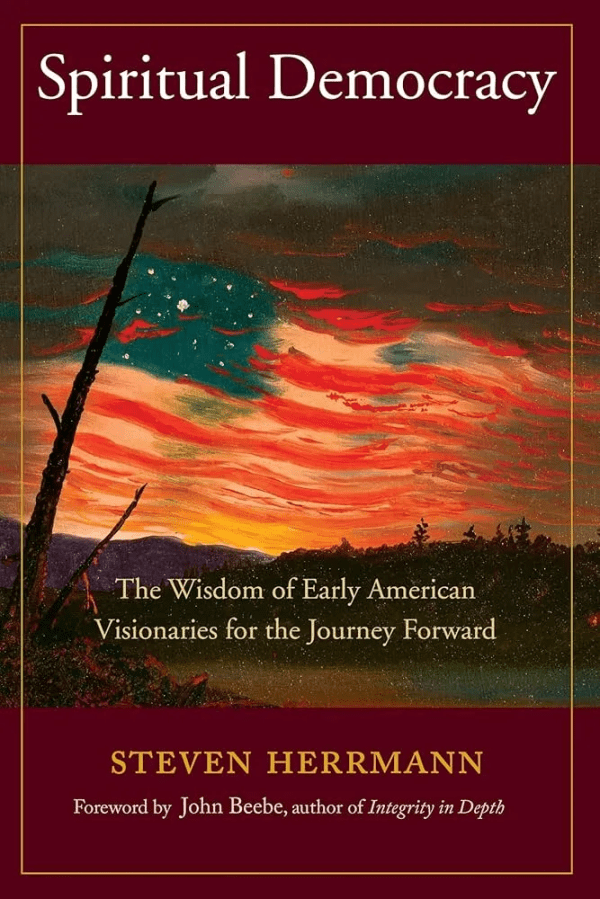
Steven Herrmann has written about the idea of “spiritual democracy:”
“Adopting the big idea of Spiritual Democracy, the realization of oneness of humanity with the universe and all its forces, can help people feel joy, peace, and interconnectedness on an individual basis. It can also inspire us to undertake sacred activism, the channeling of such forces into callings that are compassionate, just, and of equitable heart and conscience, and give us some tools to start solving some of these grave global problems, while uniting people on the planet.”[2]
Spiritual democracy, as defined by Herrmann, is founded upon an experience or realization of “oneness” and “interconnectedness.” He believes that this experience of inner democracy can lead to outer action, “sacred activism.”
Joseph Rael (Beautiful Painted Arrow) and I wrote about Spiritual Democracy in our book, Becoming Medicine: Pathways of Initiation into a Living Spirituality. We drew upon Herrmann’s ideas and combined these with Joseph’s perspectives, we spoke about the “inner journey of the democratic shaman,” and summarized a version of the Hiawatha story about Bringing the New Mind of the Great Peace. We made this chapter available as a free pdf download.
In a Becoming a True Human podcast interview with Jeremy David Engels, Chris Smith and I spoke with him about his book, On Mindful Democracy, and ideas about spiritual democracy, mystical democracy, inner democracy, and he had an idea of putting together a group of writers and thinkers to talk about The Varieties of Democratic Experience, with a nod to William James’ Varieties of Religious Experience.
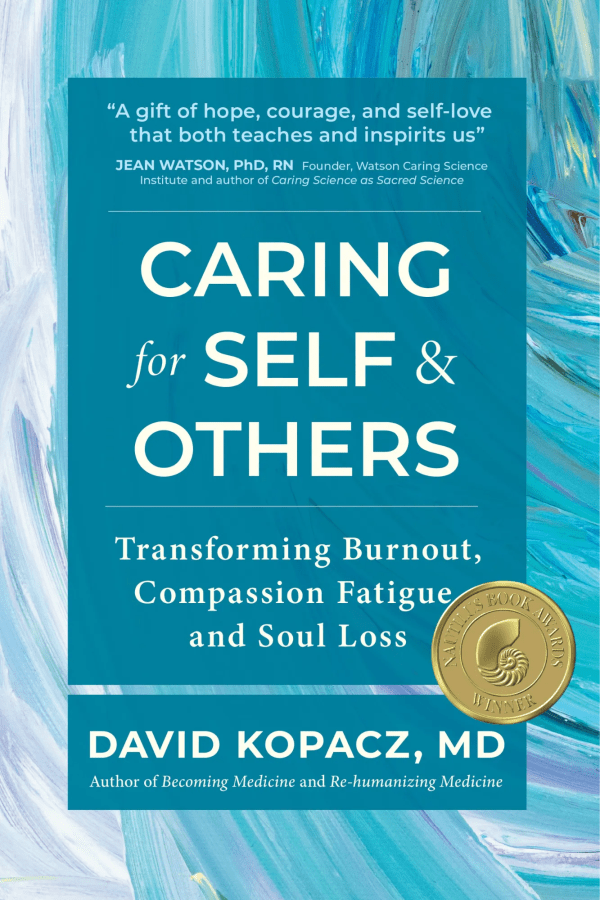
I would like to further develop some ideas around inner democracy, drawing upon the work of other writers and some of my past writing. Joseph Rael (Beautiful Painted Arrow) and I wrote a chapter on “Spiritual Democracy” in our book, Becoming Medicine: Pathways of Initiation into a Living Spirituality. This draws heavily on Steven Herrmann’s work as well as Joseph’s teachings on peace and the idea that we are cosmic citizens. As Engels did, I drew upon Thich Nhat Hanh’s concept of interbeing and Martin Luther King Jr.’s beloved community in my book, Caring for Self & Others: Transforming Burnout, Compassion Fatigue, and Soul Loss, particularly in chapter ten, “Becoming Caring: Caring for All.” I am indebted to Jeremy David Engels for his book and for such an inspiring discussion in our podcast interview.
The perspective on democracy I would like to develop is the idea that the greater sense of “oneness” (or interbeing, interdependence, nondualism) that an individual experiences, the more fully they will be able to embrace the idea of democracy, which will lead to more vigorous outer expressions of democracy. A practice of inner democracy would, thus, be a contemplative path of the development of a conscious experience of oneness. This leads to a tripartite structure:
Inner Experience of Oneness
Idea of Democracy
Outer Expression of Democracy
This tripartite structure follows the paths of the hero or heroine’s journey (as developed by Joseph Campbell), and the structure of initiation (separation/initiation/return) that Joseph Rael and I followed in Becoming Medicine. It also follows the structure of Jeremy David Engels’ book, On Mindful Democracy (xi-xii):
Stand on Common Ground (Interbeing)
Walk the Path of Interdependence in Community (Beloved Community)
Practice Democracy with Hands and Heart
The idea of mindful or inner democracy can be grasped with the mind, but a mental concept may not be as resilient as an inner experience of democracy – of interbeing, oneness, interdependence – which then leads to outer expression. In this sense, mindful democracy can be a pathway to creating a foundation of inner democracy that then supports the idea and what Engels calls the “hands and heart” of outer democracy.
Inner Democracy could be taught through practices of reflection, contemplation, deliberation, dialogue, meditation, experiences in nature, or any experience in which the individual developed an expanded sense of self beyond the limitations of the ego and the flesh.
The movement of the individual from an identity of “me” to an identity of “we” underlies the inner practice of democracy.
Interestingly, there are many names for an experience of Oneness: nondualism, interbeing, unity, transpersonal, and nondifference, to name a few. There are also many names for interrelationship and interdependence: I/Thou, Me/We, beloved community, and others.
One of the reasons I am excited about following this thread of Inner Democracy is that it provides a positive focus and practices that can be done irrespective of outer events in the world. In my Words Create Worlds series, I have focused more on resistance and opposition to words – uncaring words, words of Me-First, and words of fascism. Through Inner Democracy I am seeking to focus on building inner strength during difficult times. Perhaps chaotic and painful experiences in the outer world could even lead one to fall back upon practices of inner democracy. Inner democracy builds hope, resilience, post-burnout growth, post-traumatic growth. I agree with Jeremy David Engels’ view of democracy as caring and collaboration.
Ultimately, democracy isn’t something done “out there;” democracy is also, perhaps even originally, about doing something “in here,” in the inner space of the psyche, the work of cultivating inner democracy.
“government by the people, system of government in which the sovereign power is vested in the people as a whole exercising power directly or by elected officials; a state so governed,” 1570s, from French démocratie (14c.), from Medieval Latin democratia (13c.), from Greek dēmokratia “popular government,” from dēmos “common people,” originally “district” … + kratos “rule, strength.”
What we are experiencing now is a predictable, straight line from the words that Donald J. Trump has spoken.
The uncaring world we are living in has been created, uncaring word by uncaring word of our current president and those who are drawn to him. It is as simple as that. It is as simple as that.
What we put into the world in words, what we bring forth from that deep inner place of creative power within ourselves, creates the world we live in. We are makers and unmakers of our reality.
The inspiration for this essay series, Words Create Worlds, comes from Rabbi Heschel. He said, as recounted by his daughter, Susannah Heschel:
“Words, he often wrote, are themselves sacred, God’s tool for creating the universe, and our tools for bringing holiness—or evil—into the world. He used to remind us that the Holocaust did not begin with the building of crematoria, and Hitler did not come to power with tanks and guns; it all began with uttering evil words, with defamation, with language and propaganda. Words create worlds, he used to tell me when I was a child. They must be used very carefully. Some words, once having been uttered, gain eternity and can never be withdrawn. The Book of Proverbs reminds us, he wrote, that death and life are in the power of the tongue.”[1]
Rabbi Heschel warns us of the power of words and how they can bring holiness or evil into the world. This is the power of choice that we have and the power of our breath shaped into meaning and symbolism through the sound of the letters that we string together into words.
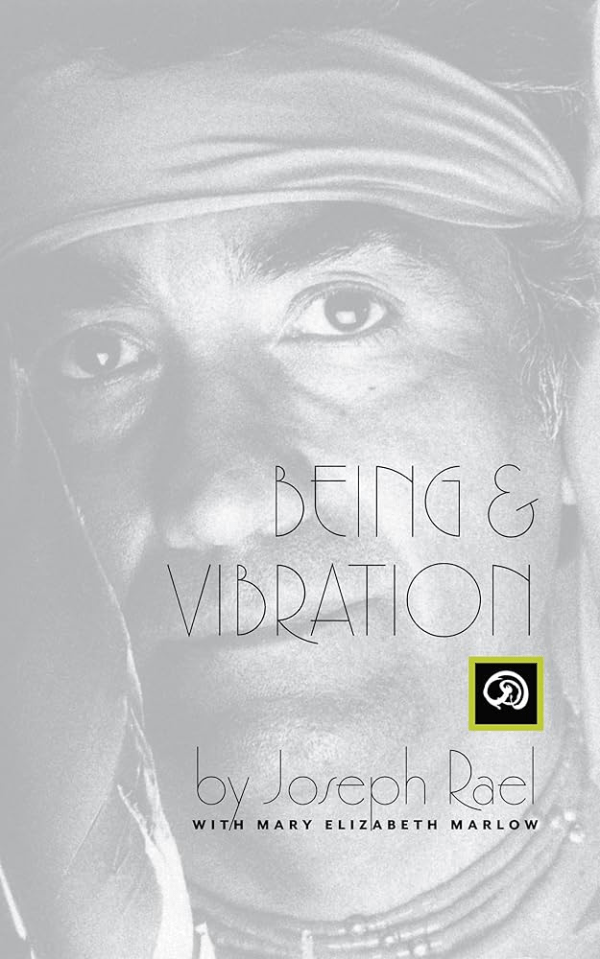
Joseph Rael (Beautiful Painted Arrow) also has taught about the power of Sound – of Being & Vibration – and how the sounds of letters and words carry the power of meaning. In the Tiwa language of Picuris Pueblo, the word for God is Wah-Mah-Chi, Breath-Matter-Movement. We could say that Wah-Mah-Chi, Breath-Matter-Movement, is a Word that creates other words and these words create our world. Creator, Wah-Mah-Chi, is a Word that creates other words and worlds. Breath comes through Matter and becomes Movement.
I am invoking spiritual teachers, but the principle of words create worlds also holds for poets, artists, singers, teachers, educators, and politicians – people who can use their words for either bad or good, or as Rabbi Heschel says, for holiness or evil.
How to Write About What You Are Not Supposed to Write About (But Are Ethically and Professionally Bound to Speak)
I started this series of essays out of my concern about the rise of Donald J. Trump as a political figure. His words were so clearly uncaring: he bullied, he name called, he threatened, he spoke about America First, but he really meant Me-First. I have felt compelled to speak the truth, as a psychiatrist, but even more so as a human being.
Lies as Politics
Lies. Donald Trump lies,[2],[3]habitually, repeatedly, and knowingly. He is trying to shape a narrative, he is trying to create your reality, he is trying to create your world.
Lying is not just a personality quirk, there is also a history of lies as politics. Bruno Frank wrote Lüge as Staatsprinzip (The Lie as State Principle) about Hitler and the Third Reich. Frank wrote: “Never before in history has any public group lies with such absolute, voracious, and poisonous shamelessness as has this party for more than a decade;” and further that the essence of fascism is “the total deception of the nation.”[4] Lying is not just a way of life for an individual, it is a political principle for fascism.
Trump believes that he is above the law, even more so as president. “On January 23, 2016, Donald Trump notoriously declared, ‘I could stand in the middle of Fifth Avenue and shoot somebody, and I wouldn’t lose any voters,’” quoted by Jonathan Chait in a piece entitled “The logical end point of Trump saying he could shoot somebody on Fifth Avenue,”[5] Trump’s words of getting away with murder are now creating our world. As Chait writes:
“That statement was understood at the time as a metaphorical expression of the depth of Republican voters’ commitment to him. Ten years and one day later, his administration’s agents shot a disarmed man on the street in full view of the public. Perhaps we should have taken him not only seriously but also literally.”[6]
The problem is, we didn’t know how to respond to Trump at the time in 2016, even though it was clear to me that his words were dangerous. As a physician, professional, and psychiatrist – I was (and am) concerned about the risk to the health of the populace and the health of our democracy, but I restrained myself out of an abundance of professional caution and also concern about the Goldwater Rule, which states that psychiatrists cannot “diagnosis” a public figure they have not met with clinically. But to warn about dangerousness is different than labelling a public figure with a diagnosis.
The Dangerous Case of Donald Trump
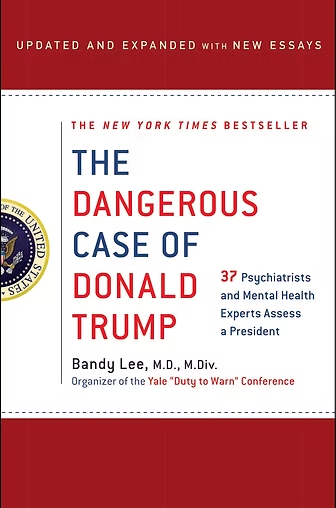
In 2017, Yale psychiatrist and expert in predicting violence, Bandy X. Lee convened a group of mental health professionals around the topic of The Dangerous Case of Donald Trump. The conference led to the publication of The Dangerous Case of Donald Trump: 27 Psychiatrists and Mental Health Experts Assess a President and then later expanded to a new edition with ten more experts, The Dangerous Case of Donald Trump: 37 Psychiatrists and Mental Health Experts Assess a President – Updated and Expanded with New Essays. Dr. Lee ended up losing her position at Yale, then she created the World Mental Health Coalition, and has dedicated her work to illuminating the dangerousness of the current president.
I watched the first Trump presidency with concern. I also recognized, as a psychiatrist and as a human being, how Trump’s words and actions were right out of the “fascist playbook.” In 2020 I was moved by the mosque shooting hate crime in Christchurch, New Zealand to start the Words Create Worlds column. (I will list each essay title with links at the end of this article). Looking back, I think the pandemic and Trump’s mishandling of it, and his use of it to divide the country rather than bring it together, helped tip my hand to write in a more open and critical way about the public health emergency of Donald J. Trump. While I was cautious back then and did not want to overstate the risk of “just words,” I now feel that my concerns are valid and vindicated by the second Trump presidency where his words are moving into action and creating our world. In fact, I called Trump the anti-Doctor as his words were not only hurtful of people’s feelings, but dangerous to people’s lives and to American democracy.
Fifth Avenue to Nicollet Avenue to Iran
Donald Trump did not shoot someone on 5th Avenue in New York City, but armed, masked men carrying out the orders of the president, shot and killed Renee Nicole Good in her car after dropping off her 6 year-old at school, near East 34th Street and Portland Avenue in Minneapolis on January 7th, 2026. This was, ominously, five years and a day after the January 6th 2021 attack on the United States Capitol.
Instead of Fifth Avenue, it was 34th Street and Portland Avenue. Instead of Fifth Avenue, it was Nicollet Avenue in Minneapolis, where Alex Jeffrey Pretti, an ICU nurse who worked at the VA (Veterans Affairs) was shot.
Trump and his team of ne’er do-wells immediately went into “blame-the-victim” mode. Homeland Security Secretary Kristi Noem lied about Renee Nicole Good, accusing her of “domestic terrorism.”[7] As with lies about Stephen Miller, Trump’s chief of staff, said that Pretti was an “assassin” who “tried to murder federal agents.”[8] Homeland Security Secretary Kristi Noem claimed Pretti “attacked” officers while “brandishing” a gun.”[9] However multiple eye witness reports and video footage showed that these were lies. The administration had to walk back its portrayal of a mother dropping off her child and a VA ICU nurse. The president even said he “felt bad” about the killings, but even worse about Renee Nicole Good’s killing as her parents were Trump supporters.[10]
Since I first started this essay, the United States of America and Israel have started a war with Iran. The lies continue…
“On February 28, during the opening hours of the assault on Iran, a missile struck a girls’ school in southern Iran, killing more than 170 people – most of them schoolgirls.”[11]
Rather than waiting for the truth of an investigation, Donald Trump immediately blamed Iran for using a US made missile to kill its own children. However, the evidence is pointing to the children being killed by the United States:
“Preliminary investigations suggest the school may have been hit by a US missile because of a targeting error, though the exact circumstances remain under investigation.
Analysts say the strike may have been caused by outdated targeting information, as the school is on the same block as buildings used by the IRGC’s navy and the site of the school was originally part of the base.”[12]
The Cusp Where Words Become Worlds
I have to keep writing this column on Words Create Worlds.
The risk of remaining silent, at this point, is greater to my humanity than the risk of speaking is to my conservative professionalism or my safety.
We are on the cusp of words becoming worlds – actually we are beyond the cusp, beyond the event horizon pulling us into the black hole of fascism. Donald J. Trump has told us, all along, what he intends to do. Republican politicians have minimized his words, saying “they are just words,” “that’s just who he is, he doesn’t really mean he is going to [fill in the blank: take over Greenland, make Canada the 51st state, invade Mexico to combat cartels, remove Palestinians from Gaza and build luxury hotels, jail his opponents, kill his opponents, run for a third term, invade Iran].
I have seen this coming. I did what I do as a writer, I wrote about it. I educated about fascism.
Yet, I feel I have not done enough. Is there anything one person can do to stop the steady slide from democracy into fascism? Actually, “steady slide” is a mischaracterization – the United States of America did not “fall” into fascism, it was pushed.
Politically, with the House, Senate, and White House controlled by Republicans, it seems to depend on Republican politicians who need to break with Trump before it is too late. But it is already too late. Trump began as much of a buffoon as Adolf Hitler was in the early 1930s – no one took him seriously. The power Trump has is the power of the tongue, the power of mass hypnosis, the power of lying to people, telling people what they want to hear and making them feel good about uncaring, and the power of intimidation. Republican politicians have colluded with him in deforming American Democracy into the power of American Empire.
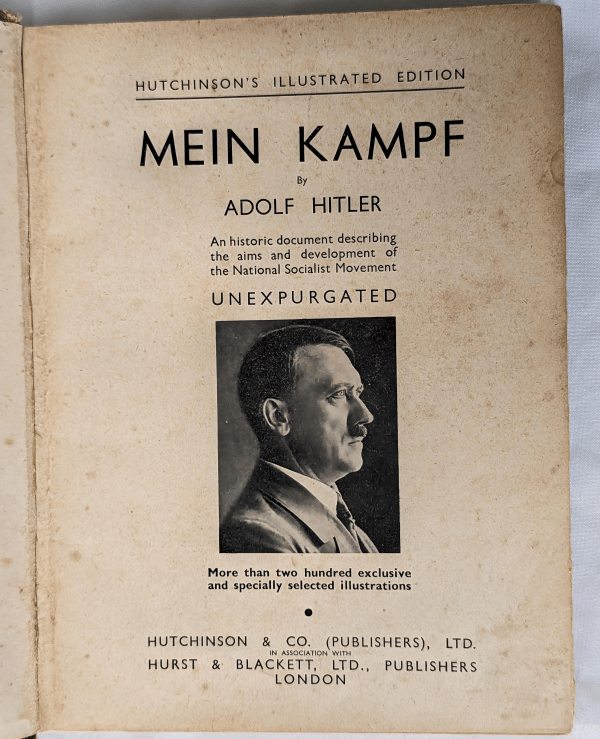
Bruno Frank, the author of Lüge as Staatsprinzip (The Lie as State Principle), whom I introduced earlier, quotes Adolf Hitler’s Mein Kampf on how lying words can create worlds:
“All this was inspired by principle ─ which is quite true in itself ─ that in the big lie there is always a certain force of credibility; because the broad masses of a nation are always more easily corrupted in the deeper strata of their emotional nature than consciously or voluntarily; and thus in the primitive simplicity of their minds they more readily fall victims to the big lie than the small lie, since they themselves often tell small lies in little matters but would be ashamed to resort to large-scale falsehoods…For the grossly impudent lie always leaves traces behind it, even after it has been nailed down, a fact which is known to all expert liars in this world and to all who conspire together in the art of lying. These people know only too well how to use falsehood for the basest purposes.”[13]
Uncaring Words Create Uncaring Worlds
What we are living in the United States right now is the uncaring world created by the uncaring words of Donald J. Trump. These are the words of fascism, authoritarianism, totalitarianism, infantilism, and me-first-ism. I have often thought that if Republican politicians asked themselves “Am I being kind, am I being compassionate,” that they would make different decisions. But kindness and compassion seem to have lost their appeal to MAGA and the Republican party. Instead, they speak words of power, words of me-first, words of us vs. them, words of hate thine enemies, and words of vengeance and retribution. MAGA and the Republican party have become, in the words of Adolph Hitler, “expert liars…who conspire together in the art of lying.”
If we hold uncaring feelings in our hearts and we speak uncaring words into the world, we will create an uncaring world.
Caring Words Create Caring Worlds
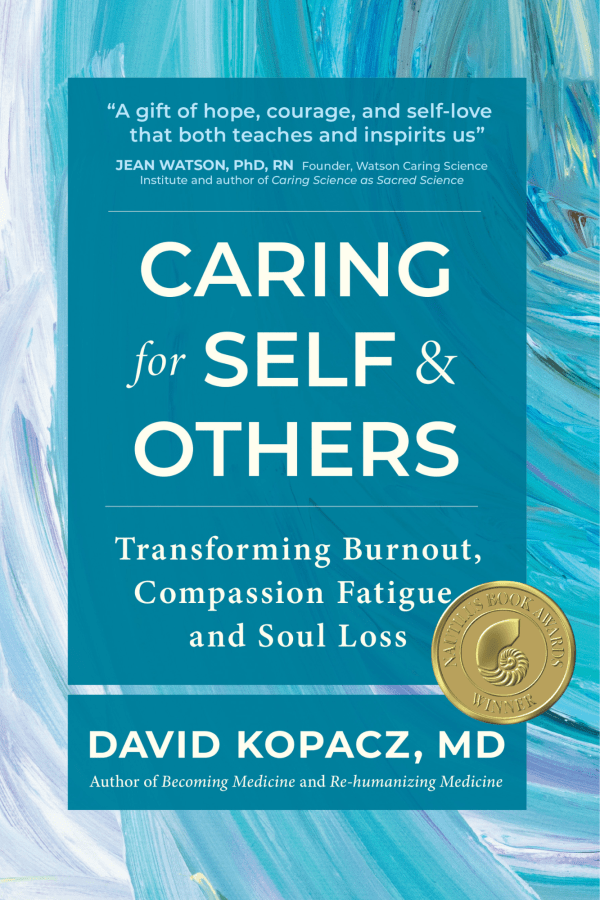
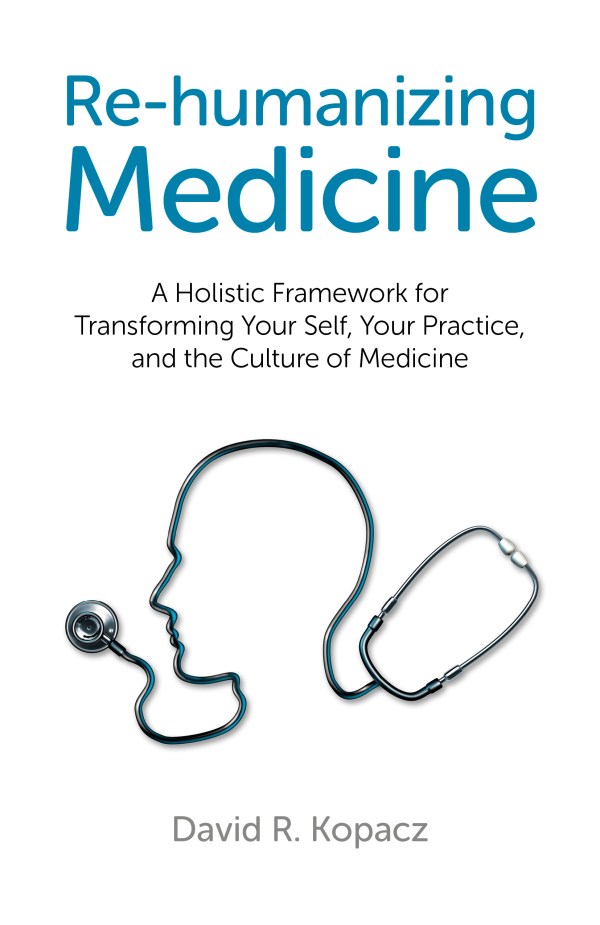
In 2025 I published my sixth book, Caring for Self & Others: Transforming Burnout, Compassion Fatigue, and Soul Loss. I wrote it as a follow-up to my first book, Re-humanizing Medicine (2014). I wrote Caring for Self & Others because I felt there was a need for a practical handbook for health care professionals, educators, and leaders – but it is really for anyone who cares for others as part of their life or jobs, which is most of us.
“Transforming burnout, compassion fatigue, and soul loss,” I wrote, “requires individual practices as well as institutional reform” (4). While I was mostly thinking about hospital and clinic settings as the place of institutional reform, we are in a place with our democracy that it also requires institutional reform in order to be a healthy place to live, love, and work.
Health Care Workers can burnout and develop compassion fatigue, where they feel they no longer have anything to give. The human imperative to resist fascism, you can call it activism if you like, also carries the risk of burnout and compassion fatigue – how can we keep caring when the suffering seems endless? We need to learn how to care for ourselves as we are caring for others. We need to learn how to replenish our own hearts of caring. The book has a number of exercises and meditations to help individuals to refill the cup of their hearts.
The Compassion Revolution & the Counter-Curriculum of Caring
In Re-humanizing Medicine I called for a Compassion Revolution in health care and now we need a Compassion Revolution in politics. We need to not just think about ourselves, we need to think about others. We need to not just care about ourselves, we need to care about others. Actually, I would argue that “caring” only for self is not really caring, it is more selfishness. Caring breaks down the boundaries and walls between self and other. Caring naturally shifts us into a transpersonal space, what Thich Nhat Hanh called “interbeing” and Martin Luther King, Jr. called the “beloved community.”[14] Caring connects us – connects us to ourselves, our hearts, our souls; connects us to other human beings; and connects us to our environment and ecosystem.
In medical school, I felt I was losing an important part of myself, I felt like I was losing who I was, my kindness, my sensitivity, my caring – my soul. Over the years I have developed what I call a counter-curriculum of caring, or rehumanization, as an antidote to counter-act all the forces in our modern world that leave us feeling dehumanized.
“These counter-curriculum practices grew into the practices for the ten dimensions of caring in this book. This book is a counter-curriculum of caring, reminding us in the midst of our busy days as technicians, educators, and leaders to take the time to care. Our current curriculum and operating procedures are creating burnout, compassion fatigue, and soul loss. The proposed counter-curriculum transforms burnout, reigniting the heart of the healer, the soul of the educator, and the vision of the leader; it gives us an antidote for compassion fatigue by giving compassion to ourselves―refilling the medicine bags of our hearts; and it helps us recover and nourish our souls, revitalizing and reconnecting all the dimensions of our humanity.”[15]
It is one thing to define a problem, to understand it, but how do we address the problem of uncaring in the USA and the world? I wish I had an answer for you, but I think each person has to figure this out for themselves, consulting their own hearts in the darkness of sleepless nights. I do think the heart can guide us.
And our souls? What about our souls?
I use the concept of “soul loss” as a metaphor for burnout and compassion fatigue – for the costs of caring. How do we recover our souls when we feel we are losing them – as individuals and as a country? We have to search, we have to be still, we have to go into the darkness – our own and that of our times. As Michael Mead writes in Awakening the Soul:
“As the inner dynamic of transformation, initiation means the continuous breaking open of areas of the soul to reveal hidden capacities and inherent gifts. When life pulls at us from the outside and the soul pushes us from the inside, we reach the point where pain and longing requires that we change. … Whatever interrupts, breaks us open, or breaks us down―whether it is the trauma and shock of a loss in life or the drama and exhilaration of success―also initiates us into a greater knowledge of ourselves.”[16]
Meade’s book repeatedly reinforces the idea that the crisis can awaken the soul which then gives the support that is needed for the particular crisis. Caring for ourselves entails caring for our souls, which then give us the strength to further care for ourselves and then to care for others.
What can we do? When you find yourself in a dark place, when you feel you are at your limit, when you feel burnout and compassion fatigue, when you feel a sense of soul loss – that is the time to consult with your soul through inner practices that lead to outer actions and outer actions that lead to inner practices.
Q: What are we going to do now? A: Whatever needs doing.
Q: How are we going to do it? A: I’m not sure, but check with your heart, check with your soul. Let your heart and soul find the caring response as the antidote to the uncaring world we are living in. The answer is in caring. Caring for what? Caring for yourself & caring for others.
Inner Democracy
One way of caring for Self is cultivating Inner Democracy. I am starting another series of essays on this topic and will be posting them soon. In addition to the outer work of challenging words creating worlds of fascism, this inner work is an antidote to uncaring. Creating Inner Democracy is a practice of Caring for Self & Caring for Others.[17] This work owes a great deal to Steven Herrmann’s work on Spiritual Democracy and Jeremy David Engels On Mindful Democracy: A Declaration of Interdependence to Mend a Fractured World.[18]
I will leave you with an exercise from Caring for Self & Others, one that actually came to me when I was working with Joseph Rael on our book, Walking the Medicine Wheel: Healing Trauma & PTSD.
Imagine and visualize what the heart does on a physiological level in the body.
The heart receives (through the right atrium) the blood that has traveled throughout the entire body. This blood has the lowest oxygen content; all the tissues of the body have already absorbed oxygen from this blood―it is blue, venous blood. From the perspective of tissues, it is “bad” blood, no longer oxygen-rich. As the heart receives and accepts this “bad blood,” it doesn’t complain or cling to it, but gives it away, lets it go, and it passes on to the lungs. There the blood is replenished with oxygen. The heart then receives again, only this time it is the “best blood,” the most oxygen-rich. Once again, however, the heart doesn’t cling or hoard the goodness for itself, but gives it away to the rest of the body.
Hopefully you are seeing the metaphor of how your heart works physiologically and how you can work with suffering in your life. How much do you cling to the good? How much to you reject “bad” life experiences, which could be blessings in disguise?
Sit back for a moment, closing your eyes. Focus on what your heart is doing an average of 60 to 80 times a minute. Receiving depleted blood, giving it away; receiving replenished blood, and giving it away. Become aware of this ongoing process within you.
If you would like, focus on this same movement in your life.
Think about a situation in which you experienced suffering. Remember to step back and use some of the grounding techniques discussed in chapter 2 if you feel overwhelmed.
Allow yourself to receive it. Once you have received it, give it away again, allow it to transform, and then allow yourself to receive it again, then give it away once again. Go through this cycle of giving and receiving for as long as feels right to you. Breathe in deeply―let it flow through you; breathe out―let it go. Practice this breathing in/letting go three more times. Feel the movement of the action of your heart throughout your being. Take a deep breath, and open your eyes.
This exercise of giving and receiving shows that compassion begins within our own hearts, that we must be willing to accept both the good and the bad in order to fully feel and fully live and fully love. Transformation occurs when we accept through receiving and let go through giving.
[1] Heschel, S. in “Introduction,” Heschel, Abraham Joshua. Moral Grandeur and Spiritual Audacity: Essays. Farrar, Straus and Giroux. Kindle Edition, 1997.
[16] Michael Meade, Awakening the Soul: A Deep Response to a Troubled World (Vashon, WA: Greenfire Press, 2018), 72-73
[17] For now, you can reference my writings on spiritual democracy and caring for all:
Caring for Self & Others: Transforming Burnout, Compassion Fatigue, and Soul Loss (ch. 10, Becoming Caring: Caring for All). Becoming Medicine: Pathways of Initiation into a Living Spirituality (ch. 14, Spiritual Democracy) – this is available as a free pdf download: https://www.davidkopacz.com/becoming-medicine
Jeremy David Engels was kind enough to join us on the Becoming a True Human podcast! Listen in for an enlightening discussion of a revised Declaration of Independence – A Declaration of Interdependence!
Jeremy David Engels discusses his new book, On Mindful Democracy with Dave Kopacz and Chris Smith. We start by asking him about the nature of the “true human” and “true democracy.”
In the book he defines true democracy as “working together to care for each other and the life we share,” (4).
The book is divided into three parts, recognizing our common ground, walking the path of interdependence in community, and practicing democracy with hands and heart.
Jeremy has drafted a new interpretation of the Declaration of Independence as the Declaration of Interdependence.
Throughout the book and our discussion, he draws on Thich Nhat Hanh’s concept of interbeing as a foundation for our common ground of mindful interdependence – and he draws on Martin Luther King Jr.’s concept of the beloved community as a model of mindful working together to foster true human connection.
Jeremy elaborates the concepts of “enemyship” (viewing relationships as us vs them, and competitive and conflictual – the opposite of interbeing) and mindful deliberation as a modality of working with tensions within the individual and within communities. He tells us that “there is no way to democracy, democracy is the way,” (103).
We discuss a great idea of bringing together various thinkers on contemplative forms of democracy, such as mindful democracy, spiritual democracy, and inner democracy – into The Varieties of Democratic Experience (with a nod to William James).
Jeremy closes our discussion with a poem from his book, entitled Hope (p. 155):
Hope
Snow melts from a tree branch Someday soon it will be a cloud And rain will fall on new leaves
There is spring in winter And winter in spring Take heart
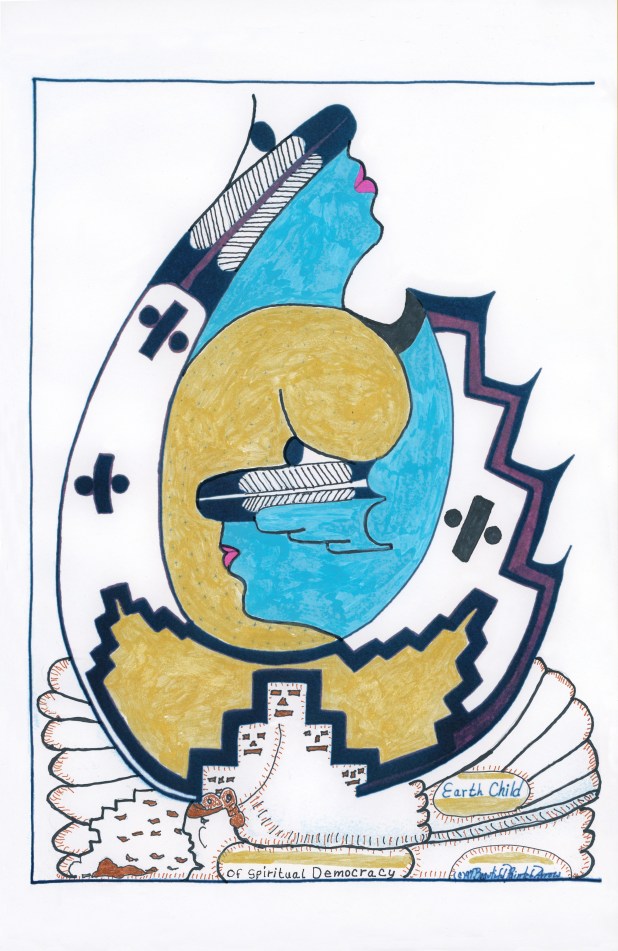
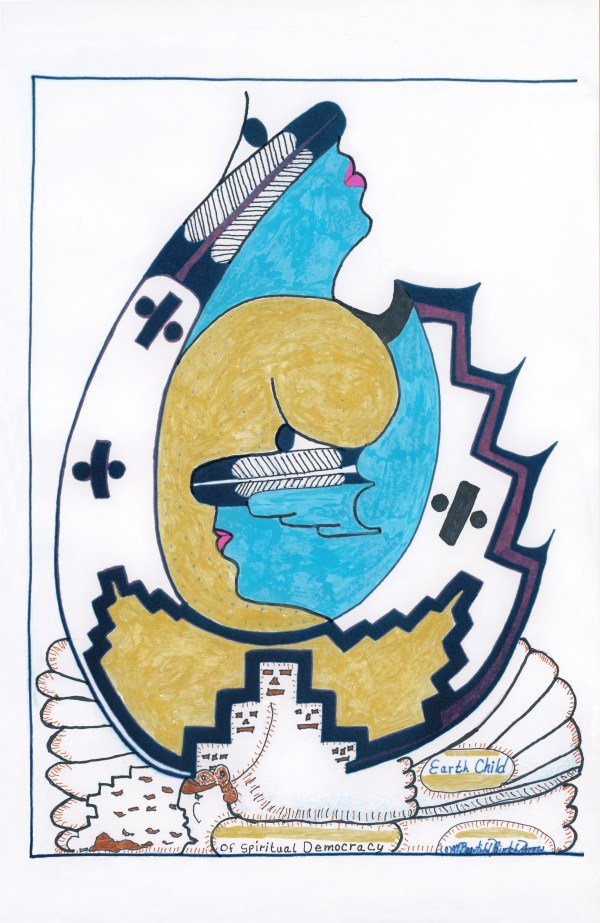
Earth Child of Spiritual Democracy – Joseph Rael (Beautiful Painted Arrow)
Now, more than ever, we need to reconnect to Spiritual Democracy.
War, violence, and aggression directed inward toward a country’s citizens and outward toward other nations and peoples – is not democracy.
In our book, Becoming Medicine: Pathways of Initiation into a Living Spirituality, Joseph Rael (Beautiful Painted Arrow) and I dedicate chapter 14 to the topic of Spiritual Democracy:
“Spiritual Democracy is a living connection, allowing the flow of spirituality through our lives, embracing the divinity in all creatures and the divinity of the Earth. Spiritual democracy is the way we treat others when we learn to see the divine in all things and that we, too, are part of divinity. It is a sacred way of being. Periodically, we forget that we are divine as we live in this world of matter and go through its trials and travails. We, as individuals, as well as we as people, need periodic renewal at the font of spiritual democracy. To seek renewal is to be a Seeker, yet so many “religious” people are becoming fundamentalists.” p.381




 Being Fully Human