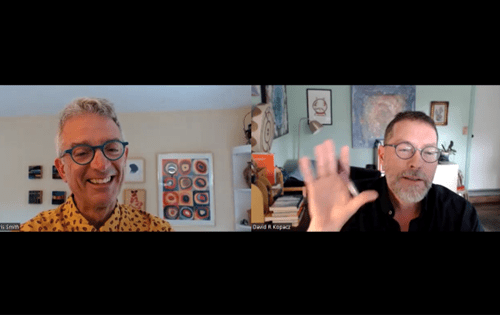
Chris Smith and David Kopacz discuss the rewards and pitfalls of practice in yoga, meditation, writing, and life.
Sometimes practice clears a space where imperfections and flaws are seen. We are tempted to try to eliminate those specks of dust and scratches on our window, but accepting our imperfections may actually be the real part of practice. Practice is about reconnecting to our True Humanity, our inner held-back place of goodness, our source of love, compassion, and caring – and we may only reach these through suffering and imperfection.
For instance, we explore the Sanskrit term, samvega, which Stephen Cope describes as “complex state involving disillusionment with mundane life, and a wholehearted longing for a deeper investigation into the inner workings of the mind and self,” (The Wisdom of Yoga, 13).
Or as Karlfried Graf Dürckheim wrote in his book The Way of Transformation: Daily Life as Spiritual Practice, “Thus the aim of practice is not to develop an attitude which allows us to acquire a state of harmony and peace wherein nothing can ever trouble us. On the contrary, practice should teach us to let ourselves be assaulted, perturbed, moved, insulted, broken and battered” (107).
Chris and Dave discuss their own struggles with chronic illness/ongoing medical symptoms and the difficult work of turning personal illness and suffering into fuel for personal growth work.
We talk about:
using suffering as a spiritual practice
cleaning the windshield
“The Garden,” a reading from Chris’ next book, Hope Opens Doors
a workshop Chris is putting on in February, “Chronic Illness & Love”
Sean Mackey’s work on love & pain
finding inner calm and strength, even within chaos & suffering
Makransky & Condon’s Sustainable Compassion Training
making practices creative and fresh
the work of Joseph Rael (Beautiful Painted Arrow)
spanda – the divine creative pulsation
practice does not make perfekt
being capable of suffering may make us more capable of joy
the benefits of practice are not only for us, but are fully realized when we share with others and the Earth
practice is caring for ourselves and others
We close with a couple of practices, one from Dave’s book, Caring for Self & Others and short one from Chris Smith.
We have video links on YouTube and audio links on Spotify, here is the link to all episodes:
Join Chris Smith & Dave Kopacz for the second episode – Health & Unhealth – of the Becoming a True Human podcast (the first where the video recording worked!). We discuss themes of the wounded healer, transforming suffering, caring moment meditation, Sustainable Compassion Training and the work of John Makransky and Paul Condon, the poetry of Rumi, and how hope can open doors. (1 hour)
From “Childhood Friends”
Trust your wound to a teacher’s surgery. Flies collect on a wound. They cover it, those flies of your self-protecting feelings, your love for what you think is yours.
Let a teacher wave away the flies and put a plaster on the wound. Don’t turn your head. Keep looking at the bandaged place. That’s where the light enters you. And don’t believe for a moment that you’re healing yourself.
Rumi, Jalal Al-Din; Barks, Coleman.
The Essential Rumi – reissue: New Expanded Edition (p. 142).
I’ve been thinking about how we need to build a community of practitioners discussing the problems of burnout, compassion fatigue, and soul loss. Isolation and loneliness contribute to burnout, and social connection is an antidote to burnout. To this end, we are creating the Becoming A True Human podcast. Who is “we”? Well, for now, it is me and my good friend Chris Smith – therapist, meditation teacher, Whole Health educator, storyteller, author (Be a Good Story), founder of the Academy for Mindfulness consulting, and all-around wise guy (and I mean that in multiple senses of the phrase).
The audio of the episode 1, Lost, is at the bottom of this post.
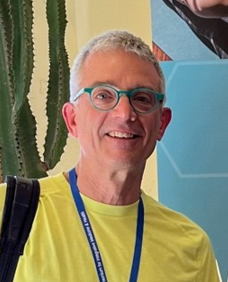
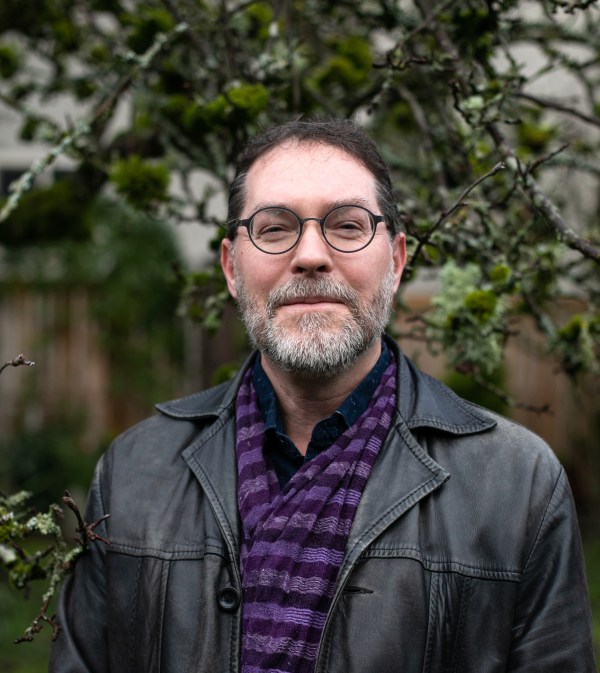
Chris SmithDave Kopacz
What is burnout? Just what exactly is it that burns out? How can whatever is burned out be re-ignited?
What is compassion fatigue? How does compassion wear out? Should it really be called empathy fatigue? Is the problem that there is too much compassion going out? Or not enough coming in? Or could it be that institutional structures and protocols make us busy with so many things that there is little time left in the clinical encounter for caring?
What is soul loss? Could we think of the soul being the “thing” that burns out? Not necessarily in a religious or metaphysical sense – although it could be if that fits your belief system – but in a metaphorical and psychological sense. If in burnout we lose connection with our souls, how can we reconnect and either go on a quest to find our lost souls, or create a welcoming environment in our bodies and lives so that our souls can return and flourish?
I address these questions in my book, Caring for Self & Others: Transforming Burnout, Compassion Fatigue, and Soul Loss, but we need to have further discussions around these topics as I feel strongly that we need a kind of ongoing practice, a yoga of burnout, in which we continually work in our own practices as well as in building communities of caring to support each other with this human, all too human dilemma.
Based on the topics we discussed in the first episode we titled this episode “Lost,” even before we realized that we somehow lost video of me and only recorded video for Chris! In this episode we explore topics of burnout as an initiation into becoming a wounded healer, soul loss, yoga for the health of healers, and we end with a meditation exercise and a poem, “Lost” by David Wagoner.
We don’t really know what we are doing with the technology aspect.
Let me tell you a story that illustrates the problem.
My high school friend Jack and I drove across the country after college. We were into the beat poets and writers, reading Kerouac’s On the Road, and envisoned a trip full of excitement and philosophical observations. We had a microcassette recorder and would talk into as we were driving, having many deep discussions and creating a record of what we saw.
Somewhere around South Dakota (having left from Chicago area) I noticed that the wheels of the recorder weren’t moving when we were recording. It was then that I noticed that there was a pause switch that was clicked on and prevented any recordings from being made! All of our bits, routines, observations, and experiences were lost! We were a bit crestfallen and we made half-hearted attempt to resume recording, but something had been lost – the energy, the enthusiasm. I think we eventually gave up on it. Maybe you could say we burned out on the idea after investing so much energy and enthusiasm and not having anything to show for it.
From a mindfulness perspective, there is surely some kind of lesson here – about not being attached to goals or outcomes, about being in the present moment versus memorializing experience, and maybe even that the organizing ego is an illusionary construct for creating a reduced and more manageable limited reality (if you want to take it that far!).
Well…I remembered this story after Chris Smith and I had just had our wide-ranging and enthusiastic discussion as we recoreded it on Zoom, only to realize that I had messed up the settings and we only had Chris’ video and both our audio. Well, crestfallen again! Urgh, technology failure again!
So, I think I have figured out how to share the audio of our video podcast, rather than have video of just Chris and my disembodied voice. Titling this episode, “Lost,” was prescient as we lost the video. Chris also spoke of his caring for self routine and how he purposefully skips some days so as not to get caught up in perfectionism, performance, and productivity. We’ll consider the lost video as a sacrifice to the Divine or the Cosmos, a giveaway, in addition to it being a bumbling failure of technology.
So, welcome to the first episode of the Becoming A True Human podcast – Lost – it highlights the vulnerability and imperfection of being human, that we are all a work in progress and that our work is a yoga practice – yoking mind, emotions, body, soul. The practice of Becoming A True Human is an ongoing practice, we can only do it in the present moment and the next moment we are again lost, at sea, trying to figure it out and Keep It All Together (KIAT). We will attempt to have the next episode as video and hope to post it on the Becoming a True Human YouTube site.