A Proposition for a Counter-Curriculum in Healthcare Education and Practice

This is a copy of the blog post that I published in the member’s blog of the Academy of Integrative Health & Medicine 8/11/16.

By AIHM Member Dave Kopacz

jhp53db8b682bd57[1]

What is a counter-curriculum and why do we need it?

A counter-curriculum is a course of self-study (which includes the study of the self) alongside the technical curriculum for training healthcare professionals.

We need it because something important is missing from the contemporary curriculum of healthcare providers.

I first developed this concept of a counter-curriculum when I was in medical school, actually even before that, back in high school when I realized that there were important areas I needed to be educated in that were outside of what I could learn through schools. My counter-curriculum included the works of Carl Jung, and writings in Zen Buddhism, poetry, literature and mysticism. It included looking at the best of being fully human, as well as the worst, so I had to study the “forgotten histories” of genocides of Native Americans and other marginalized peoples and cultures. I had to study the assumptions of the current facts that were being taught, which led to the philosophy of science and history of medicine as well as of different cultural and historical models of health and illness.

The counter-curriculum is more than reading books, however.  In order to be fully human, to counteract the dehumanizing aspects of professional training, in order to be the best doctor and the best human being I could be, I practiced various forms of meditation, yoga, tai chi, martial arts, fencing, going to various gym classes, working out, running, free and easy wandering in the woods with Thoreau and Chuang Tzu in my pack. The counter-curriculum led me to study various forms of healing, of energy, life force, breath and consciousness. It led me to seek out different forms of education and experience. It recently led me to start working with Native American visionary Joseph Rael (Beautiful Painted Arrow), who taught me that we only truly exist in moments when we are raising our consciousness, the rest of the time we are just busy trying to keep everything the same, which is persistence―not existence.

And, finally, the counter-curriculum led me to write my book, Re-humanizing Medicine. And it led me to write this blog post and to encourage you to find your own counter-curriculum, so you can be a whole person, so you can be fully human, so you can truly exist.

Dave Kopacz is a psychiatrist, a founding diplomate of the ABIHM, and is recently certified through the ABoIM. He works in primary care mental health integration at the Puget Sound VA and is on faculty at the University of Washington. He has worked in a number of practice settings in the US and New Zealand. His first book, Re-humanizing Medicine: A Holistic Framework for Transforming Your Self, Your Practice, and the Culture of Medicine develops the concept of a counter-curriculum and presents a guide for being a whole person to treat a whole person. His latest book, with co-author Joseph Rael (Beautiful Painted Arrow), is called Walking the Medicine Wheel: Healing Trauma & PTSD and is due out October 15th, 2016.

front-cover-final

Treating All of the Patient Physio Matters Interview, August 2016

The following is the text of an interview I did for Physio Matters, (member magazine of Physiotherapy New Zealand) August 2016.

FEATURE 22 | PHYSIO MATTERS AUGUST 2016

Treating All of the Patient
Interview by Rhonwyn Newson

David Kopacz, author of the book, Re-humanizing Medicine: A Holistic Framework for Transforming Your Self, Your Practice, and the Culture of Medicine, defines a holistic approach to healthcare means taking into account all human dimensions that influence health and illness.

These include not just the physical, but also the emotional, relational, mental, creative and spiritual dimensions of the person.

“To be holistic is the opposite of being reductionist. In addition to focussing on the physical body, we also are heartcentred, bringing caring and compassion to our work,” Dr Kopacz says.

How can physiotherapists provide a more holistic approach to treating patients?

Dr Kopacz believes clinicians can only provide holistic healthcare by first developing one’s own ‘wholeness’.

“We cannot give to someone else what we have not first developed in ourselves. Healthcare is both an art and a science, although we often forget the art and only focus on the science. If we want to give more compassionate care, we must cultivate our own compassion.”

‘Counter-curriculum of self-care’

Dr Kopacz notes that healthcare workers are often not trained to take care of themselves.

“If we do not care for and replenish ourselves, we end up with professional burn-out, which leads to a loss of caring in healthcare, and ultimately a loss of health for both the healthcare worker and the client.”

The basics are a great place to start – stretching, exercise, regular movement and engagement in life. Proper nutrition and relaxation techniques are helpful too. From there, the concept of mind-body-spirit should be looked at, and this applies to both the clinician and the patient.

DSC_7647

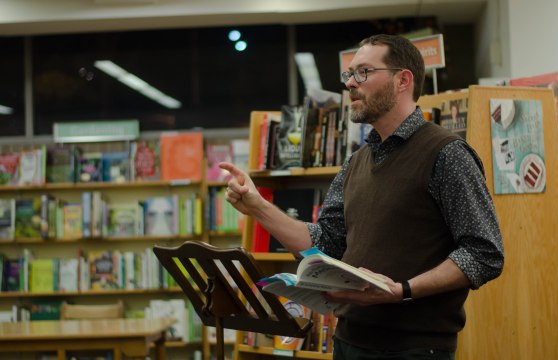
David Kopacz at Re-humanizing Medicine book signing at University of Washington Bookstore, January 2014 (Photo: Salin Sriudomporn)

According to Dr Kopacz, there are nine dimensions that need to be looked at:

  • How can a person engage their body for health?
  • How can a person engage their emotions for health?
  • How can a person engage their mind for health?
  • How can a person engage their heart for health?
  • How can a person engage their creativity for health?
  • How can a person engage their intuition for health?
  • How can a person engage their spirit for health?
  • How can a person engage their context and surroundings for health?
  • How can a person engage their time for health?

Looking at these nine dimensions gives a holistic view of a person, and each dimension has health benefits. Physiotherapists can individualise a treatment plan by finding out how to support a person to engage all of the dimensions of their health. “We don’t have to be an expert at working with each of these different dimensions, but as healthcare workers, we need to have basic fluency in each dimension.”

Treating more than just an injury

“When people are injured or have a movement disorder, it doesn’t just affect the physical body as a machine – the body also ‘thinks’,” Dr Sandra Bassett, senior lecturer in Physiotherapy at AUT says.

Dr Bassett believes a biopsychosocial healthcare approach means taking into account the beliefs people have about their treatment and their injury.

“It means taking the time to talk to a patient about any limitations to adhering to treatments – what their time and social commitments are.”

From Dr Bassett’s perspective biopsychosocial healthcare is different to providing holistic healthcare.

“It’s about finding out and respecting what a patient thinks. What their commitments are, and how they think their bodies work.”

She also believes patient education is so important. Knowing how the body works, and how treatment will help, means patients are more likely to adhere to their treatment and manage their disability.

“I often hear physios saying, ‘But I’m not a counsellor’, and that’s true,” she says. “However, physiotherapists are well-placed to connect with people, and get them to think about their day and when they might be able to fit in their treatment exercise regime, for example.”

Physios can also place responsibility on a patient to encourage self-efficacy. “Our research shows that when patients take responsibility and ownership of their treatment, they cope much better. Patients feel better about themselves and think more positively.” In this sense, the physiotherapist may act as more of a coach by setting goals, and providing encouragement and support, as well as educating the patient.

Dr Kopacz says an injured person may also suffer from grief over lost physical functionality, anxiety over being re-injured, and even depression around an injury. These emotional and mental elements need to be addressed in order for a person to even have the motivation, and commitment, to doing the exercises that physiotherapists know would help them.

“A key question is asking a patient, ‘What do you want your health for?’ This helps to motivate a person, and individualise their care. It’s not enough to provide information or appeal to a person’s intellect. We need to focus on engendering hope as much as providing an evidence-based physical treatment,” he says.

Although this may seem like a lot to take on in a busy clinical setting, it is a vital component of providing care.

“…really, it comes down to making sure that we are good human beings to each other as well as being a good technician or clinician. Kindness and caring only take a moment and we need to make sure that we make space for that moment to occur.”

DSC_9344_color_corrected

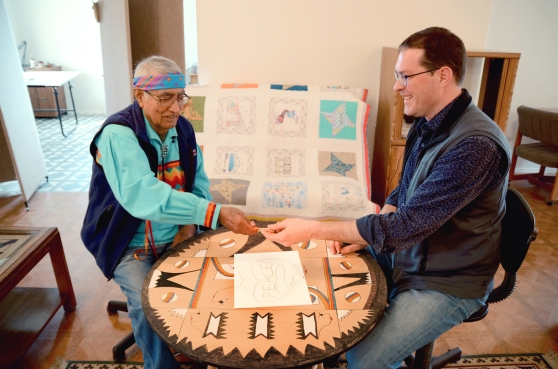
Joseph Rael (Beautiful Painted Arrow) and David Kopacz working on their new book, Walking the Medicine Wheel: Healing Trauma & PTSD. (Photo: Karen Kopacz, 2016)


Conversations With Susan.2: Susan’s Biography

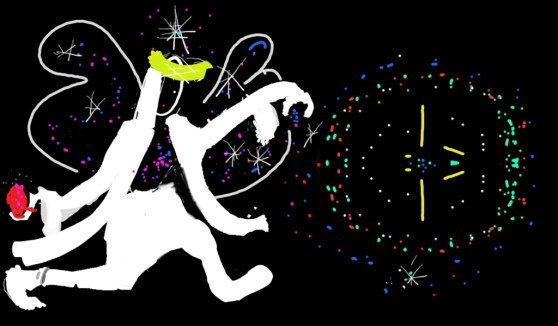
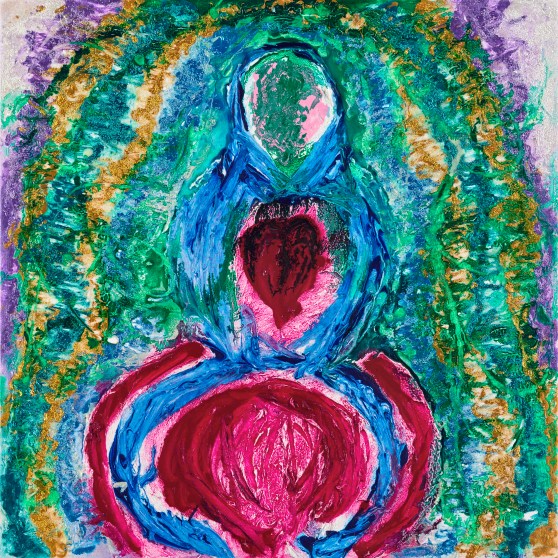
I have been emailing back and forth with my friend, Susan Mac Gregor in New Zealand as she has been going through what she calls her “deathing life” with Stage 4 Glioblastoma Multiforme. We are having some great talks and Susan would like me to share these through this blog. Here is her biography and we’ll be posting some of our discussions in future posts. Susan has also started making digital art and we’ll include some of her artwork in these posts.

___

The Centered Heart

The Centered Heart (Susan Mac Gregor)

Biography:

My name is Susan Diane Mac Gregor. I was born in Whangarei, New Zealand, on 25th August 1958. I grew up in Northland enjoying its beautiful beaches, native forests, waterways, & small town lifestyle. When not reading much of my time was spent exploring nature, riding friends horses, rescuing damaged birds or small animals & swimming. There were cats, pidgeons, chooks [chickens], sheep, dogs, canaries as pets, plus my blood brother & four fostered siblings to share time with. Having a musically talented mother & poetically inclined father, who enjoyed limerick & rhyme, meant our household was filled with music, rhyme & laughter. Despite some financial crises for my parents, it was an idyllic childhood.

Qualifications:

Cert Industrial Cookery; R.P.N; PG Dip Gerontological Nursing; PG Cert CBT; Cert N.L.P. & Eriksonian Hypnotherapy; PG Cert.Relationship Guidance; PG Cert Sexual Abuse Counseling; Cert Solution Focussed Therapy; Cert Grief Counseling;  Cert Group Facilitation; Cert Stanford University Facilitator Self Management Of Chronic Conditions Groups. Successfully completed one year from Diploma of Psychotherapy, plus stage one National Certificate in Adult Education.

Alternative Therapy Qualifications:

Diploma Therapeutic Massage; Reiki Level 3; Cert. Therapeutic Drumming; Colour Psychology … being a methodology of using colour & drawing to analyze & address psychological issues; Chaldean & Pythagorean Numerology; American Indian Aura Cleansing;  Hands On & Crystal Energy Healing; Buddhist Sound Healing via Chris James; Home Study of Aromatherapy.

Gifts:

I was born with the gifts of Clairvoyance, Clairaudience, Clairsentience,  Pre-cognisance & Telepathy. These gifts began expressing themselves firstly amongst my direct family, surprising my parents on more than one occasion. As an adult I have practiced for 25yrs as a Clairvoyant, offering guidance to100’s of people throughout the North Island. This service included dream interpretation, energy clearing, & numerology if desired. As an adjunctive I have developed a method whereby it is possible to map a person’s phases & time frames toward achieving changes & goals in their lives. The phases allow the person to consciously make the most of the vibrational energies in each phase. Feedback has confirmed this is a reliable tool for its purpose.

Harley The Rainbow Lorikeet

Harley the Rainbow Lorikeet (Susan Mac Gregor)

More About My Roots:

Family have significantly influenced my character & interests. Mums father Reverend Norman Hyde established an Orphanage during the N.Z. Influenza Epidemic of the early 1900s, & along with mums mother Lillian, brought up thirty three Orphans, plus eight of their own children. Prior to that Norman lived & worked closely with the Tainui Iwi, an indigenous Maori tribe from the Waikato region. Grand-dad spoke fluent Maori, & was fully conversant with Maori protocols & customs. When he died in his 50’s he was given the rare honours of having Maori “wailers” at his funeral, plus a Chiefs cloak was presented to the family from that Iwi. As is customary, the family has since offered the cloak back, the Iwi have not accepted it, thus it & its significance remain in the family.

Respect for New Zealand’s indigenous peoples & customs was passed onto me through my mother. Mums mother was a gifted pianist, being asked in her early teens to go to Germany to further a musical career. Grandma’s parents didn’t permit this however. Prior to marriage Lillian established her own music school, teaching piano & singing. Her talent passed to my mum, who could play any instrument she was handed, & sang on radio in her early adulthood. Our household was always filled with music, with many nights sat around the piano singing Redemption Hymns, or listening to mum play from the great classics, Chopin, Tchaikovsky, Rachmaninoff, Bach, Beethoven, Mendelssohn etc. Though never having her ability I took lessons in piano, & continued to play into adulthood.

My father, born to the son of a Scottish Immigrant from Loch Carron, bought another form of creativity into our household. Dad had a love of words, particularly in rhyme & limerick. In early adulthood he published his poems in the local News Paper. His work as a carpenter also a creative occupation. His father was a lay preacher in Churches throughout the Tauranga District. Thus we have the foundations for my love of music, rhyme, respect & interest in different cultures, nature, the humanities, & Christian faith.

Faith:

Despite our Christian underpinnings, Christianity was never forced upon us as children. My parents wished us to choose rather than be forced to accept Christ, leaving the door open for enquiry & spiritual exploration. Not withstanding that, prayer was a given in our household & my parents lives were distinctly lived from Christian principles.

In addition, my mother had the unusual gift of being a “diviner” i.e. someone who could find underground water merely by walking around with her hands held out to sense it. She would sometimes demonstrate this gift for others using a forked willow stick, which would violently twist in her hands when over water. She became well known in Northland for this gift, having divined the first steam bore at the Ngapha Steam Plant near Kaikohe, plus the water supply at a privately owned Camp Ground on the East Coast of Hohoura Harbour, called Tauranga Bay. Not to mention many farmers water supplies, etc. She was capable of identifying how deep in the earth they needed to bore, which way the water flowed, if it was salt, brackish or fresh & could, by the same means, divine  for minerals such as gold. This left the way open for enquiry as to things unseen, though felt or known.

My picture 89d72c16-50ba-43fc-b225-2c6126597c93

Susan Mac Gregor

As a young adult I entered training in Psychiatric Nursing, having chosen to diverge from my training at the Auckland Institute of Technology, where I qualified as an Industrial Cook. This led into my Career in Mental Health, & interest in Psychological methodologies. Upon qualifying I further developed my interest in caring for the Elderly, plus Special Interest in working with people with Dementia. Post Graduate study included a Diploma in Gerontology. Next I began developing qualifications & skills in Psychological Therapies. Gradually I moved from working within Private & Public Elder Care into Mental Health Psycho-Social Rehabilitation, including providing CBT counseling. I was working full time as a Therapist in a Psychology Division of a Primary Healthcare Organisation when I was diagnosed with Grade Four Glioblastoma Multiforme, this being my final job.

Spiritual explorations have included initiation into Western Sufism, initiation to The Rosocrucian Order AMORC, a home study course provided by my friend Patricia Sarne Paul in Kabbahlah, exploration of Western Spiritualism, Meditational Dancing in the form of Circle Dancing, Dances Of Universal Peace, & Sufi Zikr, practice of Hatha Yoga in my late teens, then training & practice in Raja Yoga, Mantra Yoga, Mudra Yoga &  Kriya Yoga, the latter following Paramahansa Yogananda’s teachings. There was a short foray into Tibetan Buddhism, via Dhargyey Rinpoche at the Buddhist Centre in Whangarei. Training in Mindfulness Meditation. At times I would “drop” in on Hindu services to join in with the singing of Bhajans, which I always found an uplifting practice. Or through Jewish friends I’d join in Sabbath services at the open Auckland Synagogue, or join in at Anglican or Catholic Services & discussion groups. I gathered books to read surrounding these topics borrowing some & buying others.

Influential writers were M. Scott Peck, Martin Buber, Carl Jung, Joseph Campbell, Richard Bach, Carlos Castaneda, Erich von Daniken, works from the Western Mystery Hermetic School,  Sophist Philosophy, The Paulene Gospel, Celestine Prophecy, amongst others.  Having cast the net wide I can say with conviction I decidely favour Christianity, finding truth & mystery in the life of Jesus & his gospel based on love, forgiveness, & grace. Following baptism by the Spirit as an 11yr old I have consolidated my Christian declaration with Baptism by water as an Adult.

Some Favourite Poems:

“Gunga Dinn” (Rudyard Kipling)

“Kubla Khan” (Samuel Taylor Coleridge)

“Jabberwocky” (Lewis Carroll)

“I Wandered Lonely As A Cloud” (William Wordsworth)

“The Walrus & The Carpenter” (Lewis Carroll)

“You Are Old Father William” (Lewis Carroll)

“Ode To A Mouse” (Robert Burns)

All the best to both of you, and wishing you success in your endeavours.

Love from Susan xx

Sky Painter

Sky Painter (Susan Mac Gregor)

Conversations With Susan

I have been having email conversations with my friend from New Zealand, Susan Mac Gregor. We were in a writer’s group together when I was in Auckland. We periodically have been emailing, but recently we’ve been having more frequent conversations around the topic of what she calls “deathing life,” Susan was diagnosed with Stage 4 Glioblastoma Multiforme, a serious brain cancer, and she has been sharing her insights and experiences with me. Part of what initiated our increased emails is the fact that I have been preparing to give a series of lectures in Grand Junction, Colorado, on Health Care Decisions Day. These talks will be on end-of-life decision-making, holistic decision-making, and also staff wellness for hospice workers. I had asked Susan to give some feedback on a draft for my talk and this really sparked off our conversations. As I have been wanting to expand the focus of this blog, Being Fully Human, it seemed like a good idea to post these conversations as Susan shares her honest insight and experience about the process of “deathing life,” living life right up to the point of death.

Susan has written a fairly long biography, and we’ll publish that at some point, but for this post, I’ll excerpt it and then also start with a summary that she has written about her “deathing life” process. I asked Susan about an image to include in the blog post and she said,

“Having only now read your email the things that come to mind as a picture for the blog could be based on what has been shared…perhaps something with swirling patterns of coloured light, transposed with transparent images of symbols, angels or such.” So I will put a few of my paintings in the blog that fit that description.

Kopacz 02

My name is Susan Diane Mac Gregor. I was born in Whangarei, New Zealand, on 25th August 1958. I grew up in Northland enjoying its beautiful beaches, native forests, waterways, & small town lifestyle. When not reading much of my time was spent exploring nature, swimming, rescuing damaged birds or small animals & swimming. There were cats, pidgeons, chooks [chickens], sheep, dogs, canaries as pets, plus my blood brother & four fostered siblings to share time with. Despite some financial crises for my parents, it was an idyllic childhood. 

As a young adult I entered training in Psychiatric Nursing, having chosen to diverge from my training at the Auckland Institute of Technology, where I qualified as an Industrial Cook. This led into my Career in Mental Health, & interest in Psychological methodologies. Upon qualifying I further developed my interest in caring for the Elderly, plus Special Interest in working with people with Dementia. Post Graduate study included a Diploma in Gerontology. Next I began developing qualifications & skills in Psychological Therapies, successfully completing the first year of study in a Diploma of Psychotherapy with Auckland University of Technology.

In addition to Susan’s health profession credentials, she is also a poet and spiritual seeker and we will hear more about that in further posts.

For today, we’ll include the email that Susan sent me that gave me the idea of posting her insights to share with others. I think she gives such a great, heartfelt, and wise words and experience.

25/2/16 (Susan)

Dear David,

It was with interest that I read about the latest books you’ve been reading. I have read many of the books you have cited in references, etc., including The Tibetan Book of the Dead, however not the recent Sufi book you mentioned.

I can’t give advice for your talk at the Hospice, as everyone’s experience differs, however I can write about my experience.

Initially I experienced shock & grief at receiving such a finite diagnosis. I remember looking around the rooms in my house at the things I had built up & worked hard for, & thinking what did all of that mean, was what I had invested to get those things worth it?  The answer that came back in response to that question was a feeling of emptiness. Then my heart filled with sadness thinking about my 3x beautiful cats & Mahmoud being left behind & I was glad at least that Mahmoud’s life would be more comfortable, as a result of my previous efforts.

Within 2wks I was trundled off for brain surgery, after which my life completely changed. The surgery caused damage within my brain, leaving me with left sided paresthesia.

Mahmoud was devastated. His welfare was always on my mind, as was mine on his. I had a large amount of time left lying in my hospital bed with nothing to do but think.

Years prior I had experienced a “healing” at a Buddhist retreat, in which my “difficult to control” hypertension completely dissappeared, leaving my GP astounded. During that retreat I learnt that even illness has a beneficial purpose, i.e. to teach us something, to deepen us in some way spiritually, to raise our awareness or break through unhelpful patterning.  Thus I started to look for the lessons in this experience.

For me cancer has done all of the above plus brought me to an awareness of how much love surrounds me. It has deepened my relationship with Mahmoud, with God, & given me fresh hope for humanity. I have been shown so much love & kindness, even from complete strangers.  Often those with little in the way of possessions have given me the most. I have been able to see the busy, tense person who “didn’t have time “ that I used to be, reflected in people around me, & their counter balancers in the people who will let me que jump, or help me out in getting something in a supermarket, etc., because they see I’m disabled.

As a consequence of my health & disability mine & Mahmoud’s lifestyle has dramatically changed. We have needed to offload a lot of possessions & have moved to a two bedroom rental unit. The money from my salary no longer flows in & the goal of being mortgage free in 3yrs has disintegrated. However I have found that I am surrounded with so much love & kindnesss that my soul & heart are completely full.

From this point of realisation forward I have been able to take inventory of my life, looking at past regrets & losses, & freeing myself of built up emotions through self forgiveness & forgiveness of others. This has been aided by gratitude & compassion, both of which have deepened within me exponentially.  I have become free again, letting go of pursuing goals, things, dreams…. most of which are erroneous now. Being present in each moment, with each breath, is how my days unfold. The natural world around me is exquisitely defined, colours, shapes, contrasts, each being impressed into my being through every sensory system I possess.

I still give … a smile, a kind word, my knowledge or time. My “deathing” life continues to have purpose & meaning, people ask me “what is this like”, “how do you stay so optimistic”, “are you afraid”, etc, etc. I do experience moments of fear, but at the end of the day my answer to all of these questions is, “this is life, I am blessed to have lived it, I believe in an after life, & it is my faith in God & Jesus Christ that sustains me when all else fails.

May your love-light continue to shine.

Love & Blessings, Susan xx

Kopacz 03


A Work of Joy.5 Spark Joy: What Sparks Joy for You?


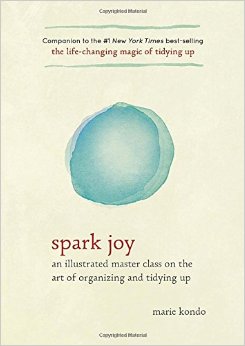
This is the fifth of a series of blog posts examining Joy in Work. We have been calling it: A Work of Joy! It is part of an ongoing discussion between Dave Kopacz and Sandy Carter on this topic and will include each of our thoughts individually as well as our dialogue on Joy in Work. This fifth blog looks at the work of Marie Kondo (who has been called the Beyoncé of Organizing), The Life-Changing Magic of Tidying Up, and her new book, Spark Joy: An Illustrated Master Class on the Art of Organizing and Tidying Up. Sandy had consulted Kondo’s first book when she was recently down-sizing. We turn to her second book, Spark Joy, not so much for tidying up, but rather for her method of determining whether or not something brings you joy. Kondo writes, “I am convinced that the perspective we gain through this process represents the driving force that can make not only our lifestyle, but our very lives, shine,” (xii).

spark-joy-contest-package

Kondo’s method is surprisingly simple, yet helps to get you out of your logical mind and in touch with your heart.  Here is what she says to determine if something sparks joy for you.


“When deciding, it’s important to touch it, and by that, I mean holding it firmly in both hands as if communicating with it. Pay close attention to how your body responds when you do this. When something sparks joy, you should feel a little thrill, as if the cells of your body are slowly rising. When you hold something that doesn’t bring you joy, however, you will notice that your body feels heavier,” (8).

20160303_082657

In regards to organizing, she writes that you should focus on what things bring you joy and that you want to keep, not on trying to get rid of things just for the sake of getting rid of things. Even with the things you discard, however, Kondo invites you to connect with and communicate with.


“Keep only those things that bring you joy. And when you discard anything that doesn’t, don’t forget to thank it before saying good-bye. By letting go of things that have been in your life with a feeling of gratitude, you foster appreciation for, and a desire to take better care of, the things in your life,” (8).


What Kondo is doing is inviting us to get in touch with the soul of things, to see how your heart resonates with the soul of the object, and if you are going to discard it, to honor the soul of the objects that are exiting your life. This reminds me, in some ways, of the world view of many Native American people, that all things are alive and are our brothers and sisters. Maybe this part of mainstream American culture’s emphasis on the accumulation of things, we do not connect to the soul of things and thus we never feel joy in our hearts and keep on accumulating objects.

70ede52a4b764ac3229190a1d3cc0578

When starting to practice determining what sparks joy in your life, Kondo recommends starting with the clothing that you wear closest to your heart, “Because that’s where you feel joy―in your heart, not in your head,” (18). This reinforces that joy, whether in tidying or in work, comes from the heart, not the head. It shows why an intellectual solution to a lack of joy will not be successful unless it partners with the heart.


After going through your belongings, object by object, you can get to where everything you have sparks some joy. “When you wear and surround yourself with things you love, your house becomes your own personal paradise,” (26). Kondo also sees objects as being capable of being transformed by love and that this can be felt as well as the physical elements of the object. So the act of loving something is part of how that object brings joy.


“I’m convinced that things that have been loved and cherished acquire elegance and character. When we surround ourselves only with things that spark joy and shower them with love, we can transform our home into a space filled with precious artifacts, our very own art museum,” (47).

410sn-mdGaL._SY344_BO1,204,203,200_

In looking at Marie Kondo’s book, Spark Joy, and her method of tidying, we can use this in several ways in regard to our larger focus of Joy in Work. The first level is the level of our surroundings and our physical workspace. We could use this method of looking at the objects around us and asking if they bring joy. Many things in a medical environment are necessary and utilitarian, we may not be able to say, “This blood pressure cuff does not bring me joy, so I am going to let it go!” We can declutter both our own personal workspace as well as shared work spaces. Shared workspaces tend to accumulate things that apparently belong to no one and we just work around them. The next aspect of this level is adding some seasoning to our work space, bringing in something that sparks joy for us. Again we may have restrictions on certain items in a medical setting, but a plant, a small vase, a little animal figurine, a favorite book, a nice pen, a colorful note pad, even an inspirational saying written on a notecard can bring joy to a personal work space. Some people in medical settings do not have a personal work space, in that case, you have to put the joy on your person (a pin, jewelry, a pen you like) or you could take on the task of bringing some joy to your collective workspace – see if you can put up a picture, bring in a plant, or even something temporary like a small vase of flowers.


Kondo teaches us that there are three common elements that determine joy, “the actual beauty of the object itself (innate attraction), the amount of love that has been poured into it (acquired attraction), and the amount of history or significance it has accrued (experiential value),” (45). Thus, it is important to realize that joy is not a static trait of an object, it is also increased by the love and enjoyment that we have with an object. For instance, I have a pair of non-descript gardening gloves. I didn’t feel joy necessarily when I bought them, but they are very comfortable and now, after using them for a couple years, they bring me joy. Also, the factor of time, I have been using them now for a while and they hold many happy memories of digging in the dirt. I like using my bare hands too, and getting dirt under my fingernails, but some jobs, like pruning a rose bush are better done with gardening gloves. These gloves now feel like a second skin to me. It is important to realize that even something plain and utilitarian can be infused with joy from years of love and use. Joy is not a one-way street. We are not separate and isolated from the physical world, but can be in a love relationship with the earth and the physical world of matter.


Our surroundings are an important part of our health, although medical settings often do not create joyful or healing environments. At the VA, we are implementing work coming out of the national VA Office of Patient Centered Care & Cultural Transformation. In particular, we are using the Circle of Health and have developed a Whole Health Class that rotates through 8 different health domains over 8 weeks. One of those domains is “Surroundings: Physical & Emotional,” and we work with Veterans to generate ideas around little ways that they can make their surroundings more health promoting. In my book, Re-humanizing Medicine, I also have a dimension of “context” which looks at our physical and situational environment.

COPHAWB

VA Circle of Health

The main reason I wanted to blog about Marie Kondo’s book was not simply for the physical work space issues, but for the method she uses of helping us sensitize and train our hearts to be open and attuned to joy in our lives. Joy is not something you can mandate and joy will be different for each person. To spark joy, we need to make room for our hearts in our work. Administration can do many things to either diminish joy or enhance joy, but ultimately, it is up to us to show up for the joy revolution, by attending to our hearts and bringing them to work each day, and by discerning what it is that we need around us in order to nurture our joy.


2015 in Review

What a big year it has been! My first book came out at the end of 2014 – Re-humanizing Medicine: A Holistic Framework for Transforming Your Self, Your Practice, and the Culture of Medicine. I have traveled a lot this year for speaking engagements: from here in Seattle to Denver, Colorado, Auckland, New Zealand and Melbourne, Australia.

jhp53db8b682bd57[1]

I just picked up Jean Houston’s book, The Search for the Beloved: Journeys in Mythology & Sacred Psychology. I was surprised to read her introduction to the second edition. She describes that in September of 1992 she stood at the northern-most point of New Zealand, Cape Reinga and watched the waters of different oceans come together. She asks her companion if “this is the place where the planetary DNA gets coded anew?” He replies, “it is…the place where all Maoris go when they have died to lift off to the Other World,” (vii).

The Search for the Beloved

This is the place, right by this tree in the photo, named Te Aroha (love), where the Māori believe that departing spirits leave this world for the other after death. Houston’s guide continued, “It is because of places like this…where the spirits of many people and many lands can meet and refresh themselves. And it is here as well…that we remember who we are and…And call our spirits home,” (viii).

DSCN0339

I, myself, stood in this same place, looking down on the coming together of masculine and feminine waters and of the place where souls leave this place after death – during my last month living in New Zealand, November 2013. See my blog about this trip.

Now, 2 years into living back in the United States, but in a new region, Seattle in the Northwest, I am at this point. Sorry, I know that sounds like Yoda-speak, I just saw “Star Wars: The Force Awakens.” Where am I now? Where is my home? Is my home here in the Northwest?

My wife and I went up to Victoria, British Columbia on the Victoria Clipper for an overnight weekend for our 24th wedding anniversary last weekend. Here are a few photos from that trip.

20151219_143558


20151219_170211

We are still exploring this region, so it seems difficult to call it home when it is so new and so far from where we grew up and where most of our relatives live. I have been reading a lot of Joseph Campbell lately, as well as other authors (whom I will discuss below). This has been a big part of my transition from “down under” back to the Northern Hemisphere. At age 48, this has been my mid-life transition, like Dante taking his mid-life journey:

Midway along the journey of our life

     I woke to find myself in a dark wood

I have developed a class for veterans based on Joseph Campbell’s hero’s journey. The hero hears a call to adventure, crosses a threshold, meets mentors and challengers, has a descent into the unknown world, comes to a challenge which is both external and internal, comes to terms with the inner/outer feminine as well as the authority of society, re-crosses the threshold to the known world, but here finds himself or herself a stranger in a strange land and must work to re-acculturate to their own home. What the hero finds at the furthest point of the journey is the gift or boon which transforms the self and has the potential to renew and transform society as well. But often, this gift is hard to see and the physical treasure might even be lost, as happens to Gilgamesh when he sets down the herb of immortality that he has brought up from the deepest ocean and it is eaten by a snake. This means that the real treasure is the transformation of the self – not some material item. This framework is so useful for returning veterans who have been away in the military world and have difficulty returning back to the civilian world. The book and class I have developed are at the point where I have just submitted it to a publisher for review with a tentative title of, Return:  The Hero’s Journey Home – for Veterans & Society After War.

Hero's Journey

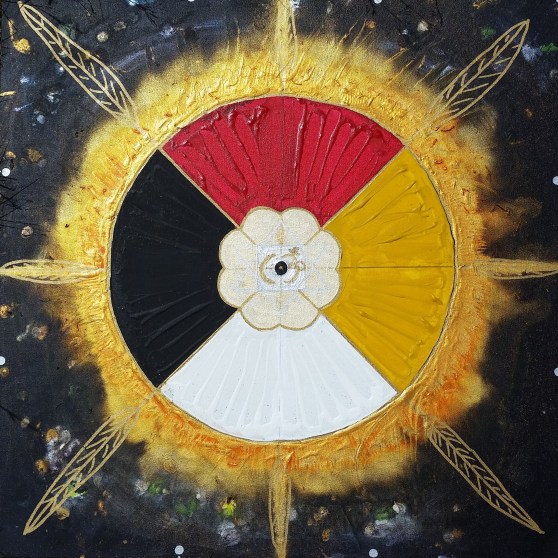
I have found this framework helpful for my own return and I have felt fellowship with these lost souls I have been working with. Reading Houston’s introduction, my mind returned to that rocky outcropping where Te Aroha clings to the cliff, serving as a guidepost for those who have died and transition on to another world. The end of my life in New Zealand really was a kind of death for me, while I am living here in the Northwest, I am still waiting in some ways to be reborn, to find out who I will be and what my life will be like here. The Northwest is the boundary between the physical West and the spiritual North on the medicine wheel. This brings me to the other major project I have been working on, co-authoring a book with my friend and Brother Joseph Rael (Joseph likes to think of us as verbs, rather than nouns, thus “Joseph-ing”), whose Tiwa name is Tsluu-teh-koh-ay (Beautiful Painted Arrow).

20141019_141911

Joseph Rael (Beautiful Painted Arrow)

I met Joseph in October of 2014 and he and I have met in person a few times and been talking on the phone and exchanging letters for work on our book, which we are calling Becoming Your Own Medicine. I have thoroughly enjoyed working with Joseph. Not only does he make me ponder spiritual questions, he is really fun to work with and I always laugh with him. We are getting to the point of doing some editing work on the manuscript for the book and it is very much my own personal journey, my own hero’s journey as much as it is about Joseph’s teachings. Of course I have been reading and re-reading Joseph’s books and he just re-released a new version of his classic, Being & Vibration: Entering the New World. Hopefully the hero’s journey book and Becoming Your Own Medicine will be released in 2016/2017.

20150621_113254 (2)

In addition to my work with veterans and my collaboration with Joseph, I have been doing some deep study of various topics and authors. 2014 was largely reading Henry Corbin and Tom Cheetham’s works on esoteric Islam and Sufism. This also included a lot of the well-known poets, Rumi and Hafiz, but also one of my favourite books of that time, The Unveiling of Secrets: Diary of a Sufi Master by Ruzbihan Baqli. In 2015, I met Richard Miller, who was kind enough to spend some time talking about iRest & yoga Nidra, when he was up here for a conference. This year has been defined by reading a lot about Hinduism and Kashmiri Shaivism with the principle of non-duality being a primary focus, as well as the concept of spanda, the divine creative pulsation which corresponds so well to Joseph Rael’s teachings about reality. These books have primarily been by Jaideva Singh and Mark S. G. Dyczkowski.

The Unveiling of Secrets

Another topic that has been of interest to me is understanding the foundation of American democracy and seeing how we have lost touch with that and how we can re-invigorate the sense of non-denominational spirituality and human rights that were foundational for our country. I think this has been a kind of re-acquaintance with the U.S. for me. Parker Palmer’s Healing the Heart of Democracy: The Courage to Create a Politics Worthy of the Human Spirit, Jacob Needleman’s The American Soul: Rediscovering the Wisdom of the Founders, Steven Hermann’s two books Spiritual Democracy: The Wisdom of Early American Visionaries for the Journey Forward and Walt Whitman: Shamanism, Spiritual Democracy, and the World Soul have helped me to come to a re-imagining of the idea of America.

George Kirazian

George Kirazian

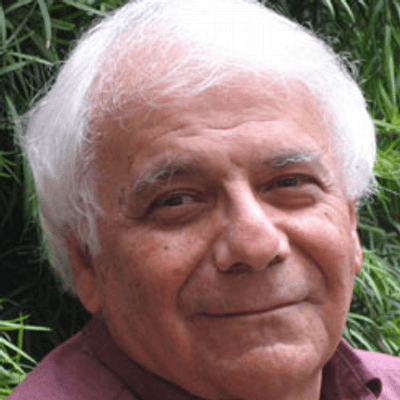
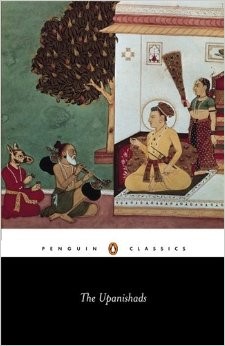
Another highpoint of the year was working with George Kirazian on an interview with him about his friendship with translator Juan Mascaró, whose renderings of The Upanishads, The Bhagavad Gita, and The Dhammapada are still readily available in the Penguin Classics series.

Juan Mascaro

Juan MascaróUpanishads


In addition to my own writing, I look forward to continued collaboration with Joseph Rael, as well as some other friends of mine: Gary Orr, Hilton Kopp, and Sandy Carter. I met Gary and Hilton during my time down under and we have some great ideas – stay tuned…I met Sandy when she did a book review of Re-humanizing Medicine for the Courage & Renewal blog. She and I put together a conference proposal on Joy in Work, which was turned down, but has led to our long-distance collaboration on a project on this same topic, which I have been calling, A Work of Joy. This examines finding joy in work at a time when there are high rates of stress and burnout in health care.

20151219_181524 (2)

At the VA, I have a couple projects I have been working on that are specific to the VA. Along with Nicola De Paul, Craig Santerre, and Jenny Salmon, we have been developing a Whole Health class that provides holistic support and inspiration to veterans who are interested in taking a more active role in their health care. I have also been working with Laura Merritt on an adaptation of Re-humanizing Medicine for VA staff, which we have been calling, Caring for Self. It is great to be able to apply some of the ideas I developed in my book to self-care for staff as well as for patients.

I’ll close in returning to what Houston writes in the introduction to her book, The Search for the Beloved: Journeys in Mythology & Sacred Psychology.

“The premise of this book is that we must call our spirits home, lest we forsake our origins, and lose hope, meaning, health, and the ability to serve and participate in the greatest challenge that history has ever known…We are all being asked, both singularly and collectively, to cross a bridge and to meet halfway a rising reality, a sacred reality. Thus the need for training in journeys into the Sacred,” (viii).

Houston develops this concept of Sacred Psychology and training in journeys into the Sacred. I feel that this is also the focus of my work in the past two years. My understanding of the hero’s journey class is that it is a form of initiation rite to help veterans move from a state of being of war to a state of being of peace in order to make the transition back into the civilian world. One of the primary ways of doing this is a kind of spiritual awakening that accompanies a shift from a materialism-based separation to a spiritual-based sense of connection and even oneness with others. I have also come to understand my work with Joseph as being a guidebook on how to become a visionary in order to move from war to peace and again to move from a state of isolated separation (which is a state of conflict) to a state of Unity as expressions of the Vast Self. This requires dying to the old self and being reborn, continuously.

Hero's Journey Reflection

20151220_132526

Here is how Joseph ends his book, The House of Shattering Light:

The House of Shattering Light

Each of us is a ceremony, a vibration of the All-That-Is. We ourselves are the Vast Self, that One Actor in the universe, who creates continually in all moments. We are the Vast Self playing in creation as creatures, as individuals.

In the experiences of my life, through loss and transformation, ceremony and story, I learned how to emerge continually from the individual self that is Joseph Earl Head Rael into the Vast Self again. In the kiva, in the sweat lodge, in the sun dances and long dances. I have learned to die to myself in order to know the Self, dying from this House of Shattering Light into states of ecstasy, and then returning again, that the Vast Self might drink continually of the light that It is creating.

To know ourselves as the Vast Self playing is to be both human and divine. It is for this we all are born, to be mystics, fully alive and dancing, (199-200).

My return to North America and my transition into the second half of my life have brought me to look less for a physical place of home and more for a spiritual, internal place – a place that also includes many places in the world as well as the whole world, or as Houston writes, “a citizen of the universe.”

kopacz.tree.2016

Review of Marsha Snyder’s Positive Health: Flourishing Lives, Well-Being in Doctors

Positive Health

I first met Marsha Snyder, MD, MAPP, an American psychiatrist, at the Health of Health Professionals conference in Auckland, New Zealand, 2011. I have sat in on her presentations over the past three offerings of the Australasian Doctors’ Health Conference/Health of Health Professionals conference. Marsha sums up her years of work and personal experience in this book, Positive Health: Flourishing Lives, Well-Being in Doctors, published 2014 – the same year as my book, Re-humanizing Medicine. Marsha’s book adds to what I have been calling the counter-curriculum of self-care and compassion revolution in health care.

Snyder

Marsha describes a curriculum that builds on positive psychology, which she studied under Dr. Martin Seligman for her Master’s degree at University of Pennsylvania. She creates an expansive curriculum of positive health and builds upon evidence-based principles of resilience and positive psychology to transform “physician ill-being” into well-being and flourishing.

Marsha describes five themes for her book:

 
1) The “cause of ill-being in medical students extends beyond the students, into issues with faculty and administration.”

2) Many “physicians who are troubled or burned out relate some of their difficulties to ethical issues in the system.”

3) There is a need for “understanding, defining, and teaching of resilience skills to physicians.”

4) The “creation of well-being in doctors and the rest of society by incorporating the science of positive health.”

5) Medical “training and practice must move out from an outdated pathology-based model to a health-based/prevention-based model,” (page 2).

Marsha adds in various exercises, including mindfulness, and discussion questions to the curriculum and stresses the need for “spirited multi-disciplinary teams.” She includes a chapter on “Spirituality and Well-Being,” defining spirituality as “a search for the sacred,” (240) and she reviews the links between spirituality and health. I particularly like the chapter, “Posttraumatic and Post-Ecstatic Growth in Medicine.” I was familiar with posttraumatic growth which describes the potentially transformative response to trauma, but I had not heard of “post-ecstatic growth,” which describes how highly positive experiences can also lead to transformative growth of “different areas of the self, including meaning in life, self-esteem, or social bonds,” (233).

Positive Health: Flourishing Lives, Well-Being in Doctors is a welcome addition to the growing literature on the need for self-care and personal growth in doctors and health care workers. Marsha’s focus goes way beyond limiting the negative to expanding joy and flourishing in the lives of those working in health care.

A Work of Joy.2 – What is Joy in Work, Where has it Gone? How can We Bring it Back?

What is Joy in Work, Where has it gone, How can We bring it Back?

This is the second in a series of blog posts examining Joy in Work. It is part of an ongoing discussion between Dave Kopacz and Sandy Carter on this topic and will include each of our thoughts individually as well as our dialogue on Joy in Work. This second blog outlines Sandy’s initial thoughts on Joy in Work.

Sandy Carter, Ph.D. works as a physician coach and consultant. Sandy is a professional certified coach, holds a PhD in organizational management with a specialization in leadership, and Masters in Business Administration and Social Work. Her research is in the area of transformational leadership with physicians, and wellness and resiliency.

Sandy.2

What is Joy? How is it different from happiness?

Sandy Carter:

Joy is a state of mind and an orientation of the heart. It is a combination of emotions and contains elements of contentment, confidence, and hope. Joy has more depth, meaning and purpose than happiness. Being joyful means feeling connected to yourself and/or others in life, nature, and appreciating beauty. It requires an acceptance for how life is (not how you’d like it to be), by living in the present. Joy comes from within! It is a sustainable emotional experience that alters our physiology and biochemistry promoting a sense of wellbeing that promotes resilience and supports immune health. In the Biblical sense, Joy is not an emotion, and it is not linked to environmental conditions, but is an attitude of the heart and spirit. It is where internal peace and contentment reside, in spite of, what’s happening ones’   life.

Lotus

Happiness is subjective – it can mean different things to different people and is more of a momentary state of being. Happiness is an emotional state of wellbeing defined by positive feelings that can range from contentment to intense Joy!

Savor the Moment

Why is Joy/happiness important?

 Joy and happiness are connected to wellbeing and are valued as essential for individuals to thrive in their work and personal lives.  On March 20, 2013, the first ever International Day of Happiness was celebrated around the world. The UN General Assembly passed a resolution to promote happiness as a universal goal and aspiration for people everywhere. The UN is urging governments to start measuring wellbeing as a guide to creating public policy. This has roots in the field of sustainable development. The UN recognizes by measuring gross domestic product (GPD) we are placing overemphasize on materialism and incomes (that beyond a certain point) does not enhance life satisfaction.

International Happiness Day

Additionally, by enhancing our overall wellbeing we can directly impact the high costs of healthcare and help create healthier work cultures that can improve hospital safety concerns (medical errors and complications). While working in cultures where there is blame/shame people tend to be hyper-vigilant and low trust. This level of stress impacts energy levels, judgment and health. Often leading to lost revenue from absenteeism, turnover, disability, insurance costs, workplace accidents, violence, workers’ compensation, and lawsuits, etc.

The United States is the most overworked developed nation in the world. Working is not necessarily the problem. If you love what you do, are doing it for the right reasons and can rest and restore – work can be a wonderful thing. However, far too many Americans are driven to work more and more (based on scarcity values of feeling like they don’t have enough) which leads to stress and lower quality of life. Leaving many people without time to unwind, take care of themselves or their homes. Vital connections are lost to friends and family. These kinds of circumstances lead to isolation, loneliness, and burnout. When all of this becomes overwhelming and can lead to coping strategies, further stress and deteriorate health.  Stress is the #1 cause of both mental and physical health problems. Many workers today are burned out and pressured causing heightened anxiety, depression and disease.

Overburdened Doctor

Biology of Joy:

People who experience upper reaches of happiness on psychological tests develop about 50% more antibodies than average. It’s also been discovered that mental states such as hopefulness appear to reduce the risk or limit the risk of cardiovascular disease, pulmonary disease, diabetes, hypertension, etc. Joy, happiness, and positive emotions make your immune system function better, help you fight disease, and even live longer.

Herbert Benson has done research on the Relaxation Response. By initiating the Relaxation Response, we can experience a physical state of deep rest that counteracts the harmful effects of the fight-or-flight response. If we can let go of bad stress, our brains can rearrange themselves neurologically so that the two hemispheres communicate better, and problem solving becomes easier.

Relaxation Response

Stress, Eustress & Joy

The problem is we don’t take care of ourselves very well. For example, the United States is the only industrialized nation without a mandatory option for new parents to take parental leave. Furthermore, 134 countries have laws setting the maximum length of a workweek and the U.S. does not. A large percentage (85.8% male and 66.5% females) work more than a 40-hour workweek. We also are the only nation in the industrialized world that has no legally mandated annual leave and very short vacation times compared to Europe.

Unmanaged stress can be destructive, and… stress also has a positive benefit. Eustress or good stress provides us with energy and motivates us to produce. When we are utilizing eustress, we find clarity, focus, and creative insight.

Joyful Doctor

Joy at work is essential. It is a vital energy in sustaining high levels of passion, performance, and productivity. Meaningful work is about uncovering and utilizing our true gifts.

In these times of unprecedented change, it is vital that we are connected to a deeper, natural energy source from within.

Stress is an essential response in highly competitive environments – it focuses you, but past a certain point it compromises your performance, efficiency and eventually your health. We are at that point today as physicians experience burnout at epidemic levels and commit suicide at a rate higher than the general public.

Poetry describing what it means to live joyfully


Mindful


Every day

I see or I hear

something

that more or less


kills me

with delight,

that leaves me

like a needle


in the haystack

of light,

it is what I was born for—

to look, to listen,


to lose myself

inside this soft world—

to instruct myself

over and over


in joy,

and acclamation.

Nor am I talking

about the exceptional,


the fearful, the dreadful,

the very extravagant—

but of the ordinary,

the common, the very drab,


the daily presentations.

Oh, good scholar,

I say to myself,

how can you help


but grow wise

with such teachings

as these–

the untrimmable light


of the world,

the ocean’s shine,

the prayers that are made

out of grass?


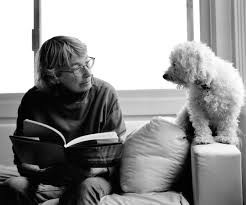
Mary Oliver from Why I Wake Early, 2004

Mary Oliver

David Whyte on JOY

is the meeting place of deep intentionality and self forgetting, the bodily alchemy of what lies inside us in communion with what formally seemed outside, but is now neither, but become a living frontier, a voice speaking between us and the world: dance, laughter, affection, skin touching skin, singing in the car, music in the kitchen, the quiet irreplaceable and companionable presence of a daughter: the sheer intoxicating beauty of the world inhabited as an edge between what we previously thought was us and what we thought was other than us.

Joy can be made by practiced, hard-won achievement as much as by an unlooked for, passing act of grace arriving out of nowhere; joy is a measure of our relationship to death and our living with death, joy is the act of giving ourselves away before we need to or are asked to, joy is practiced generosity. If joy is a deep form of love, it is also the raw engagement with the passing seasonality of existence, the fleeting presence of those we love understood as gift, going in and out of our lives, faces, voices, memory, aromas of the first spring day or a wood-fire in winter, the last breath of a dying parent as they create a rare, raw, beautiful frontier between loving presence and a new and blossoming absence.

To feel a full and untrammeled joy is to have become fully generous; to allow our selves to be joyful is to have walked through the doorway of fear, the dropping away of the anxious worried self felt like a thankful death itself, a disappearance, a giving away, overheard in the laughter of friendship, the vulnerability of happiness felt suddenly as a strength, a solace and a source, the claiming of our place in the living conversation, the sheer privilege of being in the presence of a mountain, a sky or a well loved familiar face – I was here and you were here and together we made a world.

‘JOY’ David Whyte

From CONSOLATIONS: The Solace, Nourishment and Underlying Meaning of Everyday Words

MANY RIVERS PRESS

David Whyte.3

Consolations

Meaningful work is by far the primary motivator for engagement, and experiencing excitement and joy in one’s work. Today, in healthcare organizations the environments are toxic, as the conditions for creating opportunities for meaningful work are not met.

Conditions of meaningful work include: worker autonomy, having sufficient resources and an opportunity to learn from problems. Currently, many physicians have lost their autonomy, are told to do more with less and work in toxic cultures. These are environments where it’s not safe to expose vulnerability for growth and development, and we know working in environments where there is mutual respect is critical to finding meaning and joy. A precondition for a culture of safety in the workplace is the protection of the physical and psychological safety of the workforce. Joy in the workplace comes from an appreciation of the human spirit and organizational support for developing capabilities.

Conditions for meaningful work also comes from having leaders who are a resource for enabling physicians/others by removing obstacles, providing support and acknowledging/validating strong effort and successful outcomes. When people engage in work at this level – community spirit, innovation and creativity flourishes. Most adults in the U.S. spend more hours at work than anywhere else… work should “ennoble, not kill, the human spirit.”

A Work of Joy.1 < What is Joy in Work, Where has it Gone, How can We bring it Back?

This is the first of a series of blog posts examining Joy in Work – maybe we’ll call it: A Work of Joy! It is part of an ongoing discussion between Dave Kopacz and Sandy Carter on this topic and will include each of our thoughts individually as well as our dialogue on Joy in Work. This first blog will provide a broad outline for subsequent work. We will each start with a monologue and move from there into dialogue.

Dave Kopacz, M.D. works as a psychiatrist at the VA in Primary Care Mental Health Integration. Prior to this he was Clinical Director at Buchanan Rehabilitation Centre in Auckland, New Zealand. He is Board certified in Psychiatry and Integrative & Holistic Medicine. He is the author of Re-humanizing Medicine: A Holistic Framework for Transforming Your Self, Your Practice, and the Culture of Medicine.

WIN_20150525_182313

Sandy Carter, Ph.D. works as a physician coach and consultant. Sandy is a professional certified coach, holds a PhD in organizational management with a specialization in leadership, and Masters in Business Administration and Social Work. Her research is in the area of transformational leadership with physicians, and wellness and resiliency.She heads The Center for Physician Leadership Coaching. 

Sandy.2

What is joy in work?

Where has it gone?

How can we bring it back?

Dave: To speak of joy in work can seem like an oxymoron – work is work, after all, isn’t it? The Online Etymology Dictionary describes the roots of “work” as having elements of toil as well as creativity, it can mean a military fortification as well as an artistic labor, Mark Twain wisely points out that the difference between work and play is a matter of conditions or attitude.

Very busy business

Very busy business

Old English weorc…“something done…action (whether voluntary or required)… also “physical labor, toil; skilled trade, craft, or occupation…” “military fortification,” from Proto-Germanic werkan…from Proto-Indian-European werg-o-…“to do…”

Meaning “physical effort, exertion” is from c. 1200; meaning “scholarly labor” or its productions is from c. 1200; meaning “artistic labor” or its productions is from c. 1200…Meaning “embroidery, stitchery, needlepoint” is from late 14c. Work of art attested by 1774 as “artistic creation,” earlier (1728)…

“Work and play are words used to describe the same thing under differing conditions.” [Mark Twain]

“Work,” Online Etymology Dictionary, accessed 11/6/15 

We have a wide range of roots and definitions for the word “work,” at its most simple it is “to do,” and our judgements on that doing determine whether we view it as work or play, hard or easy, meaningless or meaningful. Doing for no reason feels meaningless and tedious, but Doing that is meaningful is rewarding, even if the work is difficult. Sandy notes that we can meet high demands if we have high resources – so in this way success in work depends not only on the external conditions and needs, but also our individual, relational and organizational resources.

Garden-of-eden

In the Judeo-Christian tradition, we read early on in the Bible that human beings have been cast out of the Garden of Eden for their transgression of eating from the fruit of the Tree of Knowledge. God curses Adam and Eve and their descendants, saying that man must earn his living from the ground with toil and that woman must give birth in pain. We have this deeply ingrained belief that our relationship with work and with our bodies is one that is filled with pain – not joy – and that we have the guilt of “original sin” that taints our lives in this world. (Not all theologian ascribe to this idea, for instance Matthew Fox writes in Original Blessing that there are other spiritual perspectives we can take in the relationship between spirit and matter and that we can find joy in our work in the world).

Original Blessing.2

However, there is also a long tradition in all religions of a sense of joy and joyousness that come from the mystical connection with Spirit. Dorothee Soelle, in her work on mysticism in, The Silent Cry: Mysticism and Resistance, lists five domains of mystical experience: Nature, Eroticism, Suffering, Community, and Joy. She describes joy as a state of being, rather than a sense of acquisition or momentary pleasure.

The Silent Cry

“In the mystical sense, joy is something not tied to objects or certain experiences of delight. Joy is a matter of ‘rejoicing in’ rather than of being ‘glad about,’” (The Silent Cry, 179).

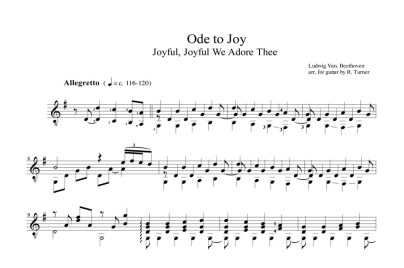
Henry Van Dyke wrote “The Hymn of Joy,” written in English and set to Beethoven’s Ninth Symphony, which, in turn was inspired by Schiller’s poem, “Ode to Joy.” Here are Van Dyke’s lyrics as an example of spiritual joy.

Joyful, joyful, we adore Thee,

God of glory, Lord of love;

hearts unfold like flow’rs before Thee,

Opening to the Sun above,

Melt the clouds of sin and sadness;

drive the dark of doubt away;

Giver of immortal gladness,

fill us with the light of day!

All Thy works with joy surround Thee,

earth and heav’n reflect Thy rays,

stars and angels sing around Thee,

center of unbroken praise:

Field and forest, vale and mountain,

Flow’ry meadow, flashing sea,

chanting bird and flowing fountain,

call us to rejoice in Thee.

Thou art giving and forgiving,

ever blessing, ever blest,

well-spring of the joy of living,

ocean-depth of happy rest!

Thou the Father, Christ our Brother,—

all who live in love are Thine:

Teach us how to love each other,

lift us to the Joy Divine.

Mortals join the mighty chorus,

which the morning stars began;

Father-love is reigning o’er us,

brother-love binds man to man.

Ever singing, march we onward,

victors in the midst of strife;

joyful music lifts us sunward

in the triumph song of life

(“The Hymn of Joy,” Wikipedia, accessed 11/6/15)
Ode to Joy combined 9x12 with tab

Work is our action in the world. Joy is the sense of connection to the greater meaning and purpose in our work.

Rael, Joseph 2

Native American visionary, Joseph Rael was taught by his grandmother that “work is worship,” (Ceremonies of the Living Spirit, 22). This brings a different perspective to work, as in the Native American tradition, every action is sacred and there is no separation between spirit and matter. Zen Buddhism takes a similar approach of spiritualizing mundane tasks, such as “polishing the mirror” or “chop wood, carry water.” In the tradition of Kashmiri Saivism, the ultimate Reality is considered to be “a compact mass of bliss (cidānandaghana),” (Dyczkowski, The Doctrine of Vibration, 44). The ultimate union of Being-Consciousness-Bliss is called “saccidānanada.”

Doctrine of Vibration

This is the “Sat, Chit, Ananda,” that Joseph Campbell speaks of when, after studying the wisdom of the Hindu tradition, he coined the phrase, “follow your bliss,” (Joseph Campbell & Bill Moyers, The Power of Myth, 149, 285).

Follow your bliss

In this work that we are undertaking, joy will refer to something deeper than a passing emotion such as happiness or the momentary satisfaction of a desire. We will be looking at joy as the underlying substrate of our Being. This comes from a sense of unity within ourselves and a sense of unity and connection with others. To put it very simply, suffering comes from separation and disconnection and joy emerges from a sense of deep connection and unity within one’s self, between self and other, and within community.

Jack Kornfeld, in his foreword to Awakening Joy, addresses this deeper level of joy. “Joy is our birthright…it is innate to consciousness. Joy is a reflection of our true nature,” (Baraz and Alexander, Awakening Joy, xiii-xiv). Kornfeld describes joy in such a way that we can imagine it to be the foundation of our life, the deep, internal ocean currents, strong and perpetual, beneath the passing, tossing waves of the ups and downs of our daily emotional life. The authors of this book (who have been teaching courses on awakening joy since 2003) describe that having a sense of joy is a choice. “Our joy and happiness is up to us. Our suffering and well-being is not solely determined by what’s happening in our present circumstances but to a large degree by our relationship to what is happening,” (Awakening Joy, xviii).

awakening to joy

Joy, in the way we will be discussing it, relates to connection, innate birthright, choice and a spiritual wisdom perspective on life.

The reason that we need to be talking about joy in the work of health care is because it has been lost in most health care work environments: physician burnout, patient dissatisfaction, long wait times, short appointment times, complicated insurance bureaucracies, costly co-payments and deductibles (for those lucky enough to have insurance) – in short, joyless experiences in giving, receiving, managing, and reimbursing health care. We take a holistic perspective that these variables cannot be dealt with in an isolated way: patient satisfaction cannot be considered without staff well-being and without considering the human needs of administrative and leadership staff. It is all of one piece. That is what we learn when we set off in search of joy – just like in the Wizard of Oz, we already have it within ourselves, but we must set off on a journey of self-exploration in which we support each other’s quest to realize and manifest what it is that we have lost or felt we never had in the first place.

In this joyful work we are undertaking, we will draw on diverse fields of human study, both ancient and modern, including: mysticism, spirituality, poetry, personal growth, well-being, positive psychology, business, economics, leadership, neuroscience, systems theory and relational science. We will look at how to manifest joy at the individual level, interpersonal level and communal level. Fundamental to manifesting joy at all these levels is the principle of connection – connection to dimensions of Self, connection between individuals, and connection in groups and communities. Joy is an emergent property that manifests from a sense of deep connection. We will then look at practical applications of joy at each of these levels and also in relation to leadership in health care and models of health care reform, such as the Triple Aim of the Institute for Health Care Improvement.

Next week we will publish Sandy’s monologue, then the dialogue will start…

A Work of Joy!