Kayaking to Rangitoto

Kayaking to Rangitoto

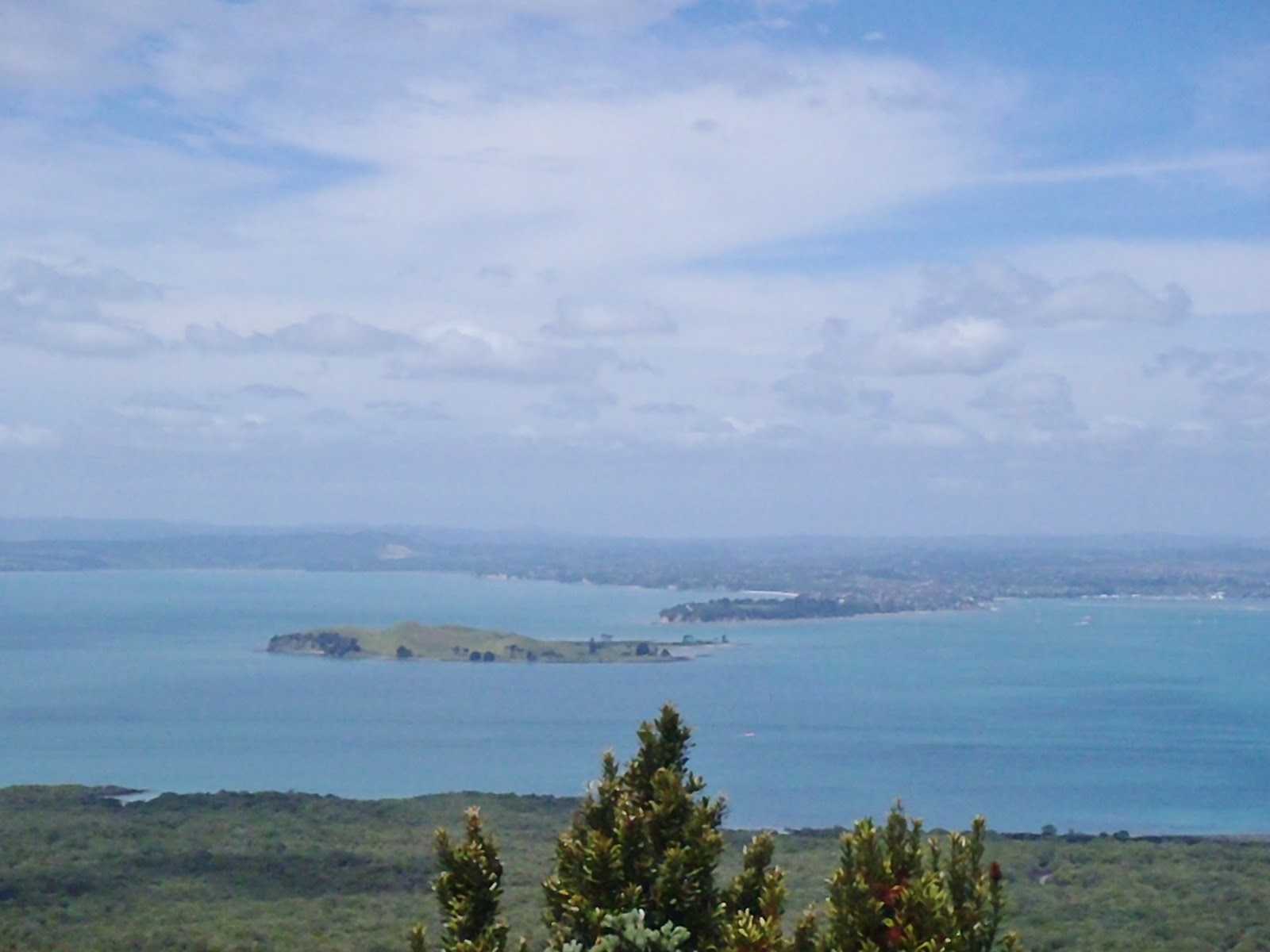
One of the first things I wanted to do when we moved into our flat was to get over to Rangitoto. Every morning I look out at it and feel it beckoning. Well, it took almost a year and a half to get there, but I kayaked over this week!

Kayaking to Rangitoto

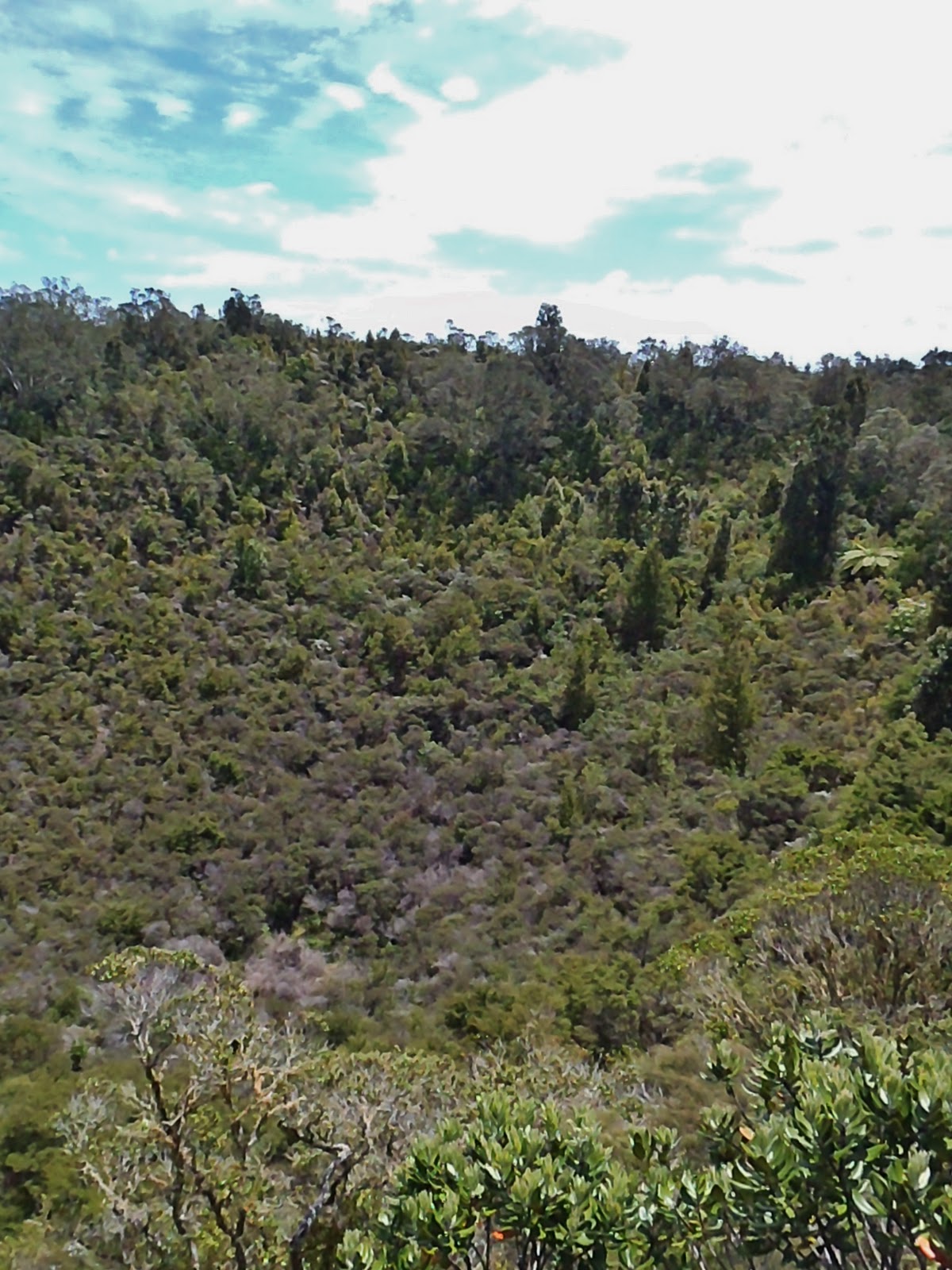
The trip over was great, the 6 km. didn’t seem like too much work. Then we hiked up to the summit and that was a nice walk after being in a kayak for about an hour and a half. There is a lot of lava rock and very little soil there and it is very dry. I took a few photos and enjoyed the hike.

Kayaking to Rangitoto

However, I was involved in another helicopter med-evac. One of our party developed breathing problems that continued to fluctuate over time and I talked with the tour guide, a great guy, about that it was safest to not have her kayak back and to get med-evac’ed off the island. This is the second time I have been off on a holiday trip to an island and gotten involved in a med-evac. I am starting to think I either need to do some wilderness medicine course or stop going out to the islands!

Kayaking to Rangitoto

The trip back was really choppy and I was greatful for the skirts we had to cover the opening of the kayak, otherwise, we would have had a lot of water on board!  I also had to swap out mid-way with another kayaker.  Our guide was concerned that two of our party (we were in tandem kayaks with two people per boat) were falling behind in the wind and waves and he wanted to put a stronger paddler in that boat.  He had mentioned we might do this if necessary before setting off, but I couldn’t really imagine how you would swap paddlers in the middle of the water – but here is what we did, we formed a raft of several kayaks with people holding on to the one next to them.  This stabilised the kayaks.  Then one person (me) climbed out of my seat and sat further back on the kayak.  Then the other person climbed over and into my seat, and then I switched over to her seat.  It all went smoothly, but as I was going across, a little more space opened up between the kayaks than I would have really wanted and I was closer to “sitting” in the water than I wanted to be.  The paddle back was gruelling and I felt hung-over the next day from the exertion.  We got a late start and the wind and waves were pretty strong.

Kayaking to Rangitoto

So, I made it to Rangitoto, the crater was smaller than I thought it would be. I got to kayak. I do have to say that I was a little less enthusiastic about running out and buying a kayak after that paddle, though….but we’ll see…

My on-line video debut

My employer got together a few American psychiatrists to shoot a promotional video. The results can be found at the link:

ADHB American Psychiatrists Testimonials

I seemed a lot less wooden and stilted when we were doing the video! It was fun to do, though, and a good chance to reflect on some of the positive aspects of working in New Zealand.

After the Health of Health Professionals Conference

I had a great time at the conference and it was really energizing. I met many inspiring people from all over the world. There are a substantial number of people doing great work to support clinicians and to bring compassion back into healthcare, and they are doing it at the individual, research, and administrative levels.

Of note, Robin Youngson gave a great presentation.

Tony Fernando gave a presentation on positive psychology that had a lot of practical information about how to be more compassionate in clinical work.

Jane Lemaire, from University of Calgary presented a series of studies that her group have done on physician well-being, one of the most interesting was on the positive cognitive and relational effects of simply feeding doctors (something that often takes back seat in a busy clinical day).

Marsha Snyder gave a great presentation on the issues involved in working with patients who are doctors.

You can still see the conference programme on-line if you want get an idea of what the conference was about. I thought I understood that the conference organizers would be putting up some additional information following the conference, although that was up at the time I posted this.

View more presentations from the conference.

The next conference will be in 2013 in Queensland Australia.

The Health of Health Professionals Conference

I will be presenting at the Health of Health Professionals Conference in Auckland, on November 3rd. The topic is: “What is Good for the Patient is Good for the Doctor.”

This presentation will examine clinician burnout, Gary Schwartz’ book, The Way We Are Working Isn’t Working, recovery principles from the recovery movement, and Parker Palmer’s concept of the “new professional.”

The focus of the presentation is on the concept that the care that a clinician provides for a client is partly dependent upon the practice environment that the organization creates for the clinician to practice within. As above, so below.

Australia!

AUSTRALIA!
AUSTRALIA!

About two weeks ago, I went to Australia for the first time. The trip was for the World Congress for Psychotherapy. I was in Sydney the whole time and I really enjoyed seeing another major city in this region. It was a 3.5 hour flight from Auckland and is the closest city larger than Auckland. Sydney has a population of about 4.5 million (which is around the population for the whole country of New Zealand) and it is in the Australian state of New South Wales. The whole population of Australia is around 22.5 million (roughly equal to the populations of the four US states of Illinois, Wisconsin, Iowa, and Nebraska).

AUSTRALIA!

It is hard to draw too many conclusions from one week in the largest city of a country. Sydney was very ethnically diverse. It definitely had a larger city feel than Auckland as well as having a different culture. Again, these are just first impressions, but Sydney felt more relaxed (in the sense of not seeming to have as many social rules about colour and loudness of voice), people were louder and more open, but not as friendly. Businesses were more business-like, but with the down-side of being less friendly, more rushed. The food was good, but the quality of the food didn’t seem as spectacular as in New Zealand. 
AUSTRALIA!
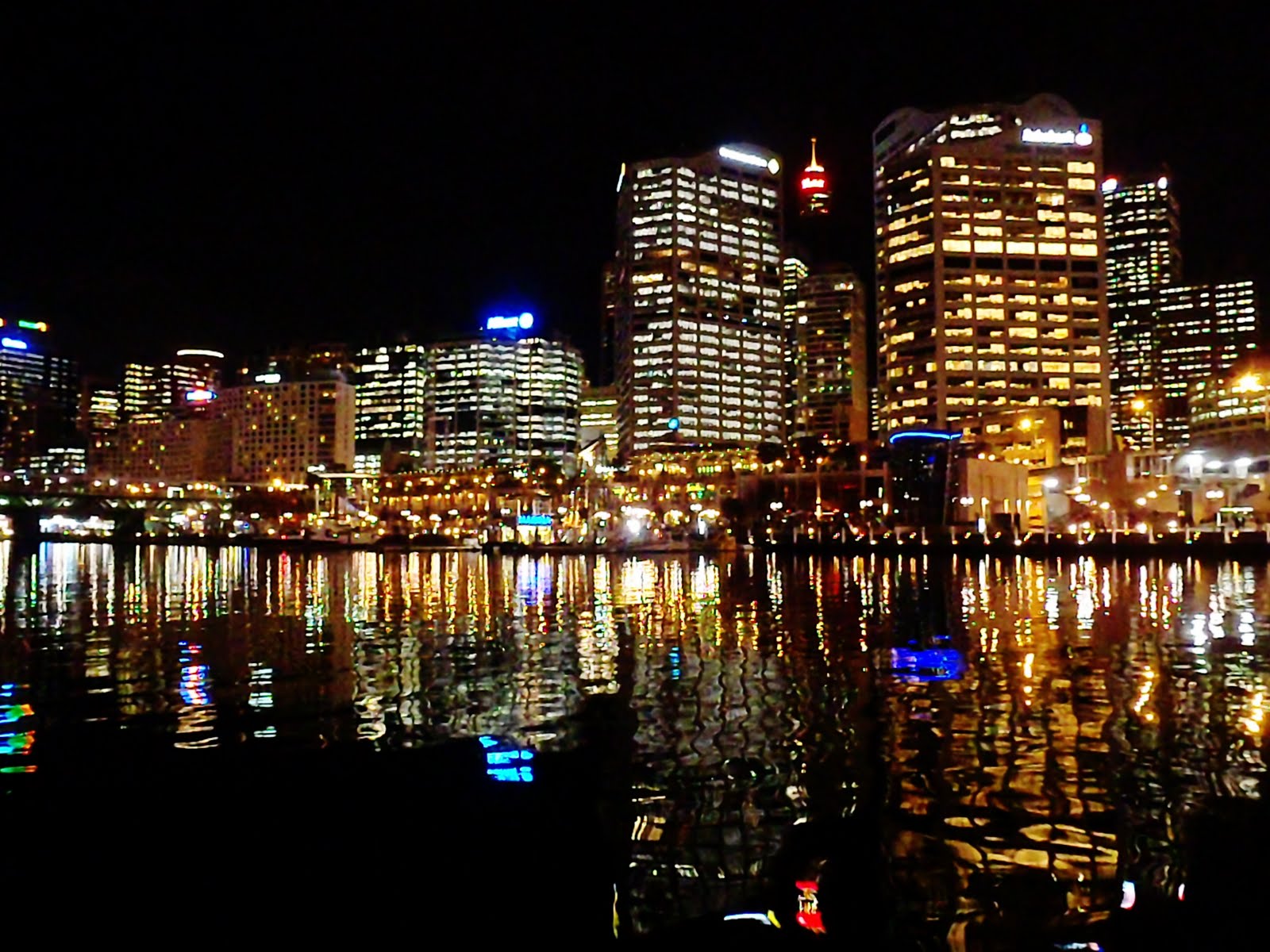
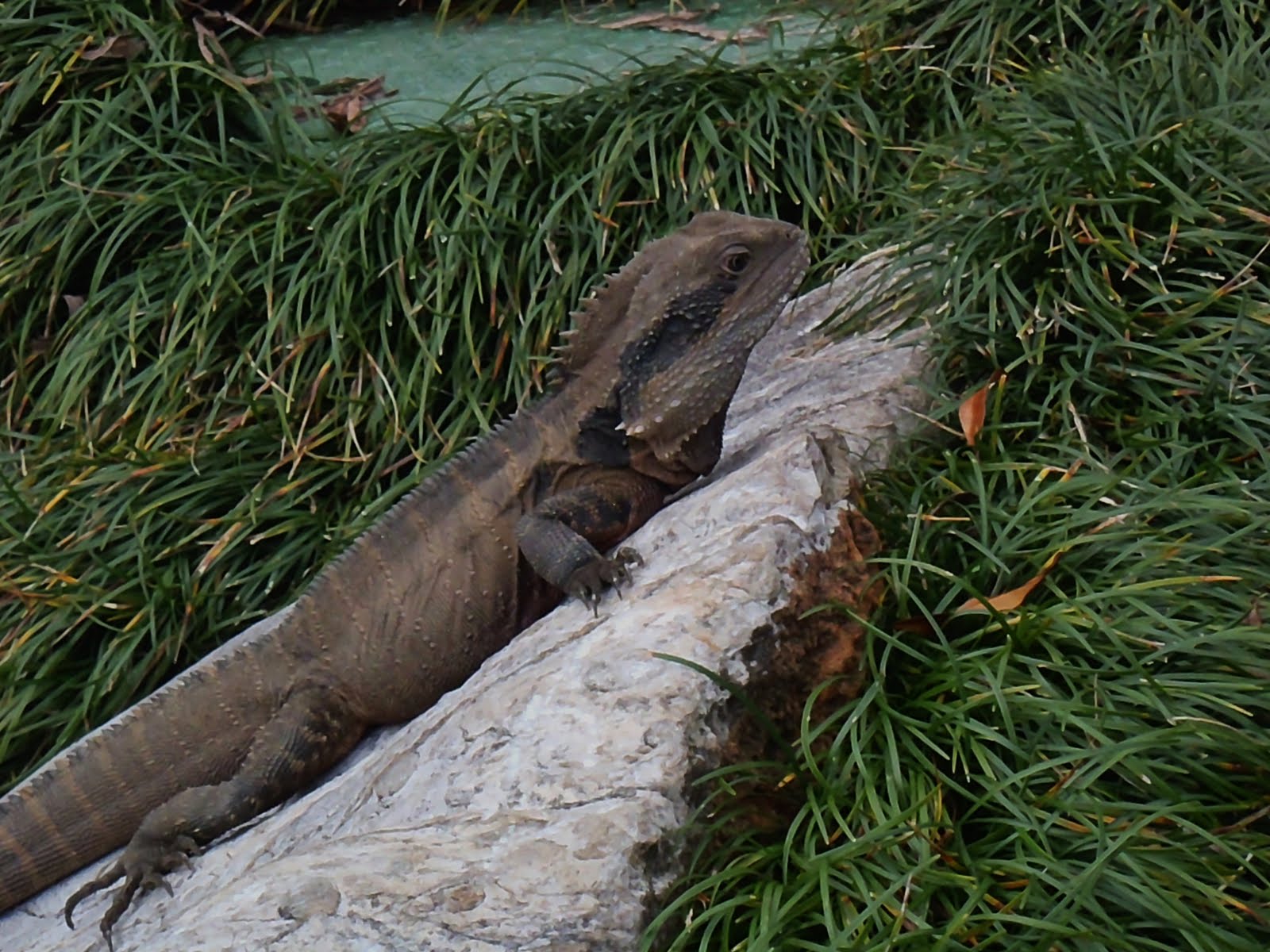
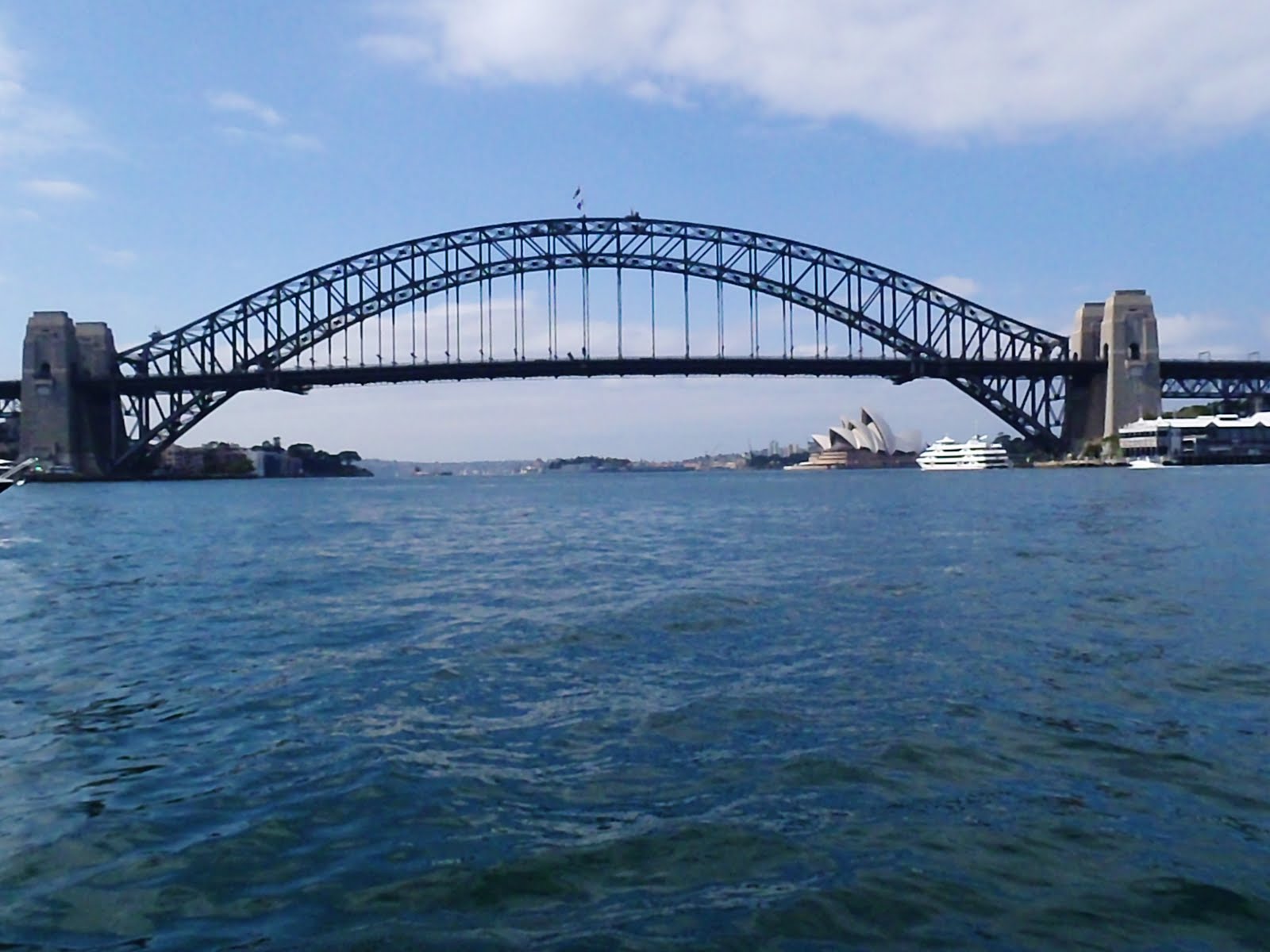
I went to the Chinese Friendship Garden and walked around Darling Harbour, where the convention centre was located. Mary Pat and I took a water taxi (which was a great idea) from Darling Harbour to the Opera House and walked around in the Botanical Gardens, which had a huge number of Flying Foxes in the trees. It was definitely a great trip and we’ll go back for a little longer look at some point.
AUSTRALIA!
AUSTRALIA!
The conference was wonderful and had daily themes on indigenous culture, spirituality, and also ethics & philosophy. I met some great people and learned and experienced a lot. The overall theme of the conference was World Dreaming, based on the Australian Aboriginal practice of studying dreams and Dream Time. I did have a lot of dreams at the conference and made it to two of the morning dream sharing sessions that were really interesting group processes stemming from the dreams that people brought in. One of my favourite lectures was by Helen Milroy who presented on Aboriginal experience from pre-colonial era, through colonization and genocide, and then a kind of trauma and healing model. What was really amazing is that she had paintings she had made that illustrated each step along the presentation and the paintings seemed to embody the complexity of the step in a non-verbal way, plus they were amazing paintings! Here is a link to a newsletter I found that has an image of one of her paintings: 
AUSTRALIA!
AUSTRALIA!

The Great American Dissatisfaction/Dream

On returning from a trip back to the US, I have several observations about the country and myself. I was struck by the sheer material abundance of the place and the feeling of dissatisfaction and lack in the people and myself. The solutions for this problem of dissatisfaction are generally material. Yet these material solutions do not fulfill the need or satisfy the dissatisfaction.

What is the American dream? Maybe that gives a clue to the dissatisfaction. It seems that that dream is of acquisition and/or improvement. The desire to “make things better” seems to be very American, and yet I am beginning to wonder if the impulse to make things better comes from an inability or difficulty in accepting what is. One often hears of “American ingenuity” as a source of innovation. At what point does change become a trap rather than an ongoing adaptation to the environment? I used to be perfectly happy with a razor that had two blades, but then it became harder to get refills for it, so I moved up to the new triple blade, and then it became more difficult to get refills for that, so I tried the quadruple blade, it seemed absurd, but I could no longer find refills for the triple blade. Now I just bought a quintuple blade razor and I feel manipulated by the razor blade companies.

It is instructive to look at the dissatisfaction as the flip side of the dream. This is one principle I feel that I have gained from living abroad for a year, that every culture creates itself according to its values and that the drawbacks or blind-spots of a culture are the shadow of its strengths. In this way it is not so unusual to examine strengths and weaknesses in relation to each other. The United States values efficiency, innovation, and the pursuit of happiness. These facets have made the US a very productive, powerful, and creative force in the world, but is there a point where these strengths are over-developed and we have an impersonal society in which people are processed in a quick and efficient manner (I am writing this after having just got through the check-in and security at O’Hare airport where I had to take off anything metal, take everything out of my pockets and go through a “backscatter x-ray” machine for my “safety”). We have bewildering choices for everything from razors, to toothpaste, to blue jeans, and yet are we, as a people, happy or fulfilled?

The dream is for more; the dissatisfaction is that what we have is never enough and that things could always be “better.” On my last day in the US, Borders bookstore was closing. It was very sad to step inside and see the giant signs, “EVERYTHING 40% OFF,” the long lines, and the sense of good deals to be had. We left almost immediately. To me, this felt like the end of an era. While it is true that Borders was a business and it was about acquisition, it was also a place that created a social place that people could meet, that you could check out new books and ideas. Borders wasn’t my favorite place to go for coffee, community, and new ideas, but when I lived in Champaign, I did go there fairly regularly, maybe every few weeks. It was a place to go before or after a movie to talk and browse, or a place to go and read a book, but to also be in a public space that contained the possibility for socialization if I ran into a friend.

The space shuttle also landed for the last time on my last day in the US. This also seems like an end of an era of creativity, dreams, exploration, and innovation. This collective work led to many new scientific discoveries and a common purpose and focus for the country and the world. As the movie, “In The Shadow of the Moon,” showed, it also led to a change in the way that we, as human beings, see and experience the Earth. It was a chance to have an awareness that we are all part of something larger than ourselves and that what happens to one person has the potential to affect everyone.

In the development of ideas, there is often a point where the fullness of the idea is reached and nothing much new is discovered or created (although there can be endless variations on this, like the many new psychiatric medications that are not significantly different than the medications already in use). The idea becomes sterile, the work technical and tedious, and the benefits and results more meager and less gratifying. It seems possible that the United States is at that point. Are we using our creativity, our ingenuity, and our ability to design efficient systems in such a way that the pursuit of our dreams only leads to dissatisfaction? If that is the case, the more energy we put into the pursuit of our dreams, the more unfulfilled and dissatisfied we become. We buy food that does not nourish or gratify, but it is efficiently made, conveniently packaged, and it looks good. We buy bigger and bigger TVs and home theater systems, to give us a more convenient and efficient way to watch movies in isolation from other people. We can download anything we can imagine, and yet our imaginations are unfulfilled.

I have had a couple of recent conversations with people about the Buddhist concept of “the hungry ghost.” What I can remember about these creatures is that they have tiny throats and insatiable appetites; they eat and eat, but are never satisfied or fulfilled. The restless consumption of US society does seem reminiscent of these creatures who only dream of consumption, yet they are never nourished.

Much of the efficiency of American culture seems to neglect nurturance, which is an aspect of fulfillment. For all their conspicuous consumption and discharge of the acquisitive drive, there is an emptiness, dissatisfaction, and persistent hunger in American society. Coming from abroad, the US seems filled with busy people, impatient, in a hurry, irritable, restless, self-absorbed and a little bit like locusts consuming mass quantities of goods and food in a way that is not only not fulfilling, but is also not sustainable.

New Zealand: One year on

It is hard to believe that it has been one year since we moved to New Zealand! So many ups and downs and sideways…  

We arrived back in the US for our first visit back to the Midwest, so we were actually in the US on our one year anniversary of our arrival in New Zealand. It seems fitting that I reflect on the last year at this point.
New Zealand: One year on

The predominant feeling I have about the move is one of gratitude and happiness for having made the leap. It has been an incredibly exciting year, as well as being very challenging, and a year of intense growth and reflection. My life feels so amazingly and irrevocably different from the experience of moving to another country and working there. Even my first job, which in the end, wasn’t the best fit for me, was an incredible learning experience that taught me a lot about the culture and about the public health care system in New Zealand, plus I met a lot of great people. My current job at a psychiatric rehabilitation centre is one of the best jobs I have had in my career and is a place that I can see continuing opportunities for growth.
I feel like I should be able to provide some general statements about my year in New Zealand. I would say that I have a greater appreciation of any culture (US, NZ, and in general) has both strengths and weaknesses. Every culture has different inherent values and once those are understood, the culture makes more sense. US culture values efficiency and consumption, thus banking, shopping, commuting, and work systems run very well, yet the downside is that they can be cold, callous, and impersonal. NZ culture seems to value connection and quality of life, thus relationships, even casual ones, can be more open, nurturing, and personal, however, organizational systems can be disorganized, “unnecessarily” complicated, and inefficient. These are broad generalizations. I can’t say that I have an in-depth understanding of NZ culture(s), but I can say that this appreciation of cultural differences in reference to an organizing value or principle seems true.

I do feel that what I wanted to get out of a move abroad, I have gotten and more so. The process has been uncomfortable and painful at times, but it has also been exciting and rewarding. I feel that I have broadened my view and experience of myself, my practice, and the world, and this is incredibly gratifying. A good decision is one that seems to make more sense as time goes on, and as you live it, and this is how it has been for this move. I do feel that the particular cultural adaptations that New Zealand requires are good challenges for me personally. As my wife and I talk about the future, we really aren’t sure that we know what we will do in 2 years’ time (which is our point of decision for whether we stay in NZ longer, go back to the US, or look at other options), but we both feel that we are where we need to be right now.

Some new artwork

DSCN0212

DSCN0219

DSCN0214

DSCN0222 - Copy

DSCN0227

DSCN0231 - Copy

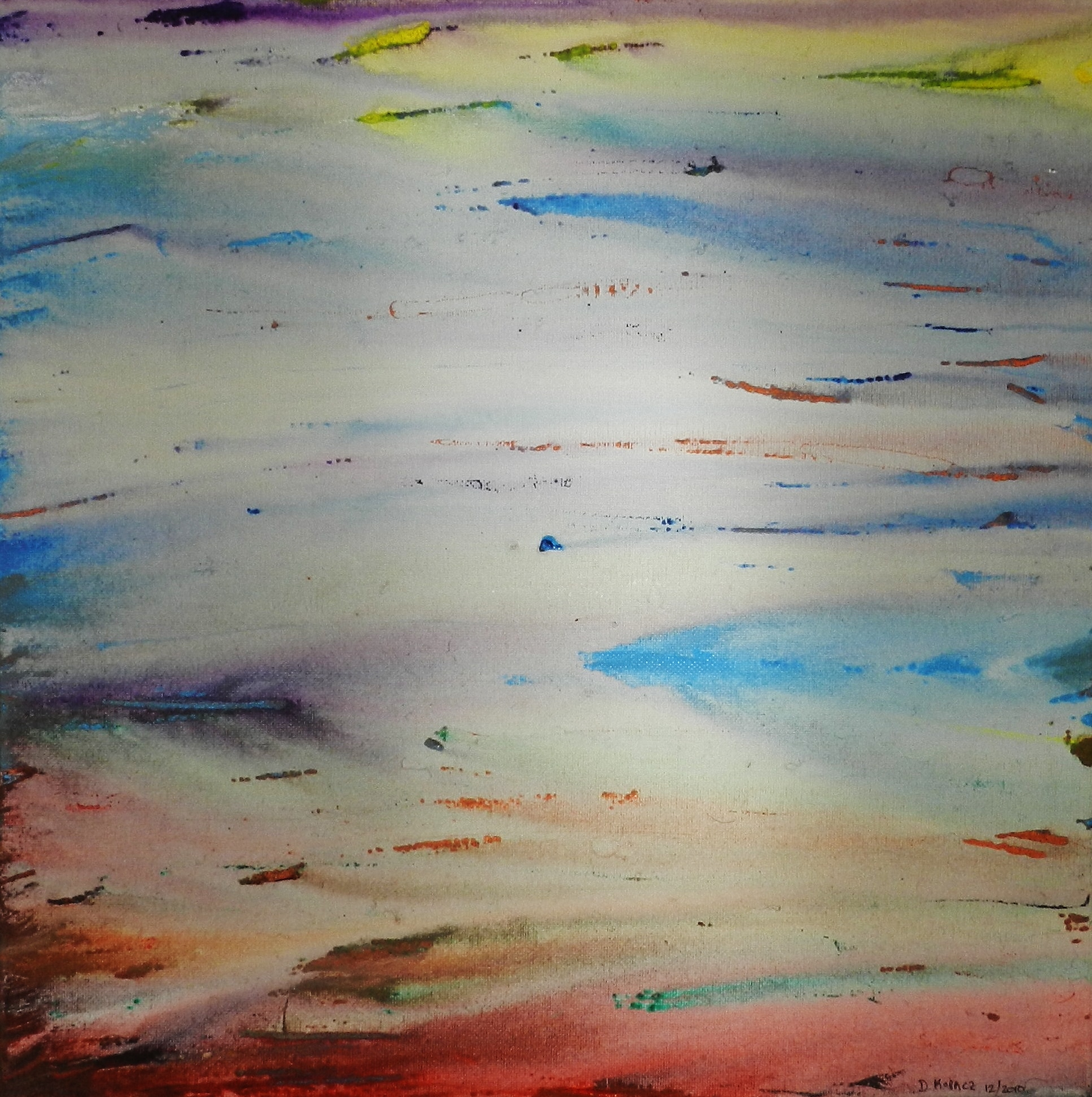
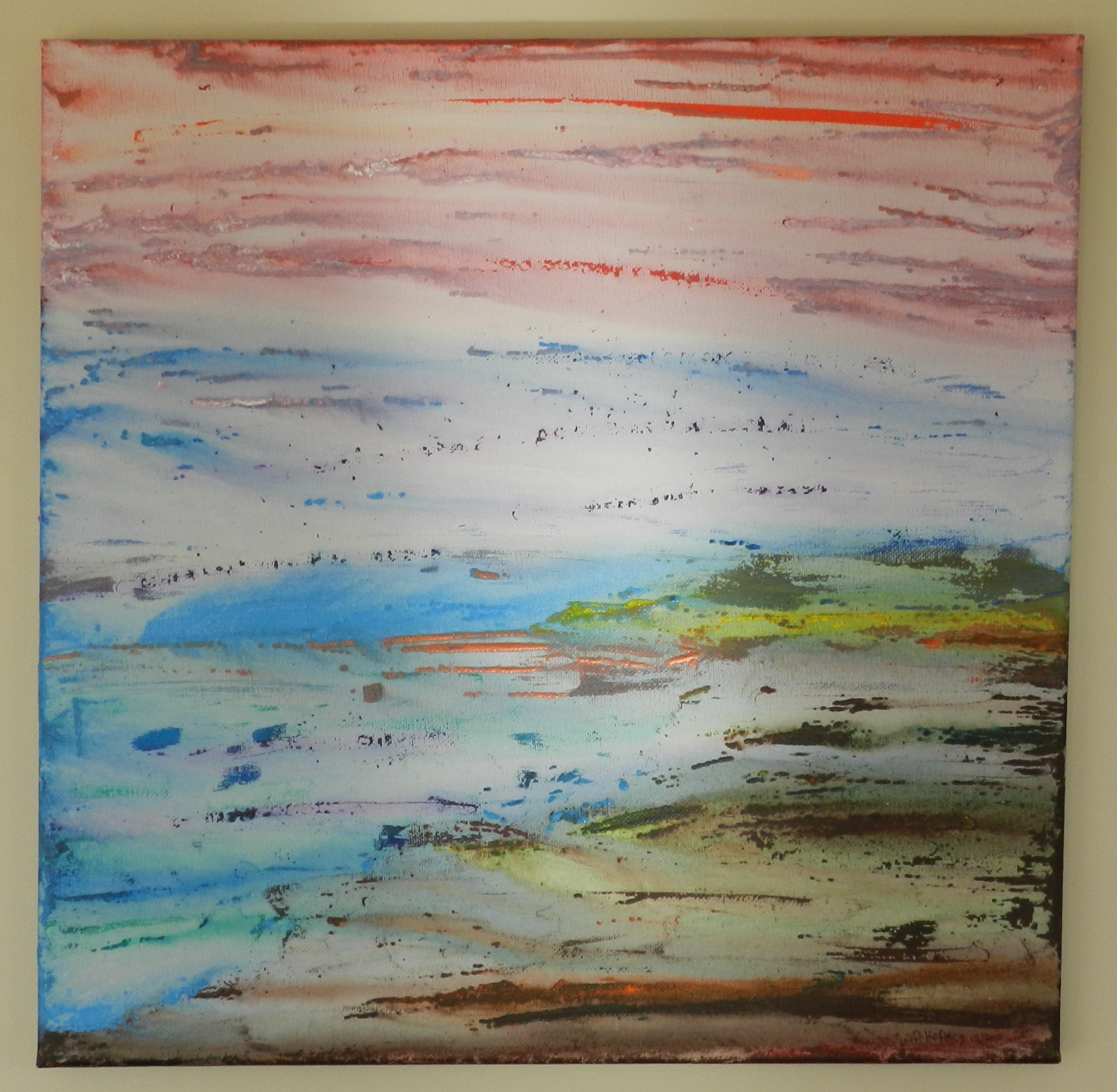
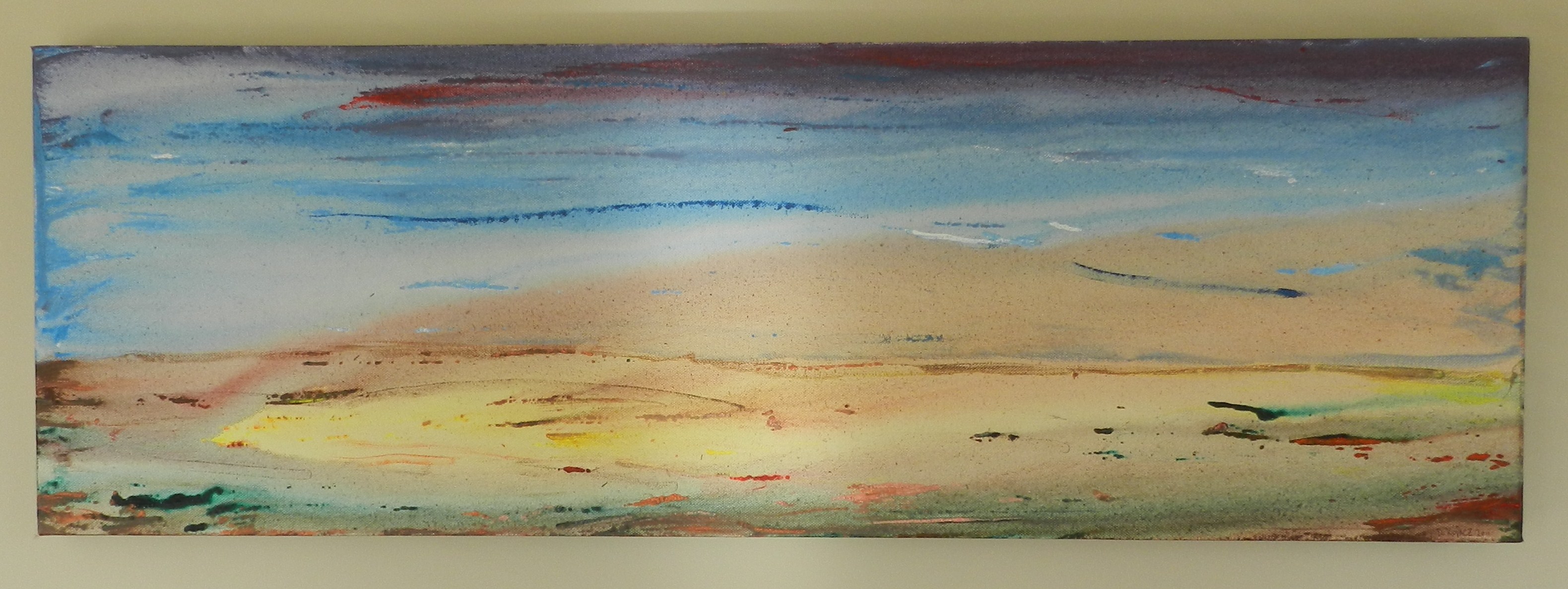
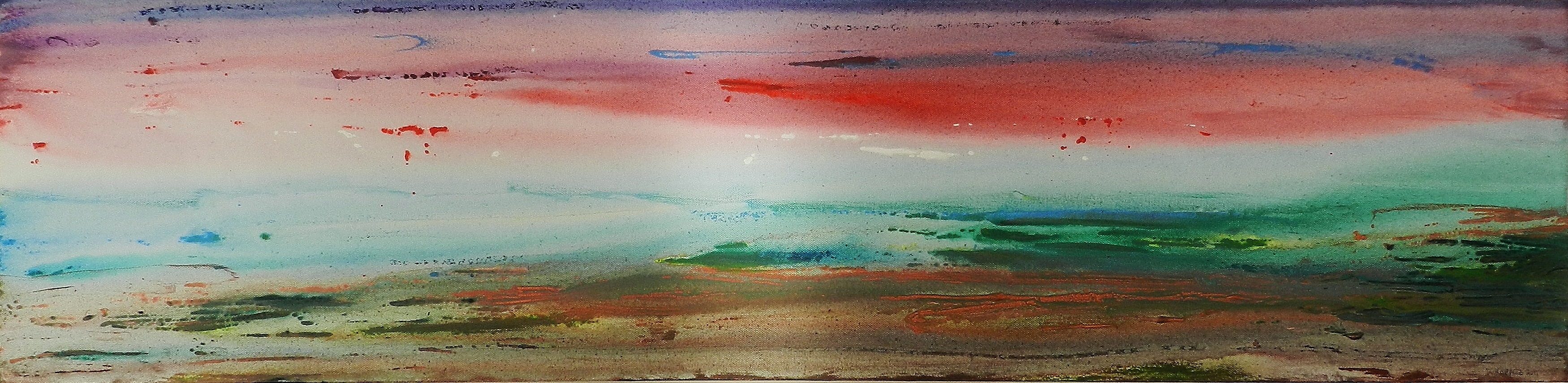
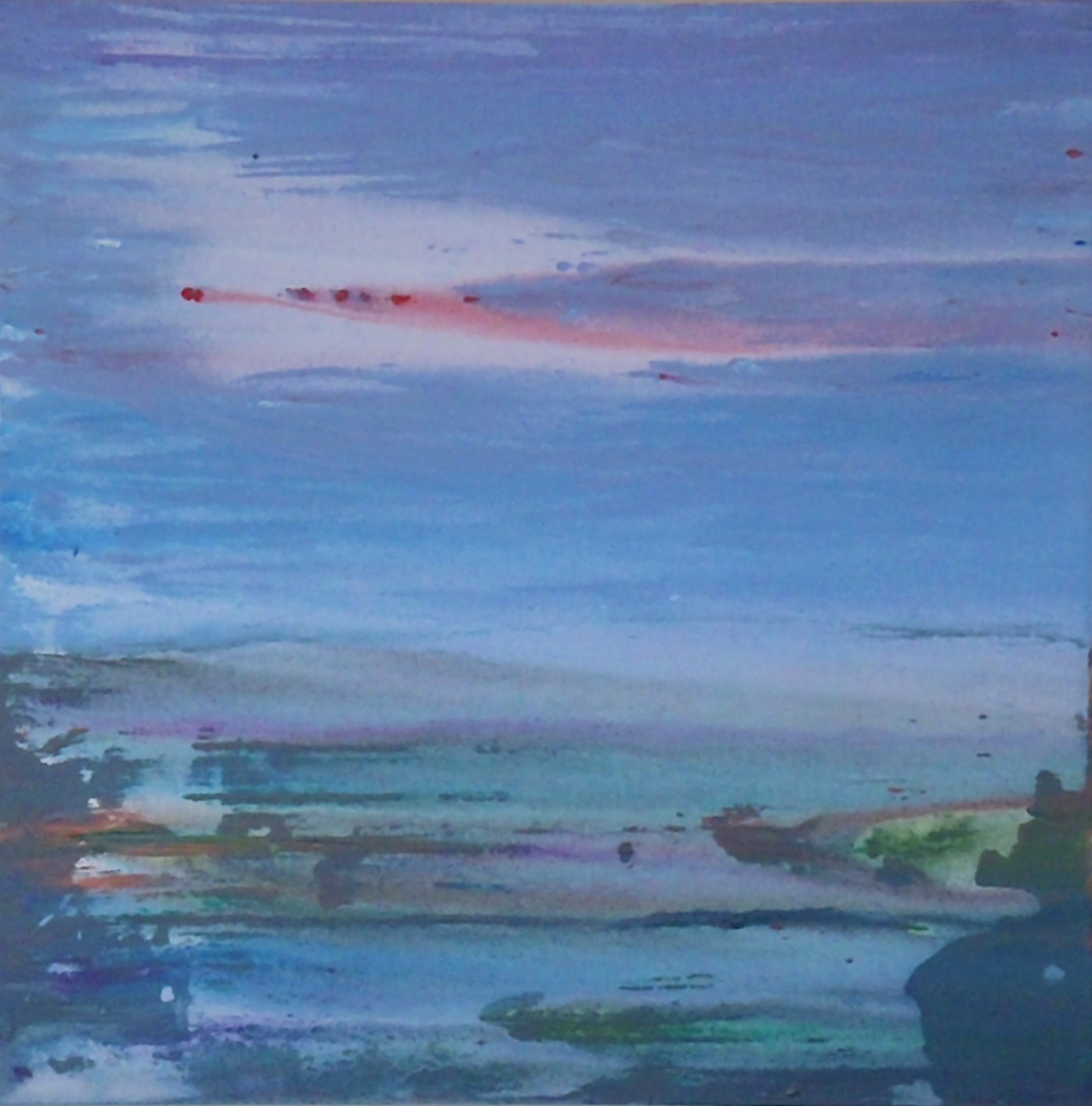
I just put up some new artwork (for more paintings, see my Website) that I have been doing since I’ve come to New Zealand. The style is different, partly due to have a different physical set up (and having to control the amount of paint splatter) and also these paintings seem to have picked up some of the aesthetic of New Zealand. The “abstract landscapes” are made by brushing in colours into the canvas and then turning the canvas on its side and using different intensities of water from a spray bottle to wash away the thickness of the paint. When the canvas is rotated back 90 degrees, they resemble landscapes. I do try to choose the colours to reflect Earth, Sea, and Sky, but the random element is how they combine as I spray the water on them.

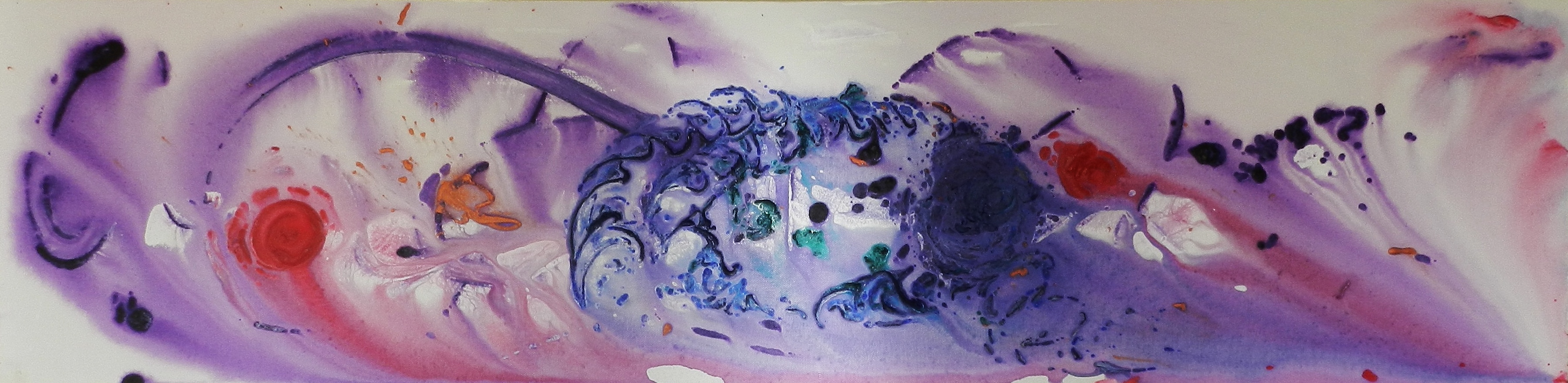
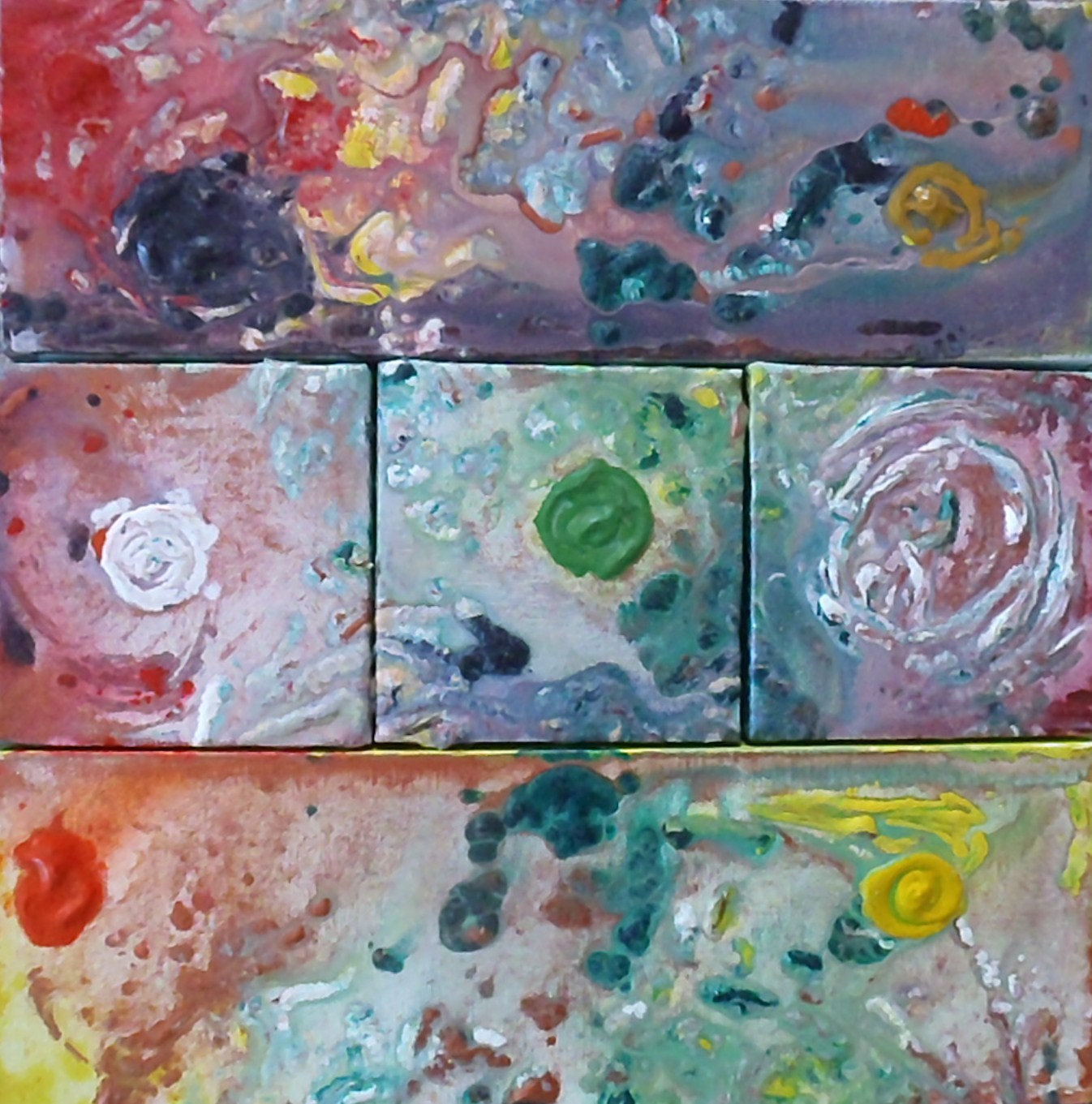
The long, purple painting reminds me of some of the Maori “totem pole” sculptures. I am not sure what they are called, but they remind me of Native American totem poles, in that they have various figures and faces on them. It was made with a similar technique, but not as covered with paint and with less water sprayed on to maintain some of the original paint pattern.

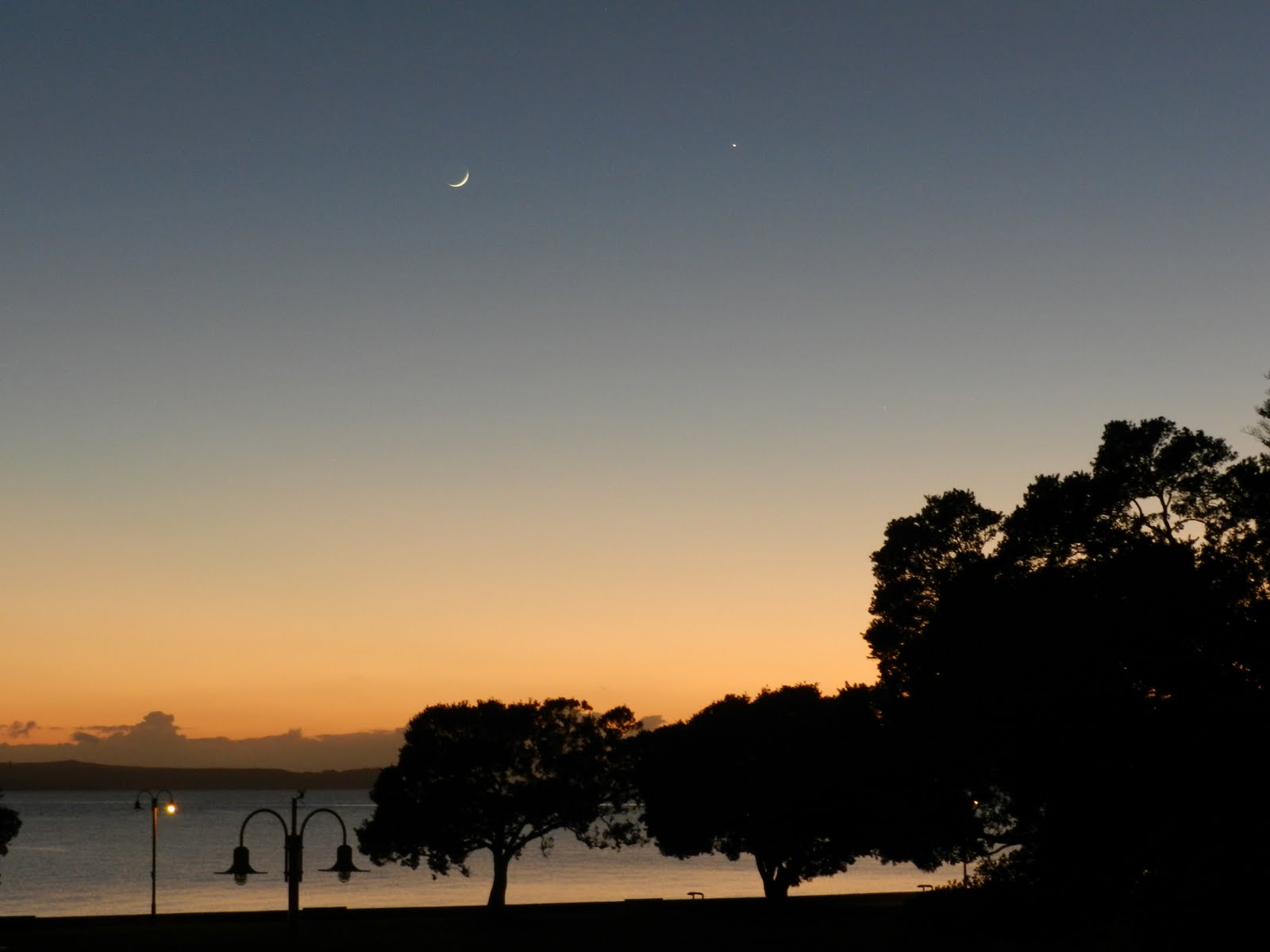
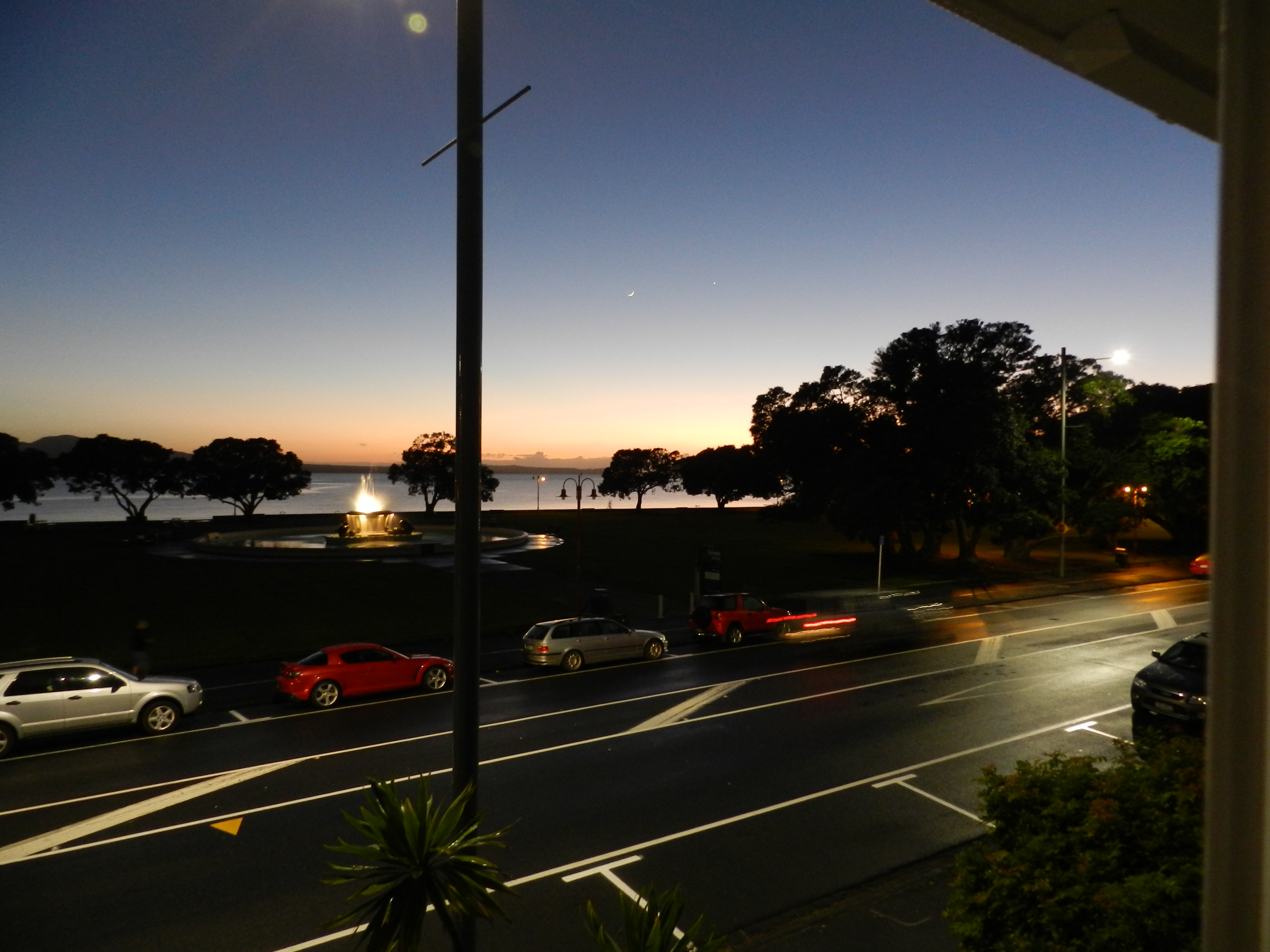
Photograph of sunrise with moon, you can see how this landscape inspires the paintings.

Photograph of sunrise with moon, you can see how this landscape inspires the paintings.

Overall I have been happy with my painting in New Zealand and it is always fun to watch as patterns and techniques evolve!

Some artwork from the first 5 months in New Zealand

Some artwork from the first 5 months in New Zealand

DSCN0206

A Corrective Emotional Experience

I took a recent trip to Hawaii for the American Psychiatric Conference. I hadn’t been to that particular conference in awhile, but I was really glad I went to this one. I met up with some old friends, caught up, and had a generally great time. It was also the first time I had been back in the US since moving to NZ. Hawaii was actually a good entry point back into the US, since it also has somewhat of a Polynesian culture blended with typical US culture and that made the transition from NZ, which also is influenced by Maori and Polynesian culture, back to the States smoother.

A CORRECTIVE EMOTIONAL EXPERIENCE

A CORRECTIVE EMOTIONAL EXPERIENCE

I met up with a friend who I told about my experience of “swimming with the dolphins” in NZ. I had anticipated doing this even before we arrived in NZ, but the experience here wasn’t all mystical communing with nature, but more akin to struggling to keep afloat in cold, choppy water while the crew of the boat alternatively yelled, “swim, swim,” of “dive, dive,” or “come back, come back.” The experience started by being told the water wasn’t that cold, so we didn’t need wetsuits. We then strapped on this strange snorkel gear that I had never worn before. Then we jumped into a big net in the water and the boat took off, plastering my flippers against the net as if I was some strange bug smashed on a windscreen. Then came the yelling and the swimming and the swallowing salt water and trying to figure out how to work the snorkel gear. I never even saw a dolphin while I was in the water, although an English couple I had been talking to earlier, told me that there was a dolphin right by me several times. I joked it probably sensed I was in distress and was trying to figure out if it should rescue me!

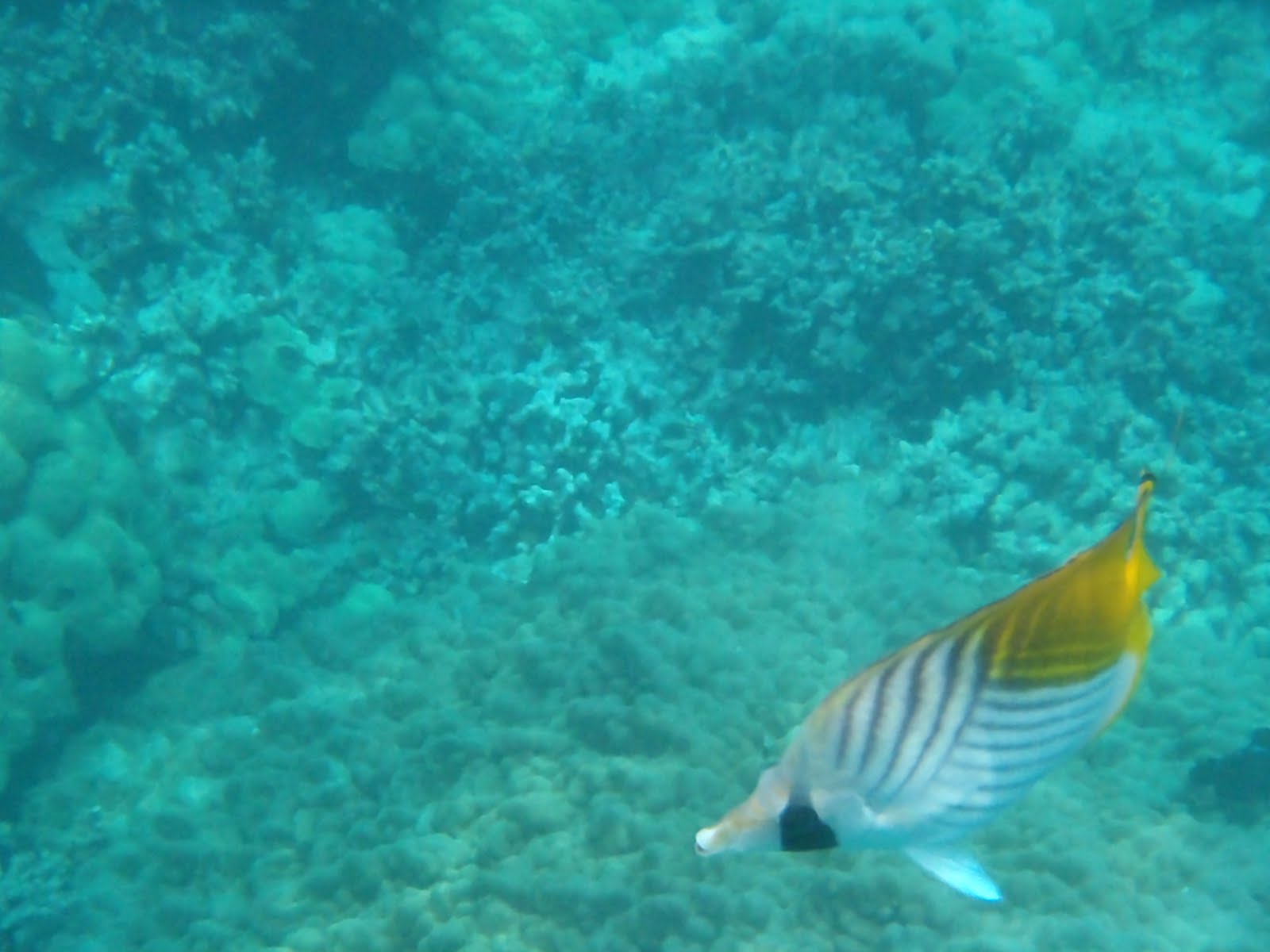
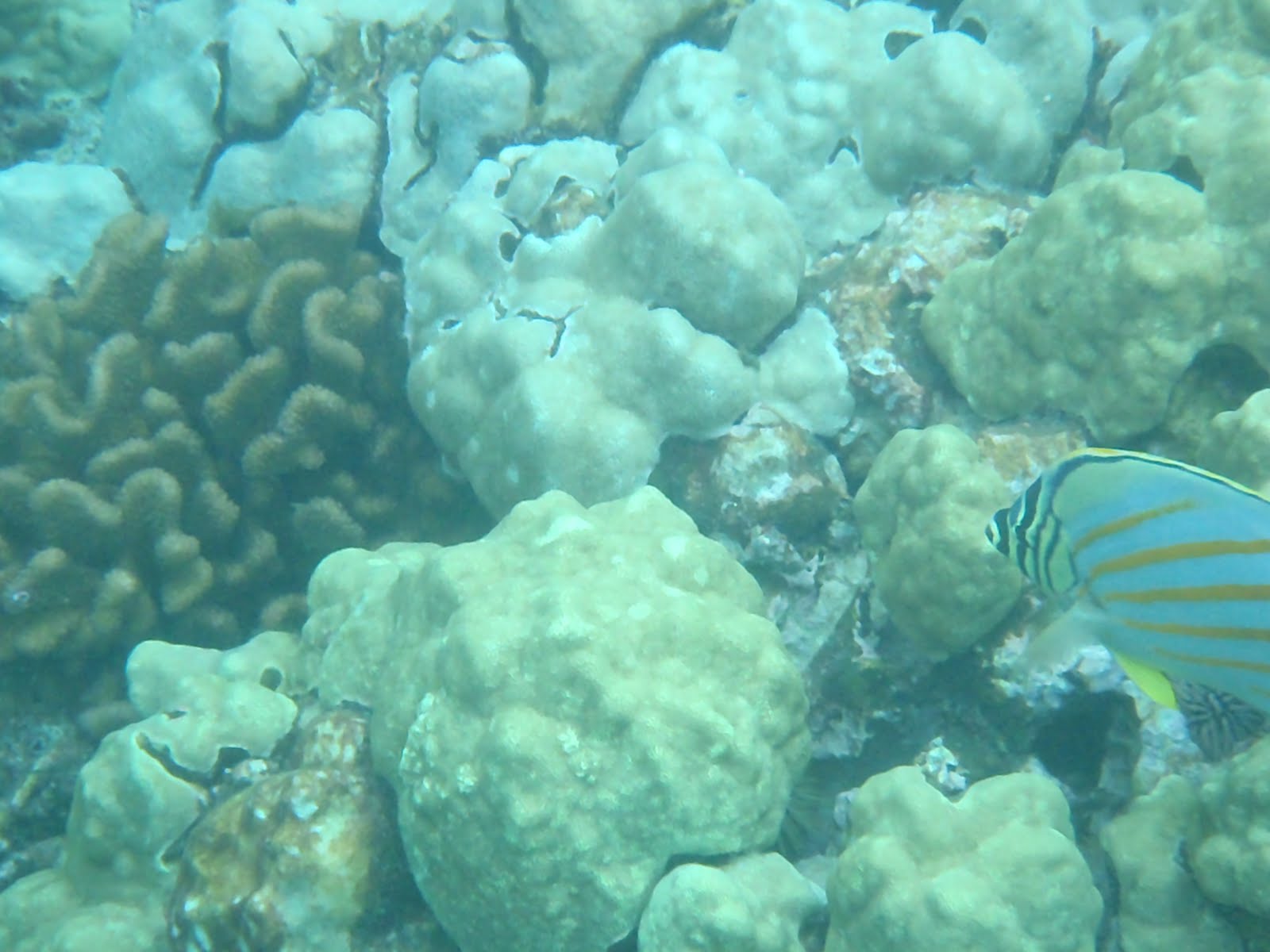
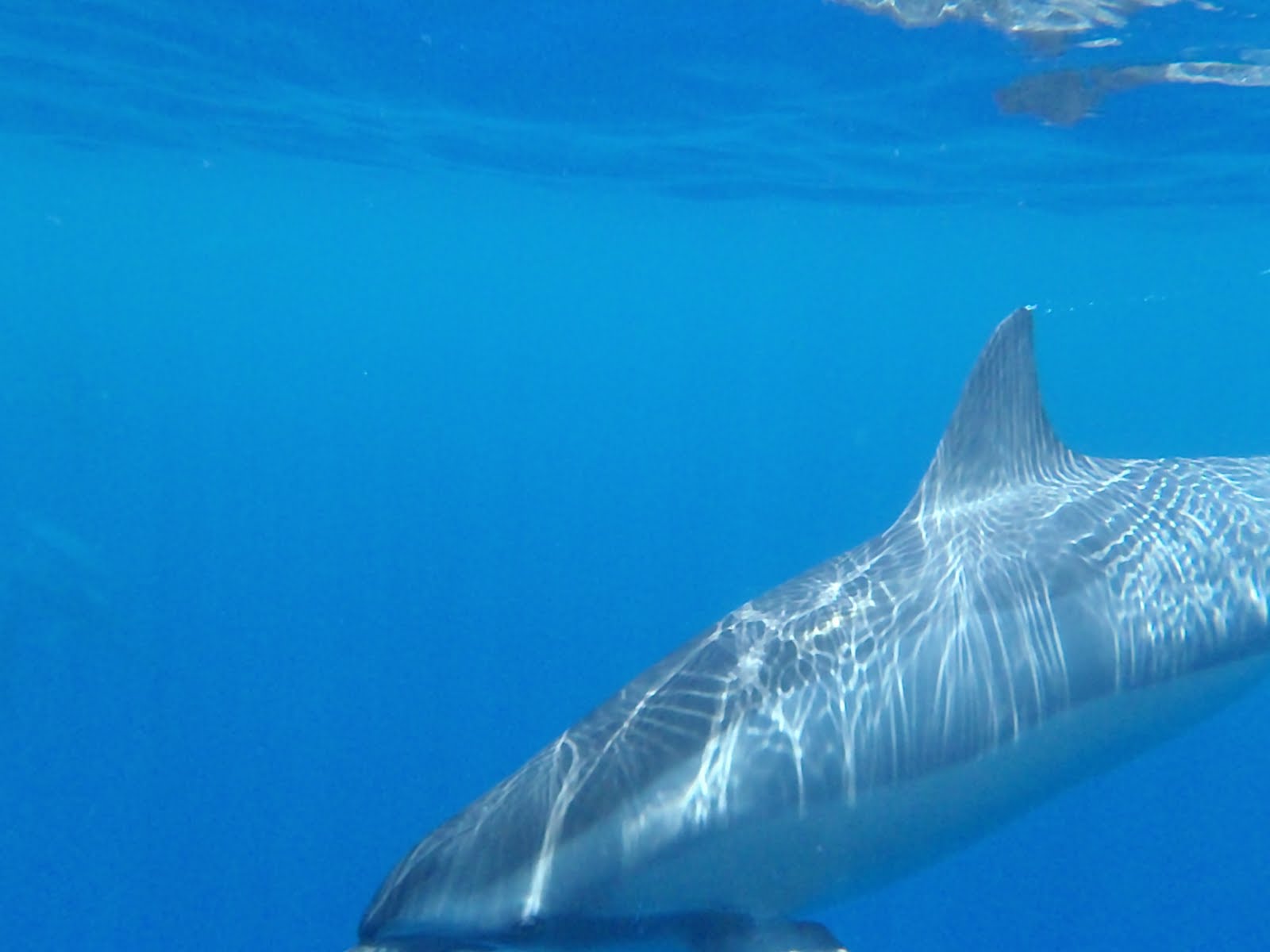
So, 6 months or so later, I went to Hawaii. My friend there said that I definintely needed to have a “corrective emotional experience” with the dolphins and said that she routinely swims with dolphins in several bays not far from her home. So, on a bright, sunny day, with smooth clear water, and a chance to figure out how to work the snorkel gear without some yelling, “swim, die, come back,” at me, I did have a corrective emotional experience. Plus, I got to try out my underwater camera that I had bought in the States, anticipating that I would be spending a lot of time underwater.

A CORRECTIVE EMOTIONAL EXPERIENCE

A CORRECTIVE EMOTIONAL EXPERIENCE

A CORRECTIVE EMOTIONAL EXPERIENCE

A CORRECTIVE EMOTIONAL EXPERIENCE

We went swimming in two different bays and saw dolphins in both of them. The second bay, a dolphin came right up and looked at me, my friend said as if it was posing for a picture. Well, I didn’t quite get the picture (as you’ll see), but the image of the dolphin coming right up to me and looking at me was really something else and tell you what, seeing all the beautiful fish while snorkelling was a bonus! Hope you enjoy the photos….Oh, and I got a new camera with a higher power zoom, so I won’t have to say, “see that thing that looks like a tall rock in the rocks?  That is a penguin.” I’ll post those photos soon, once I upload them, but no penguin photos yet, maybe next time we’re out on a cruise in the gulf….

A CORRECTIVE EMOTIONAL EXPERIENCE

A CORRECTIVE EMOTIONAL EXPERIENCE