“If we go back to Greek mythology, we will be able to see the creativity of chaos and then be able to reintegrate it into our lives. Chaos was here before anything else, a kind of floating and undifferentiated magma filled with suspended energy. . . .
By perceiving chaos as energy, we reduce both the fear we have of chaotic states and our desire to suppress our strategies to avoid them.
Periods of chaos are marvelously creative.
They are the end of a deceptively organised universe and bring the emergence of a new force. If we dare not to run away from chaos, and not to close our eyes, we will get the impression of floating amidst an ocean of a quivering energy. The body absorbs this energy, the spirit is nourished by it and goes through a phase of withdrawal and restful emptiness out of which the seeds of creativity germinate. It is the end of one order and the beginning of a revitalisation. . . .
Accepting chaos, floating on it as on a benevolent ocean, is a joyous state from which fear has been vanquished. By ceasing our desire to control everything we will feel stimulated, encouraged to desire things to emerge. Control emerges out of the fear of feeling fully alive. There is no authentic joy without encountering chaos.”
How can we transform suffering, fragmentation, and painful inner & outer separation? This is the central question that Joseph Rael (Beautiful Painted Arrow) and I address in our new book, Becoming Medicine: Pathways of Initiation into a Living Spirituality. Suffering is the flip side of initiation and enlightenment. If you are seeking to become enlightened, the door that you often enter through is some form of suffering, separation, and fragmentation.
Initiation is the process of becoming more fully human. It is a common process in indigenous societies and in religious traditions. Anthropologists, such as Victor Turner studied initiation, as well as scholars of world religions, for instance, Mircea Eliade. Joseph Campbell popularized the process of initiation as the Hero’s Journey, comprising three primary stages of separation, initiation, and return. Campbell sought to find a way that we “modern” people, who lack religious and sociocultural ritual frameworks for initiation, could transform suffering into personal and spiritual growth. Psychologists and psychiatrists became interested in the concept, as it applies to the presenting common concerns of those seeking psychotherapy. Carl Jung saw the need for initiation and transformation, as he wrote about throughout his career in books such as Modern Man in Search of a Soul, Memories, Dreams, Reflections, and his posthumous journal, The Red Book.
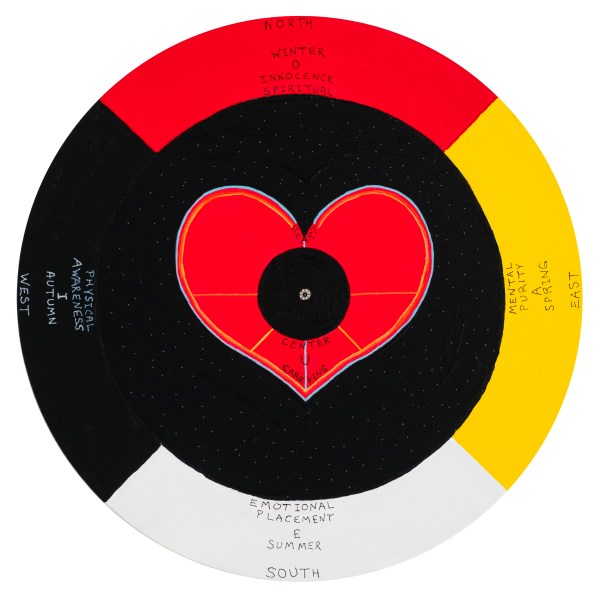
We live in a disorienting time and we seek to get our bearings again. In our first book together, Joseph Rael and I wrote about his practices of using the medicine wheel as a kind of compass for inner and outer orientation. When we find ourselves disoriented, we need some organizing framework to help us re-orient. The outer directions are North, South, East, and West. There are also the inner directions of spirit, emotion, mind, and body. Joseph also teaches that the center of the medicine wheel is the heart and embodies the principle of carrying. When we enter into the center of the medicine wheel, we realize that our hearts are medicine bags and they are filled with sacred objects. The initiation is the process of “finding the held-back place of goodness,” as Joseph called it in our book, Walking the Medicine Wheel: Healing Trauma & PTSD. Initiation is when we go into the center of the medicine wheel to find our medicine, which we come to realize is an ongoing process of becoming medicine – becoming the very thing that we so desperately need.
David Kopacz’s adaptation of Joseph Rael’s Medicine Wheel
We structure the book around the framework of initiation that Joseph Campbell, Victor Turner, Mircea Eliade, and others have described: separation, initiation, return. However, Joseph Rael comes from what he calls a verb language tradition – a language that is full of verbs like breathing, transforming, and becoming. It is a language of connecting, rather than how he describes noun language (English and German, for example) as languages that separate our living and interconnecting world into separate and discrete: people, places, and things. (The process of turning people into things is the topic of dehumanization that I explored in my first book, Re-humanizing Medicine: A Holistic Framework for Transforming Your Self, Your Practice, and the Culture of Medicine). Given Joseph’s predilection for verb language, we adapted separation, initiation, return into: seeking, finding/receiving, and giving. What one seeks with and within one’s heart, one eventually finds and receives, becoming healing medicine, and then as one is fulfilled with this, one overflows with fullness, giving to others what it was that we were seeking. In part III we examine how the personal medicine is also the universal medicine. The medicine that we become is the medicine that the world needs, and we find it through the journey of initiation into our hearts.
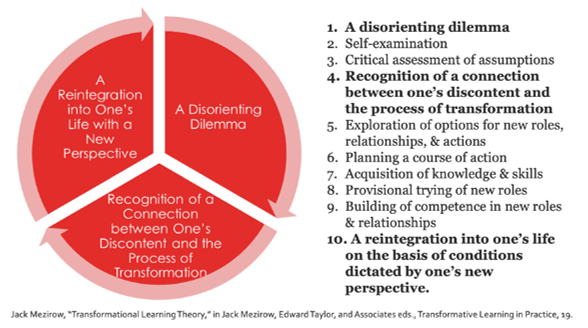
We live in a disorienting time and yet maybe instead of trying to go back to the way things were, we can go deeper into transformation, into the way things might be. The idea of initiation is consistent with Jack Mezirow’s model of transformative learning – that one enters into transformation through first becoming disoriented. And we have plenty of disorientation that we find ourselves in the midst of at this present time. Mezirow studied ten stages of transformation and we can break these down into three stages that parallel the stages of separation, initiation, and return. One way to understand transformation is that it is a change of who you are. This can be contrasted with simple change – where you remain the same, but you just change something you do. One can change without being transformed, but transformation is the ultimate change. Disorientation is the first step, according to Mezirow, for transformation. In that sense, maybe we are exactly where we need to be and things are exactly as they should be in order for us, as individuals and collectively, transform.
Adapted from Mezirow, Jack. “Transformational Learning Theory,” in Jack Mezirow, Edward Taylor, and Associates eds., Transformative Learning in Practice. San Francisco: Jossey-Bass, 2009.
Here is the table of contents of Part I of Becoming Medicine:
Part I: Separation (Seeking) 1 / Becoming Medicine 2 / Circle Medicine 3 / Separation 4 / Becoming a Visionary 5 / Becoming a Shaman 6 / Becoming a Mystic
After studying the various forms of separation/seeking, we look at how ancient and modern people have gone through the process of initiation of becoming visionaries, mystics, and shamans. We define visionaries, shamans, and mystics broadly, with the understanding that anyone can develop these human capacities. We examine my experiences learning from Joseph, as well as Joseph’s life experiences. We review a number of different spiritual teachers, musicians, and healers and their processes of initiation and becoming, including Carl Jung, Henry Corbin, Hildegard of Bingen, Miles Davis, Ben Lee, Evelyn Underhill, Dorothee Soelle, Juan Mascaró, Krishnamurti, and Matthew Fox.
In the next blog post, I will give a brief overview of Part II: Initiation (Finding/Receiving).
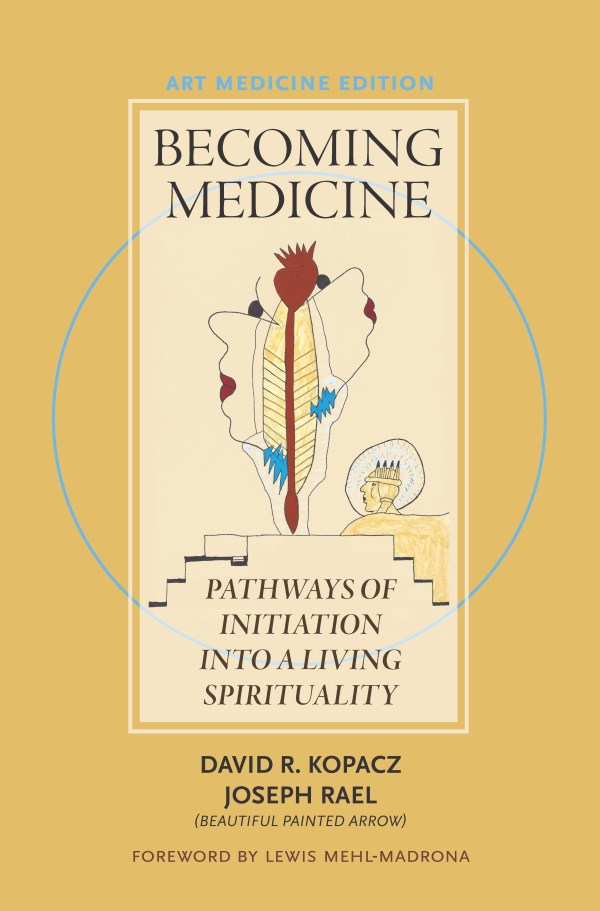
I just received five boxes of books! It is so exciting to see Becoming Medicine in finally in print. Two editions, one color (the Art Medicine Edition) and one in black & white! I keep flipping through the two editions, side by side and comparing how the artwork looks! I’m too excited to read it and I already know what it says, anyway…
It is available directly through Itasca Books (the same price as on Amazon). I ordered a copy through Amazon, myself, and anticipated delivery date is 3/31/20 – 5/30/20, for some reason, although it says it is in stock. At this point I’d recommend getting it directly through Itasca as I know someone has already received it that way. It is also available on Barnes & Noble, but I am just seeing the more expensive Art Medicine Edition there at this point.
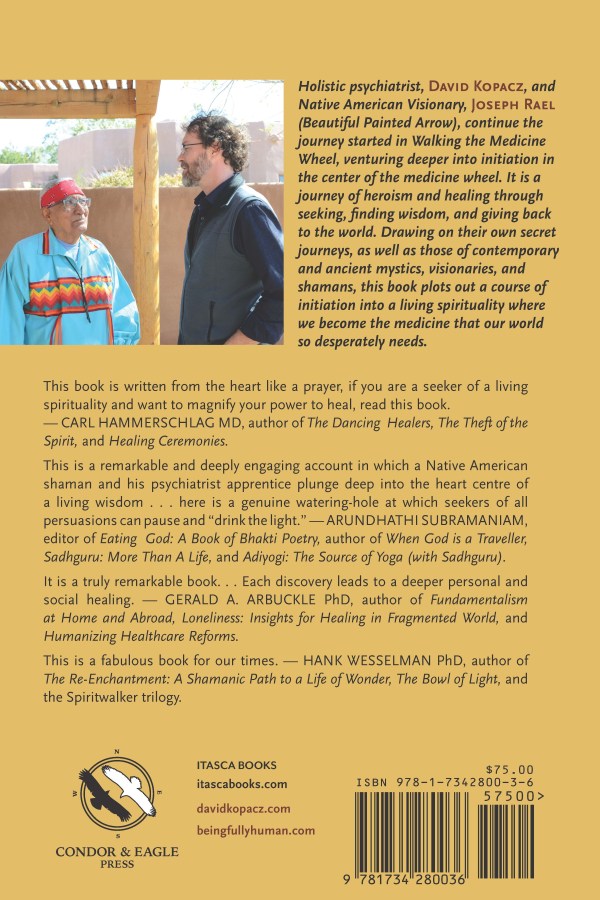
The foreword is by Lewis Mehl-Madrona, MD, PhD and a number of people have written some lovely endorsements that I’ll include in this post:
Becoming Medicine is a great compilation of contemporary medical science and ancient spiritual wisdom. This book is written from the heart like a prayer, if you are a seeker of a living spirituality and want to magnify your power to heal, read this book. — CARL HAMMERSCHLAG, M.D., author of The Dancing Healers, The Theft of the Spirit, and Healing Ceremonies.
This is a remarkable and deeply engaging account in which a Native American shaman and his psychiatrist apprentice plunge deep into the heart centre of a living wisdom. Replete with questor myths and mystical adventures, this passionate, richly cross-referenced and spiritually inclusive book becomes a vibrant junction of intersecting journeys from diverse wisdom traditions. Circling age-old themes of separation, quest and spiritual homecoming, it is an invitation to trust the non-linear journey of inner transformation — one that turns us, eventually, into our own medicine. Marked by an authenticity that readers will instantly recognize, here is a genuine watering-hole at which seekers of all persuasions can pause and ‘drink the light’. — ARUNDHATHI SUBRAMANIAM, M.A., author of When God is a Traveller, Sadhguru: More Than A Life, and with Sadhguru, Adiyogi: The Source of Yoga, editor of Eating God: A book of Bhakti Poetry.
Behind the words and images of Becoming Medicine is the wisdom of a man fearless enough to break down all the barriers between what he knows and what he is. Joseph Rael is a unique island of beauty and sanity in our crazy, uncultured culture. And that island that he is, is vaster than the whole world. — PETER KINGSLEY, Ph.D., author of Catafalque: Carl Jung and the End of Humanity, A Story Waiting to Pierce You: Mongolia, Tibet and the Destiny of the Western World, and In the Dark Places of Wisdom.
In this wonderful book, Picuris/Ute medicine man Joseph Rael reveals that each of us is an embodied human being who is in fact a medicine bag, a container in which we carry sacredness. By walking into the center of ourselves, into the center of our hearts, we cease to be ourselves and are instead becoming medicine. It is something that is done every moment. Becoming Medicine means that we are becoming capable of being a place for the Breath-Matter-Movement of the vast spirit to manifest and reside for a moment. This is a fabulous book for our times. — HANK WESSELMAN Ph.D., anthropologist and author of nine books on shamanism including The Re-Enchantment: A Shamanic Path to a Life of Wonder, The Bowl of Light: Ancestral Wisdom from a Hawaiian Shaman, the award winning Awakening to the Spirit World (with Sandra Ingerman) and the Spiritwalker trilogy.
Tragically the odious divisive social diseases of the 1930s are returning. Nationalistic, racist and fundamentalist movements are rapidly dividing communities. Innocent people feel more and more lost, alienated, powerless, lonely. They yearn for healing. But how can this healing begin? This is why Becoming Medicine by David Kopacz and Joseph Rael (Beautiful Painted Arrow) is so timely. It is a truly remarkable book, so relevant, so grounded in experience. The medicine of healing begins within each one of us. There we discover our true selves, our unified oneness with all humankind and the universe itself. This is not a healing that is confined to one event. On the contrary, it is a call to a transformative, ongoing, lifelong initiation of discovery. Each discovery leads to a deeper personal and social healing. — GERALD A. ARBUCKLE, Ph.D., Refounding and Pastoral Development Unit, Sydney, Australia. Author of Fundamentalism at Home and Abroad: Analysis and Pastoral Responses (2017), Loneliness: Insights for Healing in a Fragmented World (2018), and Humanizing Healthcare Reforms (2012).
Like the wondrous journeys of the spirit it describes, this book escorts the reader along a path to new understanding and, ultimately, transformation. Along the way, we are reminded of our true nature, our kinship with everything around us, and our power to navigate through our own tumultuous times. The path can be bumpy. It can be circular. Sometimes it is dark. This book helps light the way, and every page is a step toward something meaningful. Where will your journey take you? — J. ADAM RINDFLEISCH, M.Phil., M.D., Medical Director, Integrative Health, University of Wisconsin School of Medicine and Public Health, Associate Professor, Department of Family Medicine and Community Health.
Becoming Medicine will help you think in circles, dream-journey in technicolor, speak your vowels with mystic awareness, listen to music with more heart, and feel your heartbeat with more awe. The wonderful paintings of Joseph Rael (Beautiful Painted Arrow) and David Kopacz are a generous offering to linger over. I am grateful for their creative friendship and commitment to share a depth of spiritual, psychological, quantum physics, and visionary teachings. Becoming Medicine is a call to community, not only so that we seek out companions to slowly explore the insights and stories in this book. But so that we each take an inner journey into our hearts and return as the visionary healers the community of earth is calling for. — SHELLY L. FRANCIS, author of The Courage Way: Leading and Living With Integrity (2018).
This is a book that can really change your life. David Kopacz and Joseph Rael’s Becoming Medicine is a remarkable collaboration between two brilliant and courageous pioneers. The information they provide opens a doorway to a healing path that unveils the hidden potential of the human spirit. Blending together knowledge that is ancient and sacred within the backdrop of modern day psychiatry, it is deeply illuminating. It is a must read for anyone interested in embarking on a journey of transformation and becoming medicine for the world. — SHILAGH MIRGAIN, Ph.D., Assistant Professor, Distinguished Psychologist, University of Wisconsin – Madison.
Becoming Medicine byDavid R. Kopacz, & Joseph Rael (Beautiful Painted Arrow) is a powerful illustration of the title through the authors’ sharing of their own stories, beautiful art and text, using examples from scientific and humanistic/spiritual literature. Its message is not about becoming a doctor or a healer, but the path to becoming the medicine itself. This is a profound exploration of the journey to Become More — Medicine to self, others and the world, integrating personal examples with multiple cultural traditions present and past. In Becoming Medicine, Kopacz and Rael detail not only the journey for individuals but a path for a disoriented and fragmented world to engage in transformation towards wholeness and unity. Health workers and all seekers alike will benefit from this work.— MICHAEL HOLLIFIELD, M.D., (Long Beach, California & Angel Fire, New Mexico), President and CEO, War Survivors Institute, Clinical Professor of Psychiatry and Behavioral Sciences at the George Washington University School of Medicine and Health Sciences.
Becoming Medicine is a bridge between many dualities including: the conscious and the unconscious, the scientific and the spiritual, the ordinary and the non-ordinary, and the Western and the Indigenous. Intricately referenced and yet personal in narrative, David and Joseph weave us through distinct world traditions to reveal the interconnectedness in stories of healing. This bridge is likely to most benefit those of us educated in western contexts, where our minds have been trained to neglect the wisdom of circles and spirit. Whether readers begin as healers or seekers, they will realize the congruence of these paths. Becoming Medicine inspires us into our own shamanic journeys. — NEETA RAMKUMAR, Ph.D., Lecturer, School of Social Sciences, University of the South Pacific, Fiji.
Dr. Kopacz holds the space between the mystery and majesty of shamanic tradition and the study of anthropology and medicine. His writing brings the reader into sublime experiences that Dr. Kopacz holds in his body. He walks the walk between the seen and the unseen, transforming life along the way. Prepare to be fascinated. Prepare to be amazed. You’ll return over and over to the information on the pages and between them. — HENRI ROCA, M.D., Functional Medicine Specialist, Shamanic Journeyer, Clinical Assistant professor, family and community health, Louisiana State University School of Medicine, University of Arkansas for Medical Sciences.
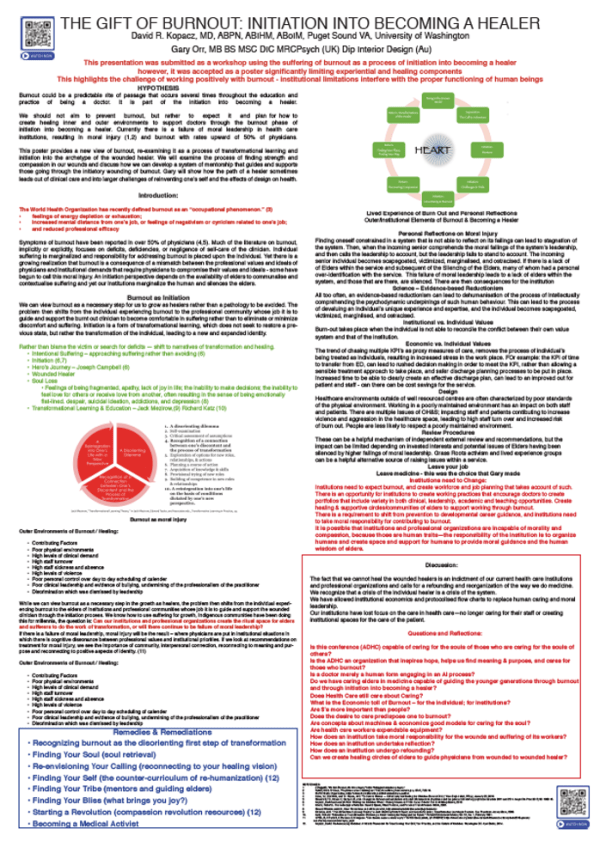
This is the title of a poster presentation that my good friend, Gary Orr, and I presented at the Australasian Doctors’ Health Conference in Perth, Australia, November 22nd, 2019. This conference takes place every two years, rotating through the Australian states and New Zealand. Here is a screen shot of the whole poster, it is a bit difficult to read in this format, so I’ll break down the elements and type them in below the poster…
THE GIFT OF BURNOUT: INITIATION INTO BECOMING A HEALER
David R. Kopacz, MD, ABPN, ABIHM, ABoIM, Puget Sound VA, University of Washington
Burnout could be a predictable rite of passage that occurs several times throughout the education and practice of being a doctor. It is part of the initiation into becoming a healer.
We should not aim to prevent burnout, but rather to expect it and plan for how to create healing inner and outer environments to support doctors through the burnout phase of initiation into becoming a healer. Currently there is a failure of moral leadership in health care institutions, resulting in moral injury (1,2) and burnout with rates upward of 50% of physicians.
This poster provides a new view of burnout, re-examining it as a process of transformational learning and initiation into the archetype of the wounded healer. We will examine the process of finding strength and compassion in our wounds and discuss how we can develop a system of mentorship that guides and supports those going through the initiatory wounding of burnout. Gary will show how the path of a healer sometimes leads out of clinical care and into larger challenges of reinventing one’s self and the effects of design on health.
Introduction:
The World Health Organization has recently defined burnout as an “occupational phenomenon.” (3)
• feelings of energy depletion or exhaustion;
• increased mental distance from one’s job, or feelings of negativism or cynicism related to one’s job;
• and reduced professional efficacy
Symptoms of burnout have been reported in over 50% of physicians (4,5). Much of the literature on burnout, implicitly or explicitly, focuses on deficits, deficiencies, or negligence of self-care of the clinician. Individual suffering is marginalized and responsibility for addressing burnout is placed upon the individual. Yet there is a growing realization that burnout is a consequence of a mismatch between the professional values and ideals of physicians and institutional demands that require physicians to compromise their values and ideals – some have begun to call this moral injury. An initiation perspective depends on the availability of elders to communalise and contextualise suffering and yet our institutions marginalize the human and silences the elders.
Burnout as Initiation
We can view burnout as a necessary step for us to grow as healers rather than a pathology to be avoided. The problem then shifts from the individual experiencing burnout to the professional community whose job it is to guide and support the burnt out clinician to become comfortable in suffering rather than to eliminate or minimize discomfort and suffering. Initiation is a form of transformational learning, which does not seek to restore a previous state, but rather the transformation of the individual, leading to a new and expanded identity.
Rather than blame the victim or search for deficits — shift to narratives of transformation and healing.
Intentional Suffering – approaching suffering rather than avoiding (6)
Initiation (6,7)
Hero’s Journey – Joseph Campbell (6)
Wounded Healer
Soul Loss
Feelings of being fragmented, apathy, lack of joy in life; the inability to make decisions; the inability to feel love for others or receive love from another, often resulting in the sense of being emotionally flat-lined. despair, suicidal ideation, addictions, and depression (8)
Transformational Learning & Education – Jack Mezirow,(9) Richard Katz (10)
Burnout as moral injury
Outer Environments of Burnout / Healing:
Contributing Factors
Poor physical environments
High levels of clinical demand
High staff turnover
High staff sickness and absence
High levels of violence
Poor personal control over day to day scheduling of calender
Poor clinical leadership and evidence of bullying, undermining of the professionalism of the practitioner
Discrimination which was dismissed by leadership
While we can view burnout as a necessary step in the growth as healers, the problem then shifts from the individual experiencing burnout to the elders of institutions and professional communities whose job it is to guide and support the wounded clinician through the initiation process. We know how to use suffering for growth, Indigenous communities have been doing this for millennia, the question is: Can our institutions and professional organizations create the ritual space for elders and sufferers to do the work of transformation, or will there continue to be failure of moral leadership?
If there is a failure of moral leadership, moral injury will be the result – where physicians are put in institutional situations in which there is cognitive dissonance between professional values and institutional priorities. If we look at recommendations on treatment for moral injury, we see the importance of community, interpersonal connection, reconnecting to meaning and purpose and reconnecting to positive aspects of identity. (11)
Lived Experience of Burn Out and Personal Reflections
Personal Reflections on Moral Injury
Finding oneself constrained in a system that is not able to reflect on its failings can lead to stagnation of the system. Then, when the incoming senior comprehends the moral failings of the system’s leadership, and then calls the leadership to account, but the leadership fails to stand to account. The incoming
senior individual becomes scapegoated, victimized, marginalised, and ostracised. If there is a lack of Elders within the service and subsequent of the Silencing of the Elders, many of whom had a personal over-identification with the service. This failure of moral leadership leads to a lack of elders within the system, and those that are there, are silenced. There are then consequences for the institution
Science – Evidence-based Reductionism
All too often, an evidence-based reductionism can lead to dehumanisation of the process of intellectually comprehending the psychodynamic underpinings of such human behaviour. This can lead to the process of devaluing an individual’s unique experience and expertise, and the individual becomes scapegoated, victimized, marginlised, and ostracised.
Institutional vs. Individual Values
Burn-out takes place when the individual is not able to reconcile the conflict between their own value system and that of the institution.
Economic vs. Individual Values
The trend of chasing multiple KPI’s as proxy measures of care, removes the process of individual’s being treated as individuals, resulting in increased stress in the work place. For example: the KPI of time to transfer from ED, can lead to rushed decision making in order to meet the KPI, rather than allowing a sensible treatment approach to take place, and safer discharge planning processes to be put in place. Increased time to be able to clearly create an effective discharge plan, can lead to an improved out for patient and staff – can there can be cost savings for the service.
Design
Healthcare environments outside of well resourced centres are often characterized by poor standards of the physical environment. Working in a poorly maintained environment has an impact on both staff and patients. There are multiple Issues of OH&S; impacting staff and patients contibuting to increase violence and aggression in the healthcare space, leading to high staff turn over and increased risk of burn out. People are less likely to respect a poorly maintained environment.
Review Procedures
These can be a helpful mechanism of independent external review and recommendations, but the impact can be limited depending on invested interests and potential issues of Elders having been silenced by higher failings of moral leadership. Grass Roots activism and lived experience groups can be a helpful alternative source of raising issues within a service.
Leave your job
Leave medicine – this was the choice that Gary made
Institutions need to Change:
Institutions need to expect burnout, and create workforce and job planning that takes account of such.
There is an opportunity for institutions to create working practices that encourage doctors to create portfolios that include variety in both clinical, leadership, academic and teaching opportunities. Create healing & supportive circles/communities of elders to support working through burnout.
There is a requirement to shift from prevention to developmental career guidance, and institutions need to take moral responsibility for contributing to burnout.
It is possible that institutions and professional organizations are incapable of morality and compassion, because those are human traits—the responsibility of the institution is to organize humans and create space and support for humans to provide moral guidance and the human wisdom of elders.
Discussion:
The fact that we cannot heal the wounded healers is an indictment of our current health care institutions and professional organizations and calls for a refounding and reorganization of the way we do medicine.
We recognize that a crisis of the individual healer is a crisis of the system.
We have allowed institutional economics and protocolised flow charts to replace human caring and moral leadership.
Our institutions have lost focus on the care in health care—no longer caring for their staff or creating
institutional spaces for the care of the patient.
Questions and Reflections:
Is this conference (ADHC) capable of caring for the souls of those who are caring for the souls of others?
Is the ADHC an organization that inspires hope, helps us find meaning & purpose, and cares for those who burnout?
Is a doctor merely a human form engaging in an AI process?
Do we have caring elders in medicine capable of guiding the younger generations through burnout and through initiation into becoming a healer?
Does Health Care still care about Caring?
What is the Economic toll of Burnout – for the individual; for institutions?
Are $’s more important than people?
Does the desire to care predispose one to burnout?
Are concepts about machines & economics good models for caring for the soul?
Are health care workers expendable equipment?
How does an institution take moral responsibility for the wounds and suffering of its workers?
How does an institution undertake reflection?
How does an institution undergo refounding?
Can we create healing circles of elders to guide physicians from wounded to wounded healer?
Remedies & Remediations
Recognizing burnout as the disorienting first step of transformation
Finding Your Soul (soul retrieval)
Re-envisioning Your Calling (reconnecting to your healing vision)
Finding Your Self (the counter-curriculum of re-humanization) (12)
Finding Your Tribe (mentors and guiding elders)
Finding Your Bliss (what brings you joy?)
Starting a Revolution (compassion revolution resources) (12)
4. Dzau, VJ, DG Kirch, and TJ. Nasca, M.D. “To Care Is Human — Collectively Confronting the Clinician-Burnout Crisis,” New Engl J Med, 378(4), January 25, 2018.
5. Shanafelt, TD, Hasan O, Dyrbye LN, et al. Changes in burnout and satisfaction with work-life balance in physicians and the general US working population between 2011 and 2014. Mayo Clin Proc 2015; 90: 1600-13.
6. Kopacz, David and Joseph Rael. Walking the Medicine Wheel: Healing Trauma & PTSD. Tulsa: Pointer Oak & Millichap Books, 2016.
7. Moore, Robert L. The Archetype of Initiation: Sacred Space, Ritual Process, and Personal Transformation. Xlibris, 2001.
9. Mezirow, Jack. “Transformational Learning Theory,” in Jack Mezirow, Edward Taylor, and Associates (eds.), Transformative Learning in Practice. San Francisco: Jossey-Bass, 2009.
10. Katz, Richard. “Education as Transformation: Becoming a Healer Among the !Kung and the Fijians.” Harvard Educational Review, Vol. 51, No. 1, February 1981.
12. Kopacz, David. Re-humanizing Medicine: A Holistic Framework for Transforming Your Self, Your Practice, and the Culture of Medicine. Washington DC: Ayni Books, 2014.
This presentation was submitted as a workshop using the suffering of burnout as a process of initiation into becoming a healer however, it was accepted as a poster significantly limiting experiential and healing components.This highlights the challenge of working positively with burnout – institutional limitations interfere with the proper functioning of human beings
The 2019 Power of Words conference was a small, intimate group of around 60 people. I found the discussions with fascinating and interesting people outside of the conference as inspiring as the actual conference offerings – which were incredible! I was able to have a nice chat with Caryn and we exchanged books, and I now have her Landed and Following the Curve to continue the conference with now that I am home. I met the new managing director, Hanne Weedon. Actually, I ended up chatting with most of the council at some point during the conference: Liz Burke-Cravens, Caleb Winebrenner, and Chip Cummings.
Right from the start of the conference, I sat down to dinner with author Gregg Levoy (Callings, Vital Signs) and Pediatric Neurologist, Peter Bingham (whose book in progress idea sounds great and I hope to read some day). Gregg Levoy did a few presentations, starting with his pre-conference workshop, Courage & Clarity with Your Right Calling – a great session in which he asked the audience a series of questions leading deeper into passion and calling and then looking through our answers to “search for concentrations of energy” in our answers and common themes. He also gave the keynote that night. Gregg was gracious enough to attend my workshop Heroic & Healing Journeys for Contemporary Times (which I’ll discuss in a future post), and he referenced Camus’ The Rebel, that “to be human is to rebel against tyranny.” It is quite a synchronicity that I had brought along that very book with me to the conference!
Gregg Levoy
The first pre-conference workshop I attended was Noa Baum’s “Stories Old & New: A Path to Healing & Resilience,” a storytelling workshop. This was a very helpful workshop and made me think about how “transformation is contagious,” to tell a personal story of transformation can become a universal story of transformation, and vice versa. Noa also gave a spell-binding performance of her “A Land Twice Promised.” I was speechless for a while after it. Noa is a Jewish woman from Israel and it is the story of her years of friendship with a Palestinian mother, recalling the struggles of growing up in the Middle East, whilst their children played together in the United States. The performance follows the story of their friendship, as well as the stories of their mothers. The name of her performance is the same title as her book, A Land Twice Promised: An Israeli Woman’s Quest for Peace. In speaking of the distinction between the performance and the book, Noa told me, “the show is the story of our friendship and the stories of our mothers. The book is a bit different – it is a memoir telling the story behind the show and how it all came to be. It is also the story of how I discovered the transformative healing power of storytelling and how I use it for peacebuilding.”
Noa Baum
The third pre-conference workshop was given by the wonderful poet, Usha Akella, “Fetch the Fire: Writing the Ghazal.” This was a great history and introduction to the form of the ghazal and we all muddled through writing one ourselves. The generous poet, Steffen Horstmann had donated signed copies of his book, Jalsaghar – thanks for this Steffen! We studied his ghazal, “[Clouds roil as Shango drum echoes in the Nile delta],” with the great line: “Charms rattle in a shaman’s fist as wind along the shore / Thrashes trees (rousing panthers from shadows) in the Nile delta.” Usha’s keynote the next day, “Matwaala: The Birth of a Festival,” described how she worked to found Matwaala, the South Asian Diaspora Poets Collective. This was a riveting presentation that focused not only on poetry, but politics, spirituality, immigration, and on bringing all voices together. It concluded with Usha reading her own poem, “Enough!” which Usha told the TLA Network they could share. This poem is a call and a challenge for “the people” to take care of the children of this Earth. Usha’s newest book of poetry is entitled, The Waiting. The book starts with the Prologue: “The hidden hand gently opens, reveals / the secret script so concealed from us, / And as the hope-less night moves to morning, / The heart’s compass from distrust to trust.”The Waiting is published in India, but you can get a copy directly from Usha by emailing her at: Reachmatwaala@gmail.com. Her other books are worth looking for: A Face That Does Not Bear the Footprints of the World, …Kali Dances. So Do I…, Ek: An English Musical on the Life of Shirdi Sai Baba, and her travel journal and poems, The Rosary of Latitudes. You can find links to Usha Akella’s poems through the Matwaala website and also a few of her poems from The Waiting are available on the Muse Indian website.
Usha Akella
I thoroughly enjoyed several long talks with Peter Bingham of Vermont Children’s Hospital and Suzanne Richmond, who developed the Health Arts & Sciences program at Goddard College. Suzanne introduced me to Dr. Celia Hildebrand, an acupuncturist, who then invited me to drive out to meet Gladys Taylor McGarey, one of the founders of the American Holistic Medical Association. I had a nice chat with Celia and Gladys and we all spoke of our callings and journeys into becoming healers. Gladys is quite impressive, at 98 years old she is still working on developing a Living Medicine program in the community and she shared with us some of her notes for her upcoming talk at the Academy of Integrative Health & Medicine conference later this month.
Dr. Gladys McGarey
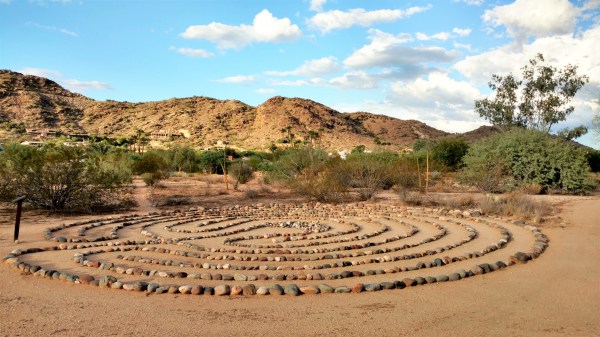
The conference was set at the beautiful Franciscan Renewal Center with a desert healing garden that I started every morning in, drinking coffee, journaling, and watching and listening to all the desert birds and animals waking up for the day.
Such great community, inspiring company, and visionary creativity at the Transformative Language Arts Network Power of Words Conference! Check out their website and their work! Photos below of (Middle Right) David Kopacz, Usha Akella, and Chip Cummings and (Lower Left) Peter Bingham, David Kopacz, poet Cindy Rinne, Suzanne Richmond, and Usha Akella.
This article focuses on Rebecca Solnit’s latest book, Call Them by Their True Names (2019). Here are a few excerpts from the article and accompanying photos from the Olympic Peninsula.
What we call things creates not just discourse, but reality. The words that we use and the words that we do not use lead us in certain directions and have different effects. Words are not just words, they are tools that shape, and give expression to, reality.
Words create our reality and our current reality is in crisis.
Across the world, in many different countries, politicians are rising to power using words of separation rather than words of union. This political crisis is a spiritual crisis because using words to create reality is a spiritual act.
One of the Crises of the Moment is Linguistic
Rebecca Solnit’s Call Them by Their True Names (2018) examines the uses and abuses of language in politics, stating that “one of the crises of this moment is linguistic.” The linguistic crisis confuses us about what is real, what is true, about who we are, and about our relationships with each other and the natural world. “Calling things by their true names,” Solnit writes, “cuts through the lies that excuse, buffer, muddle, disguise, avoid, or encourage inaction, indifference, obliviousness. It’s not all there is to changing the world, but it’s a key step.” “Once we call it by name, we can start having a real conversation about our priorities and values. Because the revolt against brutality begins with a revolt against the language that hides brutality.”[ii]
Sun through the Rain Forest, near Sol Duc River, Olympic Peninsula (D. Kopacz, 2019)
The Deregulation of Meaning
"If you begin by denying social and ecological systems, then you end by denying the reality of facts, which are, after all, part of a network of systematic relationships among language, physical reality, and the record, regulated by the rules of evidence, truth, grammar, word meaning, and so forth. You deny the relationship between cause and effect, evidence and conclusion; or, rather, you imagine both as products on the free market that one can produce and consume according to one’s preferences. You deregulate meaning. . . . And this is how the ideology of isolation becomes nihilism, trying to kill the planet and most living things on it with a confidence born of total destruction."[iii]
A Storytelling Work that Matters
"This work is always, first and last, a storytelling work, or what some of my friends call ‘the battle of the story.’ . . . To sustain it, people have to believe that the myriad small, incremental actions matter. . . . To believe it matters—well, we can’t see the future, but we have the past. Which gives us patterns, models, parallels, principles, and resources; stories of heroism, brilliance, and persistence; and the deep joy to be found in doing the work that matters. With those in hand, we can seize the possibilities and begin to make hopes into actualities."[iv]
Doing “the work that matters,” this is what we are called to do. Joseph Rael reminds us that “work is worship,” so this work of activism, this work of story, this work of loving our neighbors, is a sacred work that we are called to do and that we are called to put into words so that we can create, instead of a world of hate, separation, and war, we can create a world of love and peace.
Sun through the Trees, Mt. Muller, Olympic Peninsula
Next issue: Rob Riemen’s To Fight Against This Age: On
Fascism and Humanism
Throughout 2019, I will continue to write about some of these topics of how our “words create worlds.” In working with Joseph Rael, writing our next book, Becoming Medicine: Pathways of Initiation into a Living Spirituality, I felt compelled to write about the responsibility of mystical, visionary, and shamanic experience—that we must work toward “Spiritual Democracy.” At its deepest point, mystical experience leads to an awareness that we are all one and this comes with a responsibility to challenge words of separation which ultimately lead to fascism. Mystical experience is a pathway that leads us to question who we are and gives us a responsibility to use our words wisely to create worlds where we are becoming the medicine that our world needs. As Rumi says, “We are pain and what cures the pain.”[v]
I have been working on this concept of Circle Medicine since I had the realization that a number of different holistic models I was working with all included circles: the Hero’s Journey, the Medicine Wheel, the Circle of Re-humanizing Medicine, the Circle of Health, and Circle Medicine: the circle of circles.
In our forthcoming book, Becoming Medicine: Pathways of Initiation into A Living Spirituality, we have a table comparing Circle Medicine with Linear Medicine. Linear medicine is the predominant, biomedical approach in contemporary medical practice, however it misses crucial aspects of human being that are only found in holistic, circular models of medicine.
August 9th is National Book Lovers Day in the United States. I’ve been wanting to write a piece on books – specifically buying too many books, but then I came across an idea that maybe too many is nottoo many. Here are some ideas to make you feel better about having stacks of unread or partially read books – or maybe it will just be an excuse to buy more books!
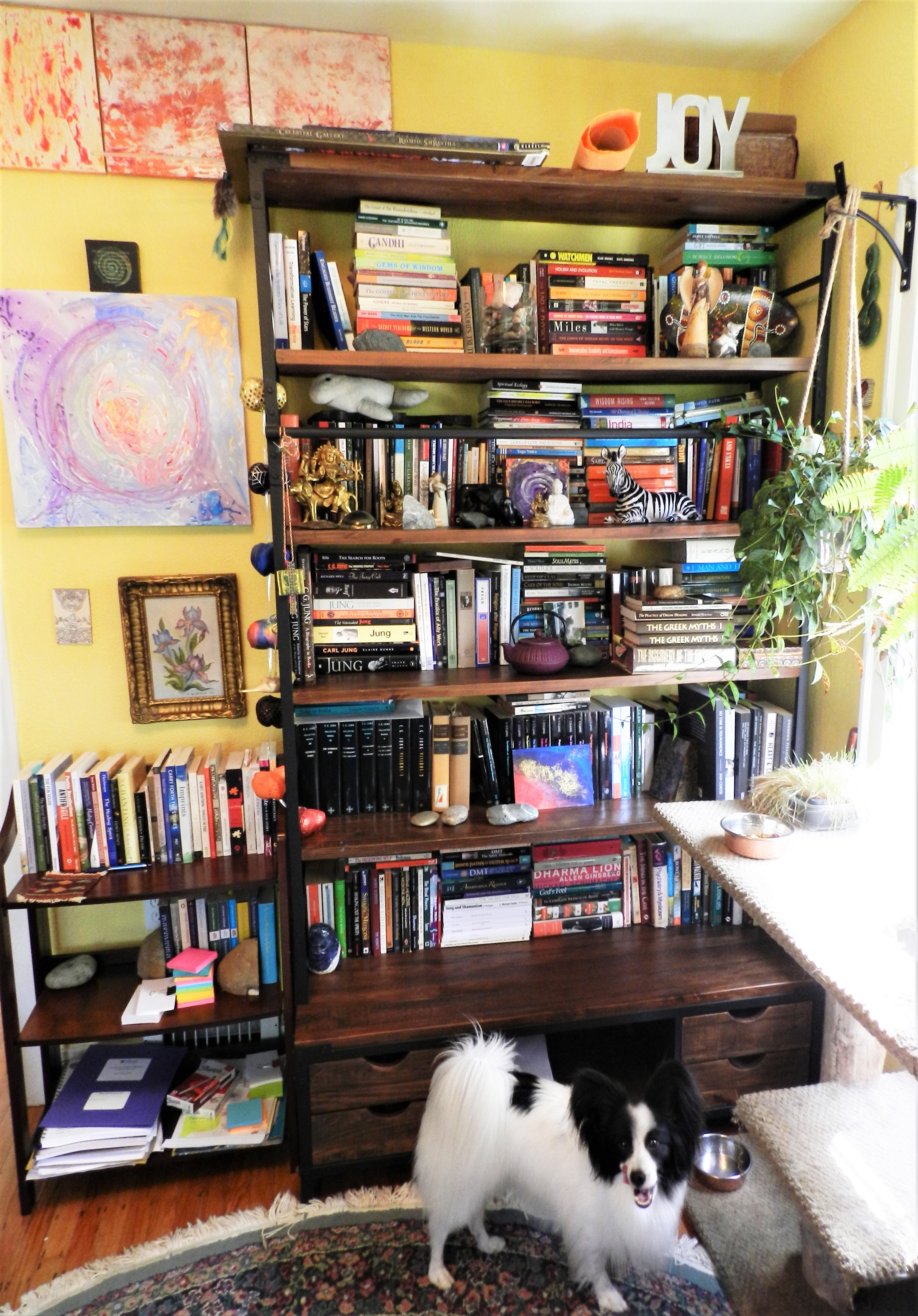
My home office desk
A 2018 article in Big Think entitled, “The value of owning more books than you can read,” by Kevin Dickinson, has some interesting ideas around unread books. Dickinson summarizes a view by statistician Nassim Nicholas Taleb, of unread books as an “antilibrary.” Taleb wrote about the anti-library in his book,The Black Swan: The Impact of the Highly Improbable. Taleb discusses author Umberto Eco’s library of over 30,000 books. Dickinson writes,
“Eco’s library wasn’t voluminous because he had read so much; it was voluminous because he desired to read so much more.”
One of my bookshelves in my office
This idea of the benefit of the “anti-library” and unread books shows us something about the benefit not of knowing, but of wanting to know. A small, tidy library may be a sign of an ordered mind and tidy life, or it may be a sign of a lack of curiosity about the world and the world of ideas. Dickinson quotes Taleb:
“Read books are far less valuable than unread ones. [Your] library should contain as much of what you do not know as your financial means, mortgage rates, and the currently tight real-estate market allows you to put there. You will accumulate more knowledge and more books as you grow older, and the growing number of unread books on the shelves will look at you menacingly. Indeed, the more you know, the larger the rows of unread books. Let us call this collection of unread books an antilibrary.”
Another book shelf, with my assistant, Corbin, finishing a snack
Dickinson quotes Taleb, “We tend to treat our knowledge as personal property to be protected and defended.” And further, “It is an ornament that allows us to rise in the pecking order. So this tendency to offend Eco’s library sensibility by focusing on the known is a human bias that extends to our mental operations.” Dickinson cites Jessica Stillman’s concept of “intellectual humility,” as focusing on how much we do not know, instead of how much we do know.
My other assistant, Sofia
Dickinson then writes about the Japanese word and concept, tsundoku, referring to stacks of unread books. He says its etymology comes from “tsunde-oku (letting things pile up) and dukosho(reading books).”
Dickinson’s article, “The value of owning more books than you can read,” is a good read with a number of interesting ideas around the value of books beyond knowing the actual knowledge found in the books. I have not summarized the whole article, I’ll leave you to it if you are interested, or perhaps you would rather just go out and buy Taleb’s book and maybe read it or maybe not!
My writing desk and another book shelf
I thought today, National Book Lovers Day was a good day to write about this thought-provoking concept of the anti-library of unread books which teaches us about the value of having things we have not mastered, always having the next book (or three, or forty) you want to read, and it says something about the value of focusing on what you desire more than on what you have acquired.
Oh, and one last thing, I must have done this subconsciously, but I just realized I’m wearing the appropriate shirt today for National Book Lovers Day!
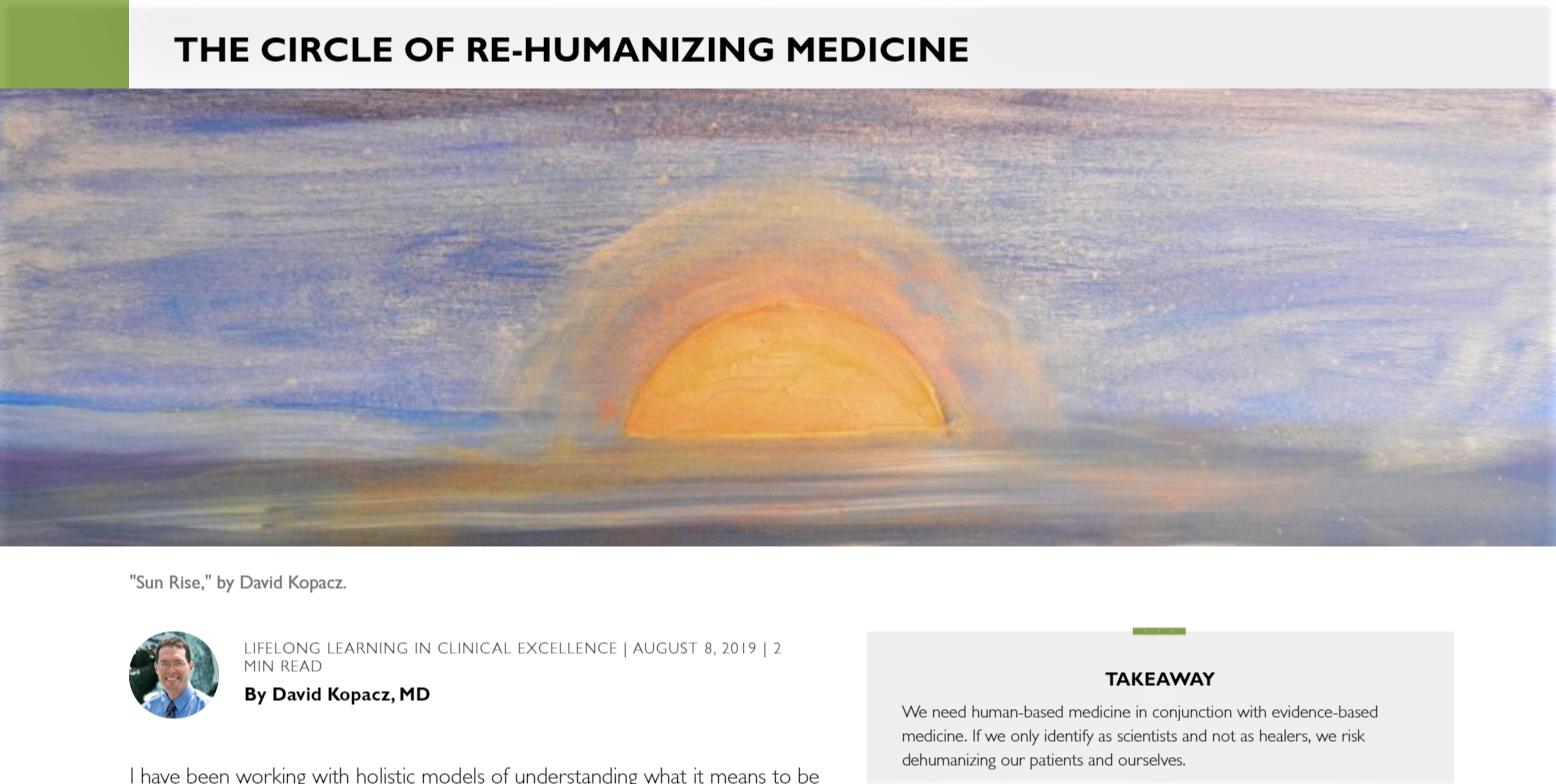
Thanks again to the folks at CLOSLER for the next in a series of guest post on various forms of Circle Medicine & Circle Healing. This week’s post is titled, “The Circle of Re-humanizing Medicine.”
Here is the Takeaway summary:
We need human-based medicine in conjunction with evidence-based medicine. If we only identify as scientists and not as healers, we risk dehumanizing our patients and ourselves.
Next week is the last in my series of guest posts at CLOSLER, please check it out. It is on the VA Circle of Health, another holistic model of Circle Medicine.















 Being Fully Human