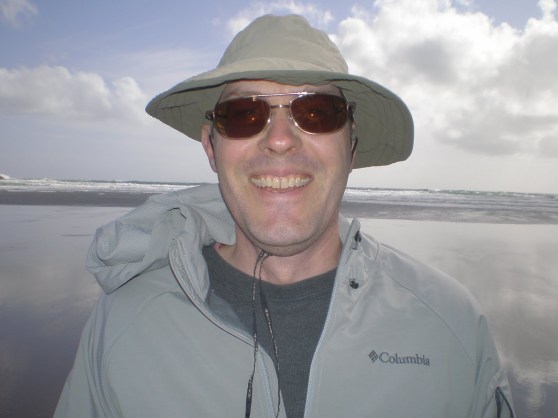
The Royal Australian & New Zealand College of Psychiatrists, Part I

I just got back from Hobart, Tasmania in Australia for the annual Royal Australian & New Zealand College of Psychiatrist conference. It was a very interesting conference, I learned a lot and met many people who are doing good work.

Hobart, Tasmania, Australia

Hobart, Tasmania, Australia

Here is the abstract for the first presentation I did:

What Does It Man to Be Human?

The Role of Psychiatrists in Philip K. Dick’s Life & Writing

Author: David R. Kopacz, M.D.

Philip K. Dick was a prolific author of over 50 novels. Many films have been based on his work, including Blade Runner, Minority Report, Adjustment Bureau, and the upcoming Radiofree Albemuth. His continued relevance seems due to the timelessness of his two main themes:   “what is human and what is real?” In the course of living these questions he was prescribed most classes of psychiatric medication, took street drugs, routinely consulted psychotherapists and psychiatrists, and was psychiatrically hospitalized several times.

Not surprisingly, psychiatrists often appear in his writing, sometimes as humanizing forces but also as forces for dehumanization. Dick called dehumanization, “androidization,” where a human being becomes a machine:  obedient, predictable, and lacking independent thought. When psychiatric interventions are applied without thought and wat ithout appreciation of the humanity of the recipient, the psychiatrist can be seen as an “android” who is trying to turn the patient into an “android” as well. In Dick’s life and work, psychiatrists also act as human beings, with concern and empathy to empower the humanity of the client.  Although Dick developed extensive, elaborate theories about the question of ultimate reality, his litmus test for humanity is much simpler – is one kind to other beings? Kindness is the hallmark of whether one is acting as a human or a machine. This presentation will examine Dick’s concepts of the android and the human in the context of contemporary debates regarding the recovery movement and the role of the psychiatrist as an evidence-based technician and/or as a humanitarian.

The Royal Australian & New Zealand College of Psychiatrists, part IThe Royal Australian & New Zealand College of Psychiatrists, part I

The presentation went well and I had some interesting discussions after it. One thing I came away thinking about was PKD’s subversive humanism (the little guy trying to stay human in the face of overwhelming technological or political attempts at androidization) and how that is similar, in some ways, to the true work of psychiatrists – fostering human growth and development in the face of mental illness, traumatic past experiences, and restrictive belief systems of family and society.

My on-line video debut

My employer got together a few American psychiatrists to shoot a promotional video. The results can be found at the link:

ADHB American Psychiatrists Testimonials

I seemed a lot less wooden and stilted when we were doing the video! It was fun to do, though, and a good chance to reflect on some of the positive aspects of working in New Zealand.

After the Health of Health Professionals Conference

I had a great time at the conference and it was really energizing. I met many inspiring people from all over the world. There are a substantial number of people doing great work to support clinicians and to bring compassion back into healthcare, and they are doing it at the individual, research, and administrative levels.

Of note, Robin Youngson gave a great presentation.

Tony Fernando gave a presentation on positive psychology that had a lot of practical information about how to be more compassionate in clinical work.

Jane Lemaire, from University of Calgary presented a series of studies that her group have done on physician well-being, one of the most interesting was on the positive cognitive and relational effects of simply feeding doctors (something that often takes back seat in a busy clinical day).

Marsha Snyder gave a great presentation on the issues involved in working with patients who are doctors.

You can still see the conference programme on-line if you want get an idea of what the conference was about. I thought I understood that the conference organizers would be putting up some additional information following the conference, although that was up at the time I posted this.

View more presentations from the conference.

The next conference will be in 2013 in Queensland Australia.

The Health of Health Professionals Conference

I will be presenting at the Health of Health Professionals Conference in Auckland, on November 3rd. The topic is: “What is Good for the Patient is Good for the Doctor.”

This presentation will examine clinician burnout, Gary Schwartz’ book, The Way We Are Working Isn’t Working, recovery principles from the recovery movement, and Parker Palmer’s concept of the “new professional.”

The focus of the presentation is on the concept that the care that a clinician provides for a client is partly dependent upon the practice environment that the organization creates for the clinician to practice within. As above, so below.

New Job!

In addition to the major earthquake this week, I have a more minor shake up in my life as I am taking a new job.

The earthquake is still a major challenge in New Zealand. My sister-in-law and a friend were visiting and they were bumped off their flight this weekend because Air New Zealand was flying back 7 injured people to either the States or England. I recently heard that 4300 people have come up to Auckland from Christchurch. There was also an article in the paper about this guy who was lifting these big slabs of concrete off of some trapped people right after the quake. I saw the video and thought, wow, those must be some other material than what they look like, because he just picked up these slabs and moved them aside without seeming to exert much effort. Here is a link to the New Zealand Herald if you are interested:

My new job is at Buchanan Rehabilitation Centre, which is an inpatient/residential centre for 40 clients who live there. The model is a very positive and hope-inducing one that gives intensive support in a holistic framework. There is a gardening program there where clients can learn to grow plants that are then planted and cared for at various sites in the community. It is also very multi-disciplinary in its focus, with a lot of group work and it is aimed at helping people get back on a developmental track in their lives and to be less stigmatized and identified as “mental patients,” and encouraged to move beyond or through their illness experiences. I am really excited about working there. I’ll be starting part-time work there in March, increase my time further in April, and then I’ll be working 4 days a week there in May, one day a week I will be taking off for writing, and I will be ending my work at the community mental health centre.

I have had a really challenging time working at my current job. It has been difficult for me to sort out what are problems at the sub-culture level and what are larger issues with the practice of psychiatry in New Zealand. When I was at my interview in Christchurch as part of my credentialing for the Medical Council, I was told that over 50% of psychiatrists pracitising in New Zealand are internationally trained. That means that the norm is that a psychiatrist in New Zealand is from another country. That makes for a very interesting and diverse work environment, but it could also contribute to a degree of transience in the work force and has a number of challenges for New Zealand in structuring and operating mental health treatment.

At this point, I am really glad to be leaving my current job. I have put in a lot of time and energy and taken on various projects to work toward changing the work environment there. It is really challenging to be working in a system in which the staff are resistant to change, and negative, also, there are various administrative level challenges as well. The more I learn about Buchanan, the more of a sense of relief I feel. My own holistic approach should be very welcomed there and also seems very similar to the therapeutic approach used there. Here is a short article, from an old newsletter, that gives a brief overview of BRC.  It is on page 5 of the newsletter.

I know this blog post is a little all over the place, talking about my job and the earthquake, so in honour of that all-over-the-place energy, here are a couple dolphin photos from the boat trip we took a couple weeks ago.

OLYMPUS DIGITAL CAMERA

OLYMPUS DIGITAL CAMERA

Fitting In and Not Fitting In (revisited)

FITTING IN AND NOT FITTING IN (REVISITED)
I just spent about an hour revising a paper that I presented at a conference a number of years ago, Learning to Save the Self (which can be now found at my Website under unpublished papers). I recently came across this paper and it really seems to summarize a lot of the issues that I have been working on in my job, teaching, and professional career over the years. Basically, how to remain fully human while going through educational programs or working in jobs that encourage dehumanization. I quite like the paper and it seems like a really nice summary of some of these ideas. It was also a lot easier for me to write than all the work I have been doing on the book, Creating A Holistic Medical Practice, which seems to be requiring endless revisions and is still has sections that I feel I have just not gotten to the essence of what I am trying to say.
FITTING IN AND NOT FITTING IN (REVISITED)

So, I thought, maybe I can just do a few revisions on this old presentation and get it out there in print somewhere. I remembered a link someone had sent me about an on-line medical humanities journal. I looked up the submission requirements and it says that articles should be less than 2000 words. My paper is about 5000 words. I just did a bunch of revisions and it is now 3771 words.

I don’t think I can cut out another 1771 words and keep the spirit of the original paper. Once again, something not fitting in. I just set it aside, for now, with ideas of going back to working on the book, or maybe doing another draconian round of revisions (which would realistically mean dropping out at least one whole section of the paper, which means dropping out a whole segment of concepts that were introduced), or, maybe, just writing a piece with the aim of trying to distill the essence of the paper into 2000 words. It is frustrating, particularly as one of the themes the paper deals with is in trying to preserve the complexity of human emotion, feeling, and relating in the face of forces which try to reduce human interaction to acronyms, protocols, and procedures.

This frustration of yet another thing not fitting in is not an isolated issue. I have four computers (my work computer, an older laptop I kept at home with all my private practice clinical information backed up on it, the desktop computer I bought for my office assistant, and my personal laptop that I use for writing that doesn’t have confidential information on it). We have four printers (my home printer, my office printer, Mary Pat’s old home printer, and a new printer that she bought that is compatible with New Zealand electricity of 220 volts (US is 110 v). (You can skip this next part if you already get the big picture). My personal laptop works on NZ current and communicates with my printer, but it doesn’t have any of my practice information. I have to get working on US and NZ taxes, so I needed to get my work desktop computer to run on NZ current. I looked into buying a converter that would work for it, but had a couple of recommendations that I just have the power supply switched out. I did that, there were various problems…eventually I had a new exterior case for the computer, it runs on 220 v, but not all of the USB ports work with it, also, it is not compatible with the printer because it is a newer printer and I can only find a Windows Vista installation disk and the computer is Windows XP. (Also, I can link to the internet with my laptop, but haven’t figured out how to do that with either of my desktops to download printer drivers). Incidentally, my printer (the one that does run on NZ current, the other – my office printer – does not) has decided it doesn’t want to print in black since it got off the boat in NZ. I can’t print my tax information or business information. My work laptop stopped backing up properly in July of 2009 and I was never able to get that sorted out through the support team. My newer desktop computer, which is Vista, doesn’t have all the practice information I need. Also, it has decided that it has an unauthorized version of windows. It seems to work fine, but I have to go through a whole series of pop-ups every time I turn it on. I think I have made the dilemma clear enough. Maybe you are thinking I shouldn’t have so many computers and printers. I agree. The fact is, I do, and to get the information, electricity, and printer to all be compatible doesn’t seem to be happening easily. Incidentally, another reason that I wanted to get my work desktop up and running is that it had all my old files from computer disks on it and was the only one that had a disk drive, and once it was up and running, I found the paper (discussed above) which is not fitting the word limit for submission.

FITTING IN AND NOT FITTING IN (REVISITED)

Last night we had dinner with some friends of ours from England. Two of us had jobs in the fields we trained in, although we are pretty grumpy about many aspects of the job not fitting our more extensive training than what the job requires. One of us is trying to get jobs in two different professional careers – Mary Pat has her NZ teaching certification, but can’t get a job in that field, and is currently waiting on her psychology registration that she started as a back-up. Another one of the four of us is running into all sorts of trouble getting nursing registration, but has a part-time job as something like a mental health technician. More problems with not fitting in. Plus, three of us have had various health problems since arriving in New Zealand. My own have been a series of different hip and knee injuries/pain that seem to relate to some difficulties in being transplanted here and putting down roots.

FITTING IN AND NOT FITTING IN (REVISITED)

In my job, I have been getting increasingly frustrated with a sub-cultural pressure to make things smaller and slower. I have tried to move ahead with several different programs, groups, or initiatives and yet I feel constantly restrained, contained, and thwarted in what I try to put into practice. I have seen this curious sign or poster a number of places since I have come to New Zealand that says “Keep Calm and Carry On,” which I think is a Winston Churchill quote. I recently saw in a magazine someone wearing a shirt that had the same logo of a crown and words, but this one said, “Get Excited and Make Things.” I feel like I can relate more to the second saying and it does seem more “American.” The tension between these two sayings seems to sum up my frustration.
FITTING IN AND NOT FITTING IN (REVISITED)

Fitting In and Not Fitting In

FITTING IN AND NOT FITTING IN

In a lot of my life, I have felt like I didn’t fit in, yet it is a natural human impulse to fit in and be part of the group. In the cross-cultural psychology/anthropology class I took in college, much of it involved looking at how individualistic a person or culture was compared to how collectivist a person or culture was. The dimension of individualism valued individual achievement, accomplishment, separation from the group, and individual goals over collective or group goals or norms. The dimension of collectivism valued group cohesion, social norms, and a person’s sense of identity was achieved through the group rather than in separation from the group in the individual. I find myself thinking of these categories as we have been in New Zealand these past 3 months.

Maori culture definitely seems very collectivist in orientation. I have read some of Mason Durie’s books (a Maori psychiatrist) and he writes about how Maori people get there sense of identity from their whanau (family), as well as from their larger tribe, and even from their connection to ancestral land. The context of identity is the collective group and even the context of relationship to the land. New Zealand Europeans (as those born in New Zealand, but of European ancestry are called) are more individualistic, but seem more collectivist than people from the United States. Kiwi culture is much more group oriented and even socialist in orientation. New Zealand prides itself on being the first country to grant women the right to vote, they are also the first or one of the first countries to establish a modern social welfare system of health care, financial and medical support for those injured in accidents (ACC), and sickness, disability, unemployment, and retirement benefits. There is much more of an emphasis on collaboration and personal relationships in organisations and in decision making.

A dark side of this collectivist orientation in Kiwi culture is what is called the “tall poppy syndrome,” in which anyone who dares to stand out or stand above others is mercilessly cut back down to size. It is a sort of regression to the mean, which, from the outside, can seem like Kiwi’s value something other than excellence, or being the best at something (quite the contrast to the “we’re number one” collective mantra of Americans).

FITTING IN AND NOT FITTING IN

The logical outcome of someone from a more individualist country coming to a more collectivist country is a culture clash or culture shock. The individualist speaks up frequently, trying to constantly figure out ways to make the system better, whereas the collectivists are more concerned with fitting in, not making waves, getting by without making a big fuss. On the one hand the collectivist culture seems more laid back, but can also seem anti-progressive. I realize that these are generalizations and that cultures and individuals have multiple motivations and values.

I was recently in a small group discussion of local psychiatrists. In our group of 7 people, only one was a born in New Zealand and trained in the NZ medical system. The other 6 of us were from across the globe, Asia, Europe, North America. One of the topics that came up in the discussion was how those of us from other countries try to balance fitting in and not making waves with our own cultural and professional values. Someone said something that really resonated with me, that in trying to fit into the Kiwi medical system, a person could be fitting into a dysfunctional system.

This gets into an area that a lot of people declare off limits due to “political correctness” and “cultural sensitivity,” that there is no better or worse, just different, but I am really not sure this is a valid way of looking at things and it seems to shut down any conversation between cultures by avoiding stirring up any conflict. When two (or more) cultures come together, there is inevitably conflict. The issue is how the conflict is handled that is important rather than pretending there is no conflict. Conflict is when two people or groups come into communication with each other and they realize that they have different assumptions, perceptions, motivations, expectations, and goals than the other. The conflict is the sign that communication and interaction are occurring, albeit in an inharmonious way. The transformative issue is in how this conflict is managed, whether it goes into war, aggression, genocide, discrimination – or whether it is channeled into dialogue, conversation, attempts at understanding, and, most importantly, whether or not the two can develop a shared language or culture which holds together the interactions in a socially acceptable way.

I remember reading about a word, that I cannot now recall, that was used in the former Yugoslavian areas of Bosnia. It was a word that was a kind of glue that seemed to hold disparate people and groups together, even though there were generations of past conflict and genocide. This term spoke to a kind of social cohesion and acceptance of difference between a humane society. The fact that this society fell apart into genocide and war, does not negate the importance of this concept.

The medical system in New Zealand is now staffed by 40% international physicians. New Zealand, and particularly Auckland, are taking in people from all over the world, immigrants looking for a better way of life, professionals interested in something different for a brief stint of work, and refugees from many of the worlds conflicts. Auckland is the largest Polynesian city in the world. It is also a very diverse city with 30% of its residents having been born outside of New Zealand. The question of fitting in will be a big one for not just the medical system within New Zealand, but for all of New Zealand.

FITTING IN AND NOT FITTING IN

On a more personal level, I find myself re-visiting this question of to fit in or not fit in. I have always been comfortable gravitating toward the fringe in different ways, whether it was punk/new wave music, mysticism, spirituality, the philosophical problem of nihilism, psychiatry, trauma studies, holistic medicine, or energy healing, many of my interests are often not valued or are actively disdained by the larger cultural group. Physicians tell psychiatrists they are not “real” doctors. Many main stream physicians say that holistic physicians are not true scientists or “real” doctors. To study trauma and to treat people who have been traumatized is often not popular. Even amongst holistic doctors, energy healing is often seen as a fringe field. You would think by now I would be comfortable with an outsider role, but here I am finding myself desperately wanting to fit in and to be accepted. Yet this is problematic because I am a restless, outspoken American who has high levels of professionalism and ethics, who believes that holistic medicine means looking at not just the holistic dimensions of a particular patient, but also the social context and the context of the health care delivery system. Additionally, it seems almost impossible for me to shut off the part of me that wants to make things better when I come across a problem. (I suppose the cultural critique of this last issue could be that I go around looking for problems instead of seeing the strengths in a given system.)

I guess this desire to fit in is always a part of me. In some ways, this experience of moving to New Zealand and practising psychiatry reminds me a little bit of that strange cultural soup of high school, where kids were continually forming, remaking, and revising identities and social structures. I can remember desperately wanting to fit in while at the same time rejecting and disdaining many of the shared cultural values of a small high school.

I guess I’ll close this blog with a few queries. How important is it to be accepted by a group? How important is it to be true to your inner self and your personal ideals and ethics? How does one balance the rules of the group with the drives of the individual? How does one find a place in the collective world, while at the same time following their own unique path? How does one come to terms with the fear that they may not fit in anywhere in the world? Is it possible to be one’s self without becoming isolated? Is it possible to fit in without blindly conforming? Is being an individual and being an accepted part of a group a tension that can be transformative as well as potentially destructive

FITTING IN AND NOT FITTING IN

The Benefits of Being Lost

The Benefits of Being Lost
I just finished reading Rebecca Solnit’s book, A Field Guide To Getting Lost, and it deals with some themes I have been thinking about lately. Her book is a series of loose meditations on different aspects of becoming lost and of what a person can find out about themselves in the process. Whether it is about getting lost in the wilderness, being an immigrant, losing oneself in a time or place, losing oneself in sex, drugs, and rock and roll, suicide, or about various species of animal going extinct or coming back from the edge of extinction, the book explores the inevitability, costs, and consequences of becoming lost.

What I have been thinking about, and probably why I was drawn to the book, is about choosing to move to a new country for the experience of it and then finding the experience really challenging.

On the one hand I am daily excited and really enthused by the clinical work I am doing. New Zealand, Auckland, at least, is a place of immigrants and immigrants all have stories of leaving, losing, and finding.

This week, I met with a client from Central Africa, and another from North Africa. I had a Maori client who felt that one of his medications, the one that he said worked the best for his psychosis was also associated with a curse that caused him to “stargaze.” I met with a Pacific Island woman and her family and looked at the reasons why she had stopped most of her medication, what the medications were supposed to do, and how we might come up with some compromise of medications that would treat her psychosis, but would have acceptable side effects. I met with a New Zealand European client and her family and discussed her reasons for stopping her medication, that she felt the medications controlled her (and she was on a combination of sedating medications that I never would put someone on) and how she felt she couldn’t travel like her friends were doing, because of the restrictions of being on medication (sedation, need to be on it or become psychotic, the logistics of trying to get prescriptions abroad). With her, we looked at how sometimes when you accept your limitations, they actually limit you in your life less. That is quite a paradox. With the woman from Central Africa, she came from a lifetime of war and lawlessness and it will be quite a challenge to figure out if her paranoia, which has at times crossed over into psychosis, is really a reaction to her past trauma and her recent relocation to a country in which she doesn’t speak the language, or if she is really developing a psychotic mental illness. Another client spoke about how they would be alone here in New Zealand, or they would be alone if they moved to the country where their spouse was working, and they would be alone if they moved back to their country of origin.

On the other the hand, I realized that this is the worst job I have worked in as I look back at the seven jobs I have previously had since graduating residency. The orientation has been terrible. The mismatch between my expectations & the jobs expectations and how the structure of the job seems to do everything it can to frustrate meeting expectations. I feel like I am working hard all day long, but that I am pulled in so many different directions that at the end of the day I am exhausted and feel like I haven’t hardly done anything.


The Benefits of Being Lost


I understand, logically, that wanting to do something completely different means that I will not be doing the same old, comfortable thing. But sometimes, this all seems a bit ridiculous and I long for the good old days when I had some control over my professional life and I could feel good about getting some work done in a day.

I haven’t made the case yet for the necessity of becoming lost at times throughout one’s life, the need for that seems pretty obvious, at least to me. I understand the saying, that if nothing is lost, nothing is gained. However, many of the above clinical stories show some of the dangers of becoming lost and staying lost. I suppose psychosis, from a psychological perspective, is another way of becoming lost, losing touch with reality and getting stuck in a self-referential world in which one’s fears become self-fulfilling prophecies.

What Solnit’s book helped me to see is a deeper understanding of the double-edged sword of getting lost. I don’t think she really looks so much at the reasons why getting lost is necessary in life. It just seems like a given in the book. What the book does look at is the hard work and energy that goes into becoming lost in the first place and then in making sense of it in the second place. It is a serious book, but not a hopeless one. The book seems to honor the need and the process and the benefits of being lost without becoming too Pollyannaish or “therapeutic.”

Solnit mentions the early 1980s post-punk band from Manchester, England, Joy Division. There is a page or two devoted to the band, the environment their music grew out of, and the atmosphere that the music created. This last week, I went to see the bass player from Joy Division, Peter Hook, and a new band of young punks, recreate the album Unknown Pleasures, for its 30th anniversary. The other two original band members weren’t there. I wasn’t sure what to expect of the show. On one hand, I didn’t want to have an experience that lessened the original album and band, but on the other hand, I was really curious to hear what it would be like and to experience that music, that I had listened to over and over as a teenager, performed live. The technical sound of the music was incredible, it had the old effect I remember from the past of a dangerous and powerful current and how it has the effect of opening up strange, wonderful, and unsettling places within myself. (Although I think Cries and Whispers, honestly, at least in my memory, did better covers of Interzone and Day of the Lords). Listening to this music born in Manchester, that I had lost myself in while in my basement room in the Midwest of the United States, performed in Auckland, New Zealand, was amazing and unsettling.

Solnit writes in her book about book that she had conceptualized but had never written. It reminded me of the writing I had done on Joy Division, as well as other topics, for a book I had planned. The idea for the book was to look at the lives and work of people who had experienced some form of trauma in their lives and then addressed trauma in some way in their creative work. The chapter on Joy Division was to be called, “Trauma and Transformation in Punk Rock.” As I was recently thinking about this, I realized that I was working with some of the same themes about the dangers and benefits of becoming lost. I realize that the work I had done was not lost, because I am still working on the themes. I remember a Carl Jung quote that said something like, people don’t work on many themes in their lives, rather, they work on one theme from different perspectives.

The ways in which I currently feel lost are that I am having trouble seeing how I fit into the larger system of health care in New Zealand. The clinical work is challenging and rewarding, but how the community mental health centre I am working in will come through its own transition and what role I will play there is a big question. I have never had this much difficulty adjusting to a job. Many days I feel like the structure and system of the job is designed to prevent me from doing the clinical work that I know how to do.

I realize that the place I am working is in chaos and transition, but the overall New Zealand health system also seems lost in a way. Of the 50 spots for psychiatric trainees in the country, only 10 spots were filled last year. This year, the district health board I work for only has one new psychiatric trainee starting for the year, out of 10 positions. 40% of all physicians in New Zealand are from overseas. New Zealand is experiencing a steady brain drain of physicians going to Australia where they easily make 30% more for the same work which is probably not in a setting of continual strain and loss of staff. Even if my specific job sorted out, I would be unsettled by these larger trends. I knew of some of these issues before I arrived here, but I had no idea how dire the situation was. It seemed like this would also be an opportunity for creative ways of working and providing care, but the system seems incredibly apathetic and has incredible inertia that seems difficult to shift.

This reminds me, in a way of the US financial crisis, in which the people who seem least able to solve the crisis are the people in charge, because they are the ones who are the architects of the crisis. As Einstein said, you can’t solve a problem using the same tools you used to create the problem. You have to lose the old tools and step into the unknown of developing new tools. To an outsider, the situation the New Zealand health care system is in looks critical. While people get upset about little things with the system, no one seems to be revamping the whole system.

One thing that I am frustrated to have lost is the canvas on which to work – in my private practice, I could change things and develop new things as the need or mood would arise. Now, I have to ask permission from a system that is often apathetic and unresponsive. I have had a few experiences of putting a lot of energy into something that either goes nowhere, or the plug is pulled on. I am used to being a creative, hard-working, and conscientious person and sometimes these things seem to be either not culturally appropriate, or at least not supported within the local system. These are things that I know I can’t change or ignore within myself. The current system where I am working seems to require a tremendous amount of energy to function and in its functioning it seems to put energy into trying to make the system not function. I often feel like I am spinning my wheels and putting in a lot of energy with very little to show for it at the end of the day. I am also spending a tremendous amount of energy trying to figure out what is the local culture of the mental health centre (which almost everyone in and out of it admits is not functioning well) and what is the culture of the larger New Zealand health care system.

My observation about a dimensional difference between the United States and New Zealand is that in the United States, work is often very systematized and there are policies, procedures, and protocols. This is something that I have seen the dark side of in that the humanness of the individual physician and patient is often lost to the needs of the functioning of the system. Scientific, “evidence-based” medicine, also plays into this dehumanization and overly technical systematization of the doctor-patient relationship. The good thing in the United States is that things get done effectively and efficiently. The question is whether the things that are getting done are doing any good.

In New Zealand, there seems to be more of an Old World who you know instead of what you know. The “system” seems to function on the basis of individual relationships more than on policy and protocol. I have tried to banish the 4 P’s from my vocabulary: policy, procedure, protocol, and process. Things seem to be done the way they are done or the way they have been done and if there is a deviation from this, there is often a sense of floundering in the abyss, rather than an organized approach to system development and change. There is a manual that I see on a shelf at work entitled, CAOS. I fantasize that it is the English spelling of the word, “chaos,” but I haven’t worked up the nerve to look at the manual to see if it is for creating chaos or managing chaos.


The Benefits of Being Lost


New Zealanders really seem to despise anything negative being said about their country. There is the phenomenon of the “tall poppy” and “cultural cringe,” here. The “tall poppy” refers to New Zealanders trying to tear down anyone who dares to do something out of the ordinary or to stand above the crowd. Presumably this comes from a culture that is very collectivist and group oriented. The effect is a culture that creates mediocrity rather than fosters individual self-expression and creativity. I was reading an interview with Jemaine from Flight of the Conchords, and he was talking about “cultural cringe,” which is similar phenomenon, in which anyone who becomes popular or does better than others at something evokes a cringe and negative reaction from the culture. For instance, he says his popularity in the United States is dismissed as “Americans are idiots, so he can’t be that good.” I wonder if I am running into some of this attitude here as well. I know that there is a stereotype of Americans being clueless, self-centered know-it-alls, and I try to be sensitive to this, but I also know that it won’t work for me to try to be apathetic and mediocre.

In some ways, New Zealand seems like a culture that has lost its external referents, but hasn’t found itself. There is an official policy of Bi-culturalism here, based on the Treaty of Waitangi, which recognizes the countries responsibility to maintain Maori culture, the people who were the first human beings to colonize New Zealand. However, I have come across some comments that the New Zealand Europeans either don’t have a culture, or that their cultural identity is still with the UK more than with themselves. There have been debates in the newspaper whether or not New Zealand should become a republic after the current Queen of England is gone. Many of the arguments for keeping the monarchy over New Zealand seem to arise from a desire to be defined from someone and someplace else.

A friend of mine was talking about when her ancestors came to New Zealand in the mid-1800s and how her identity and much of New Zealand’s identity is still from the UK. I found it interesting that her relatives had come to New Zealand decades before many of my relatives, and yet I had a more of an identity as an American than she did as a New Zealander.

The Benefits of Being Lost


There are many ways that cultures work through being thrown in contact with each other. History shows that cultural interaction tends to enrich a culture more than any drive toward cultural purity or superiority does. The enriching interactions of different peoples and different ideas seem to be far more leavening than a lot of a single ingredient. (In fact genocide or discrimination seems to be how many of the single ingredient recipes work out). People seem to have different attitudes towards difference. Some don’t want one food to touch another on their plate, whereas others find mixing everything up to be more enjoyable.

The mixing of peoples and cultures is one form of change and this change is an inevitability. New Zealand is importing 40% of its physicians and that will change the culture of the medical system here. New Zealand, maybe more than any other place colonized by Europeans, is founded on a contract and treaty, that is still living, between two very different cultures, the Maori and the European colonists. Now New Zealand is opening up to refugees from all over the world and also many immigrants from Asia and the Pacific Islands. There are now more Pacific Islanders in Auckland than on some of the original islands. The United States went through the typical colonial exploitation of native peoples and is now struggling to make sense of the influx of Latino immigrants and Latino culture.

How this mixing, in New Zealand and the United States, and intermingling is handled will determine what is lost and what is gained. You cannot go to another country without losing something and gaining something. Similarly, a country cannot have an influx of new immigrants without changing in some way, and all change entails loss and gain. Maybe it is each individual’s and culture’s attitudes toward loss that determines the outcome of cultural interactions and the change that inevitably comes from it. On an individual level, maybe one’s attitudes toward loss and being lost determine what will eventually be found.

 

The Benefits of Being Lost

The Up Side of Burn Out

5 of the 9

5 of the 9

While most people think of burnout as a bad thing, maybe it is not always that bad. While burnout can lead to apathetic withdrawal and an acceptance of the status quo, it can also be a turning point where one decides that they are no longer going to put their energy into a system that is not functioning and resists change.

synthesis

I suppose you could map out the stages of burnout and I am sure that someone has. I suppose it could start with enthusiasm, idealism, active coping and problem-solving, then frustration, confusion, and then finally a kind of withdrawal from the situation while at the same time plodding along. Complete burnout might not be that great of a thing, but maybe some of the earlier stages can be useful in overall adaptation to a situation and also as a means to achieve a radical reorientation to a situation.

What do I mean by this?

I’ll give an example from clinical psychotherapy. Often times a clinical stalemate or equilibrium can happen, in which not much change happens because both the client and the therapist hit a comfortable way of dealing with or avoiding discomfort. In trying to be “nice, supportive, and understanding,” for example, a therapist could be contributing to and maintaining a pattern of interaction which actually resists change and insight. It is only on that bad, stressful day, when the therapist, often for other personal or professional reasons, can no longer maintain the facade of “niceness” and loses their temper, or in some other way breaks the equilibrium of the therapy, that at this point, something new and interesting and more real, open and honest can emerge. It is in the aftermath of this “failure of empathy” that real gains in understanding may really become possible.

Maybe this can be similar for dealing with a dysfunctional system. Maybe it is only at the point of burnout, where one can no longer handle trying to be polite and helpful and conscientious, that at this point, one can no longer put energy into a situation that is really not working on many levels. Maybe burnout is not all bad, as long as it doesn’t lead to complete withdrawal and nihilism.

journey

journey

journey

An interesting thing happened today. I was feeling really upset and angry and I flicked off the light switch at work, feeling like I just had to get out of there, and “POP” the overhead fluorscent light bulb blew. I thought, man, I must be pretty charged up about this. I flicked the light switch again to see if the light would go back on and “POP” the other bulb blew. Man, it was time to get out of there.

Tomorrow, I will request new light bulbs, and I imagine that when I get them in a few days, that if nothing else, new light will be shed on my situation.

generator

generator

Finding Your Place in the World

FINDING YOUR PLACE IN THE WORLD
This is an oft used phrase that people use when they are looking at issues of personal identity, career, and family. The phrase has taken on new meaning for me in having moved to another country and having been in New Zealand just over 8 weeks, now.

This morning, I got up early. I haven’t been sleeping that well because I have been stressed about trying to figure out (at a mental level, but even more importantly, at a deep internal level) how my personal ethics and professionalism will fit into the contemporary New Zealand practice of psychiatry. This gets into the whole “better, different, worse” dimension from the last blog post.

This morning, I got up early because I was thinking and troubled. I thought, that’s it – I am not going to keep worrying about all this – I am going to start working on my books, to begin with Creating a Holistic Medical Practice (which when I opened the document today, I realized it has been 2 months, to the day, since I last wrote anything on this). So, I got up and thought, I’ll just head off to the café, get a latte bowl, and do some good old writing and that will help orient me and help me to feel I have a focus and purpose in whatever it is I am doing in New Zealand. 7 am. Of course, cafés here don’t seem to open until 8 am on Sunday, which is my cultural lesson for the day. So, that is ok, I am flexible and I haven’t taken a long walk along the beach in awhile, so I headed off, the sun shining brightly on the water.

I saw a flock of Kakariki, or red crowned parakeets, about 5 or 6 of them. Amazing! I sat down along the path and watched them call to each other and dart in and out of the trees high up on the Cliffside above the road. A few NZ goldfinches, with red heads, joined in, twittering and flying in and out of the trees. After watching for awhile, I resumed my walk down the path, but decided I would head up a road winding up the hill to see if I could see the Kakariki from another angle. (Incidentally, when we went out to Tiritiri Matangi Island, the tour guide gave us each a Maori bird name to pronounce, and the one I was assigned was the Kakariki). I heard a bunch of birds calling in the trees, some of which I thought were the Kakariki. I saw a few pukeko grazing on the lawn. I couldn’t get a good view of the parakeets, so I gave up and walked on up the hill, pausing to look at some thrushes along the way. I got up to the top of the hill and sat down for awhile. Lo and behold, the Kakariki had come up the hill, one sat on a fence for a while and then a pair of them went off into a tree. I followed them and at times they seemed to follow me. They seemed kind of curious as I kept trying to get a picture with my camera phone (unsuccessfully), but it was alright, I got quite a few good views of them. Then I walked over and down the hill to the Sierra café and at 8 am got some breakfast (a very tasty plate of poached eggs, toast, boiled tomato, potatoes, and creamed mushrooms) and my latte in a bowl.

The thing I think I am struggling with is finding my place in the world, and more specifically finding my place in New Zealand, and more specifically yet, my place in Manaaki House and psychiatry at Auckland District Health Board. Some of this is adjusting to the “differentness” in the way things are done. Some of which seem “better” and some “worse” from my perspective. One of the things I am hitting, which I think is a cultural difference, is that I would like my role to be clearly defined, I would like to see the policy and procedure manual, so that I can see what the policy is for which staff are allowed to touch medication, to dispense medication, and what the rules are for how and where and under what kind of security medications are stored. I have almost learned, now, to stop asking for the written policy and procedure manuals. That doesn’t seem to be the way things are done here. I am still thinking there must be some policies on these things somewhere, but it doesn’t seem to be a simple thing for me to get them and I fear I have offended some people in my quest for written guidelines. I am trying to understand the de-emphasis on policy manuals as a more “laid back” approach to life and work in New Zealand, but it is very difficult for me to go against my orienting reflex of what are the rules, how are we supposed to be doing this? One person I spoke to mentioned that people are going to think he is “Hitler” because he wanted to update some policies. That is a pretty strong anti-policy sentiment. What I struggle with, is that from my perspective, an American who has worked in many different health care delivery systems and designed from scratch a small health care delivery model (private practice), it seems like a lack of organization and structure. For me this is a culture clash, because in my disorientation in Kiwi culture, my orientation reflex is to find the structuring and organizing principles, which creates a greater dissonance between me and the culture and the day to day work.

Another cultural difference that I am finding is that Kiwis, not just at work, but in many settings, banking and business (these being other settings that I am used to having clear cut rules, policies and guidelines) there is a tendency to avoid directly answering questions that in the US would have a very clear and direct answer. For instance, I was at the bank last week, activating my EFTPOS (electronic fund transfer point of service) card which is also a MasterCard, and I tried 3 times at the window and then back to the “ATM” machine and it wouldn’t work. Eventually, the teller asked if I would just like some money at the window. I did, but I also wanted my card to be able to work. We have already switched banks once and I keep getting in these situations where I don’t have access to money accept for using my US credit card, which costs more with currency exchange fees. So, I said yes, I’d like some money. The teller said I should just wait a little while on my card, that it was activated in the system, but that sometimes it takes the computer awhile to update. So I took my $100 and tried again at the ATM a few days later and it still didn’t work. So, I waited about 15 minutes for a teller, and then she was able to get my card activated both as an EFTPOS and a MasterCard. I asked about my balance on my credit card and there was a $3 fee for a cash advance from the day before when I got the $100. I said that I didn’t feel like that was fair, because I was in and out several times and when I got the money, I thought I was getting it from my account at the bank, not a cash advance on my credit card. ($3 isn’t a big deal, and this whole episode may seem kind of petty, but when you repeat similar interactions many times over a week on many different topics, some minor and some major, it starts to become clear that there is some kind of cultural issues at work). She said she understood, and that it was a mistake and that it was “fixed.” Having been in New Zealand for a little while now, I knew enough to ask what she meant when she said it was “fixed.” She said, it won’t happen again. I thanked her for that, and then said, I didn’t want to pay the $3. She said when I got my bill, I could address it then. I said, well, why can’t we address it right here. I am here, you are here, and we can both see the $3 on the screen and why on earth would I opt to get a cash advance and pay for that when I have money in my accounts. Yes, she could see my point, she was sorry, she said it is taken care of. I said, so I won’t have to pay the $3? She said, oh, no that fee is there, but it won’t happen again. I took a deep breath and settled in for a prolonged discussion on this. She glanced back at the ever lengthening line of customers, and said she would talk with her manager and get the $3 fee removed. We each took down each other’s details (another thing I have learned in NZ is to write down the name, date, and details of the interaction because what someone says doesn’t always turn out to be what someone does) and I went on my way.

What seems like a very positive thing in Kiwi culture is that no one in the line got angry or irritated, at least not that they showed. I observed a Fiji Indian bus driver spend what seemed like 5 minutes one day patiently working with an Asian woman who spoke minimal English to figure out where she wanted to go and to make sure she was on the correct bus. The customer behind her jumped in at some point to help as well and said that she knew the road and was travelling near there herself. The bus driver then said several times slowly and clearly, you stay with her (gesturing to the helpful woman), you stay with her and she will show you where to go. At the appropriate stop, the helpful woman got off the bus with the Asian woman and gave her some more directions. This patience and desire to help is a really great quality. I wonder sometimes if the flip side of it though, is (what appears to a hasty and restless American who always wants to make things “better”) that there is a lack of dissatisfaction with things that are not working well. It can seem almost apathetic to me sometimes, but I tell myself that it is the flip side of other positive cultural attitudes, but then I say, but when you are dealing with money, or medications that can kill someone or be mis-used, is that attitude “different” or is it “worse,” and can I go along with it or should I risk being seen as a busy-body, know-it-all, who says “where I come from, we don’t do it that way.” One thing I have read and been told is that the surest way to alienate a Kiwi is to criticize the way things are done or to compare them unfavorably to a larger country.

In moving to another country, there is probably always a prior feeling of not fitting in with your own country. I know for me, that I am often critical of the US and on many levels tend to feel like I don’t fit in. Also, I tend to drift toward the fringes and I tend to really enjoy other people who are eccentric or don’t fit in squarely into the culture. In moving to New Zealand, I think on some unconscious and maybe semi-conscious level, I think I was hoping I would find a place where I “fit in.” I think this is one the major internal issues I am working on. What if I don’t fit in here? What if then I don’t fit in back in the US? What do we do, move to a third country?

I know that many people in spiritual or psychological circles would say that everyone is an individual and that the important thing is to feel comfortable with oneself. If you fit into yourself, you will find a place in the world. I do ascribe to that view, although I don’t think that is the whole truth. At least, it sounds like a potentially lonely place without much connection to others. I have been reading some of Mason Durie’s books. He is a Maori psychiatrist who has written about Maori cultural attitudes and the lack of fit in a Westernized medical system. The Maori, he says, don’t have the sense of themselves as isolated individuals, but rather their sense of self is contextual, land, place, family, tribe, and spiritual realms and connections which also are often connected to places. He says that they have a more “holistic” view of health and identity. This is definitely different from the Westernized view of a sense of self that is “portable” and self-contained and self-referential. I see the pros and cons with both the Individualist and Collectivist orientations. I can create a narrative, as many others have, that in the West we have taken Individualism to the extreme that we no longer have a sense of connection to our environment and each other. The problem of alienation and nihilism can be traced back to the rupture of connection of the individual to self, to other, and to environment.

What is the solution? What is the problem? What are different ways that people find themselves in the world? How do people find their place in an ever changing world and human environment? Is meaning to be found in the individual’s relationship to their Self, or in the individual’s connection to the Other? Is there a way that all of this is true, that there are times that a connection to Self is most pressing and other times connection to Others is more salient? How important is it to be true to your Self and how important is it to fit in?