Update

20140611_223233

So, what else???

I haven’t really blogged too much about the settling in this side in Seattle…

It has been busy buying a new house, moving in, settling in to work and putting the finishing touches on the book. I have finished the index and sent in the final proofs on the book. I have seen the draft of the cover, which is a stethoscope that forms the outline of a human head, a nice representation of having to look past the technology to the person. I am not sure how long this next process will take, but I believe the next step is publication!

I have been doing a little painting. I have large, well-lit work space in the basement and the above photo is a detail of the first painting.

I have been learning about the national VA Office of Patient Centered Care and Cultural Transformation, and I am going to a training put on by the office next month in Atlanta. There is a lot of overlap with my book, Re-humanizing Medicine: A Holistic Framework for Transforming Your Self, Your Practice, and the Culture of Medicine. There are potentially some great opportunities on the horizon!

As soon as I know more about when the book will be coming out, I will definitely post it here.

I have also been working on a draft of what could be an interesting book. I’ll be running a pilot of a class for Veterans using Joseph Campbell’s framework of the Hero’s Journey next month. I have been writing a draft of an outline for each session with various myths, movies, stories, and ideas. I’m really enthusiastic about it as it is bringing a lot of things together in a format that is different from a traditional therapy group.

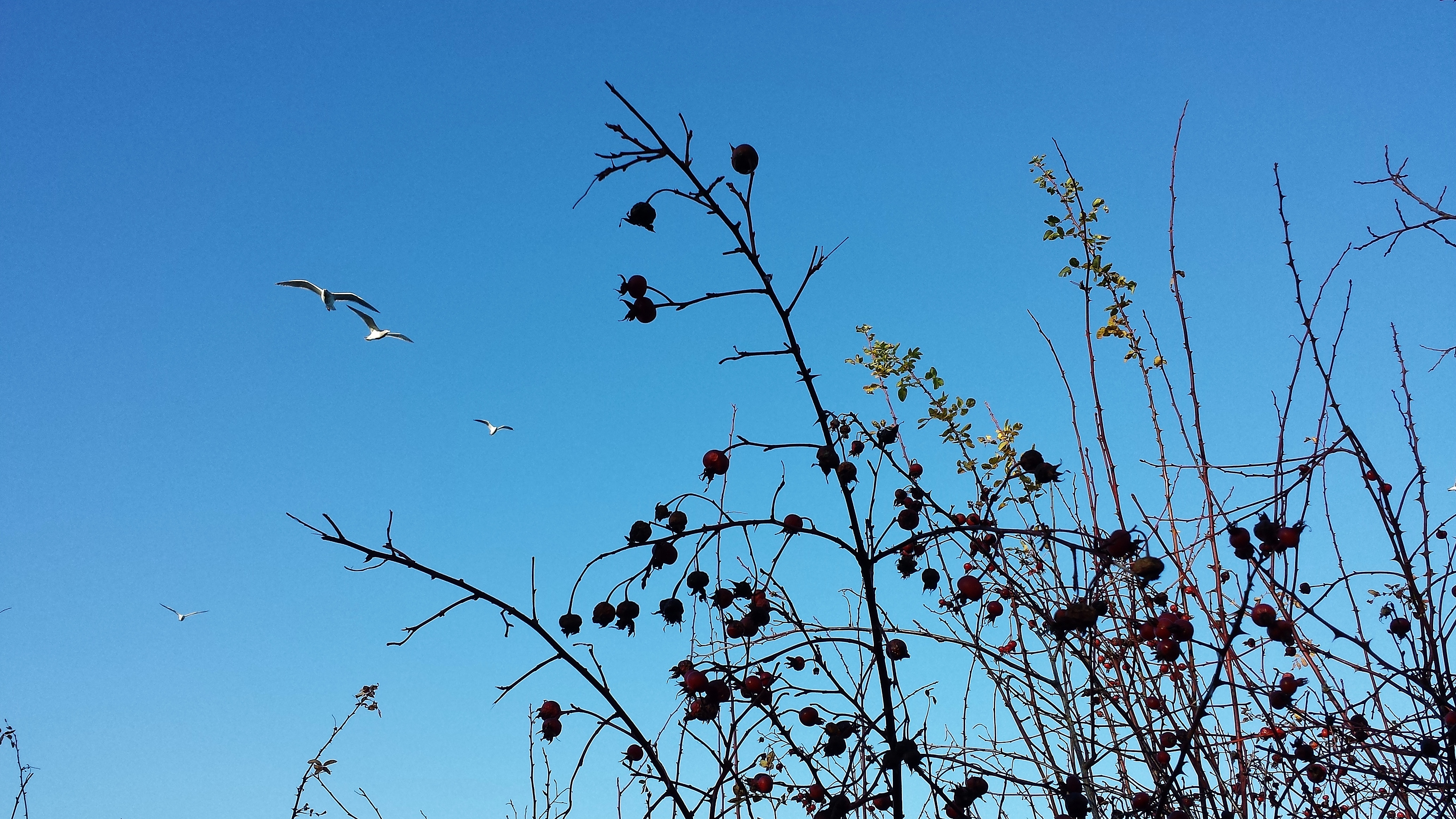
That’s all for now…in honor of the blog earlier today on the review of the union of inner/outer wilderness, here is a photo of me and a tree…(the tangled branches represent my tangled thoughts, and the teleology of branches represent my seeking the truth, which appears to be mostly off to one side of my head).

Oh, yes! I also saw Rebecca Solnit speak a couple weeks ago. I should really do a blog on that soon…

20140614_184716

The Spiritual Transformation of Humanity

A Review of Hans Thomas Hakl’s, Eranos: an alternative intellectual history of the twentieth century

51UwChYBClL._SY344_BO1,204,203,200_[1]

This is a marvelously fascinating book documenting the history of Eranos, a yearly, interdisciplinary meeting in Ascona, Switzerland that started in 1933 and continues on in different forms to the present day. Hakl’s book is balanced, while sympathetic to the underlying spirit of Eranos. It is very well-referenced, with almost one hundred pages of 8 point font notes. Eranos was the life work of Olga Fröbe, who brought together an interdisciplinary group of speakers for an exploration of the spirit in history, philosophy, psychology, science and mythology. These speakers included: Carl Jung, Joseph Campbell, James Hillman, Henry Corbin, Mircea Eliade, D. T. Suzuki, Martin Buber, Paul Tillich, Heinrich Zimmer, and innumerable others. Hakl’s work is detailed and exhaustive as well as broadly connected to larger societal themes. While the topic is very different, it is worth comparing it to Lipstick Traces: A Secret History of the Twentieth Century, by Greil Marcus.

After an in-depth exploration of the people who participated in Eranos as well as the controversies surrounding the meetings and the individual lecturers’ lives and works, Hakl gives an interesting summary of subsequent organizations that sought to combine the scholarly and the spiritual, perhaps using Eranos as a prototype. Most notably, for an American audience, Hakl cites a discussion he had with Michael Murphy discussing the role that Eranos played as an inspiration for Esalen, in California, which has played such an important role in the human potential movement and fostering personal growth.

As well as a history of a specific place and organization and specific historical individuals, Hakl also explores broader tensions between science, spirituality, objectivity, subjectivity, modernism, esotericism, individual and the collective. Hakl discusses the tensions between the rational/scientific world view and the esoteric/spiritual world view. His argument is that Eranos was a third view point which sought to integrate both science and inner spiritual experience. Here are a couple quotes that Hakl cites regarding the goal of Eranos as seeking a “rationality that does not reduce or fragment what it sees, but which enriches, synthesizes, and evokes responses,” (Charles Scott, 258). Eranos’ aim was “indeed to bring about more than an understanding but rather a knowing through direct experience,” (Ira Progoff, 258-9). And lastly, Henry Corbin, “we in Eranos never had the intention of adapting ourselves to some given model, we never paid heed to any orthodoxy, and we were concerned with only one thing, namely to press on into the innermost part of ourselves, pursuing that truth until we reach its farthest limits, (261). In summary, “Eranos was thus not exclusively concerned with learned scholarship but equally (although not in the case of all participants) with the spiritual transformation of humanity,” (Hakl, 11).

I highly recommend this book for those who are interested in the “spiritual transformation of humanity,” as well in the history of this organization that brought together such influential thinkers as Carl Jung, James Hillman, Joseph Campbell, Mircea Eliade and Henry Corbin. The book offers glimpses into the lives of these different figures who lectured at Eranos, where they could try out new ideas and find a source for inspiration and companionship in a place whose goal was the synergistic integration of inner and outer knowing.

The Tension Between Outer Religion (and Psychology) and Inner Mysticism: Jung, Buber and Gnosis

A Review of Alfred Ribi’s, The Search for Roots: C. G. Jung and the Tradition of Gnosis

9780615850627[1]

Gnosis is one of those terms that seem to mean many different things to many different people. Ribi defines it as, “Gnosis is not a ready-made system…It is the undeveloped potential of Christian myth…Developing this myth is a task for people of our own time. It is an introverted task, a personal task,” (ix). Through his study of Gnosis, as well as of Jung (even collecting the same books that Jung referenced in his own writings on Gnosis and alchemy), Ribi sees Jung’s goal as an example of the Gnostic introverted quest for divine understanding of self and God. Jung, himself, near the end of his life said that the main “interest of my work is not concerned with the treatment of neurosis, but rather with the approach to the numinous,” (7).

Lance Owens’ foreword to the 2013 English publication of the book, gives a nice summary of Jung’s inner life and writings, taking into account Liber Novus, The Red Book, published in 2009. This foreword is important as Ribi’s book was originally published in German in 1999 and thus did not have access to The Red Book at the time it was written. This personal journal of Jung’s connects the dots between Jung’s professional work in psychotherapy, mythology and alchemy with his own personal journey. The Red Book traces Jung’s inner development and experiences, from ages 38-54, which can be seen as the source material for his later works. The book itself takes the form of an alchemical or Gnostic text, a sourcebook of dreams and visions, illustrated with fantastic images. Ribi further describes Gnosis as “a spontaneous, creative phenomenon…always a fresh creation, a processing of material that to some extent is already known, but now newly organizing in novel ways and contexts,” (39). Thus The Red Book can be viewed as a Gnostic text, arising from Jung’s inner mind and spirit, a new creation, but also a reprocessing of age-old myths and material. There is no doubt that Jung studied the Gnostics and that he was sympathetic to the spiritual process of Gnosticism.

Ribi begins his book by examining the disagreement between Martin Buber and Jung over Gnosticism and ultimately, inner mystical experience. Whereas Buber considers Jung a Gnostic, and that this is a “bad” thing, Jung himself found in Alchemy and Gnosticism a link to a living, spiritual, inner experience that was the very meaning and purpose of life. For instance, Jung writes, “when I began to understand alchemy I realized that it represented a historical link with Gnosticism, and a continuity therefore existed between past and present. Grounded in the natural philosophy of the Middle Ages, alchemy formed the bridge on the one hand to the past, to Gnosticism, and on the other into the future, to the modern psychology of the unconscious,” (133). For Jung, Gnosticism is one example, as is alchemy, of the individual’s inner search for Self, the inner path to God. Ribi does resort to a form of “psychoanalysis” of Martin Buber’s childhood to explain his opposition to Jung, Gnosis, psychology, and inner, mystical experience. This personal analysis is worth considering, even though it does not always come across as balanced, but in the end is not the most important point. Ribi illuminates the rift between Jung and Buber as part of a larger debate between inner and outer experience, which can be cast as an example of the debate between the tradition of organized religion and the experiences of the individual mystic. To someone within a religious tradition, the individual mystic’s journey often appears heretical, as it is by definition, individual, new and creative, rather than being defined in terms of tradition and orthodoxy.

Through the remainder of the book, Ribi traces Jung’s life’s work through different phases and highlights the role that Gnostic beliefs played, for instance in the writing, in 1916, of  The Seven Sermons of the Dead, Septum Sermones ad Mortuos, with its Gnostic imagery and terminology, it is a mythopoetic text, more spiritual than psychological. Ribi’s examination of this text takes up the remaining 120 pages of his book and it closes somewhat abruptly, without a summing up of the overall book. Still, this book is a very interesting and rewarding read of Gnosticism; the personal relationship between Jung and Buber as it mirrors a larger spiritual/philosophical debate; and as an exploration of the role of Gnostic thought in Jung’s work. In the end, it is probably more true that Jung was not simply “a Gnostic,” as it was that he studied Gnosticism as one of the ways to strive after inner Truth. As Jung writes in the Seven Sermons, “At bottom, therefore, there is only one striving, namely the striving after your own being,” (210).

The Man Behind the Words: A Review of The Selected Letters of C. G. Jung, 1909-1961

A Review of The Selected Letters of C. G. Jung, 1909-1961

Published through the Bollingen Series, Princeton University Press 1953, this edition 1984
Selected and edited by Gerhard Adler in collaboration with Aniela Jaffe
Translated from the German by R.F.C. Hull

411TQGxwymL._SL500_SY344_BO1,204,203,200_[1]

I picked up this book intending to just read through a few of the higher profile letters to people whom I recognized and was interested in, such as Henry Corbin, Sandor Ferenczi, Herman Hesse, James Joyce, Erich Neumann, Heinrich Zimmer and Upton Sinclair. I found myself, however, drawn into replies to anonymous writers concerning questions about God and spirituality as well as letters to religious figures. In general, the longest letters are those that discuss God and religious and spiritual themes. Jung, himself in the letters, states that in his published works, the “language I speak must be ambiguous, must have two meanings, in order to do justice to the dual aspect of our psychic nature. I strive quite consciously and deliberately for ambiguity of expression,” (108-109). This is often what I first felt reading Jung’s work, “Does he mean this, or that, is this ‘real’ or symbolic?” When he would write about “archetypes,” “the self” and the “God-Image,” I was never sure in what sense Jung thought these “things” existed. He obviously thought they were important unconscious influences and that they were involved in therapeutic processes.

It has become clear to me after reading Jung’s recently published journal, The Red Book, that Jung was primarily a mystic who strove to translate his experiences into the scientific and objective language of psychology. In addition to trying to write to the unconscious as well as consciousness of his readers, he was trying to create a language and science that was more objective than his subjective, but deep and meaningful inner experiences. In his letters, he is more open, and doesn’t seem to strive for ambiguity in his language. The letters take many forms: consoling a woman with terminal cancer and talking about his own near death experience after a heart attack; giving therapeutic advice to other therapists; giving tips on how to interact with difficult influential people; clarifying to curious (or in the case of the orthodox religious, irritated) comments about his writing and theories; trading books and thoughts with other writers; discussing dreams; and sharing his professional and spiritual dilemmas with confidants. What comes through in the letters is a devout man, exploring what is of utmost importance to him while trying to help others on a similar path. Jung had many unusual experiences and used his inner life as the template for his lifelong quest to understand the unseen forces within us that shape our lives: the unconscious and God.

I’ll just give a couple quotes in closing from the letters. This is from a letter to an anonymous woman, “our proper life-task must necessarily appear impossible to us, for only then can we be certain that all our latent powers are brought into play,” (16). And this, a longer quote from a December 18, 1946 letter to Father Victor White, “Yesterday I had a marvelous dream: One bluish diamond, like a star high in heaven, reflected in a round quiet pool—heaven above, heaven below. The imago Dei in the darkness of the earth, this is myself. The dream meant a great consolation. I am no more a black and endless sea of misery and suffering but a certain amount thereof contained in a divine vessel. I am very weak. The situation dubious. Death does not seem imminent, although an embolism can occur anytime again…It seems to me as if I am ready to die, although as it looks to me some powerful thoughts are still flickering like lightnings in a summer night. Yet they are not mine, they belong to God, as everything else which bears mentioning,” (69-70).

“We’ve got it backwards, the human is the model for the machine.” PART I

Puget Sound

Puget Sound

The following blog consists of an on-line discussion between Dave Kopacz and Carl Reisman. Carl is a “holistic” lawyer, cook, and naturalist based in Champaign-Urbana, Illinois. This on-line discussion follows up on a recent conversation that Carl and Dave had in Seattle, after not seeing each other for several years. This is Part I of two parts.

Dave:

Carl, when we were talking in Seattle, you said, “We’ve got it backwards, the human is the model for the machine.” This quote is what sparked a great conversation and lead to the idea of posting a blogalogue (blog-dialogue).

Carl:

I was just thinking of you as I was walking the dogs around the block–just that I enjoyed our visit in Seattle and hoped we would stay in touch.  Nice to see your email pop up.  Connections between us all are subtle and real.

I like your questions and will wing a few answers.

Dave:

How do you balance standardization in service delivery with supporting human-to-human interaction?

Carl:

I am not sure if the “you” is referring to me or just people in general.  I can only speak for myself, and write as a solo law practitioner who used to be a professional cook.  As a cook, I can understand the need for customers who order pancakes today to be able to get the same pancakes when they return next week.  If they get lousy pancakes, they won’t cut slack, even if they are told that the cook is out sick and a new cook getting trained.  At least this is the dominant logic in the restaurant business, and it certainly is behind the success of chain restaurants.  No matter where you go on the planet, a Big Mac is a Big Mac.

Implicit in the idea, though, is standardizing quality.  No need to standardize something that sucks.  People want good experiences each time they come to a human exchange, be it with a doctor, lawyer, teacher, musician, or mechanic.  To some degree, this can be standardized, by an individual or organization imagining the experience from the point of view of their patient or customer, and trying to be consistent in delivering what they imagine that person would want.

I see no conflict with providing standardized, quality experiences and providing  human to human interaction–I think people generally prefer dealing with humans to machines, but not always.  If people always preferred humans, self-service gas stations would not have succeeded.  In some situations, people just want efficiency and to move on with their days.  It’s easy to figure out what these situations are by taking a minute to think about what we would want in those circumstances.  But when we are at our most vulnerable, such as when a doctor is telling us that they found cancer, we want the human touch.

Dave:

What does it mean to be fully human?

Carl:

This reminds me of my father asking me, after looking at my report card, “Did you do your best?”  I struggled to answer, because I thought it was impossible to do one’s best.  You could always do a little more.

So, too, a human can wake up to compassion, and still find that their heart has lots of room to grow.

It seems limiting to define oneself as being exclusively human, even a fully actualized human.  Biologically, we are a sort of community that includes a variety of organisms living and interacting with our human cells.  Our ancestors were bacteria.  We depend upon plants and other animals for life, not to mention, sun, soil, water, air, and our community.  Truly, we are products of universal processes and dependent upon the universe for our support.  It is a miracle we are alive.

A different question might be, Can we be fully human without awareness of our debt to everything which sustains us ? I think we sometimes are more sensitive and awake to these connections.  When we are, we are called to be humble and more responsible.  That seems like a good start on the long pilgrimage to find our humanity.

These questions bring to mind the word “humane.”  We are born to human parents, and are human.  But we grow in our understanding and compassion, and become more humane.

As biological creatures, we need to be selfish to survive, at least to some degree.  But we also need to learn to share to survive as a species.  You can see this tension play out as babies become toddlers.  It is painful to learn to share.  A baby’s first word may be “mine.”  It takes a great deal of patient supervision and praise to teach a toddler that there can be a benefit to sharing a toy or snack.  This is a primary lesson in our growth.  If we miss this one, we are forever damaged in our ability to relate.

It is painful to share.  We want it all and have to give up some of our claim.  There is a risk to sharing, too.  We hope we may get something in return. Sometimes we are terribly disappointed.

I don’t believe there is a pristine state that we  come from or strive towards–no noble savage, no sainthood, no innocent childhood.  Everybody wrestles with the same problem faced by the toddler–do I play with this toy by myself or give someone else a turn?  If I am hungry, do I eat the cookie by myself or share it?

We are steeped in the myth of progress, both spiritual and material.  We have the story of the pilgrim, toiling on the path to God.  We have the story of civilization, up from savages, building the shining city on the hill.

I like the idea that being human or building a culture is more like making bread–you take disparate elements, and through work, skill, and love  you create something that is entirely different than the sum of its parts, that can be beautiful and sustain life.  There is no final goal of perfection.  There is the need for constant renewal.  Death, rebirth, growth, death, rebirth.  We are participants in a terrible and beautiful cycle.

The Buddhists teach that the self can be transcended.  The heart can melt into compassion.  After it melts into compassion, though, it’s back to the fundamental challenges of sharing toys, needy people, declining health, disappointment.  This is not to discount the joys of life, which can be better appreciated if one isn’t mired in self pity.   Through a spiritual practice, we might gain a small margin of humor as we deal with frustrations and a deeper appreciation of the joys and mysteries of life, but we can’t see a spiritual practice as a journey towards a goal.  The pilgrimage is its own reward.

Dave:

I’d like to follow-up on a couple of points here.

The first is that you seem to be saying that being “human” entails an awareness of being “more than human,” that is to have an awareness that extends beyond one’s immediate context or ego. Also, in this, there seems to be an element that being human entails connecting to that which is non-human. Your astute mention of the bacteria who were our ancestors as well as continue to allow human life through symbiotic relationships (such as aiding in digestion in the GI tract), illuminates the fact that human being occurs within a larger context of non-human nature.

The second point is somewhat related, you write “the long
pilgrimage to find our humanity,” this implies that being human is not a fixed, given state, but a journey toward some point in the future. There are so many conundrums here. Is being selfish (focused on one’s individual needs) to be less human? Is there a pristine, pure state (childhood, the idea of the “noble savage,” sainthood, or some future state of perfection)? When can one be considered “human enough?” For instance, in your analogy with the exam score, when can one say, “I could have done more, but I did well enough.” I think about this a lot, this interplay between acceptance of one’s self and trying harder (e.g. “overcoming” one’s self, or “becoming more” one’s self through effort). Do you have any thoughts on these points?

Carl:

Dave, you asked, “What is it to be fully human?”  If we break down your question, let’s start, “What is it to be?”  Before we can worry about whether we are human, let alone fully human, we need to figure out how to be.  One translation of Lao Tzu is, “The way to do is to be.”  So, maybe the way towards being fully human is to be.

What does it mean to be?

Perhaps God is our greatest creation as humans, a projection of ourselves benevolently looking down upon ourselves as if from above.  We are in a particular moment in time, but also have a sense that some part of ourselves is timeless and watches if not tends our lives, even our moments of pain and panic, with a degree of compassion and humor.

To be fully human, to be fully alive, we integrate this awareness into our workaday consciousness, as a guide.

While a sin may be a trespass against our best nature, in being fully human we learn to forgive and appreciate sin as a part of our process of growth.

I don’t believe that we are traveling from a pure state through a corrupted state to a pure state.  There is no goal.  There is the opportunity to bring light to any particular moment, or to enjoy the darkness or shades of grey.  There is the chance to gain understanding, to forgive, to grow in competence and confidence, to accept losing competence and confidence, failure, and death.  It’s a rough road but a fascinating one.

You asked about what it means to be “human enough.”  The world that we share tells us when we aren’t good participants in the natural order of things.  So, humans as a species will be human enough when we figure out how to live without undermining our own existence.  This is something that humans have already accomplished.  We just recently have collectively lost our way, and hopefully, as a species, will find our way back to that place of appreciation and understanding.

(to be continued…)

Gulls Over Puget Sound Through Winter Branches

Gulls Over Puget Sound Through Winter Branches

Last Thoughts from the Clinical Director: Idealism and Cynicism; Endings and Beginnings

I was going to write this column on endings, as that is the obvious choice for the end of my time as Clinical Director at Buchanan Rehabilitation Centre. I was looking at poems about endings and trying to write the column backwards from those poems. It just wasn’t coming together. Endings are times for reflection, assessment and good-byes. I find myself immersed in emotions and logistics of planning an international move. Oftentimes the demand of the logistics leaves little time for emotional processing and the emotions leave little intellectual energy to deal with the logistics. I feel there is so much more that can be done at Buchanan to make it not just an alright place, or an ok place, but to make it a real gem of a service that combines the best of psychiatry, rehabilitation and recovery. Of course, this implies that there are things that we could be doing better and this is what leads me to a discussion of Idealism and Cynicism.

I am an Idealist, I have come to terms with this in my life. It means that I often see how things could be “better,” different, and it can lead me to a dissatisfaction and frustration with “the way things are.” The Greek philosopher, Plato, can be considered an Idealist. His allegory of the cave illustrates this. He describes a person whose only experience of reality is in seeing moving shapes on the cave wall. These shapes are created by light striking objects and casting shadows. There are two implications here. The first is that the person is only seeing an image or representation of reality (the object). The other is that the person could get up and leave the cave, go out into the sun and experience the external real world. Either way, it can be said that the person is not in touch with reality, but just a shadow of it. The spiritual and philosophical concept of “awakening” is relevant here – that the awakened person recognizes the limited or even illusory nature of the reality that we tend to respond to in day-to-day life. It can be said that an Idealist sees the ideal, that which could be, but is not found in mundane reality. Visionaries and transformers are Idealists.

Psychiatrist, Carl Jung, borrowed from Plato’s concept of “archetypes,” these ideal forms that exist outside of the day-to-day realm. These forms exert an unconscious and sometimes conscious influence on the development of the individual. While he listed many different examples of archetypes, the primary one he was interested in is called “The Self,” which is an image or representation of wholeness that works within the individual, who is by nature a small, separate being when compared to larger reality. Jung saw this archetype or force of the Ideal at work in spiritual and artistic creations and experiences in which the individual had some form of healing or renewal in a connection within the self as well as a sense of connection to a larger whole or purpose in the world.

Plato and Jung are Idealists, they view a True Human Being as actually something that is in the process of becoming through a dialogue with the Ideal (or Real). In the last column, I discussed this dilemma about a True Human Being, whether Truth is something in the moment or whether it is something that is gained in the future. I suppose this argument is reduced if we say that a True Human Being is someone who is in an open dialogue with the Ideal (or we could say the Real, or even the Divine if you are spiritually-oriented). In this sense, it is the connection between the Ideal and the individual that is crucial, rather than some present or future state of the individual.

A discussion of Idealism is incomplete without a discussion of Cynicism. There is a Greek school of philosophy called Cynicism, but my own view is that Cynics are Idealists whose dreams and ideals have been frustrated and unrealized. This calls to mind Nietzsche’s saying that man would rather will nothing than not will. Cynics are Idealists who put their energy into tearing down dreams. In a way, you could say that Cynics are the most important part of an organization because they hold a lot of energy, but it is being directed in a destructive rather than a constructive way. A rehabilitated Cynic will bring far more change to an organization than a level-headed Pragmatist. You can always find Idealists, any young person going into health care is generally an Idealist, but most quickly become either Pragmatists or Cynics as they become frustrated and disillusioned with the idea of being able to do the “best” at their jobs.  Really, a healthy and growing organization needs a balance of all 3 types. The Cynics can pull back the extremes of the Idealists, the Idealists can inspire the others, the Pragmatists can be in the middle, working on what is possible in the moment.

These are my thoughts this morning and they link back to my work on my book, Re-humanizing Medicine, which is essentially a guide for maintaining Idealism and rehabilitating Cynicism. How well have I done in my role as Clinical Director? Well, my answer to that changes minute to minute sometimes throughout the day and ranges from extremes to middle ground. I suppose my answer to that question is sometimes Idealistic, sometimes Cynical, and at times Pragmatic.  Perhaps I could have done more or “better,” but I did what I could. Perhaps if I stayed longer and worked harder, it would make a difference, but it is time for me to go. What do I hope will be the outgrowth of my work? I suppose it is related to all this talk about Idealism and Cynicism in some way.

I have had (before the movers so efficiently and swiftly packed up all my things around me) a plaque on the wall with a quote by Howard Thurman, “Ask not what the world needs, but what brings you alive, because what the world needs is people who have come alive.” This is a good definition of Idealism and includes the Jungian concept of Self, that what is ultimately important is in discovering what it is that brings you alive, that enthuses you and fills you with energy. The challenge of the Idealist is in bridging the gap between the Ideal and the mundane world. Most Idealists would agree that this is never completely possible, that it is always a work in progress and always a compromise to some extent.

A successful Idealist, one who can continue to work and create, must come to terms with this dual-natured reality: on the one hand, to be true to the Ideal vision and on the other hand, to accept that the Ideal is unrealizable. Rebecca Solnit, in her book, Hope in the Dark, describes “activists” (who I would say are a kind of Idealist) who work to make the world a better place. She sees activism as a mode of being, a moral responsibility, that is ongoing, and that one engages in regardless of the “state of the world,” or the “chance to succeed.”  She describes the term activist “to mean a particular kind of engagement – and a specific politic:  one that seeks to democratize the world, to share power, to protect difference and complexity, human and otherwise,” (18).  “For a long time, I’ve thought that the purpose of activism and art, or at least of mine, is to make a world in which people are producers of meaning, not consumers, and writing this book I now see how this is connected to the politics of hope and to those revolutionary days that are the days of creation of the world,” (115).  To define an activist or Idealist as a kind of engagement or a mode of being, de-couples it from the outcome. One maintains hope because one has decided to be a hopeful person. One is an activist because they have decided that it is right to work to make the world a better place, regardless of the chance of success. One is an Idealist because they have made the choice to work to bridge the gap between the Ideal and the world.

What does all this have to do with Buchanan and my departure? I have said before that in psychiatric rehabilitation we are in the business of hope. What I hope I have contributed to Buchanan is some of this attitude that we can and should work to bring the Ideal into the actual. This means we can and should work for change and growth in ourselves and for clients. What about endings and new beginnings? Well, those two always seem to go together, don’t they? I’ll have to leave you to work that out for yourself.


The Layers

I have walked through many lives,
some of them my own,
and I am not who I was,
though some principle of being
abides, from which I struggle
not to stray.
When I look behind,
as I am compelled to look
before I can gather strength
to proceed on my journey,
I see the milestones dwindling
toward the horizon
and the slow fires trailing
from the abandoned camp sites
over which scavenger angels
wheel on heavy wings.
Oh, I have made myself a tribe
out of my true affections,
and my tribe is scattered!
How shall the heart be reconciled
to its feast of losses?
In a rising wind
the manic dust of my friends,
those who fell along the way,
bitterly stings my face.
Yet I turn, I turn,
exulting somewhat,
with my will intact to go
wherever I need to go,
and every stone on the road
precious to me.
In my darkest night,
when the moon was covered
and I roamed through wreckage,
a nimbus-clouded voice
directed me:
“Live in the layers,
not on the litter.”
Though I lack the art
to decipher it,
no doubt the next chapter
in my book of transformations
is already written.
I am not done with my changes.

(Stanley Kunitz)


Thoughts from the Clinical Director: Becoming a True Human Being

“we are…making ourselves better heart people,” (Joseph Rael)

A hobby of mine is personal growth and transformation. This is a larger context for human being than a focus on psychiatric treatment or symptoms, although it can include addressing those. During my time at Buchanan Rehabilitation Centre, my goal has been to bring this perspective into our daily work in psychiatric rehabilitation.

What does it mean to be “A True Human Being” or to be Fully Human? What I have found is that it is a funny paradox that involves both acceptance of where someone (or one’s self) is, that people are “ok” (with all their quirks and oddities and problems) and it also involves being on a path of change, growth, self-knowledge and transformation. Every human being is unique and will hit a unique point in their life in which the drive or need to change becomes stronger than past patterns and ego defenses. Rehabilitation is fundamentally holistic – it requires many different approaches and disciplines to support the growth of the True Human Being (by this I mean, again, both for ourselves as health professionals and for clients). That is why a collaborative Multi-Disciplinary Team (MDT) is so important. Each discipline brings a different perspective and dimension to working with human beings and this fosters authentic growth and transformation.  A collaborative MDT is like a healthy human being or ecosystem – comprised of significantly different organs or organisms that all work together in an expression of their unique individuality while simultaneously working together as a collective. Sometimes this is how writers describe the difference between reductionism and holism – that reductionism is about breaking down something large into standard, interchangeable component parts, whereas holism is about something greater than the sum of the component parts. This means that somehow, beyond the biochemistry, trauma history, family dynamics and substance abuse, there is something larger that is both already present and in the process of emerging – the True Human Being.

Ok, I admit that there is a serious paradox here. Is the True Human Being something that is already present in the individual (maybe already ok as it is or maybe just obscured and waiting to be uncovered) or is the True Human Being something that is always in the future – waiting to emerge? As with any paradox about life, the answer is generally both/and rather than either/or. We can look at the relationship or dialectic between Being (already present in the moment) or Becoming (unfolding in the present and into the future). In spiritual terms, this is the dialectic between immanence (already there) and transcendence (something separate that needs to be moved toward). Being is similar to mindfulness, which is a slowing down with awareness of who one is in the moment. Becoming is like what is often called the road or path of growth and transformation, for instance M. Scott Peck’s, The Road Less Traveled. Of course these are artificial distinctions for connected processes, as the mindful act of the Acceptance of Being actually is quite transformative. Joseph Rael (Beautiful Painted Arrow), a Native American spiritual teacher describes this paradox in the following quote:

In each moment that we live there is an opportunity to change ourselves in some way. We shatter what we were in the past, so that in the new moment we can remake ourselves. In a day’s time, we go through many different moments, many different opportunities to re-make ourselves and therefore evolve…What is a road or a path? The road is the metaphor for the head of the family of ideas continually investigating themselves to find out who they are being in every single moment. Because we are changing constantly, we have to be continually investigating ourselves. Otherwise, we lose who we really are. Another meaning for road is the direction or form by which our fears are challenged and the manner in which we face them, (Joseph Rael, Being and Vibration, 57-58).

An earlier column that I wrote on Adam Kahne’s theory of Power & Love in social change brings this back to our work in rehabilitation. Love, in its many forms, is acceptance and support for how someone is in the present – it promotes transformation from the inside. Power is more external change from the outside as it structures and shapes external behaviour. In psychiatric rehabilitation Power takes the form of medications, the Mental Health Act, and behaviour plans. Notice how I use the word transformation for the internal process and change for the external process.

Rather than an either/or, Kahne recommends a both/and approach which promotes a balanced dialectic where through the harmonizing of Love and Power a transformation emerges that is greater than what can be achieved through the application of either principle alone.

Thus, for rehabilitation of the True Human Being, both Power and Love; both External Structure and Internal Transformation; both the work of individuals and the collaboration of groups are necessary.

Let’s return to Joseph Rael and hear what he has to say about “Becoming A True Human Being.” (Word of Caution: this might get a bit spiritual and mystical, which is what is often lost in a reductionistic view of human beings).

The true human is someone who is aware, someone who is, moment by moment, totally and completely merged with life. He is a listener. She is a listener. Out of that capacity of inner and outer listening, comes the capacity of humility. The true listener is no longer defined by desires or attachments. Instead, he or she is sensitized to consciousness, (67).

In the language of nature, working and listening are the same. Working, or listening, means sensitivity, (65).

A true human is a person who knows who he is because he listens to that inner listening-working voice of effort, (68).

Rael introduces the pair of human activities of plowing and playing (which we could take as more examples of being [playing] and becoming [plowing]).

Plowing is a metaphor for this physical way of looking at life…What ideas do we want to cultivate? We study something and then walk it out so that we can plow the fertile field of consciousness and then move forth and plant the seed in that field that we have plowed, which in this case is our bodies. In that way, we plant what we cultivate in the weeks to come and it eventually produces fruit, (68-69).

The metaphor of playing is quite different. Playing means strengthening oneself…making the self what is becoming…Whether we are playing a violin or a guitar, or playing football, tennis or cards, we are, through playing, making ourselves greater heart people, (69).

For the true human, the first thing is to find out how to listen. Listening is different from seeing. Seeing, and the eyes, were created so we could move into things and through things. The ear, on the other hand, was created for the art of giving. One of the attributes of the ear is the give-away; to give into the effort of giving, to give into the effort itself, the effort we can find in the toil of our work in our lives. When we are listening, we are giving. When we are giving of ourselves, we are strengthening the work-listening aspects of ourselves. We are listeners to people’s cosmic needs. First we listen to what needs to be done. But if we start with trying to see what needs to be done we will miss the point and we will not really touch the basic humanity of the situation that is talking to us at that moment in time, (70).

To return back to what all this mystical stuff means for us as health professionals and the clients, we can see a couple things in these quotes. First, to be human is to listen and this is also related to work (work-listening), and this is all related to giving. We must listen with our hearts first, and then see with our minds what needs to be done. This can all be another example of the listening-heart (as holistic transformation) and the seeing-mind (as reductionistic action).  The recent presentation I gave at the Health of Health Professionals conference in Brisbane focused on this aspect of giving as crucial to providing whole person care as well as to supporting the whole person of the professional. When we view work as a gift rather than a time-limited resource or a uni-directional vector, we move from a draining experience to a collaborative and regenerating experience. Lewis Hyde describes the gift experience as:

*         “the gift is not used up in use” (187)

*         “a gift makes a connection…a gift establishes a feeling-bond between two people, while the sale of a commodity leaves no necessary connection” (72)

*         “A gift that has the power to change us awakens a part of the soul” (65)
(Lewis Hyde, The Gift: Creativity and the Artist in the Modern World)

So far, I hope this all can be at least partially translated back to our work in psychiatric rehabilitation. Let’s go ahead and follow Beautiful Painted Arrow a little further, though, even if it might become a greater challenge to bring it back to our work in a psychiatric system. For the most part, I just let the words speak for themselves.

We become human in order to continue listening so that we can continue to verify that we exist, (72).

In the end, the mystery is the infinite void and the mystery of the void is all of us remembering, because, truly speaking, we do not exist, (75).

Sorry, if you follow any mystical line of experience and inquiry you generally end up with strange statements about the void and reality.  Let’s just close with a poem by Rael and then I’ll add an appendix for those of anyone who wants to hear more of Rael’s ideas.

Life is the road of Goodness.
Life is connected to time
as crystalized meanings.
Life purifies itself with heart connection
so it can ascend beyond the heavens as radiating innocence.

(Joseph Rael – Beautiful Painted Arrow)

Appendix: Eighteen Ideas from Joseph Rael

1. Planet Earth is constantly giving life to all things on the earth so that, in the act of giving to us, she shows us all how to serve, to give to her and ourselves.

2. First was the Dream and then the Vision that became the walking, talking, light of the one Great Mystery, which is all of us who are living on the Earth.

3. Taah-Keh (The Big Bang) was created “to initiate action” and from this came the first circle of light. [Taah-Keh refers to a Tiwa myth in which two fawns being pursued by the Old Giantess hide inside the crack in a plow. When the Plowmaker hits the plow with his hammer, the fawns go flying out.]

4. The eyes are channels for the “washing lights” that bring clarity to ideas.

5. The rainbows are hues (vibrations of the rock people) of life on the earth. And the rainbows represent, in metaphor, the breath of the Butterfly of Dream Time, the bridge to eternity.

6. The Earth is the Mother Starship of the Ancient Ones.

7. Resonating energy is simply universal intelligence descending onto its own understanding of the vast greatness of its own greater, inner self.

8. The idea of enteringness created the first form of the face.

9. Water is crystallized light which produces physical light as well as spiritual light. Interestingly, the symbol for water in chemistry is H2O. In Tiwa, the sound of HO, “Haah-Oo,” means “Little Leaf.” The leaf is the symbol for life.

10. From the first mist of the first cloud comes the idea of birthing as dropping from the biological mother’s womb. And the thread that keeps us connected to our origins was primarily created to help us keep vigilance over what we do and say: right actions/right thoughts.

11. Life on the earth is a living daily experience of inspiring qualities and inner knowing. We find them, these gems of truth, only as we are ready to acknowledge them in our lives.

12. The light is always chasing the shadow and the shadow is always following the light.

13. The breath is the key to all of the mysteries.

14. The breath is the infinite void from which all creativity is first given life, then its purpose.

15. Dream essence of life is what heals life, whereas living life is the visionary part of it.

16. The first visionary who came from the first dream was in the dream state too because he was dreaming his vision. That is, he was the dreamer and the one being dreamed. Consequently, all of life is simply made up of a healing sate that is dreaming itself beyond itself.

17. The eyes are how the Great Mystery sees, how it holds on, moment by moment holds to the gifts of each moment before the next moment appears, bringing with it its own face.

18. The earth is a large stone which is the holder and keeper of all the mysteries that created the life potential here on this earthly home of the People.

Having read these ideas, go outside and sit on a rock that has been heated by the sun. As you sit on the stone, the warmth of the rock will travel through all parts of your body and when the radiant heat from the stone has traveled through all the different parts of your body, the knowledge that lives in what you have just read will be acknowledged and appear in your life. Hereafter, you will get greater clarity on these principles.




Health of Health Professionals Conference – Brisbane, Australia (October 3-5, 2013)

Brisbane at night

I’ve been over in Australia the past couple weeks. First it was for the HOHP conference. This is the second one I’ve attended and I’ve enjoyed both of them. They happen every 2 years and rotate throughout the Australian states and New Zealand.

Ibis at Roma Parklands

I presented on “Re-humanizing Medicine: Supporting Whole Health in the Professional to Deliver Whole-Person Care.” My main point in this presentation was that the way we treat ourselves is linked to the way we treat patients, therefore to deliver whole-person care, the professional must develop themself as a whole person. This is a theme from my book (which will hopefully be out early 2014).

Bribane Botanical Gardens entrance

The conference draws an idealistic and committed group of health professionals who care equally for good clinical care as well as for creating sustainable and humane work environments for professionals. I spent some time in a couple of workshops with Hilton Koppe, an Australian GP, who uses creative writing and experiential learning in his teaching. His workshop, “Beyond the Clinical Record: Using Creative Writing as Burnout Prevention,” was a great buffet of different writing techniques and exercises that health professionals can use to process the stress of clinical work.

Brisbane Botanical Gardens

Overall, this is a really worthwhile conference for anyone interested in supporting health professionals own health so as to provide better patient care. The conference draws people from worldwide and is a nice size so that you can interact with presenters and get to know attendees of the conference, as well.

Roma Parkland Gardens

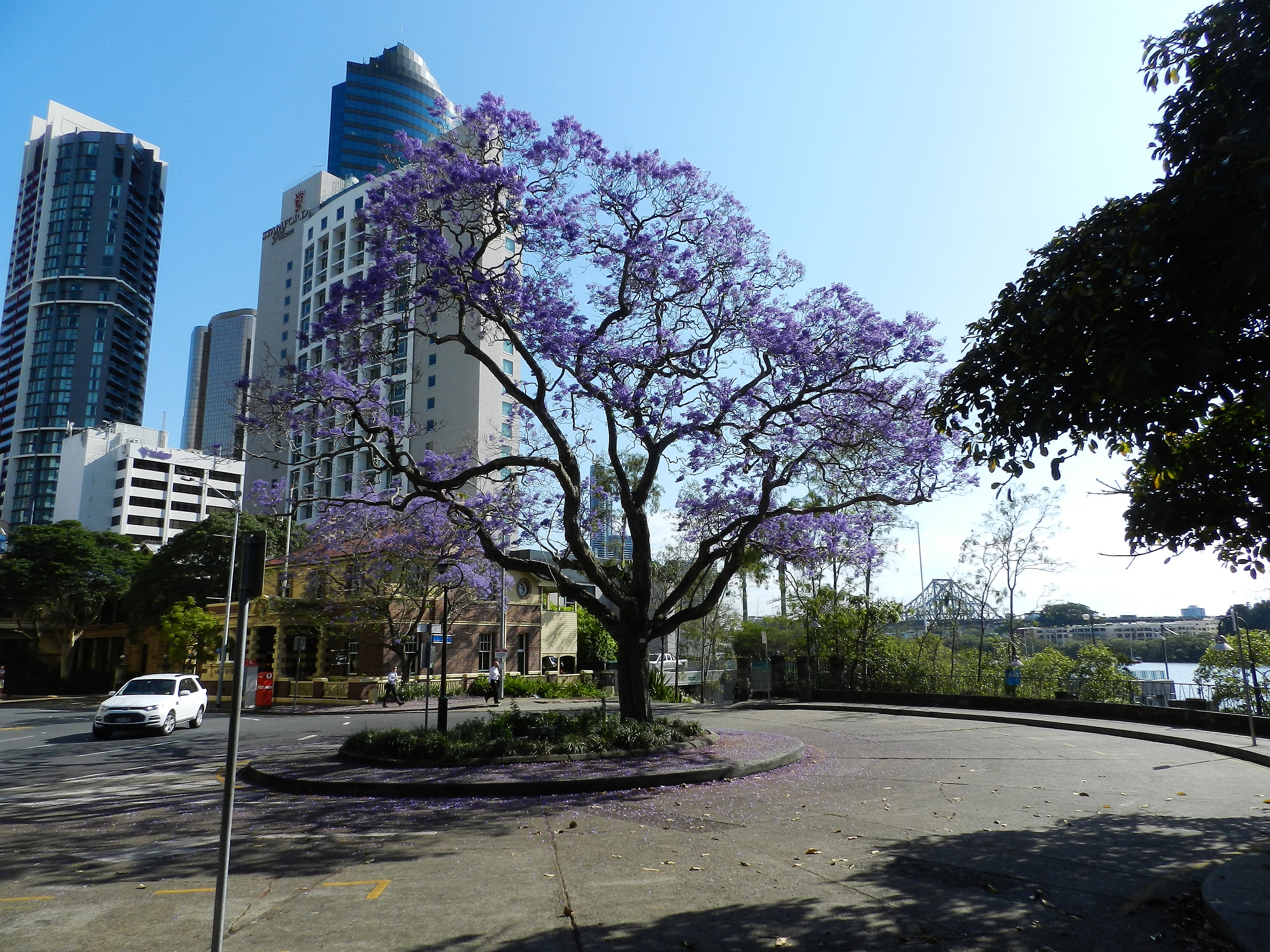
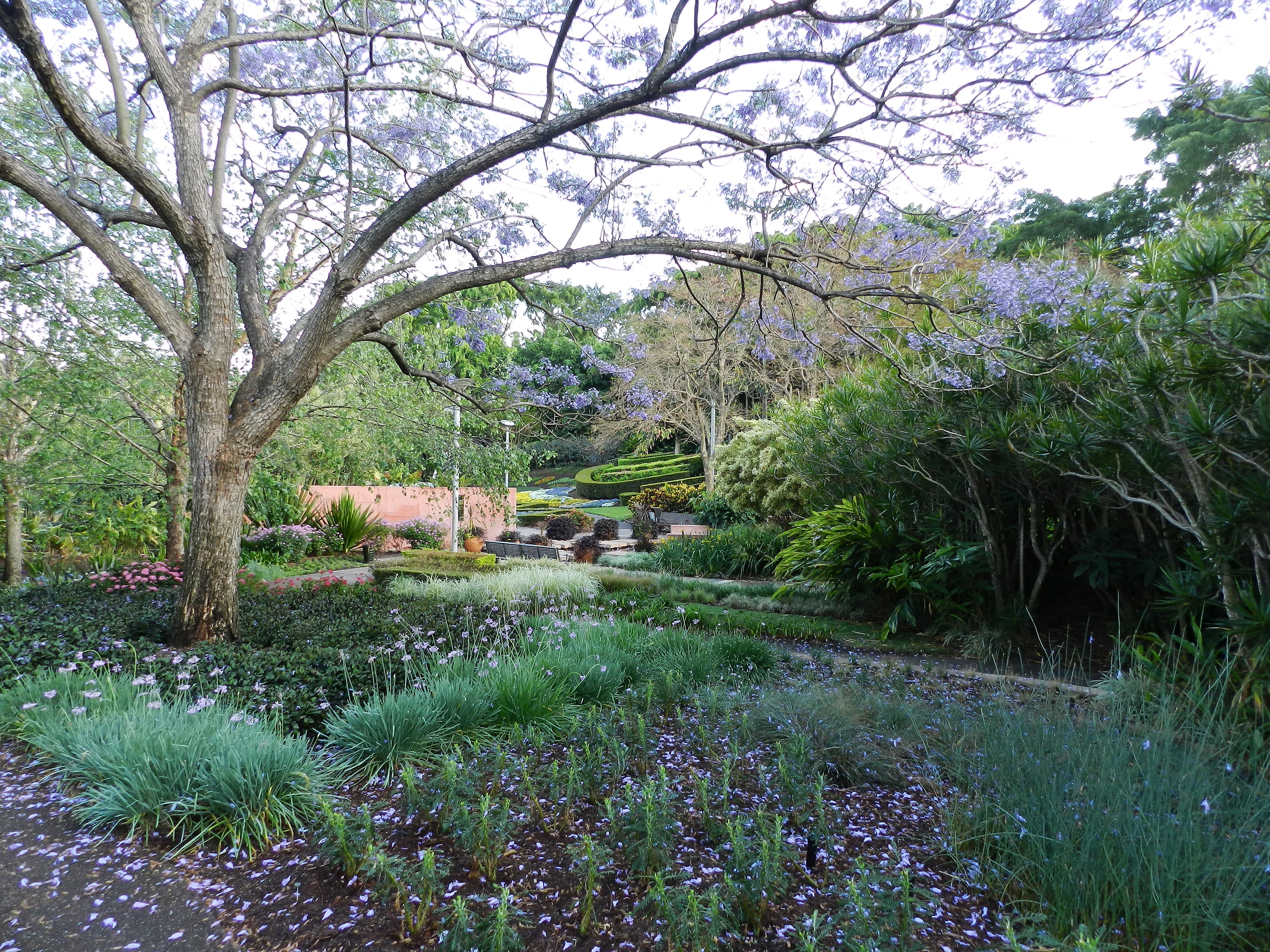
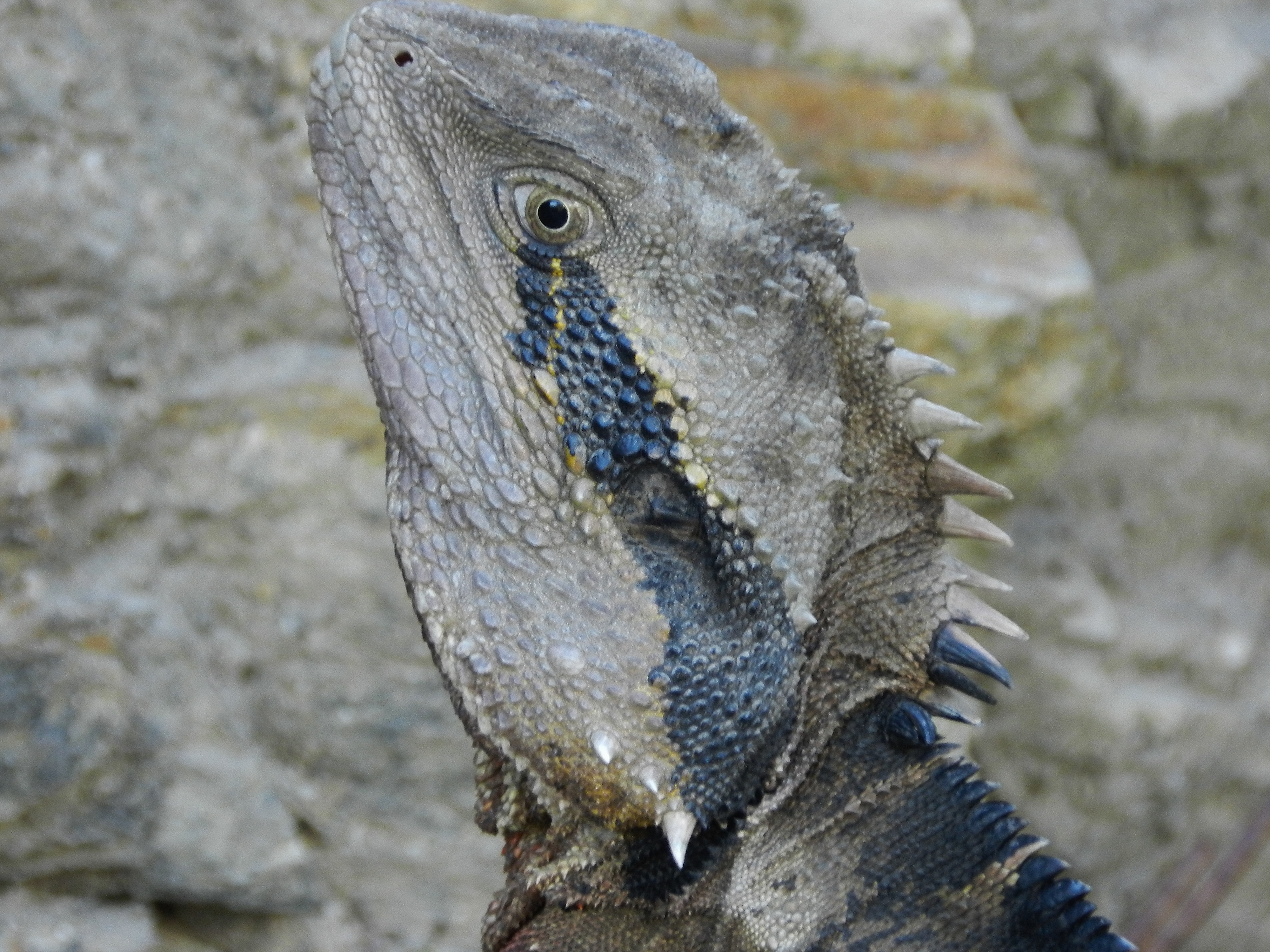
This was the first time I was in Brisbane in the state of Queensland, Australia. The city is on a river and has many nice gardens and restaurants and a very walkable Central Business District. The gardens even have plenty of lizards running about!

Lizard at Roma Parklands

Thoughts from the Clinical Director: Change

I tend to be somewhat philosophical and the more change and stress I am under, the more philosophical I become. Sometimes at night when I don’t know what to do, I lay on my back on my back stairs and look at the stars. Tonight there are patchy, fast moving clouds concealing and revealing the stars. Moby has a song called “We Are All Made of Stars.” The refrain is “people they come together, people they fall apart, no one can stop us now, because we are all made of stars.”

Scientists think we are literally made up of stars – that is that at the time of the Big Bang, there was only hydrogen and helium and these elements made up the first stars. Eventually when these stars died and exploded, they created heavier and heavier elements, such as some of the medium weight elements like carbon, oxygen and nitrogen, and these are the elements that we are physically comprised of.

We are going through a lot of change at BRC in the upcoming months, personally the most relevant change to me is my final day on 24/10/13. We are looking for locums to fill in for the clinical work and will be having interviews for the permanent position in the upcoming weeks and will keep you updated as we have more information. There is also the change of our psychologist leaving, our nurse educator having left as of today, and our other consultant leaving in February. That is a lot of change in the clinical team and it is likely to have some ripple effects in how stable BRC feels.

There is actually something called the Book of Changes, as the I Ching is sometimes translated. This is an ancient Chinese text that dates back to between the second and third millenium BCE. This book is all about studying change. It states that “When change is necessary, there are two mistakes to be avoided. One lies in excessive haste and ruthlessness, which bring disaster. The other lies in excessive hesitation and conservatism, which are also dangerous.”

Psychiatrist, Carl Jung, in his foreword to this book discusses the role of chance and synchronicity that influence how changes play out. No matter how well change is planned for, there will be unforeseen chance events. This makes managing change as much an art as a science.

Here are some more quotes from the Book of Changes, maybe they apply to BRC.

Everything is in motion: therefore if one perseveres there is a prospect of great success, in spite of existing danger. When it is man’s fate to undertake such new beginnnings, everything is still unformed, dark. Hence he must hold back, because any premature move might bring disaster. Likewise, it is very important not to remain alone; in order to overcome the chaos he needs helpers…In order to find one’s place in the infinity of being, one must be able both to separate and to unite…If a person encounters a hindrance at the beginning of an enterprise, he must not try to force advance but must pause and take thought. However, nothing should put him off his course; he must persevere and constantly keep the goal in sight.

I know that the goal at BRC is always to provide supportive care to clients in order to promote mental health, recovery and rehabilitation.

The I Ching discusses three kinds of change: non-change, cyclic change and linear change. Non-change is the fixed background that makes change possible. (At BRC this is the continual goal of supporting rehabilitation; for staring at the sky, it is the, relatively, fixed and unchanging background of stars). Cyclic change is the recurrent change of the organic world, or we can see cycles in the history of psychology, such as between nature/nurture and biology/psychology. (At BRC when changes are proposed I often hear, “we used to do it that way;” with the sky, it is the cycles of clouds covering and uncovering the same stars). Linear change is a form of progress and this creates a specific history for a given place or person. This is another level of viewing cycles of change, that when sequenced together they lead to a progress toward a certain goal. (While there are cycles of change at BRC, there is also a continual adjustment to the changing needs of the clients and the changing philosophy of the DHB. While there are similarities of current change to past methods, we are continually at a unique point in time in which we are striving to bring about the right elements at the right time to support change and growth for clients. For the sky, the interplay of cyclical change against the background of the non-changing sky creates unique moments and configurations which will not happen again, but which create a kind of linear, beautiful movie).

I’m not sure how much the I Ching can help us during this current change, but maybe these concepts can help to put the current anxiety and change into a larger context. The Greek philosopher, Heraclitus, wrote that “There is nothing permanent except change.” I do know that having a larger context in which to view change can lead to greater acceptance of the change in the moment as well as to allow one to work effectively in the current moment rather than resisting the reality of the present.

The Promise of the Inner World

If you take away all a person knows,

you are left with the mouth of a fish

gulping water as fast as it can. If you

take away a person’s coverings, you are

left with the naked freedom of a star.

If you take away all a person has done,

you are left with a soul eager to build.

And if you take away what a person has

saved, you are left with a life that

has to live now.

Stripped of too many thoughts, we

grow wise as stone. Stripped of too

many accomplishments, we grow

possible like the sun. And stripped

of what we hoard, we grow immediate.

So taking away is not just about loss.

Like it or not, we are forced, again

and again, to the nakedness of freedom,

to the eagerness that wants to build its

way out of nothing, and to the poverty

of time that has to live now. If blessed,

we wake, one more time, gulping

our way into tomorrow.

(Mark Nepo, from Reduced to Joy)

Thoughts from the Clinical Director: Crazy?

Sometimes I think that the work that we do at Buchanan is pretty crazy. This is a word that can mean a lot of different things. It is often considered a pejorative term for mental illness. Cultural critics sometimes say that it is a made up term used to label as deviants people who do not think and act the way the dominant culture dictates. What I mean by crazy is that we hold hope for people who often do not have any hope and whose objective circumstances are pretty hopeless. I suppose our work could also be viewed as crazy because it does not fit within the box of inpatient or outpatient mental health treatment that views people as illnesses and symptoms that need to be “normalized” or “controlled” with psychiatric medication. At Buchanan, we still use the standard biomedical treatment approach, but this is not the only way that we view human beings. We strive to see the needs and strengths of the whole person and this could be considered crazy from a reductive biomedical perspective of psychiatry.

I have heard people talk about different kinds of crazy, like “good crazy” and “bad crazy.” Maybe we’re that good kind of crazy by constantly working to bring hope to the hopeless and by taking on clients who are complex and don’t fit squarely within the categories of mental illness and who do not seem to get better in other treatment systems. I think this is good kind of crazy to do this kind of work. It does mean, though, that our work is often not easy, predictable, or straightforward. It takes time and effort to get to know the whole person. It requires patience as we work with people to change life-long patterns. But it is also really fulfilling work when we get the privilege of seeing someone change and grow, which is a double bonus, because I think that also means then that we are changing and growing, too!

In Praise of Craziness, of a Certain Kind

On cold evenings

my grandmother,

with ownership of half of her mind—

the other half having flown back to Bohemia—

spread newspapers over the porch floor

so, she said, the garden ants could crawl beneath

as under a blanket, and keep warm.

and what shall I wish for, for myself,

but being so struck by the lightning of the years

to be like her with what is left, loving.

Mary Oliver