Review of Voices of the Sacred Feminine: Conversations to Re-Shape Our World, by Rev. Dr. Karen Tate

91DmgTw498L[1]

Reverend Dr. Karen Tate’s book Voices of the Sacred Feminine: Conversations to Re-Shape Our World, brings together interviews from her, “Voices of the Sacred Feminine Radio Show.” It includes transcripts from such notables as Jean Shinoda Bolen, Noam Chomsky, Riane Eisler, Matthew Fox, and Starhawk. The book includes 41 interviews, divided into five parts, so there is something for everyone in this book as it includes a broad range of scholars, activists, thinkers, creators and writers.

Part I is “Sacred Feminine. Deity, Archetype and Ideal.” This section examines devotional practices with specific goddesses, such as Persephone, Kali, Mary Magdalene, and the Virgin Mary.

Part II is “Embracing the Sacred Feminine. Ritual and Healing.” This section looks at themes such as altered consciousness, multiculturalism, equality and healing.

Part III is called “Sacred Feminine Values – Alternatives to Patriarchy. Politics and Social Change.” This section is quite interesting with Noam Chomsky’s discussion of “Feminism, Patriarchy and Religion;” Riane Eisler’s “The Essence of Good Business: Companies that Care;” and Jean Shinoda Bolen’s “Antidote to Terrorism.”

Part IV is “Rebirthing the Sacred Feminine. Sacred Activism,” which takes on topics like women in the role of the priesthood, changing the masculine pronoun language of religion’s talk of God, and Matthew Fox’s “Cosmic Christ and the New Humanity.”

Part V is a memorial to the late Layne Redmond.

In the introduction, Reverend Dr. Tate points out the imbalance in the United States that 52% of the population are women, but less than 20% of leadership positions in politics, academia, business and religious institutions are held by women. This creates a gender-biased imbalance, not only in terms of individuals, but also in a lack of representation of the feminine in the creation of cultural values and society. She writes that the dominant patriarchy “stands on four legs of a stool: racism, sexism, environmental and cultural exploitation,” (9) and she sees the Divine Feminine as a “great equalizer” to correct these imbalances.

There are a number of reasons why I chose to review this book. My own work my book, Re-humanizing Medicine: A Holistic Framework for Transforming Your Self, Your Practice, and the Culture of Medicine, draws on a re-valuing of many of the traditional feminine values in medicine, connection, compassion, caring, healing, nurturance, and strengthening relationships. I call for a compassion revolution and a counter-curriculum. The compassion revolution is similar to what Riane Eisler speaks her new book, The Real Wealth of Nations: Creating a Caring Economy in her talk, “The Essence of Good Business: Companies that Care.”

51j79o4avzL[1]

She says that “Ultimately, the real wealth of a nation lies in the quality of its human and natural capital. I should add here that an investment in human capital is an investment in human beings,” (224). A large part of the argument for why contemporary medicine is so dehumanizing is the economic argument, but Eisler argues that caring businesses create healthier, more committed and more productive employees – so the compassion revolution in health care may result not just in better, more human care, but also in more economically viable and sustainable care (sustainably economically, but also emotionally for staff). Paul Spiegelman and Britt Berrett make this argument in their book, Patients Come Second: Leading Change by Changing the Way You Lead.

Rev. Dr. Tate writes that we “start by taking responsibility for our own educations,” (10). This is echoes my call for a counter-curriculum within medicine in health care, that in addition to learning the technical aspects of our trades, we must also take ethical and moral responsibility for maintaining and growing our humanity in the difficult setting in which we practice. While much of health care reform calls for external mandates and incentives, I call for individuals to take responsibility for their Continuing Human Education (CHE) as well as their Continuing Medical Education (CME).

Dr. Jean Shinoda Bolen has written such influential books as, The Tao of Psychology, Goddesses in Everywoman and Gods in Everyman, and her contribution to anthology is called, “Antidote to Terrorism.” I found this quite interesting given my recent work with Veterans that I discuss in a companion blog post to this one. She says that “the feminine principle expressed in circles and the masculine principle of hierarchy must come into balance,” (226). Just as the hero’s or heroine’s journey can be viewed as a circle, the “intention to be in a circle with a spiritual center invites the invisible world of spirit or soul to be in the center of the circle and in the center of the psyche of each person in the circle,” (228). She states that a “soldier is taught to kill, which is also what a terrorist is taught. These are not lessons maternal women want their sons to learn,” (228). Furthermore, she points out that the “Mother’s Day Proclamation, written by Julia Ward Howe in 1870, was a call to mothers to gather together to end wars, so that their sons will not be taught to main or kill the sons of other mothers,” (228). I find these observations particularly relevant in regards to the step of the hero’s journey, the inner and outer union of masculine and feminine, as they show the imbalance of a lack of feminine values and influence within the military, within the individual returning Veteran, as well as, it could be argued, within the society that the Veterans return to.

51yyQrReZaL[1]

Let’s now look at Matthew Fox’s “Cosmic Christ and the New Humanity.” He describes the Cosmic Christ (a term that goes back to Teilhard de Chardin) as divine presence and the holiness of all being. The “New Humanity” is the creation of the capacity for mysticism, which he defines as “multiple experiences of unity,” “our unitive experiences – when you feel at one with being, one with others, one with yourself, one with God,” (312). Fox says that a healthy community for New Humanity does two things: “it turns out lovers – it turns out mystics, the mystic in every person,” and “secondly, it turns out prophets – that is to say spiritual warriors. The mystic says yes, the prophet says no. The prophet…interferes with that which is interfering with the glory, the sacredness of life,” (315). This focus on mysticism and the ability to say yes to the human and no to the dehumanizing also has relevance for my book, which seeks to develop the spiritual capability of health care providers in order to care for the whole person of the patient, which includes the spiritual dimension.

51byu6s5eGL[1]

In closing, there are a lot of different perspectives in Rev. Dr. Karen Tate’s Voices of the Sacred Feminine and there are many topical discussions not just for women, but for all human beings. The book aims to correct the imbalance in our culture and society of the domination of masculine values and the lack of equal representation of feminine values. What we worship and honor in religion and spirituality is a reflection of our behaviors and actions in our mundane lives. In attending to the Sacred Feminine, Rev. Dr. Tate does present many ideas that make us think about our current societal structures and values and these conversations do have the power to re-shape our world.

Re-humanizing Medicine on Web Radio!

You can listen to an interview with Dave Kopacz about his book, Re-humanizing Medicine, by Mary Treacy O’Keefe on her radio show, “Hope, Healing and WellBeing” at WebTalkRadio. It is my first radio appearance for the book. It is about 35 minutes long.

Mary Treacy O'Keefe

Mary Treacy O’Keefe

You can listen to the interview by following this link.

Thanks Mary for the interview, I think it turned out great!

Also, the book is now in warehouses and I received notice from Amazon that the pre-orders of the book should start being delivered early next month, even before the official release date!

jhp53db8b682bd57[1]

Twenty-five Years On, the Journey Continues…

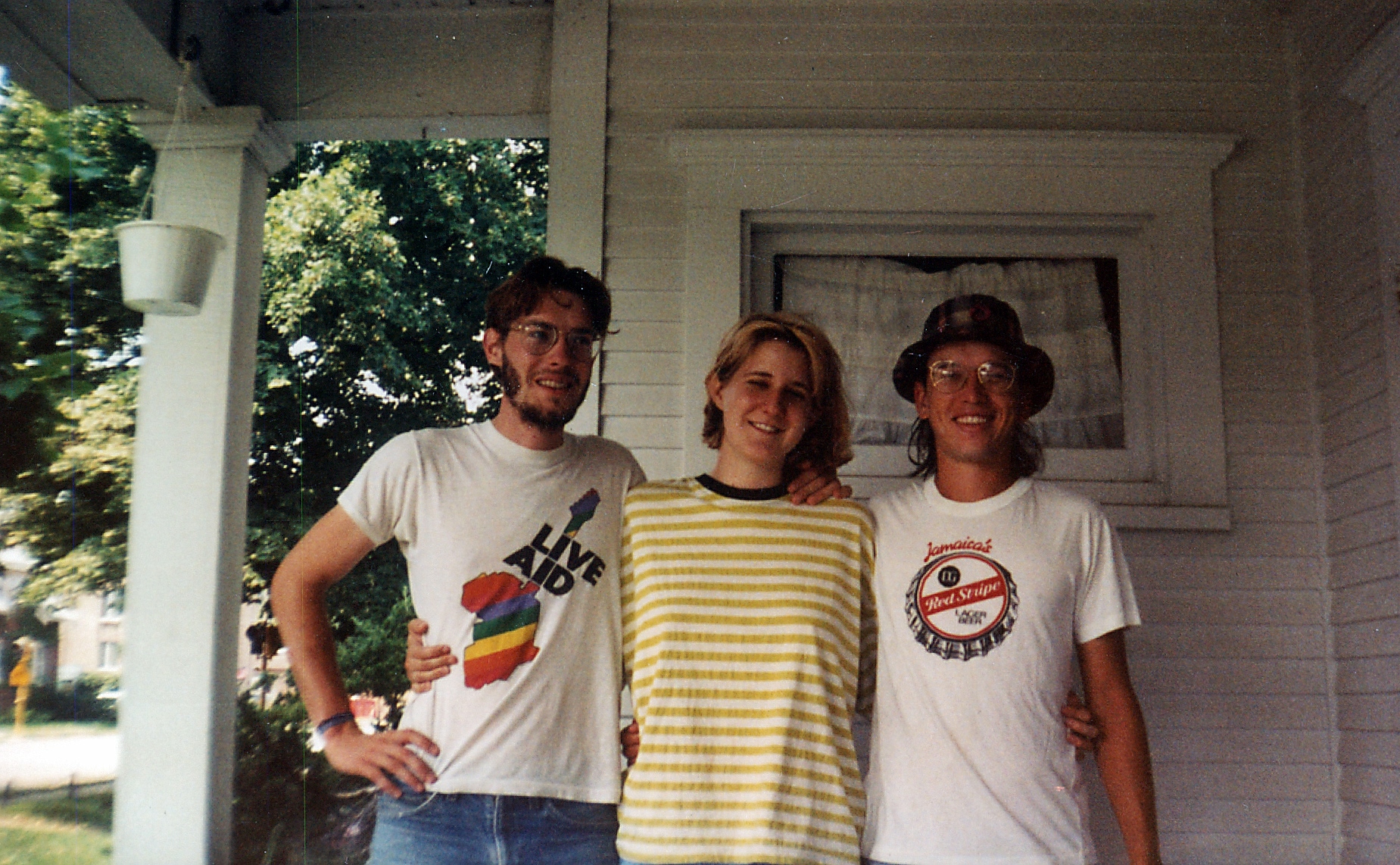
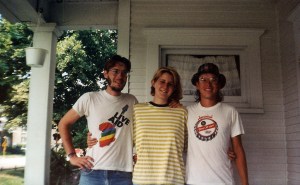
"Mountain Man Doc Dave" returned from the mountains, with Mary Pat & Mike

“Mountain Man Doc Dave” returned from the mountains, with Mary Pat & Mike

Twenty-five years ago, 7/12/89 (July 12th incidentally being Henry David Thoreau’s birthday), I set out on a 50 hour Greyhound bus ride from Chicago to Seattle. I had just graduated from college and I had a backpack full of books and other essential items. It was my trip to find myself, my vision quest – that in between time of life, between education and adult pursuits. It was one of the foundational events in my counter-curriculum of humanization and re-humanization (I hope to write more in a future blog about this concept of the counter-curriculum as described in my forth-coming book, but before I can do that, I must honor my past).

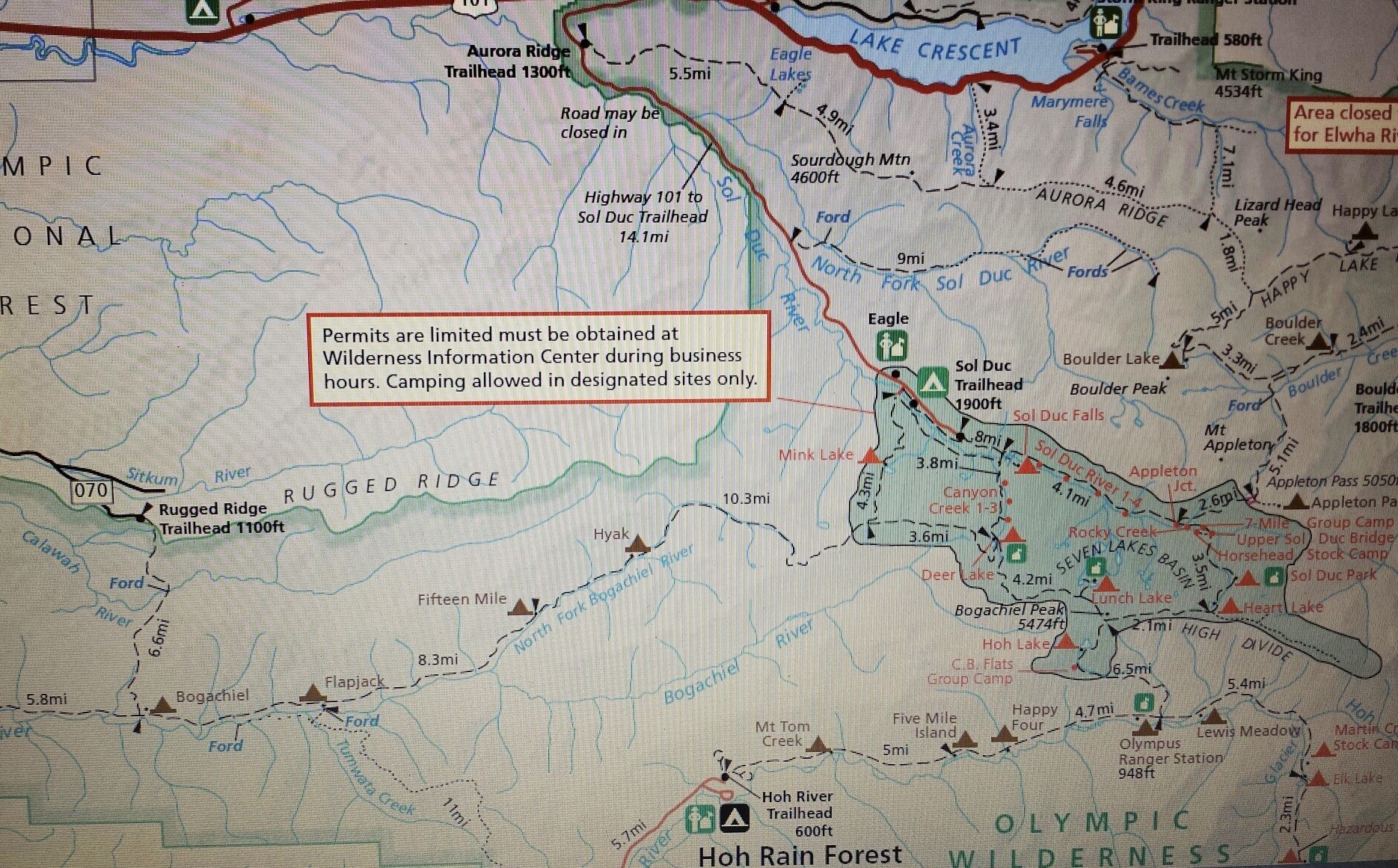
I spent two weeks in the woods, solo backpacking. It was, perhaps, where I first became aware of the dramatic swings of emotion and thought that can occur that permeate perception. I had a portable library (another feature of the counter-curriculum – always carry a variety of books), most notably Suzuki’s Zen Mind, Beginner’s Mind, Bach’s Illusions, The Portable Thoreau, as well as books by Alan Watts and some novels. I meditated, went hopping along on the rocks in the stream, I had ecstatic views of nature, but all this was also in the context of what I called “goddamned suffering in the woods” which was interchangeably a physical, emotional, neurotic and spiritual suffering. Physical pain was great in the beginning, with the heavy pack and my muscles getting used to climbing (I thought I was “training” for the journey by going for runs in the flat Midwest). The psychological and neurotic pain was immense in the beginning – all the little decisions became immense – should I camp here, or push on? Should I put the tent here or there? Should I relax now and push on later, or push on now and relax later? Luckily, I had some of the best meditation teachers along in my pack and I was great neurotic material to work on.

zen-mind-beginners-mind-1-728[1]

I also grappled with death and met the limits of what I could control, as I startled awake at night by a noise and wondered about meeting a psychopathic killer in the woods or being attacked by a wild animal. There is a point in the woods, where you have done all you can and you just have to sleep and not worry too much about all the things that could go wrong. This is what the meditation teachers instruct us to do – live in the present, when something happens – react, don’t worry about something that has not happened.

I have been resisting thinking about or writing about this journey of twenty-five years ago because I could not think of what to do to honor it. I have moved to Seattle now, which was the site of my pilgrimage 25 years ago, now it is home. I thought about going back to the mountains, re-tracing the same route, but that idea has no roots to it. So I have just ignored it, up until now.

On somewhat of a whim, I wrote to Kurt Wilt, about his book, The Visionary, about Joseph Rael (Beautiful Painted Arrow). He put me in touch with Joseph by email. I figured, what the heck, I’ll just write him and just say whatever comes out of my mouth. Joseph invited me down to visit him on the Southern Ute Reservation in Southern Colorado and I am writing this as I am on a flight from Denver back to Seattle. What a trip it was talking with Joseph. On the surface, it was to learn from him how to work with helping Veterans return home physically as well as spiritually from our wars, but it was also a spiritual journey for me, as well. And, when I realized that this trip to meet with Joseph was another “peak experience” on my journey, and that it honored my earlier trip 25 years ago – my heart sang with such joy!

I’ll write more in another blog about what I learned from Joseph, and I have a conceptual idea for another book and another class for Veterans based on our talks (I tape recorded much of our three days together). This blog entry is a more personal reflection – who was I 25 years ago? Who was that 21 year old in 1989 trying to find? Who did he become as he set off for medical school in the “big city” of Chicago? Who am I now? What am I grappling with internally? What template am I setting for the next 25 years of my life? Joseph spoke about cycles in a life, traumas, visions, “peak experiences, and events that recur on a certain cycle. What is this 25 year cycle about for me?

I had some major dreams on this trip, “big” dreams as Jung would call them. I spoke with Joseph about them, as well a “big” dream from my past. Visioning. How to envision what this next 25 years are about? I feel more confident, I have less fear, less neurosis (although that is one of the hobbies of the mind), I don’t fear death, but I am overflowing with ideas and concepts that are clamoring to come into physical form. I am just publishing my first book, I have a very rough draft of a second, an outline of a third, a brand new outline of a fourth after this weekend, as well as lecture notes from two classes that I’d like to edit into two books someday. The first half of my life was spent gathering experiences, trainings, travel, and reading, reading, reading. Now I feel the vessel is full – I have taken in a great deal, I have lived and studied, and now I have this tremendous need to move into action, to write books, to teach, to develop classes in order to metabolize, synthesize, and give back to the world what I have taken in from it. Up to this point, I have been cautious about trying to fit my writing into the mainstream of psychiatry and medicine. I view the publication of my book, Re-humanizing Medicine, as a signal that from here on out, I will seek to transform the mainstream of psychiatry and medicine. What drew me to the field was the work of psychiatrists like Carl G. Jung and M. Scott Peck, who blended the wisdom of the spiritual path with the clinical field of psychiatry. I can see that this is consistent with who I am and I see and sense a guiding pathway for how I can move forward along my path, not the path that others might say is most prudent. Another way of putting this is it has taken me 47 years to figure out who I am and what I need to address in my writing and now I feel an incredible pressure to get this all out into the world.

Animas River

Animas River

I feel like I should share something personal from my visit with Joseph. I’ll share this. The first morning in the hotel, I looked out at the Animas River (anima in Latin means soul), but it looked like there was a smudge on the window by my breakfast table. Upon closer inspection it was a frosted glass image of a hummingbird, and I jokingly said to myself, “look, there is my soul, flying around.”

hummingbird soul

I was thinking about the Native American totem animal, and wondering if that might be something I would speak with Joseph about. I had been reading Kurt Wilt’s section on discovering one’s animal. It turned out it was not something we talked about, which was ok. When the same bird lands on your head for no apparent reason, you don’t really need someone else to tell you that there is something to learn from the Nuthatch. Back to this story, though, the last thing Joseph did before I left was a ceremony with an eagle feather. I left his house after three super-charged days and I had some more daylight left that afternoon. The old neurosis had been raising its head – I wanted to get up into the mountains while I was in Colorado and my mind had been running through a bunch of different possibilities: Mesa Verde National Park, the San Juan National Forest, Animas Mountain, maybe that would be a fitting place to go since the Animas River ran through where the hotel was in Durango, Ignacio near where Joseph first lived, and Aztec New Mexico, where we went on a field trip to see the ancient dwellings there.

Joseph Rael (Beautiful Painted Arrow)

Joseph Rael (Beautiful Painted Arrow)

I came to accept, on a different level, what I have always viewed as my back and forth neurotic tendency. Joseph explained that with our face and our eyes, we are always entering, moving forward into experience and the world, but we also back up, which is receiving, and that these two movements must both happen and support each other. He made a big point of this movement in many of the dances, the forward and backward movement. So, now I have a different paradigm from which to view my moving back and forth, such as driving to Ignacio for what seemed like a fruitless meeting (although I saw such a beautiful sky, sun and clouds),

Ignacio sunrise through clouds

Ignacio sunrise through clouds

then driving past where Joseph lives since I had some time before meeting him, then driving back to meet him, then driving back the way I had gone earlier and turned around. This wasn’t pointless neurosis, it was also tracing out a backwards and forwards movement across the land, entering and receiving, taking in and metabolizing, coming into relationship with myself and the land. And then, even though I had made the choice to go to San Juan, I ended up not seeing the exit I had seen earlier and ended up at Mesa Verde and spent an amazing couple hours driving around the park. It is now fitting that I share some of those photos of Mesa Verde National Park, as I had been in the Olympic National Park 25 years ago.

Mesa Verde National Park

Mesa Verde National Park


20141020_173319


Mesa Verde Sunset

Mesa Verde Sunset

But I never finished my story, at Mesa Verde, after the ceremony with the eagle feather, I saw, in the sunset clouds, the most beautiful vision of a vast eagle in the sunset (I was driving and couldn’t photograph it). Scientists and psychologists can take comfort in this being a projection of my mind as a meaningless unconscious association, but another explanation is that during my visit my soul had started as a little smudge of a hummingbird and grown to a glowing sky eagle with a wing span of many miles. For this next part of my life, I will choose the second explanation.

I’d like to end with a few quotes from my journal from 25 years ago:

Olympic National Park

Olympic National Park

7/25/89

Today I am born. I AM ALIVE. Today alone was worth the price and troubles of the trip. I am seated atop a mountain. The view is breathtaking and it is even more spectacular because I climbed up the whole damn thing! I passed snow in the shady spots coming up. Except for a couple of chirpers and a multitude of bugs…it is silent. What more could there be?

When nothing is lost

nothing is gained

When nothing is gained

things are not as they should be

7/26/89

Right now I am at Kyak.

Yesterday…well, there is that earlier entry. After that I went up still higher and a view opened up that was indescribable. I had been on the north face of the mountain and had been viewing the smaller mountains to the north. After I crossed over to the south side and climbed a bit higher, I could see the entire Olympic Range, along with snow/glacier covered Mount Olympus. Breathtaking is the only way to describe the section of mountain I stood on. There was about a 60 degree slope of about 150′ without trees. The only thing between the mountains and valleys beyond and myself was air. I stood and stared for quite a while. I think it would be hard to say that you had been alive if you have not seen something so spectacular.

By the time I had hiked 9.2 miles and found a decent site, I was in a foul mood once again. If I would have seen the guy who wrote that shit about nothing lost, nothing gained, I would have pushed him off a cliff. In the last dying light of the day I opened Zen Mind, Beginners Mind and the only word I could make out was “constancy.”
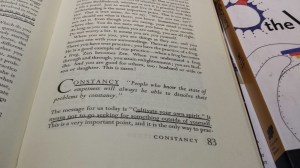
Constancy

                Yesterday was anything but constancy, from the highest of highs to the lowest of lows…

When water comes to a tough spot, it yields and flows through, sure it may foam a lot and make a lot of noise, but in no time it continues on its way, calm and smooth.

7/28/89

I am here at Flapjack and this is the nicest campsite yet. It is on a small, sunny plain with a lot of birch trees. The river is broad and shallow here. The hike wasn’t too bad, but still my body aches, but it isn’t that bad. I saw a bald eagle soaring around today. I think I heard it earlier, but I couldn’t catch a glimpse of it. There are a lot of swallows or swifts flying about the river. When I got here it was so hot and sunny that I took off my shirt and put on a pair of shorts and wandered down to the river. I tried to wade in, but nearly fell over because all the rocks on the bottom are slippery as hell.

7/29/89

~ 9:30 AM: This morning is a glorious morning. I woke up a little while ago because I was hot, the 1st time since I left Illinois. The sun is shining on the side of the tent and it feels great in here. Every now and then a cool breeze comes through the flaps. There are a lot of low lying, misty clouds at about the level of the hill tops, hopefully the sun will burn those off. Today I think I will hike up the river and look for a secluded spot to take a dip, which would feel great about now. At least I will wash my hair today with my water bottle.

——————-

A battle has been going on all morning between the sun and the clouds. Right now the clouds appear to be winning, so I am just lying around camp now. I did wash my hair this morning it was cold and great!

——————-

These swallows seem to want to sing together, but always end up being a little off beat or they produce a different tone or pitch, but the effect is more beautiful than if it was planned.

——————-

Even though the clouds have carried the day, it is still beautiful out here. The greens have a more muted tone and there is a clear contrast between the lighter birch trees and the darker firs higher up. It is amazing the number of sounds I sometimes hear in the water. I don’t know if it is aural deprivation that makes me hear things or what. I often hear voices or footsteps or hollow clanking, like boats, and today I heard a Native American holy procession. It is easy to imagine how rivers and woods were thought to have spirits.

——————-

“We should come home from far, from adventures, and perils, and discoveries every day, with new experience and character.” (Thoreau)

——————-

I was sitting and reading a section of Thoreau, “On Higher Laws,” when the mist started descending down from the hills. I quickly made a fire, started my beans cooking, and put everything inside the tent. I put on my rain suit and alternately watched the fire or the mist for about an hour. It was really something to see. My rain suit got damp, but there were never any visible drops falling. I saw an eagle, flying much lower this time, go off into the mist between the hills. It would have made a great Japanese painting, if only I was a great Japanese painter. I ate my beans, they were great, and I opened up my tortillas and had a few of those. It is hard to believe, but my food is finally down to a small, manageable weight. Now I am lying in my tent, digesting my dinner. It has stopped being wet outside, but it is still cloudy.

“To be passing is to live: to remain and continue is to die.”          (Watts)

“If you look at it carefully, you will see that consciousness- the thing you call ‘I’- is really a stream of experiences, of sensations, thoughts and feelings in constant motion. But because these experiences include memories, we have the impression that ‘I’ is something solid and still like a tablet upon which life is writing a record.” (Watts)

Today has been a day entirely devoid of human beings. I didn’t even realize this until just now.
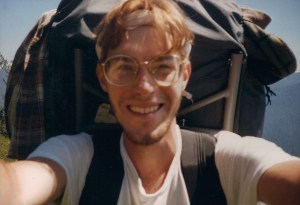
Olympic National Park, July 25, 1989

Olympic National Park, Washington, July 25, 1989


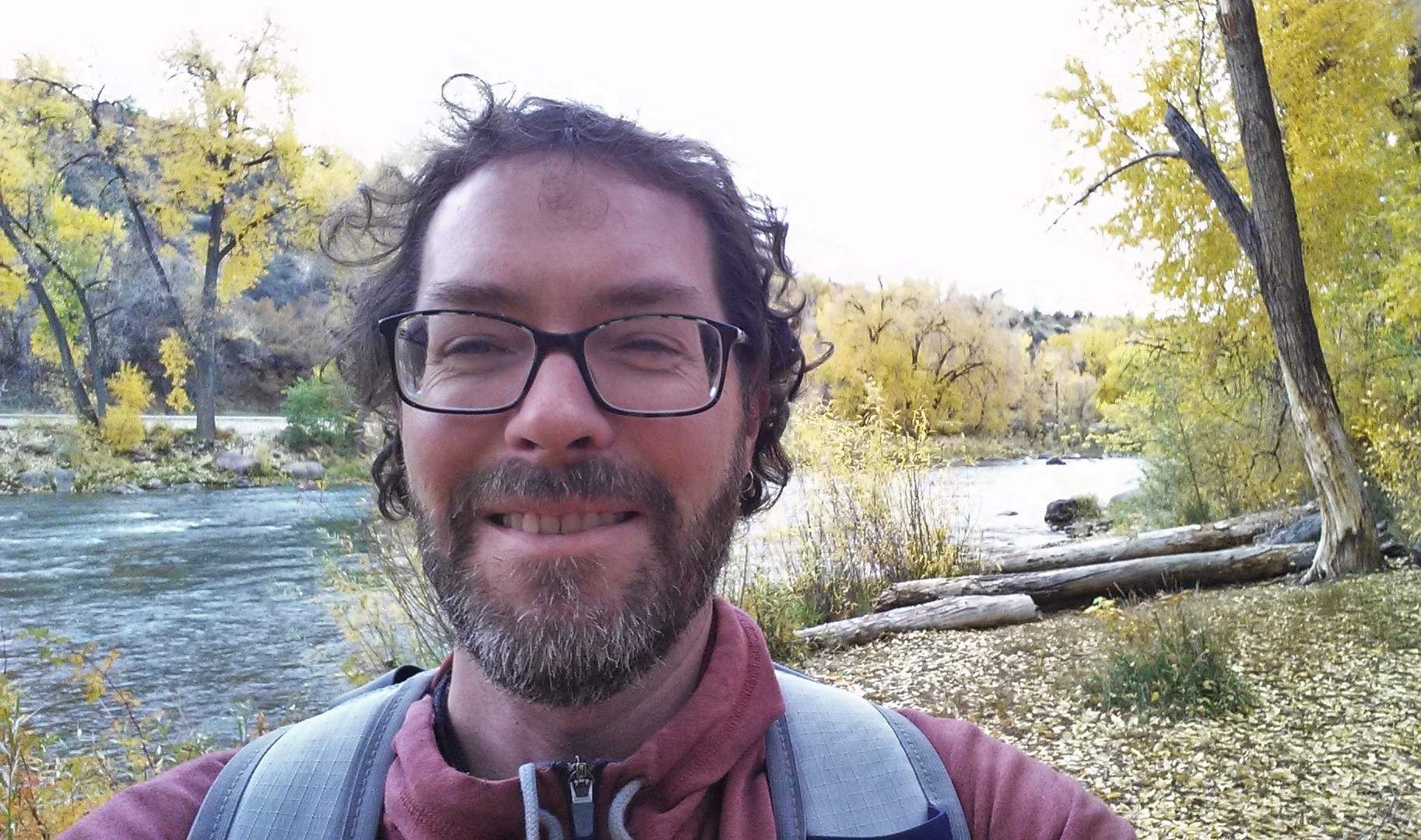
Animas River, Colorado, October 21, 2014

Animas River, Colorado, October 21, 2014

“Holistic Decision-Making – It’s Not Just for Doctors”

logo-cr[1]

Check out the very nice article that Shelly Francis put together about my book on the Courage & Renewal Blog. She excerpted Chapter 10 on “Holistic Decision-Making.”

Here is the quote from my book that the article starts off with:

Decision-making is something that you can do with either your limited mind and ego, or by letting the choices percolate through your body, emotions, mind, heart, creative self-expression, intuition, spirituality, as well as through the dimensions of context and time – until a decision becomes clear with input from your total Self. Decisions made this way may ‘freak out’ your ego, but they can be truly transformative.”

I am very happy to see the book appealing to a larger, non-health care audience. Re-humanizing Medicine advocates for a personal growth framework for the physician to become a whole person, but this model applies equally to anyone.

Please visit the above link to see the article, you can also look at their programs, I attended their “Integrity in Health Care: The Courage to Lead in Changing Times,” and I wrote a guest blog called Recovering Hope, Poetry and Connection in Health Care that you can also visit, this was published May 9, 2013.

jhp53db8b682bd57[1]

De-humanization in Medicine A Review of Doctored: The Disillusionment of an American Physician by Sandeep Jauhar.

9780374141394_custom-6793459b0d2971489a7c7062b37444d5512960da-s99-c85[1]

I read this book quite quickly. It is a gripping, emotionally honest memoir and critique of contemporary medicine. Dr. Sandeep Jauhar is a cardiologist and author. His first book was called, Intern, about the first year of residency training, and he writes for the New York Times. With great emotional honesty, Dr. Jauhar charts his journey from finishing his cardiology fellowship and into the world of medicine on Long Island and into the underworld of private practice.

The book starts with a quote from Jung on the mid-life transition:

“Wholly unprepared…we take the step into the afternoon of life; worse still, we take this step with the false assumption that our truths and ideals will serve as before. But we cannot live the afternoon of life according to the program of life’s morning – for what was great in the morning will be little at evening, and what in the morning was true will at the evening have become a lie.”

As Jauhar, documents his own “mid-life crisis” (struggling financially, trying to balance the expectations of his Indian family and golden boy brother, dealing with problems conceiving children, then with the difficulties of being a single income family with small children) he, interestingly, portrays American medicine as being in a mid-life crisis of its own. I think this is a useful way of looking at our health care system today, particularly in light of Jung’s advice about the afternoon of life, that the truths of the morning no longer serve and that we require new truths to prevent crisis from becoming breakdown. There are thus three stories that Jauhar weaves together: the story of his own life, the local realities of cardiology practice in New York, and the larger story of the culture of medicine in the US and how we have gotten to this place. He tells a compelling tale on all levels.

The first story, of the life of Sandeep Jauhar, traces a first generation Indian immigrant to the US, who struggles to balance the “old world” expectations of his family with the “new world” expectations of someone who has spent his formative years in the US. Jauhar captures these cross-cultural struggles and these are just one of the many ways that he is trapped between different people, systems, cultures and expectations. (More on Indian-American immigration and cross-generational issues can be found in the great book by Indian American author, Jhumpa Lahiri, Interpreter of Maladies). Another place that Jauhar is trapped between is between the American dream of having his kids in good schools, providing for his family and his inner morality of not wanting to engage in unethical billing practices (which ties in with the next level of the story of local practice). This story of Sandeep Jauhar at midlife is told with brutal honesty, and the reader can feel the sense of being trapped between multiple forces with no clear way out. He tries ignoring his conscience and doing what everyone else is doing, but that doesn’t work for him. Jauhar points out that every day, one American physician kills him or herself as he weaves the story from the personal, to the local, to the national culture. He tries going to his wife’s family’s guru, but that doesn’t work for him either. The only helpful advice he gets there is slipped to him by another participant at the audience, “Once you know and accept that you are going to die, the future will not haunt you.”

The second story is utterly depressing and is like a never-ending nightmare. Dr. Jauhar, looking to increase his income to support his family in their one bedroom apartment and to pay off medical school loans for himself and his wife, peddles himself all over town, trying to take on more work. The cardiology private practice culture (and it seems he is mostly exploring a sub-culture of Indian and Pakistani immigrant physicians) is rife with over-billing and almost indentured servitude in which the boss brings in young doctors to do the busy work and takes the lion’s share of the profit. Sandeep Jauhar is just not cut out for this kind of work. He comes across as the kind of man you would want as your doctor, thoughtful, not arrogant, not putting himself forward, not focused on the money, but on “doing the right thing” for the patient. However, he portrays the painful clash of his personality and ethics with the ugly realities of private practice cardiology on Long Island. He explains the local history and the vectors of force acting in medicine today.

The third story traces the larger history of American medicine, to the point that Jauhar identifies as its “mid-life” crisis. Medicine today is in a crisis, for sure, and everyone in it is often unhappy, the doctors, the nurses, the staff, and the patients. Dr. Jauhar explains how we have gotten to this point and provides an intelligent critique. He moves from the personal to the cultural as he summarizes research on physician suicide and burnout. He writes,

“Most of us went into medicine for intellectual stimulation or the desire to develop relationships with patients, not to maximize income. There is a palpable sense of grieving. The job for many has become just that – a job. Something fundamental is lost when physicians start thinking of medicine as a business,” (171).

I cover similar ground to that of Dr. Jauhar in my book, Re-humanizing Medicine: A Holistic Framework for Transforming Your Self, Your Practice and the Culture of Medicine. In addition to the critique of the economics of medicine, I also look at the effect of an over-emphasis on science and numbers to the detriment of the human aspects of medicine.

The solutions that Dr. Jauhar suggests are largely systemic, such as shifting the way medicine is reimbursed from fee-for-service to accountable care organizations, bundled payment, or paying doctors as employees rather than based on how much they can bill. He is realistic and sees how difficult it is to reform medicine, but he also points out that one in every six dollars spent in the US goes to health care. However, this still places the responsibility for change with the government, with hospital and clinic administration, with insurance and tort reform. Jauhar does point out that, “Doctors never seem to acknowledge that the widespread burnout in our profession is in part due to the behavior of doctors themselves,” (171). This is an excellent point, we can’t wait for reform and change to come from outside. I quote in my book from physician Peter Salgo’s New York Times piece where he says “we as doctors have felt powerless to change this,” and he puts out a call to patients to demand change. I take this statement to task a bit. We as physicians are the point of contact of medical care within the US. While there are many competing demands, vectors of force, and forces of dehumanization within the institutions of medicine (which both I and Jauhar document), we cannot relinquish our responsibility and the considerable influence we have as the providers of the actual care. However, it does mean that we have to look at our own behavior and challenge ourselves to change, even if it means going upstream and working, at what seems like cross-purpose to the system, by providing humane and compassionate care, in caring for ourselves first of all, and then our clients and colleagues.

Here is where I do take Jauhar to task. He has documented the problems in contemporary medicine. He has shown the painful struggles of physicians within our current system. He has portrayed the moral crisis and the mid-life crisis in medicine today. But, in the narrative of the book, it looks like the way that Dr. Jauhar solves these problems is to move to the suburbs and to reduce his expenses. Is this the best we can hope for in medicine today, a small personal reprieve? I like Sandeep Jauhar, I feel like I know him from how well he writes and how well he captures the existential dilemmas of contemporary medicine. I think in bearing witness and documenting the disillusionment of an American physician, he has done a wonderful service. I think we need to look at what he says, though, that burnout in our profession is in part due to the behavior of doctors themselves. This means that we can address this problem by changing our behavior and this is something that we can do now, we do not need to wait for political or institutional reform. I encourage Dr. Jauhar to read Parker Palmer’s article “A New Professional: The Aims of Education Revisited.” Palmer has written that “institutions are us,” and he outlines the way that professionals can take responsibility for the ethical direction of institutions. We need to move beyond critique and into change and transformation.

I found myself thinking as I read Sandeep Jauhar’s book, would my book work in his situation? Would it help at all? He documents dehumanization in himself and in the profession. I aim to re-humanize medicine through empowering individual professionals and encouraging them to develop themselves as whole people in order to provide whole person care to their clients. I encourage a counter-curriculum, which individuals have personal responsibility to create and maintain in order to preserve their precious humanity that is so needed in medicine today. I call for a compassion revolution in medicine. And I am not alone in this, Parker Palmer, Robin Youngson and Tony Schwartz, just to name a few, are out there trying to change the way that we think of ourselves as human beings in our work places. But as I read Jauhar’s book, I found myself wondering, is this enough? Is my approach practical or even feasible? Maybe it only works in psychiatry? How would if fare in the underworld of private practice cardiology in distant Long Island? I feel that my framework is generalizable, as I have developed while working in many different practice settings in two different countries. There are days when I despair about the systems we work in and all the ways that our institutions seem designed for the opposite of compassionate care of the whole person. But, I think my book can help. We have to do something. We can do something. Dr. Jauhar, if you are out there, I’d like to send you a copy of my book. Thank you for your emotional honesty and your excellent critique of the mid-life crisis of American medicine. I think we can do something more to nourish our humanity as well as that of our clients and colleagues.

Re-humanizing Hector

A Review of Hector and the Search for Happiness

hector_and_the_search_for_happiness_poster[1]

Hector is a psychiatrist, whose life seems perfect, ordered and predictable. The only problem is that he gradually realizes that although his private practice patients have so much, they are perpetually unhappy. Eventually he comes to realize, too, that he is unhappy. It is a classic midlife crisis, he is successful in the world, but the interior meaning and vitality of life elude him.

0[1]

Swiss psychiatrist, Carl Jung wrote that for men, the midlife period marks a time of moving from an external, materialistic orientation to a more inner, spiritual orientation. “Midlife is the time to let go of an overdominant ego and to contemplate the deeper significance of human existence.”

This is exactly what Hector sets off to do. His overdominant ego has controlled and limited his experiences in life, he feels compelled to break his routine and to go off on an adventure. The movie starts with a dream sequence, Hector is flying a biplane, his trusty childhood dog in the co-pilot seat. He loses his dog and instead an assassin attacks him from behind, the plane is running on empty and goes into a dive – and he awakes to another day of the same breakfast, the same patients with the same problems and a very pleasant, but measured life. His childhood dreams were of being a pilot, flying, exploring the world (he has Tintin memorabilia in his office), yet he lives his life in complete safety and isolation in his office. One of his most endearing clients is a clairvoyant who has lost her ability to tell the future and feels like she is inauthentic. She also gives Hector prescient advice.

Hector%20and%20the%20Search%20for%20Happiness%20Wallpapers[1]

At first Hector thinks he needs to go on a journey to do research so he can better help his clients learn what true happiness is, but he eventually realizes that he himself is too controlled to know true happiness and that his quest is, in reality, for self, to live and experience happiness.

He travels to China, meets a businessman and sees all of what money can buy, but it is not happiness. He goes to Tibet and feels a brief glimmer of happiness, but he loses it. He goes to South Africa where his friend from university practices in a free health clinic. Here he sees his friend living a dream of service to humanity, and of being loved for who he is. But this is also a very dangerous place, as Hector soon finds out. He bumbles along, his kindness to others making him friends and people are changed in subtle ways around him (for instance he sorts out a drug lord’s wife’s psychiatric medication and this has a small humanizing effect on the man). Hector next travels to LA, where he seeks out his childhood sweetheart, who is now married, with two kids and pregnant with a third. She teaches him that happiness does not lie in the past. On the flight to LA, he is called upon as a doctor to take care of a woman with terminal brain cancer traveling to see her sister for one last time. He dismisses his kindness and work with the woman as nothing, but she teaches Hector that, “Listening is loving.”

The last lesson he learns is from a psychologist studying happiness through brain imaging. Hector reviews the wide variety of emotional experiences he has undergone, but is still holding back. At one point, something breaks through, and he learns that happiness is feeling everything all at once, fully and deeply. Happiness is a by-product of being capable of feeling everything. This fits with my experience working with clients and from my own self-observation. It is possible to stop “negative” emotions, but it is at the cost of dampening “positive” emotions as well. The way I think of it, they flow through the same channel, so to speak, and the only choice is to feel it all, or to try to dampen and repress emotions.

more-important-than-what-we-are1[1]

All through the movie, Hector has a small journal that he doodles in and writes down his maxims of happiness. While he learns that lists and aphorisms do not make happiness, it is still worth sharing this list. The movie is based on the successful series of books by the French psychiatrist and author, François Lelord.

hector-and-the-search-for-happiness[1]

Here is the list from the book:

  1. Making comparisons can spoil your happiness
  2. Happiness often comes when least expected
  3. Many people only see happiness in their future
  4. Many people think happiness comes from having more power or more money
  5. Sometimes happiness is not knowing the whole story
  6. Happiness is a long walk in beautiful, unfamiliar mountains
  7. It’s a mistake to think that happiness is the goal
  8. Happiness is being with the people you love; unhappiness is being separated from the people you love
  9. Happiness is knowing that your family lacks for nothing
  10. Happiness is doing a job you love
  11. Happiness is having a home and a garden of your own
  12. It’s harder to be happy in a country run by bad people
  13. Happiness is feeling useful to others
  14. Happiness is to be loved for exactly who you are (People are kinder to a child who smiles)
  15. Happiness comes when you feel truly alive
  16. Happiness is knowing how to celebrate
  17. Happiness is caring about the happiness of those you love
  18. Happiness is not attaching too much importance to what other people think
  19. The sun and the sea make everybody happy
  20. Happiness is a certain way of seeing things
  21. Rivalry poisons happiness
  22. Women care more than men about making others happy
  23. Happiness means making sure that those around you are happy

This movie is really lovely, funny, heart-warming, profound, and thought-provoking. It portrays a man becoming who he truly is, overcoming his fears and defenses, becoming engaged in the world and being fully human. Simon Pegg is great as Hector. Rosamund Pike does a wonderful job as Hector’s somewhat neurotic girlfriend, who creates medication names for a pharmaceutical company. All the actors are well cast and the movie flows well, despite moving through so many settings and characters. It was directed by Peter Chelsom, who also directed the 2001 film, Serendipity, amongst others.

I just read the recently released book, Doctored: The Disillusionment of an American Physician, by Sandeep Jauhar. I will write a review of this book soon, as the theme of this book, as well as the theme of Hector are relevant to my book, Re-humanizing Medicine: A Holistic Framework for Transforming Your Self, Your Practice, and the Culture of Medicine. The joyless practice of medicine that Dr. Jauhar describes in painfully honest detail aptly captures the dehumanizing elements of medicine. Hector, while a bit of a feel-good romantic comedy, offers a portrayal of one doctor’s attempts at re-humanizing himself, his practice and the larger culture. He creates a counter-curriculum of life experience and he not only writes the book on happiness, he lives it, too. I give it 5 stars for being fully human. (The soundtrack was great, too, but not available yet).

video-undefined-1FF6F91400000578-210_636x358[1]

Radio Free Albemuth (the movie)

Radio_Free_Albemuth_FilmPoster[1]

This movie has been a long time coming. Filming started in 2007, it was shown at Sedona in 2010 and I have been waiting for it to be released, which didn’t happen until June 27, 2014, which I completely missed and just saw it on demand and watched it last night.

The movie is the first of the four novels of Philip K. Dick’s VALIS “trilogy” to be adapted to film. While it is often said that PKD’s books are great and the movies never live up to them (and perhaps that could be said of this movie as well), this is an important movie for several reasons.

Radio_free_albemuth[1]

Firstly, as mentioned, it is the first of PKD’s late books to be adapted to film (Blade Runner, Minority Report, The Adjustment Bureau, as well as many others being adaptations of PKD’s earlier work). In February of 1974, Phil had his first vision/hallucination. He continued to have these experiences over the next months and his late career revolves around his attempt to understand these experiences. He picked up and set down many different explanations for his visions: God; extraterrestrials so advanced that they may as well be God; mental illness; Russian mind control experiments; beams of energy from a satellite; attempts by extraterrestrials to intervene to save the earth; an over-lap in parallel universes, as well as many other theories. In 2011 PKD’s 976 page Exegesis was published posthumously, containing many pages of his attempts to understand his experiences, as well as ideas for his late novels. It should be mentioned that Radio Free Albemuth was written in 1976 as a draft of what later was published in 1981 as VALIS. RFA was published posthumously in 1985. The two novels are similar only in the fact that they have a character named “Philip K. Dick” who is a science fiction writer. In both novels, PKD is a kind of foil, a straight man to either Horselover Fat (VALIS) or Nicholas Brady (RFA). Phil creates a split having one character experience the visions and the pink phosphene beam and receive communications from VALIS, while the “Philip K. Dick” character is initially skeptical, but gets pulled into the metaphysical action.

Valis Satellite

Secondly, the movie is important because of its political themes. In this universe, the United States is ruled by four-term President Fremont, who has declared war on the subversive organization Aramchek, which may or may not be a real organization. The characters in the movie are visited by FAP (Friends of the American People) who are young, Hitler Youth types with unquestioning patriotism. At one point, Nick and his wife, Rachel, have to complete tests after watching President Fremont’s speech. The question is: “If the American people have to give up liberties in order to fight Aramchek, are they gaining or losing ground?”

phpThumb_generated_thumbnail[8]

The movie features

Nick goes through a series of visions, which are very close to the visions that PKD described having in real life. At one point he becomes convinced that current reality is an overlay of Rome in AD 70, the time of persecution of Christians by Nero, “The Empire never ended,” which means that PKD/Nick believes that the US government at the time was equated with the Roman empire, and President Nixon can be seen as a kind of Roman emperor.

The movie stays close to PKD’s novel and has all of the many twists and turns of the plot, including visions of messages from an alternate reality from someone in the Portuguese States of America – while this entity can give advice, it cannot answer the question, “Who are you?” It presents PKD’s spiritual beliefs, which are a mixture of science fiction, Gnosticism, Christianity, and Neoplatonism. The movie has lines, like “No one ever truly dies” and “Our minds are being invaded by an alien life form, for our benefit.” (PKD particularly developed the concept of the Paraclete as an alien life form that cross-bonded with the early Christians who accepted it in. Phil often spoke of “Firebright,” which is what he called the light he sometimes communicated with.

The question of what exactly happened to the real PKD is an interesting one and he spent the last 8 years of his life trying to decipher this, considering all possibilities. I have started work on this question as well, looking at PKD’s experiences and personal journal (The Exegesis) and Carl Jung’s visionary experiences and personal journal (The Red Book). I have a draft for a book length project called Every Thought Leads to Infinity, which is a line from The Exegesis. The link leads to the abstract from my 2012 presentation of that name.

The movie seems to have all the right ingredients, other than a big special effects budget. The actors are believable in a PKD world. Knowing the back story as I do, it is difficult to say how well the movie stands on its own, apart from PKD’s stories and life. (The movie has just had limited release and has only made $8,493 at the box office). It could serve as an introduction to his later works and it also has a theme that is relevant in today’s society of a decade of war against terror. Before Nicholas Brady is executed without a trial, the last thing he says is, “I am an American citizen, I have rights!”

phpThumb_generated_thumbnail[7]

The tagline on the official movie website reads, “A message of hope from the stars.” In the end, PKD was always hopeful that the little guy, who takes the morally right stance against totalitarian political regimes and institutions of thought control, would come out on top. He also made arguments that are consistent with the Recovery Movement in mental health, a kind of human rights movement. I have summarized PKD’s views of humane mental health treatment in a presentation, “What Does it Mean to Be Human?” Philip K Dick believed that there was reason to hope, and in his worlds that hope often was supported by metaphysical/science fiction intervention from God or VALIS (Vast Active Living Intelligence System).

maxresdefault[1]

[A quick mention about the music featured in the film. Much of it is by Robyn Hitchcock, and has a few old songs by his earlier band, The Soft Boys. However, I can’t find the soundtrack and it looks like Hitchcock wrote a song, “To Be Human” for the film that is not available elsewhere at this point. Neither does Alanis Morissette’s song, “Professional Torturer” appear to be available.]

[John Alan Simon, the director and co-producer of Radio Free Albemuth, also obtained the rights to VALIS. In an interview in Bleeding Cool, Simon talks about VALIS, and also about his own long-standing interest in visionary experience, having studied and written on Yeats and Blake’s visionary experiences. I have always thought that VALIS would make a great movie. It has more of a sense of humor, as well as darkness, it has the movie within a movie theme, as well as it just seems like the best PKD novel containing a little bit of everything from his life’s work].

JohnAlanSimon640[1]

Re-humanizing Medicine is available for pre-order on Amazon!

cafe.vita.9.13.14 (2)

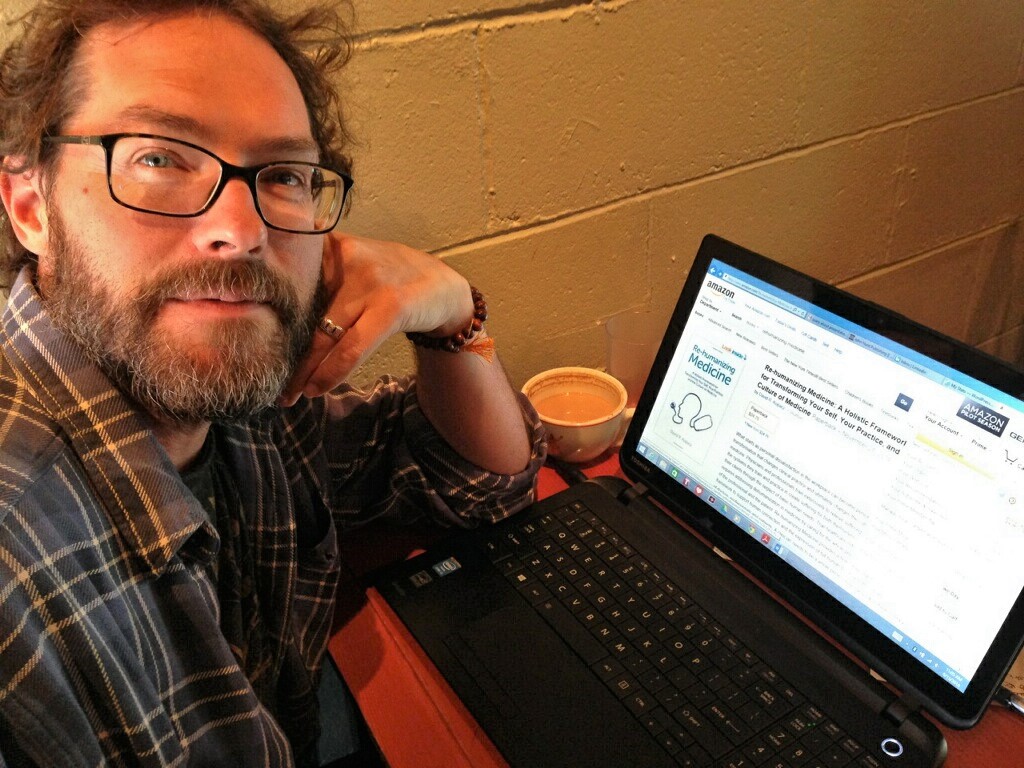
It is very strange to see something I have been working on for so long posted on Amazon. You can even look inside the book. The publication date is still set for November 28, 2014, but you can now pre-order the book.

It is difficult to say when this journey began, particularly as I distill my professional life’s work in the book. I think it was probably around 2006 where the book started to take shape as Creating A Holistic Medical Practice. I had written a draft of a book I was calling Being Your Self, but it was kind of diffuse and unfocused, gradually I realized I wanted to write about my views on holistic medicine and my work in creating a holistic medical practice. My earliest memory of working on this book was when I was at the American Holistic Medicine Association conference in 2006 in St. Paul, Minnesota. I remember sitting at a café and distilling some of my thoughts about how the structure of a holistic practice differed from a conventional practice. I had started my private practice in 2005, so I had been spending a lot of time thinking about and creating systems that supported genuine human connection in a psychiatric setting. I had set out some time in my private practice for writing, but clinical and then teaching demands intervened and the book languished. I wrote material for the classes I taught, Finding Your Self and Being Fully Human.

I moved to New Zealand as part of the culmination of a long-term dream and compulsion. I became busy there at my first job, realized I was partly living my dream, but that I needed dedicated time for my book, so when I took my second job there, at Buchanan Rehabilitation Centre, I went down to 4 days a week, so that I had Tuesdays set aside for what was most important to me. It was then that things really started happening! The book really started to take shape. I started looking into agents and publishers, eventually landed a contract with Ayni Books through John Hunt Publishing. In the process of getting book endorsements, Vincent Di Stefano mentioned the phrase “re-humanizing medicine” and that really clicked. That is where my passion was, not just in a book on creating a practice, but on challenging the dehumanization in contemporary medicine and setting out a program of re-humanization. Phrases like “counter-curriculum” and “compassion revolution” came together and the book took on its current shape, after an extensive re-write. Also, I figured out how to bring myself into the book, or the book out of me. Instead of giving facts and information, I felt the book was a part of me and I of it. At this stage, the writing of the book served an integrative process for myself, bringing together the first research project I worked on with Deb Klamen (who wrote the foreword to the book) as well as the many side projects I worked on along the way.

Eight years later, the book is now going public and I am shifting into a new phase with it. It is very exciting and I hope that the book resonates with an unmet need for physicians and clinicians and helps re-chart an inner direction that leads to outer transformation and reform. What will happen next?

imagejpeg_1 (2)

click here to go to Amazon to pre-order the book

Text from Back Cover of Book:

What starts as personal dissatisfaction in the workplace can become personal transformation that changes clinical practice and ultimately changes the culture of medicine.

Physicians and professionals train extensively to relieve suffering. Yet the systems they train and practice in create suffering for both themselves and their clients through the neglect of basic human needs. True healthcare reform requires addressing dehumanization in medicine by caring for the whole person of the professional and the patient.

Re-humanizing Medicine provides a holistic framework to support human connection and the expression of full human being of doctors, professionals and patients. A clinician needs to be a whole person to treat a whole person, thus the work of transformation begins with clinicians. As professionals work to transform themselves, this will in turn transform their clinical practices and healthcare institutions

“Modern medicine is engaged in a struggle to find its heart, soul, and spirit. This task must begin with physicians themselves. Dr. David Kopacz’s Re-Humanizing Medicine is an excellent guide in how this urgent undertaking can unfold.”

Larry Dossey, M.D., author of One Mind, Reinventing Medicine and Healing Words; executive editor of Explore: The Journal of Science and Healing.

“Dr. David Kopacz bears exquisite witness to medical dehumanization and puts his heart and soul into a thoughtful, reflective, yet practical guide for countering its contemporary ills. This book can change lives, careers, and systems.”

Stevan M. Weine, M.D., author of When History is a Nightmare and Testimony after Trauma; director, International Center on Responses to Catastrophes, University of Illinois at Chicago.

jhp53db8b682bd57[1]


Publication Date for Re-humanizing Medicine: November 28, 2014!

jhp53db8b682bd57[1]

Here is the front cover of the book, exciting to see it start to take form after so many years working on it…

Here is the link to the publisher page for the book.

I have to start moving into a new phase now, done with writing and on to marketing and promoting the book. Totally new territory. I am going to start looking into conferences and bookstores for public appearances.

The timing of the book is excellent with my work at the VA. There is a national Office of Patient Centered Care and Cultural Transformation and my book is really consistent with their message. I was just down in Atlanta for the Whole Health: Change the Conversation conference and it was really energizing and helped me to get excited about the work of the book. It will be really interesting to see how the book does once it is out in the world.

In the meantime, I continue my day to day work at the VA. I have started the pilot run of The Hero’s Journey Class, based on the work of Joseph Campbell. It uses mythology and narrative as ways of assisting Veterans in their Return Home. Here is a photo of me at work on this project.

Hero's Journey Reflection

Otherwise, I have a few interesting possible projects on Patient Centered Care and staff wellness in the works. I will be presenting a poster next month at the annual meeting of the American Holistic Medical Association – Connection & Collaboration: Innovations in Patient-Centered Care. The poster is on Collaborative Poetry Writing as a way of engaging patients with psychosis and trauma histories.

I will post more details on the book publication as they are available.