New Update on the blog that Gary Orr and I started a few years back. This is an update on my time since I left New Zealand and settled in Seattle.
http://humanworkenvironments.blogspot.com/
Includes a copy of my painting: Hero’s Journey

New Update on the blog that Gary Orr and I started a few years back. This is an update on my time since I left New Zealand and settled in Seattle.
http://humanworkenvironments.blogspot.com/
Includes a copy of my painting: Hero’s Journey

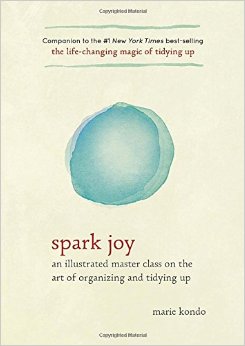
This is the fifth of a series of blog posts examining Joy in Work. We have been calling it: A Work of Joy! It is part of an ongoing discussion between Dave Kopacz and Sandy Carter on this topic and will include each of our thoughts individually as well as our dialogue on Joy in Work. This fifth blog looks at the work of Marie Kondo (who has been called the Beyoncé of Organizing), The Life-Changing Magic of Tidying Up, and her new book, Spark Joy: An Illustrated Master Class on the Art of Organizing and Tidying Up. Sandy had consulted Kondo’s first book when she was recently down-sizing. We turn to her second book, Spark Joy, not so much for tidying up, but rather for her method of determining whether or not something brings you joy. Kondo writes, “I am convinced that the perspective we gain through this process represents the driving force that can make not only our lifestyle, but our very lives, shine,” (xii).

Kondo’s method is surprisingly simple, yet helps to get you out of your logical mind and in touch with your heart. Here is what she says to determine if something sparks joy for you.
“When deciding, it’s important to touch it, and by that, I mean holding it firmly in both hands as if communicating with it. Pay close attention to how your body responds when you do this. When something sparks joy, you should feel a little thrill, as if the cells of your body are slowly rising. When you hold something that doesn’t bring you joy, however, you will notice that your body feels heavier,” (8).

In regards to organizing, she writes that you should focus on what things bring you joy and that you want to keep, not on trying to get rid of things just for the sake of getting rid of things. Even with the things you discard, however, Kondo invites you to connect with and communicate with.
“Keep only those things that bring you joy. And when you discard anything that doesn’t, don’t forget to thank it before saying good-bye. By letting go of things that have been in your life with a feeling of gratitude, you foster appreciation for, and a desire to take better care of, the things in your life,” (8).
What Kondo is doing is inviting us to get in touch with the soul of things, to see how your heart resonates with the soul of the object, and if you are going to discard it, to honor the soul of the objects that are exiting your life. This reminds me, in some ways, of the world view of many Native American people, that all things are alive and are our brothers and sisters. Maybe this part of mainstream American culture’s emphasis on the accumulation of things, we do not connect to the soul of things and thus we never feel joy in our hearts and keep on accumulating objects.

When starting to practice determining what sparks joy in your life, Kondo recommends starting with the clothing that you wear closest to your heart, “Because that’s where you feel joy―in your heart, not in your head,” (18). This reinforces that joy, whether in tidying or in work, comes from the heart, not the head. It shows why an intellectual solution to a lack of joy will not be successful unless it partners with the heart.
After going through your belongings, object by object, you can get to where everything you have sparks some joy. “When you wear and surround yourself with things you love, your house becomes your own personal paradise,” (26). Kondo also sees objects as being capable of being transformed by love and that this can be felt as well as the physical elements of the object. So the act of loving something is part of how that object brings joy.
“I’m convinced that things that have been loved and cherished acquire elegance and character. When we surround ourselves only with things that spark joy and shower them with love, we can transform our home into a space filled with precious artifacts, our very own art museum,” (47).

In looking at Marie Kondo’s book, Spark Joy, and her method of tidying, we can use this in several ways in regard to our larger focus of Joy in Work. The first level is the level of our surroundings and our physical workspace. We could use this method of looking at the objects around us and asking if they bring joy. Many things in a medical environment are necessary and utilitarian, we may not be able to say, “This blood pressure cuff does not bring me joy, so I am going to let it go!” We can declutter both our own personal workspace as well as shared work spaces. Shared workspaces tend to accumulate things that apparently belong to no one and we just work around them. The next aspect of this level is adding some seasoning to our work space, bringing in something that sparks joy for us. Again we may have restrictions on certain items in a medical setting, but a plant, a small vase, a little animal figurine, a favorite book, a nice pen, a colorful note pad, even an inspirational saying written on a notecard can bring joy to a personal work space. Some people in medical settings do not have a personal work space, in that case, you have to put the joy on your person (a pin, jewelry, a pen you like) or you could take on the task of bringing some joy to your collective workspace – see if you can put up a picture, bring in a plant, or even something temporary like a small vase of flowers.
Kondo teaches us that there are three common elements that determine joy, “the actual beauty of the object itself (innate attraction), the amount of love that has been poured into it (acquired attraction), and the amount of history or significance it has accrued (experiential value),” (45). Thus, it is important to realize that joy is not a static trait of an object, it is also increased by the love and enjoyment that we have with an object. For instance, I have a pair of non-descript gardening gloves. I didn’t feel joy necessarily when I bought them, but they are very comfortable and now, after using them for a couple years, they bring me joy. Also, the factor of time, I have been using them now for a while and they hold many happy memories of digging in the dirt. I like using my bare hands too, and getting dirt under my fingernails, but some jobs, like pruning a rose bush are better done with gardening gloves. These gloves now feel like a second skin to me. It is important to realize that even something plain and utilitarian can be infused with joy from years of love and use. Joy is not a one-way street. We are not separate and isolated from the physical world, but can be in a love relationship with the earth and the physical world of matter.
Our surroundings are an important part of our health, although medical settings often do not create joyful or healing environments. At the VA, we are implementing work coming out of the national VA Office of Patient Centered Care & Cultural Transformation. In particular, we are using the Circle of Health and have developed a Whole Health Class that rotates through 8 different health domains over 8 weeks. One of those domains is “Surroundings: Physical & Emotional,” and we work with Veterans to generate ideas around little ways that they can make their surroundings more health promoting. In my book, Re-humanizing Medicine, I also have a dimension of “context” which looks at our physical and situational environment.

VA Circle of Health
The main reason I wanted to blog about Marie Kondo’s book was not simply for the physical work space issues, but for the method she uses of helping us sensitize and train our hearts to be open and attuned to joy in our lives. Joy is not something you can mandate and joy will be different for each person. To spark joy, we need to make room for our hearts in our work. Administration can do many things to either diminish joy or enhance joy, but ultimately, it is up to us to show up for the joy revolution, by attending to our hearts and bringing them to work each day, and by discerning what it is that we need around us in order to nurture our joy.
A Review of The Theater of War
Performance by Bryan Doerries, David Strathairn and Heather Goldenhersh
Beacon Hill Church of Nazarene – Seattle
Theater of War: Soldiers & Citizens Tour
Friday, August 28, 2015
(We were a bit slow in getting this finalized, but still wanted to put this review out)
There are those few who go off to war.
There are their partners, parents, families and other loved ones who wait their return.
And then there are the rest of us, the multitudes who observe and comment from the edges. (Less than 1% of the population of the United States serves in the military).
This drama of observation from the edges has been playing out, day in and day out, over the past decade as we, health care workers, have sat with Veterans returning home from the wars in Iraq and Afghanistan: over two and a half million Veterans, more than half of whom have been seen in our VA clinics.
Intermingled with stories of celebration and reunion we have heard stories filled with pain, loss, emptiness, rage, fear, sorrow, loneliness, yearning, hopelessness …stories told by both those who have been off to war as well as those to whom they returned.
Then one day as we sat with a diverse group of community members in a small church on Beacon Hill in Seattle, it slowly dawned on us that the language of war has not changed in any significant way even as the words of those in battle have churned through every language ever spoken. And even beyond the fact that there is a transcendent language of war, the structure of the story of war is similarly immutable: there are those who are thrust into battle, there are those who love them and await their return and there are the rest of us, who at best approach with an earnest desire to play our part in the drama, if only as part of the chorus, or part of the audience.
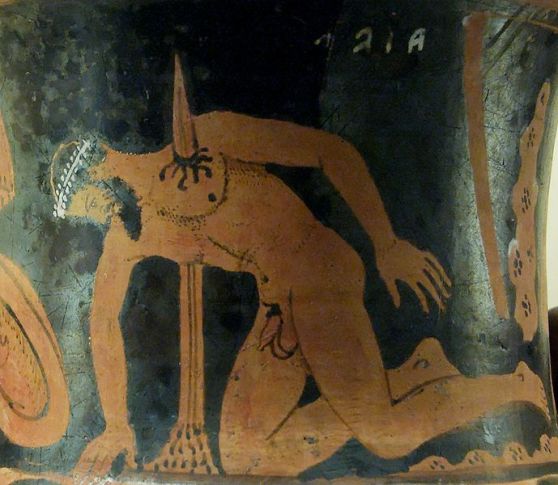
These realizations occurred as we watched, fully engaged but helpless, the Outside the Wire production of Bryan Doerries translation of Sophocles’ Ajax. David Strathairn and Heather Goldenhersh were jarring in their roles as Ajax and Tecmessa. His relentless march toward suicidal doom, her desperate attempts to avert the inevitable as she shifted her gaze and grasp from him to the chorus, while the rest of us struggled to let go and hold on simultaneously. Tecmessa calls to the chorus, Ajax’s soldiers, and through them to us in the audience when she pleads for help where help is not easy to give, “for our hero sits shell-shocked in his tent, glazed over, gazing into oblivion.”

The Belvedere Torso, a marble sculpture carved in the First Century BC depicting Ajax.
And again she speaks to all of us as citizens of the United States as well as to the chorus, “Tell me. Given the choice, which would you prefer: happiness while your friends are in pain or to share in the suffering?”
The chorus, as many Americans, initially prefers not to get caught up in this ugliness and pain, prefers not to peer into the open and un-healing wound. Yet, eventually, they commit and say, “We will stay and share the pain.”
Perhaps that is all that we can do, and yet doing that may be enough, just simply not to turn away but rather to stay and feel the pain of another who is also part of us, part of our nation.
Watching the drama felt a bit like an ambush inside the wire, leaving us feeling stripped of the professional armor and weapons and sense of hope and healing that we generally carry with us into our work. The performance is a window into the past, 2500 years ago, yet feels as raw and powerful as listening to today’s painful stories of a Veteran who has served in Iraq, Afghanistan or Vietnam. We could do nothing but watch. We could do nothing but be there. The one thing we could do was commit ourselves to do what those in the chorus committed themselves to do, “We will stay and share in the pain.”
We witness the suffering of Ajax, who has been away at war for 9 years without leave, who has seen the horrors of the battlefield, who served honorably until losing Achilles, his closest brother-in-arms. When Ajax was disgraced by the Greek military command, who played politics and denied him the honor of receiving Achilles’ armor, Ajax goes berserk and slaughters innocent animals while in a delusional blood rage. In the aftermath, Ajax is consumed with unbearable shame – “What a joke my life has become” – and despite the desperate pleas of his wife, Tecmessa, and before his bewildered infant son, and despite the presence of his brothers-at-arms, he ends his life by suicide, the violent end of so many still who have gone to war.

These themes of suffering, betrayal, rage, moral injury, shame, and self-sacrifice feel as potent in the invisible, but lethal wounds of Ajax as they do in our current Veterans. After the performance, a panel discussion included two health care workers and two Veterans who had served in Vietnam and the other in Iraq.
It further squeezed the audiences’ hearts as one Veteran, overcome by raw emotion, said, “I have lived the life of Ajax.” And the next day, other Veterans who had seen the performance said the same thing.
Bryan Doerries spoke of a performance for active duty personnel where he asked, “Why do you think Sophocles, a Greek general, would write such a play?”
“To boost morale,” a soldier in the audience said. When Bryan asked how that could be, the soldier replied, “Because it is the truth.”
Sitting in the audience of Theater of War makes one feel helpless but also hopeful, because we can catch a glimpse of “the truth” of the aftermath of war that has remained unchanged throughout time. It is a sacred moment to share with our nation’s warriors; and it is a loving act, because listening is an act of love.
As Bryan said to conclude the discussion, “I used to think our role as civilians was about empathy, but I have come to see that it is about a shared sense of discomfort.”
Perhaps by being there we learn. Perhaps by learning we grow. Perhaps by growing we change, both in who we are and what we do, as individuals and as Nations.
The idea of drama, trauma and healing is ancient. VA psychiatrist Jonathan Shay has written about the role of the Greek tragedies and the healing function they served for the actors (many of whom were Veterans) and for the audience and culture, itself.
“We must create our own new models of healing which emphasize communalization of the trauma. Combat veterans and American citizenry should meet together face to face in daylight and listen, and watch, and weep, just as citizen-soldiers of ancient Athens did in the theater at the foot of the Acropolis.We need a modern equivalent of Athenian tragedy. Tragedy brings us to cherish our mortality, to savor and embrace it,” (Shay, Achilles in Vietnam, 194).
This is exactly what Bryan Doerries has done through his productions for active duty military, Veteran, and civilian audiences, bringing together all to participate in a shared sense of discomfort and to participate in witnessing, dialogue and discussion after the performance.

In his new book, Theater of War: What Ancient Greek Tragedies Can Teach Us Today, Bryan writes that his book “is about the power of tragedies to transcend time, to comfort the afflicted and to afflict the comfortable. At its core, it is about how stories can help us heal and possibly even change, before it’s too late.” (8). Bryan also has a book of his translations, All That You’ve Seen Here is God, that are used for different performances by Outside The Wire.

Outside the Wire has presented the Theater of War over 300 times across the United States. You can visit the website for information on performances .
UPCOMING PRESENTATION AT THE ACGME:
Feb 26, 2016 Theater of War, THEATER OF WAR: Accreditation Council for Graduate Medical Education Conference
Baltimore, MD
Review, which express our own views, written by:
Stephen Hunt, MD, National Director, VA Post-Deployment Integrated Care Initiative (PDICI), Associate Professor, University of Washington
Craig Santerre, PhD, Clinical Lead Primary Care Mental Health Integration, VA Puget Sound Health Care System
David Kopacz, MD, Staff Psychiatrist, Primary Care Mental Health Integration, VA Puget Sound Health Care System; Acting Assistant Professor, University of Washington
What a big year it has been! My first book came out at the end of 2014 – Re-humanizing Medicine: A Holistic Framework for Transforming Your Self, Your Practice, and the Culture of Medicine. I have traveled a lot this year for speaking engagements: from here in Seattle to Denver, Colorado, Auckland, New Zealand and Melbourne, Australia.
![jhp53db8b682bd57[1]](https://beingfullyhuman.com/wp-content/uploads/2014/08/jhp53db8b682bd571.jpg?w=358&h=552)
I just picked up Jean Houston’s book, The Search for the Beloved: Journeys in Mythology & Sacred Psychology. I was surprised to read her introduction to the second edition. She describes that in September of 1992 she stood at the northern-most point of New Zealand, Cape Reinga and watched the waters of different oceans come together. She asks her companion if “this is the place where the planetary DNA gets coded anew?” He replies, “it is…the place where all Maoris go when they have died to lift off to the Other World,” (vii).

This is the place, right by this tree in the photo, named Te Aroha (love), where the Māori believe that departing spirits leave this world for the other after death. Houston’s guide continued, “It is because of places like this…where the spirits of many people and many lands can meet and refresh themselves. And it is here as well…that we remember who we are and…And call our spirits home,” (viii).

I, myself, stood in this same place, looking down on the coming together of masculine and feminine waters and of the place where souls leave this place after death – during my last month living in New Zealand, November 2013. See my blog about this trip.
Now, 2 years into living back in the United States, but in a new region, Seattle in the Northwest, I am at this point. Sorry, I know that sounds like Yoda-speak, I just saw “Star Wars: The Force Awakens.” Where am I now? Where is my home? Is my home here in the Northwest?
My wife and I went up to Victoria, British Columbia on the Victoria Clipper for an overnight weekend for our 24th wedding anniversary last weekend. Here are a few photos from that trip.


We are still exploring this region, so it seems difficult to call it home when it is so new and so far from where we grew up and where most of our relatives live. I have been reading a lot of Joseph Campbell lately, as well as other authors (whom I will discuss below). This has been a big part of my transition from “down under” back to the Northern Hemisphere. At age 48, this has been my mid-life transition, like Dante taking his mid-life journey:
Midway along the journey of our life
I woke to find myself in a dark wood
I have developed a class for veterans based on Joseph Campbell’s hero’s journey. The hero hears a call to adventure, crosses a threshold, meets mentors and challengers, has a descent into the unknown world, comes to a challenge which is both external and internal, comes to terms with the inner/outer feminine as well as the authority of society, re-crosses the threshold to the known world, but here finds himself or herself a stranger in a strange land and must work to re-acculturate to their own home. What the hero finds at the furthest point of the journey is the gift or boon which transforms the self and has the potential to renew and transform society as well. But often, this gift is hard to see and the physical treasure might even be lost, as happens to Gilgamesh when he sets down the herb of immortality that he has brought up from the deepest ocean and it is eaten by a snake. This means that the real treasure is the transformation of the self – not some material item. This framework is so useful for returning veterans who have been away in the military world and have difficulty returning back to the civilian world. The book and class I have developed are at the point where I have just submitted it to a publisher for review with a tentative title of, Return: The Hero’s Journey Home – for Veterans & Society After War.

I have found this framework helpful for my own return and I have felt fellowship with these lost souls I have been working with. Reading Houston’s introduction, my mind returned to that rocky outcropping where Te Aroha clings to the cliff, serving as a guidepost for those who have died and transition on to another world. The end of my life in New Zealand really was a kind of death for me, while I am living here in the Northwest, I am still waiting in some ways to be reborn, to find out who I will be and what my life will be like here. The Northwest is the boundary between the physical West and the spiritual North on the medicine wheel. This brings me to the other major project I have been working on, co-authoring a book with my friend and Brother Joseph Rael (Joseph likes to think of us as verbs, rather than nouns, thus “Joseph-ing”), whose Tiwa name is Tsluu-teh-koh-ay (Beautiful Painted Arrow).

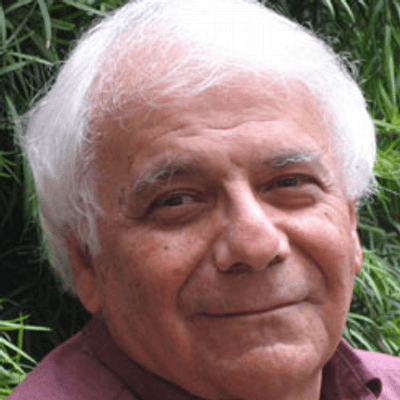
Joseph Rael (Beautiful Painted Arrow)
I met Joseph in October of 2014 and he and I have met in person a few times and been talking on the phone and exchanging letters for work on our book, which we are calling Becoming Your Own Medicine. I have thoroughly enjoyed working with Joseph. Not only does he make me ponder spiritual questions, he is really fun to work with and I always laugh with him. We are getting to the point of doing some editing work on the manuscript for the book and it is very much my own personal journey, my own hero’s journey as much as it is about Joseph’s teachings. Of course I have been reading and re-reading Joseph’s books and he just re-released a new version of his classic, Being & Vibration: Entering the New World. Hopefully the hero’s journey book and Becoming Your Own Medicine will be released in 2016/2017.

In addition to my work with veterans and my collaboration with Joseph, I have been doing some deep study of various topics and authors. 2014 was largely reading Henry Corbin and Tom Cheetham’s works on esoteric Islam and Sufism. This also included a lot of the well-known poets, Rumi and Hafiz, but also one of my favourite books of that time, The Unveiling of Secrets: Diary of a Sufi Master by Ruzbihan Baqli. In 2015, I met Richard Miller, who was kind enough to spend some time talking about iRest & yoga Nidra, when he was up here for a conference. This year has been defined by reading a lot about Hinduism and Kashmiri Shaivism with the principle of non-duality being a primary focus, as well as the concept of spanda, the divine creative pulsation which corresponds so well to Joseph Rael’s teachings about reality. These books have primarily been by Jaideva Singh and Mark S. G. Dyczkowski.

Another topic that has been of interest to me is understanding the foundation of American democracy and seeing how we have lost touch with that and how we can re-invigorate the sense of non-denominational spirituality and human rights that were foundational for our country. I think this has been a kind of re-acquaintance with the U.S. for me. Parker Palmer’s Healing the Heart of Democracy: The Courage to Create a Politics Worthy of the Human Spirit, Jacob Needleman’s The American Soul: Rediscovering the Wisdom of the Founders, Steven Hermann’s two books Spiritual Democracy: The Wisdom of Early American Visionaries for the Journey Forward and Walt Whitman: Shamanism, Spiritual Democracy, and the World Soul have helped me to come to a re-imagining of the idea of America.

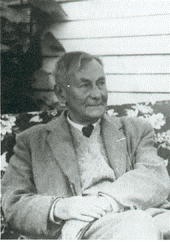
George Kirazian
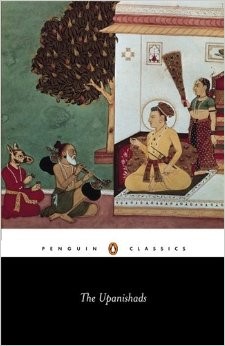
Another highpoint of the year was working with George Kirazian on an interview with him about his friendship with translator Juan Mascaró, whose renderings of The Upanishads, The Bhagavad Gita, and The Dhammapada are still readily available in the Penguin Classics series.

Juan Mascaró
In addition to my own writing, I look forward to continued collaboration with Joseph Rael, as well as some other friends of mine: Gary Orr, Hilton Kopp, and Sandy Carter. I met Gary and Hilton during my time down under and we have some great ideas – stay tuned…I met Sandy when she did a book review of Re-humanizing Medicine for the Courage & Renewal blog. She and I put together a conference proposal on Joy in Work, which was turned down, but has led to our long-distance collaboration on a project on this same topic, which I have been calling, A Work of Joy. This examines finding joy in work at a time when there are high rates of stress and burnout in health care.

At the VA, I have a couple projects I have been working on that are specific to the VA. Along with Nicola De Paul, Craig Santerre, and Jenny Salmon, we have been developing a Whole Health class that provides holistic support and inspiration to veterans who are interested in taking a more active role in their health care. I have also been working with Laura Merritt on an adaptation of Re-humanizing Medicine for VA staff, which we have been calling, Caring for Self. It is great to be able to apply some of the ideas I developed in my book to self-care for staff as well as for patients.
I’ll close in returning to what Houston writes in the introduction to her book, The Search for the Beloved: Journeys in Mythology & Sacred Psychology.
“The premise of this book is that we must call our spirits home, lest we forsake our origins, and lose hope, meaning, health, and the ability to serve and participate in the greatest challenge that history has ever known…We are all being asked, both singularly and collectively, to cross a bridge and to meet halfway a rising reality, a sacred reality. Thus the need for training in journeys into the Sacred,” (viii).
Houston develops this concept of Sacred Psychology and training in journeys into the Sacred. I feel that this is also the focus of my work in the past two years. My understanding of the hero’s journey class is that it is a form of initiation rite to help veterans move from a state of being of war to a state of being of peace in order to make the transition back into the civilian world. One of the primary ways of doing this is a kind of spiritual awakening that accompanies a shift from a materialism-based separation to a spiritual-based sense of connection and even oneness with others. I have also come to understand my work with Joseph as being a guidebook on how to become a visionary in order to move from war to peace and again to move from a state of isolated separation (which is a state of conflict) to a state of Unity as expressions of the Vast Self. This requires dying to the old self and being reborn, continuously.


Here is how Joseph ends his book, The House of Shattering Light:

Each of us is a ceremony, a vibration of the All-That-Is. We ourselves are the Vast Self, that One Actor in the universe, who creates continually in all moments. We are the Vast Self playing in creation as creatures, as individuals.
In the experiences of my life, through loss and transformation, ceremony and story, I learned how to emerge continually from the individual self that is Joseph Earl Head Rael into the Vast Self again. In the kiva, in the sweat lodge, in the sun dances and long dances. I have learned to die to myself in order to know the Self, dying from this House of Shattering Light into states of ecstasy, and then returning again, that the Vast Self might drink continually of the light that It is creating.
To know ourselves as the Vast Self playing is to be both human and divine. It is for this we all are born, to be mystics, fully alive and dancing, (199-200).
My return to North America and my transition into the second half of my life have brought me to look less for a physical place of home and more for a spiritual, internal place – a place that also includes many places in the world as well as the whole world, or as Houston writes, “a citizen of the universe.”

What is Joy in Work, Where has it gone, How can We bring it Back?
This is the second in a series of blog posts examining Joy in Work. It is part of an ongoing discussion between Dave Kopacz and Sandy Carter on this topic and will include each of our thoughts individually as well as our dialogue on Joy in Work. This second blog outlines Sandy’s initial thoughts on Joy in Work.
Sandy Carter, Ph.D. works as a physician coach and consultant. Sandy is a professional certified coach, holds a PhD in organizational management with a specialization in leadership, and Masters in Business Administration and Social Work. Her research is in the area of transformational leadership with physicians, and wellness and resiliency.

What is Joy? How is it different from happiness?
Sandy Carter:
Joy is a state of mind and an orientation of the heart. It is a combination of emotions and contains elements of contentment, confidence, and hope. Joy has more depth, meaning and purpose than happiness. Being joyful means feeling connected to yourself and/or others in life, nature, and appreciating beauty. It requires an acceptance for how life is (not how you’d like it to be), by living in the present. Joy comes from within! It is a sustainable emotional experience that alters our physiology and biochemistry promoting a sense of wellbeing that promotes resilience and supports immune health. In the Biblical sense, Joy is not an emotion, and it is not linked to environmental conditions, but is an attitude of the heart and spirit. It is where internal peace and contentment reside, in spite of, what’s happening ones’ life.

Happiness is subjective – it can mean different things to different people and is more of a momentary state of being. Happiness is an emotional state of wellbeing defined by positive feelings that can range from contentment to intense Joy!

Why is Joy/happiness important?
Joy and happiness are connected to wellbeing and are valued as essential for individuals to thrive in their work and personal lives. On March 20, 2013, the first ever International Day of Happiness was celebrated around the world. The UN General Assembly passed a resolution to promote happiness as a universal goal and aspiration for people everywhere. The UN is urging governments to start measuring wellbeing as a guide to creating public policy. This has roots in the field of sustainable development. The UN recognizes by measuring gross domestic product (GPD) we are placing overemphasize on materialism and incomes (that beyond a certain point) does not enhance life satisfaction.

Additionally, by enhancing our overall wellbeing we can directly impact the high costs of healthcare and help create healthier work cultures that can improve hospital safety concerns (medical errors and complications). While working in cultures where there is blame/shame people tend to be hyper-vigilant and low trust. This level of stress impacts energy levels, judgment and health. Often leading to lost revenue from absenteeism, turnover, disability, insurance costs, workplace accidents, violence, workers’ compensation, and lawsuits, etc.
The United States is the most overworked developed nation in the world. Working is not necessarily the problem. If you love what you do, are doing it for the right reasons and can rest and restore – work can be a wonderful thing. However, far too many Americans are driven to work more and more (based on scarcity values of feeling like they don’t have enough) which leads to stress and lower quality of life. Leaving many people without time to unwind, take care of themselves or their homes. Vital connections are lost to friends and family. These kinds of circumstances lead to isolation, loneliness, and burnout. When all of this becomes overwhelming and can lead to coping strategies, further stress and deteriorate health. Stress is the #1 cause of both mental and physical health problems. Many workers today are burned out and pressured causing heightened anxiety, depression and disease.

Biology of Joy:
People who experience upper reaches of happiness on psychological tests develop about 50% more antibodies than average. It’s also been discovered that mental states such as hopefulness appear to reduce the risk or limit the risk of cardiovascular disease, pulmonary disease, diabetes, hypertension, etc. Joy, happiness, and positive emotions make your immune system function better, help you fight disease, and even live longer.
Herbert Benson has done research on the Relaxation Response. By initiating the Relaxation Response, we can experience a physical state of deep rest that counteracts the harmful effects of the fight-or-flight response. If we can let go of bad stress, our brains can rearrange themselves neurologically so that the two hemispheres communicate better, and problem solving becomes easier.

Stress, Eustress & Joy
The problem is we don’t take care of ourselves very well. For example, the United States is the only industrialized nation without a mandatory option for new parents to take parental leave. Furthermore, 134 countries have laws setting the maximum length of a workweek and the U.S. does not. A large percentage (85.8% male and 66.5% females) work more than a 40-hour workweek. We also are the only nation in the industrialized world that has no legally mandated annual leave and very short vacation times compared to Europe.
Unmanaged stress can be destructive, and… stress also has a positive benefit. Eustress or good stress provides us with energy and motivates us to produce. When we are utilizing eustress, we find clarity, focus, and creative insight.

Joy at work is essential. It is a vital energy in sustaining high levels of passion, performance, and productivity. Meaningful work is about uncovering and utilizing our true gifts.
In these times of unprecedented change, it is vital that we are connected to a deeper, natural energy source from within.
Stress is an essential response in highly competitive environments – it focuses you, but past a certain point it compromises your performance, efficiency and eventually your health. We are at that point today as physicians experience burnout at epidemic levels and commit suicide at a rate higher than the general public.
Poetry describing what it means to live joyfully
Mindful
Every day
I see or I hear
something
that more or less
kills me
with delight,
that leaves me
like a needle
in the haystack
of light,
it is what I was born for—
to look, to listen,
to lose myself
inside this soft world—
to instruct myself
over and over
in joy,
and acclamation.
Nor am I talking
about the exceptional,
the fearful, the dreadful,
the very extravagant—
but of the ordinary,
the common, the very drab,
the daily presentations.
Oh, good scholar,
I say to myself,
how can you help
but grow wise
with such teachings
as these–
the untrimmable light
of the world,
the ocean’s shine,
the prayers that are made
out of grass?
Mary Oliver from Why I Wake Early, 2004

David Whyte on JOY
is the meeting place of deep intentionality and self forgetting, the bodily alchemy of what lies inside us in communion with what formally seemed outside, but is now neither, but become a living frontier, a voice speaking between us and the world: dance, laughter, affection, skin touching skin, singing in the car, music in the kitchen, the quiet irreplaceable and companionable presence of a daughter: the sheer intoxicating beauty of the world inhabited as an edge between what we previously thought was us and what we thought was other than us.
Joy can be made by practiced, hard-won achievement as much as by an unlooked for, passing act of grace arriving out of nowhere; joy is a measure of our relationship to death and our living with death, joy is the act of giving ourselves away before we need to or are asked to, joy is practiced generosity. If joy is a deep form of love, it is also the raw engagement with the passing seasonality of existence, the fleeting presence of those we love understood as gift, going in and out of our lives, faces, voices, memory, aromas of the first spring day or a wood-fire in winter, the last breath of a dying parent as they create a rare, raw, beautiful frontier between loving presence and a new and blossoming absence.
To feel a full and untrammeled joy is to have become fully generous; to allow our selves to be joyful is to have walked through the doorway of fear, the dropping away of the anxious worried self felt like a thankful death itself, a disappearance, a giving away, overheard in the laughter of friendship, the vulnerability of happiness felt suddenly as a strength, a solace and a source, the claiming of our place in the living conversation, the sheer privilege of being in the presence of a mountain, a sky or a well loved familiar face – I was here and you were here and together we made a world.
‘JOY’ David Whyte
From CONSOLATIONS: The Solace, Nourishment and Underlying Meaning of Everyday Words
MANY RIVERS PRESS


Meaningful work is by far the primary motivator for engagement, and experiencing excitement and joy in one’s work. Today, in healthcare organizations the environments are toxic, as the conditions for creating opportunities for meaningful work are not met.
Conditions of meaningful work include: worker autonomy, having sufficient resources and an opportunity to learn from problems. Currently, many physicians have lost their autonomy, are told to do more with less and work in toxic cultures. These are environments where it’s not safe to expose vulnerability for growth and development, and we know working in environments where there is mutual respect is critical to finding meaning and joy. A precondition for a culture of safety in the workplace is the protection of the physical and psychological safety of the workforce. Joy in the workplace comes from an appreciation of the human spirit and organizational support for developing capabilities.
Conditions for meaningful work also comes from having leaders who are a resource for enabling physicians/others by removing obstacles, providing support and acknowledging/validating strong effort and successful outcomes. When people engage in work at this level – community spirit, innovation and creativity flourishes. Most adults in the U.S. spend more hours at work than anywhere else… work should “ennoble, not kill, the human spirit.”
This is the first of a series of blog posts examining Joy in Work – maybe we’ll call it: A Work of Joy! It is part of an ongoing discussion between Dave Kopacz and Sandy Carter on this topic and will include each of our thoughts individually as well as our dialogue on Joy in Work. This first blog will provide a broad outline for subsequent work. We will each start with a monologue and move from there into dialogue.
Dave Kopacz, M.D. works as a psychiatrist at the VA in Primary Care Mental Health Integration. Prior to this he was Clinical Director at Buchanan Rehabilitation Centre in Auckland, New Zealand. He is Board certified in Psychiatry and Integrative & Holistic Medicine. He is the author of Re-humanizing Medicine: A Holistic Framework for Transforming Your Self, Your Practice, and the Culture of Medicine.

Sandy Carter, Ph.D. works as a physician coach and consultant. Sandy is a professional certified coach, holds a PhD in organizational management with a specialization in leadership, and Masters in Business Administration and Social Work. Her research is in the area of transformational leadership with physicians, and wellness and resiliency.She heads The Center for Physician Leadership Coaching.

What is joy in work?
Where has it gone?
How can we bring it back?
Dave: To speak of joy in work can seem like an oxymoron – work is work, after all, isn’t it? The Online Etymology Dictionary describes the roots of “work” as having elements of toil as well as creativity, it can mean a military fortification as well as an artistic labor, Mark Twain wisely points out that the difference between work and play is a matter of conditions or attitude.

Very busy business
Old English weorc…“something done…action (whether voluntary or required)… also “physical labor, toil; skilled trade, craft, or occupation…” “military fortification,” from Proto-Germanic werkan…from Proto-Indian-European werg-o-…“to do…”
Meaning “physical effort, exertion” is from c. 1200; meaning “scholarly labor” or its productions is from c. 1200; meaning “artistic labor” or its productions is from c. 1200…Meaning “embroidery, stitchery, needlepoint” is from late 14c. Work of art attested by 1774 as “artistic creation,” earlier (1728)…
“Work and play are words used to describe the same thing under differing conditions.” [Mark Twain]
We have a wide range of roots and definitions for the word “work,” at its most simple it is “to do,” and our judgements on that doing determine whether we view it as work or play, hard or easy, meaningless or meaningful. Doing for no reason feels meaningless and tedious, but Doing that is meaningful is rewarding, even if the work is difficult. Sandy notes that we can meet high demands if we have high resources – so in this way success in work depends not only on the external conditions and needs, but also our individual, relational and organizational resources.

In the Judeo-Christian tradition, we read early on in the Bible that human beings have been cast out of the Garden of Eden for their transgression of eating from the fruit of the Tree of Knowledge. God curses Adam and Eve and their descendants, saying that man must earn his living from the ground with toil and that woman must give birth in pain. We have this deeply ingrained belief that our relationship with work and with our bodies is one that is filled with pain – not joy – and that we have the guilt of “original sin” that taints our lives in this world. (Not all theologian ascribe to this idea, for instance Matthew Fox writes in Original Blessing that there are other spiritual perspectives we can take in the relationship between spirit and matter and that we can find joy in our work in the world).

However, there is also a long tradition in all religions of a sense of joy and joyousness that come from the mystical connection with Spirit. Dorothee Soelle, in her work on mysticism in, The Silent Cry: Mysticism and Resistance, lists five domains of mystical experience: Nature, Eroticism, Suffering, Community, and Joy. She describes joy as a state of being, rather than a sense of acquisition or momentary pleasure.

“In the mystical sense, joy is something not tied to objects or certain experiences of delight. Joy is a matter of ‘rejoicing in’ rather than of being ‘glad about,’” (The Silent Cry, 179).
Henry Van Dyke wrote “The Hymn of Joy,” written in English and set to Beethoven’s Ninth Symphony, which, in turn was inspired by Schiller’s poem, “Ode to Joy.” Here are Van Dyke’s lyrics as an example of spiritual joy.
Joyful, joyful, we adore Thee,
God of glory, Lord of love;
hearts unfold like flow’rs before Thee,
Opening to the Sun above,
Melt the clouds of sin and sadness;
drive the dark of doubt away;
Giver of immortal gladness,
fill us with the light of day!
All Thy works with joy surround Thee,
earth and heav’n reflect Thy rays,
stars and angels sing around Thee,
center of unbroken praise:
Field and forest, vale and mountain,
Flow’ry meadow, flashing sea,
chanting bird and flowing fountain,
call us to rejoice in Thee.
Thou art giving and forgiving,
ever blessing, ever blest,
well-spring of the joy of living,
ocean-depth of happy rest!
Thou the Father, Christ our Brother,—
all who live in love are Thine:
Teach us how to love each other,
lift us to the Joy Divine.
Mortals join the mighty chorus,
which the morning stars began;
Father-love is reigning o’er us,
brother-love binds man to man.
Ever singing, march we onward,
victors in the midst of strife;
joyful music lifts us sunward
in the triumph song of life

Work is our action in the world. Joy is the sense of connection to the greater meaning and purpose in our work.

Native American visionary, Joseph Rael was taught by his grandmother that “work is worship,” (Ceremonies of the Living Spirit, 22). This brings a different perspective to work, as in the Native American tradition, every action is sacred and there is no separation between spirit and matter. Zen Buddhism takes a similar approach of spiritualizing mundane tasks, such as “polishing the mirror” or “chop wood, carry water.” In the tradition of Kashmiri Saivism, the ultimate Reality is considered to be “a compact mass of bliss (cidānandaghana),” (Dyczkowski, The Doctrine of Vibration, 44). The ultimate union of Being-Consciousness-Bliss is called “saccidānanada.”

This is the “Sat, Chit, Ananda,” that Joseph Campbell speaks of when, after studying the wisdom of the Hindu tradition, he coined the phrase, “follow your bliss,” (Joseph Campbell & Bill Moyers, The Power of Myth, 149, 285).

In this work that we are undertaking, joy will refer to something deeper than a passing emotion such as happiness or the momentary satisfaction of a desire. We will be looking at joy as the underlying substrate of our Being. This comes from a sense of unity within ourselves and a sense of unity and connection with others. To put it very simply, suffering comes from separation and disconnection and joy emerges from a sense of deep connection and unity within one’s self, between self and other, and within community.
Jack Kornfeld, in his foreword to Awakening Joy, addresses this deeper level of joy. “Joy is our birthright…it is innate to consciousness. Joy is a reflection of our true nature,” (Baraz and Alexander, Awakening Joy, xiii-xiv). Kornfeld describes joy in such a way that we can imagine it to be the foundation of our life, the deep, internal ocean currents, strong and perpetual, beneath the passing, tossing waves of the ups and downs of our daily emotional life. The authors of this book (who have been teaching courses on awakening joy since 2003) describe that having a sense of joy is a choice. “Our joy and happiness is up to us. Our suffering and well-being is not solely determined by what’s happening in our present circumstances but to a large degree by our relationship to what is happening,” (Awakening Joy, xviii).

Joy, in the way we will be discussing it, relates to connection, innate birthright, choice and a spiritual wisdom perspective on life.
The reason that we need to be talking about joy in the work of health care is because it has been lost in most health care work environments: physician burnout, patient dissatisfaction, long wait times, short appointment times, complicated insurance bureaucracies, costly co-payments and deductibles (for those lucky enough to have insurance) – in short, joyless experiences in giving, receiving, managing, and reimbursing health care. We take a holistic perspective that these variables cannot be dealt with in an isolated way: patient satisfaction cannot be considered without staff well-being and without considering the human needs of administrative and leadership staff. It is all of one piece. That is what we learn when we set off in search of joy – just like in the Wizard of Oz, we already have it within ourselves, but we must set off on a journey of self-exploration in which we support each other’s quest to realize and manifest what it is that we have lost or felt we never had in the first place.
In this joyful work we are undertaking, we will draw on diverse fields of human study, both ancient and modern, including: mysticism, spirituality, poetry, personal growth, well-being, positive psychology, business, economics, leadership, neuroscience, systems theory and relational science. We will look at how to manifest joy at the individual level, interpersonal level and communal level. Fundamental to manifesting joy at all these levels is the principle of connection – connection to dimensions of Self, connection between individuals, and connection in groups and communities. Joy is an emergent property that manifests from a sense of deep connection. We will then look at practical applications of joy at each of these levels and also in relation to leadership in health care and models of health care reform, such as the Triple Aim of the Institute for Health Care Improvement.
Next week we will publish Sandy’s monologue, then the dialogue will start…
A Work of Joy!
The Gold Foundation is a great organization whose motto is: “Working to keep the care in health care.”
Similar to the message in my book, Re-humanizing Medicine, the Gold Foundation states “Humanistic medical care is not simply compassion. It is the best of medicine.”
They are a good resource for research on humanism and compassion in medicine. They offer grants to practitioners and researchers (my mate, Hilton Koppe – @doc_hilton – from Lennox Head Australia recently received a Gold Foundation grant for his work on poetry and medicine).
I discuss the counter-curriculum in my book and in this blog I talk a little bit about the background of how I came to the necessity of that idea.
“Sometimes the things you most need to learn are not taught in school.”
An Interview with George Kirazian about his literary friendship with Juan Mascaró.
“The memories…are golden memories and I am reliving them,” (George Kirazian).
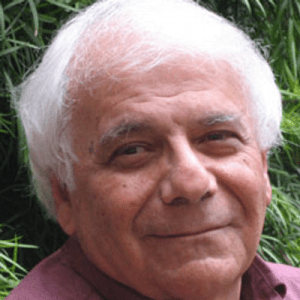
Author, composer and poet, George Kirazian and his family visited translator Juan Mascaró in Comberton, Cambridge in the UK in 1972. Perhaps at some future point George and I will speak again about his own creative work (he is currently working on a ballet and his rendition of the “Divine Liturgy of the Armenian Apostolic Church” is available on-line, however in our discussion on 8/28/15, we primarily focused on the Kirazian family visit to Comberton, Cambridge. I decided to publish this all as one piece, even though it is a bit lengthy for a blog post, but I’d like to present the full experience of George’s memories as a whole.
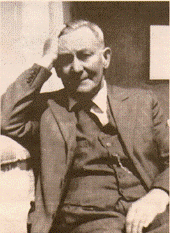
Juan Mascaró (December 8, 1897 – March 19, 1987) was born in Majorca, Spain, lived in Sri Lanka (then Ceylon) for a time, and spent most of his adult life as a professor at Cambridge. His first name was originally spelled “Joan,” in Catalan, but he changed the spelling to “Juan” to avoid confusion with the female name “Joan.” He retained the Catalonian pronunciation, however, which is more like “jew-an,” rather than the Spanish pronunciation “wan.”
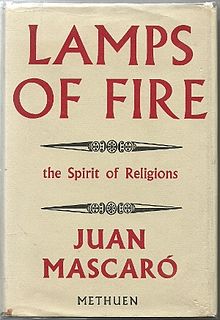
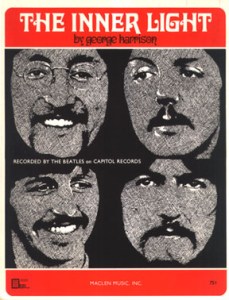
George tells that Juan only ever taught two classes at Cambridge during his entire time there. One class was on the Romantic Poets and the other was “Literary and Spiritual Values in the Authorized Version of the Bible” (which means the King James Version in the UK). There is very little written about Juan Mascaró on the internet, which is perhaps fitting for a man who dedicated his life to translating ancient words spiritual texts – his English translations of The Bhagavad Gita, The Upanishads, and The Dhammapada are still available in the Penguin Classics series. He also self-published a small anthology of his favourite Keats poems (of which George has a copy), Lamps of Light (a compilation of spiritual wisdom from world religions), and the posthumous The Creation of Faith (a collection of his own thoughts and aphorisms). Mascaró had correspondence with another George, George Harrison and this resulted in the Beatles song, “The Inner Light.”
Mascaró wrote in The Creation of Faith, “I have two lives: my inner life with God, and my outer life with nature and men. How mysterious these two worlds are,” (169). He left footprints and notes, detailed in his writings about his inner life with God, however, we know remarkably little about the man in his outer life, and our conversation with George will serve to flesh out the words a bit.
DK: Why don’t you start with how you came to have inscribed copy of Juan Mascaró’s book, Lamps of Fire, as well as his other books?
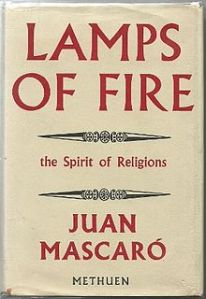
GK: I had been studying the Penguin Bhagavad Gita in the late 60s, ‘68-69, and was deeply impressed. I then purchased the Upanishads, Juan’s translation, and I was so moved when I completed the introduction, that I just simply–it was at midnight–picked up the phone and trusting to luck and good fortune, called Cambridge, yes, at midnight, San Diego time. I guess it was what, 8 or 9 am there, and she was kind enough, the operator, to trace Juan’s number for me. I called him and he was having breakfast. We chatted for a while and I said “Professor Mascaró, I am so deeply moved by the introduction to the Upanishads that it was like an Upanishad for me,” and he said “Oh, George, where are you calling from?”
You know, he had such a sharp mind that could leap into transitions effortlessly. I said, “I am calling you from San Diego,” and in a moment he simply said “Father Junípero Serra was born a mile away from my father’s farm.”
So you see how he leaped from San Diego, and if you know the whole history of the California missions, established by Father Junípero Serra [recently canonized by Pope Francis], no other comment, he just moved right into the reference, and we chatted. He was very gracious and he said, “Look, I know this is a costly call, can you give me your address.” So I took down his number and I gave him my address and we continued chatting for a while, I don’t know, by this time it was 1 am or so, and a week later I received a Penguin Bhagavad Gita inscribed to me with a very lovely note. And then there began, in Winter, 1971 a lengthy correspondence that carried over into the spring of ’72.
“In theory, an Upanishad could even be composed in the present day: a spiritual Upanishad that would draw its life from the One source of religions and humanism and apply to the modern world,” (Juan Mascaró, Introduction to the Penguin Classics, The Upanishads, 8).
[George then recounted how the friendship developed, with letters back and forth. Juan then invited George and his family to stay at a cottage he owned near his own home, “The Retreat,” and George recounts the discussion with Juan about the cottage.]
GK: Juan said, “I have a lovely cottage,” within walking distance of The Retreat” [his home], and I said, “That’s fine.” “You’ll like it George.” He said, “I’ve just renovated the bathroom and in addition to that, I have just had the roof re-thatched!”
So, Dave, my wife and I, let me jump ahead a month or so, when we approached the cottage I expected either Ronald Colman or Greer Garson to walk out and greet us, like in “Random Harvest.” I don’t know if you are at all an old movie fan. It was incredible, lovely, with an entrance archway of many miniature roses.
I said “That would be fine.” He asked, “How long are you planning to stay?” “Oh, about 5-6 weeks.” … Hmmm, it’s amazing how one can recall these conversations almost per syllable, after more than 40 years….. He said, “Well George, would $250 for the month be acceptable?” My wife and I nearly fell off our chairs. I said, “It is so generous, Juan!” Of course, I immediately sent payment to him.
I once made the mistake of calling him Juan [the Spanish pronunciation, like “wan”]. “No,” he said, “I am Catalonian, it is Juan,” [the Catalonian pronunciation sounds more like “jew-an”]. “Well, I am comfortable with Juan” [“wan”], I said. And he answered firmly, “No, George, it is Juan [“Jew-an”]. I only needed that one lesson, I didn’t need it to be repeated.
…
When we entered his home, Juan amazed us: he came in from a dining room and he just stared at us. It was as if time stopped, he just stared at me, my wife and our children, in a very warm way, you know, this wasn’t anything done icily. And after that he just stayed and looked, as if taking a kind of physical/cerebral inventory of us, if that is possible, and he welcomed us and we sat. It was just a wonderful welcome. And we sat there and then later in the evening, he and Kathleen [Juan’s wife] walked us to our home. And he was right, it was a newly refurbished bathroom, small but very convenient, and the roof was indeed recently thatched. My memory just leaped backwards in time. I imagined that Keats on a walking trip from Cambridge to Comberton, or William Blake, perhaps, and stopping at this cottage for a refreshing drink. I think the building date was 1732. I just said to my wife, “Who knows if Byron or Keats walked by here, and perhaps stopped to rest” – Keats was a walker, certainly, Wordsworth and Coleridge were also…so I just kind of pondered that.
There began our 5 or 6 week sharing time…
We discussed The Dhammapada [Mascaró was just finishing this translation from Pali of the Buddha’s teachings]…and there began a number of delightful, I mean, Dave, golden memories, sitting in his backyard and Kathleen fixing tea and our chatting. And my wife Dee and our girls there, sharing with Juan and Kathleen, and I underneath an absolutely massive walnut tree. Juan said I was sitting in C.S. Lewis’ favorite chair and I was gratified to hear that. He told me that another chair was a favorite of W. H. D. Rouse, who had translated the Iliad and Odyssey of Homer, prose translations, in the ‘50s and ‘60s. They were very popular in America, published by Signet American Library, I used them myself in a number of my classes. He said that Rouse’s chair had been carved out of a nearby walnut tree and it was a beautiful comfortable, gnarly chair, but I preferred CS Lewis’ chair.
I asked him about Lamps of Fire, oh and a beautiful – he had done a marvelous anthology of Keats’ poetry. Published in Majorca, in a very nice, very artistic, rough-cut, parchment cover, an edition by a friend of his, published on the Island.
And we were talking about Keats, and I don’t know if you want to get into any literary or musical things, but that is what we focused on in those early weeks. He told me, he said that Keats for him was the perfect emblem of the Hellenic experience, while Wordsworth, to his great satisfaction, was the perfect embodiment of the Hindu. And if you read his notes, he took a month or 5 weeks, he told me, to do [translate] the Isa Upanishad at Tintern Abbey, one of Wordsworth’s most renowned poems and he just stayed there…he said it was a labor of love and he didn’t leave. I guess the Wordsworthian spirit and consciousness were present. He said it was a beautiful time for him.
…
And I have felt
A presence that disturbs me with the joy
Of elevated thoughts; a sense sublime
Of something far more deeply interfused,
Whose dwelling is the light of setting suns,
And the round ocean and the living air,
And the blue sky, and in the mind of man;
A motion and a spirit, that impels
All thinking things, all objects of all thought,
And rolls through all things…
(Wordsworth, “Lines Composed a Few Miles above Tintern Abbey, on Revisiting the Banks of the Wye during a Tour, July 13, 1798”)
One of the most beautiful gifts he gave me was the gift of Gitanjali by Rabindranath Tagore and – there have been one or two other translations, but he, as I did, following his lead, felt that Tagore’s rendering of his own poems was perhaps definitive.
“Thou hast made me endless, such is thy pleasure,” (Tagore, Gitanjali, opening line).
He gave me a number of books during our stay and then we started on our walks.
[George tells of their walks down country lanes, speaking of Lope De Vega, Ezra Pound, Bernard Shaw, “Citizen Kane,” Fortunio Bonanova (Catalonian singer and actor who moved to Hollywood, whom Juan grew up with), Tomas Vittoria’s masses. At one point, Juan and George were walking on a meadow lane near a group of cows. Juan asks George about the college the locations he taught at, in California].
GK: I told him, the city is called “El Cajon.”
“El Cajon!” He burst out laughing and the cow got so scared it just turned and ran into the meadow. He said “You have a city called ‘the box!?!’” And apparently that’s what it means. “I can’t believe that a city would be called ‘the box.’ He howled and just kept walking and slapping his knee. He couldn’t believe that a city would be given such a name.
We talked about Tagore, a dear, dear favorite. And we talked about Vivekananda and Ramakrishna and also about Paramahansa Yogananda, who came to the center in LA. He didn’t follow them too, too often, but he had heard that Yogananda had a broad following in the United States and California especially.
Then he went on to talk a little bit about Ceylon (now Sri Lanka) and this was before he returned to Cambridge. He told me, “George, you know I have taught only two courses, I taught the Romantic Poets and ‘Literary and Spiritual Values in the Authorized Version of the Bible,’ that is to say the King James. “That is all I taught, my entire career.” Apparently he got his degree and then went back to Barcelona where he lost a number of his friends, I think Unamuno and others who had been shot. I guess this was Hemingway’s “For Whom the Bell Tolls” time, Francisco Franco ‘39, ‘40, ‘41 and he apparently had lost some dear friends, so he didn’t stay there. He went back to the school that had granted him his degrees, to teach, but he repeated, “I only taught two classes….”
And it was that day, when we returned from the walk, that he gave me the private, 200 copies only, privately printed anthology of selected poems by John Keats. Very artistic looking, a rough-cut, parchment cover edition, it showed Keats’ poems that matter most deeply to him.
A thing of beauty is a joy for ever:
Its loveliness increases; it will never
Pass into nothingness;
…
Nor do we merely feel these essences
For one short hour; no, even as the trees
That whisper round a temple become soon
Dear as the temple’s self, so does the moon,
The passion poesy, glories infinite,
Haunt us till they become a cheering light
Unto our souls, and bound to us so fast,
That, whether there be shine, or gloom o’ercast;
They always must be with us, or we die.
(From Endymion, John Keats)
And when we talked about Ceylon, Sri Lanka, where he was, he used the term “Governor” of the school, I guess the magistrate of the school. He said that he would walk to the school every morning and I said “That must have been pleasant.” “Yes, it was pleasant but it was rather unique. My rooms were not that far…” And I said “What was unique about it?” “Well, every morning when the sun rose I would walk to work, I purposefully took a cane and as I walked I would take the cane and knock the cobras out of my path.” He would just strike the snakes out and knock them onto the dirt or the meadows that flanked the walk way. I said, “Did you ever get hurt?” He said, “No, no.” Apparently every morning they were awakening from their torpor, and as the heat warmed them they were stretching and arching, and he just knocked them out, or knocked them out of his path.
…
[George and his wife, Dee, recount memorable evenings with Juan and his wife, where Juan would pour them all sherry and listen to Catalonian folk songs, and a different facet of his personality would emerge].
GK: He enjoyed and poured us sherry and played Catalonian folk songs on 78 rpms. And you saw a side of him that I never saw in our walks or in our conversations in his library. What a splendid library, Dave, oh Good Lord, I think he had begun building it the day he returned to England after the Spanish madness. It was just beautiful.
…
[I had read his] Upanishads and I was deeply moved. The introduction to it was a revelation to me, it still is.
“Our spiritual life must be a work of creation. Whether we are within a religion, or outside a religion, or against religion, we can only live by faith, a burning faith in the deep spiritual values of man. This faith can only come from life, from the deep fountain of life within us, the Atman of the Upanishads, Nirvana, the Kingdom of Heaven,” (Mascaró, Introduction to The Upanishads, 23).
…
And The Dhammapada, he was working on it [when we visited]. I sat once, and I was honored, he was walking around the room – I sat at the desk and he read several chapters. We looked over the introduction, and briefly discussed Lamps of Fire. He is very careful, as in San Juan Del La Cruz, St. John of the Cross, he will say “translated by E. Alison Peers or “Sister Teresa” and he’ll say “translated by so and so.” Or he’ll say “translated by Juan Mascaró,” but unless I’m mistaken, for all of the Tao Te Ching, he uses the verb “rendered by Juan Mascaró,” he doesn’t say translated. He said he would study the translations he respected the most, absorb them, as many translators do today. We see a number of Americans rendering the Tao or Dhammapada; they are hardly versed in the original language, so what they do is surround themselves in a half-moon of other paperback translations, absorb them, and then render their own translation.
So we talked about Tagore, Yeats – my favorite poet of the 20th century who had written a lovely, lovely introduction to the Gitanjali – it still reads beautifully, do you have that introduction, Dave?”
DK: I don’t think I do, I just have a collected works of Tagore.
GK: If you can get a single volume, with Yeats’ Intro, 1912 or 1907, I may be mistaken, or 1912, it is just a lovely introduction to Tagore’s poems. There are some paragraphs there, you know “I have kept these poems in my hands on trolleys and omnibuses and so forth…” just a beautiful, beautiful tribute….
“I have carried the manuscript of these translations about with me for days, reading it in railway trains, or on top of omnibuses and in restaurants…
Lovers, while they await one another shall find, in murmuring them, this love of a God a magic gulf wherein their own more bitter passion may bathe and renew its youth. At every moment the heart of this poet flows outward…for it has known…images of the heart’s turning to God,” (W. B. Yeats, “Introduction” to the Gitanjali, 1912).
Then he had shown me a letter that Tagore had written to him and said that Juan had “captured the spirit of the Upanishads,” a very complimentary letter that Tagore had written, and then when we left, he gave me a number of books and inscribed them all, including Lamps of Fire and also Final Poems of Tagore. I think the title is “Whispers of Eternity,” unless I am mistaken, and he said these were very lovely, and indeed, I think the final poem in that volume was written on the morning or night before Tagore’s passing.
“22 December, 1938.
Dear Professor,
I have too often seen the Upanishads rendered into English by scholars who are philologists and who miss the delight of the immediate realisation of truth expressed in the original texts.
…
And these are the reasons why I feel grateful to you for your translation which fortunately is not strictly literal and therefore nearer to the truth, and which is done in a right spirit and in a sensitive language that has caught from those great words the inner voice that goes beyond the boundaries of words.
…
Yours sincerely,
Rabindranath Tagore”
(Letter reproduced in The Creation of Faith, Juan Mascaró, 20).
…
It was a lovely summer, “How was the weather, Dee?”
[Dee, in background, answered] “Not very good. I think we saw the sun twice in one month, grey and overcast…”
[Dee, incidently, is the author of an Armenian Vegan cookbook]
I just love my memories, in the carven walnut tree chair behind the cottage….
Oh, and his eating habits – he said, “I eat one meal a day,” echoing the Buddha. He said “I have a chop, a bit of potato and some greens.” I myself couldn’t exist on so Spartan a diet, so I made it a point to eat rather well before I went for my midday visit there. But he would sit in a kind of mini greenhouse, and he was right: I saw a very thin lamb chop, a modest sized potato, and some green peas, and he ate very slowly, very delicately….
A beautiful summer it was, my family loved it, especially the girls – it looked like Snow White’s cottage or Ronald Colman’s cottage.
…
GK: Catalonian Dance night, the girls would read the classics…and we would have great times, and I asked, “What about W.H.D. Rouse?” He said, “Rouse was remarkable!” I said, “In what way?” (It was quite an accomplishment to translate the Iliad and the Odyssey, although they are rather prosy). He said, “Well, he impressed me deeply one day when he came here and sat in that chair George, and said, ‘I have begun the study of Chinese’ – and he was 89! ‘I am launching a study of Chinese,’” I think he died several years after.
DK: George, you had mentioned Catalonian music nights, where Juan showed a different side of his story, could you say more about that?
GK: The side was not a very Cambridge manner (laughs), I mean he was relaxed and very cordial, he sipped the sherry and he would fill it again and then translate the songs and he even would sit and get up and then change the record and then stand up and offer us a snack, and smile and laugh. He was like a young boy again, nibbling straw on his father’s farm, long before the whole Cambridge/Barcelona experience began. And we saw that – and I am not saying he was a frowning Cambridge Don, even on his non-Catalonian nights, he was very gracious, very friendly, he would laugh. He would always say, “George the power and beauty of” – and almost every meeting, and I learned from him (I get excited now because the memories as I mentioned are golden memories and I am reliving them, but I was that way myself) and he would always say, “The beauty and the blessing of stillness and silence.” And as Dee just mentioned, he spoke very softly, but you never had to lean toward him to hear what he said, everything was clearly stated and that evening was a merry, merry evening and he would sit and you would know he was in a kind of Proustian remembrance of things past…. He must have been an adolescent again, maybe stealing apples with Fortunato on his father’s farm. Dee says from background, “They were happy songs.” Yes, they were lovely songs, very lilting and happy songs. He loved his Catalonian culture. I mentioned Franco once, but he didn’t even bother to respond. He just didn’t want to discuss that time, that topic… He just wasn’t concerned with it. He was totally Catalonian….
“George, the power and the beauty…the beauty and the blessing of stillness and silence,” (Juan Mascaró, to George Kirazian, 1972).
He could crack a walnut and take a sip of sherry with the best of them, don’t get the impression that he had high, stiff starched collars – that was not the case. Very humble, in that respect he was still a simple son of a Majorcan farmer, I don’t mean that in a bad way, he was very earthy, down to earth.
…
We never saw him again…
…
DK: It is so great to hear about [your visit with him]. You know, I had read the Upanishads and the Gita when I was in college and then a few years ago I had gone back and I think I had lost the books, so I had bought them again and had, kind of similar to you, just this real appreciation for the introductions, I read the introduction and then read the book and then went back and read the introduction again, which is kind of a rare thing for me to do. I’ll often when I appreciate somebody, I will start to find everything that they had written and that is when I found The Creation of Faith [a posthumous collection of aphorisms that Mascaró had been working on at his death] and I think that is kind of how you – how did you stumble across that the blog that I did on that book?
GK: I don’t think it was a blog, was it an Amazon?
DK: Oh, it might have been an Amazon review because I would do both, an Amazon review and then expand that into a blog.
GK: And I responded to that, I don’t know what the review was, but I was struck by that and that initiated my email to you and so forth. You are right, what I did for one semester and a half was, I went through The Upanishads [Juan’s introduction] with a pen and underlined every reference to writers, such as Ramon Lull, a great poet/mystic of the 14th century. And San Juan De La Cruz, who’s Spanish even I can understand, even though it is around the time of Elizabeth, Shakespeare. But you are right, those have to be revisited often as a holy tribute.
DK: I feel like the tremendous amount of work that he did and how passionate he was, and how much he seemed to love the work that he was doing and the writing that he was translating or rendering. If you look on-line there is very, very little about him, the translations of the books and the introductions come up, but I just pulled up the Wikipedia page [on Juan Mascaró] there are only 303 words in the description of his life.
GK: Oh, my Lord!
DK: Just even what I am hoping with you is to put a little bit more about this man’s own life – maybe he is the type of person who would not want a lot of his own details out there, but for somebody who did so much important work and introduced so many generations of people to Eastern wisdom it seems…
GK: Oh, you are absolutely right, it was Juan’s, it was his translations of Penguin which for years were adopted by the UC system here. I mean from Northern California right down to my own city, San Diego, if you took a course and you walked into the bookstore, those were the translations that were on the shelf, his….
DK: And I think they are still very well respected and available.
GK: Yes, they are, and you know, a few of the comments…
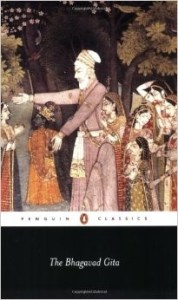
GK: Let me close with this, because not too many people have touched on it in the appreciations on Amazon and elsewhere. What was a revelation to me with the Gita and then later the Upanishads the subsequent, following year, was his ability to (and a number of people now I think are referencing it), his ability when he happens on a kind of eternal spiritual truth he, instead of rendering it the way the original would have him do, he will go into the Old Testament or the New, based on his authorized version…and he will take that phrase from the Bible instead of strictly translating the original because he feels, that quote captured perfectly the Spirit, and would be luminous to kindred readers–and yet he would not dilute, he did not feel that he would dilute the effect and the power of the original by using that Biblical phrase. He worked very carefully… I was amazed at that and I told him that first night. I have never, of all the translations, I have never encountered anything like that. It showed such a total mastery of the two traditions and when I learned later that he taught only two courses,” when he said the Authorized Version, I said to myself “Well, George, there it is!” Just beautiful, just lovely…
And there began, that Summer, the literary romance of my life.
George Kirazian
Facebook: https://www.facebook.com/george.kirazian
Twitter: @georgekirazian
Reverend Dr. Karen Tate’s book Voices of the Sacred Feminine: Conversations to Re-Shape Our World, brings together interviews from her, “Voices of the Sacred Feminine Radio Show.” It includes transcripts from such notables as Jean Shinoda Bolen, Noam Chomsky, Riane Eisler, Matthew Fox, and Starhawk. The book includes 41 interviews, divided into five parts, so there is something for everyone in this book as it includes a broad range of scholars, activists, thinkers, creators and writers.
Part I is “Sacred Feminine. Deity, Archetype and Ideal.” This section examines devotional practices with specific goddesses, such as Persephone, Kali, Mary Magdalene, and the Virgin Mary.
Part II is “Embracing the Sacred Feminine. Ritual and Healing.” This section looks at themes such as altered consciousness, multiculturalism, equality and healing.
Part III is called “Sacred Feminine Values – Alternatives to Patriarchy. Politics and Social Change.” This section is quite interesting with Noam Chomsky’s discussion of “Feminism, Patriarchy and Religion;” Riane Eisler’s “The Essence of Good Business: Companies that Care;” and Jean Shinoda Bolen’s “Antidote to Terrorism.”
Part IV is “Rebirthing the Sacred Feminine. Sacred Activism,” which takes on topics like women in the role of the priesthood, changing the masculine pronoun language of religion’s talk of God, and Matthew Fox’s “Cosmic Christ and the New Humanity.”
Part V is a memorial to the late Layne Redmond.
In the introduction, Reverend Dr. Tate points out the imbalance in the United States that 52% of the population are women, but less than 20% of leadership positions in politics, academia, business and religious institutions are held by women. This creates a gender-biased imbalance, not only in terms of individuals, but also in a lack of representation of the feminine in the creation of cultural values and society. She writes that the dominant patriarchy “stands on four legs of a stool: racism, sexism, environmental and cultural exploitation,” (9) and she sees the Divine Feminine as a “great equalizer” to correct these imbalances.
There are a number of reasons why I chose to review this book. My own work my book, Re-humanizing Medicine: A Holistic Framework for Transforming Your Self, Your Practice, and the Culture of Medicine, draws on a re-valuing of many of the traditional feminine values in medicine, connection, compassion, caring, healing, nurturance, and strengthening relationships. I call for a compassion revolution and a counter-curriculum. The compassion revolution is similar to what Riane Eisler speaks her new book, The Real Wealth of Nations: Creating a Caring Economy in her talk, “The Essence of Good Business: Companies that Care.”
She says that “Ultimately, the real wealth of a nation lies in the quality of its human and natural capital. I should add here that an investment in human capital is an investment in human beings,” (224). A large part of the argument for why contemporary medicine is so dehumanizing is the economic argument, but Eisler argues that caring businesses create healthier, more committed and more productive employees – so the compassion revolution in health care may result not just in better, more human care, but also in more economically viable and sustainable care (sustainably economically, but also emotionally for staff). Paul Spiegelman and Britt Berrett make this argument in their book, Patients Come Second: Leading Change by Changing the Way You Lead.
Rev. Dr. Tate writes that we “start by taking responsibility for our own educations,” (10). This is echoes my call for a counter-curriculum within medicine in health care, that in addition to learning the technical aspects of our trades, we must also take ethical and moral responsibility for maintaining and growing our humanity in the difficult setting in which we practice. While much of health care reform calls for external mandates and incentives, I call for individuals to take responsibility for their Continuing Human Education (CHE) as well as their Continuing Medical Education (CME).
Dr. Jean Shinoda Bolen has written such influential books as, The Tao of Psychology, Goddesses in Everywoman and Gods in Everyman, and her contribution to anthology is called, “Antidote to Terrorism.” I found this quite interesting given my recent work with Veterans that I discuss in a companion blog post to this one. She says that “the feminine principle expressed in circles and the masculine principle of hierarchy must come into balance,” (226). Just as the hero’s or heroine’s journey can be viewed as a circle, the “intention to be in a circle with a spiritual center invites the invisible world of spirit or soul to be in the center of the circle and in the center of the psyche of each person in the circle,” (228). She states that a “soldier is taught to kill, which is also what a terrorist is taught. These are not lessons maternal women want their sons to learn,” (228). Furthermore, she points out that the “Mother’s Day Proclamation, written by Julia Ward Howe in 1870, was a call to mothers to gather together to end wars, so that their sons will not be taught to main or kill the sons of other mothers,” (228). I find these observations particularly relevant in regards to the step of the hero’s journey, the inner and outer union of masculine and feminine, as they show the imbalance of a lack of feminine values and influence within the military, within the individual returning Veteran, as well as, it could be argued, within the society that the Veterans return to.
Let’s now look at Matthew Fox’s “Cosmic Christ and the New Humanity.” He describes the Cosmic Christ (a term that goes back to Teilhard de Chardin) as divine presence and the holiness of all being. The “New Humanity” is the creation of the capacity for mysticism, which he defines as “multiple experiences of unity,” “our unitive experiences – when you feel at one with being, one with others, one with yourself, one with God,” (312). Fox says that a healthy community for New Humanity does two things: “it turns out lovers – it turns out mystics, the mystic in every person,” and “secondly, it turns out prophets – that is to say spiritual warriors. The mystic says yes, the prophet says no. The prophet…interferes with that which is interfering with the glory, the sacredness of life,” (315). This focus on mysticism and the ability to say yes to the human and no to the dehumanizing also has relevance for my book, which seeks to develop the spiritual capability of health care providers in order to care for the whole person of the patient, which includes the spiritual dimension.
In closing, there are a lot of different perspectives in Rev. Dr. Karen Tate’s Voices of the Sacred Feminine and there are many topical discussions not just for women, but for all human beings. The book aims to correct the imbalance in our culture and society of the domination of masculine values and the lack of equal representation of feminine values. What we worship and honor in religion and spirituality is a reflection of our behaviors and actions in our mundane lives. In attending to the Sacred Feminine, Rev. Dr. Tate does present many ideas that make us think about our current societal structures and values and these conversations do have the power to re-shape our world.
You can listen to an interview with Dave Kopacz about his book, Re-humanizing Medicine, by Mary Treacy O’Keefe on her radio show, “Hope, Healing and WellBeing” at WebTalkRadio. It is my first radio appearance for the book. It is about 35 minutes long.
You can listen to the interview by following this link.
Thanks Mary for the interview, I think it turned out great!
Also, the book is now in warehouses and I received notice from Amazon that the pre-orders of the book should start being delivered early next month, even before the official release date!