Dave and Chris talk about how illness can be a call to creativity. Chris starts out with a story of learning from a young cancer patient. We talk about how illness can break down the everyday mindset, or horizontal, material focus and introduce a vertical, or spiritual dimension in life. To make this shift requires an openness to creativity and also allowing inspiration, grace, or a sense of a gift to be received. This gift of creativity can then be shared with others. We talk about the lives and creative processes of Philip K. Dick and Carl G. Jung. As always, Chris and Dave share stories, humor, ideas, and books. Dave closes with a Daniel Ladinsky rendering of a Hafiz poem, “To Build a Swing.”
To Build a Swing You carry All the ingredients To turn your life into a nightmare─ Don’t mix them! You have all the genius To build a swing in your backyard For God. That sounds Like a hell of a lot more fun. Let’s start laughing, drawing blueprints, Gathering our talented friends. I will help you. With my divine lyre and drum. Hafiz Will sing a thousand words, You can take into your hands, Like golden saws, Sliver hammers, Polished teakwood, Strong silk rope. You carry all the ingredients To turn your existence into joy, Mix them, mix Them!
Hafiz, “To Build a Swing,” Translated/Rendered by Daniel Ladinsky, The Gift, p. 48
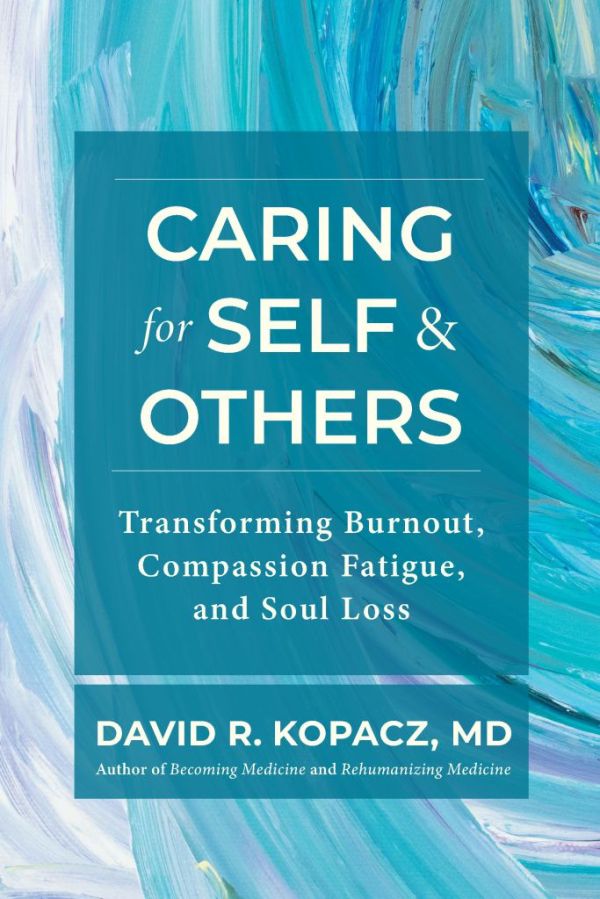
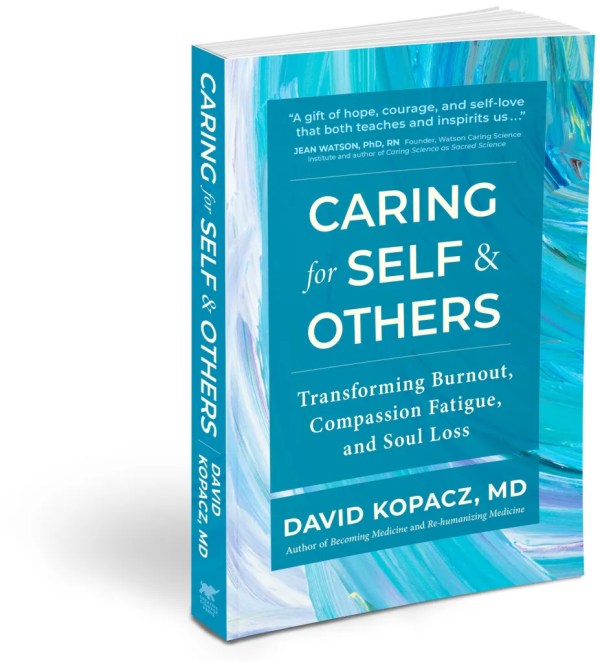
We’ve gotten some really nice endorsements for the upcoming release of Caring for Self & Others: Transforming Burnout, Compassion Fatigue, and Soul Loss – which will be released on June 25th and is currently available for pre-order through Amazon. I’ll share some of the comments below:
“It is a healing experience to read the beautiful, self-journey into self-caring through the wounded depth of the dark night of soul. It is through such personal sharing of self that we learn from each other. David Kopacz ‘s book offers readers a gift of hope, courage and self love, that both teach and inspirit us with his soul’s path into self-caring and heart healing.”
Jean Watson, PhD, RN, AHN-BC, FAAN, LL (AAN), Founder Watson Caring Science Institute, Distinguished Prof/Dean Emerita University of Colorado Denver, College of Nursing
“This holistic, imaginative and soulful response to burnout is much needed in today’s world.”
Dr. Dina Glouberman, author of TheJoy of Burnout: How the end of the world can be a new beginning
“As physicians, we may not always acknowledge that we each have a soul. However, we are in a sacred profession that truly holds the soul of our patients. Whatever we call it, there is a place deep within us–almost the elephant in the room–that is our compass guiding us, our North Star. Oftentimes we get lost because we don’t care for our internal compass. That is the essence of what’s lost in healthcare today. If we have the true soulful connection with our Self, it needs to be fed first so that we can be available to everyone else.
When we make self-care and colleague care an unapologetic and unashamed priority, we can give the best care to our patients. David Kopacz invites us to reconnect to our humanity, nurturing our hearts and minds as healers and setting the stage for our systems to heal as well.”
Mukta Panda, MD, author of Resilient Threads: Weaving Joy and Meaning into Well-Being and co-author of The Oath to Self-Care and Well-Being
Caring for Self & Others Transforming Burnout, Compassion Fatigue, and Soul Loss is a blueprint for authentic happiness. Dr. David Kopacz has gifted us with an insightful guide for self-care. He points to how burnout and compassion fatigue lead to losing our souls and how the loss teaches us a way into depth and spirituality. He suggests ways to sit with equanimity between the wholeness of the sacred and the mundane. This book is an invitation to show up fully and to rediscover there is no split of body/mind or between the self and the collective; it contains perennial wisdom with all its regenerative power.
Marianela Medrano, PhD, What a Word is Worth podcast, and author of Rooting,Diosas de la yuca, and other titles
“David Kopacz, versed in worldwide healing traditions where illness is approached as a loss of soul and healing involves its restoration, offers a complete vision of individual, social, and earth practice where everything contributes to a communion of creation that transforms afflictions into affirmations of life. His personal “dark night” shows the way to a timeless discipline of compassionate creation with others, helping us see that we participate in a process larger than ourselves yet sustained by our unique and personal contributions.”
Shaun McNiff, PhD, author of Art as Medicine, Art Heals, Integrating the Arts in Therapy, Trust the Process: An Artist’s Guide to Letting Go, Imagination in Action: Secrets for Unleashing Creative Expression, and other books. Lesley University, Cambridge, MA, 2021 to date: University Professor Emeritus
“Finally, a book that puts together what self-care and healing are really about! Kopacz, an exceptional healer, presents a comprehensive and holistic perspective on ideas and practices that can mitigate the burnout and fatigue that are rampant in healthcare. This is a handbook that will help every practitioner reclaim their role as healer and reconnect with the Soul of their practice. An exquisite, insightful and transformative work!”
Lucia Thornton, ThD, MSN, RN, Past President, American Holistic Nurses Association, Past President, Academy of Integrative Health and Medicine, and author of Whole Person Caring: An Interprofessional Model for Healing and Wellness
“As a clinician who has experienced deep burnout, I adore this book and find it endlessly useful. Dr. Kopacz aptly offers his work as an oxygen mask. He exquisitely supports attention toward the crucial self care healers of all kinds desperately need for thriving lives.”
Kate King, MA, LPC, ATR-BC, author of The Radiant Life Project
“Caring for Self & Others: Transforming Burnout, Compassion Fatigue, and Soul Loss demands to be read with our heads and our hearts. David Kopacz challenges us to care for ourselves, others and the systems we work in. The book is filled with exercises and meditations that can help us in this work. David also shares his journey and how he was employed the ideas and exercises in his own life that reveal the depth of his commitment to caring.”
John (Jack) Miller, Professor at the University of Toronto and author of Education and the Soul, Love and Compassion: Exploring Their Role in Education, and A Holistic Educator’s Journey: Seeking Wholeness in America, Canada, Japan and AsiaThe Holistic Curriculum
“Caring for Self & Others charts a path through the inevitable downturns and struggles of our lives by using our very suffering as material for transformation and growth. It elaborates a practice of caring that leads us from our individual pain into service to others by breaking down the mental barriers that lead us to believe that there is a self separate from others. This is perennial wisdom for the soul.”
Stephen Cope, Scholar Emeritus, Kripalu Center, bestselling author of The Great Work of Your Life, The Wisdom of Yoga: A Seeker’s Guide to Extraordinary Living, and The Dharma in Difficult Times: Finding Your Calling in Times of Loss, Change, Struggle, and Doubt
“Caring for Self and Others speaks directly to us in these uncertain and difficult times; a book that we must read. The author uses his own experience both as a doctor and patient to deeply delve into the different kinds of caring: for the body, for emotion, for mind, heart. It is a book full of wisdom gained by the author’s insight and continuous growing curiosity about life and the importance of caring and healing. This book is written for you; that is, anyone with an interest in the world around us who knows that to live well (or thrive), we need to care for ourselves and others. David Kopacz both explains why we need to care but also gives practical ways of doing so.”
Jonathan McFarland, MA, President and Founder of The Doctor as a Humanist and co-editor of Health Humanities for Quality of Care in Times of COVID -19, Associate Professor, Universidad Autónoma de Madrid
Caring for Self & Others: Transforming Burnout, Compassion Fatigue, and Soul Loss will be published by Creative Courage Press – thanks to Shelly Francis for all the support in the publication process!
This is a short book for children and the young at heart, filled with 18 ideas from Joseph and accompanied by his artwork.
Every child is born a Holy Being
We are all on a journey—the Journey of the Holy Being. This journey starts when you are born. The secret is that you are already a Holy Being when you are born…Go ahead and read these ideas I am giving you, but beware because you will eventually become a Holy Being if you read this book! Actually, you already are—you just forgot . . .Joseph Rael (Beautiful Painted Arrow)
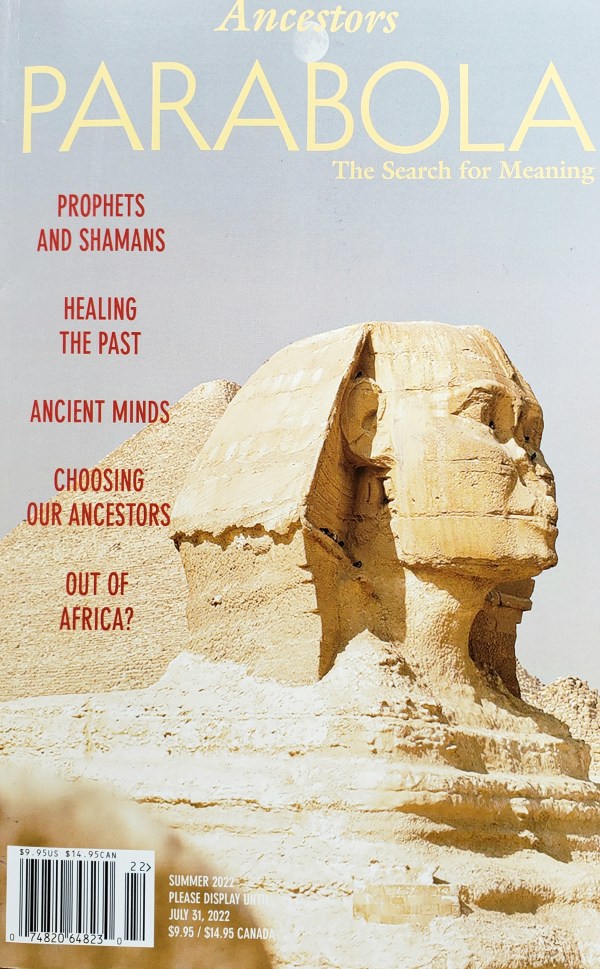
The excerpt is entitled “The Gates of Paradise: Shamanic Memories from an Indian Visionary,” and is availabe online in Parabola Summer 2022 Edition with the theme of Ancestors. It is currently available online, but the whole issue is worth reading, with an articles on P. L. Travers, Vaclav Havel, Nelson Mandela, and many different topics on the theme of Ancestors.
The article also features two of Joseph Rael’s paintings, “Sage Woman becomes visible to – bless “the People,” and “Crystal Chamber,” which I’ll include below.
We are very happy that this book is getting some notice as it is an autobiography of Joseph’s life specifically aimed at passing on wisdom to the next generation, how fitting that it is in the Ancestors issue of Parabola: The Search for Meaning. The book was also recognized as a winner of the Paterson Prize for Books for Young People.
This essay was originally published in The Badger, Year 4, Vol 2, March 2018. Thanks to The Badger for permission to reprint! It seems as relevant now as ever…
This past year (2018) has been a difficult one in the world. There continues to be a movement of anti-democracy and radical “other-ing,” in which we see our brothers and sisters as “others,” and we break down, rather than strengthen, the bonds of our common humanity. In the United States the freedom of the press is under attack, environmental regulations are being rolled back and hostility toward non-white, non-Christians is being promoted at the highest levels of government. Not only is there an attempt to drive people apart and promote fear, there is even talk of building a physical wall between the United States and Mexico. Walls are the most concrete dividers of people.
While the stated goal is to “make America great again,” in reality it is an anti-democracy movement that has all the hallmarks of totalitarian and fascist regimes of the 20th century.
I do not intend to regularly write on politics in this column (Becoming Medicine in The Badger), but we are in unprecedented times and times such as these spirituality needs to be engaged and to speak up for peace and human rights.
In 2017, I published an essay called “The End of E pluribus Unum? The De-evolution of Out of Many, One, to ME First” in The Badger (Year 3, Volume 2, pgs 57-66). In the essay I describe how the idea of “America First” is thinly veiled selfishness, essentially ME first. It’s history traces back to Charles Lindberg and the America First movement that was sympathetic to the Nazis and encouraged the US to stay out of the war (see M. Albright, Fascism: A Warning and J. Stanley How Fascism Works). This attitude is the pinnacle of self-centered capitalism, and betrays the ideals upon which the United States was founded.
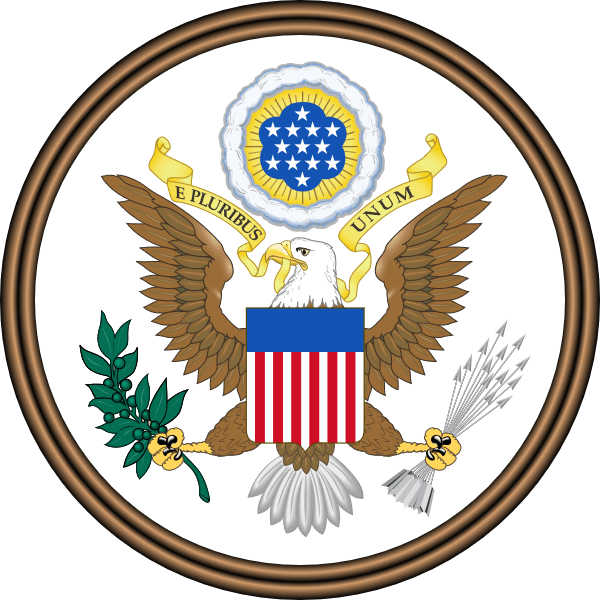
In my work with Native American visionary Joseph Rael, in our book, Walking the Medicine Wheel: Healing Trauma & PTSD, we discuss the motto on the back of the Great Seal of the United States which has the Latin phrase E pluribus unum, “out of many, one.” This motto captures the “united” aspect of the country’s name: the United States, symbolized by the 13 arrows the eagle is clutching. (Glenn Aparicio Parry has written in Original Politics: Making American Sacred Againabout Chief Canasatego, of the Onondaga, giving Benjamin Franklin a single arrow that he then snapped easily, then giving him 13 arrows bundled together, which could not be easily broken). The 13 colonies had different cultural, political, religious, and economic foundations, and yet these 13 colonies united and came together with the idea of strength through union, “united we stand, divided we fall.” This phrase was used in the early years of the American Revolution by such figures as John Dickinson, Patrick Henry, and Abraham Lincoln also paraphrased it. I do not mean to gloss over the major failures of living up to the ideals of the United States in regard to its inhuman policies toward Black and Native American people, but ideals provide a vision of a better world to strive for.
The Great Seal of the United States of America, U.S. Government / Public domain. The eagle looks toward the olive branch rather than the arrows – reminding us to focus on peace.
In my essay, I discussed how crucial it is for the idea of democracy to be able to see ourselves as similar and united within our diversity. When Joseph and I wrote our book on helping veterans return from war to peace, we saw this motto, “out of many, one” as crucial. Moving from war to peace means moving from a perspective of human beings as “other” to seeing them as “brother and sister.” As Joseph often says, “I am my brother’s keeper.” This statement shows affiliation and human bonding. In war, military personnel are taught to view human beings as “other” as the enemy. However, after war, this perspective of viewing human beings as “other” does not promote reintegration or democracy. All of us here in the USA (except for Native Americans) come from other lands. Our current First Lady is an immigrant, born in Slovenia.
I was uncertain if I should write a political piece earlier in the year and I am still uncomfortable with speaking out politically for several reasons.
Yet, as a human being, and as a healer, I feel obligated to speak up against totalitarianism and fascism: attacking the press, threatening federal employees, appointing government officials who seek to undermine the mandate of those agencies (e.g. the Environmental Protection Agency, the United Nations Ambassador), lying without any consequences, and consolidating power in fewer and fewer hands.
Sandia Mountain, looking south, NM (D. Kopacz 2018)
Other healers have felt similarly that they have a moral, ethical, and professional obligation to speak up about the current risks to American democracy. The Dangerous Case of Donald Trump, edited by Bandy Lee, MD, MDiv, includes perspectives of 27 professionals. (Now in a second edition with 37 professionals contributing and also a companion volume The World Mental Health Coalition Documents). While the Goldwater Rule banned mental health professionals from diagnosing mental illness in politicians who had not been formally evaluated, many of these authors take another perspective on our responsibility as mental health professionals to warn others when we see signs of dangerousness.
Two psychiatrists who were very influential in my learning about trauma studies contribute to this volume: Robert Jay Lifton and Judith Herman. Lifton’s work includes the books The Nazi Doctors: Medical Killing and the Psychology of Genocide (which examines how “good” German doctors could gradually become perpetrators of genocide) and Destroying the World to Save It (which examines apocalyptic cults and global terrorism). Judith Herman is the author of the classic book, Trauma and Recovery The Aftermath of Violence—From Domestic Abuse to Political Terror. What I admire about both of these authors, and part of what drew me to working clinically with trauma is that they take a strong human rights stance in their work and do not focus solely on the individual. Their work bears witness to human rights violations as well as seeks to provide a pathway of healing for those who have been traumatized at the hands of fellow human beings.
While I am glad to see that other health professionals are also struggling with the commitment to human rights that is part of being a healer, I do not think that the questions about specific psychiatric diagnoses are important. It does not matter why someone is acting in a totalitarian and fascist manner, danger is danger: fomenting anger and division, whipping up anti-immigrant sentiment, attacking the press, and lying so much that people have come to accept his lying as “normal.” Robert Jay Lifton calls the normalizing of lies, “malignant normality,” through the sheer repetition of lies, people no longer expect the truth.
The Washington Post Fact Checker reported that the current president of the US made “2,140 false or misleading claims” in the first year of office (as of 10/2/20, the total is 20,055 false or misleading claims).
“I always feel we have to work both outside and inside of our existing institutions, so we have to…examine carefully our institutions and what they’re meant to do and how they’re being violated. I also think we need movements from below that oppose what this administration and administrations like it are doing to ordinary people. And for those of us who contributed to this book — well, as I said earlier, we have to be ‘witnessing professionals’ and fulfill our duty to warn.” (Robert Jay Lifton)
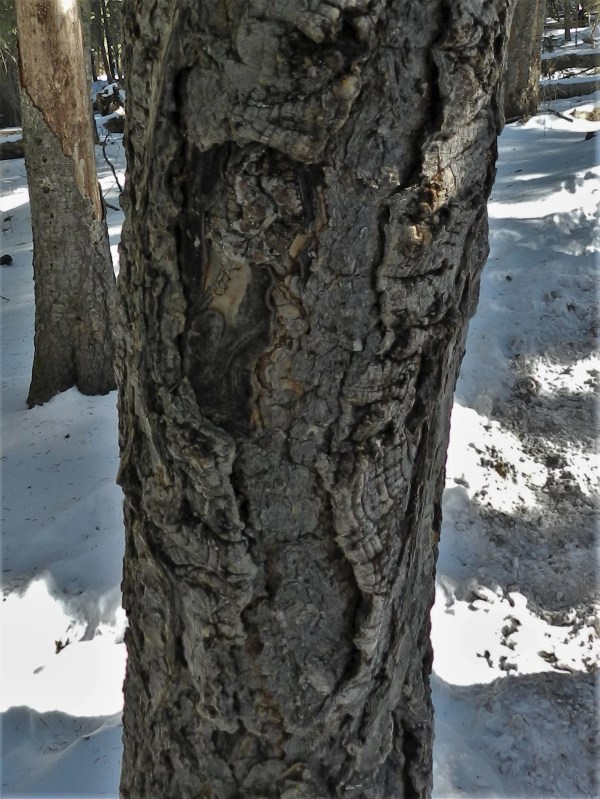
Face in the Tree, Sandia Mountain, NM (D. Kopacz 2018)
Joseph Rael (Beautiful Painted Arrow) and I continue to work together to promote peace. In our latest book, Becoming Medicine: Pathways of Initiation into a Living Spirituality, we seek to illuminate the pathway in the heart that brings us from “other” to “brother and sister.” Mystics, visionaries, and shamans teach us that there is a state of radical union that transcends even the separation implied in our relation as brothers and sisters.
Joseph Rael teaches us that we do not exist as separate beings, but are all part of Divine Oneness. Anti-democracy and radical other-ing are not consistent with spiritual reality. Spiritual Democracy asks us to walk the path of the heart at the center of the medicine wheel.
Many Native American traditions speak of walking the good Red Road, and Joseph tells us that the Red Road is currently off kilter and we must all strive to straighten the path that we are walking upon.
Red Road Off Kilter, Joseph Rael (Beautiful Painted Arrow)







 Being Fully Human