Great Barrier Reef (3): Night on the Reef

OLYMPUS DIGITAL CAMERA OLYMPUS DIGITAL CAMERA

Two of the dives were night dives and this was a totally different experience! Armed with a flashlight I paddled about as the previously sedate Trevally and Red Bass (who drifted along during the day) began a feeding frenzy! The photos didn’t turn out so well with the flashlight as the only light source. But if you can imagine these 4-5 foot long fish zipping all around, searching for any poor little fish caught out in the open, you might get a little sense of what it was like!

OLYMPUS DIGITAL CAMERA OLYMPUS DIGITAL CAMERA

I also saw 6-7 reef sharks, which at first was kind of scary/invigorating, but they really kept a much greater distance than the Trevally and Red Bass. The crew told us to expect seeing the reef sharks as a common place event, particularly on the night dives.

OLYMPUS DIGITAL CAMERA

OLYMPUS DIGITAL CAMERA

OLYMPUS DIGITAL CAMERA

Great Barrier Reef (2)

Some of the dive sites were at places called “bommies,” which were pinnacles of rock in the middle of deeper water. Some of these weren’t so great for snorkeling as far as seeing the surface of the bommie. However, there were masses of schooling fish that I delighted in swimming with, surrounded by zipping colours.

Schooling Fish

Schooling Fish

Close-up of Red-bellied Fusilier

Close-up of Red-bellied Fusilier

Red-bellied Fusilier Schooling

Red-bellied Fusilier Schooling

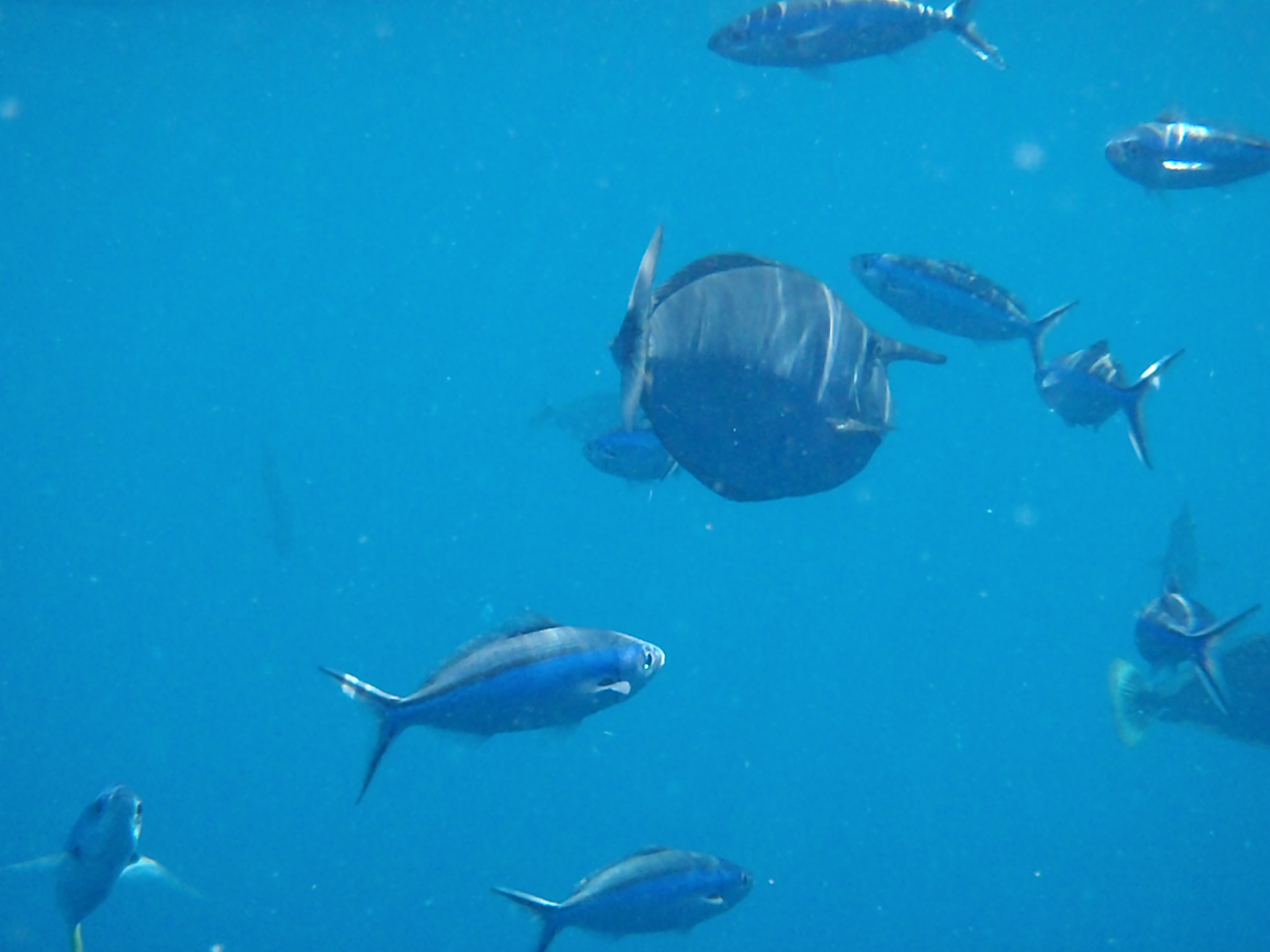
I swam for hours in these swarms of fish as they swarmed and then would suddenly dash for deeper water (a few times I saw circling barracudas, but many times I could not tell why the sudden dash for the deep). It was a very strange feeling to be completely surrounded by these teeming fish and then suddenly to be all alone in deep water – where I couldn’t see the bottom and I couldn’t see another living creature. Soon enough, though, the swarms of fish would come back up and begin zipping about again. Each site was a little different as far as which fish would be schooling closer to the surface and how intermingled the schools were. The yellow-finned fish always seemed to be closest to the surface. The striped blue fish always schooled with them, but a little deeper. The Unicorn Fish were generally deeper yet, but at one site they were coming to the top and I ended up swimming alongside them.

Schooling Fish with Diver

Schooling Fish with Diver

OLYMPUS DIGITAL CAMERA

Unicorn Fish Schooling

Unicorn Fish Schooling

I could have just stayed there, gently swimming in these swarms of fish forever. It was just like a dream! It is hard to describe how peaceful the feeling was and the photos just can’t capture the three dimensional experience of it!

Schooling Fish with Diver's Bubbles

 
Schooling Fish with Diver’s Bubbles

Great Barrier Reef!!! (1)

Reef from Above

Reef from Above

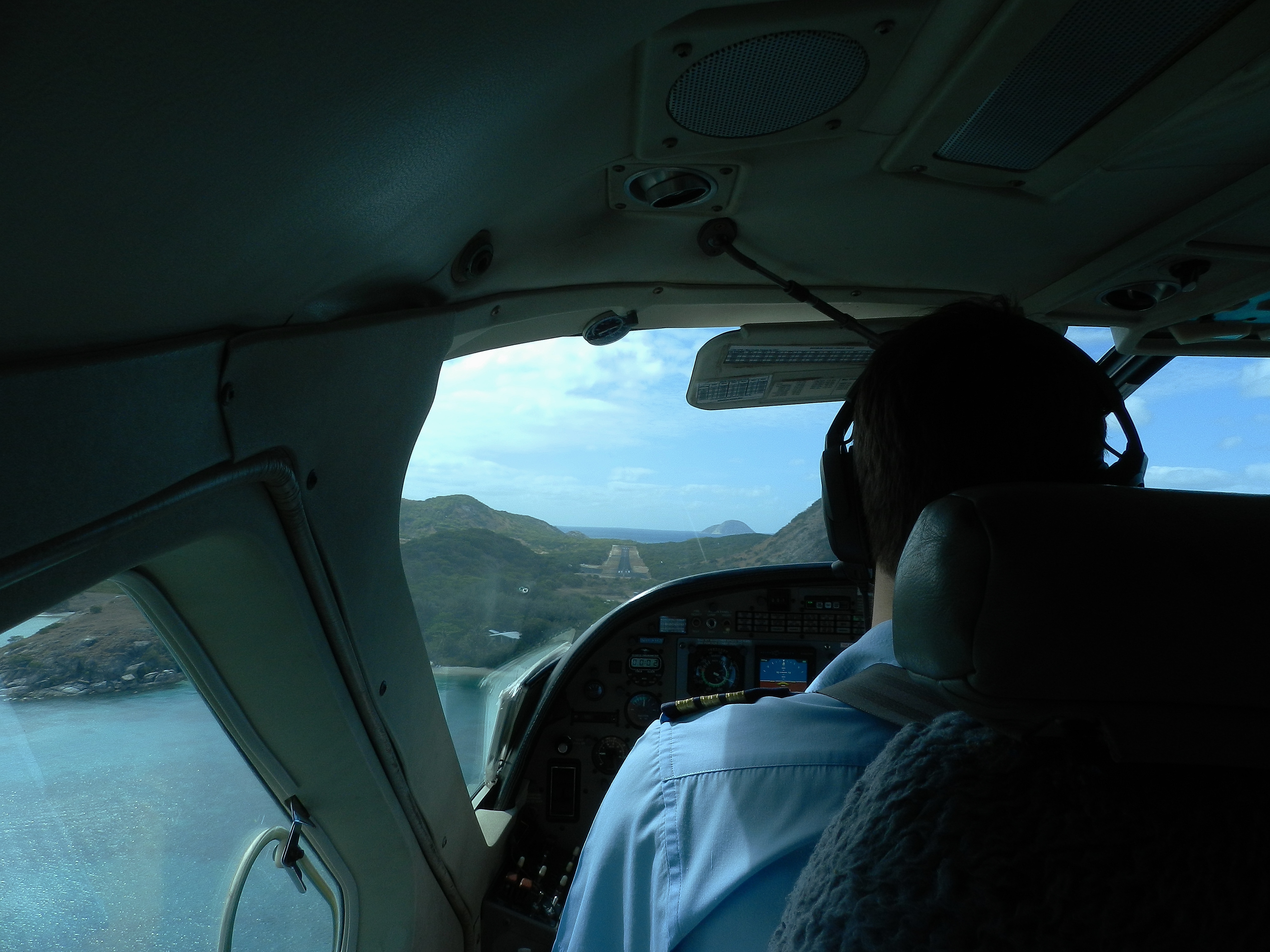
I had a great time out on the Reef. I did a 3 night live aboard trip with a flight out to Lizard Island to start with, and then a cruise back along the Reef toward Cairns. The flight was a nice way to get an overview of the Reef. Also, all the dive sites were more than 100 kilometers from Cairns, which is a good thing because a lot of the Reef is getting damaged from high density tourist use. A number of things I read were quite pessimistic about the future of this massive reef system that runs all the way up into Indonesia. The tour I went on was very aware of the need to make efforts to preserve the Reef.

Flying in Formation over the Reef

 
Flying in Formation over the Reef
On Approach to Lizard Island

On Approach to Lizard Island

Spoilsport, our home for 3 nights

Spoilsport, our home for 3 nights

I did my PADI certification for scuba back in Auckland a few weeks ago. I had difficulty equalizing the pressure in my ears and had some fluid in my ears after that (four flights in a week with pressure changes highlighted that I still had some problems with equalization), so I ended up snorkeling the whole time. Of the 12 dives, there was only one that I was somewhat disappointed that I wasn’t able to go under water.

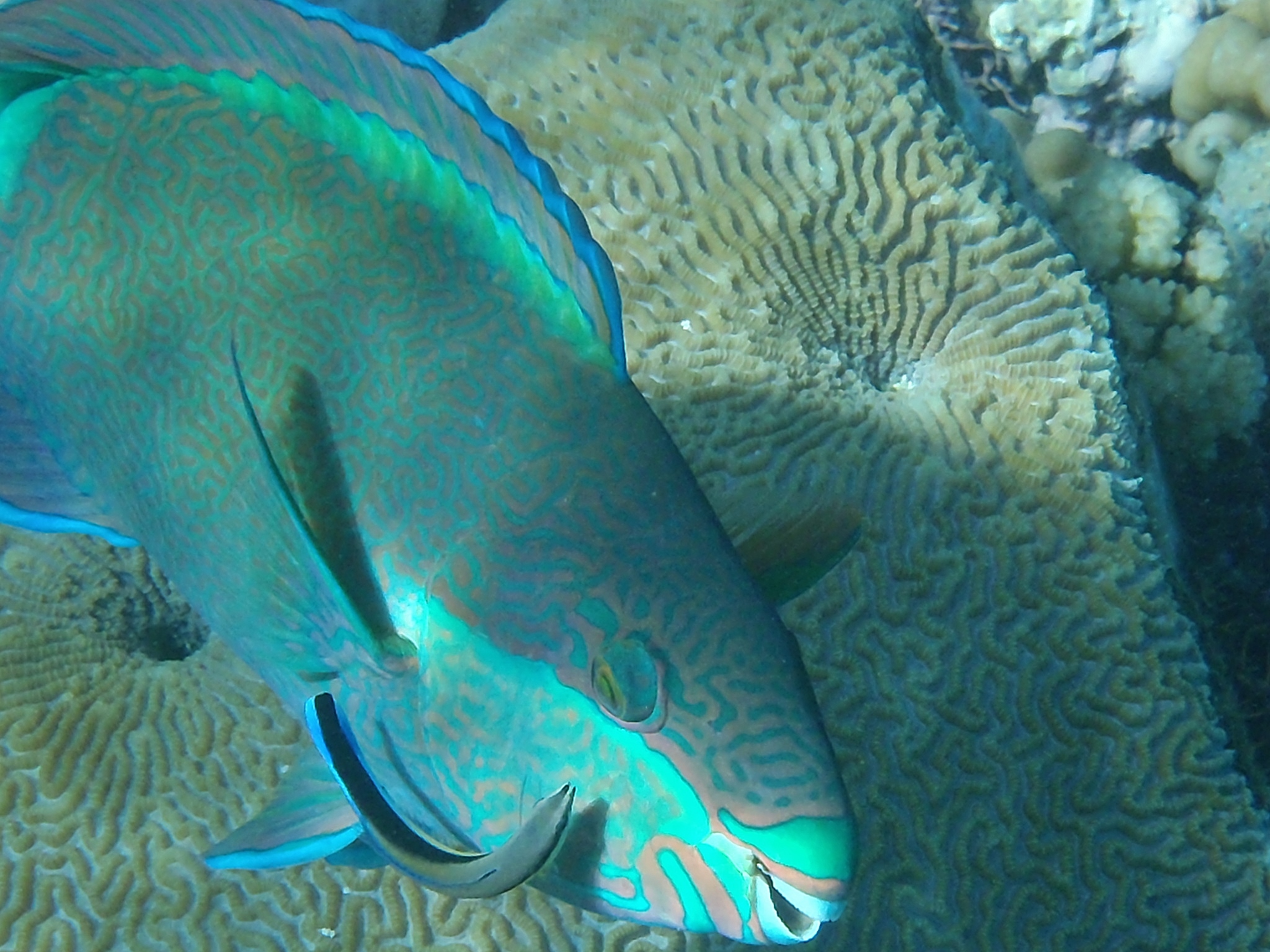
Parrot Fish with Remora

Parrot Fish with Remora

Reef View

Reef View

Every time I went out, I saw more and more amazing things, the kind of things you generally only see in books or documentaries…

Unicorn Fish Close-up

Unicorn Fish Close-up

OLYMPUS DIGITAL CAMERA

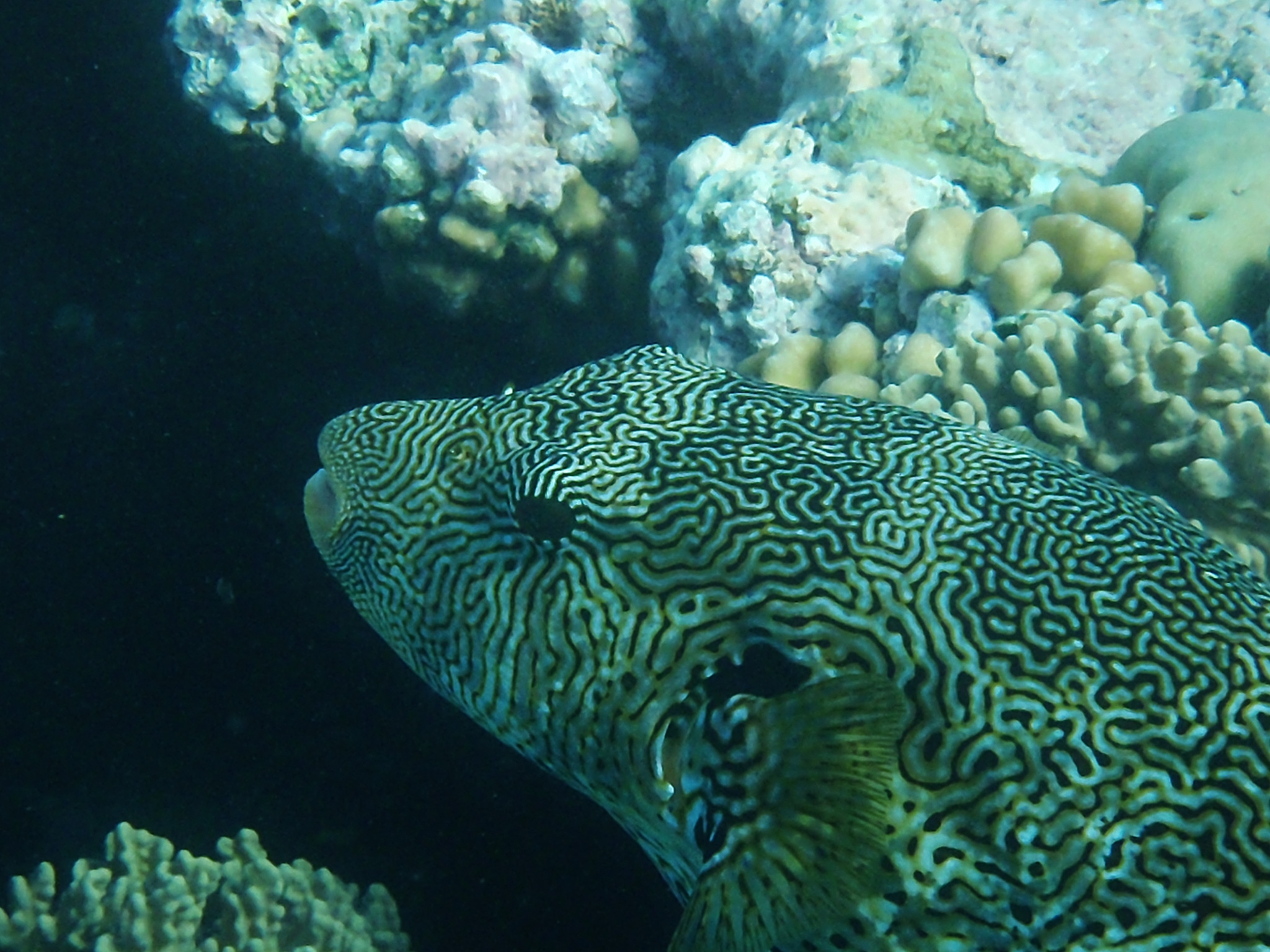
Puffer Fish

Puffer Fish

Green Sea Turtle

Green Sea Turtle

Trigger Fish

Trigger Fish

I’ll post some more photos in another blog…

Cairns, Australia

Shell Statue Cairns  waterfront

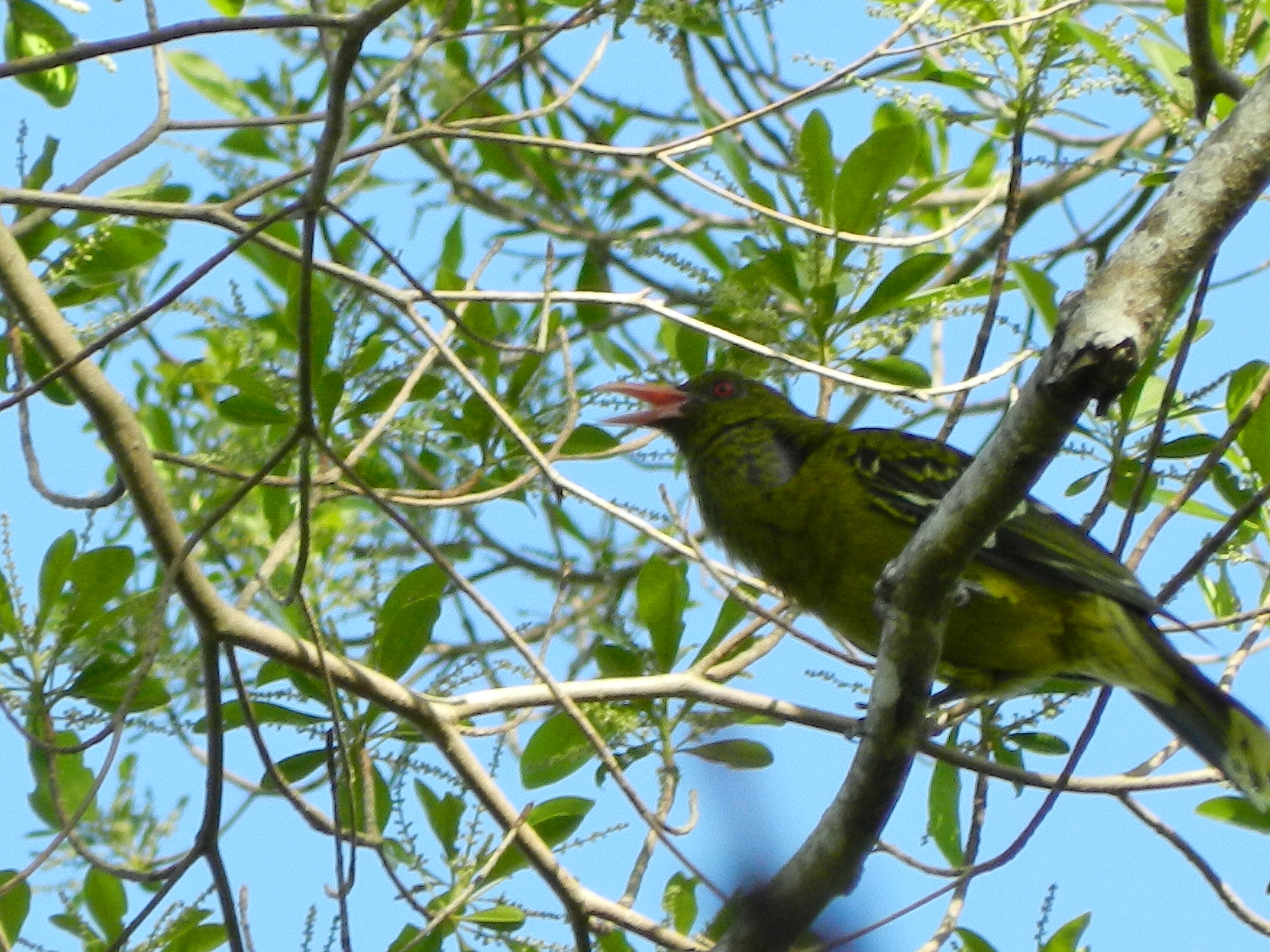
I decided to take a week off and head North into tropical Queensland to the town of Cairns. Cairns is one of the major jumping off points for the Great Barrier Reef as well as for excursions further North into the Daintree Rainforest. Cairns waterfront is very touristy and the beach is not very swimmable, as it is muddy. But it is a great place to head out to the Reef from. I also love anywhere that you can see wild parrots zipping about. In fact, there were quite a few interesting birds around town and on the waterfront.

parrot

I liked the botanical gardens better than the Brisbane gardens. There is a boardwalk through the wetlands (although it was quite dry during the whole trip and the stream beds were dry).

Leaf, Botanical Gardens

Ginger, Botanical Gardens

I took a couple of day trips out of Cairns and will blog about those later. There are a lot of shops and restaurants in Cairns, but for me, it worked best as a base for other activities in the area. Wifi was a little tough to come by and not many of the cafés had it available.

singing bird, Botanical Gardens

Flowering Shrub, Botanical Gardens

The weather was great while I was here, 30 degrees Celsius and sunny. A nice breeze today near the ocean as I sit drinking coffee and watching the various birds cavort about in the flowering trees.

DSCN9691

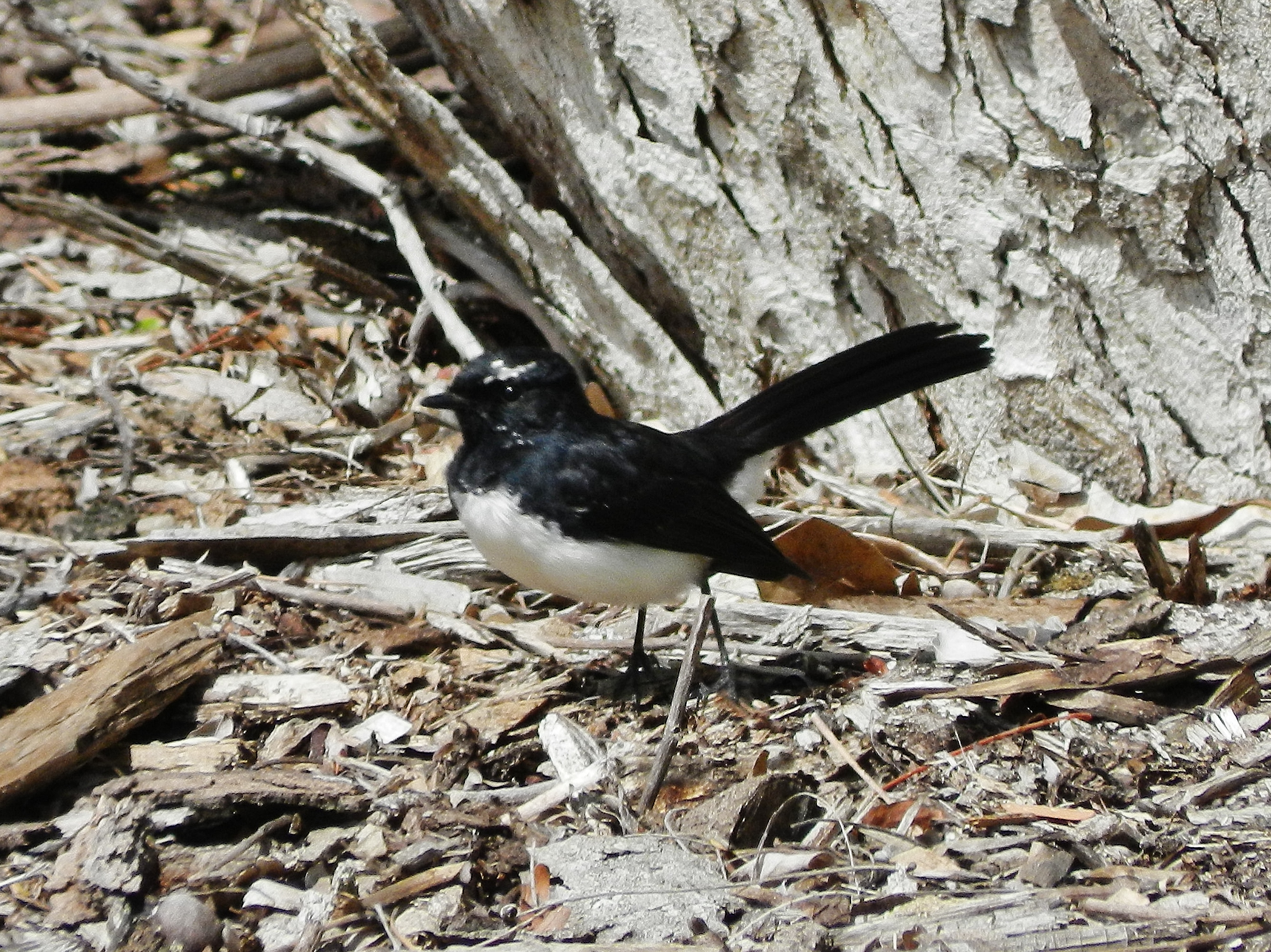
Bird at waterfront

More Ginger, Botanical Gardens

Health of Health Professionals Conference – Brisbane, Australia (October 3-5, 2013)

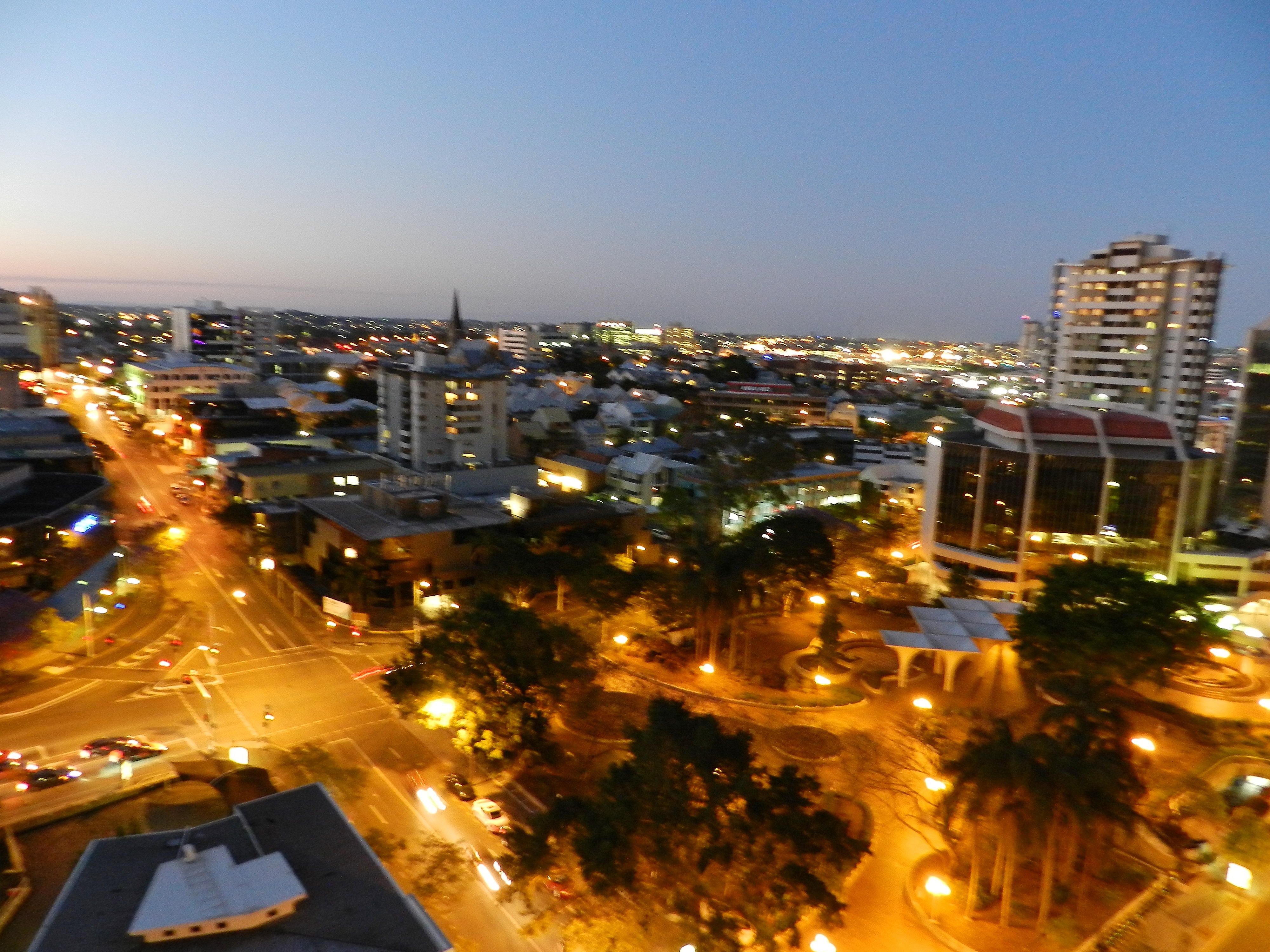
Brisbane at night

I’ve been over in Australia the past couple weeks. First it was for the HOHP conference. This is the second one I’ve attended and I’ve enjoyed both of them. They happen every 2 years and rotate throughout the Australian states and New Zealand.

Ibis at Roma Parklands

I presented on “Re-humanizing Medicine: Supporting Whole Health in the Professional to Deliver Whole-Person Care.” My main point in this presentation was that the way we treat ourselves is linked to the way we treat patients, therefore to deliver whole-person care, the professional must develop themself as a whole person. This is a theme from my book (which will hopefully be out early 2014).

Bribane Botanical Gardens entrance

The conference draws an idealistic and committed group of health professionals who care equally for good clinical care as well as for creating sustainable and humane work environments for professionals. I spent some time in a couple of workshops with Hilton Koppe, an Australian GP, who uses creative writing and experiential learning in his teaching. His workshop, “Beyond the Clinical Record: Using Creative Writing as Burnout Prevention,” was a great buffet of different writing techniques and exercises that health professionals can use to process the stress of clinical work.

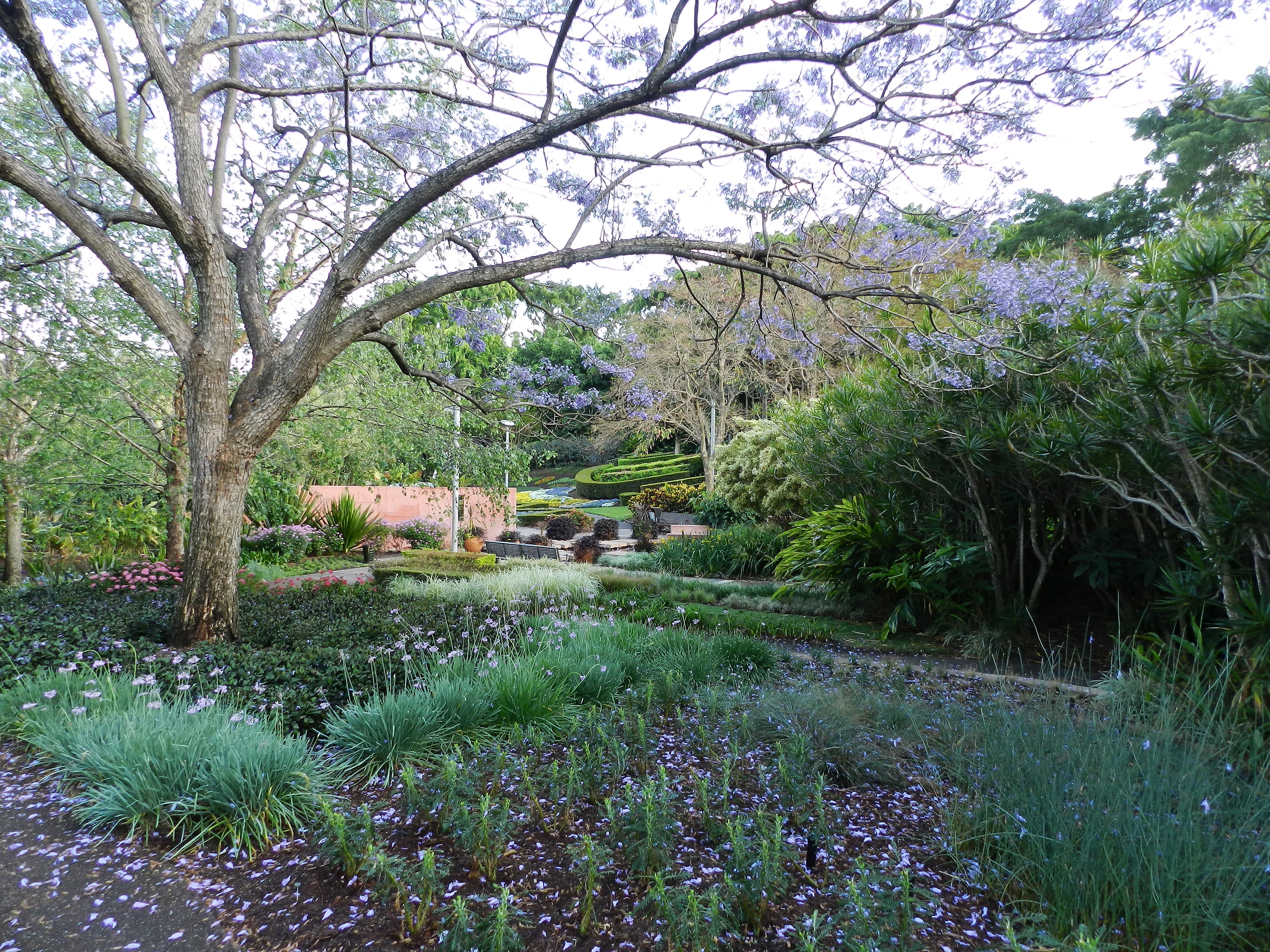
Brisbane Botanical Gardens

Overall, this is a really worthwhile conference for anyone interested in supporting health professionals own health so as to provide better patient care. The conference draws people from worldwide and is a nice size so that you can interact with presenters and get to know attendees of the conference, as well.

Roma Parkland Gardens

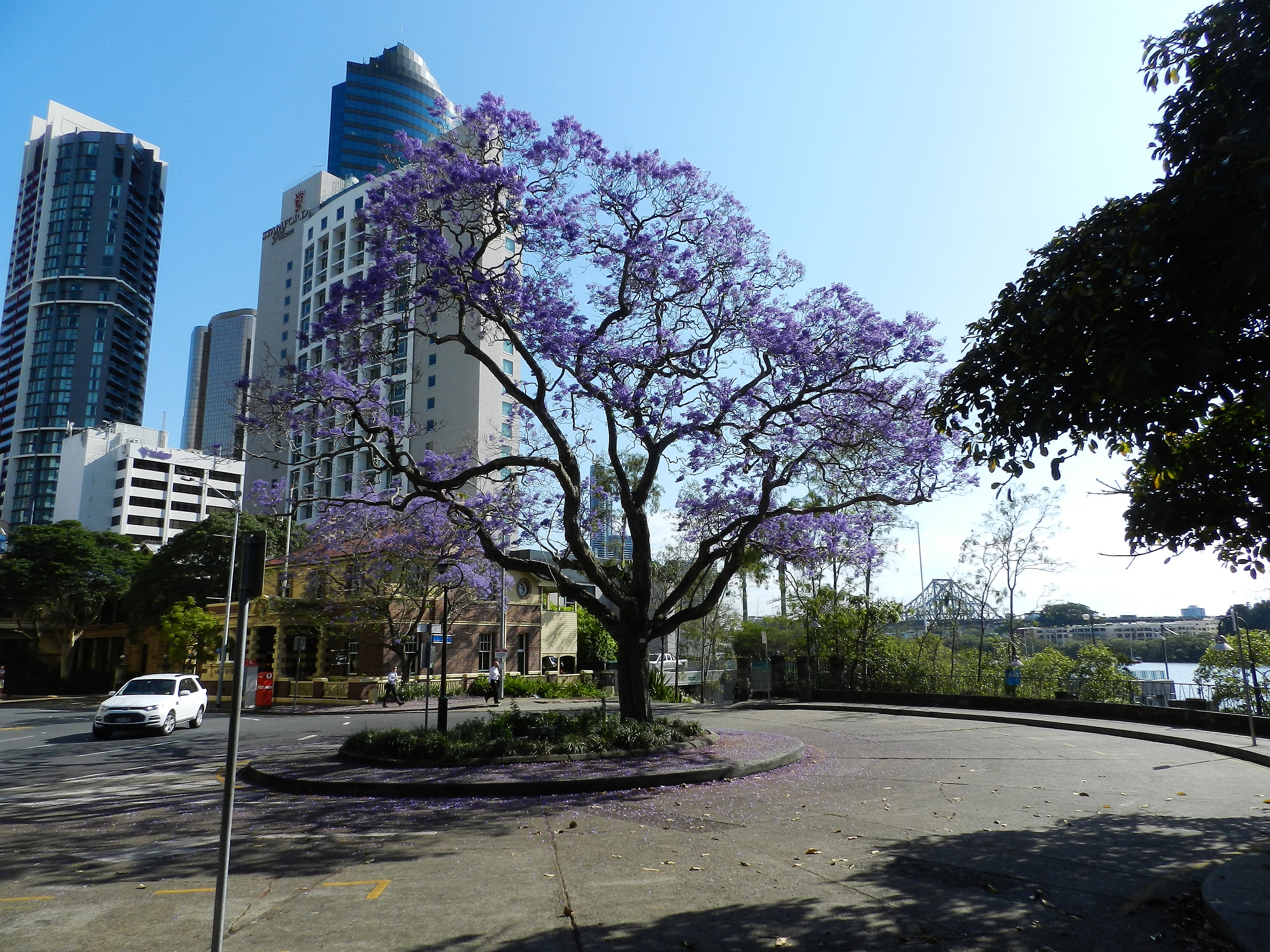
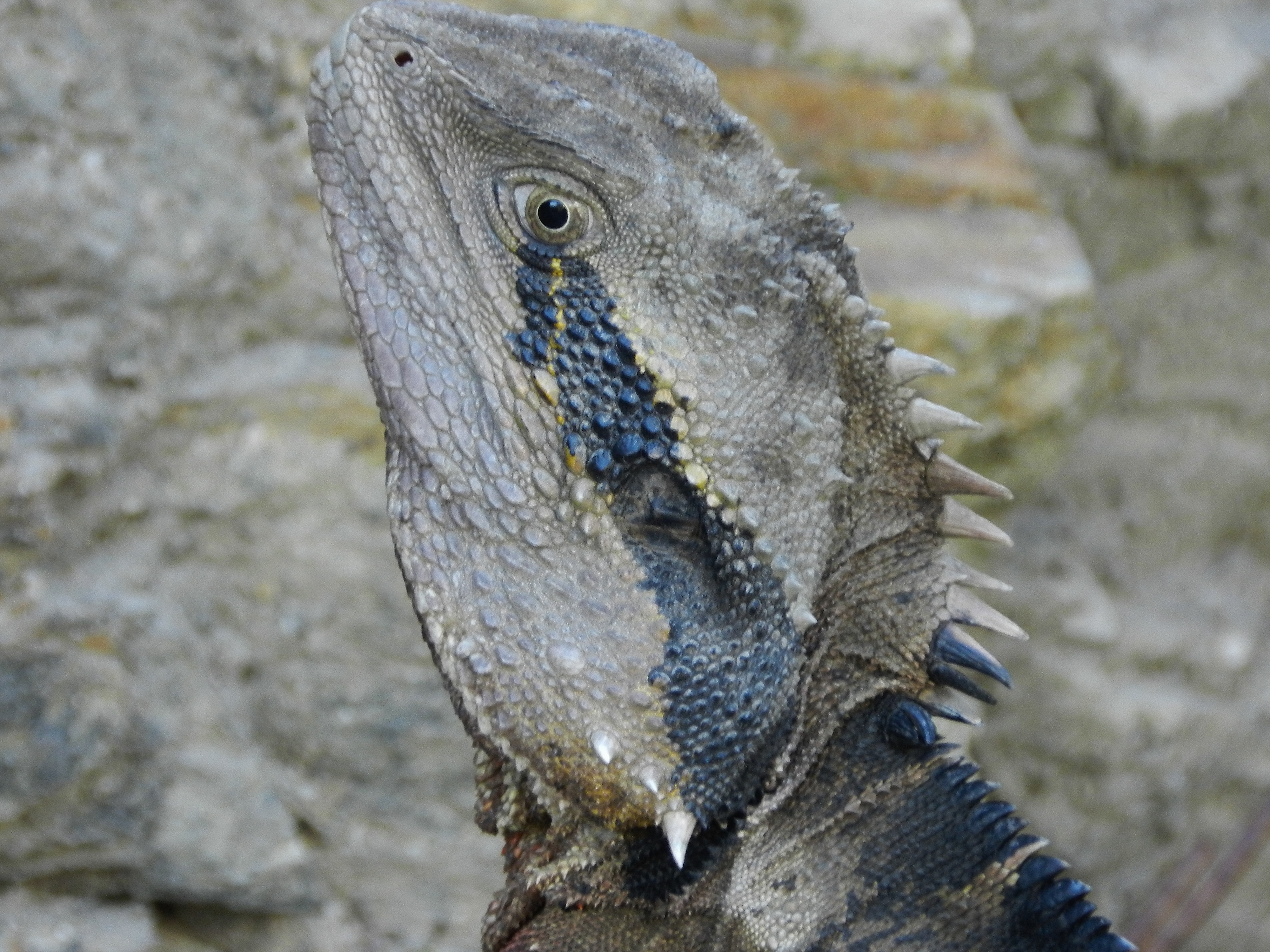
This was the first time I was in Brisbane in the state of Queensland, Australia. The city is on a river and has many nice gardens and restaurants and a very walkable Central Business District. The gardens even have plenty of lizards running about!

Lizard at Roma Parklands

Thoughts from the Clinical Director: Change

I tend to be somewhat philosophical and the more change and stress I am under, the more philosophical I become. Sometimes at night when I don’t know what to do, I lay on my back on my back stairs and look at the stars. Tonight there are patchy, fast moving clouds concealing and revealing the stars. Moby has a song called “We Are All Made of Stars.” The refrain is “people they come together, people they fall apart, no one can stop us now, because we are all made of stars.”

Scientists think we are literally made up of stars – that is that at the time of the Big Bang, there was only hydrogen and helium and these elements made up the first stars. Eventually when these stars died and exploded, they created heavier and heavier elements, such as some of the medium weight elements like carbon, oxygen and nitrogen, and these are the elements that we are physically comprised of.

We are going through a lot of change at BRC in the upcoming months, personally the most relevant change to me is my final day on 24/10/13. We are looking for locums to fill in for the clinical work and will be having interviews for the permanent position in the upcoming weeks and will keep you updated as we have more information. There is also the change of our psychologist leaving, our nurse educator having left as of today, and our other consultant leaving in February. That is a lot of change in the clinical team and it is likely to have some ripple effects in how stable BRC feels.

There is actually something called the Book of Changes, as the I Ching is sometimes translated. This is an ancient Chinese text that dates back to between the second and third millenium BCE. This book is all about studying change. It states that “When change is necessary, there are two mistakes to be avoided. One lies in excessive haste and ruthlessness, which bring disaster. The other lies in excessive hesitation and conservatism, which are also dangerous.”

Psychiatrist, Carl Jung, in his foreword to this book discusses the role of chance and synchronicity that influence how changes play out. No matter how well change is planned for, there will be unforeseen chance events. This makes managing change as much an art as a science.

Here are some more quotes from the Book of Changes, maybe they apply to BRC.

Everything is in motion: therefore if one perseveres there is a prospect of great success, in spite of existing danger. When it is man’s fate to undertake such new beginnnings, everything is still unformed, dark. Hence he must hold back, because any premature move might bring disaster. Likewise, it is very important not to remain alone; in order to overcome the chaos he needs helpers…In order to find one’s place in the infinity of being, one must be able both to separate and to unite…If a person encounters a hindrance at the beginning of an enterprise, he must not try to force advance but must pause and take thought. However, nothing should put him off his course; he must persevere and constantly keep the goal in sight.

I know that the goal at BRC is always to provide supportive care to clients in order to promote mental health, recovery and rehabilitation.

The I Ching discusses three kinds of change: non-change, cyclic change and linear change. Non-change is the fixed background that makes change possible. (At BRC this is the continual goal of supporting rehabilitation; for staring at the sky, it is the, relatively, fixed and unchanging background of stars). Cyclic change is the recurrent change of the organic world, or we can see cycles in the history of psychology, such as between nature/nurture and biology/psychology. (At BRC when changes are proposed I often hear, “we used to do it that way;” with the sky, it is the cycles of clouds covering and uncovering the same stars). Linear change is a form of progress and this creates a specific history for a given place or person. This is another level of viewing cycles of change, that when sequenced together they lead to a progress toward a certain goal. (While there are cycles of change at BRC, there is also a continual adjustment to the changing needs of the clients and the changing philosophy of the DHB. While there are similarities of current change to past methods, we are continually at a unique point in time in which we are striving to bring about the right elements at the right time to support change and growth for clients. For the sky, the interplay of cyclical change against the background of the non-changing sky creates unique moments and configurations which will not happen again, but which create a kind of linear, beautiful movie).

I’m not sure how much the I Ching can help us during this current change, but maybe these concepts can help to put the current anxiety and change into a larger context. The Greek philosopher, Heraclitus, wrote that “There is nothing permanent except change.” I do know that having a larger context in which to view change can lead to greater acceptance of the change in the moment as well as to allow one to work effectively in the current moment rather than resisting the reality of the present.

The Promise of the Inner World

If you take away all a person knows,

you are left with the mouth of a fish

gulping water as fast as it can. If you

take away a person’s coverings, you are

left with the naked freedom of a star.

If you take away all a person has done,

you are left with a soul eager to build.

And if you take away what a person has

saved, you are left with a life that

has to live now.

Stripped of too many thoughts, we

grow wise as stone. Stripped of too

many accomplishments, we grow

possible like the sun. And stripped

of what we hoard, we grow immediate.

So taking away is not just about loss.

Like it or not, we are forced, again

and again, to the nakedness of freedom,

to the eagerness that wants to build its

way out of nothing, and to the poverty

of time that has to live now. If blessed,

we wake, one more time, gulping

our way into tomorrow.

(Mark Nepo, from Reduced to Joy)

Thoughts from the Clinical Director: Crazy?

Sometimes I think that the work that we do at Buchanan is pretty crazy. This is a word that can mean a lot of different things. It is often considered a pejorative term for mental illness. Cultural critics sometimes say that it is a made up term used to label as deviants people who do not think and act the way the dominant culture dictates. What I mean by crazy is that we hold hope for people who often do not have any hope and whose objective circumstances are pretty hopeless. I suppose our work could also be viewed as crazy because it does not fit within the box of inpatient or outpatient mental health treatment that views people as illnesses and symptoms that need to be “normalized” or “controlled” with psychiatric medication. At Buchanan, we still use the standard biomedical treatment approach, but this is not the only way that we view human beings. We strive to see the needs and strengths of the whole person and this could be considered crazy from a reductive biomedical perspective of psychiatry.

I have heard people talk about different kinds of crazy, like “good crazy” and “bad crazy.” Maybe we’re that good kind of crazy by constantly working to bring hope to the hopeless and by taking on clients who are complex and don’t fit squarely within the categories of mental illness and who do not seem to get better in other treatment systems. I think this is good kind of crazy to do this kind of work. It does mean, though, that our work is often not easy, predictable, or straightforward. It takes time and effort to get to know the whole person. It requires patience as we work with people to change life-long patterns. But it is also really fulfilling work when we get the privilege of seeing someone change and grow, which is a double bonus, because I think that also means then that we are changing and growing, too!

In Praise of Craziness, of a Certain Kind

On cold evenings

my grandmother,

with ownership of half of her mind—

the other half having flown back to Bohemia—

spread newspapers over the porch floor

so, she said, the garden ants could crawl beneath

as under a blanket, and keep warm.

and what shall I wish for, for myself,

but being so struck by the lightning of the years

to be like her with what is left, loving.

Mary Oliver

Thoughts from the Clinical Director: Being Lost

I am a week late in writing these fortnightly thoughts, as I was traveling back in the States for a couple of weeks. Right now I have two homes, one here in New Zealand and one back in the US. I have to admit that I feel a bit lost at times, but I think about the clients at BRC and how much more lost they must feel, lost in psychosis, lost in drugs and alcohol, many lost from families and lost from trusting human relationships. Those are much more painful conditions of being lost. I see the problem of being lost as one of the primary things that we work on in a rehabilitation setting as opposed to a mental health centre or an acute inpatient ward, where the focus is primarily on treating symptoms.

One of my favourite writers, Rebecca Solnit has written a wonderful book called A Field Guide To Getting Lost. She explores all the ways that people can get lost, but as always, she searches for how being lost is part of the human condition and can even lead to growth and transformation (as well as risk destruction and dissolution). She quotes the Greek philosopher, Meno, as asking “How will you go about finding that thing the nature of which is totally unknown to you?” (4). She goes on to say:

The things we want are transformative, and we don’t know or only think we know what is on the other side of that transformation. Love, wisdom, grace, inspiration—how do you go about finding these things that are in some ways about extending the boundaries of the self into unknown territory, about becoming someone else? (5).

I often think about this seeming paradox in our work with clients and in personal growth: to what extent are we working to support our clients to “become someone else” and to what extent are we supporting them to become more authentically “who they are,” or to realize their potential? I sometimes get uncomfortable talking about potential, because that seems to imply that someone is less than who they could be. It all gets pretty complicated sometimes when you start talking about change and transformation. But I would definitely say that the work that rehabilitation and recovery requires is transformative and we are asking our clients to extend their boundaries of self to include new possibilities. You should know me well enough by now to know that the next thing I am going to say is that as staff working in rehabilitation we need to extend the boundaries of ourselves as well. One of the ways that psychiatrist Carl Jung looked at psychotherapy is that the therapist has to get lost along with the client and then act as a guide to help both of them become found. As Solnit writes, “Sometimes gaining and losing are more intimately related than we like to think,” (38). That implies that if we seek to gain anything, we must tolerate becoming lost, and possibly even seek out becoming lost. “Not till we are lost, in other words, not till we have lost the world, do we begin to find ourselves, and realize where we are and the infinite extent of our relations,” (15).

Even though it is necessary for finding ourselves, being lost also has serious risks and that is what we and the clients struggle with at BRC. How can we reach someone who has lost hope? How can we support clients in a positive way who are lost in repetitive cycles of addiction, depression, psychosis, trauma or violence? This is where the art and skill of rehabilitation comes in. This is where we have to be willing to become lost ourselves and to say, “I really don’t know what the **** to do next!” In trying to reach clients, we often have to realize that the text book is not working and we have to find it within our hearts to be patient with ourselves and with clients when we are in these lost spaces. I sure wish that I could say that I was often successful in this work. I cannot say that I am. It often seems that many of our clients make small changes and some clients seem not to change at all. I still have the unshakeable belief, though, that the work we do matters and makes a difference. When we go looking for someone who is lost and when we maintain the hope of a searchlight we are offering clients a pathway back from wherever they are lost. Sometimes that is all we can do is to stubbornly maintain hope. I may have already quoted Vāclav Havel in an earlier column, but it is he who I always turn to when I am trying to maintain my own hope when I am lost or when I am trying to reach someone who is lost. “Hope is definitely not the same thing as optimism. It is not the conviction that something will turn out well, but the certainty that something makes sense, regardless of how it turns out.”

Since I am in this 90 day period of leaving Buchanan, I have found this website that allows me to calculate how many days are between two dates. At this point it is down to 62 days that I have left at Buchanan. What can I do in that short amount of time? I have to let go of any grand plans for transformation and really just focus on connecting to people and starting to say goodbye. I have to admit, I feel a bit lost at times, but I know we are all working together and that gives me some comfort.


Lost

Stand still. The trees ahead and the bushes beside you
Are not lost. Wherever you are is called Here,
And you must treat it as a powerful stranger,
Must ask permission to know it and be known.
The forest breathes. Listen. It answers,
I have made this place around you.
If you leave it, you may come back again, saying Here.
No two trees are the same to Raven.
No two branches are the same to Wren.
If what a tree or bush does is lost on you,
You are surely lost. Stand still. The forest knows
Where you are. You must let it find you.

David Wagoner


It is I who must begin

It is I who must begin,

Once I begin, once I try—

here and now,

right where I am,

not excusing myself

by saying that things

would be easier elsewhere,

without grand speeches and

ostentatious gestures,

but all the more persistently

—to live in harmony

with the “voice of Being,” as I

understand it within myself

—as soon as I begin that,

I suddenly discover,

to my surprise, that

I am neither the only one,

nor the first,

nor the most important one

to have set out upon the road.

Whether all is really lost

or not depends entirely on

whether or not I am lost.

Vāclav Havel


Into the Heart of Darkness

(This post is something I started working on earlier in the year while I was on holiday in Melbourne, it is fitting to post it now as I am just announcing my departure from New Zealand, which is part of the topic of this post).

I haven’t posted much lately, I have been working “full on,” as they say in New Zealand, on my book. I’ll post with an update on that at a later point.  I am just getting to edit some photos from a trip to Nikau Caves back in November. It was my second time at the caves which are down near Port Waikato. It is about a 1-2 hour tour that is mostly walking, but has one place where you have to let yourself down through a keyhole and then crawl on hands and knees through a stream for a bit. I am not a fan of tight spaces, but I challenged myself a few years back to go to Mammoth Caves in Kentucky, and I found to my surprise, that I actually quite like caves. It is an exhilarating adventure to enter into the darkness, to smell the damp, cool air, to get wet and grimy and then come out the other side into the light again.

Dave at Nikau Cave

Dave at Nikau Cave

OLYMPUS DIGITAL CAMERA

The Heart of Darkness is a novella by Joseph Conrad. Conrad was a Polish sailor, adventurer and writer. He, himself, travelled into central Africa. The book is a story of one man, Kurtz, who years back ventured into the heart of Africa. There, something happened. You could consider it that he went “native,” but it is not fair to the place or the “natives” to blame them for the transformation. The book is also about the inner journey as much as the outer journey. You cannot really have one without the other, can you? Every outer journey is also an inner journey. Kurtz came to something dark within himself. The narrator, sent to find Kurtz represents the innocent explorer and Kurtz represents the one who has been over-powered by his own darkness.

The movie, “Apocalypse Now” is based on the Conrad’s novella, a book that is not long enough to be a novel, but too long to be a short story. In the movie, Martin Sheen’s character is the innocent sent to find Kurtz. Kurtz has created some kind of bizarre web around him. The darkness that is explored in the movie is the personal shadow that everyone has. It also represents the shadow side of the United States — a failed war that turned into an occupation that attempted to win over the “hearts and minds” of the “natives” and to build an (empire) of democracy. It is a war that led to a shift in consciousness in the American psyche. USA was not #1 and the line between “good guys” and “bad guys” started to become blurred.

While filming the movie, Martin Sheen — in reality — had a heart attack.

In Conrad’s book, there is a line:

“And this also has been one of the dark places of the earth.”

I made a painting years ago that had that quotation written along the bottom edge. That line always struck me. It is a complex sentence. There are several key words in that sentence. It starts with “and” as if there had already been an ongoing discussion of dark places. The word “also” implies that there are other dark places. The word “has” is a pivotal word for me, it implies the possibility of change. Therefore, darkness does not seem to be unchangeable, it is not unusual and in fact, it is to be expected, perhaps all places at some point on the earth are dark. Returning to the earlier statement — all outer journeys are also inner journeys —could lead us to say that all people, at one point in their lives on earth are also a dark place, while this is incredibly serious, it is by no means unusual, nor is it a permanent state.

And This Also Has Been One of the Dark Places of the Earth

And This Also Has Been One of the Dark Places of the Earth

In my painting, which I called “And this has also been one of the dark places of the earth,” there was a sort of abstract landscape — a pool, a tree, grassy banks, browns, greens, blues — and then there was also a squiggle of colors from a squeeze tube of paint — light blue and dark purple. Much to my consternation, this always looked to me like a nun, the Virgin Mary, or some other female, Christian icon. Yet that consternation was what I loved about the painting. The painting and the quote were about dark places, but also about that operative word, “has been,” implying the hope and potential for change. The visage of this benign presence keeping watch over the dark places seemed somehow appropriate.

The brighter the light that illuminates an object, the greater the shadow that is cast. Light and dark are inseparable aspects of the same thing. Every place that is illuminated has also been a dark place. Jung wrote that everyone has a shadow. Jung didn’t believe that it was possible to “get rid” of the shadow, although by venturing into it and developing a different relationship with it could lead to transformation. We need not be speaking of anything spiritual or supernatural here, this applies on a psychological and metaphorical level, although it could be argued that these are all aspects of the same process.

I woke up this morning (January 27, 2013) gradually working out this essay in my head. At the time of writing this, I am in Melbourne, Australia. Yesterday was Australia Day. I went snorkeling at Portsea Pier on the Mornington Peninsula in Victoria. Water has also been one of my fears in life and there is some similarity between venturing into the darkness of a cave or the fluidness of the water and similar strange creatures and features exist in both places. I saw Weedy Sea Dragons, a giant sting ray, heaps of puffer fish and many jellyfish. We went to an aboriginal art show and then we went on a night tour at Moonlit Sanctuary, a great wildlife park where we saw all sorts of interesting animals — wallabies, kangaroos, a quoll, bettongs, barking owls and a sugar glider that climbed on my hand. All this ties together, the journeys in the dark, the art work, the outer/inner journey, the strange creatures and the heart.

At the aboriginal art show, we bought a beautiful painting of the Dream Sisters, two stylized figures leaning in with heads touching and a third thing/being created from the union of the two. The woman in charge of the show told us the story of how the figures represent watchful protection. She spoke about a mandala she has that is always the first thing to go up in her home and the last thing she takes down and how that makes her feel good in some way, not that she thinks there is some supernatural force or something, she said. I thought how cool that is, I wish I had something like that, then I remembered “And this also has been one of the dark places of the earth,” and I remembered how I had sold that painting prior to us moving to New Zealand. I remembered that with sadness, but also with the reality that you cannot have an adventure, particularly into darkness (which is where all real adventures into the unknown end up at some point) and be able to bring along everything that is a comfort to you. I also realized that we were just purchasing a painting that could serve that same purpose — in fact, the blue and purple outline of the female figure is somewhat similar to the Dream Sisters.

This morning, as I was waking up, I started to think about the move to New Zealand, wondering if that was a journey into the heart of darkness. I decided it was, particularly as I decided that all outer journeys are also inner journeys. I thought of Thoreau going to Walden and then of Thoreau leaving Walden. “I left the woods for as good a reason as I went there. Perhaps it seemed to me that I had several more lives to live, and could not spare any more time for that one.” I suppose I will say something similar when I leave New Zealand.

The question, “So why did you move to New Zealand?” is one I have been repeatedly asked and have repeatedly answered. For a change. To do something new. Because the life that we had was changing so much that it seemed like a good time to change our lives. I suppose the decision to move really had something to do with life and death. The old life seemed dead and I desperately needed to pump new life into myself. I needed to move, to travel, to see the world, to remind myself that I was part of the world and had a place in the world. It was all that much more painful when I realized that moving to another country is all about not having a place in the world. It is also about questioning who you really are and about what is really you, what is a conditioned cultural response from the country one lives in and what is a spontaneous expression of oneself. I went to New Zealand to see the world, to grow and to reconnect to myself. I am now in the process of leaving New Zealand for the same reasons.

This piece I am writing is really too long for a blog post, it is more of an essay, but I am going to post it as a blog post. I guess you could say it is a bl-essay. When I thought of that I had the sense the term is fitting as the idea of the watchful figure is like having a blessing, having a reminder that the dark places are temporary but necessary on the earth. Like Dante’s quote, “Midway upon the journey of our life, I found myself within a forest dark, For the straight forward pathway had been lost.” The darkness is necessary for the transformation that comes later. Life is created in the space between the contraction and relaxation of the heart.

Some (Parting) Thoughts from the Clinical Director (26/7/13)

It is with great sadness that I am writing to tell you that I am handing in my 90 day notice for my resignation from Buchanan Rehabilitation Centre and Auckland District Health Board today. That means that my last day at Buchanan will be Thursday, October 24th, 2013.Why am I leaving? A client at BRC recently asked me if I was leaving because of something he had done. That is so not true at all, I am not leaving because of anything at all having to do with BRC or what anyone has done or hasn’t done. I am leaving because it is time for me to leave. My wife, Mary Pat and I have decided to move back to the States and we’re in the process of relocating to Seattle, a city in Washington State in the Northwest corner of the United States, not too far from Canada and the city of Vancouver. I will be taking a job at the Veterans Administration, which is a federal job working with war veterans. (It will be a bit of a full circle for me as my first job was at the Omaha VA and the University of Nebraska). I will be working in a clinic that integrates primary care and psychiatry and I’ll also do a day of telepsychiatry over the internet, connecting with patients who live in rural Washington, Idaho, Montana, Wyoming and Alaska. I will also have a joint appointment with the University of Washington, so that I can teach – which is one of the things that I love the most and which I am very enthusiastic about; and I’ll also have a paid writing day each week!

Seattle with Mount Rainer looking South

 
Seattle with Mount Rainer looking South

What is Seattle like? It is a beautiful city set in some of the most beautiful mountains, forest and ocean in the United States. I have always been particularly fond of the Olympic National Park where I have spent many memorable camping trips. Both Mary Pat and I have family in Seattle and we also have a lot of really great friends there.

Seattle with Olympics, looking West

Seattle with Olympics, looking West

Leaving Buchanan is really difficult for me, because I love it so much. I am so grateful to have had the chance to work here, and it has been a privilege to have served as Clinical Director. I only wish I could have done more and that I could have stayed longer and sometimes I wish there were two of me so that I could both stay at BRC and go on with my new life. Why am I leaving then? Well, I said because it is time for my family to relocate back to the States. I think about a quote I have always liked by Henry David Thoreau about why he left the cabin he built on Walden Pond, where he lived for 2 years, 2 months and 2 days (I will have been at Auckland District Health Board for 3 years 3 months and 5 days – you might think I stayed a couple days too long!). Anyway, I will share a long quote from Thoreau:

“I left the woods for as good a reason as I went there. Perhaps it seemed to me that I had several more lives to live, and could not spare any more time for that one. It is remarkable how easily and insensibly we fall into a particular route, and make a beaten track for ourselves. I had not lived there a week before my feet wore a path from my door to the pond-side; and though it is five or six years since I trod it, it is still quite distinct. It is true, I fear that others may have fallen into it, and so helped to keep it open. The surface of the earth is soft and impressible by the feet of men; and so with the paths which the mind travels. How worn and dusty, then, must be the highways of the world, how deep the ruts of tradition and conformity! I did not wish to take a cabin passage, but rather to go before the mast and on the deck of the world, for there I could best see the moonlight amid the mountains. I do not wish to go below now.

I learned this, at least, by my experiment; that if one advances confidently in the direction of his dreams, and endeavors to live the life which he has imagined, he will meet with a success unexpected in common hours. He will put some things behind, will pass an invisible boundary; new, universal, and more liberal laws will begin to establish themselves around and within him; or the old laws will be expanded, and interpreted in his favor in a more liberal sense, and he will live with the license of a higher order of beings. In proportion as he simplifies his life, the laws of the universe will appear less complex, and solitude will not be solitude, nor poverty poverty, nor weakness weakness.” (H.D. Thoreau, Walden)

Dave at a Replica of Thoreau's Cabin

Dave at a Replica of Thoreau’s Cabin

So, now that I am leaving, what next? Well, Adele, our manager at BRC, and I have been talking about this for months and now we will launch into action recruiting a new clinical director to take over my job. We hope that this goes smoothly and that we find someone with values that match those of Buchanan, where clients and staff continually have the opportunity to grow and learn together and to bring the best of the heart and the mind to work every day.

I will continue to keep you posted with our progress of finding a replacement and I’ll continue to write these fortnightly “Thoughts.”

I will tell you that I will be away for a few weeks during the next 90 days. I am heading to Seattle to see Mary Pat (and our cat, Sofia, who recently made the journey there) and to take care of some things with my new job. I’ll be away August 6th and I’ll return to work on August 19th. I also have had a conference proposal accepted in Brisbane for the Health of Health Professionals conference and I’ll be away from October 2nd until October 14th. Otherwise I’ll be around BRC working business as usual, although I’ll be starting to gradually say goodbye to all the wonderful clients and staff at Buchanan.

Thank you for everything,

Dave

Thoreau Quote