Re-humanizing Medicine is available for pre-order on Amazon!

cafe.vita.9.13.14 (2)

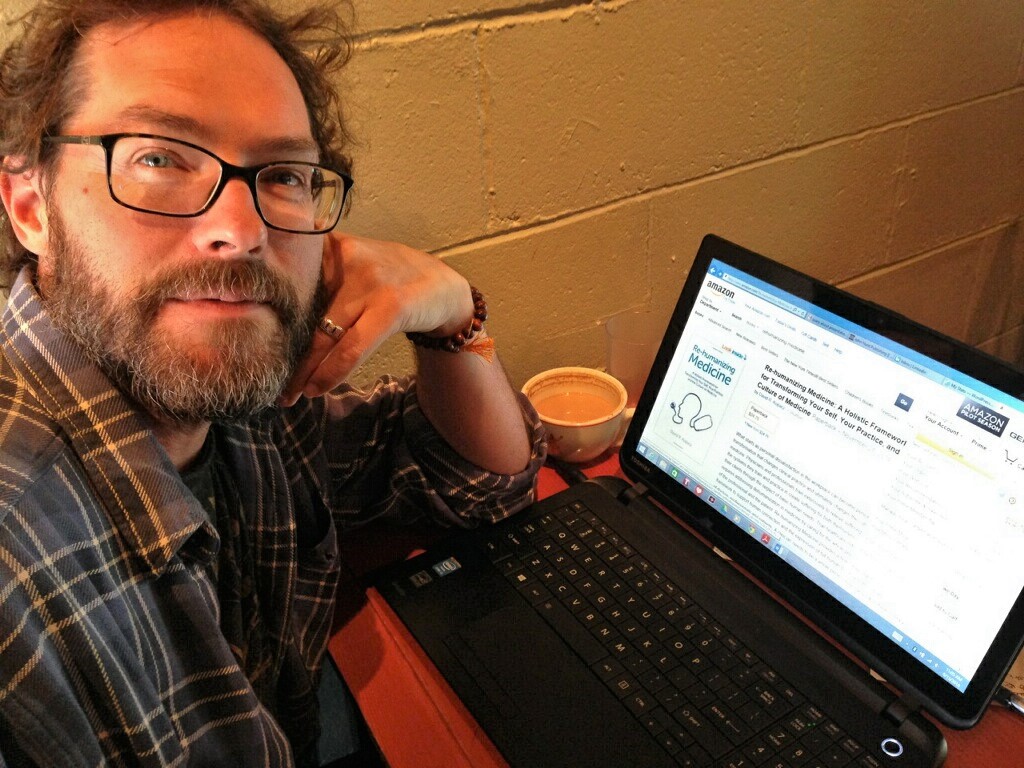
It is very strange to see something I have been working on for so long posted on Amazon. You can even look inside the book. The publication date is still set for November 28, 2014, but you can now pre-order the book.

It is difficult to say when this journey began, particularly as I distill my professional life’s work in the book. I think it was probably around 2006 where the book started to take shape as Creating A Holistic Medical Practice. I had written a draft of a book I was calling Being Your Self, but it was kind of diffuse and unfocused, gradually I realized I wanted to write about my views on holistic medicine and my work in creating a holistic medical practice. My earliest memory of working on this book was when I was at the American Holistic Medicine Association conference in 2006 in St. Paul, Minnesota. I remember sitting at a café and distilling some of my thoughts about how the structure of a holistic practice differed from a conventional practice. I had started my private practice in 2005, so I had been spending a lot of time thinking about and creating systems that supported genuine human connection in a psychiatric setting. I had set out some time in my private practice for writing, but clinical and then teaching demands intervened and the book languished. I wrote material for the classes I taught, Finding Your Self and Being Fully Human.

I moved to New Zealand as part of the culmination of a long-term dream and compulsion. I became busy there at my first job, realized I was partly living my dream, but that I needed dedicated time for my book, so when I took my second job there, at Buchanan Rehabilitation Centre, I went down to 4 days a week, so that I had Tuesdays set aside for what was most important to me. It was then that things really started happening! The book really started to take shape. I started looking into agents and publishers, eventually landed a contract with Ayni Books through John Hunt Publishing. In the process of getting book endorsements, Vincent Di Stefano mentioned the phrase “re-humanizing medicine” and that really clicked. That is where my passion was, not just in a book on creating a practice, but on challenging the dehumanization in contemporary medicine and setting out a program of re-humanization. Phrases like “counter-curriculum” and “compassion revolution” came together and the book took on its current shape, after an extensive re-write. Also, I figured out how to bring myself into the book, or the book out of me. Instead of giving facts and information, I felt the book was a part of me and I of it. At this stage, the writing of the book served an integrative process for myself, bringing together the first research project I worked on with Deb Klamen (who wrote the foreword to the book) as well as the many side projects I worked on along the way.

Eight years later, the book is now going public and I am shifting into a new phase with it. It is very exciting and I hope that the book resonates with an unmet need for physicians and clinicians and helps re-chart an inner direction that leads to outer transformation and reform. What will happen next?
imagejpeg_1 (2)

click here to go to Amazon to pre-order the book

Text from Back Cover of Book:

What starts as personal dissatisfaction in the workplace can become personal transformation that changes clinical practice and ultimately changes the culture of medicine.

Physicians and professionals train extensively to relieve suffering. Yet the systems they train and practice in create suffering for both themselves and their clients through the neglect of basic human needs. True healthcare reform requires addressing dehumanization in medicine by caring for the whole person of the professional and the patient.

Re-humanizing Medicine provides a holistic framework to support human connection and the expression of full human being of doctors, professionals and patients. A clinician needs to be a whole person to treat a whole person, thus the work of transformation begins with clinicians. As professionals work to transform themselves, this will in turn transform their clinical practices and healthcare institutions

“Modern medicine is engaged in a struggle to find its heart, soul, and spirit. This task must begin with physicians themselves. Dr. David Kopacz’s Re-Humanizing Medicine is an excellent guide in how this urgent undertaking can unfold.”

Larry Dossey, M.D., author of One Mind, Reinventing Medicine and Healing Words; executive editor of Explore: The Journal of Science and Healing.

“Dr. David Kopacz bears exquisite witness to medical dehumanization and puts his heart and soul into a thoughtful, reflective, yet practical guide for countering its contemporary ills. This book can change lives, careers, and systems.”

Stevan M. Weine, M.D., author of When History is a Nightmare and Testimony after Trauma; director, International Center on Responses to Catastrophes, University of Illinois at Chicago.

jhp53db8b682bd57[1]


Publication Date for Re-humanizing Medicine: November 28, 2014!

jhp53db8b682bd57[1]

Here is the front cover of the book, exciting to see it start to take form after so many years working on it…

Here is the link to the publisher page for the book.

I have to start moving into a new phase now, done with writing and on to marketing and promoting the book. Totally new territory. I am going to start looking into conferences and bookstores for public appearances.

The timing of the book is excellent with my work at the VA. There is a national Office of Patient Centered Care and Cultural Transformation and my book is really consistent with their message. I was just down in Atlanta for the Whole Health: Change the Conversation conference and it was really energizing and helped me to get excited about the work of the book. It will be really interesting to see how the book does once it is out in the world.

In the meantime, I continue my day to day work at the VA. I have started the pilot run of The Hero’s Journey Class, based on the work of Joseph Campbell. It uses mythology and narrative as ways of assisting Veterans in their Return Home. Here is a photo of me at work on this project.

Hero's Journey Reflection

Otherwise, I have a few interesting possible projects on Patient Centered Care and staff wellness in the works. I will be presenting a poster next month at the annual meeting of the American Holistic Medical Association – Connection & Collaboration: Innovations in Patient-Centered Care. The poster is on Collaborative Poetry Writing as a way of engaging patients with psychosis and trauma histories.

I will post more details on the book publication as they are available.

Update

20140611_223233

So, what else???

I haven’t really blogged too much about the settling in this side in Seattle…

It has been busy buying a new house, moving in, settling in to work and putting the finishing touches on the book. I have finished the index and sent in the final proofs on the book. I have seen the draft of the cover, which is a stethoscope that forms the outline of a human head, a nice representation of having to look past the technology to the person. I am not sure how long this next process will take, but I believe the next step is publication!

I have been doing a little painting. I have large, well-lit work space in the basement and the above photo is a detail of the first painting.

I have been learning about the national VA Office of Patient Centered Care and Cultural Transformation, and I am going to a training put on by the office next month in Atlanta. There is a lot of overlap with my book, Re-humanizing Medicine: A Holistic Framework for Transforming Your Self, Your Practice, and the Culture of Medicine. There are potentially some great opportunities on the horizon!

As soon as I know more about when the book will be coming out, I will definitely post it here.

I have also been working on a draft of what could be an interesting book. I’ll be running a pilot of a class for Veterans using Joseph Campbell’s framework of the Hero’s Journey next month. I have been writing a draft of an outline for each session with various myths, movies, stories, and ideas. I’m really enthusiastic about it as it is bringing a lot of things together in a format that is different from a traditional therapy group.

That’s all for now…in honor of the blog earlier today on the review of the union of inner/outer wilderness, here is a photo of me and a tree…(the tangled branches represent my tangled thoughts, and the teleology of branches represent my seeking the truth, which appears to be mostly off to one side of my head).

Oh, yes! I also saw Rebecca Solnit speak a couple weeks ago. I should really do a blog on that soon…

20140614_184716

Health of Health Professionals Conference – Brisbane, Australia (October 3-5, 2013)

Brisbane at night

I’ve been over in Australia the past couple weeks. First it was for the HOHP conference. This is the second one I’ve attended and I’ve enjoyed both of them. They happen every 2 years and rotate throughout the Australian states and New Zealand.

Ibis at Roma Parklands

I presented on “Re-humanizing Medicine: Supporting Whole Health in the Professional to Deliver Whole-Person Care.” My main point in this presentation was that the way we treat ourselves is linked to the way we treat patients, therefore to deliver whole-person care, the professional must develop themself as a whole person. This is a theme from my book (which will hopefully be out early 2014).

Bribane Botanical Gardens entrance

The conference draws an idealistic and committed group of health professionals who care equally for good clinical care as well as for creating sustainable and humane work environments for professionals. I spent some time in a couple of workshops with Hilton Koppe, an Australian GP, who uses creative writing and experiential learning in his teaching. His workshop, “Beyond the Clinical Record: Using Creative Writing as Burnout Prevention,” was a great buffet of different writing techniques and exercises that health professionals can use to process the stress of clinical work.

Brisbane Botanical Gardens

Overall, this is a really worthwhile conference for anyone interested in supporting health professionals own health so as to provide better patient care. The conference draws people from worldwide and is a nice size so that you can interact with presenters and get to know attendees of the conference, as well.

Roma Parkland Gardens

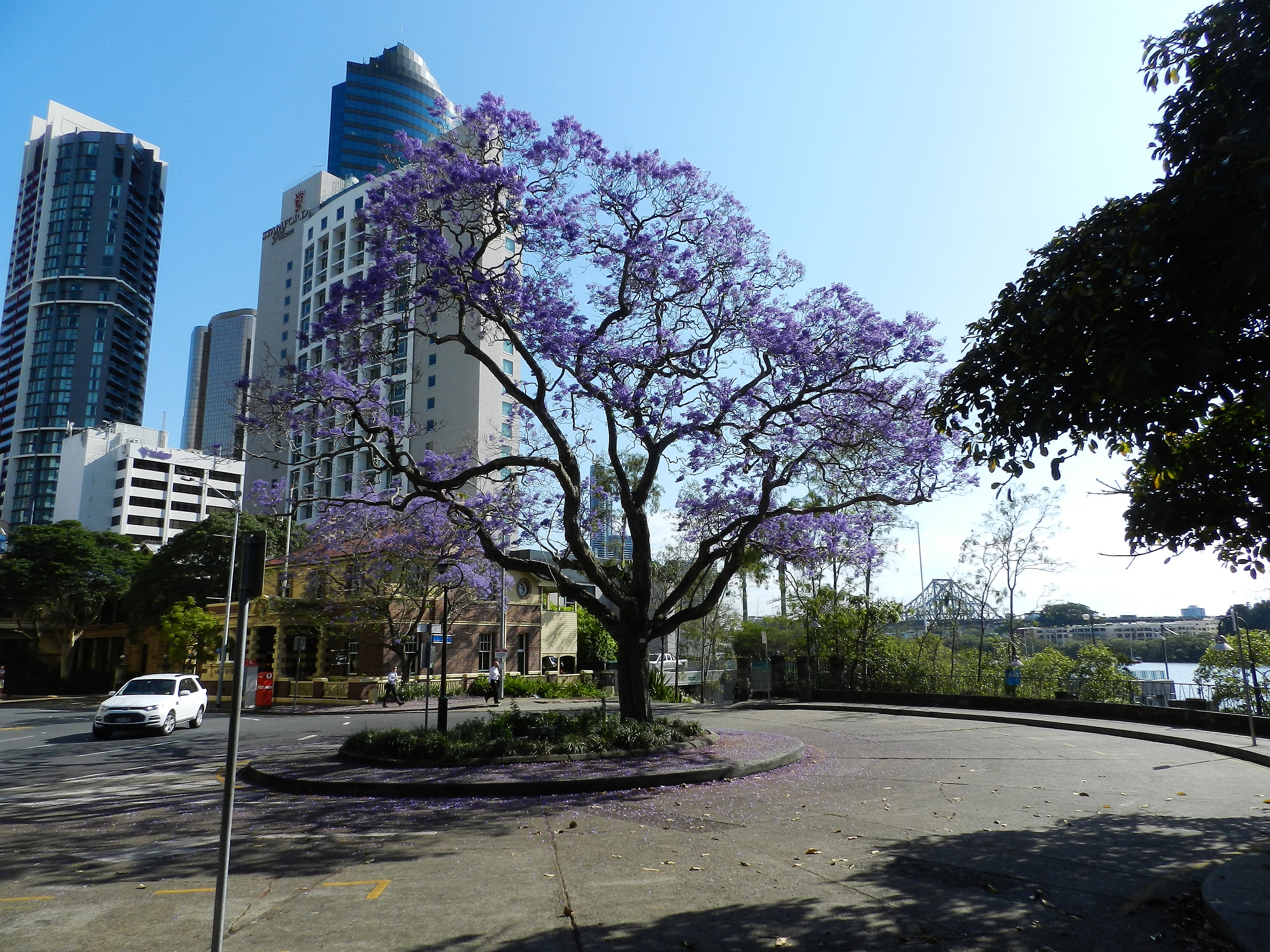
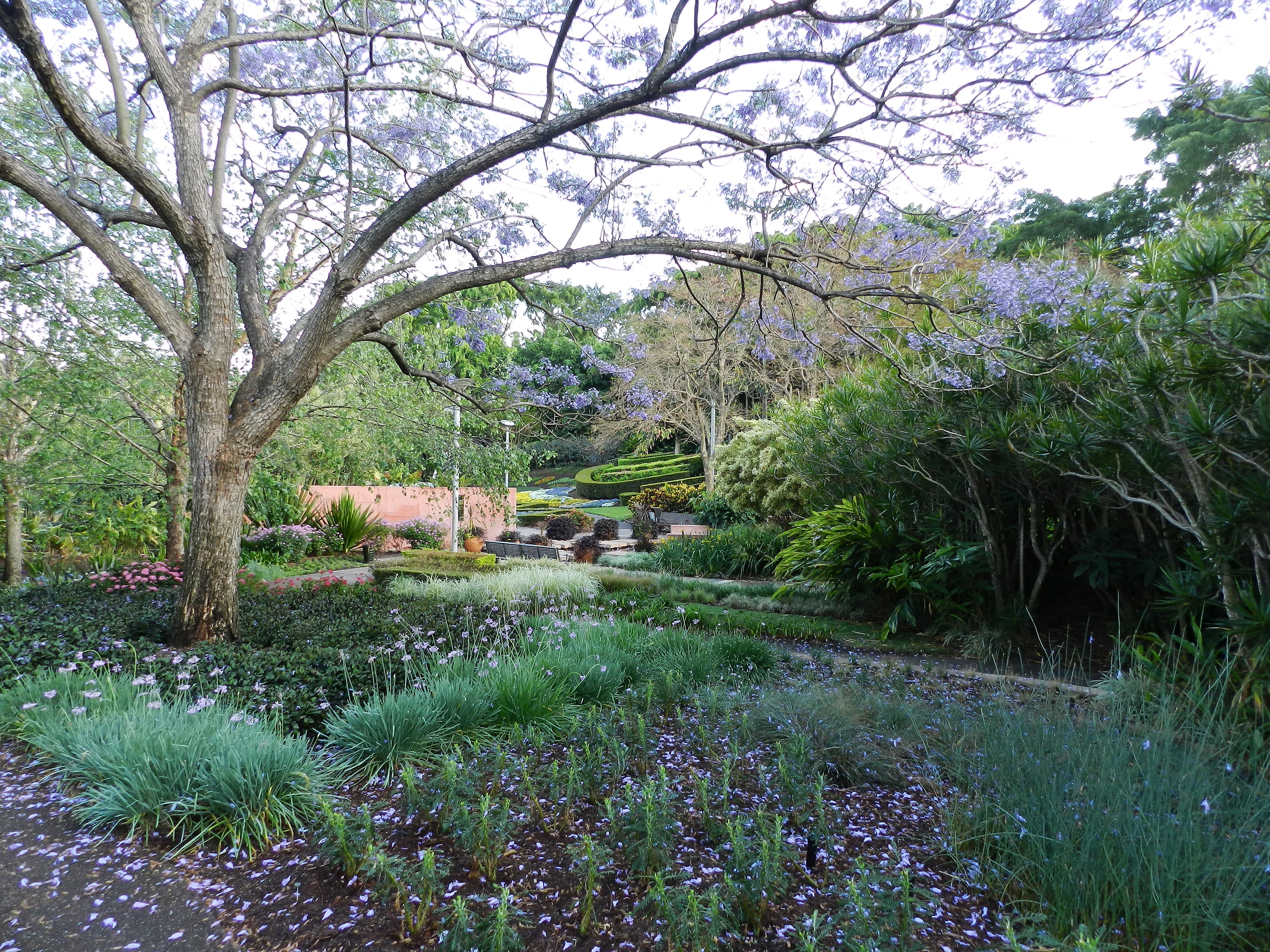
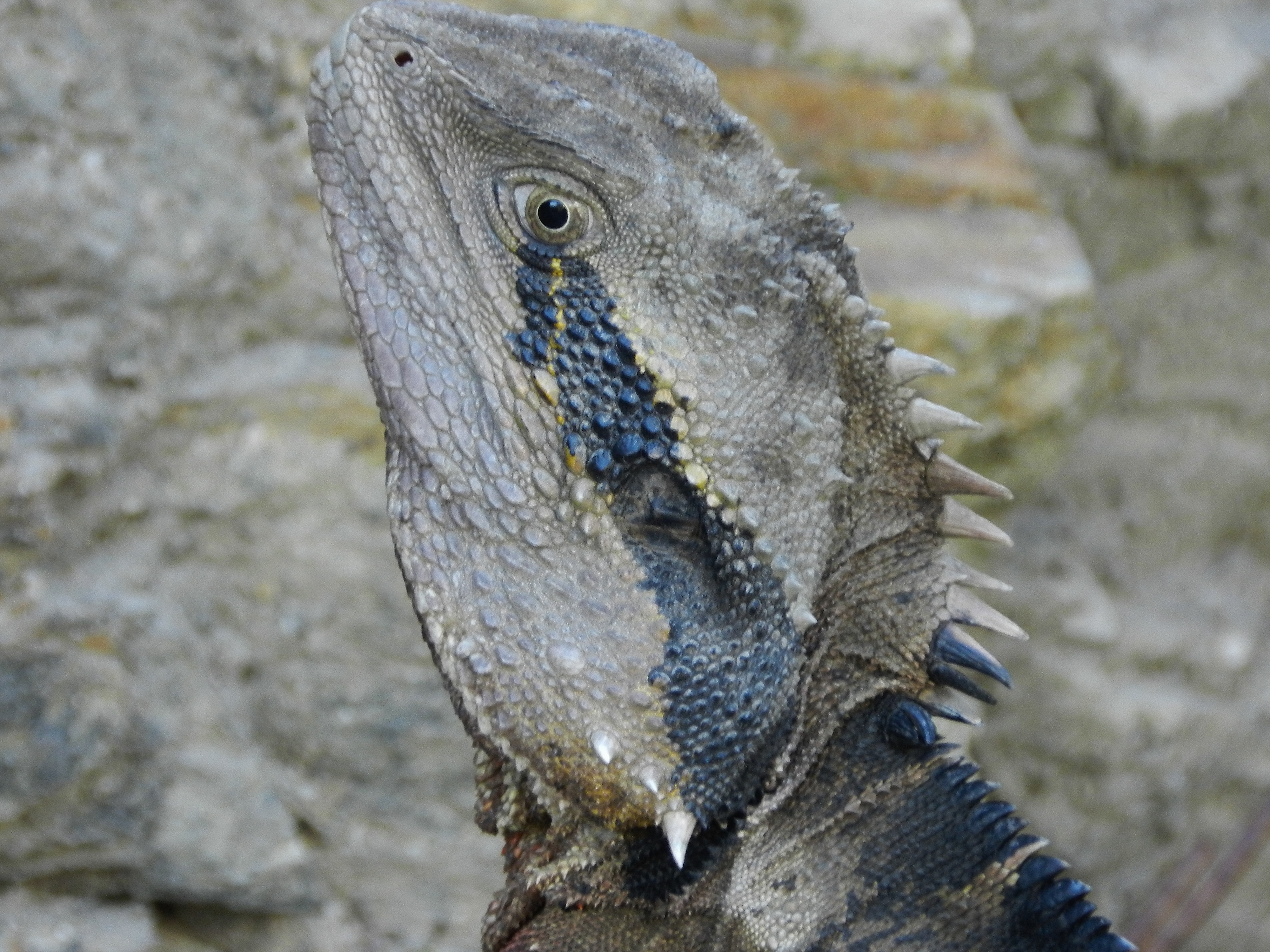
This was the first time I was in Brisbane in the state of Queensland, Australia. The city is on a river and has many nice gardens and restaurants and a very walkable Central Business District. The gardens even have plenty of lizards running about!

Lizard at Roma Parklands

Website Launches Today!

My new Website is launching today!

close-up-holi-photo

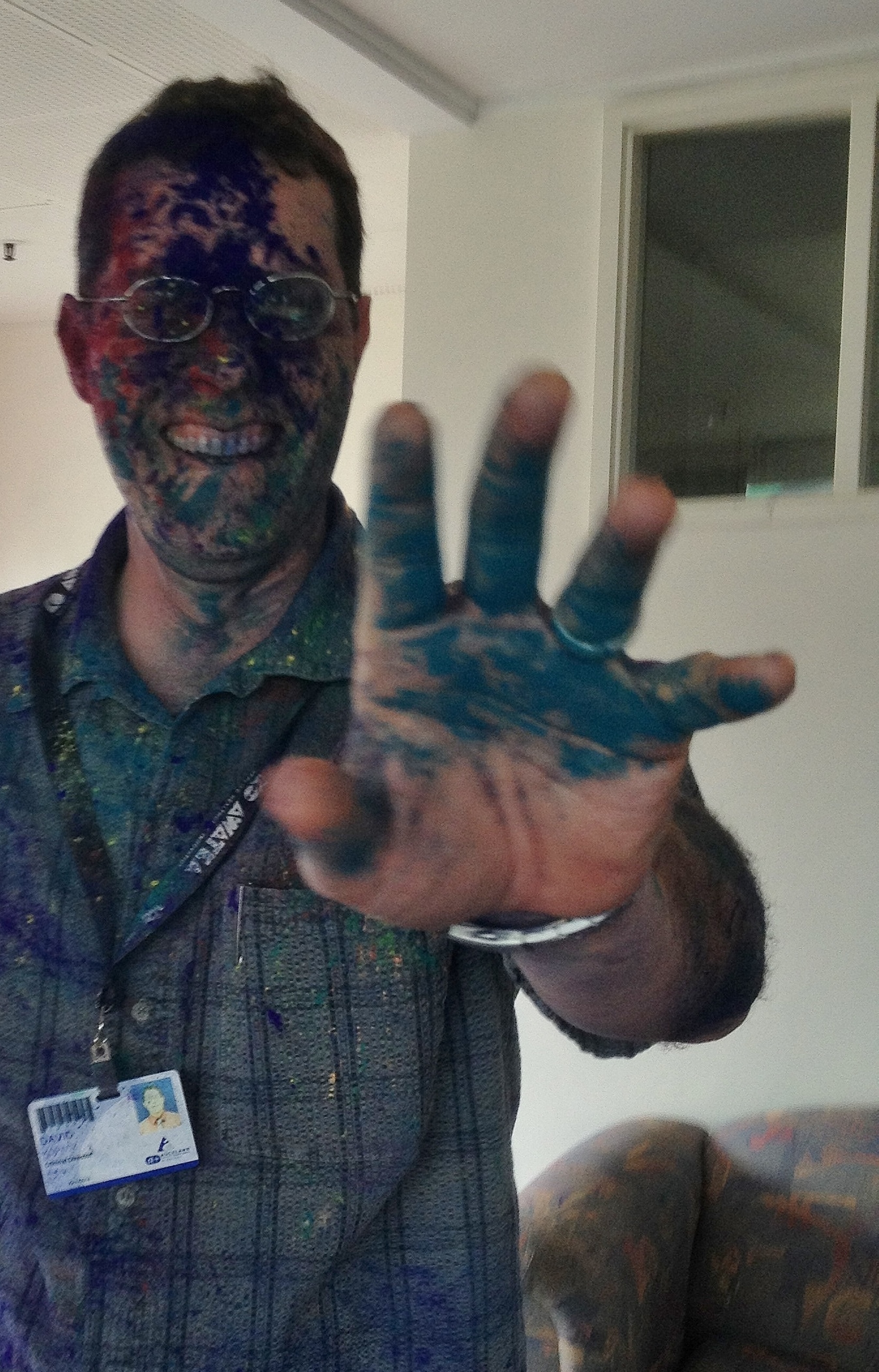
Holi celebration with the Exploring Mental Health with Yoga group

I started the Website to support my soon to be published book, Re-humanizing Medicine: A Holistic Framework for Transforming Your Self, Your Practice, and the Culture of Medicine. The book is currently going through a final edit and will be published late 2013. It will be available on Amazon in print and e-book formats.

Please check out the Website davidkopacz.com for information about the book as well as other writing, poetry, photography and paintings.

Guest Blog Post at the Center for Courage & Renewal Blog

Please see my May 9th guest blog post at The Center for Courage & Renewal Blog (the full text can also be found below)

I wrote this after attending the 2nd Annual Health Care Institute:

Integrity in Health Care: The Courage to Lead in a Changing Landscape

The Center for Courage & Renewal promotes the work of Parker Palmer. I frequently cite Palmer’s work, particularly as it pertains to professional leadership in medicine, in my forthcoming book, Re-humanizing Medicine: A Holistic Framework for Transforming Your Self, Your Practice and the Culture of Medicine.

Another update is that I have been spending a lot of time working on my website, but you can’t tell it yet. All the new content should be posted there before too long.

___________

Recovering Hope, Poetry and Connection in Health Care

I recently attended the conference/retreat “Integrity in Health Care: The Courage to Lead in a Changing Landscape.” I arrived there in the usual state for me, tired, stressed and struggling to balance all of my clinical and administrative responsibilities with the rest of my life. I work as a psychiatrist and as Clinical Director at an inpatient/residential psychiatric rehabilitation program with a population of treatment-resistant clients and a staff group that is going through union action. I took on the job hoping that I could bring a holistic approach to foster recovery and rehabilitation for clients and well-being for the staff, but I am not sure how successful I have been with either the clients or the staff. Many days feel like a constant barrage of worries and concerns about clients, staff and a never-ending stream of emails.

What I found at the conference was not any easy answer or magic solution to my daily worries. What I did find was a chance to reflect on my own situation with a group of supportive facilitators and participants. Having this time and space allowed me to connect more deeply to myself as well as to connect with other health professionals struggling with similar demands. As a result of the conference I felt more hopeful, less alone and that I had more inner and outer resources to bring to my daily work. I think one of the most damaging aspects of our work in health care is the despair that comes from trying to do good work in systems that, directly or indirectly, seem to inhibit good work. We thus have systems in which everyone is working hard, yet no one feels good about the work that they are doing.

The conference was structured around Parker Palmer’s “Five Habits of the Heart,” from his book Healing the Heart of Democracy. These habits are: understanding we are all in this together; an appreciation of the value of “otherness; the ability to hold tension in life-giving ways; a sense of personal voice and agency; and the capacity to create community. For me this boiled down to developing a sense of internal connection and cohesion while also developing connection to others and building community. This led me to reflect that if we can hold the inevitable tensions between individual and community in life-giving ways, the personal growth and well-being of the individual can contribute to the complexity and health of the community.

The idea of embracing tension rather than trying to eliminate it got me thinking of the tension in my own work and life. If I can shift my perspective toward daily stress and tension as a life-giving energy for work instead of as a drain and impediment to my work, perhaps I can more skillfully support the growth of a therapeutic community at the rehabilitation center where I work. The concept of a therapeutic community is that no one individual has responsibility for solving the problems that arise in the community, rather the work is done in open discussion between all members of the community. Palmer’s habits of the heart serve as an excellent guide for this kind of work by valuing the individual and the community and by seeing the tension as a source of life energy. To me, this was the most useful concept from the conference, that stress and tension can be re-framed and used for positive work.

This concept of holding tension between opposites, rather than trying to have one opposite (e.g. hope) overpower the other opposite (e.g. despair) allows for a complex and systemic approach to complex and systemic problems. The idea of tension being life-giving rather than something to get rid of reminds me of Swiss psychiatrist Carl Jung’s approach to the problem of opposites, that there is a “unifying third” that unites the opposites into a higher order of meaning. In this conference, we can look at integrity as the “unifying third” that comes from holding the reality of despair about contemporary health care and the need and fact of hope. In practice, integrity is generated from embracing the despair and the hope in contemporary health care.

Where does this hope come from? I found hope when I looked into the eyes of the facilitators and participants at the conference. I found it when I looked into myself. Hope is there, it is a living thing. It is just that there is also so much despair that it is easy to lose sight of hope. Hope is intrinsic to the very idea of health care. We all went into this field because we felt that something hopeful could be done in the world.

I’d like to return to this idea of tension being “life-giving.” The image that came to me was of the poles of a magnet. Electromagnetic lines of force emanate in complex and systemic ways around the negative and positive poles of the magnet. These electromagnetic fields create energy that can be used for work. Cancellation of either the negative or positive pole leads to a collapse of the energy and an inability to do work. To move from the metaphor back to our discussion of hope and despair, it is quite apparent that if despair eclipses hope no work can be done. (I will leave the opposite statement of what happens when hope eclipses despair to the metaphysicians, as this does not appear to be an immediate risk in health care.) If this metaphor holds, we can shift our attitudes toward the reality of despair and let go of our desire to eliminate it. Instead, we can view it as a powerful generator of energy and work when it is in a tension-filled relationship with hope.

We do not need any help to find sources of despair to feed this life-giving tension. However, we do need to periodically renew our sources of hope. Luckily these can be found when we pause in life and look within and look to others who are doing hopeful work. One great place to pause is at an “Integrity in Health Care” retreat.

This conference was not a passive, one-way exchange of information from the facilitators to the participants. We had ample time for personal reflection and small and large group work. The facilitators were compassionate and skillful in stimulating discussion and reflection to promote individual and group work. The other participants were inspirational in their personal honesty, their humanitarian drive to alleviate suffering and the creative ways that they were doing clinical and administrative work. I remember one small group where we discussed how we can facilitate individual and group reflection in busy health care environments. We spoke about mindfulness and poetry as ways to accomplish this. This discussion was very helpful for me and I take away a particular commitment to have more poetry in my life as I find it ignites a dimension in me that I often push on the back burner. As the poet and translator of sacred texts, Juan Mascaró, writes:

“The appreciation of a poem is an act of creation whereby we go towards the greater life that created the poem. An expansion of life.”

There is another tension in health care between the poetry of medicine and the science of medicine. We work in a time when the science (and the business) of medicine often obscure the poetic value in our work. Mascaró further writes that:

“There is inner observation and experiment and outer observation and experiment. From the first comes poetry and spiritual vision and all human values; from the second science and technology.”

What I take away from this conference is an enhanced ability to hold this tension between inner and outer observation and experiment, which allows human values and science to co-exist in the delivery of health care. Practically, this means I have a renewed sense of self-connection, a stronger sense of community and more hope from the work that others are doing in health care. With a handful of poems and a heart-full of hope, I return to my daily life and work.


Update

It has been a while since I have posted much on the blog, but I’ve been busy behind the scenes…

First, the new blog, itself, Being Fully Human, has taken some work and I am also working on a webpage davidkopacz.com, which is still under construction. My sister, Karen is a Web designer and has been really doing the work. You can check out her work at Design for the Arts.

My book had been taking up a lot of time, along with my job. The update on the book is that I am awaiting the final edit to be returned to me, after I review that the book will make the next step in production and will hopefully be out mid- to late-2013. I’ll post more updates on Re-humanizing Medicine: A Holistic Framework for Transforming Your Self, Your Practice, and the Culture of Medicine as they are available.

Mary Pat and I have been busy with a few trips and 3 sets of visitors who came through New Zealand. We took a trip to Melbourne, Australia.

Dave-in-Melbourne
Photo in Melbourne with the tram passing in the background
OLYMPUS DIGITAL CAMERA
Weedy Seadragon, Mornington Peninsula

We had a series of 3 different sets of visitors come to New Zealand. When my parents visited we went travelled through Northland to Opononi and Bay of Islands, and then took the “Perfect Day” trip out to Poor Knight’s Island and went snorkeling.

OLYMPUS DIGITAL CAMERA

Then we caught a flight to Queenstown, on the South Island and did an overnight cruise on Doubtful Sound. It rained pretty much the whole time, but we were rewarded with hundreds of tremendous waterfalls. It didn’t stop us from fishing and we caught Jock Stewarts and Scarlet Wrasses (as well as some monster of the deep that snapped a couple of lines). We also kayaked and saw dolphins and fur seals.

waterfalls 6
A misty morning on Doubtful Sound
looking seal
A fur seal watching us

Next, we drove down to Invercargill and Bluff and took the ferry over to Stewart Island where we saw many of the native parrots, Kaka, flying about and being generally unruly.

Half Cloud

The biggest news is that we are moving back to the States this year. We are relocating to Seattle. We have had many great experiences, adventures and misadventures during our 3 years in this part of the world, but we are wanting to be closer to friends and family. We have learned that it is good to have a balance of stability and adventure and currently we are wanting some more stability in our lives as we dream about having our own home again as well as a dog or two.

More details as they become available…..

After the Health of Health Professionals Conference

I had a great time at the conference and it was really energizing. I met many inspiring people from all over the world. There are a substantial number of people doing great work to support clinicians and to bring compassion back into healthcare, and they are doing it at the individual, research, and administrative levels.

Of note, Robin Youngson gave a great presentation.

Tony Fernando gave a presentation on positive psychology that had a lot of practical information about how to be more compassionate in clinical work.

Jane Lemaire, from University of Calgary presented a series of studies that her group have done on physician well-being, one of the most interesting was on the positive cognitive and relational effects of simply feeding doctors (something that often takes back seat in a busy clinical day).

Marsha Snyder gave a great presentation on the issues involved in working with patients who are doctors.

You can still see the conference programme on-line if you want get an idea of what the conference was about. I thought I understood that the conference organizers would be putting up some additional information following the conference, although that was up at the time I posted this.

View more presentations from the conference.

The next conference will be in 2013 in Queensland Australia.

The Health of Health Professionals Conference

I will be presenting at the Health of Health Professionals Conference in Auckland, on November 3rd. The topic is: “What is Good for the Patient is Good for the Doctor.”

This presentation will examine clinician burnout, Gary Schwartz’ book, The Way We Are Working Isn’t Working, recovery principles from the recovery movement, and Parker Palmer’s concept of the “new professional.”

The focus of the presentation is on the concept that the care that a clinician provides for a client is partly dependent upon the practice environment that the organization creates for the clinician to practice within. As above, so below.