Conversations with Susan.3

Susan’s health has been deteriorating lately. We have been emailing back and forth, but I have not been getting these up as posts very quickly. I’ll be putting up posts more regularly now, starting with our earliest emails in this post and I think I’ll also put up a separate post with more recent updates. While we human beings usually have a bias for a linear narrative, my work with Joseph Rael has been opening me up to non-linear narratives, which is what this series of blog posts is ending up being…I will include some of Susan’s artwork and some of my photos in the mix.

My picture b16eea51-9c6f-475e-b009-856c8c3f730c (1)

Susan Mac Gregor, May 8, 2016

Susan to David: February 7, 2016

Hi,

How are you & Mary-Pat?

Seem to have got so tied up on Facebook that other communications have lagged. Mahmoud & I have had a great Xmas & summer with lotsa socialising amongst friends & family, a trip away to Tauranga, & some lovely local outings. Though the cancer did return, following further radiotherapy, I am again in remission. Looking at things overall I’ve well exceeded the norm for this thing, the cancer having started in Oct 2012. I am not “fighting” it, just accepting it & taking one day at a time.

On other matters finally I’ve contacted a publishing company re a selection of my poems. They distribute through AU, UK, NZ & USA. Not having great expectations, but it will complete a goal I’ve had for some time. The company is ‘XLIBRIS’.

We are off to the exquisite beaches, hot pools & restaurants of Tauranga again in early March. I expect this will be my last visit there, as prognosis now months, not years. Frankly I am ready to “go home” & shall welcome that journey when it comes. My brother is tasked to inform everyone on Facebook so that no one is left wondering. His name is Rob MacGregor, so please don’t be surprised when you get an email from him.

Look forward to your news.

Kind regards,

Susan MacGregor

David to Susan February 16, 2016:

Hi Susan, thank you for writing. Your trip to Tauranga sounds great and I hope you enjoy it thoroughly.

I am sorry to hear about the recurrence and that the doctors are giving you months now rather than years. Just remember, time and life is not really a doctors to give in the first place…

Good luck with your publishing. If you ever want to put a poem “out there” I’d be happy to put one up on my blog with some info about you.

I’ve been working on a book with Native American visionary, Joseph Rael, it has turned into two books. Working with his publisher is great as they are a small press and are really moving things along. July publication date for Walking the Medicine Wheel: Healing PTSD [this has since been pushed back to September, 2016]. I’ll send you a draft and also a draft of Becoming Your Own Medicine, which will be the second book, but hasn’t been edited yet.

I just started reading The Tibetan Book of Living & Dying by Sogyal Rinpoche and also read the Tibetan Book of the Dead. I am preparing to give a series of talks to patients, family and caregivers at a hospice programme out in Colorado on end of life decisions. Do you have any advice for me for the talk? I’ll send you the PowerPoint when there is a PowerPoint to send…maybe in a month…I am thinking about some topics like Death Stewardship, using the Red Road of the Medicine Wheel which orients one to the emotional and spiritual to balance our culture’s over-focus on the mental and physical, and then something on holistic decision-making, using the 9 dimensional model from my book.

The Tibetans sure know how to die, I am learning from these books. The view it as a very important and sacred time in transitioning from this realm to the next. As they believe in reincarnation, the emotional and spiritual state at the time of death is very important in determining the next birth.

Please keep in touch as your time and energy allows.

Here are very rough draft copies of the writing I am doing. [attachment to email] Please don’t feel any need to read them, but if they are of interest, enjoy!

Blessings upon Your Beautiful Soul,

Dave

Oh, have you ever heard of Nevit O. Ergin? I just read The Sufi Path of Annihilation by him and found it quite interesting.

Conversations With Susan.2: Susan’s Biography

I have been emailing back and forth with my friend, Susan Mac Gregor in New Zealand as she has been going through what she calls her “deathing life” with Stage 4 Glioblastoma Multiforme. We are having some great talks and Susan would like me to share these through this blog. Here is her biography and we’ll be posting some of our discussions in future posts. Susan has also started making digital art and we’ll include some of her artwork in these posts.

___

The Centered Heart

The Centered Heart (Susan Mac Gregor)

Biography:

My name is Susan Diane Mac Gregor. I was born in Whangarei, New Zealand, on 25th August 1958. I grew up in Northland enjoying its beautiful beaches, native forests, waterways, & small town lifestyle. When not reading much of my time was spent exploring nature, riding friends horses, rescuing damaged birds or small animals & swimming. There were cats, pidgeons, chooks [chickens], sheep, dogs, canaries as pets, plus my blood brother & four fostered siblings to share time with. Having a musically talented mother & poetically inclined father, who enjoyed limerick & rhyme, meant our household was filled with music, rhyme & laughter. Despite some financial crises for my parents, it was an idyllic childhood.

Qualifications:

Cert Industrial Cookery; R.P.N; PG Dip Gerontological Nursing; PG Cert CBT; Cert N.L.P. & Eriksonian Hypnotherapy; PG Cert.Relationship Guidance; PG Cert Sexual Abuse Counseling; Cert Solution Focussed Therapy; Cert Grief Counseling;  Cert Group Facilitation; Cert Stanford University Facilitator Self Management Of Chronic Conditions Groups. Successfully completed one year from Diploma of Psychotherapy, plus stage one National Certificate in Adult Education.

Alternative Therapy Qualifications:

Diploma Therapeutic Massage; Reiki Level 3; Cert. Therapeutic Drumming; Colour Psychology … being a methodology of using colour & drawing to analyze & address psychological issues; Chaldean & Pythagorean Numerology; American Indian Aura Cleansing;  Hands On & Crystal Energy Healing; Buddhist Sound Healing via Chris James; Home Study of Aromatherapy.

Gifts:

I was born with the gifts of Clairvoyance, Clairaudience, Clairsentience,  Pre-cognisance & Telepathy. These gifts began expressing themselves firstly amongst my direct family, surprising my parents on more than one occasion. As an adult I have practiced for 25yrs as a Clairvoyant, offering guidance to100’s of people throughout the North Island. This service included dream interpretation, energy clearing, & numerology if desired. As an adjunctive I have developed a method whereby it is possible to map a person’s phases & time frames toward achieving changes & goals in their lives. The phases allow the person to consciously make the most of the vibrational energies in each phase. Feedback has confirmed this is a reliable tool for its purpose.

Harley The Rainbow Lorikeet

Harley the Rainbow Lorikeet (Susan Mac Gregor)

More About My Roots:

Family have significantly influenced my character & interests. Mums father Reverend Norman Hyde established an Orphanage during the N.Z. Influenza Epidemic of the early 1900s, & along with mums mother Lillian, brought up thirty three Orphans, plus eight of their own children. Prior to that Norman lived & worked closely with the Tainui Iwi, an indigenous Maori tribe from the Waikato region. Grand-dad spoke fluent Maori, & was fully conversant with Maori protocols & customs. When he died in his 50’s he was given the rare honours of having Maori “wailers” at his funeral, plus a Chiefs cloak was presented to the family from that Iwi. As is customary, the family has since offered the cloak back, the Iwi have not accepted it, thus it & its significance remain in the family.

Respect for New Zealand’s indigenous peoples & customs was passed onto me through my mother. Mums mother was a gifted pianist, being asked in her early teens to go to Germany to further a musical career. Grandma’s parents didn’t permit this however. Prior to marriage Lillian established her own music school, teaching piano & singing. Her talent passed to my mum, who could play any instrument she was handed, & sang on radio in her early adulthood. Our household was always filled with music, with many nights sat around the piano singing Redemption Hymns, or listening to mum play from the great classics, Chopin, Tchaikovsky, Rachmaninoff, Bach, Beethoven, Mendelssohn etc. Though never having her ability I took lessons in piano, & continued to play into adulthood.

My father, born to the son of a Scottish Immigrant from Loch Carron, bought another form of creativity into our household. Dad had a love of words, particularly in rhyme & limerick. In early adulthood he published his poems in the local News Paper. His work as a carpenter also a creative occupation. His father was a lay preacher in Churches throughout the Tauranga District. Thus we have the foundations for my love of music, rhyme, respect & interest in different cultures, nature, the humanities, & Christian faith.

Faith:

Despite our Christian underpinnings, Christianity was never forced upon us as children. My parents wished us to choose rather than be forced to accept Christ, leaving the door open for enquiry & spiritual exploration. Not withstanding that, prayer was a given in our household & my parents lives were distinctly lived from Christian principles.

In addition, my mother had the unusual gift of being a “diviner” i.e. someone who could find underground water merely by walking around with her hands held out to sense it. She would sometimes demonstrate this gift for others using a forked willow stick, which would violently twist in her hands when over water. She became well known in Northland for this gift, having divined the first steam bore at the Ngapha Steam Plant near Kaikohe, plus the water supply at a privately owned Camp Ground on the East Coast of Hohoura Harbour, called Tauranga Bay. Not to mention many farmers water supplies, etc. She was capable of identifying how deep in the earth they needed to bore, which way the water flowed, if it was salt, brackish or fresh & could, by the same means, divine  for minerals such as gold. This left the way open for enquiry as to things unseen, though felt or known.

My picture 89d72c16-50ba-43fc-b225-2c6126597c93

Susan Mac Gregor

As a young adult I entered training in Psychiatric Nursing, having chosen to diverge from my training at the Auckland Institute of Technology, where I qualified as an Industrial Cook. This led into my Career in Mental Health, & interest in Psychological methodologies. Upon qualifying I further developed my interest in caring for the Elderly, plus Special Interest in working with people with Dementia. Post Graduate study included a Diploma in Gerontology. Next I began developing qualifications & skills in Psychological Therapies. Gradually I moved from working within Private & Public Elder Care into Mental Health Psycho-Social Rehabilitation, including providing CBT counseling. I was working full time as a Therapist in a Psychology Division of a Primary Healthcare Organisation when I was diagnosed with Grade Four Glioblastoma Multiforme, this being my final job.

Spiritual explorations have included initiation into Western Sufism, initiation to The Rosocrucian Order AMORC, a home study course provided by my friend Patricia Sarne Paul in Kabbahlah, exploration of Western Spiritualism, Meditational Dancing in the form of Circle Dancing, Dances Of Universal Peace, & Sufi Zikr, practice of Hatha Yoga in my late teens, then training & practice in Raja Yoga, Mantra Yoga, Mudra Yoga &  Kriya Yoga, the latter following Paramahansa Yogananda’s teachings. There was a short foray into Tibetan Buddhism, via Dhargyey Rinpoche at the Buddhist Centre in Whangarei. Training in Mindfulness Meditation. At times I would “drop” in on Hindu services to join in with the singing of Bhajans, which I always found an uplifting practice. Or through Jewish friends I’d join in Sabbath services at the open Auckland Synagogue, or join in at Anglican or Catholic Services & discussion groups. I gathered books to read surrounding these topics borrowing some & buying others.

Influential writers were M. Scott Peck, Martin Buber, Carl Jung, Joseph Campbell, Richard Bach, Carlos Castaneda, Erich von Daniken, works from the Western Mystery Hermetic School,  Sophist Philosophy, The Paulene Gospel, Celestine Prophecy, amongst others.  Having cast the net wide I can say with conviction I decidely favour Christianity, finding truth & mystery in the life of Jesus & his gospel based on love, forgiveness, & grace. Following baptism by the Spirit as an 11yr old I have consolidated my Christian declaration with Baptism by water as an Adult.

Some Favourite Poems:

“Gunga Dinn” (Rudyard Kipling)

“Kubla Khan” (Samuel Taylor Coleridge)

“Jabberwocky” (Lewis Carroll)

“I Wandered Lonely As A Cloud” (William Wordsworth)

“The Walrus & The Carpenter” (Lewis Carroll)

“You Are Old Father William” (Lewis Carroll)

“Ode To A Mouse” (Robert Burns)

All the best to both of you, and wishing you success in your endeavours.

Love from Susan xx

Sky Painter

Sky Painter (Susan Mac Gregor)

Guest Post: Sandy Carter on Bonsai, Simplicity, and Joy

Marie Kondo writes of love, joy and the beauty of simplicity in a manner that inspired me to utilize her principles in a recent downsizing experience, which changed my life. For years, I have intuitively created space I felt appreciative of, but our recent move presented challenges we hadn’t faced before as we reduced our living space by seventy-five percent.

Bonsai Tree

Our house was filled with possessions we had collected over many years from travels; heirlooms passed onto us by family members and childhood mementos from our children’s growing up years. We felt attached to most everything, and knew what displayed beautifully in our present home would clutter our new space and over stimulate us and we had to make a huge change.


Using Ms. Kondo’s book as a reference, we let go of our things in layers over time and succeeded in choosing what we needed to accompany us as we opened a new life chapter. With her philosophy guiding us, we now live in beautiful and joyous space. The process was not easy, but well worth the effort.


My life has personally changed because I’m been more mindful of the choices I’m making. Surrounded only by things I love has helped me embody wellbeing in more depth. Another gift related to experiencing joy is co-writing a blog with Dave on the topic. Because of this, I’ve trained myself to be aware of joy’s presence again and again. As I’ve focused my attention, I’ve engaged with more subtle experiences of joy in others and myself.


One such joyous occasion occurred with a recent experience between my father and me. Dad told me he was going to buy himself a birthday present. I listened half amused and half curious, wondering what my 88-year-old father had in mind. My father is an example of graceful aging. He is continually appreciative of life’s blessings and surprises my siblings and me all the time, as he lives his life with zeal, seeking new opportunities to learn and grow. Unpredictable as ever, when Dad declared he was going to purchase a Bonsai Tree I was stunned, and asked him if I could go along. I had no idea Dad was interested in this ancient Chinese art form and thought sharing this experience with him would be worthwhile. An idea I am grateful I had, as there are times when I’m too caught up in my world to take advantage of such gifts.


Although the word Bonsai is Japanese, the practice originated in China. In 600 AD the Chinese started using special techniques to grow dwarf trees and they eventually became very valuable and were offered as luxurious gifts throughout China. Later, Japan adopted the Chinese tradition basing the art on Zen Buddhism influence and referred to the practice as Bonsai. Not long ago, the idea spread beyond Asian culture and into other countries. My Dad researched possibilities for a Bonsai Tree purchase in his area, and we headed to a retail establishment called the Bonsai House.


The Bonsai House is a small house transformed into a retail shop for the sale of Bonsai trees. The space is filled with hundreds of Bonsai trees of various shapes, sizes and varieties. A Chinese couple owns the business and the woman not only has a passion for Bonsai trees, but a vast knowledge regarding them. While Dad and I looked at the Bonsai’s, she educated us on the history, types and care of these ancient and beautiful trees. What we discovered is that Bonsai trees can live for several generations, and caring for them can be a deeply satisfying personal experience. Dad insisted we choose a tree together. Although, we did not speak of it in so many words, we knew the tree’s care could be passed onto me and possibly outlive both of us. We had no idea Bonsai shopping would bring us face to face with our mortality. This could have been a depressing thought, but instead it had the opposite effect as we decided on the tree that needed to go home with us.


After our purchase, we left to drive back to the retirement community. As my Dad and I sat side by side in the car we shared a joyous silence reveling in our good fortune of being together and sharing this experience. Later, we put into words what we’d both been feeling. We agreed, no matter what hardships have passed or what may come, having these precious times together brings us much joy and happiness!

Choose Joy

Conversations With Susan

I have been having email conversations with my friend from New Zealand, Susan Mac Gregor. We were in a writer’s group together when I was in Auckland. We periodically have been emailing, but recently we’ve been having more frequent conversations around the topic of what she calls “deathing life,” Susan was diagnosed with Stage 4 Glioblastoma Multiforme, a serious brain cancer, and she has been sharing her insights and experiences with me. Part of what initiated our increased emails is the fact that I have been preparing to give a series of lectures in Grand Junction, Colorado, on Health Care Decisions Day. These talks will be on end-of-life decision-making, holistic decision-making, and also staff wellness for hospice workers. I had asked Susan to give some feedback on a draft for my talk and this really sparked off our conversations. As I have been wanting to expand the focus of this blog, Being Fully Human, it seemed like a good idea to post these conversations as Susan shares her honest insight and experience about the process of “deathing life,” living life right up to the point of death.

Susan has written a fairly long biography, and we’ll publish that at some point, but for this post, I’ll excerpt it and then also start with a summary that she has written about her “deathing life” process. I asked Susan about an image to include in the blog post and she said,

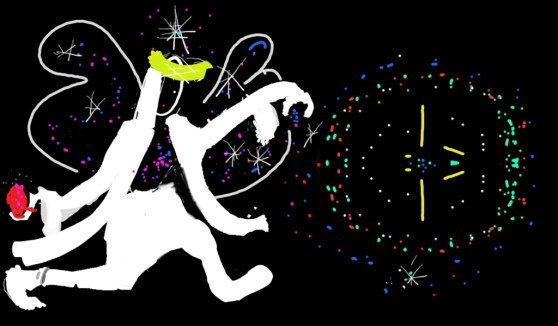
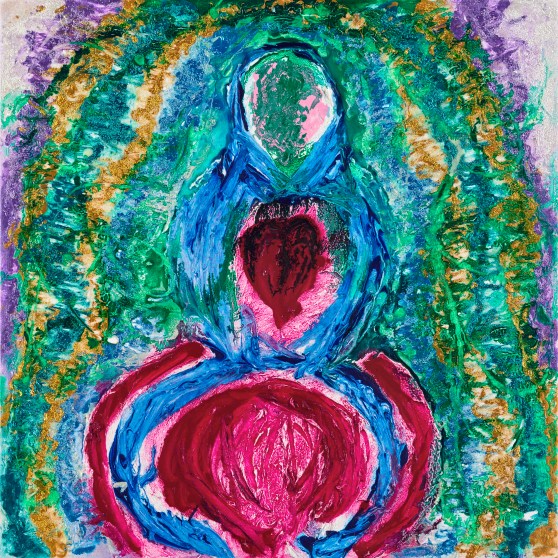
“Having only now read your email the things that come to mind as a picture for the blog could be based on what has been shared…perhaps something with swirling patterns of coloured light, transposed with transparent images of symbols, angels or such.” So I will put a few of my paintings in the blog that fit that description.

Kopacz 02

My name is Susan Diane Mac Gregor. I was born in Whangarei, New Zealand, on 25th August 1958. I grew up in Northland enjoying its beautiful beaches, native forests, waterways, & small town lifestyle. When not reading much of my time was spent exploring nature, swimming, rescuing damaged birds or small animals & swimming. There were cats, pidgeons, chooks [chickens], sheep, dogs, canaries as pets, plus my blood brother & four fostered siblings to share time with. Despite some financial crises for my parents, it was an idyllic childhood. 

As a young adult I entered training in Psychiatric Nursing, having chosen to diverge from my training at the Auckland Institute of Technology, where I qualified as an Industrial Cook. This led into my Career in Mental Health, & interest in Psychological methodologies. Upon qualifying I further developed my interest in caring for the Elderly, plus Special Interest in working with people with Dementia. Post Graduate study included a Diploma in Gerontology. Next I began developing qualifications & skills in Psychological Therapies, successfully completing the first year of study in a Diploma of Psychotherapy with Auckland University of Technology.

In addition to Susan’s health profession credentials, she is also a poet and spiritual seeker and we will hear more about that in further posts.

For today, we’ll include the email that Susan sent me that gave me the idea of posting her insights to share with others. I think she gives such a great, heartfelt, and wise words and experience.

25/2/16 (Susan)

Dear David,

It was with interest that I read about the latest books you’ve been reading. I have read many of the books you have cited in references, etc., including The Tibetan Book of the Dead, however not the recent Sufi book you mentioned.

I can’t give advice for your talk at the Hospice, as everyone’s experience differs, however I can write about my experience.

Initially I experienced shock & grief at receiving such a finite diagnosis. I remember looking around the rooms in my house at the things I had built up & worked hard for, & thinking what did all of that mean, was what I had invested to get those things worth it?  The answer that came back in response to that question was a feeling of emptiness. Then my heart filled with sadness thinking about my 3x beautiful cats & Mahmoud being left behind & I was glad at least that Mahmoud’s life would be more comfortable, as a result of my previous efforts.

Within 2wks I was trundled off for brain surgery, after which my life completely changed. The surgery caused damage within my brain, leaving me with left sided paresthesia.

Mahmoud was devastated. His welfare was always on my mind, as was mine on his. I had a large amount of time left lying in my hospital bed with nothing to do but think.

Years prior I had experienced a “healing” at a Buddhist retreat, in which my “difficult to control” hypertension completely dissappeared, leaving my GP astounded. During that retreat I learnt that even illness has a beneficial purpose, i.e. to teach us something, to deepen us in some way spiritually, to raise our awareness or break through unhelpful patterning.  Thus I started to look for the lessons in this experience.

For me cancer has done all of the above plus brought me to an awareness of how much love surrounds me. It has deepened my relationship with Mahmoud, with God, & given me fresh hope for humanity. I have been shown so much love & kindness, even from complete strangers.  Often those with little in the way of possessions have given me the most. I have been able to see the busy, tense person who “didn’t have time “ that I used to be, reflected in people around me, & their counter balancers in the people who will let me que jump, or help me out in getting something in a supermarket, etc., because they see I’m disabled.

As a consequence of my health & disability mine & Mahmoud’s lifestyle has dramatically changed. We have needed to offload a lot of possessions & have moved to a two bedroom rental unit. The money from my salary no longer flows in & the goal of being mortgage free in 3yrs has disintegrated. However I have found that I am surrounded with so much love & kindnesss that my soul & heart are completely full.

From this point of realisation forward I have been able to take inventory of my life, looking at past regrets & losses, & freeing myself of built up emotions through self forgiveness & forgiveness of others. This has been aided by gratitude & compassion, both of which have deepened within me exponentially.  I have become free again, letting go of pursuing goals, things, dreams…. most of which are erroneous now. Being present in each moment, with each breath, is how my days unfold. The natural world around me is exquisitely defined, colours, shapes, contrasts, each being impressed into my being through every sensory system I possess.

I still give … a smile, a kind word, my knowledge or time. My “deathing” life continues to have purpose & meaning, people ask me “what is this like”, “how do you stay so optimistic”, “are you afraid”, etc, etc. I do experience moments of fear, but at the end of the day my answer to all of these questions is, “this is life, I am blessed to have lived it, I believe in an after life, & it is my faith in God & Jesus Christ that sustains me when all else fails.

May your love-light continue to shine.

Love & Blessings, Susan xx

Kopacz 03


A Work of Joy.5 Spark Joy: What Sparks Joy for You?


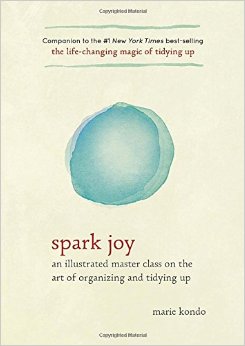
This is the fifth of a series of blog posts examining Joy in Work. We have been calling it: A Work of Joy! It is part of an ongoing discussion between Dave Kopacz and Sandy Carter on this topic and will include each of our thoughts individually as well as our dialogue on Joy in Work. This fifth blog looks at the work of Marie Kondo (who has been called the Beyoncé of Organizing), The Life-Changing Magic of Tidying Up, and her new book, Spark Joy: An Illustrated Master Class on the Art of Organizing and Tidying Up. Sandy had consulted Kondo’s first book when she was recently down-sizing. We turn to her second book, Spark Joy, not so much for tidying up, but rather for her method of determining whether or not something brings you joy. Kondo writes, “I am convinced that the perspective we gain through this process represents the driving force that can make not only our lifestyle, but our very lives, shine,” (xii).

spark-joy-contest-package

Kondo’s method is surprisingly simple, yet helps to get you out of your logical mind and in touch with your heart.  Here is what she says to determine if something sparks joy for you.


“When deciding, it’s important to touch it, and by that, I mean holding it firmly in both hands as if communicating with it. Pay close attention to how your body responds when you do this. When something sparks joy, you should feel a little thrill, as if the cells of your body are slowly rising. When you hold something that doesn’t bring you joy, however, you will notice that your body feels heavier,” (8).

20160303_082657

In regards to organizing, she writes that you should focus on what things bring you joy and that you want to keep, not on trying to get rid of things just for the sake of getting rid of things. Even with the things you discard, however, Kondo invites you to connect with and communicate with.


“Keep only those things that bring you joy. And when you discard anything that doesn’t, don’t forget to thank it before saying good-bye. By letting go of things that have been in your life with a feeling of gratitude, you foster appreciation for, and a desire to take better care of, the things in your life,” (8).


What Kondo is doing is inviting us to get in touch with the soul of things, to see how your heart resonates with the soul of the object, and if you are going to discard it, to honor the soul of the objects that are exiting your life. This reminds me, in some ways, of the world view of many Native American people, that all things are alive and are our brothers and sisters. Maybe this part of mainstream American culture’s emphasis on the accumulation of things, we do not connect to the soul of things and thus we never feel joy in our hearts and keep on accumulating objects.

70ede52a4b764ac3229190a1d3cc0578

When starting to practice determining what sparks joy in your life, Kondo recommends starting with the clothing that you wear closest to your heart, “Because that’s where you feel joy―in your heart, not in your head,” (18). This reinforces that joy, whether in tidying or in work, comes from the heart, not the head. It shows why an intellectual solution to a lack of joy will not be successful unless it partners with the heart.


After going through your belongings, object by object, you can get to where everything you have sparks some joy. “When you wear and surround yourself with things you love, your house becomes your own personal paradise,” (26). Kondo also sees objects as being capable of being transformed by love and that this can be felt as well as the physical elements of the object. So the act of loving something is part of how that object brings joy.


“I’m convinced that things that have been loved and cherished acquire elegance and character. When we surround ourselves only with things that spark joy and shower them with love, we can transform our home into a space filled with precious artifacts, our very own art museum,” (47).

410sn-mdGaL._SY344_BO1,204,203,200_

In looking at Marie Kondo’s book, Spark Joy, and her method of tidying, we can use this in several ways in regard to our larger focus of Joy in Work. The first level is the level of our surroundings and our physical workspace. We could use this method of looking at the objects around us and asking if they bring joy. Many things in a medical environment are necessary and utilitarian, we may not be able to say, “This blood pressure cuff does not bring me joy, so I am going to let it go!” We can declutter both our own personal workspace as well as shared work spaces. Shared workspaces tend to accumulate things that apparently belong to no one and we just work around them. The next aspect of this level is adding some seasoning to our work space, bringing in something that sparks joy for us. Again we may have restrictions on certain items in a medical setting, but a plant, a small vase, a little animal figurine, a favorite book, a nice pen, a colorful note pad, even an inspirational saying written on a notecard can bring joy to a personal work space. Some people in medical settings do not have a personal work space, in that case, you have to put the joy on your person (a pin, jewelry, a pen you like) or you could take on the task of bringing some joy to your collective workspace – see if you can put up a picture, bring in a plant, or even something temporary like a small vase of flowers.


Kondo teaches us that there are three common elements that determine joy, “the actual beauty of the object itself (innate attraction), the amount of love that has been poured into it (acquired attraction), and the amount of history or significance it has accrued (experiential value),” (45). Thus, it is important to realize that joy is not a static trait of an object, it is also increased by the love and enjoyment that we have with an object. For instance, I have a pair of non-descript gardening gloves. I didn’t feel joy necessarily when I bought them, but they are very comfortable and now, after using them for a couple years, they bring me joy. Also, the factor of time, I have been using them now for a while and they hold many happy memories of digging in the dirt. I like using my bare hands too, and getting dirt under my fingernails, but some jobs, like pruning a rose bush are better done with gardening gloves. These gloves now feel like a second skin to me. It is important to realize that even something plain and utilitarian can be infused with joy from years of love and use. Joy is not a one-way street. We are not separate and isolated from the physical world, but can be in a love relationship with the earth and the physical world of matter.


Our surroundings are an important part of our health, although medical settings often do not create joyful or healing environments. At the VA, we are implementing work coming out of the national VA Office of Patient Centered Care & Cultural Transformation. In particular, we are using the Circle of Health and have developed a Whole Health Class that rotates through 8 different health domains over 8 weeks. One of those domains is “Surroundings: Physical & Emotional,” and we work with Veterans to generate ideas around little ways that they can make their surroundings more health promoting. In my book, Re-humanizing Medicine, I also have a dimension of “context” which looks at our physical and situational environment.

COPHAWB

VA Circle of Health

The main reason I wanted to blog about Marie Kondo’s book was not simply for the physical work space issues, but for the method she uses of helping us sensitize and train our hearts to be open and attuned to joy in our lives. Joy is not something you can mandate and joy will be different for each person. To spark joy, we need to make room for our hearts in our work. Administration can do many things to either diminish joy or enhance joy, but ultimately, it is up to us to show up for the joy revolution, by attending to our hearts and bringing them to work each day, and by discerning what it is that we need around us in order to nurture our joy.


2015 in Review

What a big year it has been! My first book came out at the end of 2014 – Re-humanizing Medicine: A Holistic Framework for Transforming Your Self, Your Practice, and the Culture of Medicine. I have traveled a lot this year for speaking engagements: from here in Seattle to Denver, Colorado, Auckland, New Zealand and Melbourne, Australia.

jhp53db8b682bd57[1]

I just picked up Jean Houston’s book, The Search for the Beloved: Journeys in Mythology & Sacred Psychology. I was surprised to read her introduction to the second edition. She describes that in September of 1992 she stood at the northern-most point of New Zealand, Cape Reinga and watched the waters of different oceans come together. She asks her companion if “this is the place where the planetary DNA gets coded anew?” He replies, “it is…the place where all Maoris go when they have died to lift off to the Other World,” (vii).

The Search for the Beloved

This is the place, right by this tree in the photo, named Te Aroha (love), where the Māori believe that departing spirits leave this world for the other after death. Houston’s guide continued, “It is because of places like this…where the spirits of many people and many lands can meet and refresh themselves. And it is here as well…that we remember who we are and…And call our spirits home,” (viii).

DSCN0339

I, myself, stood in this same place, looking down on the coming together of masculine and feminine waters and of the place where souls leave this place after death – during my last month living in New Zealand, November 2013. See my blog about this trip.

Now, 2 years into living back in the United States, but in a new region, Seattle in the Northwest, I am at this point. Sorry, I know that sounds like Yoda-speak, I just saw “Star Wars: The Force Awakens.” Where am I now? Where is my home? Is my home here in the Northwest?

My wife and I went up to Victoria, British Columbia on the Victoria Clipper for an overnight weekend for our 24th wedding anniversary last weekend. Here are a few photos from that trip.

20151219_143558


20151219_170211

We are still exploring this region, so it seems difficult to call it home when it is so new and so far from where we grew up and where most of our relatives live. I have been reading a lot of Joseph Campbell lately, as well as other authors (whom I will discuss below). This has been a big part of my transition from “down under” back to the Northern Hemisphere. At age 48, this has been my mid-life transition, like Dante taking his mid-life journey:

Midway along the journey of our life

     I woke to find myself in a dark wood

I have developed a class for veterans based on Joseph Campbell’s hero’s journey. The hero hears a call to adventure, crosses a threshold, meets mentors and challengers, has a descent into the unknown world, comes to a challenge which is both external and internal, comes to terms with the inner/outer feminine as well as the authority of society, re-crosses the threshold to the known world, but here finds himself or herself a stranger in a strange land and must work to re-acculturate to their own home. What the hero finds at the furthest point of the journey is the gift or boon which transforms the self and has the potential to renew and transform society as well. But often, this gift is hard to see and the physical treasure might even be lost, as happens to Gilgamesh when he sets down the herb of immortality that he has brought up from the deepest ocean and it is eaten by a snake. This means that the real treasure is the transformation of the self – not some material item. This framework is so useful for returning veterans who have been away in the military world and have difficulty returning back to the civilian world. The book and class I have developed are at the point where I have just submitted it to a publisher for review with a tentative title of, Return:  The Hero’s Journey Home – for Veterans & Society After War.

Hero's Journey

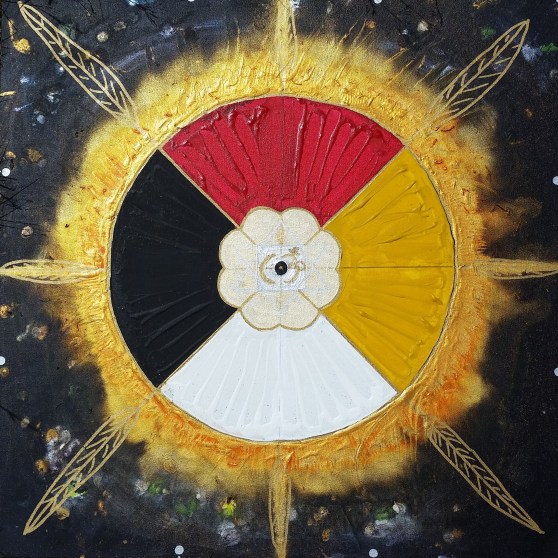
I have found this framework helpful for my own return and I have felt fellowship with these lost souls I have been working with. Reading Houston’s introduction, my mind returned to that rocky outcropping where Te Aroha clings to the cliff, serving as a guidepost for those who have died and transition on to another world. The end of my life in New Zealand really was a kind of death for me, while I am living here in the Northwest, I am still waiting in some ways to be reborn, to find out who I will be and what my life will be like here. The Northwest is the boundary between the physical West and the spiritual North on the medicine wheel. This brings me to the other major project I have been working on, co-authoring a book with my friend and Brother Joseph Rael (Joseph likes to think of us as verbs, rather than nouns, thus “Joseph-ing”), whose Tiwa name is Tsluu-teh-koh-ay (Beautiful Painted Arrow).

20141019_141911

Joseph Rael (Beautiful Painted Arrow)

I met Joseph in October of 2014 and he and I have met in person a few times and been talking on the phone and exchanging letters for work on our book, which we are calling Becoming Your Own Medicine. I have thoroughly enjoyed working with Joseph. Not only does he make me ponder spiritual questions, he is really fun to work with and I always laugh with him. We are getting to the point of doing some editing work on the manuscript for the book and it is very much my own personal journey, my own hero’s journey as much as it is about Joseph’s teachings. Of course I have been reading and re-reading Joseph’s books and he just re-released a new version of his classic, Being & Vibration: Entering the New World. Hopefully the hero’s journey book and Becoming Your Own Medicine will be released in 2016/2017.
20150621_113254 (2)

In addition to my work with veterans and my collaboration with Joseph, I have been doing some deep study of various topics and authors. 2014 was largely reading Henry Corbin and Tom Cheetham’s works on esoteric Islam and Sufism. This also included a lot of the well-known poets, Rumi and Hafiz, but also one of my favourite books of that time, The Unveiling of Secrets: Diary of a Sufi Master by Ruzbihan Baqli. In 2015, I met Richard Miller, who was kind enough to spend some time talking about iRest & yoga Nidra, when he was up here for a conference. This year has been defined by reading a lot about Hinduism and Kashmiri Shaivism with the principle of non-duality being a primary focus, as well as the concept of spanda, the divine creative pulsation which corresponds so well to Joseph Rael’s teachings about reality. These books have primarily been by Jaideva Singh and Mark S. G. Dyczkowski.

The Unveiling of Secrets

Another topic that has been of interest to me is understanding the foundation of American democracy and seeing how we have lost touch with that and how we can re-invigorate the sense of non-denominational spirituality and human rights that were foundational for our country. I think this has been a kind of re-acquaintance with the U.S. for me. Parker Palmer’s Healing the Heart of Democracy: The Courage to Create a Politics Worthy of the Human Spirit, Jacob Needleman’s The American Soul: Rediscovering the Wisdom of the Founders, Steven Hermann’s two books Spiritual Democracy: The Wisdom of Early American Visionaries for the Journey Forward and Walt Whitman: Shamanism, Spiritual Democracy, and the World Soul have helped me to come to a re-imagining of the idea of America.
George Kirazian

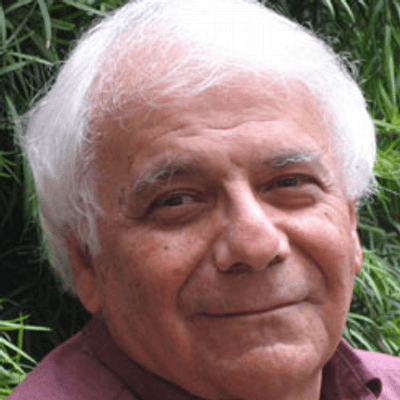
George Kirazian

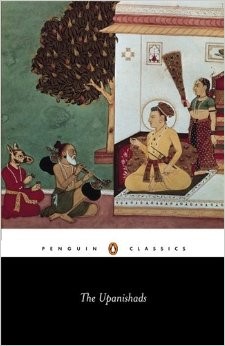
Another highpoint of the year was working with George Kirazian on an interview with him about his friendship with translator Juan Mascaró, whose renderings of The Upanishads, The Bhagavad Gita, and The Dhammapada are still readily available in the Penguin Classics series.

Juan Mascaro

Juan MascaróUpanishads


In addition to my own writing, I look forward to continued collaboration with Joseph Rael, as well as some other friends of mine: Gary Orr, Hilton Kopp, and Sandy Carter. I met Gary and Hilton during my time down under and we have some great ideas – stay tuned…I met Sandy when she did a book review of Re-humanizing Medicine for the Courage & Renewal blog. She and I put together a conference proposal on Joy in Work, which was turned down, but has led to our long-distance collaboration on a project on this same topic, which I have been calling, A Work of Joy. This examines finding joy in work at a time when there are high rates of stress and burnout in health care.

20151219_181524 (2)

At the VA, I have a couple projects I have been working on that are specific to the VA. Along with Nicola De Paul, Craig Santerre, and Jenny Salmon, we have been developing a Whole Health class that provides holistic support and inspiration to veterans who are interested in taking a more active role in their health care. I have also been working with Laura Merritt on an adaptation of Re-humanizing Medicine for VA staff, which we have been calling, Caring for Self. It is great to be able to apply some of the ideas I developed in my book to self-care for staff as well as for patients.

I’ll close in returning to what Houston writes in the introduction to her book, The Search for the Beloved: Journeys in Mythology & Sacred Psychology.

“The premise of this book is that we must call our spirits home, lest we forsake our origins, and lose hope, meaning, health, and the ability to serve and participate in the greatest challenge that history has ever known…We are all being asked, both singularly and collectively, to cross a bridge and to meet halfway a rising reality, a sacred reality. Thus the need for training in journeys into the Sacred,” (viii).

Houston develops this concept of Sacred Psychology and training in journeys into the Sacred. I feel that this is also the focus of my work in the past two years. My understanding of the hero’s journey class is that it is a form of initiation rite to help veterans move from a state of being of war to a state of being of peace in order to make the transition back into the civilian world. One of the primary ways of doing this is a kind of spiritual awakening that accompanies a shift from a materialism-based separation to a spiritual-based sense of connection and even oneness with others. I have also come to understand my work with Joseph as being a guidebook on how to become a visionary in order to move from war to peace and again to move from a state of isolated separation (which is a state of conflict) to a state of Unity as expressions of the Vast Self. This requires dying to the old self and being reborn, continuously.
Hero's Journey Reflection

20151220_132526

Here is how Joseph ends his book, The House of Shattering Light:

The House of Shattering Light

Each of us is a ceremony, a vibration of the All-That-Is. We ourselves are the Vast Self, that One Actor in the universe, who creates continually in all moments. We are the Vast Self playing in creation as creatures, as individuals.

In the experiences of my life, through loss and transformation, ceremony and story, I learned how to emerge continually from the individual self that is Joseph Earl Head Rael into the Vast Self again. In the kiva, in the sweat lodge, in the sun dances and long dances. I have learned to die to myself in order to know the Self, dying from this House of Shattering Light into states of ecstasy, and then returning again, that the Vast Self might drink continually of the light that It is creating.

To know ourselves as the Vast Self playing is to be both human and divine. It is for this we all are born, to be mystics, fully alive and dancing, (199-200).

My return to North America and my transition into the second half of my life have brought me to look less for a physical place of home and more for a spiritual, internal place – a place that also includes many places in the world as well as the whole world, or as Houston writes, “a citizen of the universe.”
kopacz.tree.2016

July trip up to San Juan Islands

It has been a busy summer with trips and visits and taking every opportunity to present on my book. I’ll work on an update on my current writing projects, but for now I’ll just share some of the photographs I’ve taken lately.

DSCN1407

We had family visit in July and we went up to San Juan island and spent some time at Lime Kiln State Park, which is supposedly one of the best land-based sites to whale watch. Sure enough, we saw (what some of the more seasoned whale watchers – the ones with big cameras identified as) a Minke Whale. It cruised back and forth a few times and I was able to get a photo of its dorsal fin.

DSCN1371 (2)

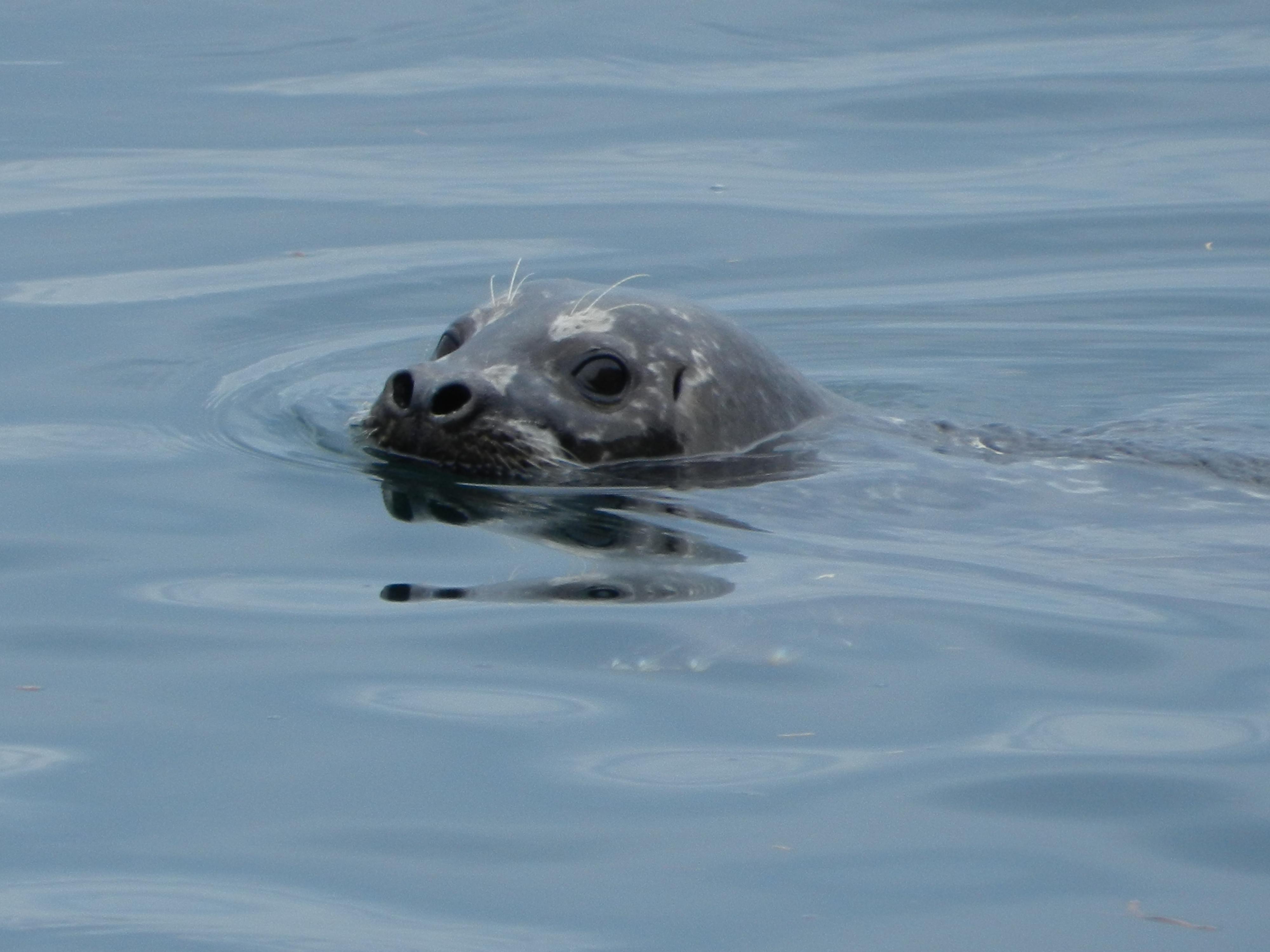
There was also a seal or sea lion cruising around for a while.

DSCN1355

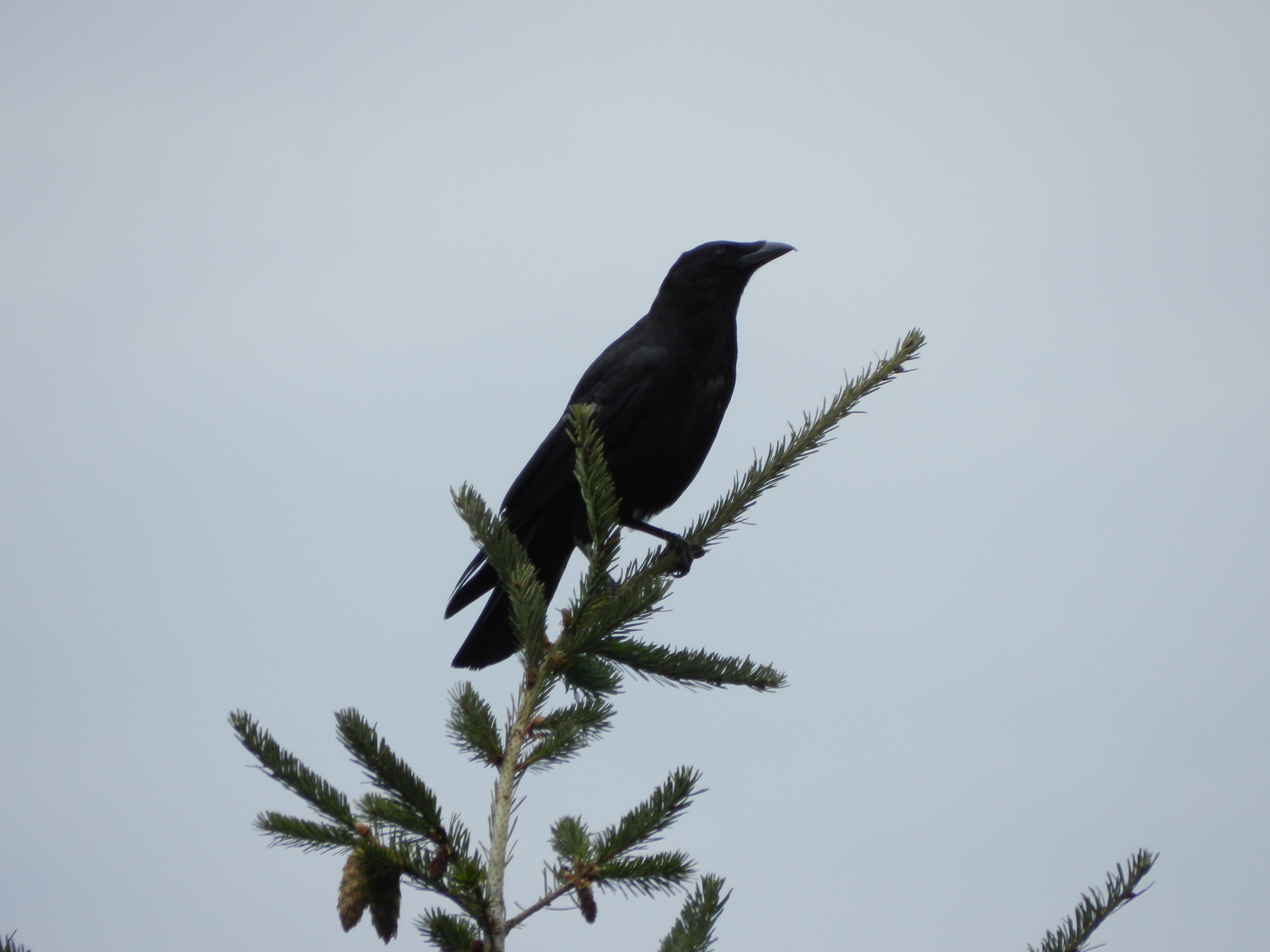
And here is a nice crow who was hanging around when we first arrived.

DSCN1345 - Copy

As I was walking around, I saw this great face in an old tree, I took it to be the spirit of this place and was grateful to have seen it.

DSCN1446

Lastly, we also made a trip out to Sun Lakes in Central Washington, which is quite near some of the wild fires that are currently burning out there. This is a photo of Dry Falls, which was once a huge waterfall, but now is quite barren.

DSCN1526

The fires in Washington are very serious the past couple weeks. Three fire fighters died this past week. Two hundred soldiers have been called up from Joint Base Lewis-McCord. Calls have gone out to Canada, Australia and New Zealand for assistance in fighting the fires. The state even made an unusual request for volunteers. From Seattle we can’t see the Cascades today as the visibility is hazy. No rain in the forecast for this week so far…

It has definitely been a very dry and hot summer here.

We just made a trip down to LA and New Mexico and saw a wild fire start in LA while we were visiting friends. It was small and helicopters responded quickly, dropping water on the fire. After that trip down to the Southwest, you really get an appreciation for the ongoing drought and water issues in large parts of the country.

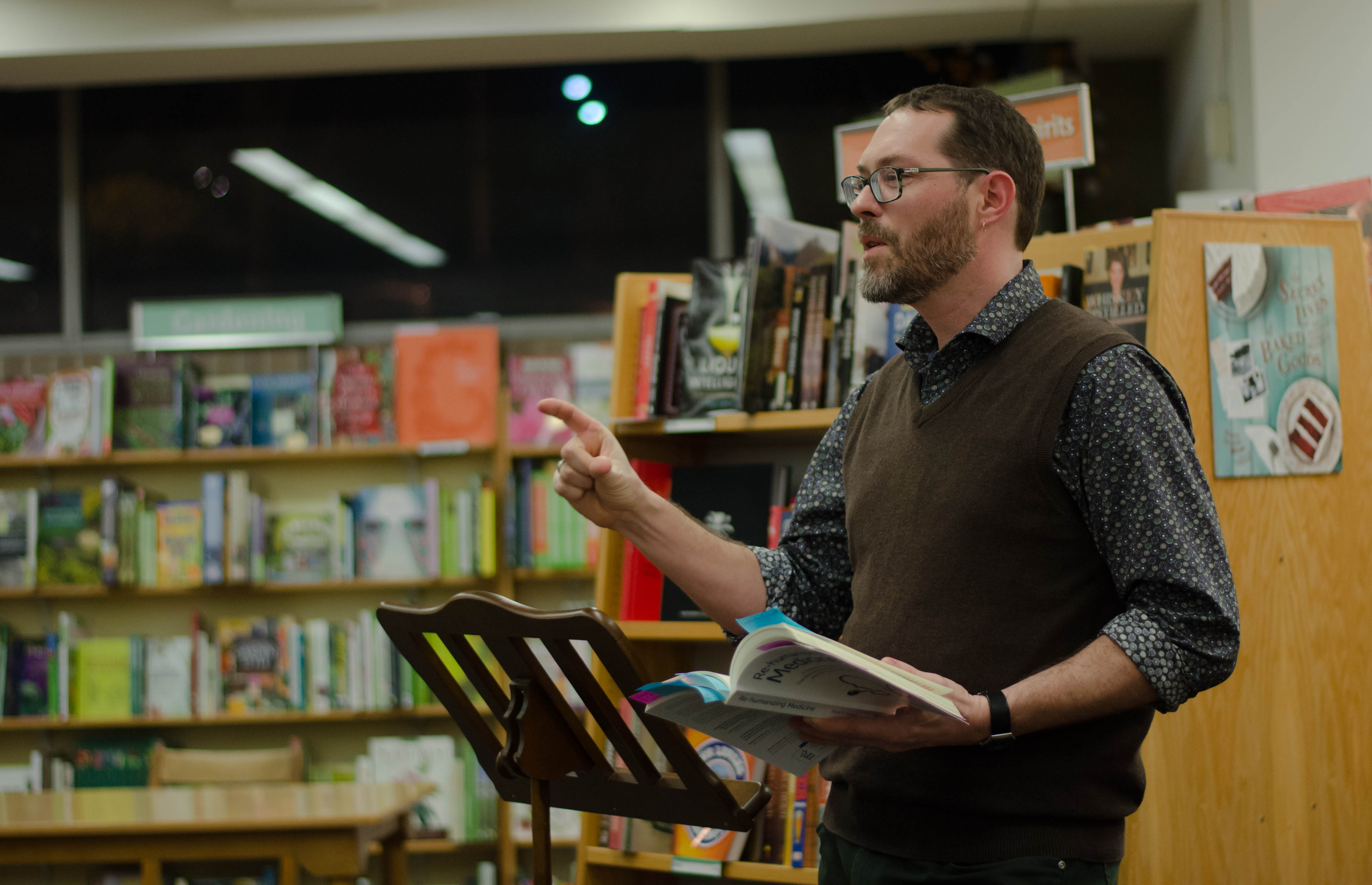
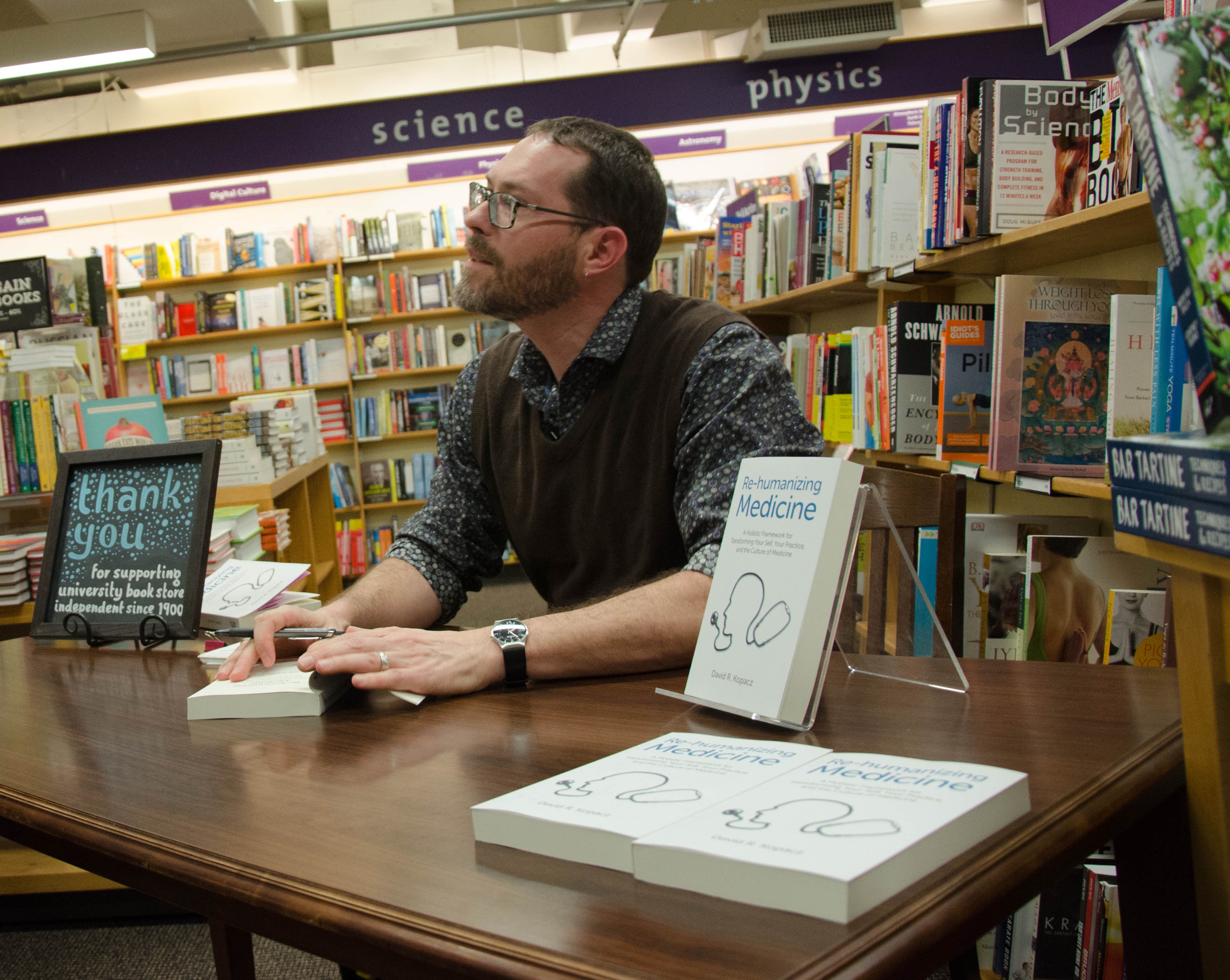
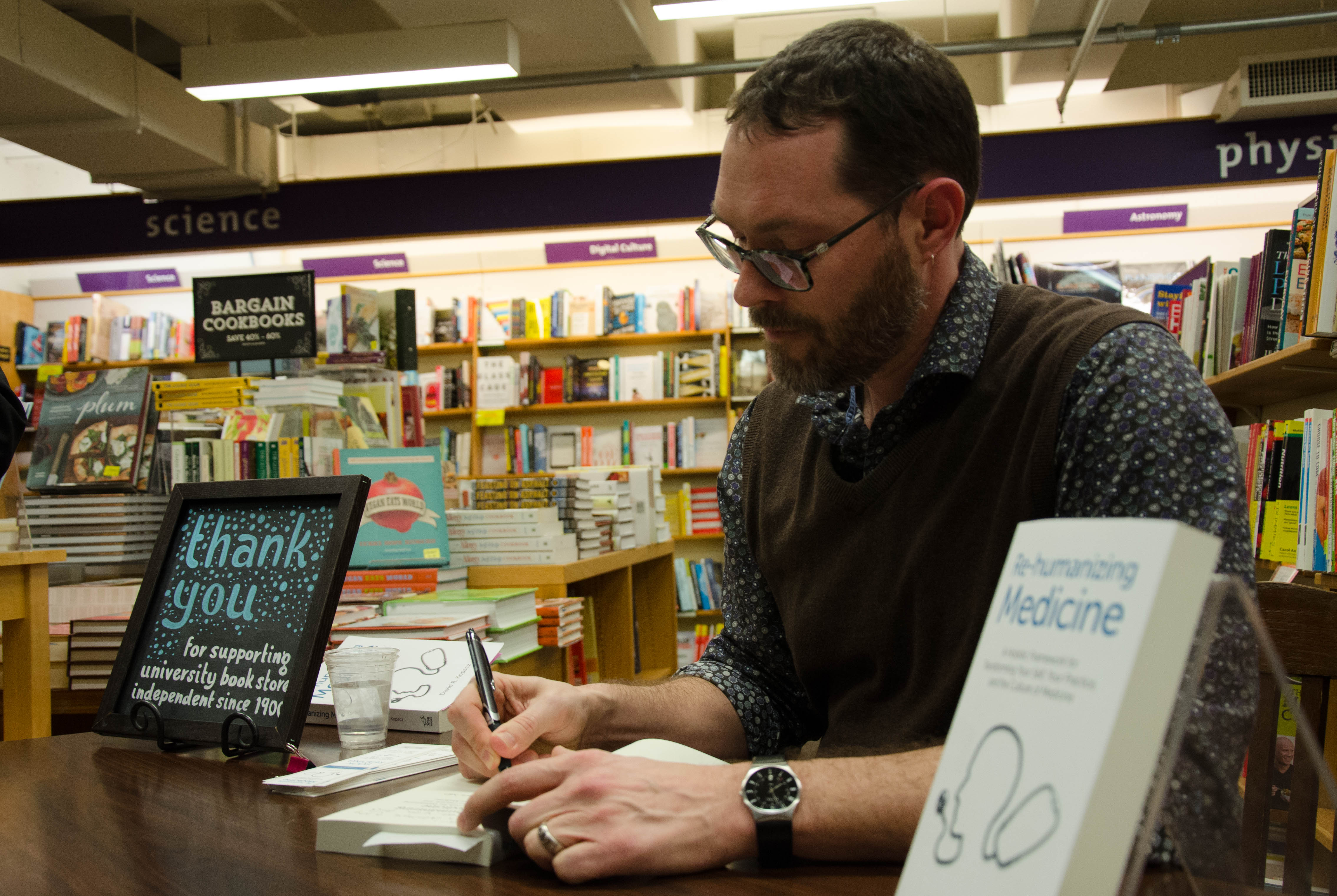
Some Photos from the Book Talk at University of Washington Bookstore, January 8, 2015

Photos courtesy of Salin Sriudomporn

Photo courtesy of Salin Sriudomporn

Photo courtesy of Salin Sriudomporn

Photo courtesy of Salin Sriudomporn

Photo courtesy of Salin Sriudomporn

Photo courtesy of Salin Sriudomporn

Photo courtesy of Salin Sriudomporn

Photo courtesy of Salin Sriudomporn

Photo courtesy of Salin Sriudomporn

Photo courtesy of Salin Sriudomporn

Photo courtesy of Salin Sriudomporn

Photo courtesy of Salin Sriudomporn

Photo courtesy of Salin Sriudomporn

Photo courtesy of Salin Sriudomporn

Photo courtesy of Salin Sriudomporn

Photo courtesy of Salin Sriudomporn

Photo courtesy of Salin Sriudomporn

Photo courtesy of Salin Sriudomporn

Photo courtesy of Salin Sriudomporn

Photo courtesy of Salin Sriudomporn

Photo courtesy of Salin Sriudomporn

Photo courtesy of Salin Sriudomporn

Photo courtesy of Salin Sriudomporn


Review of Voices of the Sacred Feminine: Conversations to Re-Shape Our World, by Rev. Dr. Karen Tate

91DmgTw498L[1]

Reverend Dr. Karen Tate’s book Voices of the Sacred Feminine: Conversations to Re-Shape Our World, brings together interviews from her, “Voices of the Sacred Feminine Radio Show.” It includes transcripts from such notables as Jean Shinoda Bolen, Noam Chomsky, Riane Eisler, Matthew Fox, and Starhawk. The book includes 41 interviews, divided into five parts, so there is something for everyone in this book as it includes a broad range of scholars, activists, thinkers, creators and writers.

Part I is “Sacred Feminine. Deity, Archetype and Ideal.” This section examines devotional practices with specific goddesses, such as Persephone, Kali, Mary Magdalene, and the Virgin Mary.

Part II is “Embracing the Sacred Feminine. Ritual and Healing.” This section looks at themes such as altered consciousness, multiculturalism, equality and healing.

Part III is called “Sacred Feminine Values – Alternatives to Patriarchy. Politics and Social Change.” This section is quite interesting with Noam Chomsky’s discussion of “Feminism, Patriarchy and Religion;” Riane Eisler’s “The Essence of Good Business: Companies that Care;” and Jean Shinoda Bolen’s “Antidote to Terrorism.”

Part IV is “Rebirthing the Sacred Feminine. Sacred Activism,” which takes on topics like women in the role of the priesthood, changing the masculine pronoun language of religion’s talk of God, and Matthew Fox’s “Cosmic Christ and the New Humanity.”

Part V is a memorial to the late Layne Redmond.

In the introduction, Reverend Dr. Tate points out the imbalance in the United States that 52% of the population are women, but less than 20% of leadership positions in politics, academia, business and religious institutions are held by women. This creates a gender-biased imbalance, not only in terms of individuals, but also in a lack of representation of the feminine in the creation of cultural values and society. She writes that the dominant patriarchy “stands on four legs of a stool: racism, sexism, environmental and cultural exploitation,” (9) and she sees the Divine Feminine as a “great equalizer” to correct these imbalances.

There are a number of reasons why I chose to review this book. My own work my book, Re-humanizing Medicine: A Holistic Framework for Transforming Your Self, Your Practice, and the Culture of Medicine, draws on a re-valuing of many of the traditional feminine values in medicine, connection, compassion, caring, healing, nurturance, and strengthening relationships. I call for a compassion revolution and a counter-curriculum. The compassion revolution is similar to what Riane Eisler speaks her new book, The Real Wealth of Nations: Creating a Caring Economy in her talk, “The Essence of Good Business: Companies that Care.”

51j79o4avzL[1]

She says that “Ultimately, the real wealth of a nation lies in the quality of its human and natural capital. I should add here that an investment in human capital is an investment in human beings,” (224). A large part of the argument for why contemporary medicine is so dehumanizing is the economic argument, but Eisler argues that caring businesses create healthier, more committed and more productive employees – so the compassion revolution in health care may result not just in better, more human care, but also in more economically viable and sustainable care (sustainably economically, but also emotionally for staff). Paul Spiegelman and Britt Berrett make this argument in their book, Patients Come Second: Leading Change by Changing the Way You Lead.

Rev. Dr. Tate writes that we “start by taking responsibility for our own educations,” (10). This is echoes my call for a counter-curriculum within medicine in health care, that in addition to learning the technical aspects of our trades, we must also take ethical and moral responsibility for maintaining and growing our humanity in the difficult setting in which we practice. While much of health care reform calls for external mandates and incentives, I call for individuals to take responsibility for their Continuing Human Education (CHE) as well as their Continuing Medical Education (CME).

Dr. Jean Shinoda Bolen has written such influential books as, The Tao of Psychology, Goddesses in Everywoman and Gods in Everyman, and her contribution to anthology is called, “Antidote to Terrorism.” I found this quite interesting given my recent work with Veterans that I discuss in a companion blog post to this one. She says that “the feminine principle expressed in circles and the masculine principle of hierarchy must come into balance,” (226). Just as the hero’s or heroine’s journey can be viewed as a circle, the “intention to be in a circle with a spiritual center invites the invisible world of spirit or soul to be in the center of the circle and in the center of the psyche of each person in the circle,” (228). She states that a “soldier is taught to kill, which is also what a terrorist is taught. These are not lessons maternal women want their sons to learn,” (228). Furthermore, she points out that the “Mother’s Day Proclamation, written by Julia Ward Howe in 1870, was a call to mothers to gather together to end wars, so that their sons will not be taught to main or kill the sons of other mothers,” (228). I find these observations particularly relevant in regards to the step of the hero’s journey, the inner and outer union of masculine and feminine, as they show the imbalance of a lack of feminine values and influence within the military, within the individual returning Veteran, as well as, it could be argued, within the society that the Veterans return to.

51yyQrReZaL[1]

Let’s now look at Matthew Fox’s “Cosmic Christ and the New Humanity.” He describes the Cosmic Christ (a term that goes back to Teilhard de Chardin) as divine presence and the holiness of all being. The “New Humanity” is the creation of the capacity for mysticism, which he defines as “multiple experiences of unity,” “our unitive experiences – when you feel at one with being, one with others, one with yourself, one with God,” (312). Fox says that a healthy community for New Humanity does two things: “it turns out lovers – it turns out mystics, the mystic in every person,” and “secondly, it turns out prophets – that is to say spiritual warriors. The mystic says yes, the prophet says no. The prophet…interferes with that which is interfering with the glory, the sacredness of life,” (315). This focus on mysticism and the ability to say yes to the human and no to the dehumanizing also has relevance for my book, which seeks to develop the spiritual capability of health care providers in order to care for the whole person of the patient, which includes the spiritual dimension.

51byu6s5eGL[1]

In closing, there are a lot of different perspectives in Rev. Dr. Karen Tate’s Voices of the Sacred Feminine and there are many topical discussions not just for women, but for all human beings. The book aims to correct the imbalance in our culture and society of the domination of masculine values and the lack of equal representation of feminine values. What we worship and honor in religion and spirituality is a reflection of our behaviors and actions in our mundane lives. In attending to the Sacred Feminine, Rev. Dr. Tate does present many ideas that make us think about our current societal structures and values and these conversations do have the power to re-shape our world.