The Great American Dissatisfaction/Dream

On returning from a trip back to the US, I have several observations about the country and myself. I was struck by the sheer material abundance of the place and the feeling of dissatisfaction and lack in the people and myself. The solutions for this problem of dissatisfaction are generally material. Yet these material solutions do not fulfill the need or satisfy the dissatisfaction.

What is the American dream? Maybe that gives a clue to the dissatisfaction. It seems that that dream is of acquisition and/or improvement. The desire to “make things better” seems to be very American, and yet I am beginning to wonder if the impulse to make things better comes from an inability or difficulty in accepting what is. One often hears of “American ingenuity” as a source of innovation. At what point does change become a trap rather than an ongoing adaptation to the environment? I used to be perfectly happy with a razor that had two blades, but then it became harder to get refills for it, so I moved up to the new triple blade, and then it became more difficult to get refills for that, so I tried the quadruple blade, it seemed absurd, but I could no longer find refills for the triple blade. Now I just bought a quintuple blade razor and I feel manipulated by the razor blade companies.

It is instructive to look at the dissatisfaction as the flip side of the dream. This is one principle I feel that I have gained from living abroad for a year, that every culture creates itself according to its values and that the drawbacks or blind-spots of a culture are the shadow of its strengths. In this way it is not so unusual to examine strengths and weaknesses in relation to each other. The United States values efficiency, innovation, and the pursuit of happiness. These facets have made the US a very productive, powerful, and creative force in the world, but is there a point where these strengths are over-developed and we have an impersonal society in which people are processed in a quick and efficient manner (I am writing this after having just got through the check-in and security at O’Hare airport where I had to take off anything metal, take everything out of my pockets and go through a “backscatter x-ray” machine for my “safety”). We have bewildering choices for everything from razors, to toothpaste, to blue jeans, and yet are we, as a people, happy or fulfilled?

The dream is for more; the dissatisfaction is that what we have is never enough and that things could always be “better.” On my last day in the US, Borders bookstore was closing. It was very sad to step inside and see the giant signs, “EVERYTHING 40% OFF,” the long lines, and the sense of good deals to be had. We left almost immediately. To me, this felt like the end of an era. While it is true that Borders was a business and it was about acquisition, it was also a place that created a social place that people could meet, that you could check out new books and ideas. Borders wasn’t my favorite place to go for coffee, community, and new ideas, but when I lived in Champaign, I did go there fairly regularly, maybe every few weeks. It was a place to go before or after a movie to talk and browse, or a place to go and read a book, but to also be in a public space that contained the possibility for socialization if I ran into a friend.

The space shuttle also landed for the last time on my last day in the US. This also seems like an end of an era of creativity, dreams, exploration, and innovation. This collective work led to many new scientific discoveries and a common purpose and focus for the country and the world. As the movie, “In The Shadow of the Moon,” showed, it also led to a change in the way that we, as human beings, see and experience the Earth. It was a chance to have an awareness that we are all part of something larger than ourselves and that what happens to one person has the potential to affect everyone.

In the development of ideas, there is often a point where the fullness of the idea is reached and nothing much new is discovered or created (although there can be endless variations on this, like the many new psychiatric medications that are not significantly different than the medications already in use). The idea becomes sterile, the work technical and tedious, and the benefits and results more meager and less gratifying. It seems possible that the United States is at that point. Are we using our creativity, our ingenuity, and our ability to design efficient systems in such a way that the pursuit of our dreams only leads to dissatisfaction? If that is the case, the more energy we put into the pursuit of our dreams, the more unfulfilled and dissatisfied we become. We buy food that does not nourish or gratify, but it is efficiently made, conveniently packaged, and it looks good. We buy bigger and bigger TVs and home theater systems, to give us a more convenient and efficient way to watch movies in isolation from other people. We can download anything we can imagine, and yet our imaginations are unfulfilled.

I have had a couple of recent conversations with people about the Buddhist concept of “the hungry ghost.” What I can remember about these creatures is that they have tiny throats and insatiable appetites; they eat and eat, but are never satisfied or fulfilled. The restless consumption of US society does seem reminiscent of these creatures who only dream of consumption, yet they are never nourished.

Much of the efficiency of American culture seems to neglect nurturance, which is an aspect of fulfillment. For all their conspicuous consumption and discharge of the acquisitive drive, there is an emptiness, dissatisfaction, and persistent hunger in American society. Coming from abroad, the US seems filled with busy people, impatient, in a hurry, irritable, restless, self-absorbed and a little bit like locusts consuming mass quantities of goods and food in a way that is not only not fulfilling, but is also not sustainable.
New Zealand: One year on

It is hard to believe that it has been one year since we moved to New Zealand! So many ups and downs and sideways…  

We arrived back in the US for our first visit back to the Midwest, so we were actually in the US on our one year anniversary of our arrival in New Zealand. It seems fitting that I reflect on the last year at this point.
New Zealand: One year on

The predominant feeling I have about the move is one of gratitude and happiness for having made the leap. It has been an incredibly exciting year, as well as being very challenging, and a year of intense growth and reflection. My life feels so amazingly and irrevocably different from the experience of moving to another country and working there. Even my first job, which in the end, wasn’t the best fit for me, was an incredible learning experience that taught me a lot about the culture and about the public health care system in New Zealand, plus I met a lot of great people. My current job at a psychiatric rehabilitation centre is one of the best jobs I have had in my career and is a place that I can see continuing opportunities for growth.

I feel like I should be able to provide some general statements about my year in New Zealand. I would say that I have a greater appreciation of any culture (US, NZ, and in general) has both strengths and weaknesses. Every culture has different inherent values and once those are understood, the culture makes more sense. US culture values efficiency and consumption, thus banking, shopping, commuting, and work systems run very well, yet the downside is that they can be cold, callous, and impersonal. NZ culture seems to value connection and quality of life, thus relationships, even casual ones, can be more open, nurturing, and personal, however, organizational systems can be disorganized, “unnecessarily” complicated, and inefficient. These are broad generalizations. I can’t say that I have an in-depth understanding of NZ culture(s), but I can say that this appreciation of cultural differences in reference to an organizing value or principle seems true.

I do feel that what I wanted to get out of a move abroad, I have gotten and more so. The process has been uncomfortable and painful at times, but it has also been exciting and rewarding. I feel that I have broadened my view and experience of myself, my practice, and the world, and this is incredibly gratifying. A good decision is one that seems to make more sense as time goes on, and as you live it, and this is how it has been for this move. I do feel that the particular cultural adaptations that New Zealand requires are good challenges for me personally. As my wife and I talk about the future, we really aren’t sure that we know what we will do in 2 years’ time (which is our point of decision for whether we stay in NZ longer, go back to the US, or look at other options), but we both feel that we are where we need to be right now.

Some new artwork

DSCN0212

DSCN0219

DSCN0214

DSCN0222 - Copy

DSCN0227

DSCN0231 - Copy

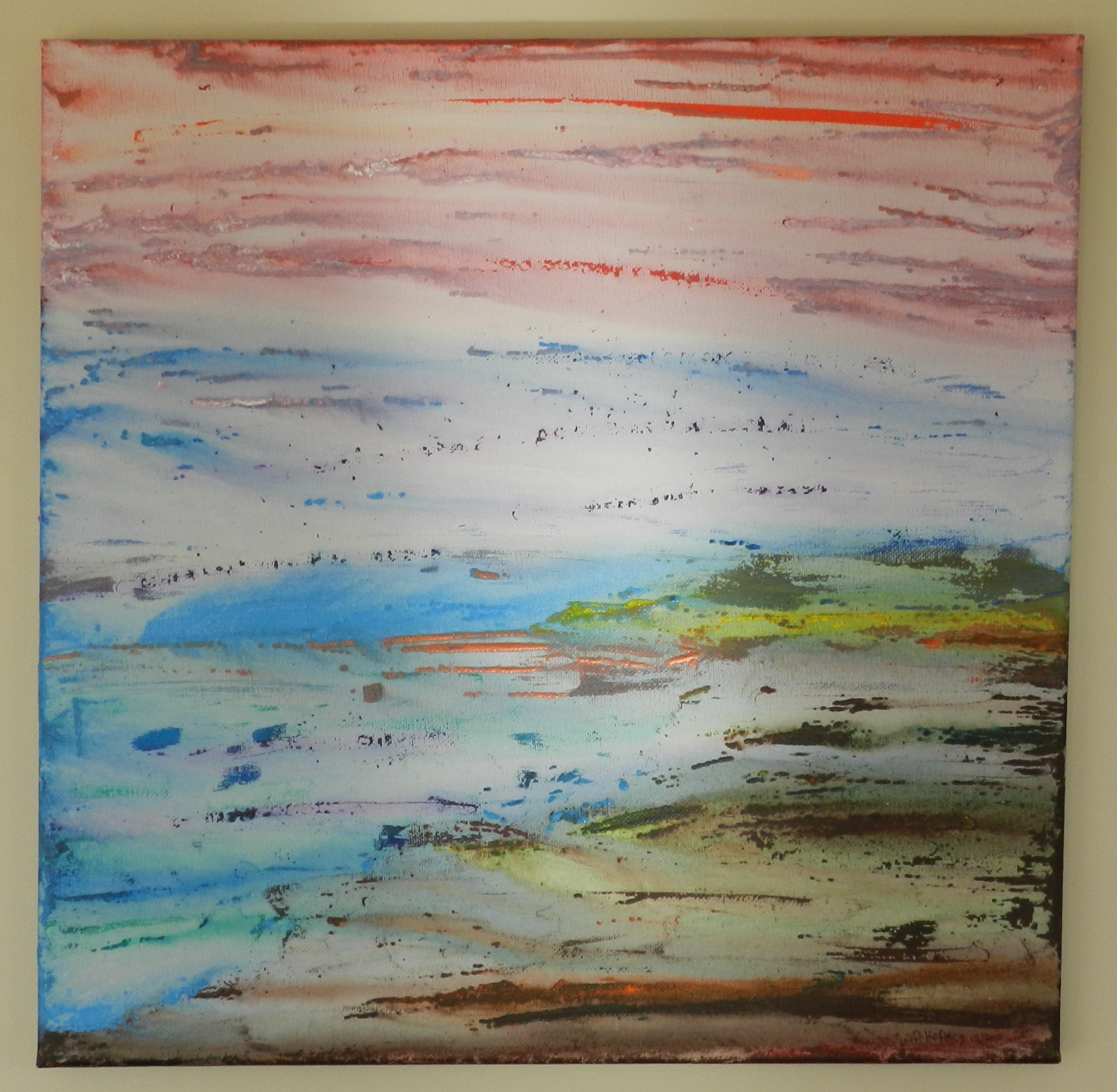
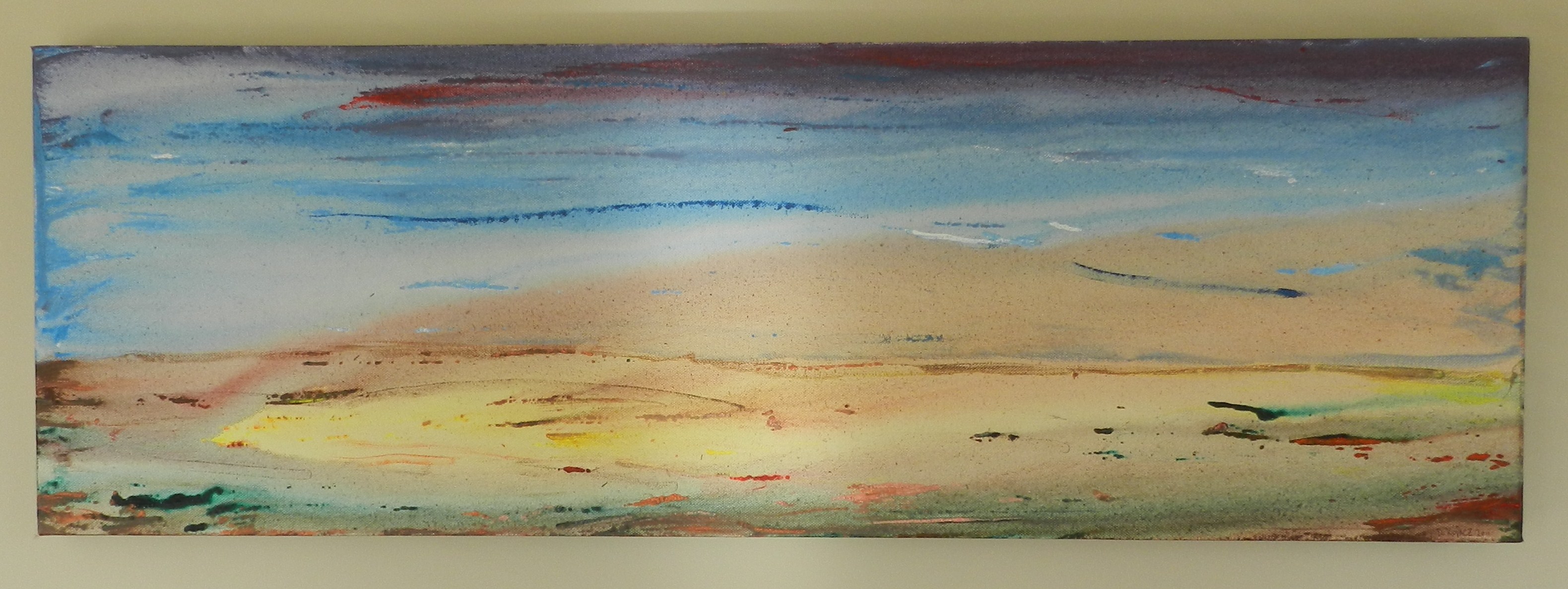
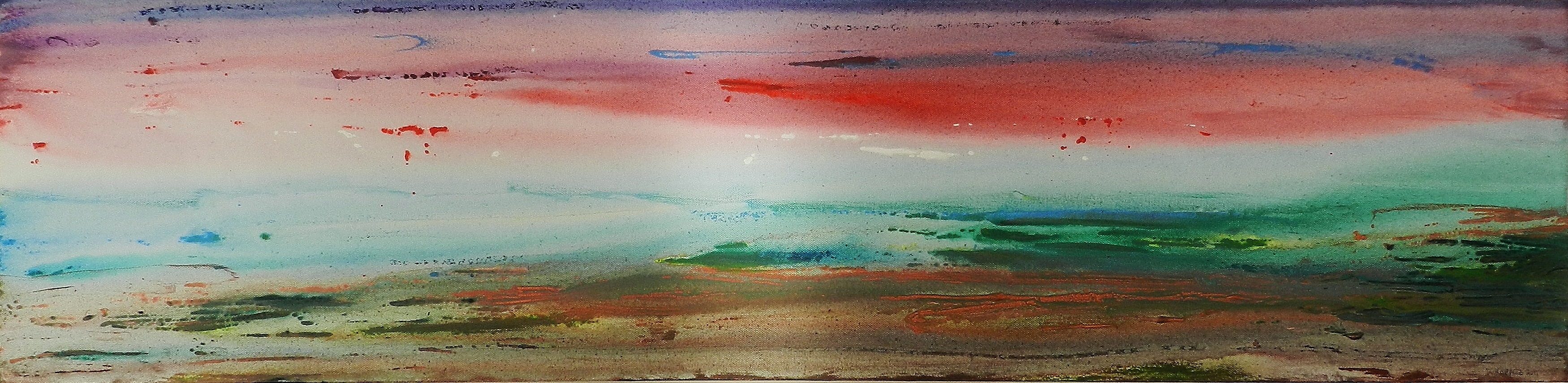
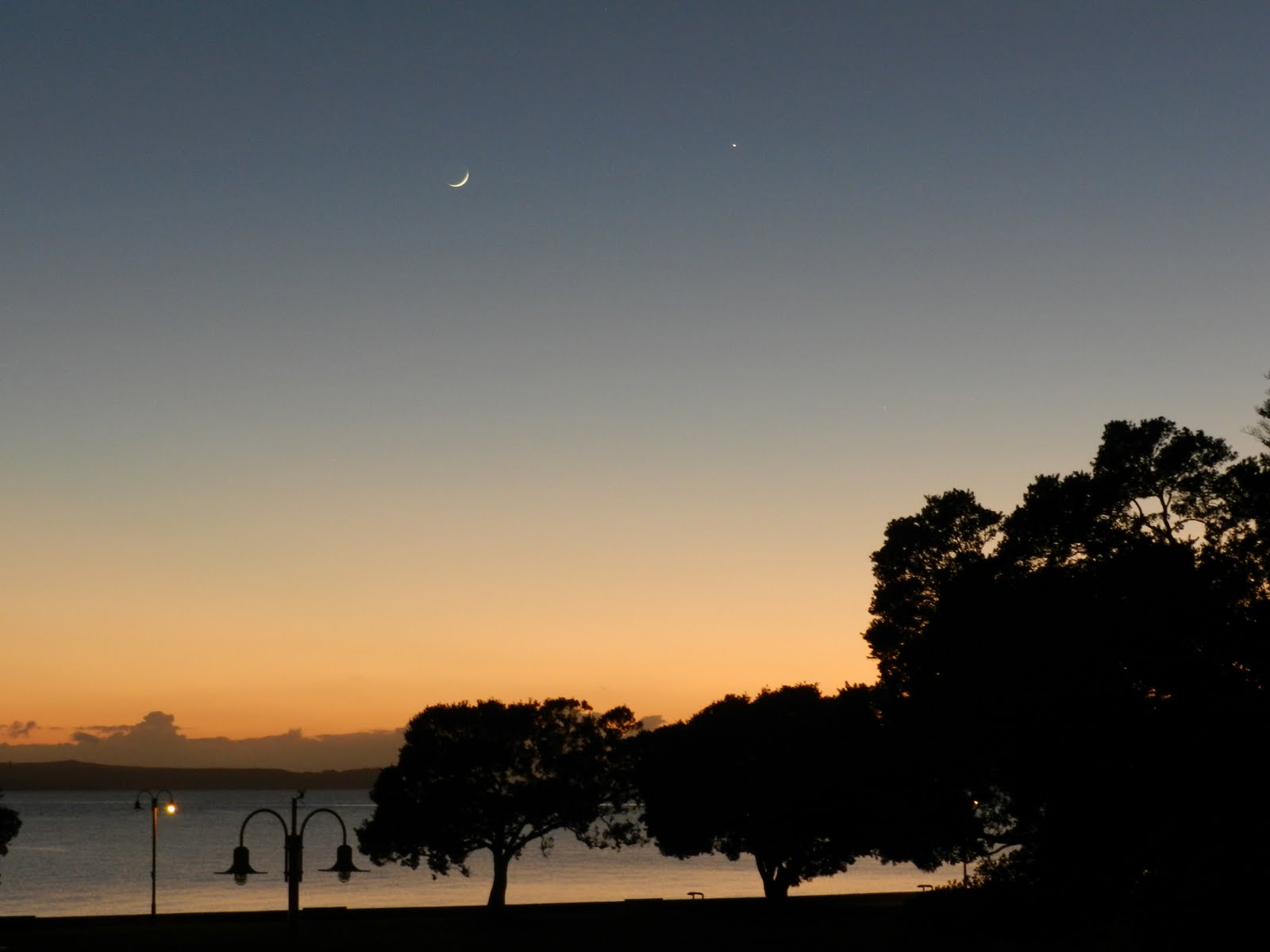
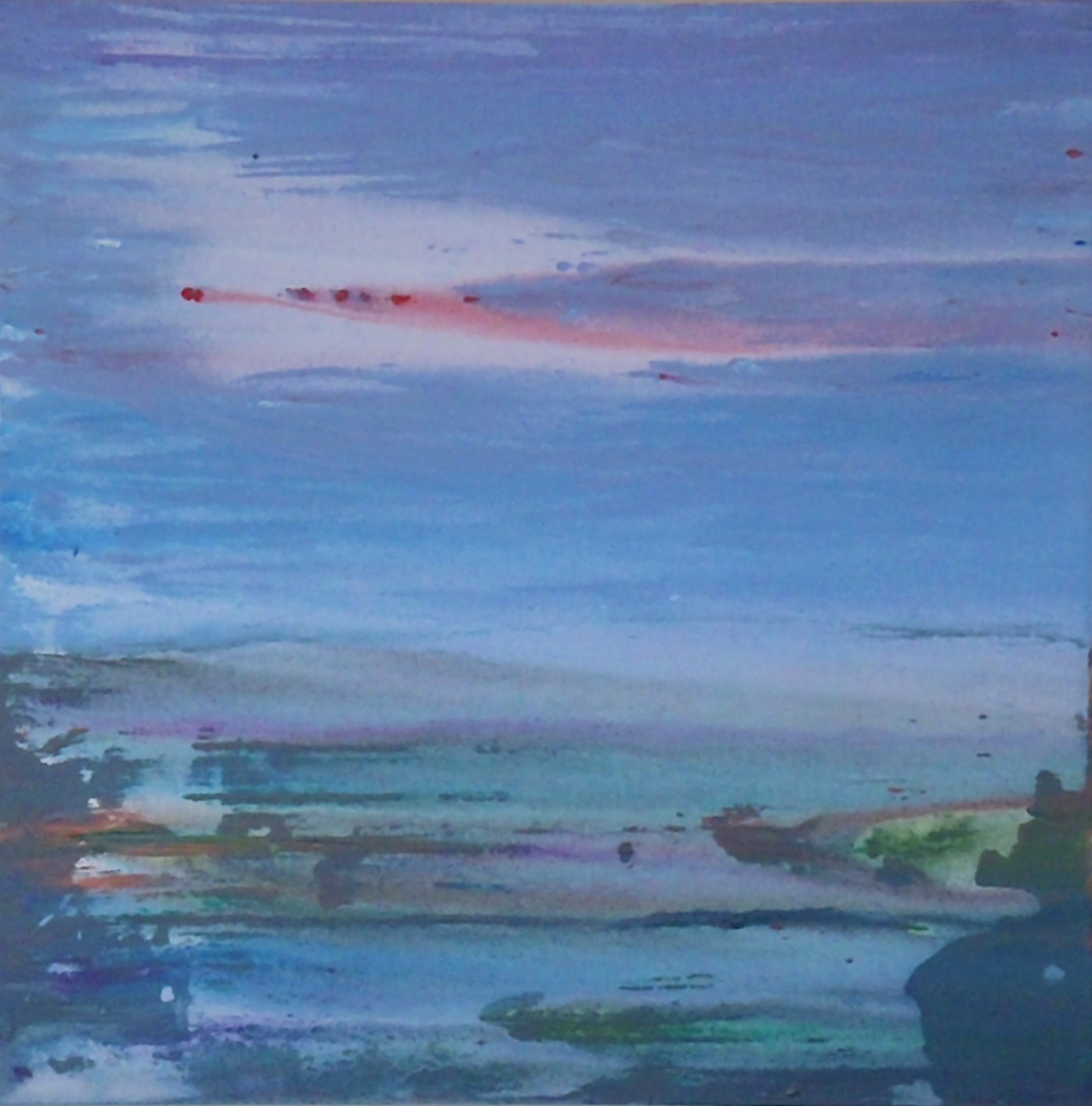
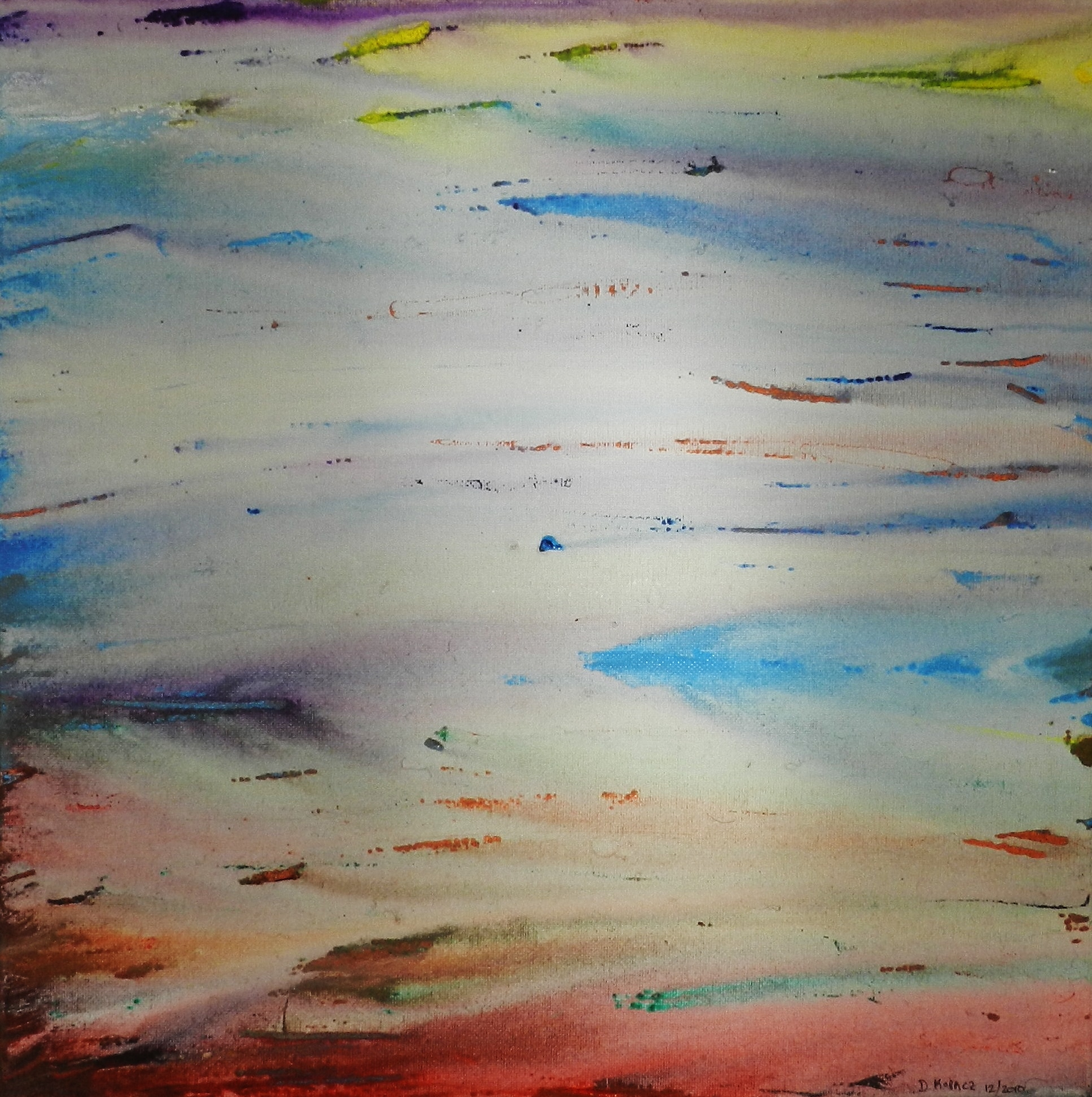
I just put up some new artwork (for more paintings, see my Website) that I have been doing since I’ve come to New Zealand. The style is different, partly due to have a different physical set up (and having to control the amount of paint splatter) and also these paintings seem to have picked up some of the aesthetic of New Zealand. The “abstract landscapes” are made by brushing in colours into the canvas and then turning the canvas on its side and using different intensities of water from a spray bottle to wash away the thickness of the paint. When the canvas is rotated back 90 degrees, they resemble landscapes. I do try to choose the colours to reflect Earth, Sea, and Sky, but the random element is how they combine as I spray the water on them.

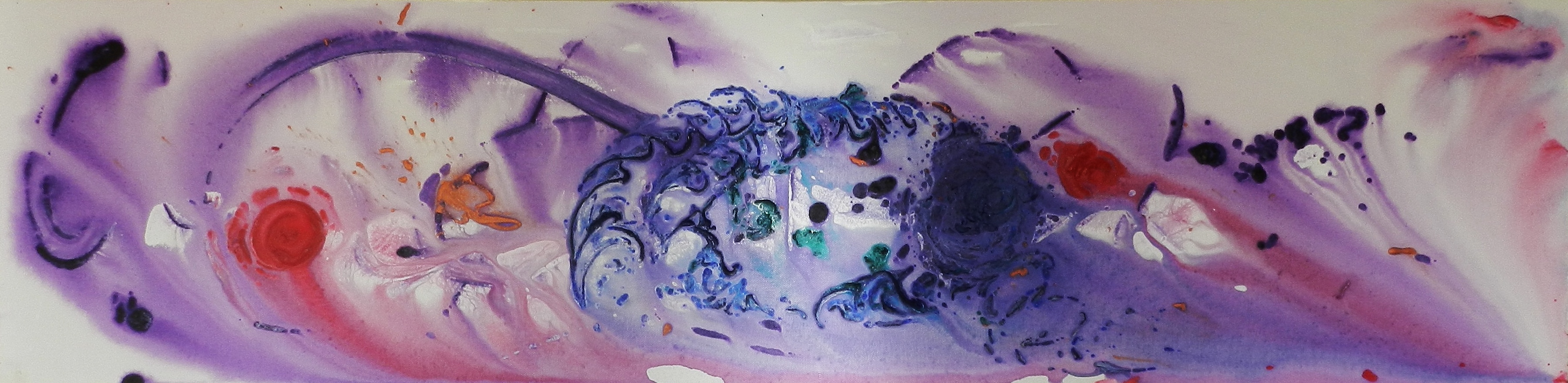
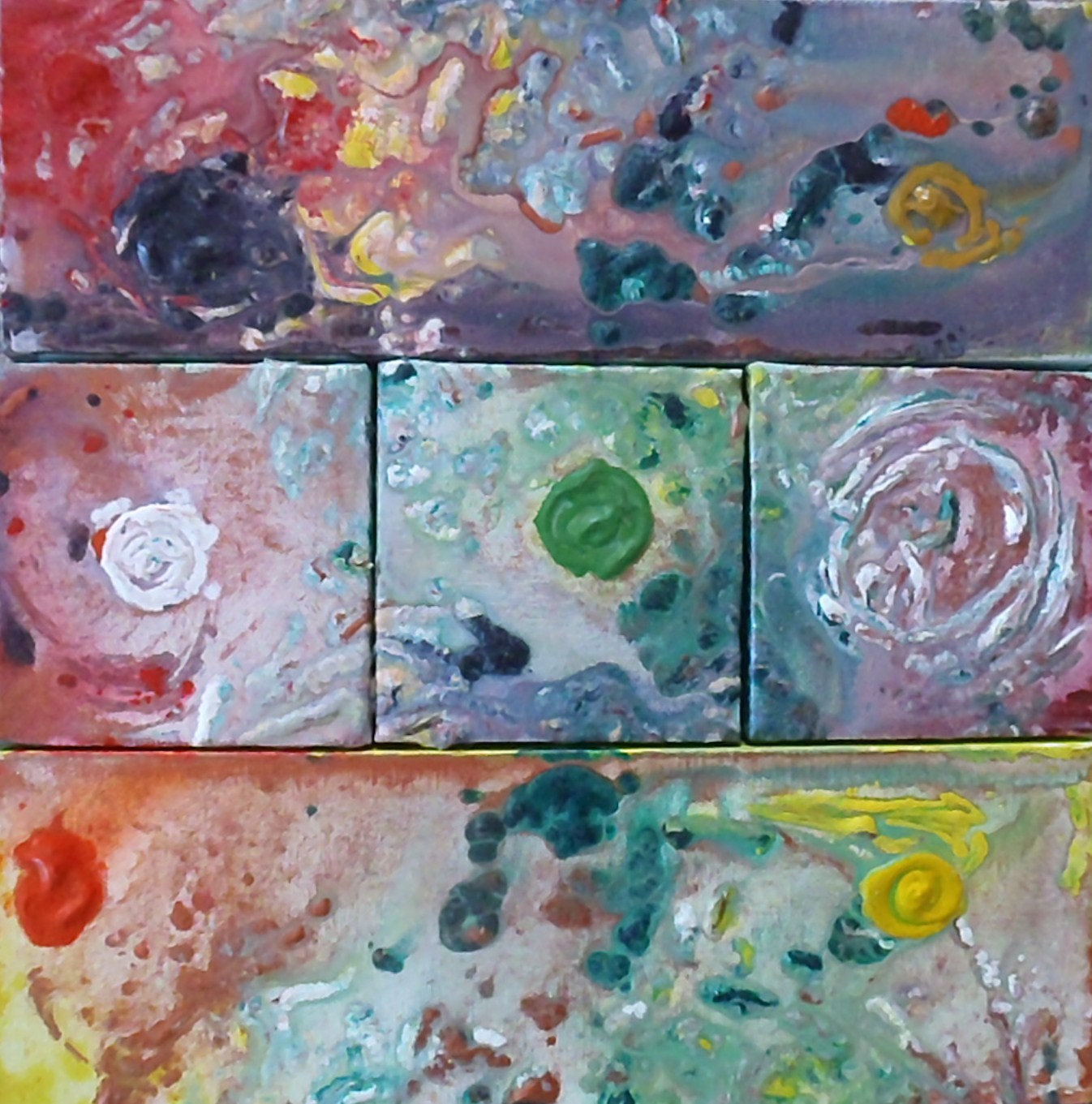
The long, purple painting reminds me of some of the Maori “totem pole” sculptures. I am not sure what they are called, but they remind me of Native American totem poles, in that they have various figures and faces on them. It was made with a similar technique, but not as covered with paint and with less water sprayed on to maintain some of the original paint pattern.

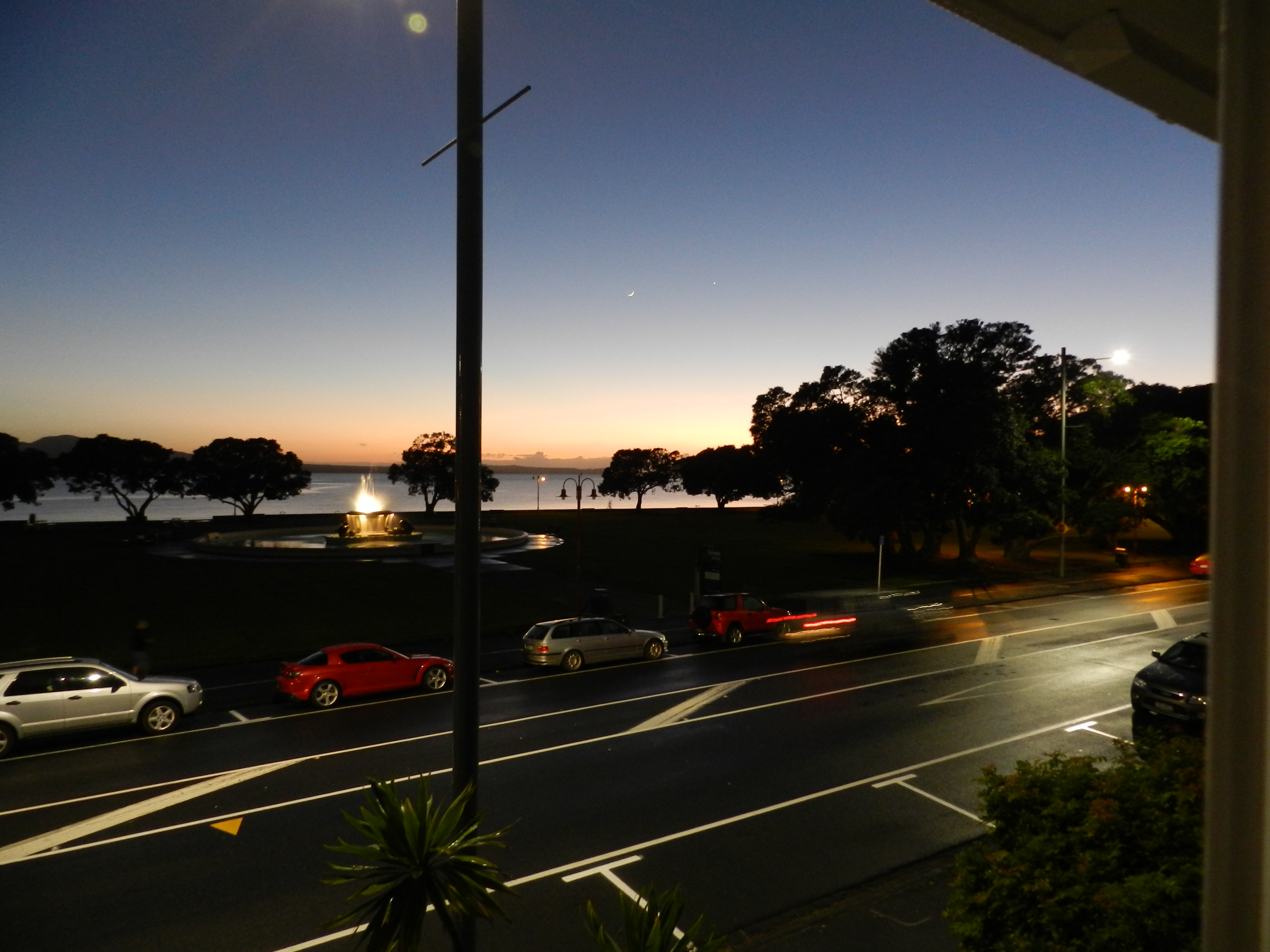
Photograph of sunrise with moon, you can see how this landscape inspires the paintings.

Photograph of sunrise with moon, you can see how this landscape inspires the paintings.

Overall I have been happy with my painting in New Zealand and it is always fun to watch as patterns and techniques evolve!

Some artwork from the first 5 months in New Zealand

Some artwork from the first 5 months in New Zealand

DSCN0206

A Corrective Emotional Experience

I took a recent trip to Hawaii for the American Psychiatric Conference. I hadn’t been to that particular conference in awhile, but I was really glad I went to this one. I met up with some old friends, caught up, and had a generally great time. It was also the first time I had been back in the US since moving to NZ. Hawaii was actually a good entry point back into the US, since it also has somewhat of a Polynesian culture blended with typical US culture and that made the transition from NZ, which also is influenced by Maori and Polynesian culture, back to the States smoother.

A CORRECTIVE EMOTIONAL EXPERIENCE

A CORRECTIVE EMOTIONAL EXPERIENCE

I met up with a friend who I told about my experience of “swimming with the dolphins” in NZ. I had anticipated doing this even before we arrived in NZ, but the experience here wasn’t all mystical communing with nature, but more akin to struggling to keep afloat in cold, choppy water while the crew of the boat alternatively yelled, “swim, swim,” of “dive, dive,” or “come back, come back.” The experience started by being told the water wasn’t that cold, so we didn’t need wetsuits. We then strapped on this strange snorkel gear that I had never worn before. Then we jumped into a big net in the water and the boat took off, plastering my flippers against the net as if I was some strange bug smashed on a windscreen. Then came the yelling and the swimming and the swallowing salt water and trying to figure out how to work the snorkel gear. I never even saw a dolphin while I was in the water, although an English couple I had been talking to earlier, told me that there was a dolphin right by me several times. I joked it probably sensed I was in distress and was trying to figure out if it should rescue me!

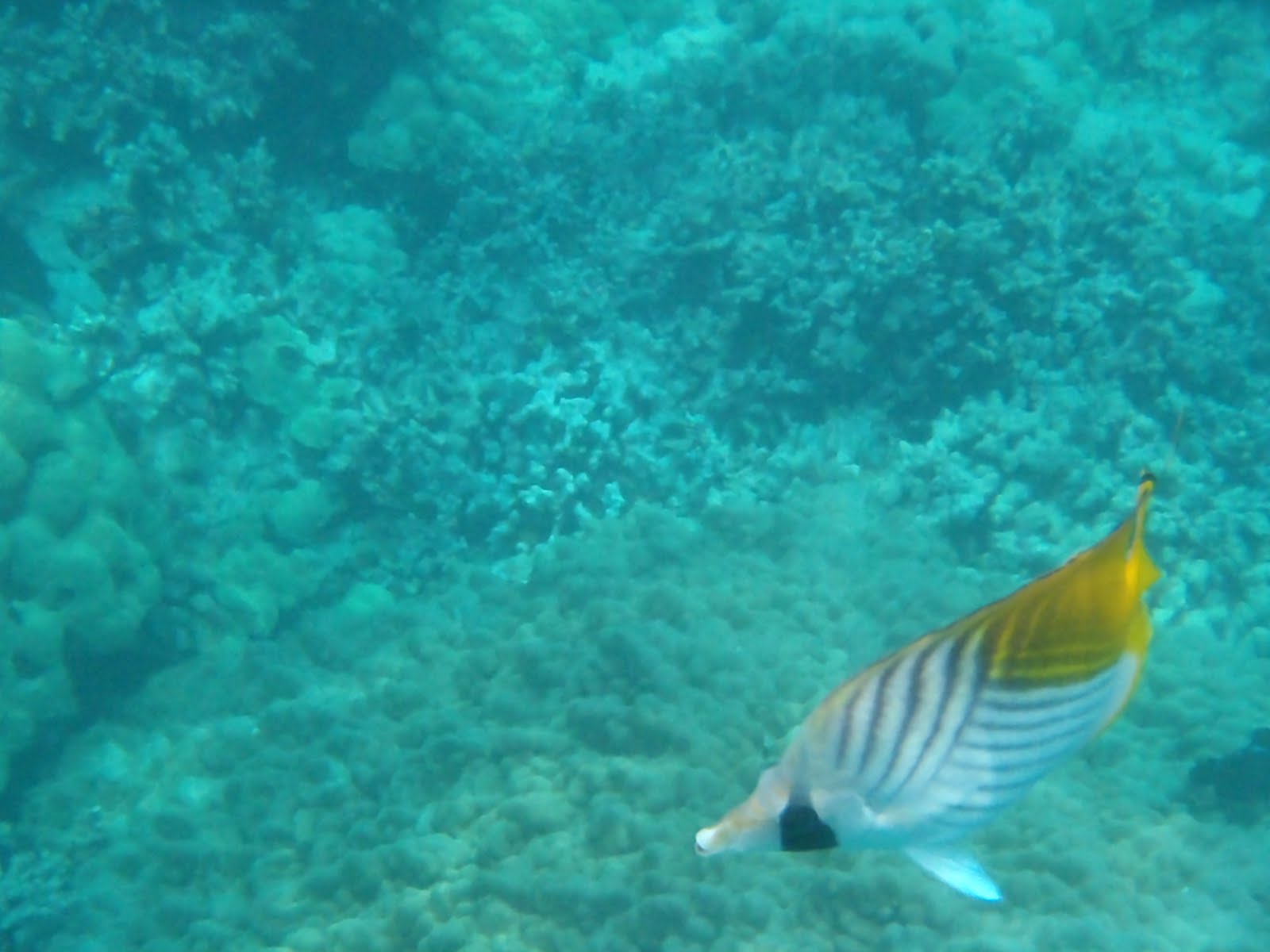
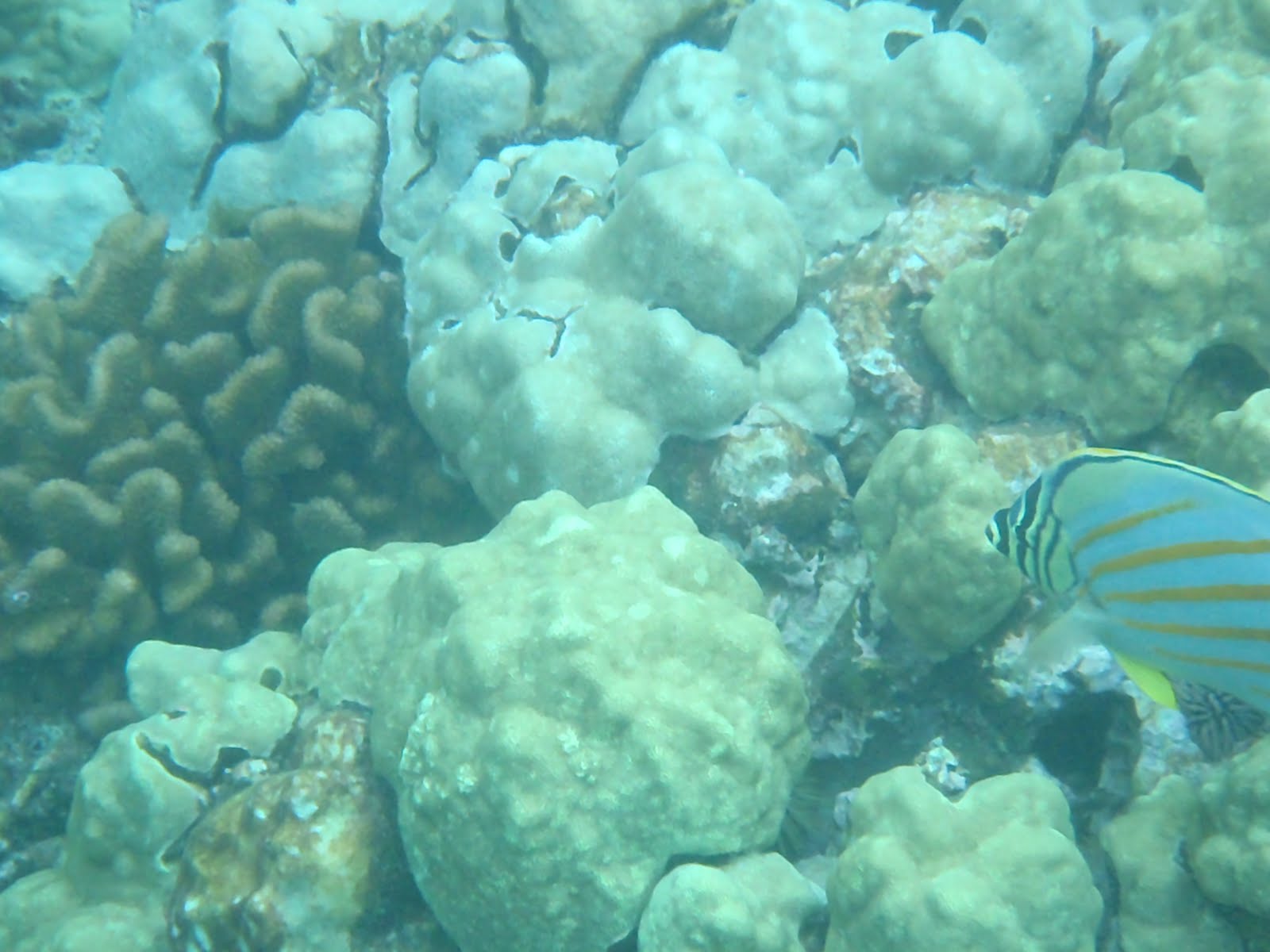
So, 6 months or so later, I went to Hawaii. My friend there said that I definintely needed to have a “corrective emotional experience” with the dolphins and said that she routinely swims with dolphins in several bays not far from her home. So, on a bright, sunny day, with smooth clear water, and a chance to figure out how to work the snorkel gear without some yelling, “swim, die, come back,” at me, I did have a corrective emotional experience. Plus, I got to try out my underwater camera that I had bought in the States, anticipating that I would be spending a lot of time underwater.

A CORRECTIVE EMOTIONAL EXPERIENCE

A CORRECTIVE EMOTIONAL EXPERIENCE

A CORRECTIVE EMOTIONAL EXPERIENCE

A CORRECTIVE EMOTIONAL EXPERIENCE

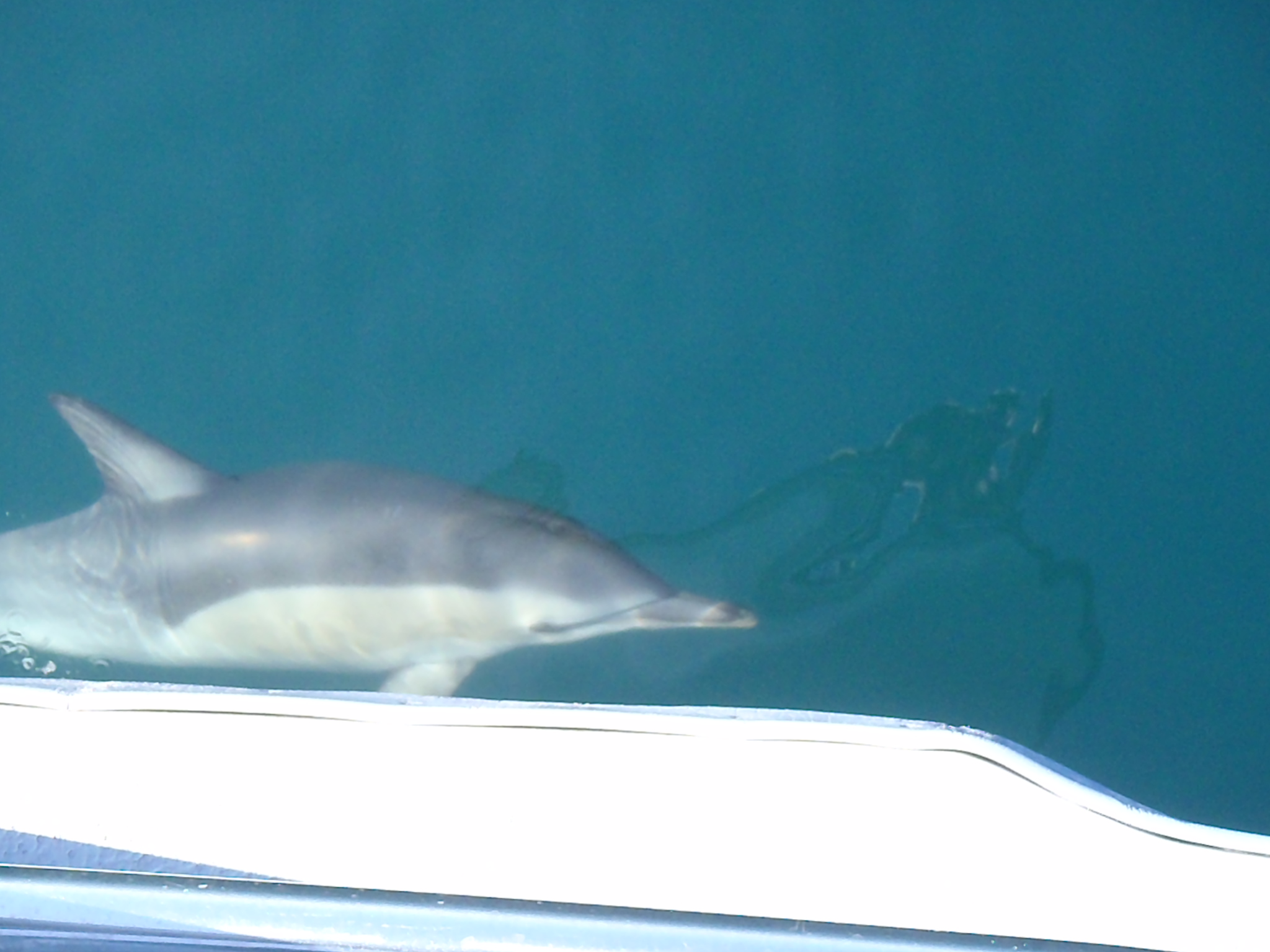
We went swimming in two different bays and saw dolphins in both of them. The second bay, a dolphin came right up and looked at me, my friend said as if it was posing for a picture. Well, I didn’t quite get the picture (as you’ll see), but the image of the dolphin coming right up to me and looking at me was really something else and tell you what, seeing all the beautiful fish while snorkelling was a bonus! Hope you enjoy the photos….Oh, and I got a new camera with a higher power zoom, so I won’t have to say, “see that thing that looks like a tall rock in the rocks?  That is a penguin.” I’ll post those photos soon, once I upload them, but no penguin photos yet, maybe next time we’re out on a cruise in the gulf….

A CORRECTIVE EMOTIONAL EXPERIENCE

A CORRECTIVE EMOTIONAL EXPERIENCE

Full Circle

FULL CIRCLE

I had a really great day today. I am currently at the American Psychiatric Association meeting in Hawaii. I feel like a lot of my professional life has been a critique of the mainstream of psychiatry, whether it has been studying psychotherapy (which according to a lecture today has “always been subversive,” because it challenges people’s understanding of themselves, their relationships, and it challenges the status quo), learning about trauma and bearing witness, or moving outside the confines of psychiatry into holistic medicine. The thing about living a critique is that it can start to get lonely, because I seem to continually question the fitness of the different treatment/personal growth philosophical systems that I put myself in. It is kind of like the dilemma of trying to find a group of people who don’t fit in and who form a community of “misfits.” Looking around at the conference today, I felt that old desire to be part of the group while also finding fault in the limitations of the dominant, evidence-based paradigm. I was slightly envious of the people who seemed to have built something in their lives over time as I compared myself to them. The thing with continually being open to new ideas and practices is that there is a risk of ending up intellectually homeless and unrecognized, another way of saying that I felt outside of the circle. With my recent move to New Zealand, I have faced this dilemma of wanting to fit in, but also wanting to follow my own passion and my own ethics and idealism.

FULL CIRCLE

Yesterday, I had this realization. I won’t bother putting it into words, it would sound incredibly simplistic, anyway, but it was just this felt sense of connection and meaning, even if I wasn’t feeling a clear sense of purpose. That is when I thought about blogging on the topic of coming full circle, which can mean so many things at so many different levels. On this trip, I brought along Maugham’s, The Razor’s Edge, a book I read a lot when I was in college and medical school. In some ways, the book is important and in some ways it is not, what is more important is re-connecting to things that I was interested in the past, and more important than intellectual things I was interested in, it was about connecting to the feeling of who I was when I was younger and what was important to me, including questioning, searching, and idealism. I had this sense of meeting an old friend, only the old friend was my younger self.

Part of what I was going to write about was a critique (or maybe just another chapter) of my article for PrivatePractice.MD, “Say Yes to Private Practice,” that I wrote as I was leaving private practice. I referenced the movie, “Yes Man,” which I just re-watched again when it was on TV. In the movie, Jim Carey’s character turns his life around by saying “yes” to every opportunity that came along. His life opened up and changed and became more rewarding when he said “yes,” and it closed down, became painful, or problematic when he refused to say “yes” to a new opportunity. In the movie, he hits a peak, though, in how useful this way of living is, everything starts to fall apart as he realizes that he can’t build a relationship if he is constantly saying yes to other things. He comes to learn a more sophisticated way of using this attitude, he learns to say yes only to things that he really, in his heart, wants to do. It isn’t about saying yes to everything, although that was a useful stage that helped him get unstuck in his life, but he learns discernment in choosing to say yes to what he is really passionate about. So that is where I have been feeling like I am lately, that I am at that point where I need to be more discriminating in what I say “yes” to, particularly after my first job in New Zealand where I feel like I burned out after about 2 months in the job and I took on a lot of challenges that were bigger than my own interests.

So, that is what I was going to write about, how I had so much growth in my life through saying “yes,” but that it was time to start reining all that in a bit and to start being more discerning in what I put my energy into and making sure that I am not just doing what needs doing, or jumping into an opportunity, but really practicing discernment and making sure my heart was in whatever I take on in the future. That said, today I had two really cool synchronicities that happened only because I said a few chance words. It was like the old accidental networking (which is what I used to call it) kicked in again. Things started to make sense, I felt more connection, more trust in myself and the universe. I think I won’t write about the actual events, the process is more important anyway. I will talk some about coming full circle, though.

FULL CIRCLE

I imagine that as a person goes through life, they have various circles that they go through. For one thing there is the grand circle of birth and death, that is really the foundation of life, I suppose, it is the most basic and incontrovertible fact. There are other circles, too, though.  For me, I just went through a training so that I can supervise psychiatry trainees in New Zealand (registrars, or what we would call residents in the US). In looking over the supervision pathways, I mentioned that I had done a lot of psychotherapy training, enough so as to be considered to have done a sub-specialty in it in New Zealand. So I mentioned it, and now I am also a psychotherapy supervisor and I already have been assigned my first registrar. Being at this conference also helped me to get excited about the role of psychotherapy in psychiatry. It is tending to get less and less attention and some training programs are even questioning whether it should be taught, but to me, it provides the humanitarian and ethical counter-point to guideline-driven medication management. I have also started doing some psychotherapy at my new job, whereas at the community mental health centre, it really wasn’t part of the work (at least not in a formal and in-depth way) and there were always so many patients that needed to be seen.

Here is what I have to say about this whole full circle thing, it can sometimes feel like you are going backwards when you are really just circling back to some important point in your life, from which you will venture off into another circle. I think of my colleague, Patte Randal’s, diagrams she uses in her work, making the distinction between “vicious cycles” and “victorious cycles.” I guess it is hard to know which kind of circle you are in sometimes. Looking at myself and my life, lately, I am amazed at how intensely I have felt that I am in the depth of either a vicious or a victorious cycle. That struggle and self-analysis, and self-critique, and continual striving to try to get from one kind of circle to the other has really been wearing me out lately. I guess that one way I can describe my realization, from yesterday, is that I am in both circles at the same time. Maybe anytime that I am feeling like I am just in one isolated circle, I will always feel lost and desperate and like the energy I am putting into my life is not going anywhere, building anything, or connecting to anything larger than myself. All circles are parts of other circles. I remember a painting I did called, “There is No Perfect Circle.” It had a bunch of lopsided circles on it that I kept trying to redraw to make “perfect,” finally, in exasperation, I wrote, “there is no perfect circle” on it and that seemed to complete something at the time.  ut, I suppose it might be true to say that every circle is perfect, that every circle is an interpretation of what it means to be a circle and all circles are manifestations of some kind of circle energy or circle template, and in this way, there is an inherent connection between all circles. And, then, I suppose, maybe life is all about continually drawing and re-drawing these circles and seeing how they interconnect and repeat and create things that seem entirely new, even as they might also seem totally commonplace. 

Getting back to Hawaii, the little bit I have seen so far is beautiful. I have met some really friendly birds and I’ll post a few pictures of them. I am trying to go swimming in the ocean every day, so I better circle back to hotel and the beach and go for a swim.

FULL CIRCLE

Considering Identity and Culture

“Exploring the world is one of the best ways of exploring the mind, and walking travels both terrains,” (Rebecca Solnit, Wanderlust, p. 13).

I was recently talking with someone about culture and trying to figure out how to understand different challenging interactions. I was starting to realize that in any cross-cultural interaction, at least 4 different factors need to be considered, my personality, my culture, the host culture, and also the sub-culture I am interacting with (or the personality of a particular person I am interacting with). 
I have driven myself crazy sometimes, trying to analyze how much each of these different factors is contributing. At other times, I have tried to change my personality to try to “fit” into the culture or sub-culture, which doesn’t really seem to work. 
Realizing that there are so many different factors at play in any interaction does give me a better appreciation of how complex interpersonal and cross-cultural interactions really are, and it gives me pause to not feel as much like I need to “figure it all out,” and to try to let myself understand things as I go along. 
I received a card awhile back that has the following quote on it, “We cannot discover new oceans until we have courage to lose sight of the shore.” I suppose this is kind of the dilemma of my feeling that I need to “figure things out,” that I keep trying to chart the map at the same time that I am exploring the “ocean,” and these are two contradictory things, as one really needs to get lost before one can find something new. The challenge is allowing myself to feel lost for awhile to learn, rather than at the first sense of feeling lost trying to immediately find my place on the map.
I was just reading Emerson’s “The American Scholar,” and there is a section where he talks about how when one is in the midst of an experience, and for a variable time after the experience, that one is blind to the true meaning of it, but that it is only at some undetermined later point that suddenly experience becomes clear, understandable, and also a part of one’s life story:
“The new deed is yet part of life, – remains for a time immersed in our unconscious life. In some contemplative hour, it detaches itself from life like a ripe fruit, to become a thought in the mind.  Instantly, it is raised, transfigured; the corruptible has put on incorruption. Always now it is an object of beauty, however base its origins and neighborhood. Observe, too, the impossibility of antedating this act.  In its grub state, it cannot fly, it cannot shine, – it is a dull grub. But suddenly, without observation, the selfsame thing unfurls beautiful wings, and is an angel of wisdom. So is there no fact, no event, in our private history, which shall not, sooner or later, lose its adhesive inert form, and astonish us by soaring from our body into the empyrean.”
I guess things will always make sense at some point, but this understanding is always a function of the past and not the present experience. What I didn’t expect in moving to New Zealand was that I would spend so much time bumping into myself and finding myself exploring “the mind,” when I really wanted a break from that for awhile and sought to go out and “explore the world.” That is Solnit’s point, and Emerson’s as well, perhaps, that to go out into the world is to explore one’ Self.

Hope

“The kind of hope I often think about (especially in situations that are particularly hopeless, such as prison) I understand above all as a state of mind, not a state of the world. Either we have hope within us or we don’t; it is a dimension of the soul; it’s not essentially dependent on some particular observation of the world or estimate of the situation. Hope is not prognostication. It is an orientation of the spirit, an orientation of the heart; it transcends the world that is immediately experienced, and is anchored somewhere beyond its horizons. Hope in this deep and powerful sense, is not the same as joy that things are going well, or willingness to invest in enterprises that are obviously headed for success, but, rather, an ability to work for something because it is good, not just because it stands a chance to succeed,” (Vaclav Havel, Disturbing the Peace).

I love this quote by Havel. I like how it describes hope as a moral choice that is independent of the external situation. It reminds me a little of faith, but not quite the same. Havel’s description seems like more of a choice than faith does. One thing that this quote does, for me, is it preserves the right of the individual to choose what is right and what deserves to be worked for, regardless of the dimension of how likely it is to succeed.

I just finished reading Rebecca Solnit’s book, Hope in the Dark, in which she cites the above quote by Havel. The quote doesn’t appear until page 148, but it seems to inform a thread of Solnit’s argument from the very beginning. “To hope is to gamble. It’s to bet on the future, on your desires, on the possibility that an open heart and uncertainty are better than gloom and safety. To hope is dangerous, and yet it is the opposite of fear, for to live is to risk…Hope just means another world might be possible, not promised, not guaranteed. Hope calls for action; action is impossible without hope,” (Solnit, 4-5).

Another thread in Solnit’s book is of darkness, which is not necessarily the typical way that darkness is thought of. She writes that the “future is dark, with a darkness as much of the womb as of the grave,” (6). This darkness is more of the creative void than the destructive void. It is this embrace of generative uncertainty that also runs through the book. This reminds me of the dark matter of the universe, that unseen substance that physicists can measure that seems to make up all the empty space between things in the universe. I can’t remember for sure, but maybe it is something like 85% of matter in the universe is unseen matter, maybe it is even more than that. But, what is all this dark, unseen matter doing? I like to think that it is somehow invisibly guiding and shaping the tip of the iceberg of matter that we can see. We can bemoan the visible catastrophes, but all is not lost. Just like the iceberg metaphor, Solnit argues for a cognitive restructuring, do we focus on only what is going wrong in the world, or do we focus also on what is going right. Or, even do we focus on how things could have been an even bigger catastrophe than they are?

Solnit introduces the Angel of Alternate History. As compared to the Angel of History, who mostly counts bodies, the Angel of Alternate History focuses on that dark space that surrounds the actual and sees the possible. “The Angel of History says, ‘Terrible,’ but this angel says, ‘Could be worse.’ They are both right, but the latter angel gives us grounds to act,” (76).

Another way of looking at this cognitive re-structuring is that we have to count victories as well as catastrophes in our analysis of the world. Solnit provides criticism of the tendency toward pessimism and catastrophizing of many activists and the Left in the US. She describes such paradoxical victories as the role of Viagra in saving species that were previously used in for increasing sexual potency in Chinese Medicine and how some military bases have inadvertently become safe havens for endangered species.

Another critique Solnit discusses is that of the end of the need for activism, or the desire to “go home,” after the protest. In a way, this mindset looks at attention, awareness, and activism as only being necessary to re-set things or make it happily ever after, and then to turn off awareness and to let go of engagement. Rather, she sees activism as a mode of being, a moral responsibility, that is ongoing, and that one engages in regardless of the “state of the world,” or the “chance to succeed,” to refer back to Havel, again.  The need for engagement never ends.   “Still, I use the term activist to mean a particular kind of engagement – and a specific politic: one that seeks to democratize the world, to share power, to protect difference and complexity, human and otherwise,” (18). “For a long time, I’ve thought that the purpose of activism and art, or at least of mine, is to make a world in which people are producers of meaning, not consumers, and writing this book I now see how this is connected to the politics of hope and to those revolutionary days that are the days of creation of the world,” (115).

Solnit also quotes the Zapatista Subcommandante Marcos throughout the book, who apparently publishes manifestos over the internet. For some reason, I found these to be a kind of eloquent comic relief, not because the content wasn’t serious, maybe even because of the seriousness of the content, but with their ease and fluidity of language and the sense of spontaneity, creativity, and even joy that seems to flow through these declarations. “A new lie is being sold to us as history. The lie of the defeat of hope, the lie of the defeat of dignity, the lie of the defeat of humanity…In place of humanity, they offer us the stock market index. In place of dignity, they offer us the globalization of misery. In place of hope, they offer us emptiness. In place of life, they offer us an International of Terror. Against the International of Terror that neoliberalism represents, we must raise an International of Hope. Unity, beyond borders, languages, colors, cultures, sexes, strategies and thoughts, of all those who prefer a living humanity. The International of Hope. Not the bureaucracy of hope, not an image inverse to, and thus similar to, what is annihilating us. Not power with a new sign or new clothes. A flower, yes, that flower of hope,” (cited, 39-40).

Overall, it seems that Solnit’s argument for hope lies in looking at things differently, refusing to despair, seeking engagement in art, activism, and life, and accepting uncertainty (the darkness that obscures) rather than demanding a certain outcome. This again reminds me of this central Havel quote, which connects a human being to themselves and refuses to let external events dictate whether or not one can hope to make things better or even hope to have one’s own vision of life.

One last thing I’ll touch on here is a small way thing that I find hopeful. As someone who is concerned about the health of the environment, Solnit engages and relates to the natural world and refuses to disconnect from that. After reading Hope in the Dark, I started reading Emerson’s essay, “Nature,” which I don’t think I ever read before. A few thoughts have been coalescing for me. As I sat reading Emerson, drinking a cup of coffee at a cafe, gazing out the open window at the ocean which is right across the street from where we live, I thought, I should really get out into nature more – and it struck me that living on the ocean is perpetually being on the edge of nature, even though this is a pretty happening place, bustling, full of continuous human activity, it is in constant relationship to that great and restless body of water, constantly moving in and out. “The beauty of nature reforms itself in the mind, and not for barren contemplation, but for new creation…The production of a work of art throws a light upon the mystery of humanity,” (Emerson, p. 41, in The American Transcendentalists). Emerson argues that “words are signs of natural facts, particular facts are symbols of particular spiritual facts, and nature is the symbol of spirit,” (42). At first, I was taken aback by this, it seems he is arguing that the natural world and the internal, cognitive and spiritual world are reflections of each other. Oh, ok, that old “as above, so below” congruence between things. Maybe even more. I have read in a couple of different sources now about the finding that there is a 10 hertz electromagnetic current that pulses throughout the Earth and that 10 hertz is also the “dominant (alpha) frequency of the EEG in animals,” (Robert O. Becker, The Body Electric, p. 249, in the chapter, “Breathing with the Earth,” which discusses this concept in depth). What this seems to mean is that living beings contain within them an echo or correspondence with a common electromagnetic current of the Earth. It seems like an instance of “as above, so below,” or maybe, rather, as without, so within.

James Oschman, in Energy Medicine: The Scientific Basis, also writes about this, the Schumann resonance, which “is a unique electromagnetic phenomenon created by the sum of the lightning activity around the world,” (99). The Schumann resonance is 7-10 Hertz in frequency, just like the alpha waves of animal brains. Also, Oschman cites a study of various healers who had their brain activity recorded on EEG and when they went into a “healing state” had activity in the 7.8-8.0 Hertz range (107). Additionally, Oschman cites studies that show that have measured healers whose hands generate electromagnetic fields ranging from 0.3 – 30 Hz, which could be seen to vary around the 10 Hz frequency of alpha brain rhythms and this particular background pulse of the Earth (Oschman, 87). Oschman suggests that a mechanism of various healing modalities is a supportive “therapeutic entrainment,” in which the healer amplifies this electromagnetic rhythm of the Earth and that this is healing by resetting the natural baseline rhythm in the person being worked on. It is easy to imagine that through the daily stresses of life (or even longer term maladaptive patterns of living) that one could lose touch with the natural rhythm of one’s own body, which also corresponds to the natural rhythm of the Earth. Getting back in touch with nature, in this light, could really, truly have a healing effect on one’s biorhythms.

Maybe all this might seem far-fetched to you, but it is what sprang to my mind as I was reading Emerson and his argument that nature is a symbol of the spirit. The transcendentalists refused to buy into the split between mind and body and the individual and the natural or social environment. Another way of stating this could be that nature and spirit both share a common origin, both are in relation and communication with each other, and both enhance each other. Nature and spirit are reflections of one another. Rather than a separation between mind and body, or individual and environment, there is a resonance between all the different things that we divide from each other and with our intellects imagine as separate. Lately, when I feel particularly out of synch in my life, I have been imaging this great, pulsing rhythm of the Earth and looking for the echo of it in my self. I find this comforting, even hope-inducing.

Facing Fear

OLYMPUS DIGITAL CAMERA

One of my fears has been to be in a situation in which someone says, “Is there a doctor in the house?” My fear is that I will be the only medically trained person and that I will have to face embarrassment (or worse) as I find myself in a situation that I am not prepared to handle as a psychiatrist attempting to face a medical emergency.

Well, I recently faced this fear.

My parents visited recently and we went out to Tiritiri Matangi, an island in the Haurakai Gulf outside of Auckland that has been established as a bird sanctuary. We were in the gift shop when a tour guide came running in and said, “There has been an accident.” I tried to listen as he spoke in hushed tones to one of the managers of place. I stood there, wondering if I should speak up or listen more. The manager came up to me and said, “We need a doctor,” to which I said, “I am a doctor, well a psychiatrist, it has been awhile since all the blood stuff, but I’ll help if I can.” Actually, I can’t remember how much of that I thought and how much of it I said.

It turns out that she then remembered me from a conversation we had when I had been out to the island the first time about 6 months ago. We raced off in a truck and then walked a little way down a path. There an older woman was lying flat on her back where she had fallen backwards and landed, full force, on the wooden walkway. Mostly, I just talked with her and held her hand. She could move all her extremities, she had feeling in her hands and feet. She did have a burning pain along her cervical and thoracic spine and she had tried to turn her head earlier and that made the pain worse. As I said, I mostly just talked with her, encouraged her to stay calm, distracted her at times from her pain with humor or questions about her family, and stayed with her while the rest of the staff on the island arranged for a helicopter to come out with paramedics.

After about 20-30 minutes (hard to judge time in these situations), we heard the helicopter circling. I assumed that a staff member would go up to a place that seemed like a good landing site up the hill, but that turned out not to be the case (learning point if I am ever in another helicopter evacuation situation). Instead, the helicopter kept circling looking for us. Some of the staff shouted, waved things in the air, but we were sheltered under small trees. Eventually, one of the staff climbed up a tree and got the helicopter pilot’s attention. I still kept thinking they would land up the hill and walk down, as that was the plan that the staff had discussed. Instead, the helicopter seemed like it was going to land right on us! The sound got louder and louder and the wind started to pick up with dirt and leaves blowing everywhere. I just tried to keep the woman’s face covered as she couldn’t really move to do that herself. This seemed to go on forever, this buffeting wind and noise of the copter right above us. Eventually, I glanced up to see that a paramedic was rappelling down a rope to us. It was a relief for him to get there and I watched attentively as he took her blood pressure, gently checked her neck and head and then put an immobilization collar on her. Each of us took a shoulder, hip or leg and gently lifted her up and another person slid a stretcher under her. We then carried her up to where the helicopter had landed up the hill. They drove me down to the dock and I joined my parents on the ferry which was just about to depart to head back to Auckland.

The strange thing is that I felt really good about the whole thing. I really felt that the woman would be fine and the paramedic had said the same thing, that he was just immobilizing her to be cautious and on the safe side. I felt that my medical, and really even more, my psychiatric training had prepared me to just be with her and to recommend she stay still until more intensive medical help arrived. I felt like I had really helped another person in a difficult situation.

OLYMPUS DIGITAL CAMERA

Since moving to New Zealand, I have really often wondered, “what the heck am I doing here?” Also, “are all my efforts and energy really helping anyone? And sometimes, I have even wondered, “Is the way I am responding to people and systems issues in this new country not just making not things better, but am I even making them worse?” Somehow, helping this person seemed to give me an inner sense of certainty and a conviction that I can help people and that is a worthwhile thing to do. Even if I am not sure about my own life, my own direction, I can still be with someone to provide comfort when they are in pain and suffering. I helped and I was helped in the same situation.

Oddly enough, my own back had gone out a week before this incident and I had gone to the chiropractor. It went out again, to the point that I even missed work the past couple days and I have made several trips to the chiropractor and my awesome massage therapist. Since coming to New Zealand, I have had back problems, multiple types of skin problems, knee and hip problems, ear problems, lots of stress, sleep problems, and probably some other things that I am forgetting. At my most bleak, I find myself thinking, “That is it, I am falling apart, I am getting old, I will never be healthy again.” At my best, I think, “this is all a big, physical adjustment to moving to another country and my body is trying to re-equilibrate to this new land and to living in the Southern hemisphere.”

I am starting my new job tomorrow, Monday, and will be working part-time between my new job and part-time at my old job for about a 6 week transition. This is another big change going on in my life. I feel like I need to let go of everything I have been trying to carry at my old job, I guess that is how I look at these back issues and the timing of them where I had to take off part of my last full week at my old job. I have been trying to figure out how quickly to let go of certain things that I have taken on at the old job and having these physical issues has made it pretty clear that I need to stop carrying them around sooner rather than later.

All these physical issues have brought up this other fear, “what if my body doesn’t heal?” This, in turn, compounds my bigger existential questions I keep asking myself, “What am I doing here? What is my purpose? Am I doing any good? Am I causing harm? Am I making things worse?” All these physical problems are forcing me back to basics, trying to be patient and compassionate toward myself during this challenging transition.

Moving to a different country, even one as similar as going from the States to New Zealand, breaks all the old social support and even, I have found, has broken many of the social cues that I used to get feedback about how I was doing in my job. I have realized that this was a fear that I didn’t realize I would be stirring up in coming here, “what if I cannot do a good job?” I have been reminded of how I felt during medical school, where, as students, we were tossed in to new specialties and hospitals every few month or so and there was this constant learning curve of trying to figure out what my job was, how to do it, and if I was doing it well. I hadn’t felt this feeling and its attendant fears for some time. I had gotten to the point in my professional career where I felt pretty confident in my own abilities. Sure, I knew that I always went through a period of feeling “de-skilled” when I moved to a new job and tried to figure out how things worked and how to adapt to a new system that had different ways of doing day to day things, but I knew this gradually would ease over about 6 months at the job. But, here, in New Zealand, I have experienced this at a much deeper level as I have re-evaluated even my basic personality, my cultural assumptions (some of which I wasn’t even aware of), my philosophy of psychiatry, and my day to day functioning in the job. At times I have been able to fall back and find strength and certainty in myself, but other times I have fallen back and found rickety structures that did not seem to provide support, or worse, my old nightmare fear of losing my grip and falling and not being able to find internal or external support.

In my professional work, I am frequently telling people to face their fears and I know, intellectually that fears only get stronger the more one avoids facing them. My experience of moving to another country has, at times, really tested my intellectual commitment to facing fear. It is hard work. I am hopeful after having faced this fear of being the only doctor in the house. I am also very hopeful about moving to this new job. It really is a challenging task to restructure internally and externally to create new life in which I feel like I fit, that I am relevant, and that is a good balance of meaningful work, light-hearted play, and is filled with good friends.

I remember a quote of Philip K. Dick, that I’ll paraphrase as, “How can you become that which you are not? By doing that which you would never do.” I suppose this relates to facing fear.

OLYMPUS DIGITAL CAMERA

New Job!

In addition to the major earthquake this week, I have a more minor shake up in my life as I am taking a new job.

The earthquake is still a major challenge in New Zealand. My sister-in-law and a friend were visiting and they were bumped off their flight this weekend because Air New Zealand was flying back 7 injured people to either the States or England. I recently heard that 4300 people have come up to Auckland from Christchurch. There was also an article in the paper about this guy who was lifting these big slabs of concrete off of some trapped people right after the quake. I saw the video and thought, wow, those must be some other material than what they look like, because he just picked up these slabs and moved them aside without seeming to exert much effort. Here is a link to the New Zealand Herald if you are interested:

My new job is at Buchanan Rehabilitation Centre, which is an inpatient/residential centre for 40 clients who live there. The model is a very positive and hope-inducing one that gives intensive support in a holistic framework. There is a gardening program there where clients can learn to grow plants that are then planted and cared for at various sites in the community. It is also very multi-disciplinary in its focus, with a lot of group work and it is aimed at helping people get back on a developmental track in their lives and to be less stigmatized and identified as “mental patients,” and encouraged to move beyond or through their illness experiences. I am really excited about working there. I’ll be starting part-time work there in March, increase my time further in April, and then I’ll be working 4 days a week there in May, one day a week I will be taking off for writing, and I will be ending my work at the community mental health centre.

I have had a really challenging time working at my current job. It has been difficult for me to sort out what are problems at the sub-culture level and what are larger issues with the practice of psychiatry in New Zealand. When I was at my interview in Christchurch as part of my credentialing for the Medical Council, I was told that over 50% of psychiatrists pracitising in New Zealand are internationally trained. That means that the norm is that a psychiatrist in New Zealand is from another country. That makes for a very interesting and diverse work environment, but it could also contribute to a degree of transience in the work force and has a number of challenges for New Zealand in structuring and operating mental health treatment.

At this point, I am really glad to be leaving my current job. I have put in a lot of time and energy and taken on various projects to work toward changing the work environment there. It is really challenging to be working in a system in which the staff are resistant to change, and negative, also, there are various administrative level challenges as well. The more I learn about Buchanan, the more of a sense of relief I feel. My own holistic approach should be very welcomed there and also seems very similar to the therapeutic approach used there. Here is a short article, from an old newsletter, that gives a brief overview of BRC.  It is on page 5 of the newsletter.

I know this blog post is a little all over the place, talking about my job and the earthquake, so in honour of that all-over-the-place energy, here are a couple dolphin photos from the boat trip we took a couple weeks ago.

OLYMPUS DIGITAL CAMERA

OLYMPUS DIGITAL CAMERA

We are ok in Auckland

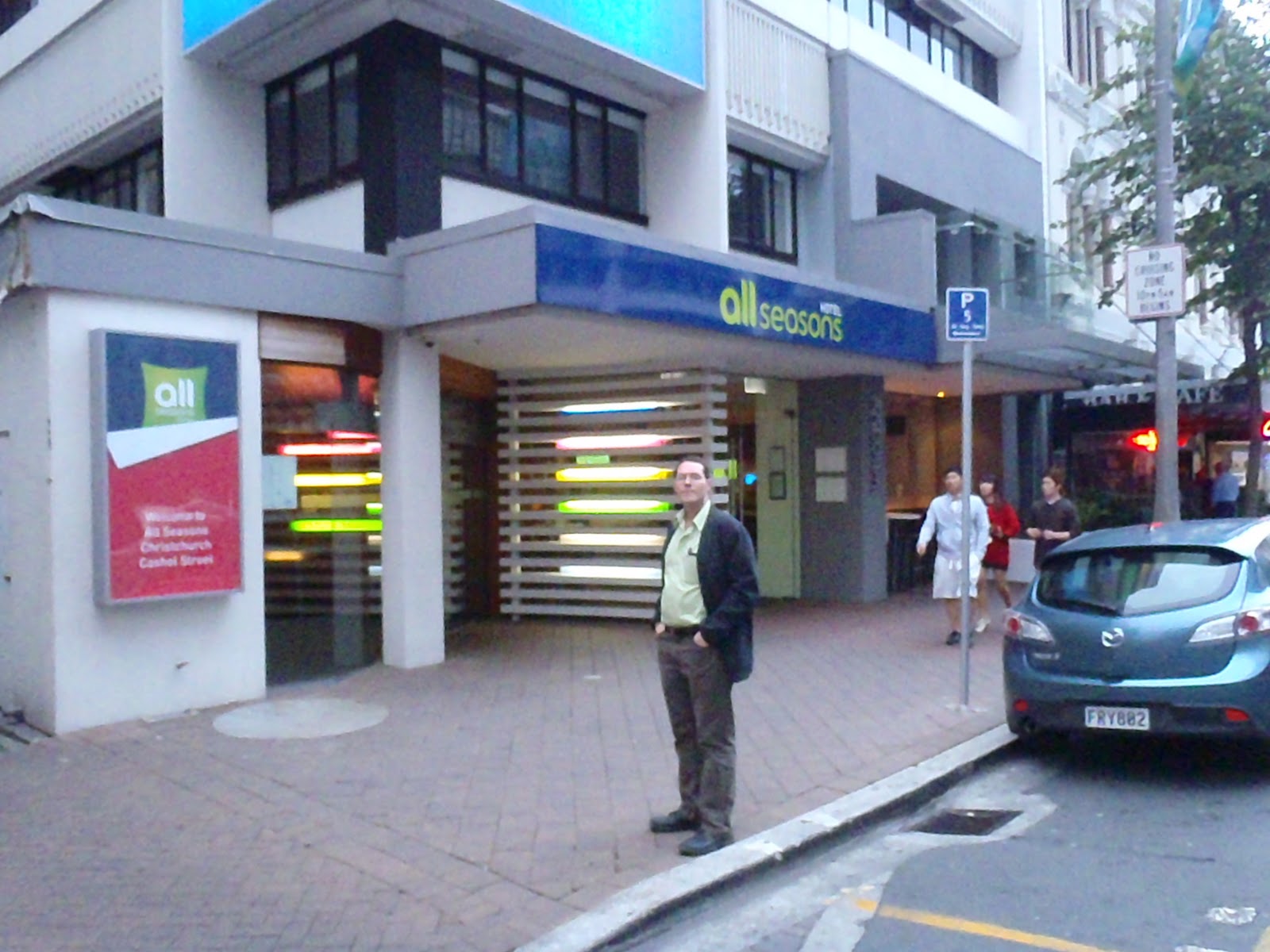
Mary Pat and I were just in Christchurch about 2 1/2 weeks ago. I had to go down there for the last stage of my credentialing process with the Medical Council of New Zealand. The interview went fine, but we were on edge as they city was still having some significant aftershocks – they had a 4.5 quake earlier in the day before we arrived.

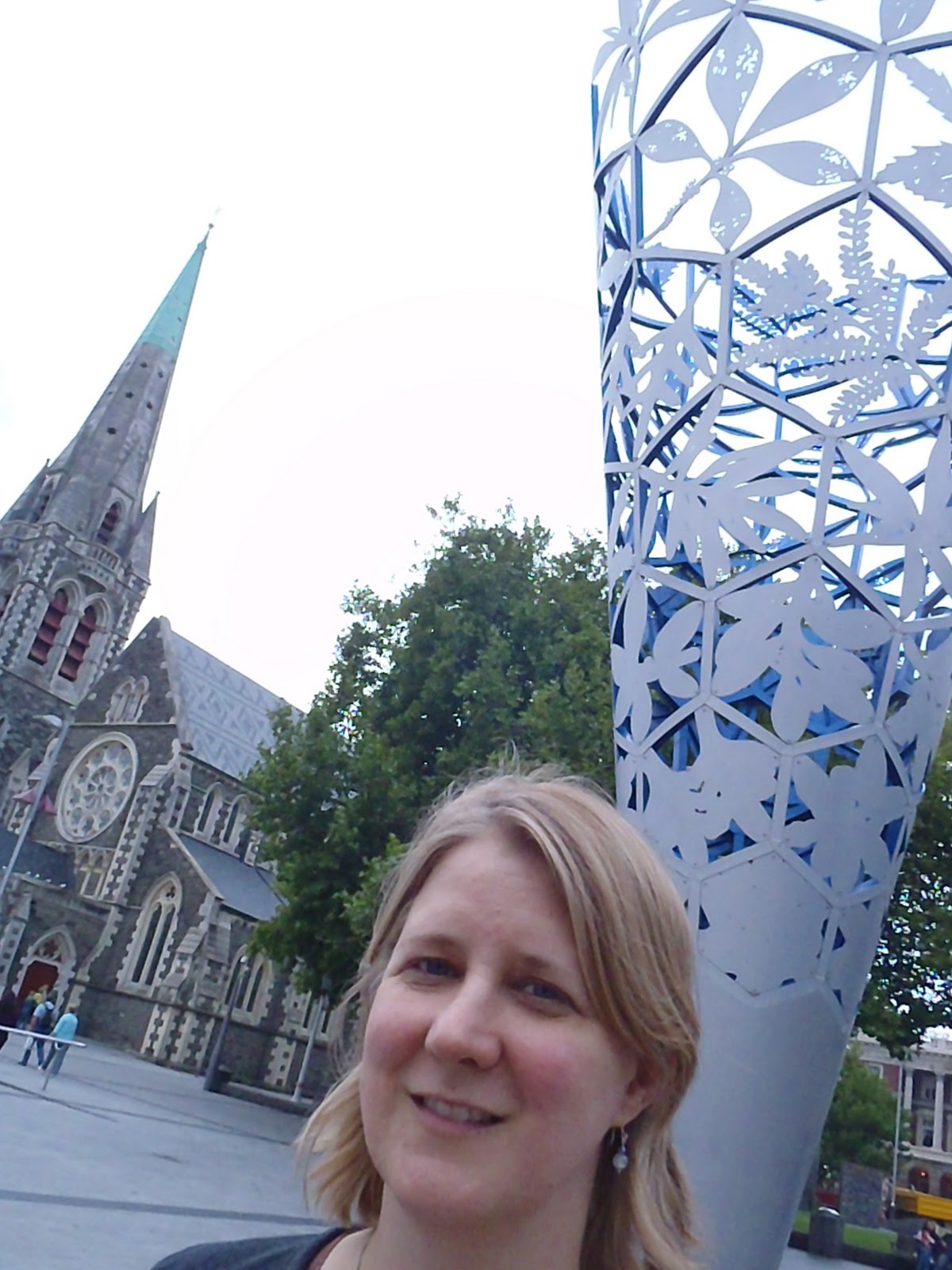
We took a few pictures in the square, near where the cathedral tower collapsed. We were struck by how many businesses were still shut down after the quake last September. We saw a few buildings that looked pretty seriously damaged. One, in particular, had huge cracks in it and had these large metal rods propping up the corner of the building. Before this most recent quake, the city was obviously damaged, but was still, overall, quite lively and bustling.

We didn’t feel anything from the quake up here in Auckland, on the North Island. We do have a lot of people we know who are visiting New Zealand right now, but luckily, none of them were in the Christchurch area.

The country is really focused on the quake, Christchurch is the second largest city in the country. The news is running without any commercials, just non-stop updates and new film footage. I don’t think anyone died in the September quake, but there are estimates of at least 100 people who died in this quake. 80 percent of Christchurch is without water now. Power is out for about 50% of homes. Workers are still trying to find out if people are alive under the rubble.

I’ll post a few photos of our recent trip to Christchurch. It is strange to see us having such a good time in a landscape that is now dramatically changed. The church in the photo behind us is the one that the steeple collapsed:

We are ok in Auckland

Here is a link that shows the church from above, with the damage to the steeple.

We are ok in Auckland

We are ok in Auckland

We have been getting a lot of email inquiries to make sure we are ok. We are ok, but the situation in Christchurch is serious. We appreciate everyone sending their thoughts.