Lantern Festival & Nikau Caves

Lantern Festival & Nikau Caves
This last weekend was Lantern Festival in Auckland, for Chinese New Year. I wasn’t there long, just a quick walk through at the end of the night and I took a few photos. There were electric light lanterns all over Albert Park downtown.
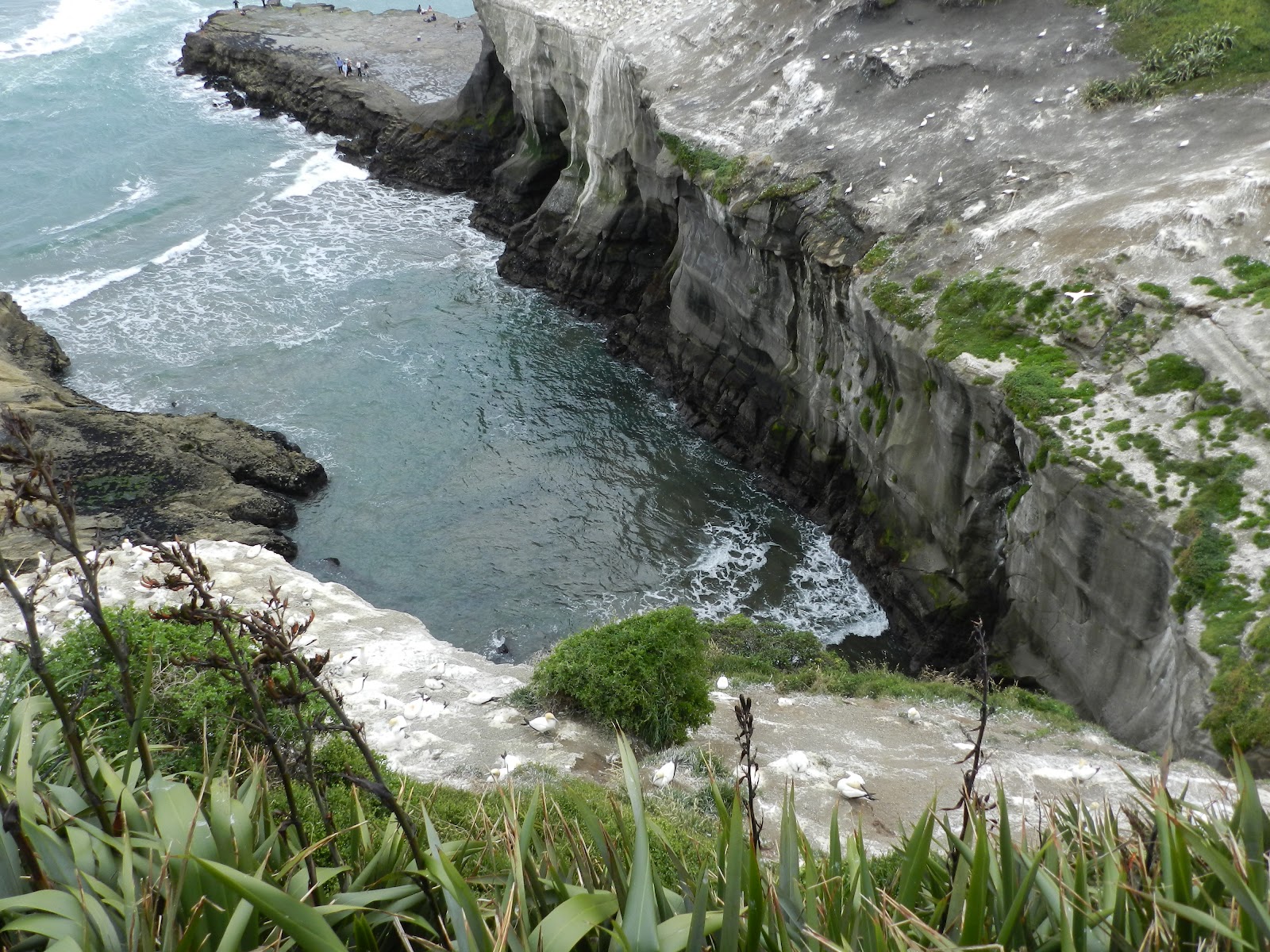
The next day I drove down to the Nikau Caves, about 90 minutes South of Auckland, a little way South of Port Waikato. The tour was a 1 km. walk/crawl through the caves, including going through a fair amount of water. I had been on a cave tour at Mammoth Caves in Kentucky, back in the States, and that is the closest I can compare it to (although much more water at Nikau).  Compared to the Waitomo Caves, further South yet, this was definitely more of an adventure.
Lantern Festival & Nikau Caves
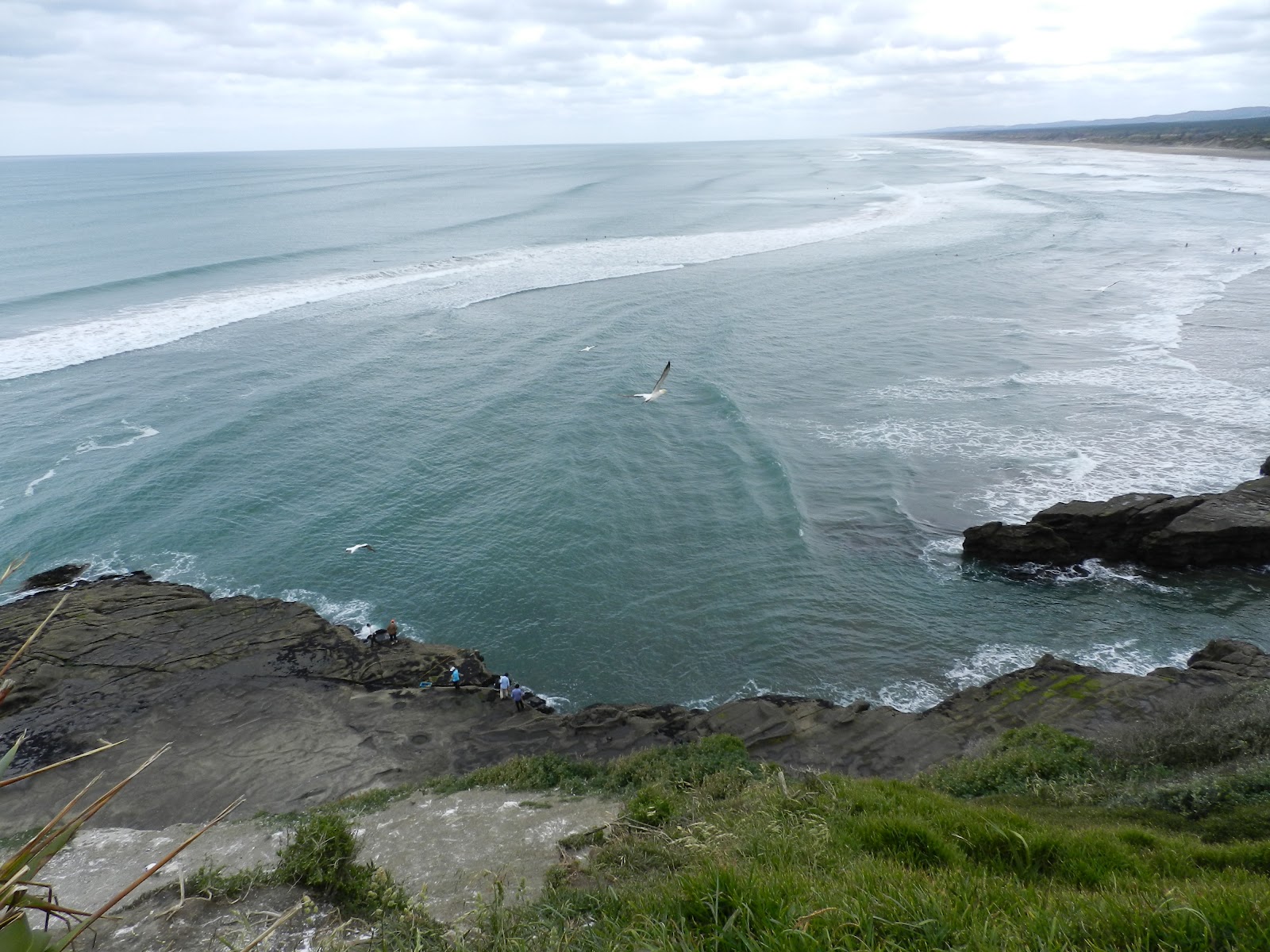
After the caves, I drove up through a scenic route toward Port Waikato and took a few photos along the way. I was listening to the new Wilco album, particularly playing track 12, One Sunday Morning (A Song for Jane Smiley’s Boyfriend). It is such a middle American ballad that it seemed odd listening to it driving through New Zealand country side, but maybe all country sides have a certain slow and meandering feeling…
Lantern Festival & Nikau Caves
All in all, it was a fun weekend with new and exciting adventures!
Lantern Festival & Nikau Caves

One And a Half Years and Counting

We recently just passed the one and half year mark of living in New Zealand. It is definitely a different phase now, more settled, but that raises questions and dilemmas, too. Every year here is a year not there. I have a very good career opportunity that has come up here, so I am committed to that, but we definitely have been having some discussions about what our plans for the future are.
I think this is actually a challenging point in the move. The excitement of moving to a new country is not as great. I have a realization that even though I have worked very hard to grow roots here, they are fairly shallow and they feel vulnerable yet. I have definitely grown and learned so many things and met so many people from around the world, here in New Zealand, that it has changed me. This is really a kind of between time. Not a period of intense adjustment, but a period of questioning, and with that questioning, I have also felt mourning. So many of the things I have gained and grown in here are intangible and I wonder how they would translate back to the US. That creates a kind of double mourning: what I left in the US, what I missed out on for the past year and a half, but also about what I will at some point leave here. 
It is a time of being pulled in two directions, it is as if I feel that at some point in the future, I will have reached the half-way point in my journey here and the focus of energy away from the US and toward NZ will begin to shift back. I think because it has been such an intense emotional experience here that any change, anything that stirs up emotions gets compounded.
I have found myself thinking a lot about things that I have let go of over the years, not necessarily things that we sold or gave away before we moved to NZ, but things that I have let go of at other points, books, music – things mostly, but I imagine the things are more than just things, but really parts of myself, eras of my life, things that I once cared a great deal about and then let go of, for various reasons. I have been picking up a lot of music on Amazon, old songs or albums that have been on my mind that I no longer have.  It is amazing what can be replaced digitally now – most of the music, really, is still available. Digitally, it takes up less space, as I amass a digital library that reminds me of my old stacks of vinyl records and cassette tapes – although it is different still, less tangible, and also it is a re-visitation of the past, rather than an exploration of the new on the edge of the present and the future. 
I also bought a Kindle. Have I spoken about it on the blog? I’m not sure, I know I haven’t been blogging as much lately. I like that I can play music on it while I read.  I feel better about downloading books on the kindle than paying for shipping from the US (and the environmental impact of shipping a box of books all the way from the US). Books here in NZ are really expensive, it is much cheaper to import them yourself through Amazon. I have been getting a few books that I miss from the past, like Octavio Paz’s Conjunctions and Disjunctions and Ken Wilbur’s A Brief History of Everything. I am really missing my Jung books that I collected over the years and then decided I didn’t want to lug them about everywhere and let go of them. I seem to go through phases of reading and re-reading Jung and I am in one of those now. The first phase was at University, then we moved back to Champaign after 10 years away, and now about 12 years after that.
It is interesting – I have been thinking about the role that earlier interests play in a person’s life.  I’ve been working on a conference proposal looking at Jung’s Red Book and Philip K. Dick’s Exegesis. Both of these are massive works that were personal, rather than written for an audience, and both contain intense, spiritual experiences that served as a framework for each author’s later works. The strange thing is that the experiences they had are not so unusual given each authors’ interests. For Jung, he had already been writing about archetypes of the collective unconscious and then he experienced a flood of unconscious material that he managed to ground and work with very creatively for the rest of his life. PKD also wrote about how his life had become like one of his novels, filled with spiritual revelation on the edge of psychosis and paranoia. While PKD doesn’t seem like he was as functional in the “real” world as Jung was, still, he made great use of his experiences in his later work. Back to the interesting thing, though, both Jung and PKD seemed to presage their spontaneous spiritual experiences in their prolific work at writing prior to the experiences. 
This is particularly of interest to me at this juncture in my life in which I am looking at some of the things that I thought I had let go of in my life, and I am finding that rather these are recurrent threads – I may have thought I left something behind me, but I find that my interests at a younger age are often my interests at an older age. I guess that is not surprising, I am the same person – and yet I am surprised! Like a painting or a song, there are certain prominent, recurring themes, new elements are incorporated, but they are incorporated into a framework that relates the new elements to the enduring themes. Even coming to New Zealand was an idea I had when was going through my psychiatric training and I became aware that NZ needed psychiatrists. Coming here ties together some of the themes of my interests in culture, anthropology, exploration, travel, nature and then oddly enough, I ended up working in a rehabilitation/recovery model and this reignited some of my earlier interests in trauma, psychotherapy, Jung, and also some of my old punk rock idealism. I never would have guessed what I would be doing at this point, but it is not surprising, given who I am/have been in the past.

Project from writing group: influential author

I have worked with some other people to start a monthly writing group and this was one of our exercises, to write about an author whose writing you find influential. I’ll include my piece on this below:

Rebecca Solnit is an American author that I only discovered upon moving to New Zealand. The first book of hers that I read was A Field Guide to Getting Lost, it seemed appropriate for me, as I was feeling adrift in my life, having just moved around the world and I was trying to get my bearings. This book examines many different kinds of getting lost, from getting lost in the woods, lost in sex, drugs, and rock and roll, lost in mental illness, losing one’s cultural heritage, getting lost in art, and losing one’s thread in life. Solnit explores these themes in a loose, and rambling manner, sometimes seeming to get lost herself, so that the reader asks, “where is all this leading, if anywhere?”
                She quotes the pre-Socratic philosopher, Meno, “How will you go about finding that thing the nature of which is totally unknown to you?” She goes on to say that this seems to her the “basic tactical question in life.” “The things we want are transformative, and we don’t know or only think we know what is on the other side of that transformation. Love, wisdom, grace, inspiration – how do you go about finding these things that are in some ways about extending the boundaries of the self into unknown territory, about becoming someone else (4-5)?” Through studying the various different ways of getting lost, Solnit is secretly exploring the different ways of growing, changing, and transforming one’s self through the engagement in the painful and darker things in life. She often quotes Henry David Thoreau (another reason I like her books), for instance, “Not till we are lost, in other words, not till we have lost the world, do we begin to find ourselves, and realize where we are and the infinite extent of our relations,” (15).
                This permission to be lost in order to find oneself, came at a great time for me, as I struggled with my own issues of identity, place, and belonging.  I have long felt an outsider, and yet there are other times that I am very much an insider in certain situations. I have worked to make sense of my life by following a thread that leads sometimes internally, sometimes externally, sometimes through the “inside” of a system, organization, or profession, and sometimes on the “outside.” It was comforting to me to feel that there is a point in getting lost, and that point is growth and transformation.
                Another thing that I like about Solnit’s writing is that she is an idealist, a social activist, a realist, and a naturalist. She has a poetic sense and uses her own subjective experiences along with pursuing and developing ideas that don’t just sit on the shelf, but that engage with the world to create something positive. The next book of hers that I read was Hope In The Dark:  Untold Histories, Wild Possibilities. In this book, she outlines a definition of hope, how to keep hope alive, and how to stay positively engaged in life, even when it so often seems like all hope is lost. 
What I like about Solnit’s writing is her embrace of idealism and realism, that when held together comprise paradox. Hope comes from despair, human connection asserts itself in the face of repression and disconnection, and one finds oneself through losing oneself. Other paradoxes that Solnit describes are that the word emergency contains within it the word emerge (12); and that darkness can represent both the creative darkness of the womb and or the terminal darkness of the grave (6). These paradoxes allow for both reality and idealism. Paradox allows for one to act in the world without having to be perfect, it allows for complexity, such as success and defeat both being present in the same action. Solnit argues that the very reasons for despair can also be the justification for engaging in the world.  She defines the word, activist “to mean a particular kind of engagement – and a specific politic:  one that seeks to democratize the world, to share power, to protect difference and complexity, human and otherwise,” (18). 
                Solnit argues 3 points in favour of hope: 1) when looked at historically, many positive changes have occurred already in terms of human rights; 2) change “takes place in more protracted, circuitous, surprising ways than is often acknowledged;” and 3) despair is often a result of misunderstanding change, thinking that only success validates hope, and thinking that activism is the exception rather than the rule of continual engagement in life (pgs. 151-152). 
                I came across Rebecca Solnit’s writing at a very good time for me. Personally, my decisions to move from the US to New Zealand were due to both a pulltowards New Zealand and a push away from the economic and political problems in the US. Moving to another country brought up issues of identity and belonging for me, as well as the familiar question of to what extent am I an insider and to what extent am I an outsider. In addition to the Solnit’s positive messages about the benefits of getting lost and the necessity and reality of hope, she is American in the best sense of the word.  She frequently draws on the best American principles, such as Thoreau’s civil disobedience, love of nature, and opposition to slavery. She also draws on the struggles and victories of many Americans who are unknown to the larger world and history. 
                Solnit also draws on voices of freedom from around the world, such as an unknown person who goes by the name Subcommandante Marcos, a leader of the Zapatista movement in Mexico. Marcos has issued a series of proclamations. An excerpt from the Fourth Declaration of the Lacondon Jungle reads, “A new lie is being sold to us as history. The lie of the defeat of hope, the lie of the defeat of dignity, the lie of the defeat of humanity…In place of humanity, they offer us the stock market index. In place of dignity, they offer us the globalization of misery.  In place of hope, they offer us emptiness. In place of life, they offer us an International of Terror. Against the International of Terror…we must raise an International of Hope. Unity beyond borders, languages, colors, cultures, sexes, strategies and thoughts, of all those who prefer a living humanity. The International of Hope. Not the bureaucracy of hope, not an image inverse to, and thus similar to, what is annihilating us. Not power with a new sign or new clothes. A flower, yes, that flower of hope,” (39-40). To me, Solnit’s writing stands for these universal human rights:  the International of Hope and the flower of hope; the engagement with a “living humanity;” and also the best of American ideals and pragmatism.  Last of all, Solnit argues that the act of writing, itself is an act of hope. She states that writing “is a model for how indirect effect can be, how delayed, how invisible; no one is more hopeful than a writer, no  one is a bigger gambler,” (65).

Václav Havel: 5 October 1936 – 18 December 2011

“I should probably say first that the kind of hope I often think about (especially in situations that are particularly hopeless, such as prison) I understand above all as a state of mind, not a state of the world. Either we have hope within us or we don’t; it is a dimension of the soul, and it’s not essentially dependent on some particular observation of the world or estimate of the situation. Hope is not a prognostication. It is an orientation of the spirit, an orientation of the heart; it transcends the world that is immediately experienced, and is anchored somewhere beyond its horizons. I don’t think you can explain it as a mere derivative of something here, of some movement, or of some favorable signs in the world. I feel that its deepest roots are in the transcendental, just as the roots of human responsibility are, though of course I can’t – unlike Christians, for instance – say anything concrete about the transcendental. An individual may affirm or deny that his hope is so rooted, but this does nothing to change my conviction (which is more than just a conviction; it’s an inner experience). The most convinced materialist and atheist may have more of this genuine, transcendentally rooted inner hope (this is my view, not his) than ten metaphysicians together.

Hope, in this deep and powerful sense, is not the same as joy that things are going well, or willingness to invest in enterprises that are obviously headed for early success, but, rather, an ability to work for something because it is good, not just because it stands a chance to succeed. The more unpropitious the situation in which we demonstrate hope, the deeper that hope is. Hope is definitely not the same thing as optimism. It is not the conviction that something will turn out well, but the certainty that something makes sense, regardless of how it turns out. In short, I think that the deepest and most important form of hope, the only one that can keep us above water and urge us to good works, and the only true source of the breathtaking dimensions of the human spirit and its efforts, is something we get, as it were, from ‘elsewhere.’  It is also this hope, above all, which gives us the strength to live and continually to try new things, even in conditions that seem as hopeless as ours do, here and now,”
(Václav Havel, Disturbing the Peace, p. 181-182).

Great Barrier Island

Great Barrier Island

I had some time off recently and did a three island trip over my holiday. I first kayaked to Rangitoto, as previously blogged. Then I took the slow ferry out to Great Barrier Island. It is a 4.5 hour trip on the ferry as it is a big ferry that carries over vehicles and supplies to the island. The island is very remote feeling, although it really isn’t that far from Auckland. It doesn’t have running water or electricity, the houses and bachs (short for “bachleor’s” cabins) have solar and wind power and store water in cisterns. I kept being shocked by the scale. I had read in the tourist guides and they talked about “cities” and “restaurants,” but the truth is, I drove through Tryphena twice before I realized I was actually in it. The restaurants were very informal settings and many of them felt extremely local. Since the island only has 900 year round residents, it is quite a small community.

Great Barrier Island

Great Barrier Island
The roads were treacherous. I definitely wouldn’t advise one to come straight to New Zealand and get on these roads. Even after more than a year of driving on the left side and gradually getting used to things like one lane bridges, these roads were still a shock. Many of the roads were considered one lane roads (with traffic going both ways) and they wound around sheer cliffs and blind hairpin turns. Average speed for me was probably only 20-30 k, so even though the distances were short, the travel times were long.  It took about an hour or more for me to drive from the hot pools to Port Fitzroy. Again, I was shocked, I didn’t see any restaurants, but there were some locals sitting by a picnic table at the side of the road.  here was a lot of bustle around when the ferries arrive and off-load supplies (beer seemed to feature heavily) and these were stacked on the wharf and people would come by and claim their goods.
Great Barrier Island
The place is incredibly beautiful. Some of the beach vistas were gorgeous. There are some decent hill/mountain ranges. I climbed to the top of Hirakimata (Mt. Hobson) and had great views of the island. Windy Canyon was really impressive and that is just a short, but steep, climb up from the road. 
Great Barrier Island

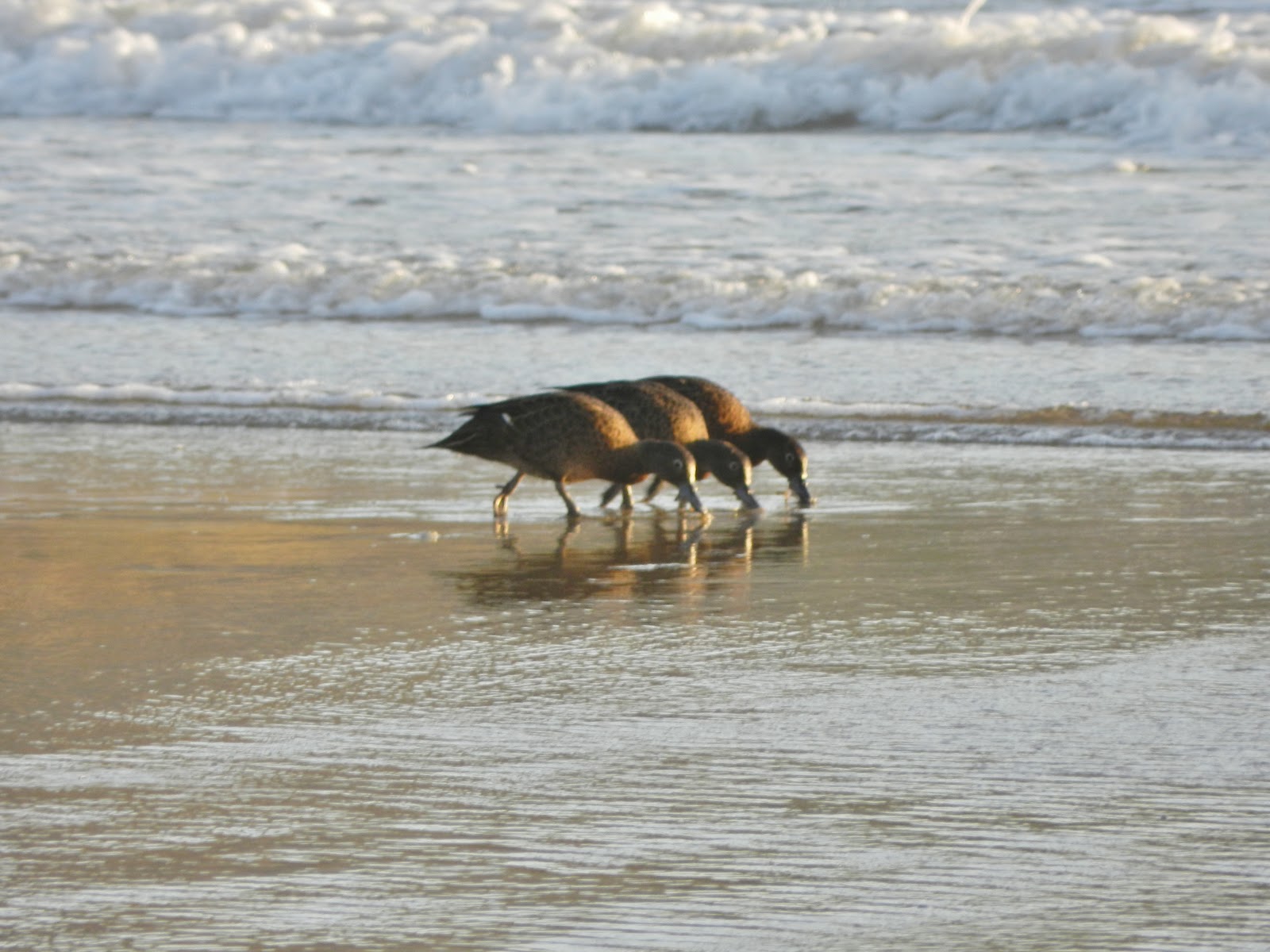
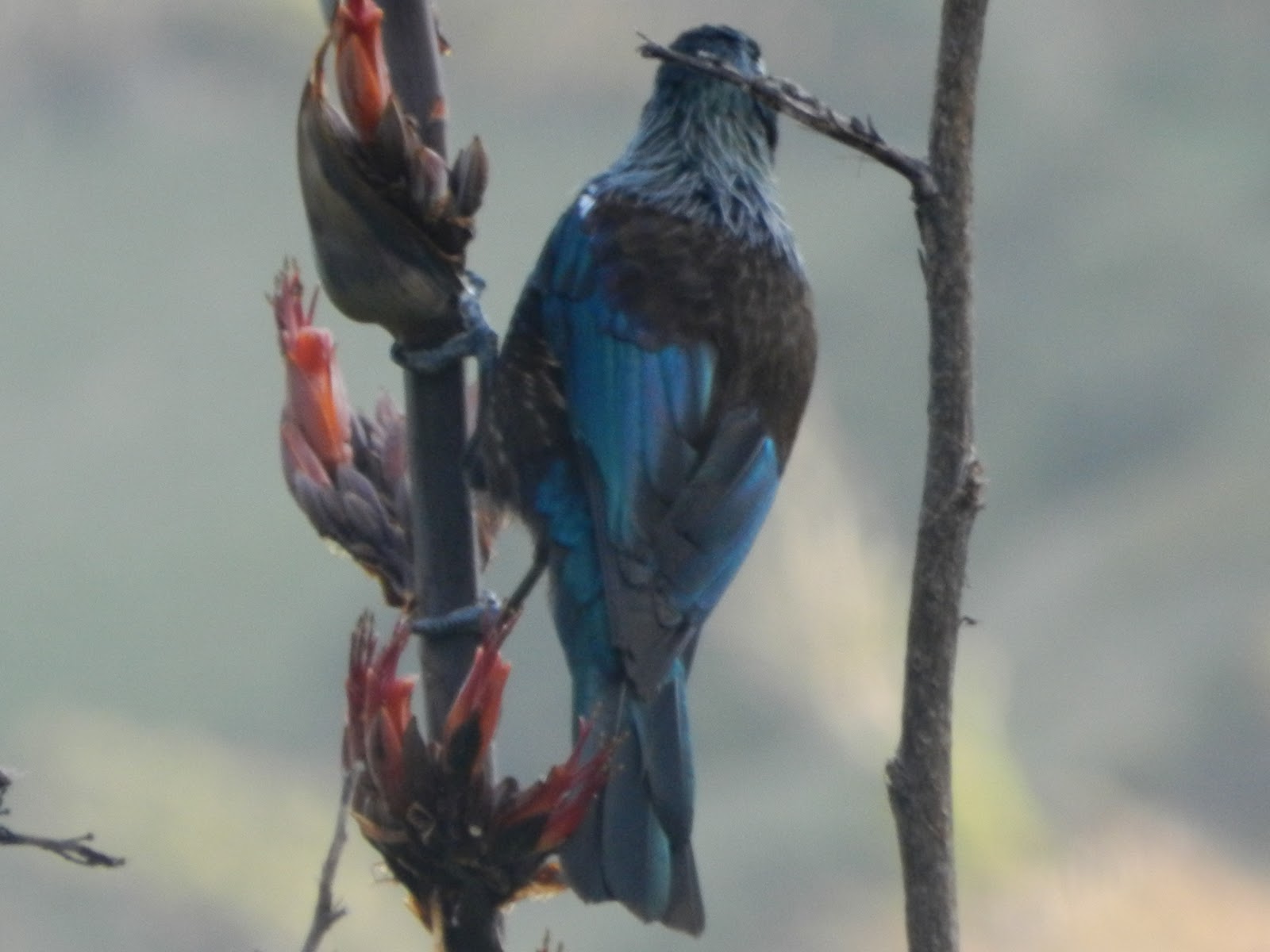
The wildlife is incredible. I was most thrilled about the wild parrots (Kaka) flying about, eating flax flowers, squabbling and chasing each other. From the top of Hirakimata, it sounded like a jungle below as Kaka sqwacked and chased each other. There were a lot of Tui, also, and the island has a large population of Brown Teal, which are endangered elsewhere.

 

  Great Barrier Island


Great Barrier Island

Great Barrier Island

Great Barrier Island

I was only out on the island for a few days, but it was incredibly peaceful and rejuvenating!

Great Barrier Island

Great Barrier Island

On the way back we saw numerous whales spouting (I was disappointed to not be able to see anything more than a spout of water, but it was still exciting).  Then we had dolphins that came up to the ferry for awhile. I have noticed that the wind and sun make an incredible difference in being able to get good photographs. There was a lot of sun on the water and so not very good photos. Also, if it is too cloudy, it is hard to see very deeply in the water.  Other times, with the right angle of sun and lack of clouds, I have gotten crystal clear photos of dolphins.

Great Barrier Island

On the way back into Auckland, the skyline and lighting was amazing!  See for yourself.

Great Barrier Island

Kayaking to Rangitoto

Kayaking to Rangitoto

One of the first things I wanted to do when we moved into our flat was to get over to Rangitoto. Every morning I look out at it and feel it beckoning. Well, it took almost a year and a half to get there, but I kayaked over this week!

Kayaking to Rangitoto

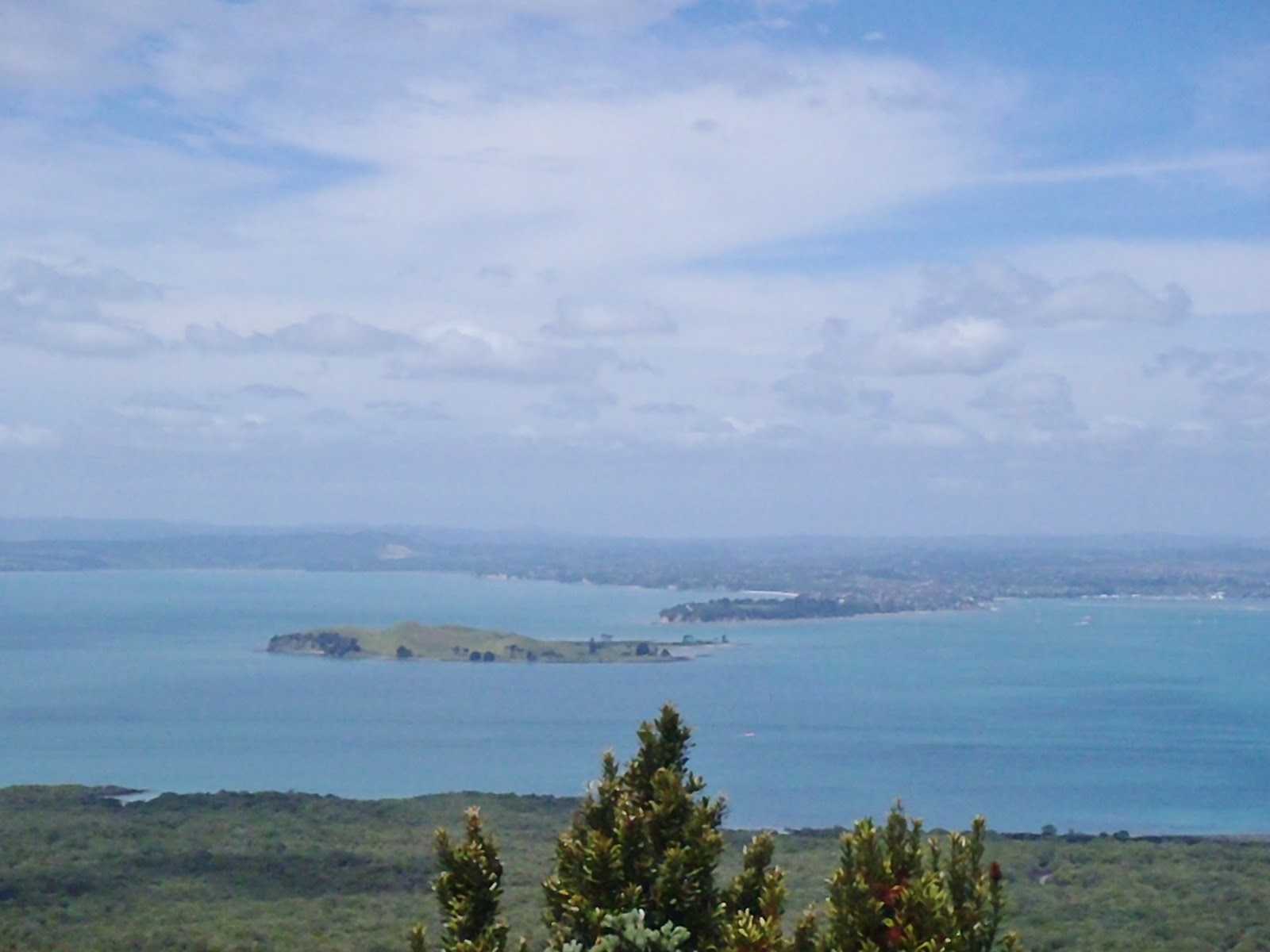
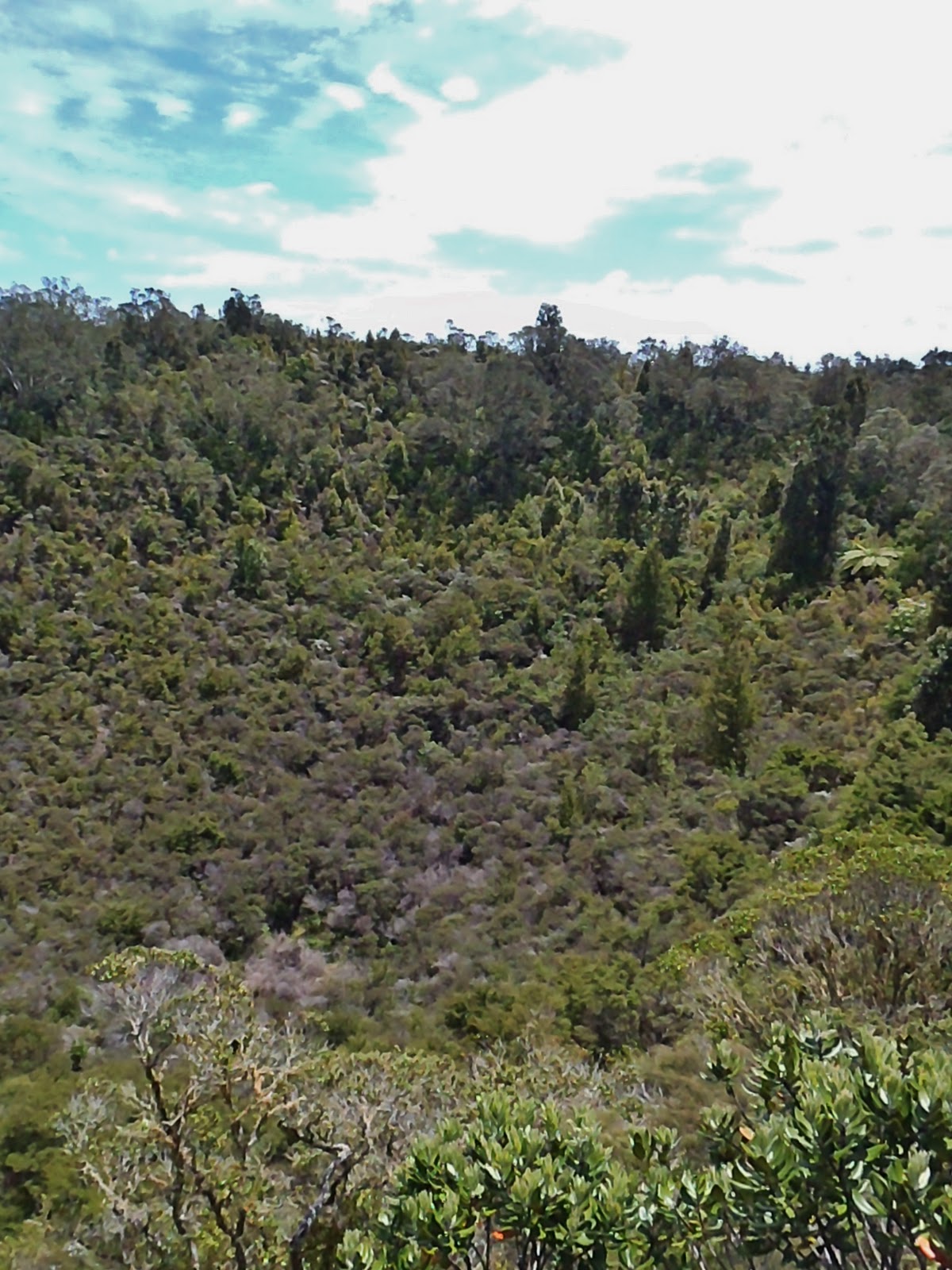
The trip over was great, the 6 km. didn’t seem like too much work. Then we hiked up to the summit and that was a nice walk after being in a kayak for about an hour and a half. There is a lot of lava rock and very little soil there and it is very dry. I took a few photos and enjoyed the hike.

Kayaking to Rangitoto

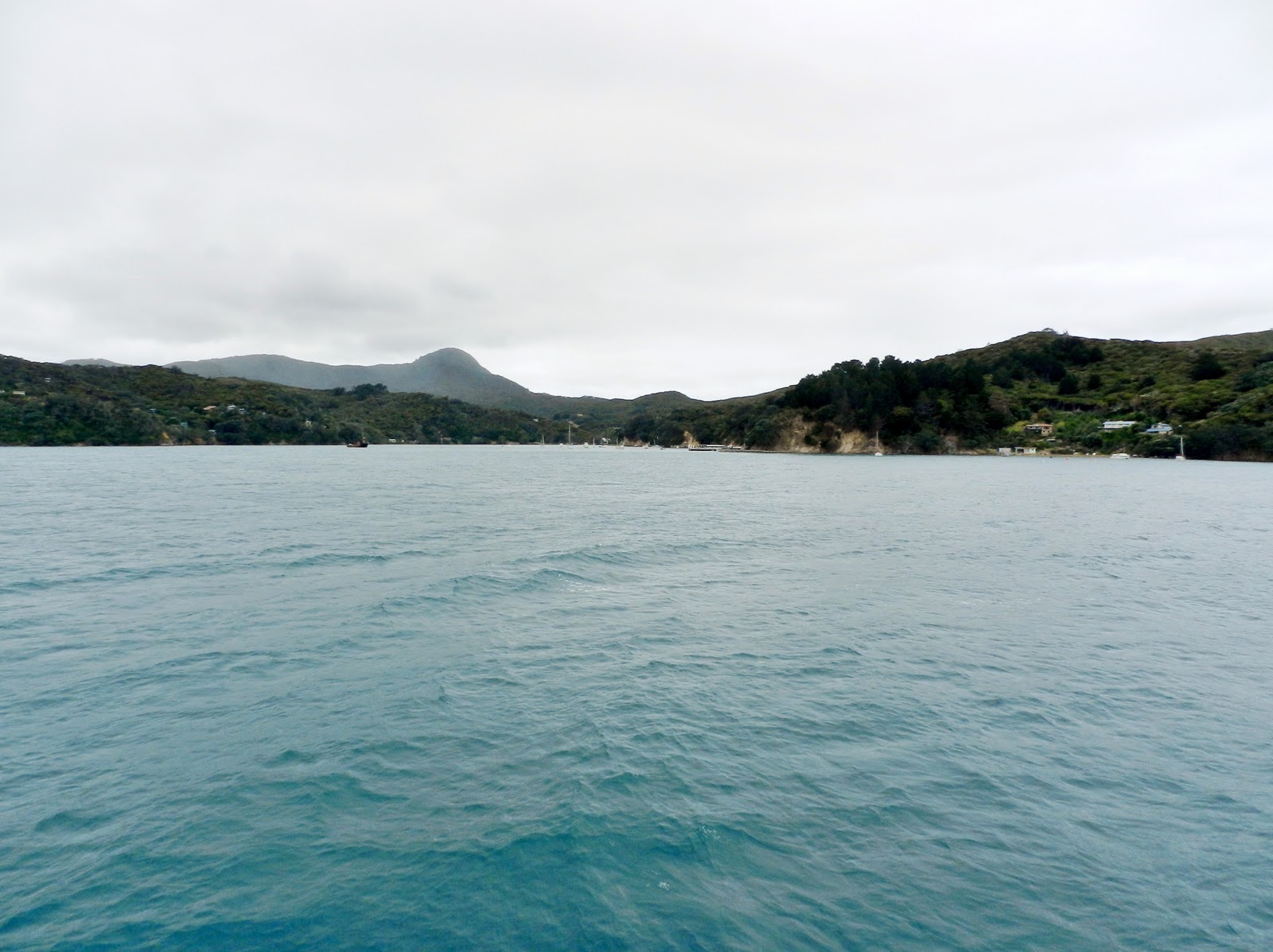
However, I was involved in another helicopter med-evac. One of our party developed breathing problems that continued to fluctuate over time and I talked with the tour guide, a great guy, about that it was safest to not have her kayak back and to get med-evac’ed off the island. This is the second time I have been off on a holiday trip to an island and gotten involved in a med-evac. I am starting to think I either need to do some wilderness medicine course or stop going out to the islands!
Kayaking to Rangitoto

The trip back was really choppy and I was greatful for the skirts we had to cover the opening of the kayak, otherwise, we would have had a lot of water on board!  I also had to swap out mid-way with another kayaker.  Our guide was concerned that two of our party (we were in tandem kayaks with two people per boat) were falling behind in the wind and waves and he wanted to put a stronger paddler in that boat.  He had mentioned we might do this if necessary before setting off, but I couldn’t really imagine how you would swap paddlers in the middle of the water – but here is what we did, we formed a raft of several kayaks with people holding on to the one next to them.  This stabilised the kayaks.  Then one person (me) climbed out of my seat and sat further back on the kayak.  Then the other person climbed over and into my seat, and then I switched over to her seat.  It all went smoothly, but as I was going across, a little more space opened up between the kayaks than I would have really wanted and I was closer to “sitting” in the water than I wanted to be.  The paddle back was gruelling and I felt hung-over the next day from the exertion.  We got a late start and the wind and waves were pretty strong.
Kayaking to Rangitoto

So, I made it to Rangitoto, the crater was smaller than I thought it would be. I got to kayak. I do have to say that I was a little less enthusiastic about running out and buying a kayak after that paddle, though….but we’ll see…

My on-line video debut

My employer got together a few American psychiatrists to shoot a promotional video. The results can be found at the link:

ADHB American Psychiatrists Testimonials

I seemed a lot less wooden and stilted when we were doing the video! It was fun to do, though, and a good chance to reflect on some of the positive aspects of working in New Zealand.

Australia!

AUSTRALIA!
AUSTRALIA!

About two weeks ago, I went to Australia for the first time. The trip was for the World Congress for Psychotherapy. I was in Sydney the whole time and I really enjoyed seeing another major city in this region. It was a 3.5 hour flight from Auckland and is the closest city larger than Auckland. Sydney has a population of about 4.5 million (which is around the population for the whole country of New Zealand) and it is in the Australian state of New South Wales. The whole population of Australia is around 22.5 million (roughly equal to the populations of the four US states of Illinois, Wisconsin, Iowa, and Nebraska).
AUSTRALIA!

It is hard to draw too many conclusions from one week in the largest city of a country. Sydney was very ethnically diverse. It definitely had a larger city feel than Auckland as well as having a different culture. Again, these are just first impressions, but Sydney felt more relaxed (in the sense of not seeming to have as many social rules about colour and loudness of voice), people were louder and more open, but not as friendly. Businesses were more business-like, but with the down-side of being less friendly, more rushed. The food was good, but the quality of the food didn’t seem as spectacular as in New Zealand. 
AUSTRALIA!
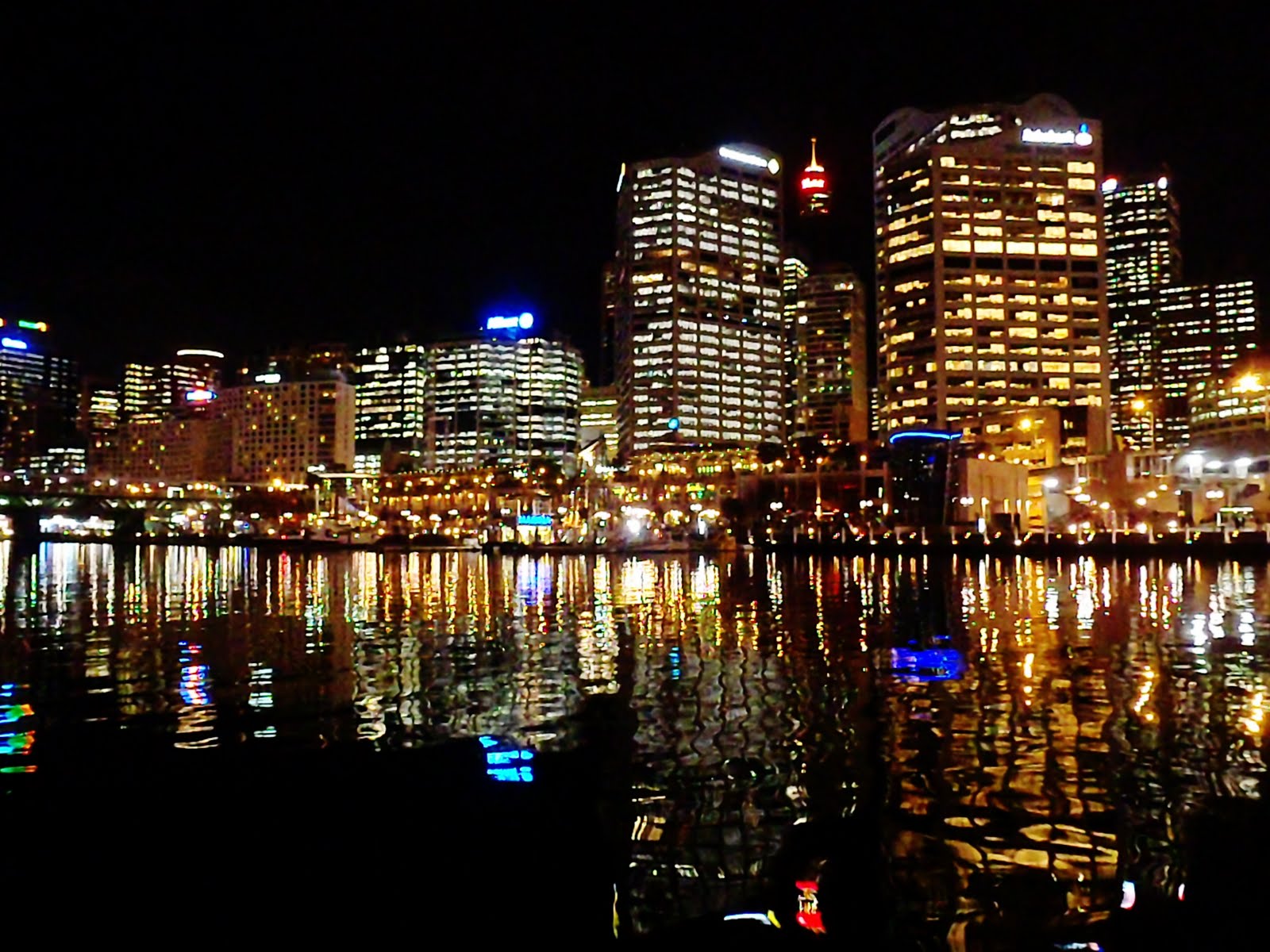
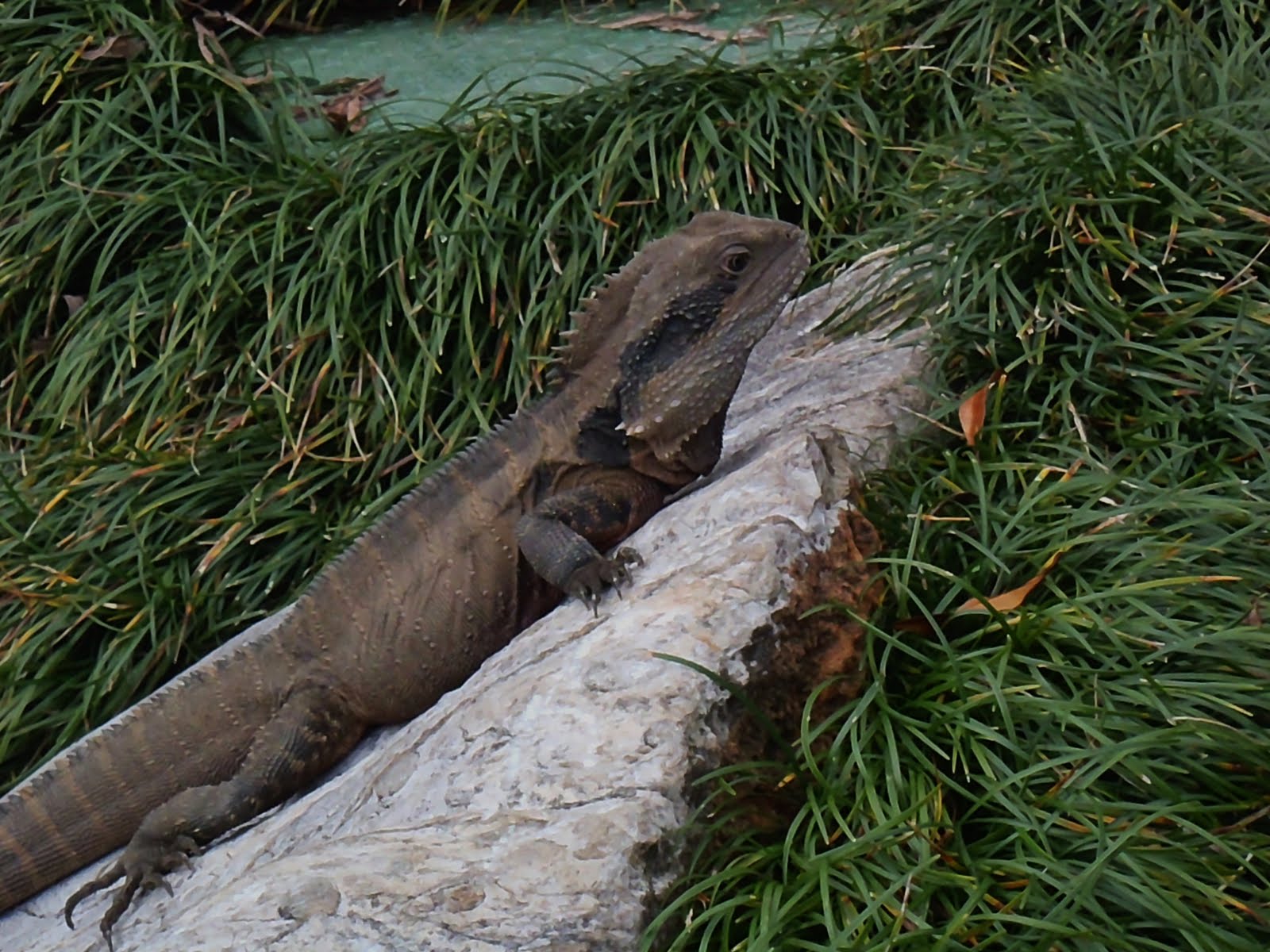
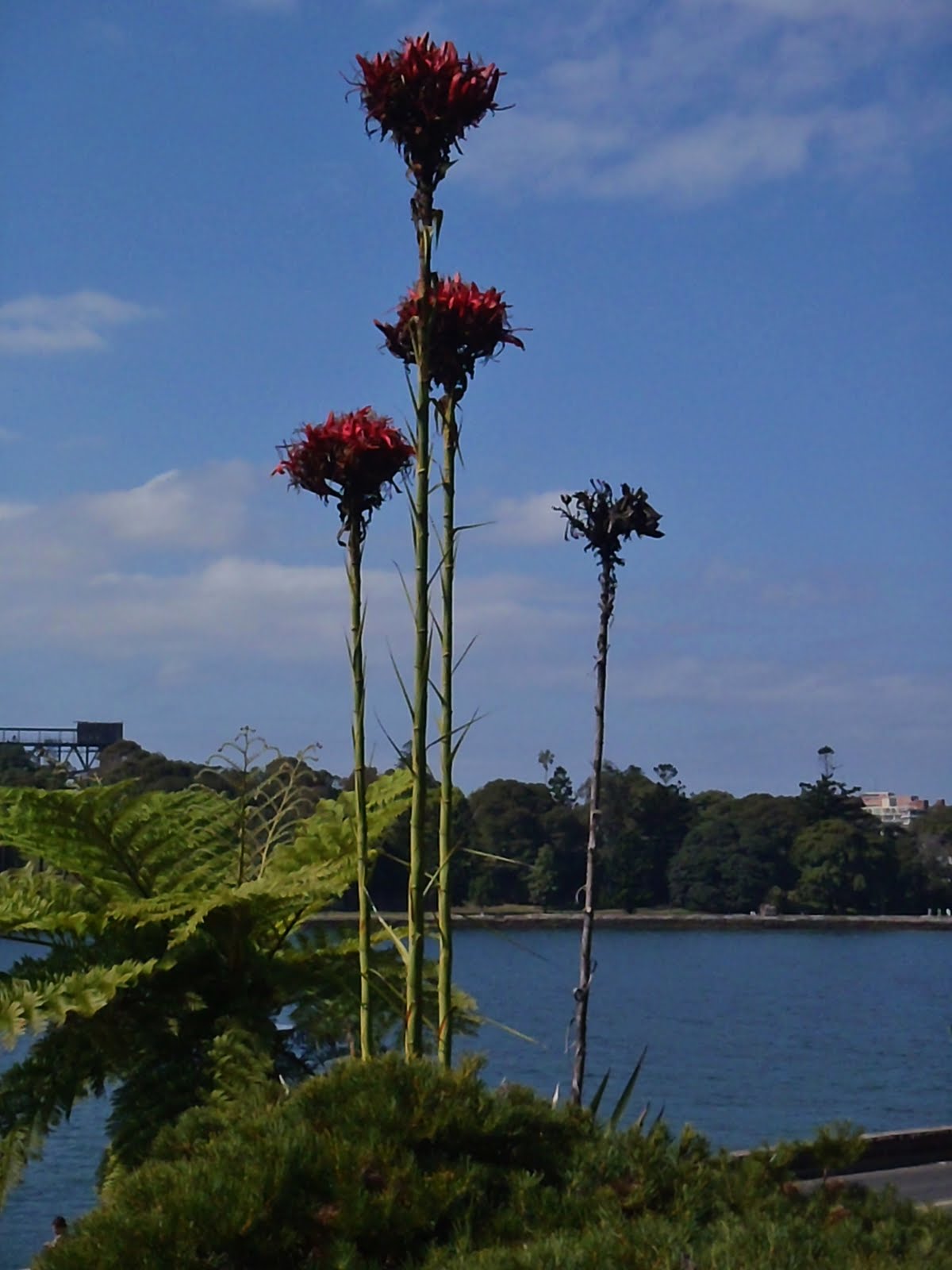
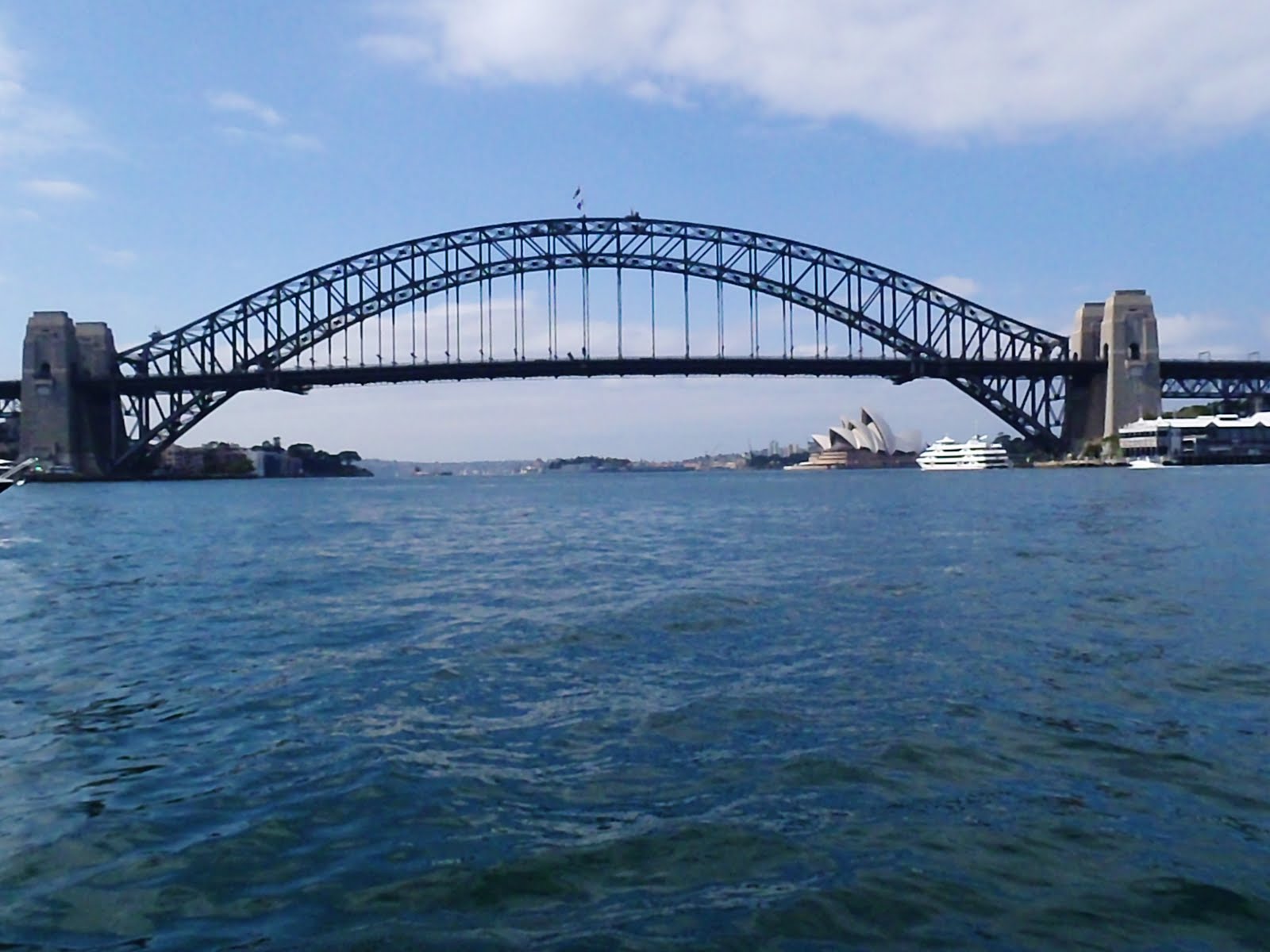
I went to the Chinese Friendship Garden and walked around Darling Harbour, where the convention centre was located. Mary Pat and I took a water taxi (which was a great idea) from Darling Harbour to the Opera House and walked around in the Botanical Gardens, which had a huge number of Flying Foxes in the trees. It was definitely a great trip and we’ll go back for a little longer look at some point.
AUSTRALIA!
AUSTRALIA!
The conference was wonderful and had daily themes on indigenous culture, spirituality, and also ethics & philosophy. I met some great people and learned and experienced a lot. The overall theme of the conference was World Dreaming, based on the Australian Aboriginal practice of studying dreams and Dream Time. I did have a lot of dreams at the conference and made it to two of the morning dream sharing sessions that were really interesting group processes stemming from the dreams that people brought in. One of my favourite lectures was by Helen Milroy who presented on Aboriginal experience from pre-colonial era, through colonization and genocide, and then a kind of trauma and healing model. What was really amazing is that she had paintings she had made that illustrated each step along the presentation and the paintings seemed to embody the complexity of the step in a non-verbal way, plus they were amazing paintings! Here is a link to a newsletter I found that has an image of one of her paintings: 
AUSTRALIA!
AUSTRALIA!