Conversations With Susan

I have been having email conversations with my friend from New Zealand, Susan Mac Gregor. We were in a writer’s group together when I was in Auckland. We periodically have been emailing, but recently we’ve been having more frequent conversations around the topic of what she calls “deathing life,” Susan was diagnosed with Stage 4 Glioblastoma Multiforme, a serious brain cancer, and she has been sharing her insights and experiences with me. Part of what initiated our increased emails is the fact that I have been preparing to give a series of lectures in Grand Junction, Colorado, on Health Care Decisions Day. These talks will be on end-of-life decision-making, holistic decision-making, and also staff wellness for hospice workers. I had asked Susan to give some feedback on a draft for my talk and this really sparked off our conversations. As I have been wanting to expand the focus of this blog, Being Fully Human, it seemed like a good idea to post these conversations as Susan shares her honest insight and experience about the process of “deathing life,” living life right up to the point of death.

Susan has written a fairly long biography, and we’ll publish that at some point, but for this post, I’ll excerpt it and then also start with a summary that she has written about her “deathing life” process. I asked Susan about an image to include in the blog post and she said,

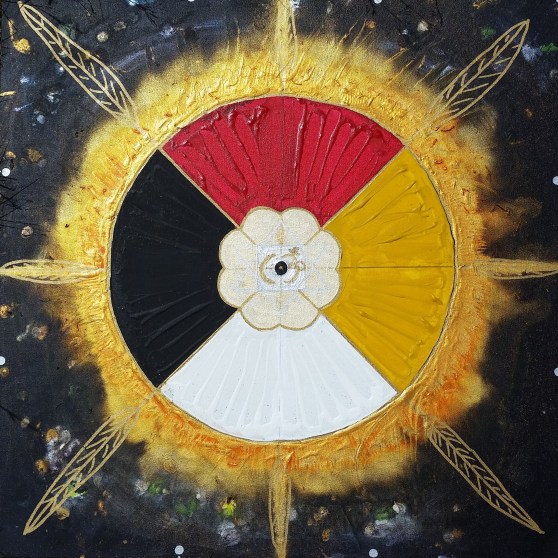
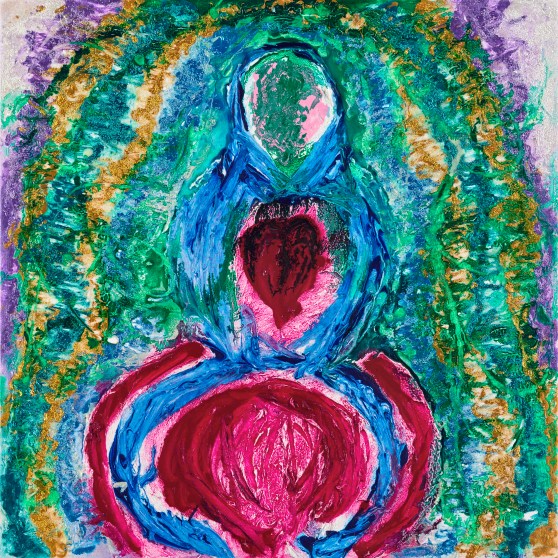
“Having only now read your email the things that come to mind as a picture for the blog could be based on what has been shared…perhaps something with swirling patterns of coloured light, transposed with transparent images of symbols, angels or such.” So I will put a few of my paintings in the blog that fit that description.

Kopacz 02

My name is Susan Diane Mac Gregor. I was born in Whangarei, New Zealand, on 25th August 1958. I grew up in Northland enjoying its beautiful beaches, native forests, waterways, & small town lifestyle. When not reading much of my time was spent exploring nature, swimming, rescuing damaged birds or small animals & swimming. There were cats, pidgeons, chooks [chickens], sheep, dogs, canaries as pets, plus my blood brother & four fostered siblings to share time with. Despite some financial crises for my parents, it was an idyllic childhood. 

As a young adult I entered training in Psychiatric Nursing, having chosen to diverge from my training at the Auckland Institute of Technology, where I qualified as an Industrial Cook. This led into my Career in Mental Health, & interest in Psychological methodologies. Upon qualifying I further developed my interest in caring for the Elderly, plus Special Interest in working with people with Dementia. Post Graduate study included a Diploma in Gerontology. Next I began developing qualifications & skills in Psychological Therapies, successfully completing the first year of study in a Diploma of Psychotherapy with Auckland University of Technology.

In addition to Susan’s health profession credentials, she is also a poet and spiritual seeker and we will hear more about that in further posts.

For today, we’ll include the email that Susan sent me that gave me the idea of posting her insights to share with others. I think she gives such a great, heartfelt, and wise words and experience.

25/2/16 (Susan)

Dear David,

It was with interest that I read about the latest books you’ve been reading. I have read many of the books you have cited in references, etc., including The Tibetan Book of the Dead, however not the recent Sufi book you mentioned.

I can’t give advice for your talk at the Hospice, as everyone’s experience differs, however I can write about my experience.

Initially I experienced shock & grief at receiving such a finite diagnosis. I remember looking around the rooms in my house at the things I had built up & worked hard for, & thinking what did all of that mean, was what I had invested to get those things worth it?  The answer that came back in response to that question was a feeling of emptiness. Then my heart filled with sadness thinking about my 3x beautiful cats & Mahmoud being left behind & I was glad at least that Mahmoud’s life would be more comfortable, as a result of my previous efforts.

Within 2wks I was trundled off for brain surgery, after which my life completely changed. The surgery caused damage within my brain, leaving me with left sided paresthesia.

Mahmoud was devastated. His welfare was always on my mind, as was mine on his. I had a large amount of time left lying in my hospital bed with nothing to do but think.

Years prior I had experienced a “healing” at a Buddhist retreat, in which my “difficult to control” hypertension completely dissappeared, leaving my GP astounded. During that retreat I learnt that even illness has a beneficial purpose, i.e. to teach us something, to deepen us in some way spiritually, to raise our awareness or break through unhelpful patterning.  Thus I started to look for the lessons in this experience.

For me cancer has done all of the above plus brought me to an awareness of how much love surrounds me. It has deepened my relationship with Mahmoud, with God, & given me fresh hope for humanity. I have been shown so much love & kindness, even from complete strangers.  Often those with little in the way of possessions have given me the most. I have been able to see the busy, tense person who “didn’t have time “ that I used to be, reflected in people around me, & their counter balancers in the people who will let me que jump, or help me out in getting something in a supermarket, etc., because they see I’m disabled.

As a consequence of my health & disability mine & Mahmoud’s lifestyle has dramatically changed. We have needed to offload a lot of possessions & have moved to a two bedroom rental unit. The money from my salary no longer flows in & the goal of being mortgage free in 3yrs has disintegrated. However I have found that I am surrounded with so much love & kindnesss that my soul & heart are completely full.

From this point of realisation forward I have been able to take inventory of my life, looking at past regrets & losses, & freeing myself of built up emotions through self forgiveness & forgiveness of others. This has been aided by gratitude & compassion, both of which have deepened within me exponentially.  I have become free again, letting go of pursuing goals, things, dreams…. most of which are erroneous now. Being present in each moment, with each breath, is how my days unfold. The natural world around me is exquisitely defined, colours, shapes, contrasts, each being impressed into my being through every sensory system I possess.

I still give … a smile, a kind word, my knowledge or time. My “deathing” life continues to have purpose & meaning, people ask me “what is this like”, “how do you stay so optimistic”, “are you afraid”, etc, etc. I do experience moments of fear, but at the end of the day my answer to all of these questions is, “this is life, I am blessed to have lived it, I believe in an after life, & it is my faith in God & Jesus Christ that sustains me when all else fails.

May your love-light continue to shine.

Love & Blessings, Susan xx
Kopacz 03


2015 in Review

What a big year it has been! My first book came out at the end of 2014 – Re-humanizing Medicine: A Holistic Framework for Transforming Your Self, Your Practice, and the Culture of Medicine. I have traveled a lot this year for speaking engagements: from here in Seattle to Denver, Colorado, Auckland, New Zealand and Melbourne, Australia.

jhp53db8b682bd57[1]

I just picked up Jean Houston’s book, The Search for the Beloved: Journeys in Mythology & Sacred Psychology. I was surprised to read her introduction to the second edition. She describes that in September of 1992 she stood at the northern-most point of New Zealand, Cape Reinga and watched the waters of different oceans come together. She asks her companion if “this is the place where the planetary DNA gets coded anew?” He replies, “it is…the place where all Maoris go when they have died to lift off to the Other World,” (vii).

The Search for the Beloved

This is the place, right by this tree in the photo, named Te Aroha (love), where the Māori believe that departing spirits leave this world for the other after death. Houston’s guide continued, “It is because of places like this…where the spirits of many people and many lands can meet and refresh themselves. And it is here as well…that we remember who we are and…And call our spirits home,” (viii).

DSCN0339

I, myself, stood in this same place, looking down on the coming together of masculine and feminine waters and of the place where souls leave this place after death – during my last month living in New Zealand, November 2013. See my blog about this trip.

Now, 2 years into living back in the United States, but in a new region, Seattle in the Northwest, I am at this point. Sorry, I know that sounds like Yoda-speak, I just saw “Star Wars: The Force Awakens.” Where am I now? Where is my home? Is my home here in the Northwest?

My wife and I went up to Victoria, British Columbia on the Victoria Clipper for an overnight weekend for our 24th wedding anniversary last weekend. Here are a few photos from that trip.

20151219_143558


20151219_170211

We are still exploring this region, so it seems difficult to call it home when it is so new and so far from where we grew up and where most of our relatives live. I have been reading a lot of Joseph Campbell lately, as well as other authors (whom I will discuss below). This has been a big part of my transition from “down under” back to the Northern Hemisphere. At age 48, this has been my mid-life transition, like Dante taking his mid-life journey:

Midway along the journey of our life

     I woke to find myself in a dark wood

I have developed a class for veterans based on Joseph Campbell’s hero’s journey. The hero hears a call to adventure, crosses a threshold, meets mentors and challengers, has a descent into the unknown world, comes to a challenge which is both external and internal, comes to terms with the inner/outer feminine as well as the authority of society, re-crosses the threshold to the known world, but here finds himself or herself a stranger in a strange land and must work to re-acculturate to their own home. What the hero finds at the furthest point of the journey is the gift or boon which transforms the self and has the potential to renew and transform society as well. But often, this gift is hard to see and the physical treasure might even be lost, as happens to Gilgamesh when he sets down the herb of immortality that he has brought up from the deepest ocean and it is eaten by a snake. This means that the real treasure is the transformation of the self – not some material item. This framework is so useful for returning veterans who have been away in the military world and have difficulty returning back to the civilian world. The book and class I have developed are at the point where I have just submitted it to a publisher for review with a tentative title of, Return:  The Hero’s Journey Home – for Veterans & Society After War.

Hero's Journey

I have found this framework helpful for my own return and I have felt fellowship with these lost souls I have been working with. Reading Houston’s introduction, my mind returned to that rocky outcropping where Te Aroha clings to the cliff, serving as a guidepost for those who have died and transition on to another world. The end of my life in New Zealand really was a kind of death for me, while I am living here in the Northwest, I am still waiting in some ways to be reborn, to find out who I will be and what my life will be like here. The Northwest is the boundary between the physical West and the spiritual North on the medicine wheel. This brings me to the other major project I have been working on, co-authoring a book with my friend and Brother Joseph Rael (Joseph likes to think of us as verbs, rather than nouns, thus “Joseph-ing”), whose Tiwa name is Tsluu-teh-koh-ay (Beautiful Painted Arrow).

20141019_141911

Joseph Rael (Beautiful Painted Arrow)

I met Joseph in October of 2014 and he and I have met in person a few times and been talking on the phone and exchanging letters for work on our book, which we are calling Becoming Your Own Medicine. I have thoroughly enjoyed working with Joseph. Not only does he make me ponder spiritual questions, he is really fun to work with and I always laugh with him. We are getting to the point of doing some editing work on the manuscript for the book and it is very much my own personal journey, my own hero’s journey as much as it is about Joseph’s teachings. Of course I have been reading and re-reading Joseph’s books and he just re-released a new version of his classic, Being & Vibration: Entering the New World. Hopefully the hero’s journey book and Becoming Your Own Medicine will be released in 2016/2017.

20150621_113254 (2)

In addition to my work with veterans and my collaboration with Joseph, I have been doing some deep study of various topics and authors. 2014 was largely reading Henry Corbin and Tom Cheetham’s works on esoteric Islam and Sufism. This also included a lot of the well-known poets, Rumi and Hafiz, but also one of my favourite books of that time, The Unveiling of Secrets: Diary of a Sufi Master by Ruzbihan Baqli. In 2015, I met Richard Miller, who was kind enough to spend some time talking about iRest & yoga Nidra, when he was up here for a conference. This year has been defined by reading a lot about Hinduism and Kashmiri Shaivism with the principle of non-duality being a primary focus, as well as the concept of spanda, the divine creative pulsation which corresponds so well to Joseph Rael’s teachings about reality. These books have primarily been by Jaideva Singh and Mark S. G. Dyczkowski.

The Unveiling of Secrets

Another topic that has been of interest to me is understanding the foundation of American democracy and seeing how we have lost touch with that and how we can re-invigorate the sense of non-denominational spirituality and human rights that were foundational for our country. I think this has been a kind of re-acquaintance with the U.S. for me. Parker Palmer’s Healing the Heart of Democracy: The Courage to Create a Politics Worthy of the Human Spirit, Jacob Needleman’s The American Soul: Rediscovering the Wisdom of the Founders, Steven Hermann’s two books Spiritual Democracy: The Wisdom of Early American Visionaries for the Journey Forward and Walt Whitman: Shamanism, Spiritual Democracy, and the World Soul have helped me to come to a re-imagining of the idea of America.

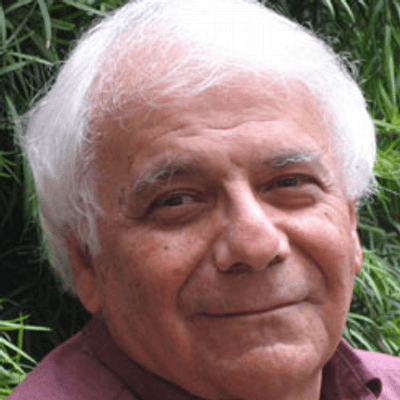
George Kirazian

George Kirazian

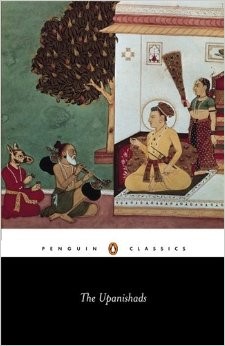
Another highpoint of the year was working with George Kirazian on an interview with him about his friendship with translator Juan Mascaró, whose renderings of The Upanishads, The Bhagavad Gita, and The Dhammapada are still readily available in the Penguin Classics series.

Juan Mascaro

Juan MascaróUpanishads


In addition to my own writing, I look forward to continued collaboration with Joseph Rael, as well as some other friends of mine: Gary Orr, Hilton Kopp, and Sandy Carter. I met Gary and Hilton during my time down under and we have some great ideas – stay tuned…I met Sandy when she did a book review of Re-humanizing Medicine for the Courage & Renewal blog. She and I put together a conference proposal on Joy in Work, which was turned down, but has led to our long-distance collaboration on a project on this same topic, which I have been calling, A Work of Joy. This examines finding joy in work at a time when there are high rates of stress and burnout in health care.

20151219_181524 (2)

At the VA, I have a couple projects I have been working on that are specific to the VA. Along with Nicola De Paul, Craig Santerre, and Jenny Salmon, we have been developing a Whole Health class that provides holistic support and inspiration to veterans who are interested in taking a more active role in their health care. I have also been working with Laura Merritt on an adaptation of Re-humanizing Medicine for VA staff, which we have been calling, Caring for Self. It is great to be able to apply some of the ideas I developed in my book to self-care for staff as well as for patients.

I’ll close in returning to what Houston writes in the introduction to her book, The Search for the Beloved: Journeys in Mythology & Sacred Psychology.

“The premise of this book is that we must call our spirits home, lest we forsake our origins, and lose hope, meaning, health, and the ability to serve and participate in the greatest challenge that history has ever known…We are all being asked, both singularly and collectively, to cross a bridge and to meet halfway a rising reality, a sacred reality. Thus the need for training in journeys into the Sacred,” (viii).

Houston develops this concept of Sacred Psychology and training in journeys into the Sacred. I feel that this is also the focus of my work in the past two years. My understanding of the hero’s journey class is that it is a form of initiation rite to help veterans move from a state of being of war to a state of being of peace in order to make the transition back into the civilian world. One of the primary ways of doing this is a kind of spiritual awakening that accompanies a shift from a materialism-based separation to a spiritual-based sense of connection and even oneness with others. I have also come to understand my work with Joseph as being a guidebook on how to become a visionary in order to move from war to peace and again to move from a state of isolated separation (which is a state of conflict) to a state of Unity as expressions of the Vast Self. This requires dying to the old self and being reborn, continuously.

Hero's Journey Reflection

20151220_132526

Here is how Joseph ends his book, The House of Shattering Light:

The House of Shattering Light

Each of us is a ceremony, a vibration of the All-That-Is. We ourselves are the Vast Self, that One Actor in the universe, who creates continually in all moments. We are the Vast Self playing in creation as creatures, as individuals.

In the experiences of my life, through loss and transformation, ceremony and story, I learned how to emerge continually from the individual self that is Joseph Earl Head Rael into the Vast Self again. In the kiva, in the sweat lodge, in the sun dances and long dances. I have learned to die to myself in order to know the Self, dying from this House of Shattering Light into states of ecstasy, and then returning again, that the Vast Self might drink continually of the light that It is creating.

To know ourselves as the Vast Self playing is to be both human and divine. It is for this we all are born, to be mystics, fully alive and dancing, (199-200).

My return to North America and my transition into the second half of my life have brought me to look less for a physical place of home and more for a spiritual, internal place – a place that also includes many places in the world as well as the whole world, or as Houston writes, “a citizen of the universe.”

kopacz.tree.2016

Update

20140611_223233

So, what else???

I haven’t really blogged too much about the settling in this side in Seattle…

It has been busy buying a new house, moving in, settling in to work and putting the finishing touches on the book. I have finished the index and sent in the final proofs on the book. I have seen the draft of the cover, which is a stethoscope that forms the outline of a human head, a nice representation of having to look past the technology to the person. I am not sure how long this next process will take, but I believe the next step is publication!

I have been doing a little painting. I have large, well-lit work space in the basement and the above photo is a detail of the first painting.

I have been learning about the national VA Office of Patient Centered Care and Cultural Transformation, and I am going to a training put on by the office next month in Atlanta. There is a lot of overlap with my book, Re-humanizing Medicine: A Holistic Framework for Transforming Your Self, Your Practice, and the Culture of Medicine. There are potentially some great opportunities on the horizon!

As soon as I know more about when the book will be coming out, I will definitely post it here.

I have also been working on a draft of what could be an interesting book. I’ll be running a pilot of a class for Veterans using Joseph Campbell’s framework of the Hero’s Journey next month. I have been writing a draft of an outline for each session with various myths, movies, stories, and ideas. I’m really enthusiastic about it as it is bringing a lot of things together in a format that is different from a traditional therapy group.

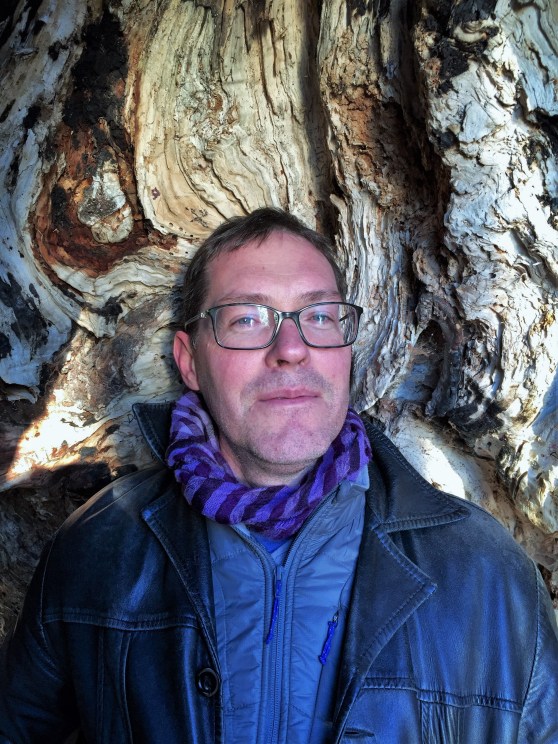
That’s all for now…in honor of the blog earlier today on the review of the union of inner/outer wilderness, here is a photo of me and a tree…(the tangled branches represent my tangled thoughts, and the teleology of branches represent my seeking the truth, which appears to be mostly off to one side of my head).

Oh, yes! I also saw Rebecca Solnit speak a couple weeks ago. I should really do a blog on that soon…

20140614_184716

Into the Heart of Darkness

(This post is something I started working on earlier in the year while I was on holiday in Melbourne, it is fitting to post it now as I am just announcing my departure from New Zealand, which is part of the topic of this post).

I haven’t posted much lately, I have been working “full on,” as they say in New Zealand, on my book. I’ll post with an update on that at a later point.  I am just getting to edit some photos from a trip to Nikau Caves back in November. It was my second time at the caves which are down near Port Waikato. It is about a 1-2 hour tour that is mostly walking, but has one place where you have to let yourself down through a keyhole and then crawl on hands and knees through a stream for a bit. I am not a fan of tight spaces, but I challenged myself a few years back to go to Mammoth Caves in Kentucky, and I found to my surprise, that I actually quite like caves. It is an exhilarating adventure to enter into the darkness, to smell the damp, cool air, to get wet and grimy and then come out the other side into the light again.

Dave at Nikau Cave

Dave at Nikau Cave

OLYMPUS DIGITAL CAMERA

The Heart of Darkness is a novella by Joseph Conrad. Conrad was a Polish sailor, adventurer and writer. He, himself, travelled into central Africa. The book is a story of one man, Kurtz, who years back ventured into the heart of Africa. There, something happened. You could consider it that he went “native,” but it is not fair to the place or the “natives” to blame them for the transformation. The book is also about the inner journey as much as the outer journey. You cannot really have one without the other, can you? Every outer journey is also an inner journey. Kurtz came to something dark within himself. The narrator, sent to find Kurtz represents the innocent explorer and Kurtz represents the one who has been over-powered by his own darkness.

The movie, “Apocalypse Now” is based on the Conrad’s novella, a book that is not long enough to be a novel, but too long to be a short story. In the movie, Martin Sheen’s character is the innocent sent to find Kurtz. Kurtz has created some kind of bizarre web around him. The darkness that is explored in the movie is the personal shadow that everyone has. It also represents the shadow side of the United States — a failed war that turned into an occupation that attempted to win over the “hearts and minds” of the “natives” and to build an (empire) of democracy. It is a war that led to a shift in consciousness in the American psyche. USA was not #1 and the line between “good guys” and “bad guys” started to become blurred.

While filming the movie, Martin Sheen — in reality — had a heart attack.

In Conrad’s book, there is a line:

“And this also has been one of the dark places of the earth.”

I made a painting years ago that had that quotation written along the bottom edge. That line always struck me. It is a complex sentence. There are several key words in that sentence. It starts with “and” as if there had already been an ongoing discussion of dark places. The word “also” implies that there are other dark places. The word “has” is a pivotal word for me, it implies the possibility of change. Therefore, darkness does not seem to be unchangeable, it is not unusual and in fact, it is to be expected, perhaps all places at some point on the earth are dark. Returning to the earlier statement — all outer journeys are also inner journeys —could lead us to say that all people, at one point in their lives on earth are also a dark place, while this is incredibly serious, it is by no means unusual, nor is it a permanent state.

And This Also Has Been One of the Dark Places of the Earth

And This Also Has Been One of the Dark Places of the Earth

In my painting, which I called “And this has also been one of the dark places of the earth,” there was a sort of abstract landscape — a pool, a tree, grassy banks, browns, greens, blues — and then there was also a squiggle of colors from a squeeze tube of paint — light blue and dark purple. Much to my consternation, this always looked to me like a nun, the Virgin Mary, or some other female, Christian icon. Yet that consternation was what I loved about the painting. The painting and the quote were about dark places, but also about that operative word, “has been,” implying the hope and potential for change. The visage of this benign presence keeping watch over the dark places seemed somehow appropriate.

The brighter the light that illuminates an object, the greater the shadow that is cast. Light and dark are inseparable aspects of the same thing. Every place that is illuminated has also been a dark place. Jung wrote that everyone has a shadow. Jung didn’t believe that it was possible to “get rid” of the shadow, although by venturing into it and developing a different relationship with it could lead to transformation. We need not be speaking of anything spiritual or supernatural here, this applies on a psychological and metaphorical level, although it could be argued that these are all aspects of the same process.

I woke up this morning (January 27, 2013) gradually working out this essay in my head. At the time of writing this, I am in Melbourne, Australia. Yesterday was Australia Day. I went snorkeling at Portsea Pier on the Mornington Peninsula in Victoria. Water has also been one of my fears in life and there is some similarity between venturing into the darkness of a cave or the fluidness of the water and similar strange creatures and features exist in both places. I saw Weedy Sea Dragons, a giant sting ray, heaps of puffer fish and many jellyfish. We went to an aboriginal art show and then we went on a night tour at Moonlit Sanctuary, a great wildlife park where we saw all sorts of interesting animals — wallabies, kangaroos, a quoll, bettongs, barking owls and a sugar glider that climbed on my hand. All this ties together, the journeys in the dark, the art work, the outer/inner journey, the strange creatures and the heart.

At the aboriginal art show, we bought a beautiful painting of the Dream Sisters, two stylized figures leaning in with heads touching and a third thing/being created from the union of the two. The woman in charge of the show told us the story of how the figures represent watchful protection. She spoke about a mandala she has that is always the first thing to go up in her home and the last thing she takes down and how that makes her feel good in some way, not that she thinks there is some supernatural force or something, she said. I thought how cool that is, I wish I had something like that, then I remembered “And this also has been one of the dark places of the earth,” and I remembered how I had sold that painting prior to us moving to New Zealand. I remembered that with sadness, but also with the reality that you cannot have an adventure, particularly into darkness (which is where all real adventures into the unknown end up at some point) and be able to bring along everything that is a comfort to you. I also realized that we were just purchasing a painting that could serve that same purpose — in fact, the blue and purple outline of the female figure is somewhat similar to the Dream Sisters.

This morning, as I was waking up, I started to think about the move to New Zealand, wondering if that was a journey into the heart of darkness. I decided it was, particularly as I decided that all outer journeys are also inner journeys. I thought of Thoreau going to Walden and then of Thoreau leaving Walden. “I left the woods for as good a reason as I went there. Perhaps it seemed to me that I had several more lives to live, and could not spare any more time for that one.” I suppose I will say something similar when I leave New Zealand.

The question, “So why did you move to New Zealand?” is one I have been repeatedly asked and have repeatedly answered. For a change. To do something new. Because the life that we had was changing so much that it seemed like a good time to change our lives. I suppose the decision to move really had something to do with life and death. The old life seemed dead and I desperately needed to pump new life into myself. I needed to move, to travel, to see the world, to remind myself that I was part of the world and had a place in the world. It was all that much more painful when I realized that moving to another country is all about not having a place in the world. It is also about questioning who you really are and about what is really you, what is a conditioned cultural response from the country one lives in and what is a spontaneous expression of oneself. I went to New Zealand to see the world, to grow and to reconnect to myself. I am now in the process of leaving New Zealand for the same reasons.

This piece I am writing is really too long for a blog post, it is more of an essay, but I am going to post it as a blog post. I guess you could say it is a bl-essay. When I thought of that I had the sense the term is fitting as the idea of the watchful figure is like having a blessing, having a reminder that the dark places are temporary but necessary on the earth. Like Dante’s quote, “Midway upon the journey of our life, I found myself within a forest dark, For the straight forward pathway had been lost.” The darkness is necessary for the transformation that comes later. Life is created in the space between the contraction and relaxation of the heart.

Guest Blog Post at the Center for Courage & Renewal Blog

Please see my May 9th guest blog post at The Center for Courage & Renewal Blog (the full text can also be found below)

I wrote this after attending the 2nd Annual Health Care Institute:

Integrity in Health Care: The Courage to Lead in a Changing Landscape

The Center for Courage & Renewal promotes the work of Parker Palmer. I frequently cite Palmer’s work, particularly as it pertains to professional leadership in medicine, in my forthcoming book, Re-humanizing Medicine: A Holistic Framework for Transforming Your Self, Your Practice and the Culture of Medicine.

Another update is that I have been spending a lot of time working on my website, but you can’t tell it yet. All the new content should be posted there before too long.

___________

Recovering Hope, Poetry and Connection in Health Care

I recently attended the conference/retreat “Integrity in Health Care: The Courage to Lead in a Changing Landscape.” I arrived there in the usual state for me, tired, stressed and struggling to balance all of my clinical and administrative responsibilities with the rest of my life. I work as a psychiatrist and as Clinical Director at an inpatient/residential psychiatric rehabilitation program with a population of treatment-resistant clients and a staff group that is going through union action. I took on the job hoping that I could bring a holistic approach to foster recovery and rehabilitation for clients and well-being for the staff, but I am not sure how successful I have been with either the clients or the staff. Many days feel like a constant barrage of worries and concerns about clients, staff and a never-ending stream of emails.

What I found at the conference was not any easy answer or magic solution to my daily worries. What I did find was a chance to reflect on my own situation with a group of supportive facilitators and participants. Having this time and space allowed me to connect more deeply to myself as well as to connect with other health professionals struggling with similar demands. As a result of the conference I felt more hopeful, less alone and that I had more inner and outer resources to bring to my daily work. I think one of the most damaging aspects of our work in health care is the despair that comes from trying to do good work in systems that, directly or indirectly, seem to inhibit good work. We thus have systems in which everyone is working hard, yet no one feels good about the work that they are doing.

The conference was structured around Parker Palmer’s “Five Habits of the Heart,” from his book Healing the Heart of Democracy. These habits are: understanding we are all in this together; an appreciation of the value of “otherness; the ability to hold tension in life-giving ways; a sense of personal voice and agency; and the capacity to create community. For me this boiled down to developing a sense of internal connection and cohesion while also developing connection to others and building community. This led me to reflect that if we can hold the inevitable tensions between individual and community in life-giving ways, the personal growth and well-being of the individual can contribute to the complexity and health of the community.

The idea of embracing tension rather than trying to eliminate it got me thinking of the tension in my own work and life. If I can shift my perspective toward daily stress and tension as a life-giving energy for work instead of as a drain and impediment to my work, perhaps I can more skillfully support the growth of a therapeutic community at the rehabilitation center where I work. The concept of a therapeutic community is that no one individual has responsibility for solving the problems that arise in the community, rather the work is done in open discussion between all members of the community. Palmer’s habits of the heart serve as an excellent guide for this kind of work by valuing the individual and the community and by seeing the tension as a source of life energy. To me, this was the most useful concept from the conference, that stress and tension can be re-framed and used for positive work.

This concept of holding tension between opposites, rather than trying to have one opposite (e.g. hope) overpower the other opposite (e.g. despair) allows for a complex and systemic approach to complex and systemic problems. The idea of tension being life-giving rather than something to get rid of reminds me of Swiss psychiatrist Carl Jung’s approach to the problem of opposites, that there is a “unifying third” that unites the opposites into a higher order of meaning. In this conference, we can look at integrity as the “unifying third” that comes from holding the reality of despair about contemporary health care and the need and fact of hope. In practice, integrity is generated from embracing the despair and the hope in contemporary health care.

Where does this hope come from? I found hope when I looked into the eyes of the facilitators and participants at the conference. I found it when I looked into myself. Hope is there, it is a living thing. It is just that there is also so much despair that it is easy to lose sight of hope. Hope is intrinsic to the very idea of health care. We all went into this field because we felt that something hopeful could be done in the world.

I’d like to return to this idea of tension being “life-giving.” The image that came to me was of the poles of a magnet. Electromagnetic lines of force emanate in complex and systemic ways around the negative and positive poles of the magnet. These electromagnetic fields create energy that can be used for work. Cancellation of either the negative or positive pole leads to a collapse of the energy and an inability to do work. To move from the metaphor back to our discussion of hope and despair, it is quite apparent that if despair eclipses hope no work can be done. (I will leave the opposite statement of what happens when hope eclipses despair to the metaphysicians, as this does not appear to be an immediate risk in health care.) If this metaphor holds, we can shift our attitudes toward the reality of despair and let go of our desire to eliminate it. Instead, we can view it as a powerful generator of energy and work when it is in a tension-filled relationship with hope.

We do not need any help to find sources of despair to feed this life-giving tension. However, we do need to periodically renew our sources of hope. Luckily these can be found when we pause in life and look within and look to others who are doing hopeful work. One great place to pause is at an “Integrity in Health Care” retreat.

This conference was not a passive, one-way exchange of information from the facilitators to the participants. We had ample time for personal reflection and small and large group work. The facilitators were compassionate and skillful in stimulating discussion and reflection to promote individual and group work. The other participants were inspirational in their personal honesty, their humanitarian drive to alleviate suffering and the creative ways that they were doing clinical and administrative work. I remember one small group where we discussed how we can facilitate individual and group reflection in busy health care environments. We spoke about mindfulness and poetry as ways to accomplish this. This discussion was very helpful for me and I take away a particular commitment to have more poetry in my life as I find it ignites a dimension in me that I often push on the back burner. As the poet and translator of sacred texts, Juan Mascaró, writes:

“The appreciation of a poem is an act of creation whereby we go towards the greater life that created the poem. An expansion of life.”

There is another tension in health care between the poetry of medicine and the science of medicine. We work in a time when the science (and the business) of medicine often obscure the poetic value in our work. Mascaró further writes that:

“There is inner observation and experiment and outer observation and experiment. From the first comes poetry and spiritual vision and all human values; from the second science and technology.”

What I take away from this conference is an enhanced ability to hold this tension between inner and outer observation and experiment, which allows human values and science to co-exist in the delivery of health care. Practically, this means I have a renewed sense of self-connection, a stronger sense of community and more hope from the work that others are doing in health care. With a handful of poems and a heart-full of hope, I return to my daily life and work.


The End of an Era: Freddino’s Closing

The End of an Era: Freddino's Closing

It is the end of the month and also the end of the fiscal year in New Zealand – and Freddino’s cafe and Yakitori is closing.

The End of an Era: Freddino's Closing

This has been my favourite cafe to write in and I am really sad about it closing. Freddino has created a great atmosphere, that in some odd ways reminds me of home, the kind of feel that someplace in Champaign-Urbana – there is something about the relaxed, open atmosphere and the Freddino’s artwork that he has about the place. On the surface, you wouldn’t notice it, it is a deeper sense of creativity and comfort.

The End of an Era: Freddino's Closing

There aren’t many cafes in New Zealand that are “laptop friendly,” but I never felt like I was a nuisance taking up a table at Freddino’s. I have really enjoyed writing at Freddino’s and it will leave a gap in the cafe writing culture in Auckland.

The End of an Era: Freddino's Closing

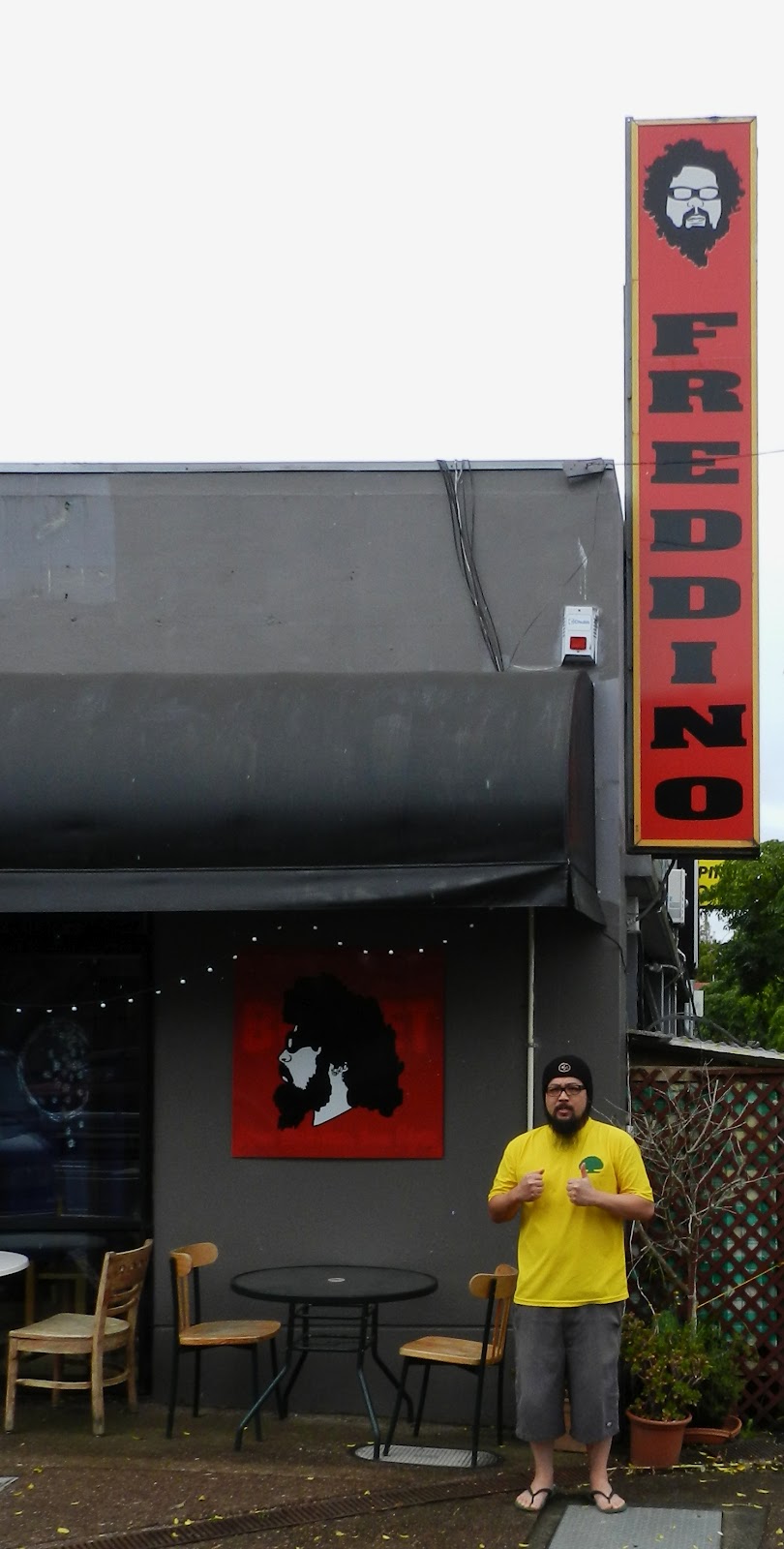
Freddino isn’t afraid to put himself out there, as you’ll see from his artwork and his iconic self-portrait that festoons the outside of the building.

The End of an Era: Freddino's Closing

The coffee is always great, they serve lattes in bowls, which I love. The vegetarian breakfast is superb! We didn’t make it out to Freddino’s for dinner much, I was mostly there on my Tuesday writing mornings, but the Yakitori was great.

The End of an Era: Freddino's Closing

One And a Half Years and Counting

We recently just passed the one and half year mark of living in New Zealand. It is definitely a different phase now, more settled, but that raises questions and dilemmas, too. Every year here is a year not there. I have a very good career opportunity that has come up here, so I am committed to that, but we definitely have been having some discussions about what our plans for the future are.
I think this is actually a challenging point in the move. The excitement of moving to a new country is not as great. I have a realization that even though I have worked very hard to grow roots here, they are fairly shallow and they feel vulnerable yet. I have definitely grown and learned so many things and met so many people from around the world, here in New Zealand, that it has changed me. This is really a kind of between time. Not a period of intense adjustment, but a period of questioning, and with that questioning, I have also felt mourning. So many of the things I have gained and grown in here are intangible and I wonder how they would translate back to the US. That creates a kind of double mourning: what I left in the US, what I missed out on for the past year and a half, but also about what I will at some point leave here. 
It is a time of being pulled in two directions, it is as if I feel that at some point in the future, I will have reached the half-way point in my journey here and the focus of energy away from the US and toward NZ will begin to shift back. I think because it has been such an intense emotional experience here that any change, anything that stirs up emotions gets compounded.
I have found myself thinking a lot about things that I have let go of over the years, not necessarily things that we sold or gave away before we moved to NZ, but things that I have let go of at other points, books, music – things mostly, but I imagine the things are more than just things, but really parts of myself, eras of my life, things that I once cared a great deal about and then let go of, for various reasons. I have been picking up a lot of music on Amazon, old songs or albums that have been on my mind that I no longer have.  It is amazing what can be replaced digitally now – most of the music, really, is still available. Digitally, it takes up less space, as I amass a digital library that reminds me of my old stacks of vinyl records and cassette tapes – although it is different still, less tangible, and also it is a re-visitation of the past, rather than an exploration of the new on the edge of the present and the future. 
I also bought a Kindle. Have I spoken about it on the blog? I’m not sure, I know I haven’t been blogging as much lately. I like that I can play music on it while I read.  I feel better about downloading books on the kindle than paying for shipping from the US (and the environmental impact of shipping a box of books all the way from the US). Books here in NZ are really expensive, it is much cheaper to import them yourself through Amazon. I have been getting a few books that I miss from the past, like Octavio Paz’s Conjunctions and Disjunctions and Ken Wilbur’s A Brief History of Everything. I am really missing my Jung books that I collected over the years and then decided I didn’t want to lug them about everywhere and let go of them. I seem to go through phases of reading and re-reading Jung and I am in one of those now. The first phase was at University, then we moved back to Champaign after 10 years away, and now about 12 years after that.
It is interesting – I have been thinking about the role that earlier interests play in a person’s life.  I’ve been working on a conference proposal looking at Jung’s Red Book and Philip K. Dick’s Exegesis. Both of these are massive works that were personal, rather than written for an audience, and both contain intense, spiritual experiences that served as a framework for each author’s later works. The strange thing is that the experiences they had are not so unusual given each authors’ interests. For Jung, he had already been writing about archetypes of the collective unconscious and then he experienced a flood of unconscious material that he managed to ground and work with very creatively for the rest of his life. PKD also wrote about how his life had become like one of his novels, filled with spiritual revelation on the edge of psychosis and paranoia. While PKD doesn’t seem like he was as functional in the “real” world as Jung was, still, he made great use of his experiences in his later work. Back to the interesting thing, though, both Jung and PKD seemed to presage their spontaneous spiritual experiences in their prolific work at writing prior to the experiences. 
This is particularly of interest to me at this juncture in my life in which I am looking at some of the things that I thought I had let go of in my life, and I am finding that rather these are recurrent threads – I may have thought I left something behind me, but I find that my interests at a younger age are often my interests at an older age. I guess that is not surprising, I am the same person – and yet I am surprised! Like a painting or a song, there are certain prominent, recurring themes, new elements are incorporated, but they are incorporated into a framework that relates the new elements to the enduring themes. Even coming to New Zealand was an idea I had when was going through my psychiatric training and I became aware that NZ needed psychiatrists. Coming here ties together some of the themes of my interests in culture, anthropology, exploration, travel, nature and then oddly enough, I ended up working in a rehabilitation/recovery model and this reignited some of my earlier interests in trauma, psychotherapy, Jung, and also some of my old punk rock idealism. I never would have guessed what I would be doing at this point, but it is not surprising, given who I am/have been in the past.

Project from writing group: influential author

I have worked with some other people to start a monthly writing group and this was one of our exercises, to write about an author whose writing you find influential. I’ll include my piece on this below:

Rebecca Solnit is an American author that I only discovered upon moving to New Zealand. The first book of hers that I read was A Field Guide to Getting Lost, it seemed appropriate for me, as I was feeling adrift in my life, having just moved around the world and I was trying to get my bearings. This book examines many different kinds of getting lost, from getting lost in the woods, lost in sex, drugs, and rock and roll, lost in mental illness, losing one’s cultural heritage, getting lost in art, and losing one’s thread in life. Solnit explores these themes in a loose, and rambling manner, sometimes seeming to get lost herself, so that the reader asks, “where is all this leading, if anywhere?”
                She quotes the pre-Socratic philosopher, Meno, “How will you go about finding that thing the nature of which is totally unknown to you?” She goes on to say that this seems to her the “basic tactical question in life.” “The things we want are transformative, and we don’t know or only think we know what is on the other side of that transformation. Love, wisdom, grace, inspiration – how do you go about finding these things that are in some ways about extending the boundaries of the self into unknown territory, about becoming someone else (4-5)?” Through studying the various different ways of getting lost, Solnit is secretly exploring the different ways of growing, changing, and transforming one’s self through the engagement in the painful and darker things in life. She often quotes Henry David Thoreau (another reason I like her books), for instance, “Not till we are lost, in other words, not till we have lost the world, do we begin to find ourselves, and realize where we are and the infinite extent of our relations,” (15).
                This permission to be lost in order to find oneself, came at a great time for me, as I struggled with my own issues of identity, place, and belonging.  I have long felt an outsider, and yet there are other times that I am very much an insider in certain situations. I have worked to make sense of my life by following a thread that leads sometimes internally, sometimes externally, sometimes through the “inside” of a system, organization, or profession, and sometimes on the “outside.” It was comforting to me to feel that there is a point in getting lost, and that point is growth and transformation.
                Another thing that I like about Solnit’s writing is that she is an idealist, a social activist, a realist, and a naturalist. She has a poetic sense and uses her own subjective experiences along with pursuing and developing ideas that don’t just sit on the shelf, but that engage with the world to create something positive. The next book of hers that I read was Hope In The Dark:  Untold Histories, Wild Possibilities. In this book, she outlines a definition of hope, how to keep hope alive, and how to stay positively engaged in life, even when it so often seems like all hope is lost. 
What I like about Solnit’s writing is her embrace of idealism and realism, that when held together comprise paradox. Hope comes from despair, human connection asserts itself in the face of repression and disconnection, and one finds oneself through losing oneself. Other paradoxes that Solnit describes are that the word emergency contains within it the word emerge (12); and that darkness can represent both the creative darkness of the womb and or the terminal darkness of the grave (6). These paradoxes allow for both reality and idealism. Paradox allows for one to act in the world without having to be perfect, it allows for complexity, such as success and defeat both being present in the same action. Solnit argues that the very reasons for despair can also be the justification for engaging in the world.  She defines the word, activist “to mean a particular kind of engagement – and a specific politic:  one that seeks to democratize the world, to share power, to protect difference and complexity, human and otherwise,” (18). 
                Solnit argues 3 points in favour of hope: 1) when looked at historically, many positive changes have occurred already in terms of human rights; 2) change “takes place in more protracted, circuitous, surprising ways than is often acknowledged;” and 3) despair is often a result of misunderstanding change, thinking that only success validates hope, and thinking that activism is the exception rather than the rule of continual engagement in life (pgs. 151-152). 
                I came across Rebecca Solnit’s writing at a very good time for me. Personally, my decisions to move from the US to New Zealand were due to both a pulltowards New Zealand and a push away from the economic and political problems in the US. Moving to another country brought up issues of identity and belonging for me, as well as the familiar question of to what extent am I an insider and to what extent am I an outsider. In addition to the Solnit’s positive messages about the benefits of getting lost and the necessity and reality of hope, she is American in the best sense of the word.  She frequently draws on the best American principles, such as Thoreau’s civil disobedience, love of nature, and opposition to slavery. She also draws on the struggles and victories of many Americans who are unknown to the larger world and history. 
                Solnit also draws on voices of freedom from around the world, such as an unknown person who goes by the name Subcommandante Marcos, a leader of the Zapatista movement in Mexico. Marcos has issued a series of proclamations. An excerpt from the Fourth Declaration of the Lacondon Jungle reads, “A new lie is being sold to us as history. The lie of the defeat of hope, the lie of the defeat of dignity, the lie of the defeat of humanity…In place of humanity, they offer us the stock market index. In place of dignity, they offer us the globalization of misery.  In place of hope, they offer us emptiness. In place of life, they offer us an International of Terror. Against the International of Terror…we must raise an International of Hope. Unity beyond borders, languages, colors, cultures, sexes, strategies and thoughts, of all those who prefer a living humanity. The International of Hope. Not the bureaucracy of hope, not an image inverse to, and thus similar to, what is annihilating us. Not power with a new sign or new clothes. A flower, yes, that flower of hope,” (39-40). To me, Solnit’s writing stands for these universal human rights:  the International of Hope and the flower of hope; the engagement with a “living humanity;” and also the best of American ideals and pragmatism.  Last of all, Solnit argues that the act of writing, itself is an act of hope. She states that writing “is a model for how indirect effect can be, how delayed, how invisible; no one is more hopeful than a writer, no  one is a bigger gambler,” (65).

Václav Havel: 5 October 1936 – 18 December 2011

“I should probably say first that the kind of hope I often think about (especially in situations that are particularly hopeless, such as prison) I understand above all as a state of mind, not a state of the world. Either we have hope within us or we don’t; it is a dimension of the soul, and it’s not essentially dependent on some particular observation of the world or estimate of the situation. Hope is not a prognostication. It is an orientation of the spirit, an orientation of the heart; it transcends the world that is immediately experienced, and is anchored somewhere beyond its horizons. I don’t think you can explain it as a mere derivative of something here, of some movement, or of some favorable signs in the world. I feel that its deepest roots are in the transcendental, just as the roots of human responsibility are, though of course I can’t – unlike Christians, for instance – say anything concrete about the transcendental. An individual may affirm or deny that his hope is so rooted, but this does nothing to change my conviction (which is more than just a conviction; it’s an inner experience). The most convinced materialist and atheist may have more of this genuine, transcendentally rooted inner hope (this is my view, not his) than ten metaphysicians together.

Hope, in this deep and powerful sense, is not the same as joy that things are going well, or willingness to invest in enterprises that are obviously headed for early success, but, rather, an ability to work for something because it is good, not just because it stands a chance to succeed. The more unpropitious the situation in which we demonstrate hope, the deeper that hope is. Hope is definitely not the same thing as optimism. It is not the conviction that something will turn out well, but the certainty that something makes sense, regardless of how it turns out. In short, I think that the deepest and most important form of hope, the only one that can keep us above water and urge us to good works, and the only true source of the breathtaking dimensions of the human spirit and its efforts, is something we get, as it were, from ‘elsewhere.’  It is also this hope, above all, which gives us the strength to live and continually to try new things, even in conditions that seem as hopeless as ours do, here and now,”
(Václav Havel, Disturbing the Peace, p. 181-182).

Australia!

AUSTRALIA!
AUSTRALIA!

About two weeks ago, I went to Australia for the first time. The trip was for the World Congress for Psychotherapy. I was in Sydney the whole time and I really enjoyed seeing another major city in this region. It was a 3.5 hour flight from Auckland and is the closest city larger than Auckland. Sydney has a population of about 4.5 million (which is around the population for the whole country of New Zealand) and it is in the Australian state of New South Wales. The whole population of Australia is around 22.5 million (roughly equal to the populations of the four US states of Illinois, Wisconsin, Iowa, and Nebraska).

AUSTRALIA!

It is hard to draw too many conclusions from one week in the largest city of a country. Sydney was very ethnically diverse. It definitely had a larger city feel than Auckland as well as having a different culture. Again, these are just first impressions, but Sydney felt more relaxed (in the sense of not seeming to have as many social rules about colour and loudness of voice), people were louder and more open, but not as friendly. Businesses were more business-like, but with the down-side of being less friendly, more rushed. The food was good, but the quality of the food didn’t seem as spectacular as in New Zealand. 
AUSTRALIA!
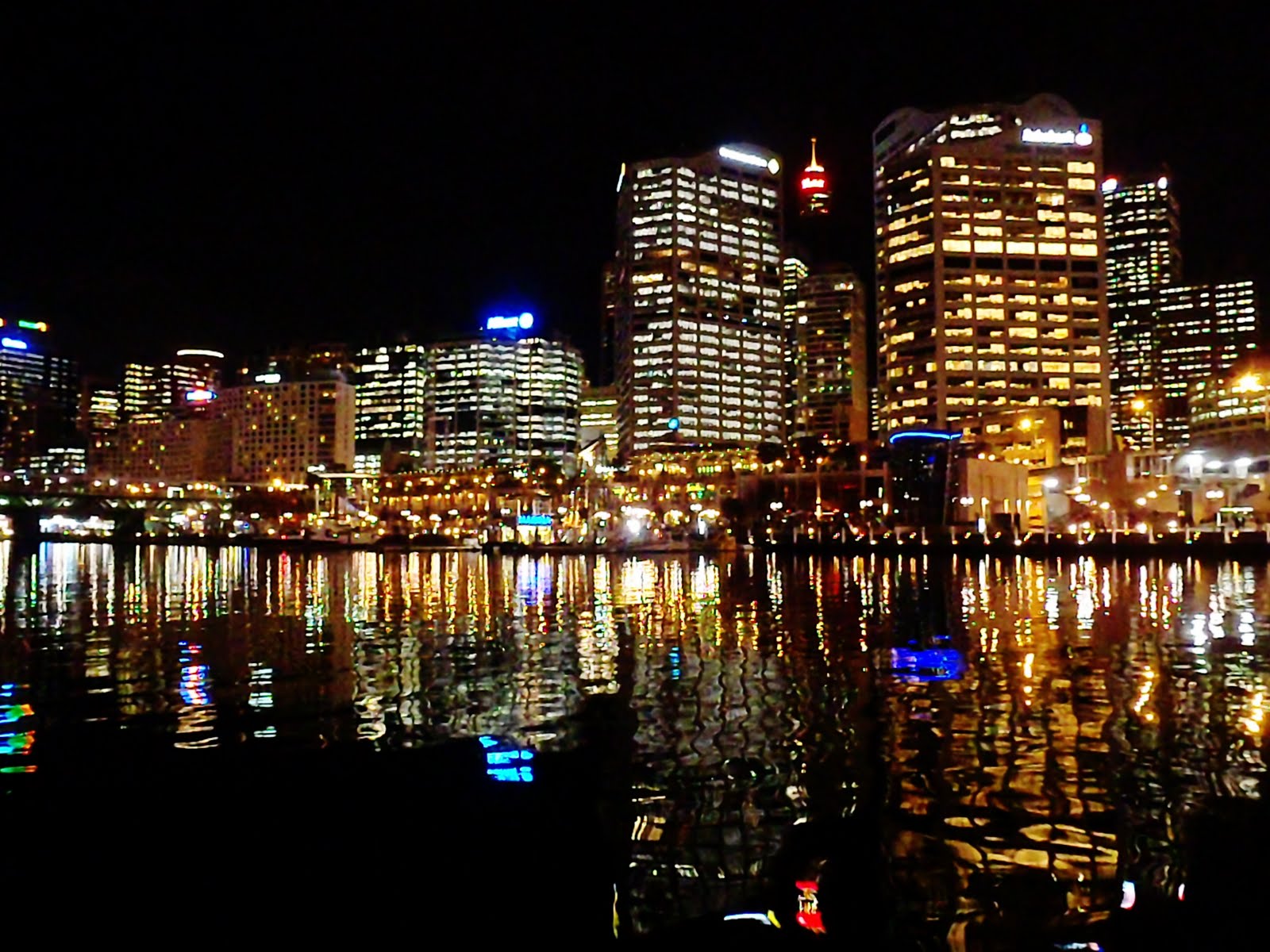
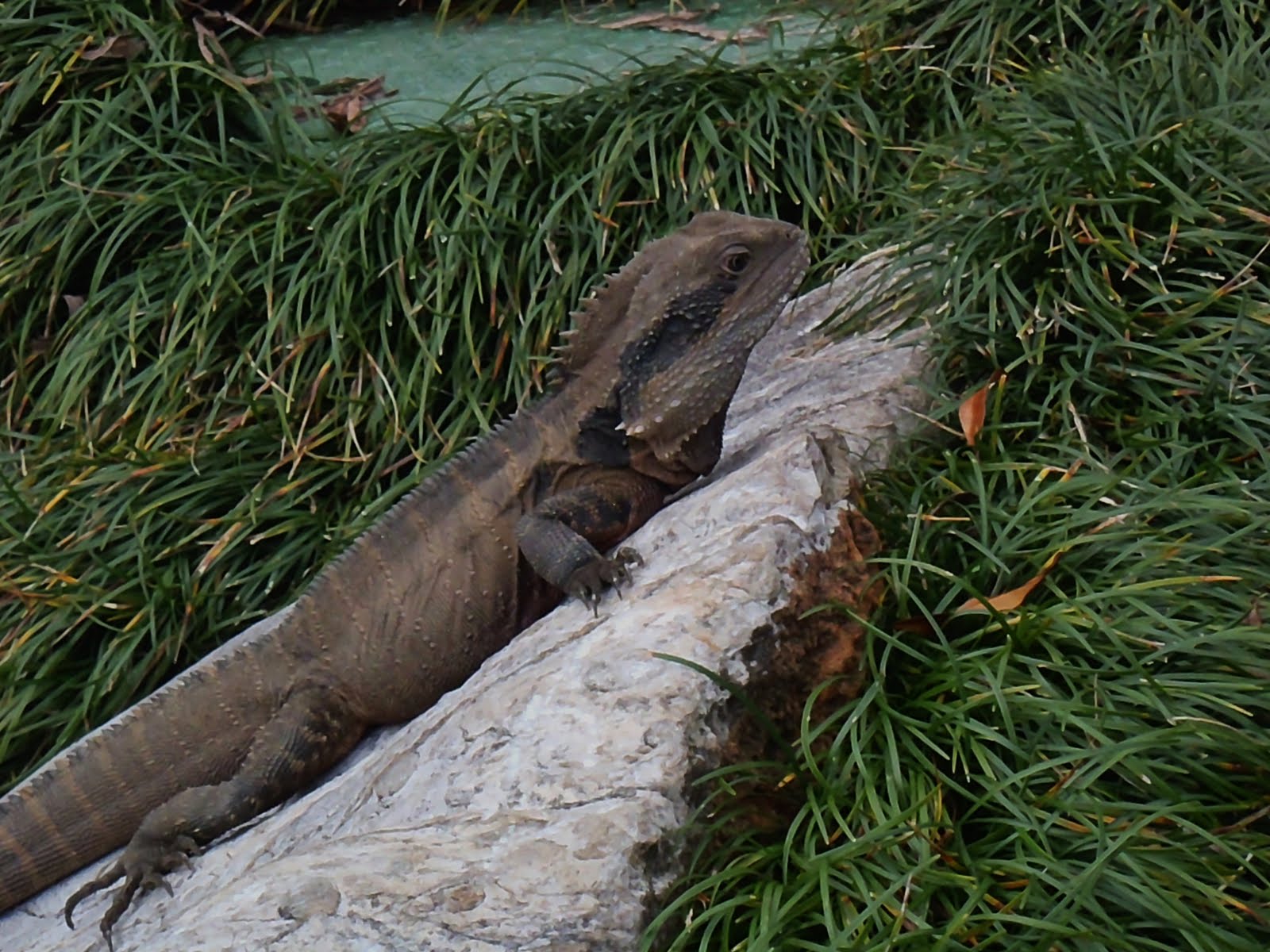
I went to the Chinese Friendship Garden and walked around Darling Harbour, where the convention centre was located. Mary Pat and I took a water taxi (which was a great idea) from Darling Harbour to the Opera House and walked around in the Botanical Gardens, which had a huge number of Flying Foxes in the trees. It was definitely a great trip and we’ll go back for a little longer look at some point.
AUSTRALIA!
AUSTRALIA!
The conference was wonderful and had daily themes on indigenous culture, spirituality, and also ethics & philosophy. I met some great people and learned and experienced a lot. The overall theme of the conference was World Dreaming, based on the Australian Aboriginal practice of studying dreams and Dream Time. I did have a lot of dreams at the conference and made it to two of the morning dream sharing sessions that were really interesting group processes stemming from the dreams that people brought in. One of my favourite lectures was by Helen Milroy who presented on Aboriginal experience from pre-colonial era, through colonization and genocide, and then a kind of trauma and healing model. What was really amazing is that she had paintings she had made that illustrated each step along the presentation and the paintings seemed to embody the complexity of the step in a non-verbal way, plus they were amazing paintings! Here is a link to a newsletter I found that has an image of one of her paintings: 
AUSTRALIA!
AUSTRALIA!