A Last Journey in New Zealand: Cape Reinga

I have not posted anything for some time as I have been absorbed in wrapping things up in New Zealand and getting settled in Seattle. I did take a last road trip before I left New Zealand and drove up to Cape Reinga at the northernmost tip of the North Island. This is a sacred place to the Maori who believe that departed souls leave New Zealand from this point (actually climbing down a lone Pohutukawa tree located on a large rock, a tree which has never been seen to bloom).

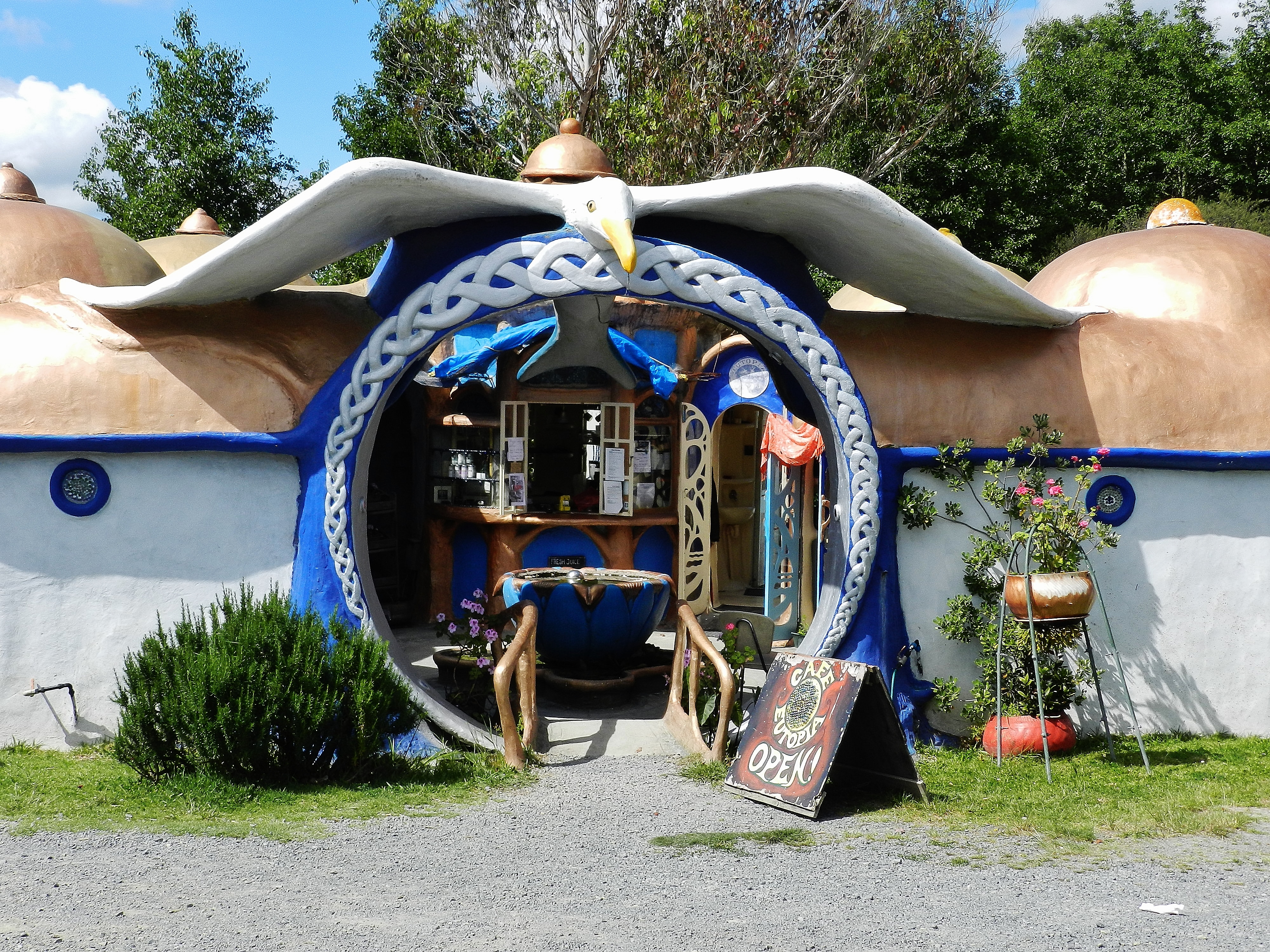
On my way up, I stopped at the always interesting Café Eutopia in Kawakawa.

DSCN0295

DSCN0297

DSCN0299

It was a great trip and a fitting end to my time in New Zealand. There was a different feel at Cape Reinga, driving along the spine of the North Island as it gradually comes to an end. The hill where the lighthouse is planted is called Atua Peruperu.

DSCN0320

DSCN0331

Here is the pohutukawa (kahika) tree known as Te Aroha (Love). Te Aroha’s roots, on Te Reinga, are the steps used by departing souls into the underworld.

DSCN0334

DSCN0337

Reinga is also the meeting point, the confluence, of the Pacific Ocean and the Tasman Sea. It is thus a meeting place of powerful forces. The line between the two bodies of water is actually visible extending out from the land.

DSCN0343

DSCN0345

I drove back down Northland and stayed near Mangonui (known for its fish & chips) in a caravan on a property on a farm. The couple who leased it out were very nice and it turned out the man was an American ex-pat. There were so many sounds that night as I went to sleep: the cry of various birds and peacocks in the distance and various farmyard sounds. So much to listen to, such abundance of life. In the morning I awakened to the sound of cows in the pasture right outside my kitchen window. I had a nice breakfast of farm fresh eggs on, an orange off the tree, and coffee…

DSCN0377

DSCN0380

DSCN0393

The next day I drove out to Karikari peninsula and then made my way back to Auckland. It was a quick trip, but I covered a lot of ground. It was a perfect trip to reflect on the themes of endings and beginnings and my time in New Zealand, as my (living) soul prepared to leave New Zealand after my 1232 days (3 years, 4 months, 13 days) in New Zealand…

Last Thoughts from the Clinical Director: Idealism and Cynicism; Endings and Beginnings

I was going to write this column on endings, as that is the obvious choice for the end of my time as Clinical Director at Buchanan Rehabilitation Centre. I was looking at poems about endings and trying to write the column backwards from those poems. It just wasn’t coming together. Endings are times for reflection, assessment and good-byes. I find myself immersed in emotions and logistics of planning an international move. Oftentimes the demand of the logistics leaves little time for emotional processing and the emotions leave little intellectual energy to deal with the logistics. I feel there is so much more that can be done at Buchanan to make it not just an alright place, or an ok place, but to make it a real gem of a service that combines the best of psychiatry, rehabilitation and recovery. Of course, this implies that there are things that we could be doing better and this is what leads me to a discussion of Idealism and Cynicism.

I am an Idealist, I have come to terms with this in my life. It means that I often see how things could be “better,” different, and it can lead me to a dissatisfaction and frustration with “the way things are.” The Greek philosopher, Plato, can be considered an Idealist. His allegory of the cave illustrates this. He describes a person whose only experience of reality is in seeing moving shapes on the cave wall. These shapes are created by light striking objects and casting shadows. There are two implications here. The first is that the person is only seeing an image or representation of reality (the object). The other is that the person could get up and leave the cave, go out into the sun and experience the external real world. Either way, it can be said that the person is not in touch with reality, but just a shadow of it. The spiritual and philosophical concept of “awakening” is relevant here – that the awakened person recognizes the limited or even illusory nature of the reality that we tend to respond to in day-to-day life. It can be said that an Idealist sees the ideal, that which could be, but is not found in mundane reality. Visionaries and transformers are Idealists.

Psychiatrist, Carl Jung, borrowed from Plato’s concept of “archetypes,” these ideal forms that exist outside of the day-to-day realm. These forms exert an unconscious and sometimes conscious influence on the development of the individual. While he listed many different examples of archetypes, the primary one he was interested in is called “The Self,” which is an image or representation of wholeness that works within the individual, who is by nature a small, separate being when compared to larger reality. Jung saw this archetype or force of the Ideal at work in spiritual and artistic creations and experiences in which the individual had some form of healing or renewal in a connection within the self as well as a sense of connection to a larger whole or purpose in the world.

Plato and Jung are Idealists, they view a True Human Being as actually something that is in the process of becoming through a dialogue with the Ideal (or Real). In the last column, I discussed this dilemma about a True Human Being, whether Truth is something in the moment or whether it is something that is gained in the future. I suppose this argument is reduced if we say that a True Human Being is someone who is in an open dialogue with the Ideal (or we could say the Real, or even the Divine if you are spiritually-oriented). In this sense, it is the connection between the Ideal and the individual that is crucial, rather than some present or future state of the individual.

A discussion of Idealism is incomplete without a discussion of Cynicism. There is a Greek school of philosophy called Cynicism, but my own view is that Cynics are Idealists whose dreams and ideals have been frustrated and unrealized. This calls to mind Nietzsche’s saying that man would rather will nothing than not will. Cynics are Idealists who put their energy into tearing down dreams. In a way, you could say that Cynics are the most important part of an organization because they hold a lot of energy, but it is being directed in a destructive rather than a constructive way. A rehabilitated Cynic will bring far more change to an organization than a level-headed Pragmatist. You can always find Idealists, any young person going into health care is generally an Idealist, but most quickly become either Pragmatists or Cynics as they become frustrated and disillusioned with the idea of being able to do the “best” at their jobs.  Really, a healthy and growing organization needs a balance of all 3 types. The Cynics can pull back the extremes of the Idealists, the Idealists can inspire the others, the Pragmatists can be in the middle, working on what is possible in the moment.

These are my thoughts this morning and they link back to my work on my book, Re-humanizing Medicine, which is essentially a guide for maintaining Idealism and rehabilitating Cynicism. How well have I done in my role as Clinical Director? Well, my answer to that changes minute to minute sometimes throughout the day and ranges from extremes to middle ground. I suppose my answer to that question is sometimes Idealistic, sometimes Cynical, and at times Pragmatic.  Perhaps I could have done more or “better,” but I did what I could. Perhaps if I stayed longer and worked harder, it would make a difference, but it is time for me to go. What do I hope will be the outgrowth of my work? I suppose it is related to all this talk about Idealism and Cynicism in some way.

I have had (before the movers so efficiently and swiftly packed up all my things around me) a plaque on the wall with a quote by Howard Thurman, “Ask not what the world needs, but what brings you alive, because what the world needs is people who have come alive.” This is a good definition of Idealism and includes the Jungian concept of Self, that what is ultimately important is in discovering what it is that brings you alive, that enthuses you and fills you with energy. The challenge of the Idealist is in bridging the gap between the Ideal and the mundane world. Most Idealists would agree that this is never completely possible, that it is always a work in progress and always a compromise to some extent.

A successful Idealist, one who can continue to work and create, must come to terms with this dual-natured reality: on the one hand, to be true to the Ideal vision and on the other hand, to accept that the Ideal is unrealizable. Rebecca Solnit, in her book, Hope in the Dark, describes “activists” (who I would say are a kind of Idealist) who work to make the world a better place. She sees activism as a mode of being, a moral responsibility, that is ongoing, and that one engages in regardless of the “state of the world,” or the “chance to succeed.”  She describes the term activist “to mean a particular kind of engagement – and a specific politic:  one that seeks to democratize the world, to share power, to protect difference and complexity, human and otherwise,” (18).  “For a long time, I’ve thought that the purpose of activism and art, or at least of mine, is to make a world in which people are producers of meaning, not consumers, and writing this book I now see how this is connected to the politics of hope and to those revolutionary days that are the days of creation of the world,” (115).  To define an activist or Idealist as a kind of engagement or a mode of being, de-couples it from the outcome. One maintains hope because one has decided to be a hopeful person. One is an activist because they have decided that it is right to work to make the world a better place, regardless of the chance of success. One is an Idealist because they have made the choice to work to bridge the gap between the Ideal and the world.

What does all this have to do with Buchanan and my departure? I have said before that in psychiatric rehabilitation we are in the business of hope. What I hope I have contributed to Buchanan is some of this attitude that we can and should work to bring the Ideal into the actual. This means we can and should work for change and growth in ourselves and for clients. What about endings and new beginnings? Well, those two always seem to go together, don’t they? I’ll have to leave you to work that out for yourself.


The Layers

I have walked through many lives,
some of them my own,
and I am not who I was,
though some principle of being
abides, from which I struggle
not to stray.
When I look behind,
as I am compelled to look
before I can gather strength
to proceed on my journey,
I see the milestones dwindling
toward the horizon
and the slow fires trailing
from the abandoned camp sites
over which scavenger angels
wheel on heavy wings.
Oh, I have made myself a tribe
out of my true affections,
and my tribe is scattered!
How shall the heart be reconciled
to its feast of losses?
In a rising wind
the manic dust of my friends,
those who fell along the way,
bitterly stings my face.
Yet I turn, I turn,
exulting somewhat,
with my will intact to go
wherever I need to go,
and every stone on the road
precious to me.
In my darkest night,
when the moon was covered
and I roamed through wreckage,
a nimbus-clouded voice
directed me:
“Live in the layers,
not on the litter.”
Though I lack the art
to decipher it,
no doubt the next chapter
in my book of transformations
is already written.
I am not done with my changes.

(Stanley Kunitz)


Thoughts from the Clinical Director: Becoming a True Human Being

“we are…making ourselves better heart people,” (Joseph Rael)

A hobby of mine is personal growth and transformation. This is a larger context for human being than a focus on psychiatric treatment or symptoms, although it can include addressing those. During my time at Buchanan Rehabilitation Centre, my goal has been to bring this perspective into our daily work in psychiatric rehabilitation.

What does it mean to be “A True Human Being” or to be Fully Human? What I have found is that it is a funny paradox that involves both acceptance of where someone (or one’s self) is, that people are “ok” (with all their quirks and oddities and problems) and it also involves being on a path of change, growth, self-knowledge and transformation. Every human being is unique and will hit a unique point in their life in which the drive or need to change becomes stronger than past patterns and ego defenses. Rehabilitation is fundamentally holistic – it requires many different approaches and disciplines to support the growth of the True Human Being (by this I mean, again, both for ourselves as health professionals and for clients). That is why a collaborative Multi-Disciplinary Team (MDT) is so important. Each discipline brings a different perspective and dimension to working with human beings and this fosters authentic growth and transformation.  A collaborative MDT is like a healthy human being or ecosystem – comprised of significantly different organs or organisms that all work together in an expression of their unique individuality while simultaneously working together as a collective. Sometimes this is how writers describe the difference between reductionism and holism – that reductionism is about breaking down something large into standard, interchangeable component parts, whereas holism is about something greater than the sum of the component parts. This means that somehow, beyond the biochemistry, trauma history, family dynamics and substance abuse, there is something larger that is both already present and in the process of emerging – the True Human Being.

Ok, I admit that there is a serious paradox here. Is the True Human Being something that is already present in the individual (maybe already ok as it is or maybe just obscured and waiting to be uncovered) or is the True Human Being something that is always in the future – waiting to emerge? As with any paradox about life, the answer is generally both/and rather than either/or. We can look at the relationship or dialectic between Being (already present in the moment) or Becoming (unfolding in the present and into the future). In spiritual terms, this is the dialectic between immanence (already there) and transcendence (something separate that needs to be moved toward). Being is similar to mindfulness, which is a slowing down with awareness of who one is in the moment. Becoming is like what is often called the road or path of growth and transformation, for instance M. Scott Peck’s, The Road Less Traveled. Of course these are artificial distinctions for connected processes, as the mindful act of the Acceptance of Being actually is quite transformative. Joseph Rael (Beautiful Painted Arrow), a Native American spiritual teacher describes this paradox in the following quote:

In each moment that we live there is an opportunity to change ourselves in some way. We shatter what we were in the past, so that in the new moment we can remake ourselves. In a day’s time, we go through many different moments, many different opportunities to re-make ourselves and therefore evolve…What is a road or a path? The road is the metaphor for the head of the family of ideas continually investigating themselves to find out who they are being in every single moment. Because we are changing constantly, we have to be continually investigating ourselves. Otherwise, we lose who we really are. Another meaning for road is the direction or form by which our fears are challenged and the manner in which we face them, (Joseph Rael, Being and Vibration, 57-58).

An earlier column that I wrote on Adam Kahne’s theory of Power & Love in social change brings this back to our work in rehabilitation. Love, in its many forms, is acceptance and support for how someone is in the present – it promotes transformation from the inside. Power is more external change from the outside as it structures and shapes external behaviour. In psychiatric rehabilitation Power takes the form of medications, the Mental Health Act, and behaviour plans. Notice how I use the word transformation for the internal process and change for the external process.

Rather than an either/or, Kahne recommends a both/and approach which promotes a balanced dialectic where through the harmonizing of Love and Power a transformation emerges that is greater than what can be achieved through the application of either principle alone.

Thus, for rehabilitation of the True Human Being, both Power and Love; both External Structure and Internal Transformation; both the work of individuals and the collaboration of groups are necessary.

Let’s return to Joseph Rael and hear what he has to say about “Becoming A True Human Being.” (Word of Caution: this might get a bit spiritual and mystical, which is what is often lost in a reductionistic view of human beings).

The true human is someone who is aware, someone who is, moment by moment, totally and completely merged with life. He is a listener. She is a listener. Out of that capacity of inner and outer listening, comes the capacity of humility. The true listener is no longer defined by desires or attachments. Instead, he or she is sensitized to consciousness, (67).

In the language of nature, working and listening are the same. Working, or listening, means sensitivity, (65).

A true human is a person who knows who he is because he listens to that inner listening-working voice of effort, (68).

Rael introduces the pair of human activities of plowing and playing (which we could take as more examples of being [playing] and becoming [plowing]).

Plowing is a metaphor for this physical way of looking at life…What ideas do we want to cultivate? We study something and then walk it out so that we can plow the fertile field of consciousness and then move forth and plant the seed in that field that we have plowed, which in this case is our bodies. In that way, we plant what we cultivate in the weeks to come and it eventually produces fruit, (68-69).

The metaphor of playing is quite different. Playing means strengthening oneself…making the self what is becoming…Whether we are playing a violin or a guitar, or playing football, tennis or cards, we are, through playing, making ourselves greater heart people, (69).

For the true human, the first thing is to find out how to listen. Listening is different from seeing. Seeing, and the eyes, were created so we could move into things and through things. The ear, on the other hand, was created for the art of giving. One of the attributes of the ear is the give-away; to give into the effort of giving, to give into the effort itself, the effort we can find in the toil of our work in our lives. When we are listening, we are giving. When we are giving of ourselves, we are strengthening the work-listening aspects of ourselves. We are listeners to people’s cosmic needs. First we listen to what needs to be done. But if we start with trying to see what needs to be done we will miss the point and we will not really touch the basic humanity of the situation that is talking to us at that moment in time, (70).

To return back to what all this mystical stuff means for us as health professionals and the clients, we can see a couple things in these quotes. First, to be human is to listen and this is also related to work (work-listening), and this is all related to giving. We must listen with our hearts first, and then see with our minds what needs to be done. This can all be another example of the listening-heart (as holistic transformation) and the seeing-mind (as reductionistic action).  The recent presentation I gave at the Health of Health Professionals conference in Brisbane focused on this aspect of giving as crucial to providing whole person care as well as to supporting the whole person of the professional. When we view work as a gift rather than a time-limited resource or a uni-directional vector, we move from a draining experience to a collaborative and regenerating experience. Lewis Hyde describes the gift experience as:

*         “the gift is not used up in use” (187)

*         “a gift makes a connection…a gift establishes a feeling-bond between two people, while the sale of a commodity leaves no necessary connection” (72)

*         “A gift that has the power to change us awakens a part of the soul” (65)
(Lewis Hyde, The Gift: Creativity and the Artist in the Modern World)

So far, I hope this all can be at least partially translated back to our work in psychiatric rehabilitation. Let’s go ahead and follow Beautiful Painted Arrow a little further, though, even if it might become a greater challenge to bring it back to our work in a psychiatric system. For the most part, I just let the words speak for themselves.

We become human in order to continue listening so that we can continue to verify that we exist, (72).

In the end, the mystery is the infinite void and the mystery of the void is all of us remembering, because, truly speaking, we do not exist, (75).

Sorry, if you follow any mystical line of experience and inquiry you generally end up with strange statements about the void and reality.  Let’s just close with a poem by Rael and then I’ll add an appendix for those of anyone who wants to hear more of Rael’s ideas.

Life is the road of Goodness.
Life is connected to time
as crystalized meanings.
Life purifies itself with heart connection
so it can ascend beyond the heavens as radiating innocence.

(Joseph Rael – Beautiful Painted Arrow)

Appendix: Eighteen Ideas from Joseph Rael

1. Planet Earth is constantly giving life to all things on the earth so that, in the act of giving to us, she shows us all how to serve, to give to her and ourselves.

2. First was the Dream and then the Vision that became the walking, talking, light of the one Great Mystery, which is all of us who are living on the Earth.

3. Taah-Keh (The Big Bang) was created “to initiate action” and from this came the first circle of light. [Taah-Keh refers to a Tiwa myth in which two fawns being pursued by the Old Giantess hide inside the crack in a plow. When the Plowmaker hits the plow with his hammer, the fawns go flying out.]

4. The eyes are channels for the “washing lights” that bring clarity to ideas.

5. The rainbows are hues (vibrations of the rock people) of life on the earth. And the rainbows represent, in metaphor, the breath of the Butterfly of Dream Time, the bridge to eternity.

6. The Earth is the Mother Starship of the Ancient Ones.

7. Resonating energy is simply universal intelligence descending onto its own understanding of the vast greatness of its own greater, inner self.

8. The idea of enteringness created the first form of the face.

9. Water is crystallized light which produces physical light as well as spiritual light. Interestingly, the symbol for water in chemistry is H2O. In Tiwa, the sound of HO, “Haah-Oo,” means “Little Leaf.” The leaf is the symbol for life.

10. From the first mist of the first cloud comes the idea of birthing as dropping from the biological mother’s womb. And the thread that keeps us connected to our origins was primarily created to help us keep vigilance over what we do and say: right actions/right thoughts.

11. Life on the earth is a living daily experience of inspiring qualities and inner knowing. We find them, these gems of truth, only as we are ready to acknowledge them in our lives.

12. The light is always chasing the shadow and the shadow is always following the light.

13. The breath is the key to all of the mysteries.

14. The breath is the infinite void from which all creativity is first given life, then its purpose.

15. Dream essence of life is what heals life, whereas living life is the visionary part of it.

16. The first visionary who came from the first dream was in the dream state too because he was dreaming his vision. That is, he was the dreamer and the one being dreamed. Consequently, all of life is simply made up of a healing sate that is dreaming itself beyond itself.

17. The eyes are how the Great Mystery sees, how it holds on, moment by moment holds to the gifts of each moment before the next moment appears, bringing with it its own face.

18. The earth is a large stone which is the holder and keeper of all the mysteries that created the life potential here on this earthly home of the People.

Having read these ideas, go outside and sit on a rock that has been heated by the sun. As you sit on the stone, the warmth of the rock will travel through all parts of your body and when the radiant heat from the stone has traveled through all the different parts of your body, the knowledge that lives in what you have just read will be acknowledged and appear in your life. Hereafter, you will get greater clarity on these principles.


Some More Photos from Great Barrier Reef (4)

I have gotten a lot of feedback on the posts with photos from the Great Barrier Reef, so here are a couple more posts with some more photos. I use an Olympus Stylus Tough 8010. It has a slow reaction for taking a photo once you press the button, but I set it on a multiple shot setting as long as the button is depressed. The good news is you can catch a fish in a great shot, but the bad news I would get out of the water with hundreds of photos to sift through each time. It has been a great camera for underwater photos, but I’d look for one with a faster response time and also I think being about 4 years old, you can get better picture quality these days.

OLYMPUS DIGITAL CAMERA

OLYMPUS DIGITAL CAMERA

OLYMPUS DIGITAL CAMERA

OLYMPUS DIGITAL CAMERA

Daintree Rainforest & Kuranda

Crocodile on Daintree River

Crocodile on Daintree River

On my recent trip to Australia, I spent a few days in Cairns and took a couple daytrips.

First I went up to the Daintree Rainforest and took a walk at Mossman Gorge. It was a little disappointing after 3 nights out at the Great Barrier Reef with so much wildlife every time I got in the water. I ran into a guy from the boat at a coffee shop our first day back in Cairns and we both had the idea of driving the hour and half or so up North. Daintree Village was a little tourist stop without any real access to trails, but we took a little cruise on the Daintree River and saw one basking crocodile on the shore. We drove back down to Mossman Gorge and took a walk there. It had been very dry, it was an ok walk, but not much wildlife, a few birds: an Australian Brush Turkey digging away next to the trail (photos didn’t turn out well), some nesting Metallic Starlings, and I did see a couple of Cockatoos in flight (sorry, no photo again).

Mossman Gorge

Mossman Gorge

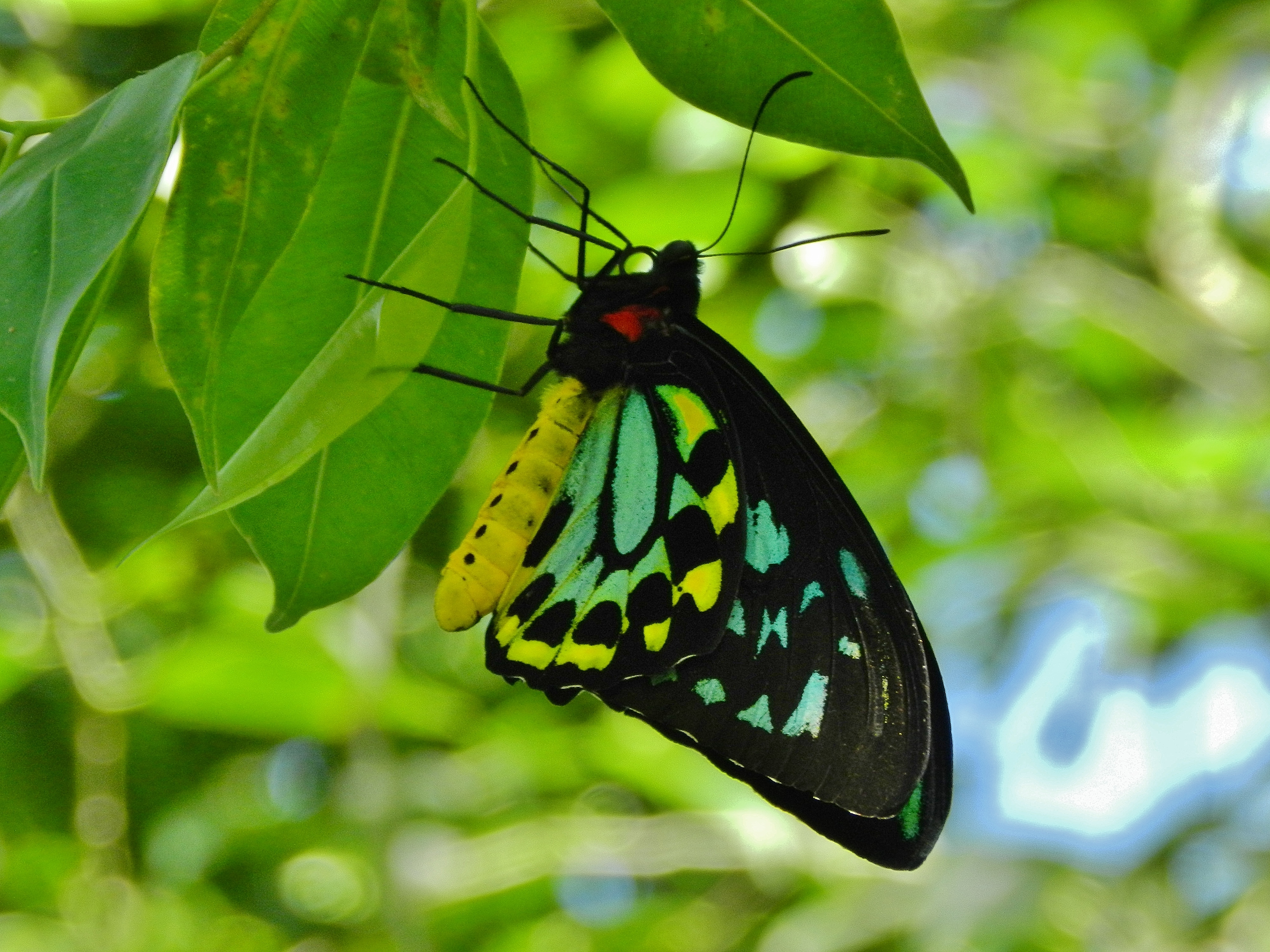
The next day I drove up the hills to Kuranda, a nice little tourist town that had a nice butterfly sanctuary.

DSCN9922

DSCN9932

DSCN9948

Great Barrier Reef (3): Night on the Reef

OLYMPUS DIGITAL CAMERA OLYMPUS DIGITAL CAMERA

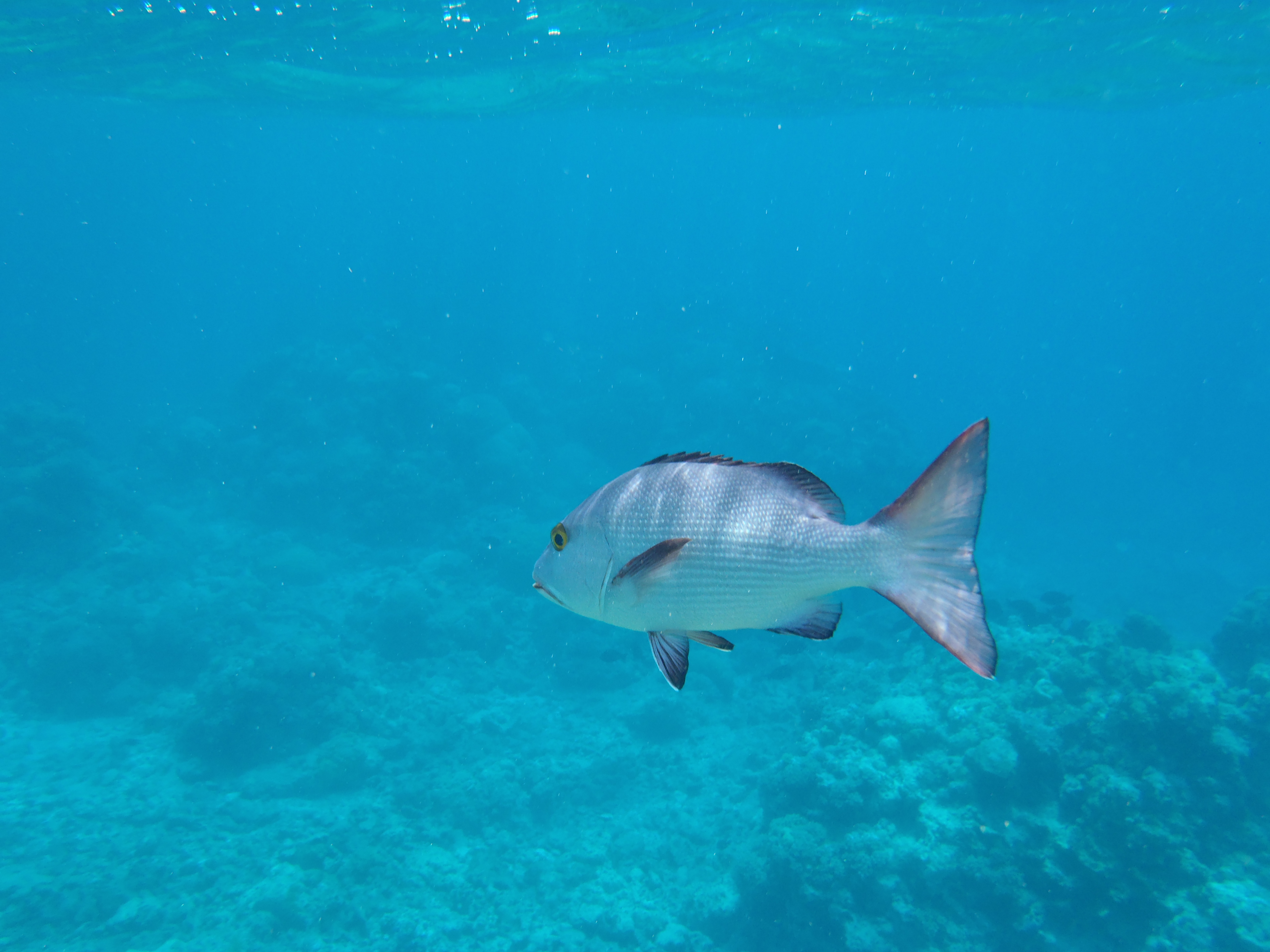
Two of the dives were night dives and this was a totally different experience! Armed with a flashlight I paddled about as the previously sedate Trevally and Red Bass (who drifted along during the day) began a feeding frenzy! The photos didn’t turn out so well with the flashlight as the only light source. But if you can imagine these 4-5 foot long fish zipping all around, searching for any poor little fish caught out in the open, you might get a little sense of what it was like!

OLYMPUS DIGITAL CAMERA OLYMPUS DIGITAL CAMERA

I also saw 6-7 reef sharks, which at first was kind of scary/invigorating, but they really kept a much greater distance than the Trevally and Red Bass. The crew told us to expect seeing the reef sharks as a common place event, particularly on the night dives.

OLYMPUS DIGITAL CAMERA

OLYMPUS DIGITAL CAMERA

OLYMPUS DIGITAL CAMERA

Great Barrier Reef (2)

Some of the dive sites were at places called “bommies,” which were pinnacles of rock in the middle of deeper water. Some of these weren’t so great for snorkeling as far as seeing the surface of the bommie. However, there were masses of schooling fish that I delighted in swimming with, surrounded by zipping colours.

Schooling Fish

Schooling Fish

Close-up of Red-bellied Fusilier

Close-up of Red-bellied Fusilier

Red-bellied Fusilier Schooling

Red-bellied Fusilier Schooling

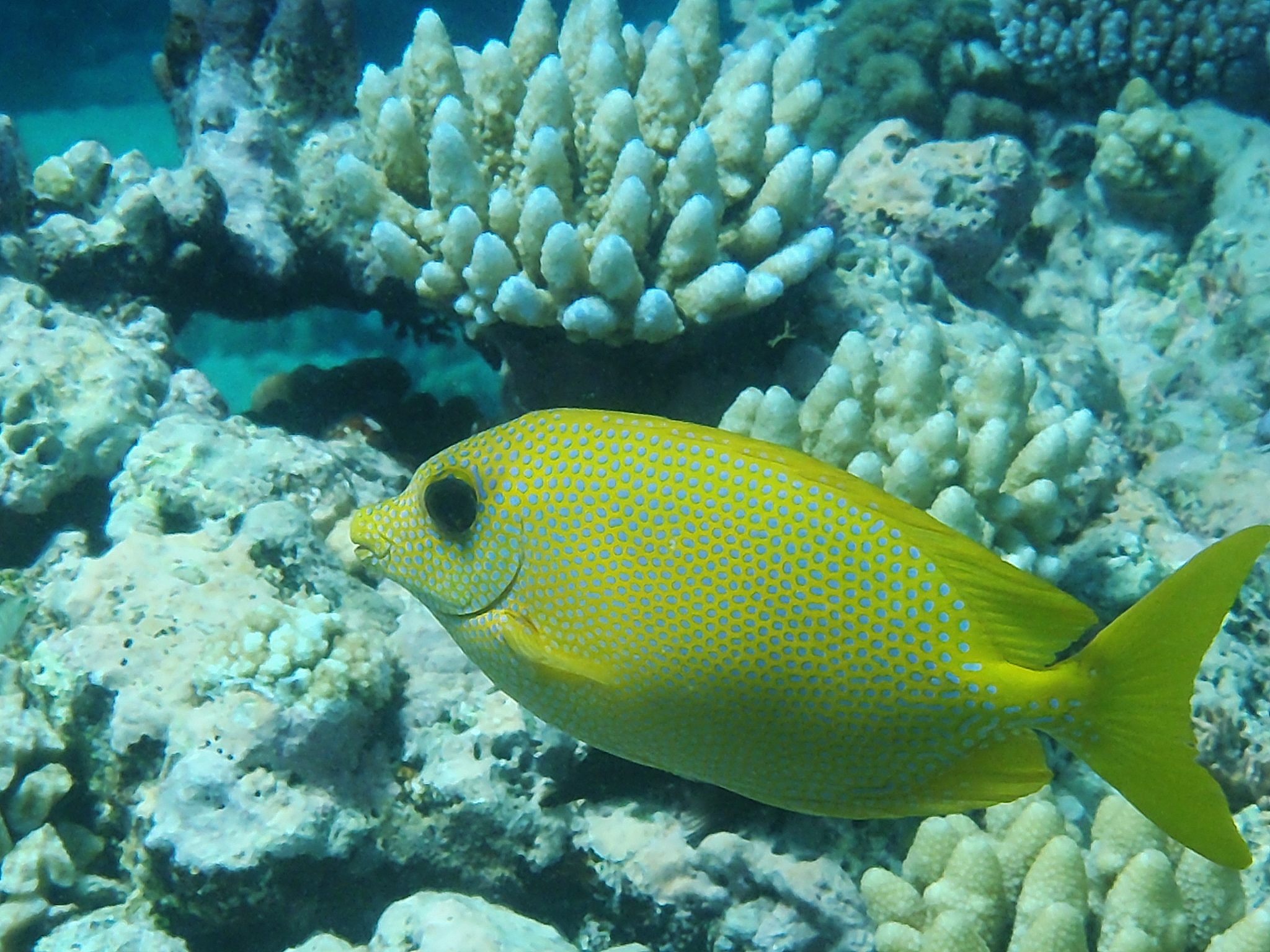
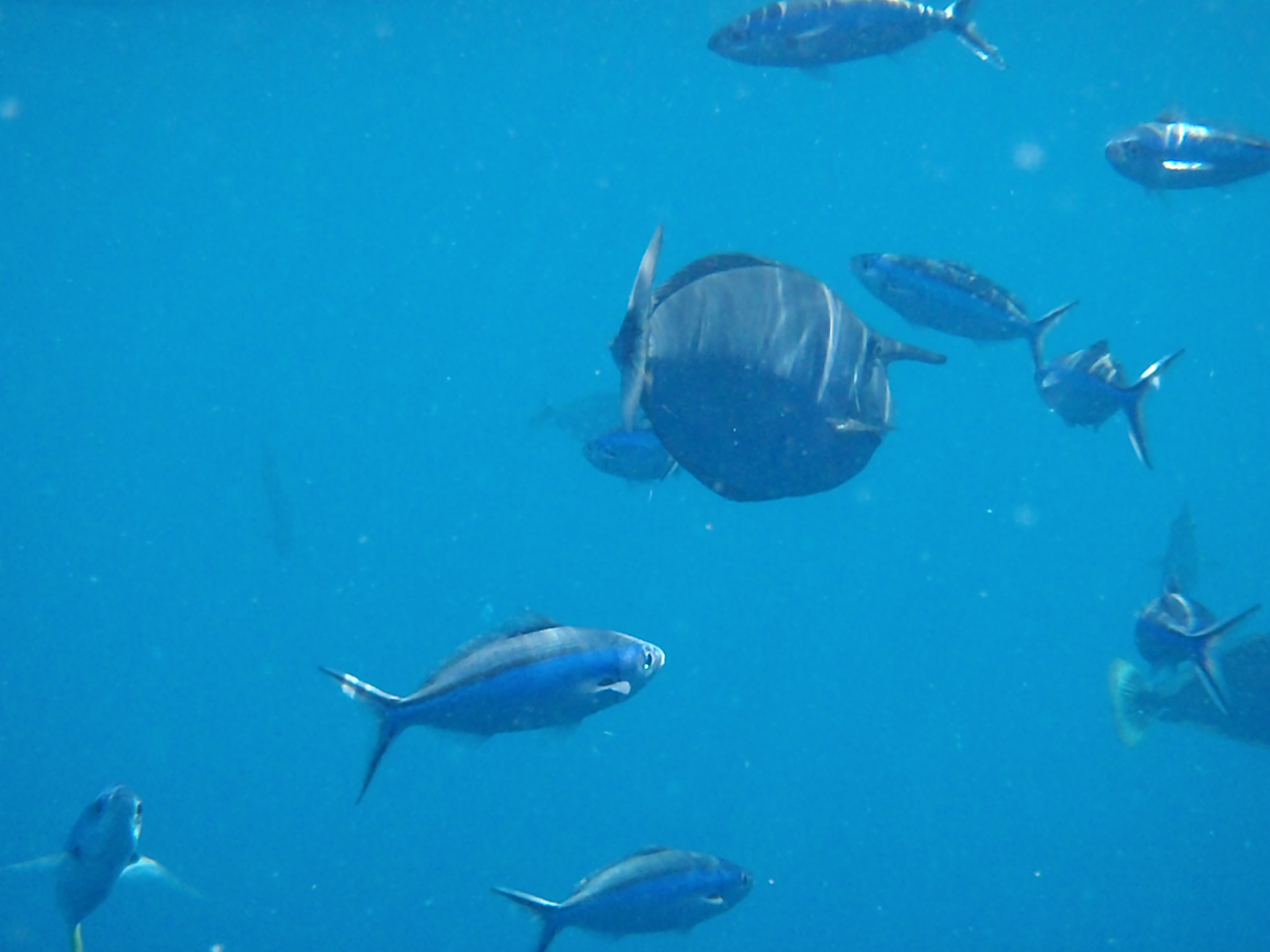
I swam for hours in these swarms of fish as they swarmed and then would suddenly dash for deeper water (a few times I saw circling barracudas, but many times I could not tell why the sudden dash for the deep). It was a very strange feeling to be completely surrounded by these teeming fish and then suddenly to be all alone in deep water – where I couldn’t see the bottom and I couldn’t see another living creature. Soon enough, though, the swarms of fish would come back up and begin zipping about again. Each site was a little different as far as which fish would be schooling closer to the surface and how intermingled the schools were. The yellow-finned fish always seemed to be closest to the surface. The striped blue fish always schooled with them, but a little deeper. The Unicorn Fish were generally deeper yet, but at one site they were coming to the top and I ended up swimming alongside them.

Schooling Fish with Diver

Schooling Fish with Diver

OLYMPUS DIGITAL CAMERA

Unicorn Fish Schooling

Unicorn Fish Schooling

I could have just stayed there, gently swimming in these swarms of fish forever. It was just like a dream! It is hard to describe how peaceful the feeling was and the photos just can’t capture the three dimensional experience of it!

Schooling Fish with Diver's Bubbles

 
Schooling Fish with Diver’s Bubbles

Great Barrier Reef!!! (1)

Reef from Above

Reef from Above

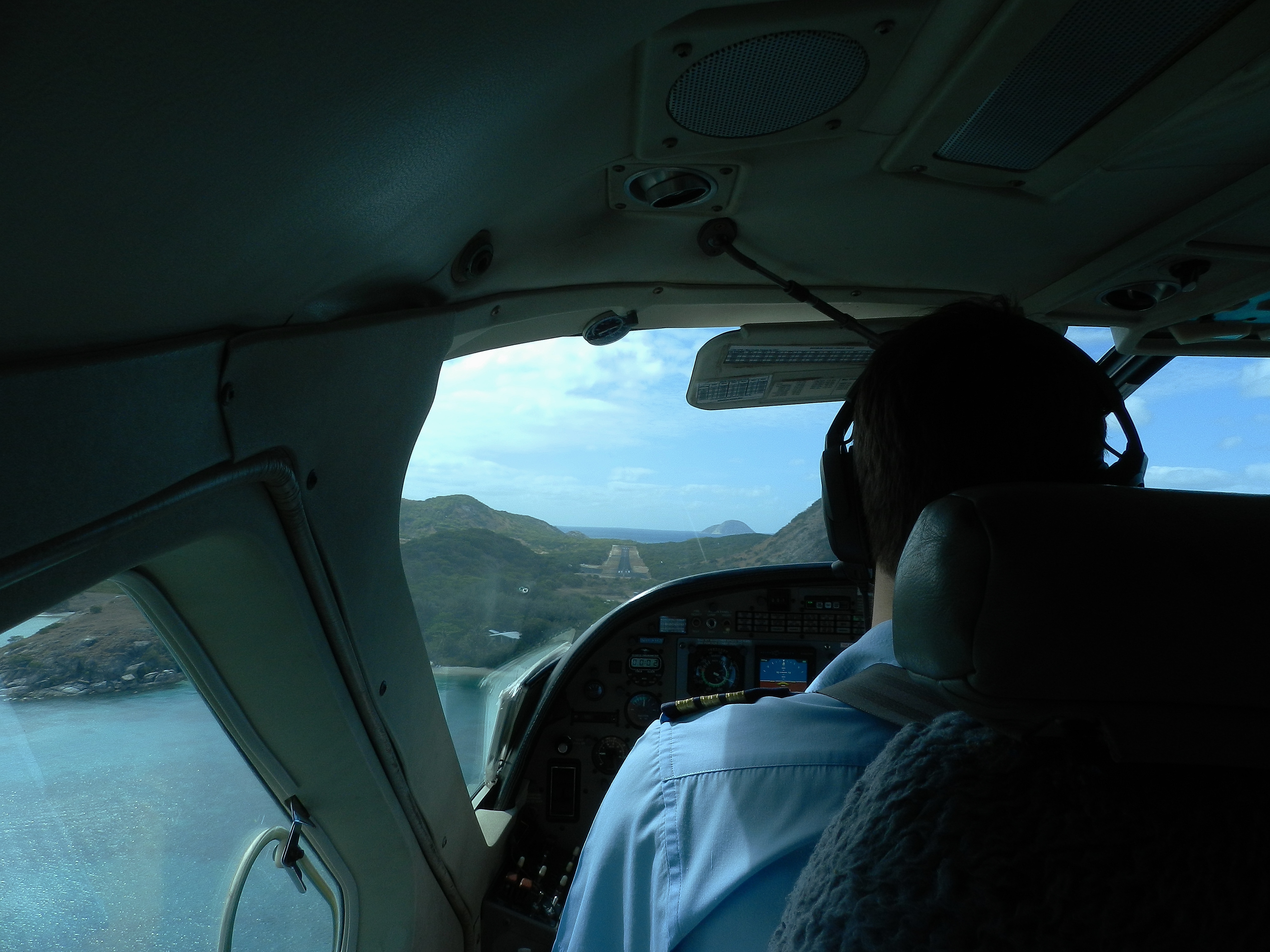
I had a great time out on the Reef. I did a 3 night live aboard trip with a flight out to Lizard Island to start with, and then a cruise back along the Reef toward Cairns. The flight was a nice way to get an overview of the Reef. Also, all the dive sites were more than 100 kilometers from Cairns, which is a good thing because a lot of the Reef is getting damaged from high density tourist use. A number of things I read were quite pessimistic about the future of this massive reef system that runs all the way up into Indonesia. The tour I went on was very aware of the need to make efforts to preserve the Reef.

Flying in Formation over the Reef

 
Flying in Formation over the Reef
On Approach to Lizard Island

On Approach to Lizard Island

Spoilsport, our home for 3 nights

Spoilsport, our home for 3 nights

I did my PADI certification for scuba back in Auckland a few weeks ago. I had difficulty equalizing the pressure in my ears and had some fluid in my ears after that (four flights in a week with pressure changes highlighted that I still had some problems with equalization), so I ended up snorkeling the whole time. Of the 12 dives, there was only one that I was somewhat disappointed that I wasn’t able to go under water.

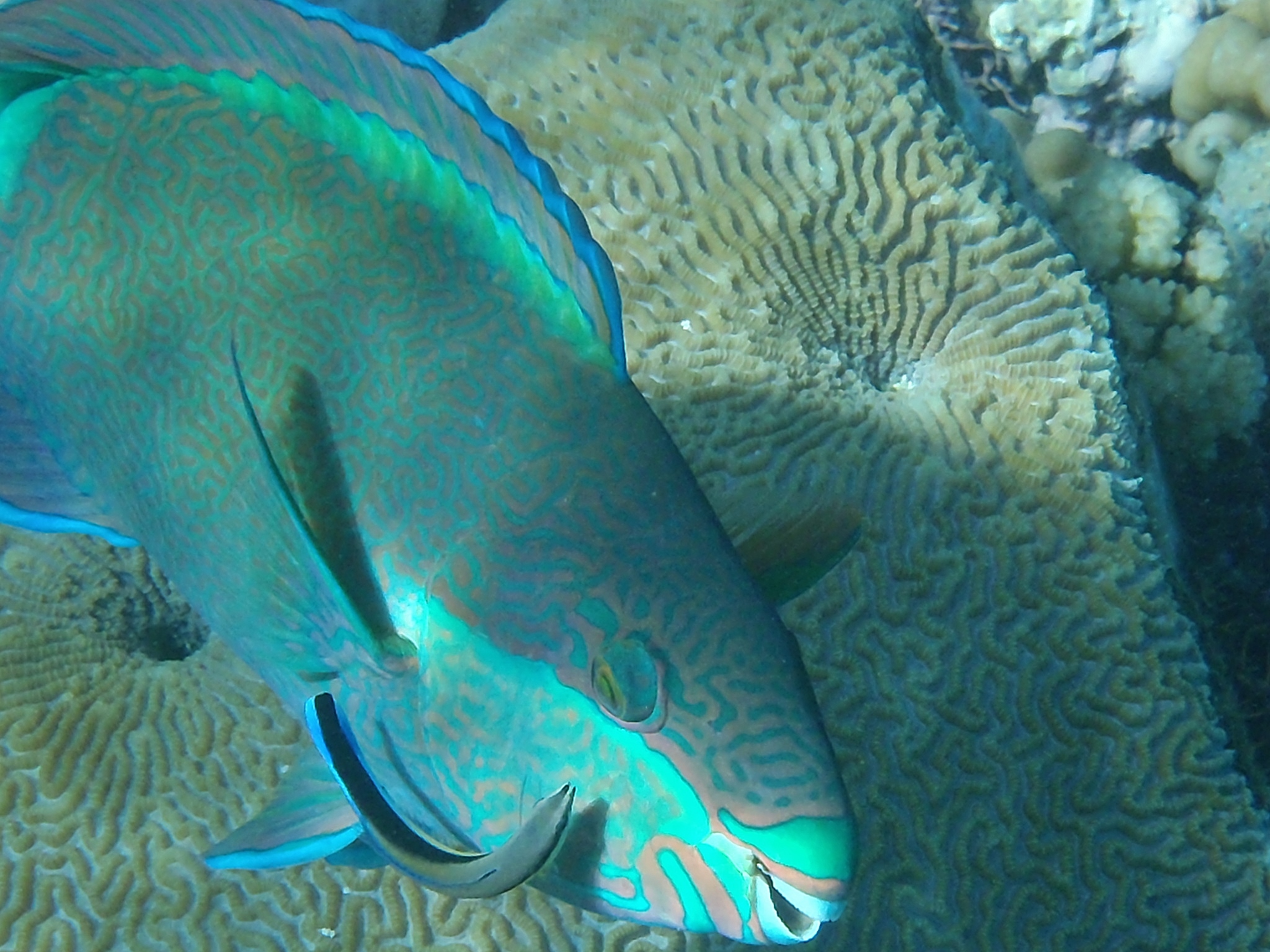
Parrot Fish with Remora

Parrot Fish with Remora

Reef View

Reef View

Every time I went out, I saw more and more amazing things, the kind of things you generally only see in books or documentaries…

Unicorn Fish Close-up

Unicorn Fish Close-up

OLYMPUS DIGITAL CAMERA

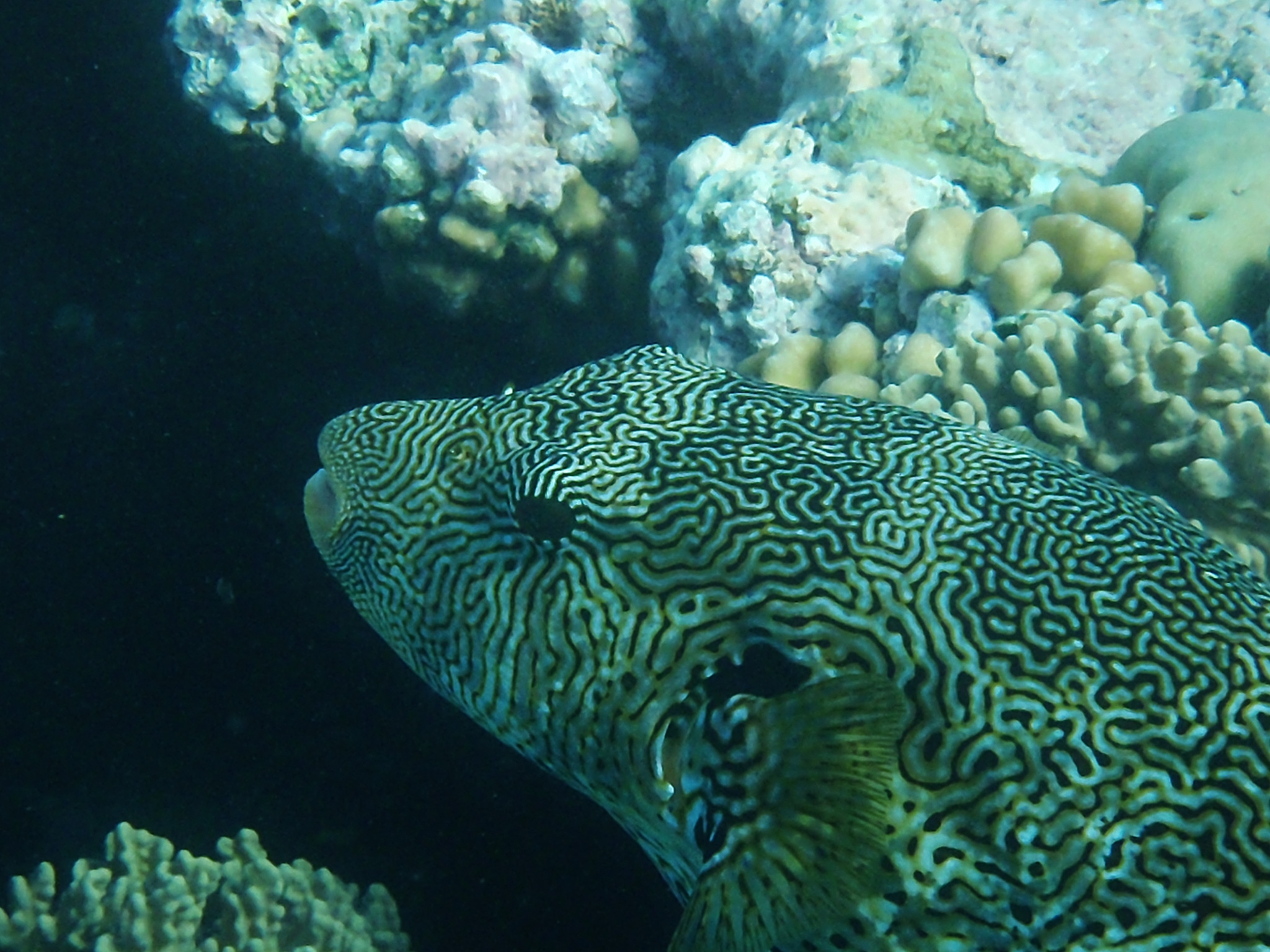
Puffer Fish

Puffer Fish

Green Sea Turtle

Green Sea Turtle

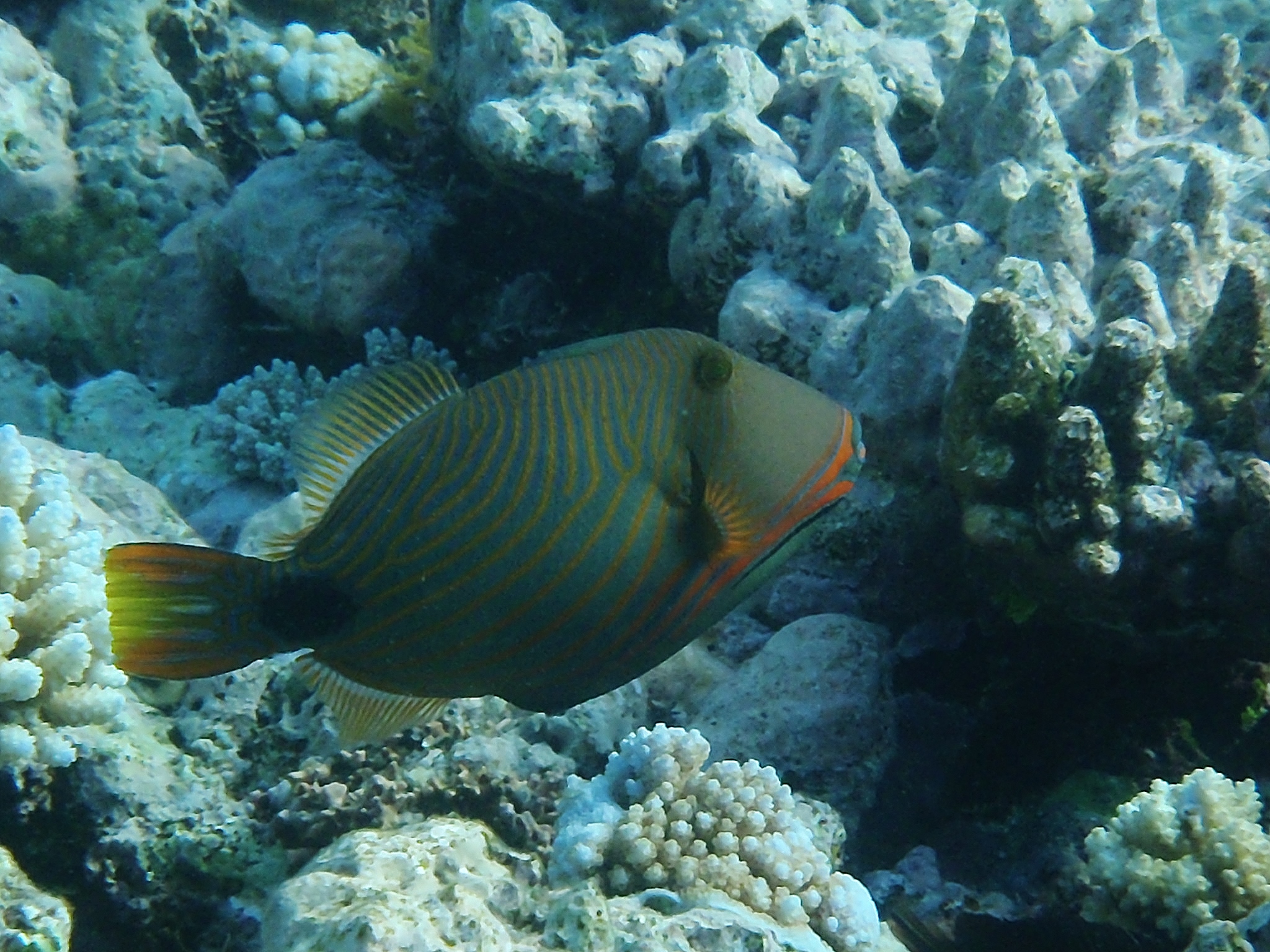
Trigger Fish

Trigger Fish

I’ll post some more photos in another blog…

Cairns, Australia

Shell Statue Cairns  waterfront

I decided to take a week off and head North into tropical Queensland to the town of Cairns. Cairns is one of the major jumping off points for the Great Barrier Reef as well as for excursions further North into the Daintree Rainforest. Cairns waterfront is very touristy and the beach is not very swimmable, as it is muddy. But it is a great place to head out to the Reef from. I also love anywhere that you can see wild parrots zipping about. In fact, there were quite a few interesting birds around town and on the waterfront.

parrot

I liked the botanical gardens better than the Brisbane gardens. There is a boardwalk through the wetlands (although it was quite dry during the whole trip and the stream beds were dry).

Leaf, Botanical Gardens

Ginger, Botanical Gardens

I took a couple of day trips out of Cairns and will blog about those later. There are a lot of shops and restaurants in Cairns, but for me, it worked best as a base for other activities in the area. Wifi was a little tough to come by and not many of the cafés had it available.

singing bird, Botanical Gardens

Flowering Shrub, Botanical Gardens

The weather was great while I was here, 30 degrees Celsius and sunny. A nice breeze today near the ocean as I sit drinking coffee and watching the various birds cavort about in the flowering trees.

DSCN9691

Bird at waterfront

More Ginger, Botanical Gardens