


Words Create Worlds.11: What Are We Going to Do Now?

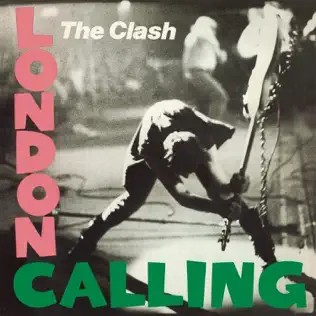
Images: Renee Nicole Good and Alex Pretti were shot and killed by ICE in January, 2026. ICE photo by David Guttenfelder/The New York Times/Redux. The cover of The Clash’s 1979 album London Calling.

The Clash song, “Clampdown,” from the 1979 double album Londong Calling, starts with the question: “What are we going to do now?”

I have had this song by The Clash going through my head this past week. Now after the second killing of American Citizens by ICE in the past month, I keep asking myself, asking us, “What are we going to do now?”

The shooting death by masked government agents of Alex Pretti strikes close to home as he was a VA ICU nurse. Having trained and worked in the VA system for close to 20 years, I know the kind of professional dedication and commitment that VA employees bring to caring for Veterans who have served their country.

Renee Nicole Good had just dropped off her 6-year old at school before she was shot by armed masked government agents. Her last words were reportedly, “That’s fine, dude. I’m not mad at you.”

“What are we going to do now?”

I always wondered what “the clampdown” was when I listened to this Clash song as a kid. I wasn’t sure what it was, but I knew I didn’t want to work for it – and I know I don’t want to work for it now.

Taking off his turban, they said, is this man a Jew?
‘Cause they’re working for the clampdown
They put up a poster saying we earn more than you!
When we’re working for the clampdown

I pictured something like Hitler’s paramilitary Brownshirts, or some other loosely organized group that came together to inflict violence on it’s own people. I suppose this queston of those working for the clampdown about “is this man a Jew” made me think of the Nazis.

We will teach our twisted speech
To the young believers
We will train our blue-eyed men
To be young believers

The Clampdown seems to require teaching “twisted,” violent speech to the young of the nation, and invoking “our blue-eyed men” again recalls the Nazis. It continues to confound me how many MAGA and now ICE believers there are, who don’t see how words create worlds. The deaths of Renee Nicole Good and Alex Pretti are the worlds that have been created by the words of name calling and bullying and “othering” of Americans.

The judge said five to ten, but I say double that again
I’m not working for the clampdown
No man born with a living soul
Can be working for the clampdown

At least some judges are finding for the rule of law, but what happens when the judges are working for the Clampdown? I hesitate to dehumanize others and say they don’t have a “living soul,” but dehumanization, scapegoating, projection, and “othering” are key psychosocial operations that pave the way for violence. I can see questioning the humanity of those working for the Clampdown when the Clampdown dehumanizes others.

Kick over the wall ’cause government’s to fall
How can you refuse it?
Let fury have the hour, anger can be power
D’you know that you can use it?

It does seem like government is falling. We have a crisis between the federal government’s masked paramilitary organization. The Feds are blocking city and state government from investigating these shooting deaths of American citizens. Who holds the power here? Why are there armed masked men kicking down doors and kicking over walls? The seem to encapsulate the fury of the hour, which is how I always heard that line. The current President seems to have a fury of the hour, but The Clash seem to say that those with the fury are carrying the hour. Anger can be power. That is true. Anger can be power. “Do you know that you can use it?” This could be giving permission for paramilitary organizations to channel their fury and anger into anti-democratic activities and violence. But we can also hear this line from the perspective of those asking “What are we going to do now?” We can channel our anger into peaceful protest, into not looking away from abuses of power and tyranny. But again, this line could also be from the hooligans who have risen to power, looking toward their leader, ready to carry out the fury of the hour.

The voices in your head are calling
Stop wasting your time, there’s nothing coming
Only a fool would think someone could save you

Here The Clash tell us that it would be foolish to think that someone is coming to save us, we each have to refuse to work for the Clampdown.

The men at the factory are old and cunning
You don’t owe nothing, so boy get running
It’s the best years of your life they want to steal

Now the Clampdown also takes the form of the “old and cunning” men who want to steal the “best years of your life.” The Clampdown takes away your rights, it takes away your soul, it can steal away the best years of your life, and, apparently, it can even take your life with impunity.

You grow up and you calm down
You’re working for the clampdown
You start wearing the blue and brown
You’re working for the clampdown

I heard this as a warning. It is one thing to be full of a piss and vinegar as a young punk, but there is a risk that you “grow up” and you “calm down” and end up working for the Clampdown, even though you resisted it in your youth. I knew about the Brownshirts, but I didn’t know about the Blueshirts – are The Clash singing about the Irish party of that name? I’m not sure. It is clear though, The Clash are warning you not to work for the Clampdown, no matter whether you are wearing a brown shirt, a blue shirt, or a red white and blue shirt.

So you got someone to boss around
It makes you feel big now
You drift until you brutalize
You made your first kill now

This is always a chilling stanza. I always think of the kids who I had been friends with in elementary school who became thugs and bullies in high school. People who feel small and have listened to the “twisted speech” and become “young believers” that the way to feel big and powerful is to find someone to “boss around.” Once you have given over your power to the fury of the hour, you cease to direct your own actions, you become a puppet who drifts “until you brutalize,” and from there the next step is making “your first kill now.” Words lead to action which leads to creating worlds of violence and when you are working for the Clampdown, you can easily end up killing.

I had to look this line up on The Clash website because Google Lyrics listed it as “Doesn’t make you first kill now,” which really doesn’t make any sense.

In these days of evil presidentes
Working for the clampdown
But lately one or two has fully paid their due
For working for the clampdown

Doesn’t that just capture it! It sure seems like we are living in the “days of evil presidentes/working for the clampdown.” We can only hope that one or two will fully pay their due. Right now it seems like the Clampdown is in charge and unrestrained.

Ha! Gitalong! Gitalong!
Working for the clampdown
Ha! Gitalong! Gitalong!
Working for the clampdown

Not much more to say here – sounds like a cattle drive with masked armed men who have immunity under the Federal government, trying to heard along protesters and killing the occasional one or two.

Yeah I’m working hard in Harrisburg
Working hard in Petersburg
Working for the clampdown

Everyone, no matter they are, they’re working – and either your working hard for the Clampdown, or your working hard against it.

Ha! Gitalong! Gitalong
Begging to be melted down
Gitalong, gitalong
(Work)
(Work)
(Work) And I’ve given away no secrets – ha!
(Work)
(Work)
(More work)
(More work)
(Work)
(Work)
(Work)
(Work)
Who’s barmy now?

The song just tails off with “work” and “more work,” finally asking “who’s barmy now?” Meaning who’s crazy, I suppose. “Clampdown” gives us much to think about in the United States at this moment. It gives us pause and reminds us that the Clampdown could be almost anything and could be almost anywhere, but right now it is here…now.

“What are we going to do now?”

Maybe the answer to that question is: you are either working for the Clampdown – or you are not.

Are you working for the Clampdown?

Clampdown, Live – Fridays 1980: shorturl.at/TdE5A

London Calling album, studio version: rb.gy/kdhzxe

Words Create Worlds.10: Jung Did Not Write about Empaths vs. Narcissists

The last Words Create Worlds essay in this blog was “Words Create Worlds.9: Life and Death are in the Power of the Tongue” on January 7th, 2021, the day after the insurrection. I am feeling the need to start writing this series, again, though, with current events in the United States and abroad.

The inspiration for this essay series comes from Rabbi Heschel. He said, as recounted by his daughter, Susannah Heschel:

“Words, he often wrote, are themselves sacred, God’s tool for creating the universe, and our tools for bringing holiness—or evil—into the world. He used to remind us that the Holocaust did not begin with the building of crematoria, and Hitler did not come to power with tanks and guns; it all began with uttering evil words, with defamation, with language and propaganda. Words create worlds, he used to tell me when I was a child. They must be used very carefully. Some words, once having been uttered, gain eternity and can never be withdrawn. The Book of Proverbs reminds us, he wrote, that death and life are in the power of the tongue.”[1]

We live in what is increasingly called a post-truth world and with the growth of AI, truth is getting even more difficult to ascertain. Truth may become only one perspective amongst many in the marketplace and in politics.

The reason I am reviving this essay series is because I have recently had two clients refer to videos by “Carl Jung” discussing empaths and narcissists. I found this very strange, as the word “empath” is a contemporary term which Jung did not use. “Narcissist” is also a term he rarely used. I cautioned my clients that these could be AI created fictions and began looking into the source of this misinformation.

I count 208 videos posted by Surreal Mind (listed as joining April 26, 2025) on YouTube, with 137K subscribers. Most of these videos contain AI images of Jung in different settings and give a muddled mixture of occasional true quotes from Jung (unrelated to empaths and narcissists) in a morass of misattributions. I hesitate to go deeply into these false attributions, lest I lend them credence they don’t deserve. Let us just look at one in video, “4 Stages Every Empath Abuse By Narcissist Goes Through / Carl Jung Psychology,” [sic] (with 31K views), whose first words are a deceptive falsehood. The video starts with the words, “Carl Jung discovered that empaths who survive narcissistic abuse go through four distinct psychological stages, and the final stage terrifies narcissists more than anything else.” These stages are listed on the screen as: 1) “The Light Trap” (a term not found in Jung’s Collected Works – CW); 2) “Soul Extraction” (not found in the CW); 3) “The Dark Night” (found in discussions of St. John of the Cross’ “dark night of the soul” and the nigredo stage in alchemy, but nowhere in regards to “empaths” or “narcissists”); and 4) “The Phoenix Rebirth” (not found in the CW). We do not have to go any further into the video to know that it is not founded on Jung’s works and is therefore a deceptive untruth.

The videos are narrated in a deep English-accented voice (sounding like Terrence Stamp in the movie “Yes Man”) with eerie background tones. (If you get creeped out by these videos, please watch the “Yes Man” scene as an antidote!) The narrator often will quote Jung directly, then blur into a statement such as “stage 2 is what I call the great devouring.” It is not clear who the “I” is who is appropriating Jung’s name, you can’t even say he is appropriating Jung’s work, more stringing together a few unconnected quotes and creating, what could be called a manifesto for empaths fighting narcissists.

As a scholar, I feel obligated to give a few references to debunk the claim that Jung’s work has anything to do with the conceptual framework of these videos.

I have the complete Collected Works of Jung, in book and e-book form, so I did a quick search for “narcissist” and only found 3 instances of variations of that word in the entire twenty volumes of the Collected Works.

“This kind of analysis brings the work of art into the sphere of general human psychology, where many other things besides art have their origin. To explain art in these terms is just as great a platitude as the statement that ‘every artist is a narcissist.’ Every man who pursues his own goal is a ‘narcissist’— though one wonders how permissible it is to give such wide currency to a term specifically coined for the pathology of neurosis.”[2]

The context of this quote is a critique of psychoanalysis reducing the production of art to a neurotic and pathological activity. Jung is in no way writing about the dangers of “narcissists.”

The only other appearance of a variation on the word “narcissist” is in a critique of Freud’s view of introversion and Eastern spirituality as pathological self-focus.

“Freud identifies it with an autoerotic, ‘narcissistic’ attitude of mind. He shares his negative position with the National Socialist philosophy of modern Germany, which accuses introversion of being an offence against community feeling. In the East, however, our cherished extraversion is depreciated as illusory desirousness, as existence in the samsāra, the very essence of the nidāna-chain which culminates in the sum of the world’s sufferings.”[3]

If anything, Jung’s three instances of the word “narcissist” in the CW are a defense of introversion and artistic creation as not being a narcissistic preoccupation with the self, but impliy that there is a healthy form of self-focus possible.

The word “empath” or the concept of a “highly sensitive person” is not found in any of Jung’s writing as these are terms that were developed long after he had died in 1961. Variations of “empathize,” “empathizes,” and “empathized” appear twenty-three times in the collected works, but these are used in the ordinary manner of speech and not referring to “empaths” or “narcissistic abuse of empaths.”

Why would someone create obviously untrue videos and make false attributions to Carl Jung, replete with AI generated images of Jung? I really couldn’t tell you. Maybe someone thinks that invoking Jung gives their ideas credibility or validity?

There is a $39 The Alchemist’s Path: Perception Training for Empaths that can be purchased through the Surreal Mind YouTube site. So, there is possibly some money being made from the popularity of these deceptive videos through sales, but maybe more through ad revenue.

Since initially posting this, I have found another site, The Unconscious Guide, which takes the deception a step further by adding AI voice-over that is supposed to sound like Carl Jung, again speaking about empaths and narcissists.

I am disturbed, on multiple levels, by these empaths vs narcissists videos that are said to grow out of “Carl Jung Psychology:”

  1. These videos are blatantly untrue. They have nothing to do with Jung’s work and misrepresent him as founding a contemporary pop psychology misinformation mill.
  2. The videos clog the internet with AI misinformation.
  3. The videos further the dehumanization we have been trying to counter in medicine and health care by reducing human beings to labels, in this case, “empath” or “narcissist.” We have worked diligently in medicine to shift from the language of “he’s a schizophrenic” to “he is a person living with schizophrenia.” To call oneself an “empath” and another a “narcissist” diminishes the humanity of both people to a label.
  4. The videos promote a division of the world into the good: empaths, and the bad: narcissists. We don’t need further polarization and “othering” in the world at this time, even if it is currently very popular to demonize “others.” These videos encourage people to enter into a kind of “psychological warfare” against an inhuman enemy instead of focusing on one’s own humanity.
  5. Both the medium (the AI aesthetics and auditory tones) and the message (the false attributions to Jung) feel sticky, creepy, and cult-like.

What I am concerned about, beyond the obvious misappropriation, is that I hear clients latching on to the victim aspect of this empath/narcissist narrative. The risk is that people can over-focus on the power of the “narcissist” and ignore their own power. Healing is about caring for Self, not about finding fault in others. As Nietzsche wrote,

“Whoever fights monsters should see to it that in the process he does not become a monster. And when you look long into the abyss, the abyss looks back into you.”[4]

What this quote means to me is that we must be careful in studying the wrongs of others, lest we become like them to “overcome” them. True healing is self-connection and awakening the goodness of your own heart. In addition to the deceptiveness and misrepresentation of Jung, I do worry that this narrative risks being too much about the “other” and not enough about the Self.

Jung is important to me, his book, Modern Man in Search of a Soul, was one of the two books that led me on the path of becoming a psychiatrist (psyche-iatros: soul healer). The other book was M. Scott Peck’s The Road Less Traveled. In Modern Man in Search of a Soul, I learned of a view of the profession of psychiatry that was more than a reductionistic approach to brain chemicals, but a complex psychotherapy focused on personal growth. For Jung, the study of psychiatry included the arts and humanities, anthropology, archaeology, the study of language, dreams, and spirituality. The goal of life, and therefore psychotherapy, was the path of individuation, a journey from the limitation of one’s childhood and public persona to states of greater wholeness. This psychological journey shares a great deal with the spiritual quest. Jungian psychology tends to focus more on the inner journey of growth in which the ego clings to its limited persona and the obscuration of the personal shadow in order to manifest more of the “self.” This path of growth focuses on inner experiences of dreams and visions from the unconscious. This growth is in service to the self, not in service of the ego. Jung’s psychology is not for those who wish to be comfortable in the everyday world, but it is for those who wish to undertake a journey of self-discovery to become not who they think they should be, but to become who they are truly capable of becoming.

Here is the last paragraph of Modern Man in Search of a Soul:

“The living spirit grows and even outgrows its earlier forms of expression; it freely chooses the…[people]…in whom it lives and who proclaim it. This living spirit is eternally renewed and pursues its goal in manifold and inconceivable ways throughout the history of…[humanity]. Measured against it, the names and forms which men have given it mean little enough; they are only the changing leaves and blossoms on the stem of the eternal tree.”[5]

These videos obscure more than reveal Jung and his writings – they are predominantly misinformation and deception. I find them creepy, cult-like AI fantasies. I encourage you to watch the Terrence Stamp scene in “Yes Man” and then go back and watch these videos and see if you look at them differently. If you would really like to learn about Jung, read Memories, Dreams, Reflections autobiographical sketches written by Aniela Jaffé through conversations with Jung, or the newly published Jung’s Life and Work: Interviews for Memories, Dreams, Reflections with Aniela Jaffé, or Carl Jung Speaking: Interviews and Encounters, or The Essential Jung: Selected Writings.


[1] Heschel, S. in “Introduction,” Heschel, Abraham Joshua. Moral Grandeur and Spiritual Audacity: Essays. Farrar, Straus and Giroux. Kindle Edition, 1997.

[2] Jung, CG. “On the Relation of Analytical Psychology to Poetry,” The Spirit in Man, Art, and Literature (CW 15), ¶ 102, p. 68. The Collected Works of C.G. Jung (Kindle Locations 221217-221220). Princeton University Press. Kindle Edition.

[3] Jung, CG. “Psychological Commentary on ‘The Tibetan Book of the Great Liberation,’” Psychology and Religion: West and East (Collected Works 11), ¶770, p. 481. The Collected Works of C.G. Jung (Kindle Locations 148354-148359). Princeton University Press. Kindle Edition.

[4] Nietzsche, F. Aphorism 146, Beyond Good & Evil: Prelude to  Philosophy of the Future, Kaufmann, W (trans). New York: Vintage Books, 1989, p 89.

[5] Jung, CG. Modern Man in Search of a Soul. New York: Harvest, (1933), p. 244. Kindle Edition. Location 3572, (pp. 250-251).

Episode 14: What is the Story that is Enough? Becoming a True Human Podcast

Episode 14: What is the Story that is Enough?

Chris tells a story, attributed to Elie Wiesel, about a time when the world was in chaos and disorder and a Rabbi asked what he could do and was told to go into a certain forest, to light a candle, and to say a certain prayer. He did so and peace and order was restored in the world. However, over lifetimes, chaos and disorder descended again, but people forgot where the certain forest was. A Rabbi tried lighting a candle and saying a prayer – and it was enough, peace and order was restored again. Over many more lifetimes, chaos and disorder arose again, but the people had forgotten the prayer. A Rabbi lit a candle – and it was enough, peace and order was restored. Over many more lifetimes, again chaos and disorder arose. There was a Rabbi who didn’t know the forest, about the candle, or what the prayer was, but he knew that once there was a story of how to restore peace and order – and knowing that story was enough! Peace was restored once more.

Chris asks Dave about how we can find that story is that is enough in contemporary times.

Dave recalls the Bertolt Brecht quote:

               Motto

“In the dark times, will there also be singing?

Yes, there will be singing.

About the dark times.”

(Bertolt Brecht)

But Chris does not find this a positive enough response. Dave summarizes a Philip K Dick story in which the individual human is doomed, but humanity is saved, but this still does not satisfy Chris. Then Dave invokes Robert Jay Lifton’s concept of the “witnessing professional,” and Parker Palmer’s “the new professional.” Then Dave recalls when he was working with Joseph Rael (Beautiful Painted Arrow) on writing Walking the Medicine Wheel, and Joseph recounted a “dream or a vision” that Wah-Mah-Chi (the Tiwa word for God – Breath-Matter-Movement) holds back a place of goodness in our hearts – no matter what we have done and no matter what has been done to us. In this sense, when we feel lost, when we lose ourselves, when we feel that we have lost our souls – the work is not actually to find something that we no longer have, but rather to reconnect to what is already present deep within our hearts.

We look at this story from different perspectives and ponder how to find the story that is enough for these times.

We also discuss two pieces of writing, that we have each been working on independently, and realize a common theme about being scapegoated and trying to figure out a story that makes sense of the situation and that is enough for each of us to go on. We also talk about passive bystanders who could speak up, but choose not to – and we wonder how we can all preserve on our humanity by preserving the humanity of others.

Dave reads David Wagoner’s poem, “Lost.”

               Lost

Stand still. The trees ahead and bushes beside you

Are not lost. Wherever you are is called Here,

And you must treat it as a powerful stranger,

Must ask permission to know it and be known.

The forest breathes. Listen. It answers,

I have made this place around you.

If you leave it, you may come back again, saying Here.

No two trees are the same to Raven.

No two branches are the same to Wren.

If what a tree or a bush does is lost on you,

You are surely lost. Stand still. The forest knows

Where you are. You must let it find you.

(David Wagoner)

Chris leads a guided imagery mediation on finding our own inner forest, our own prayer, and our own light to work for peace in ourselves and then to carry that forth into the world.

We have decided that this 14th episode is the beginning of season 2 of the Becoming a True Human podcast. We are introducing a new format where we will alternate between the two of us doing our usual podcast, having a special guest of one of our VA Whole Health friends, and then having a guest that we choose outside of our healer’s circle of friends.

Spotify: https://open.spotify.com/episode/63f0qUiXE2xURFUPwiyLqj

YouTube: https://youtu.be/0oXcLZKB02Q