Some new artwork

DSCN0212

DSCN0219

DSCN0214

DSCN0222 - Copy

DSCN0227

DSCN0231 - Copy

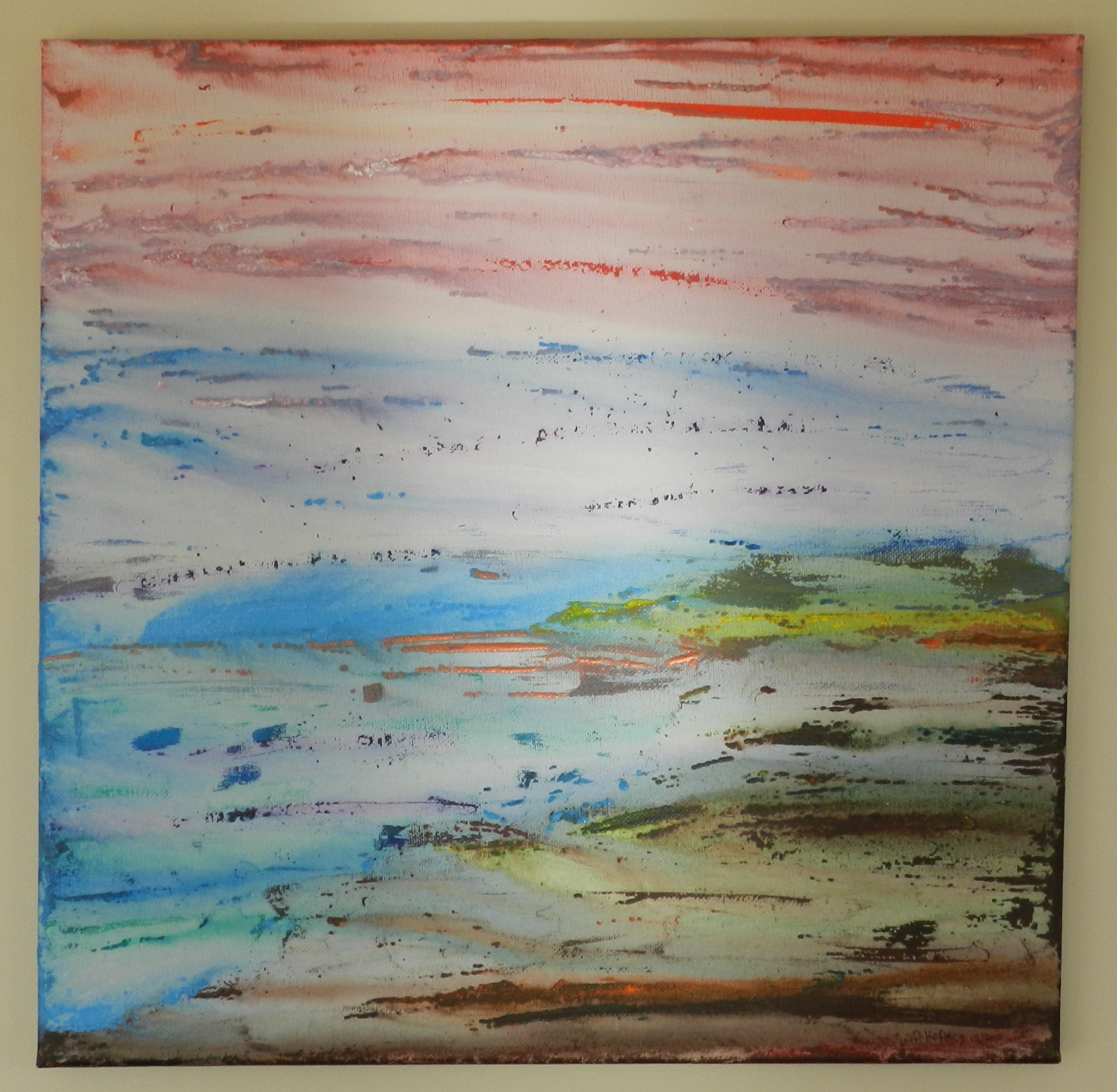
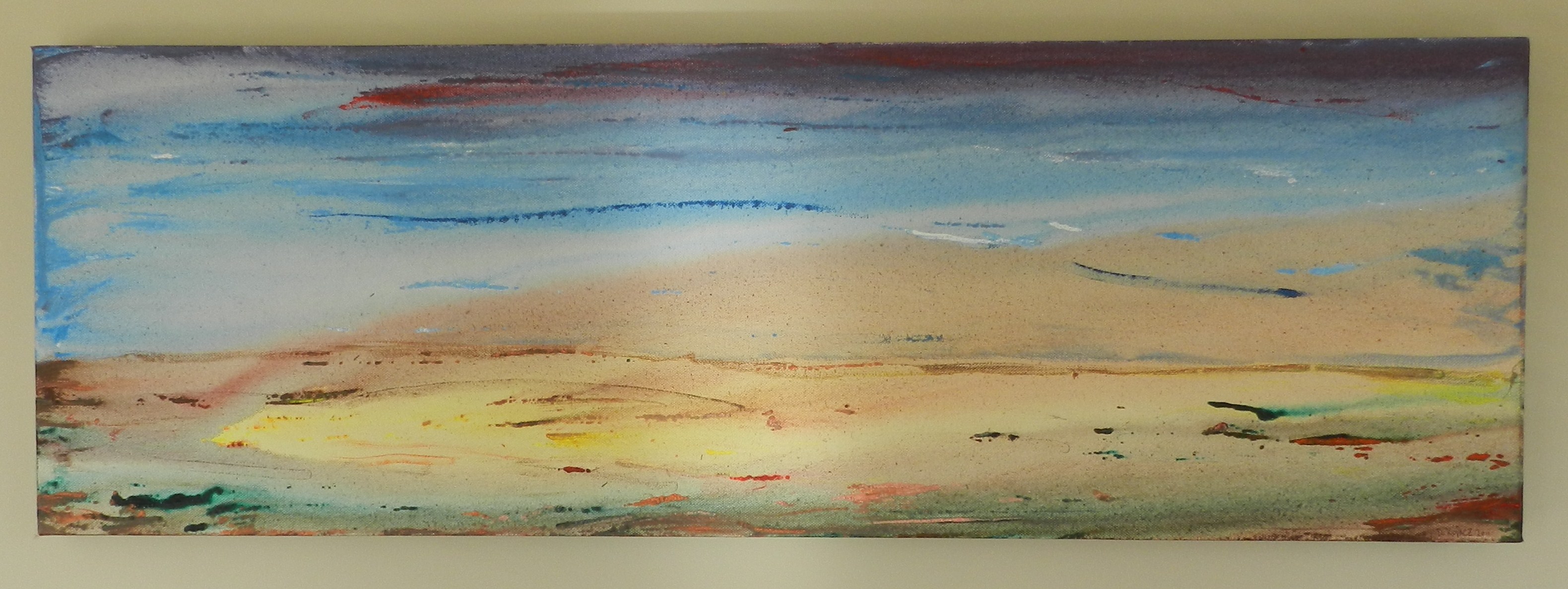
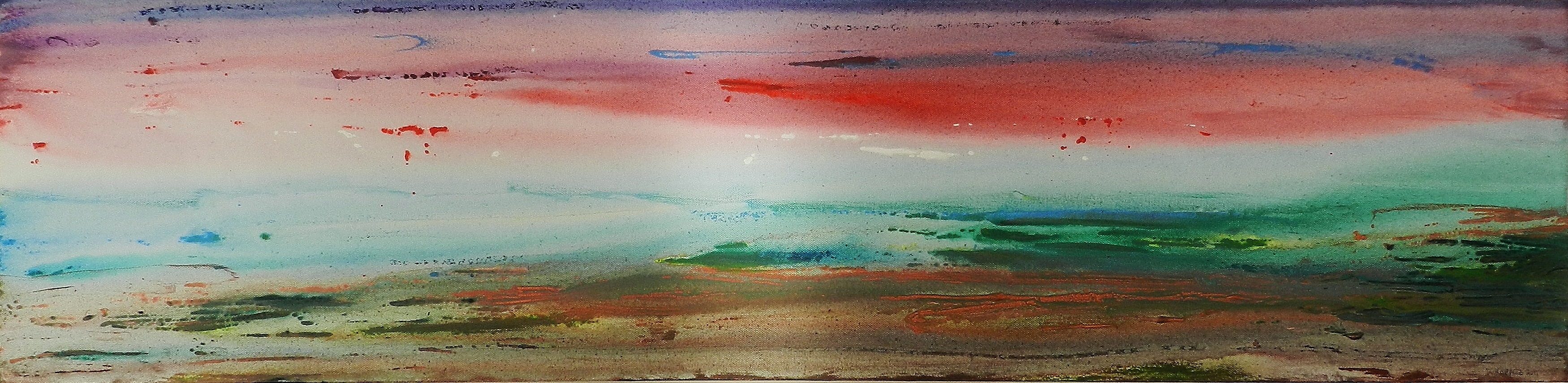
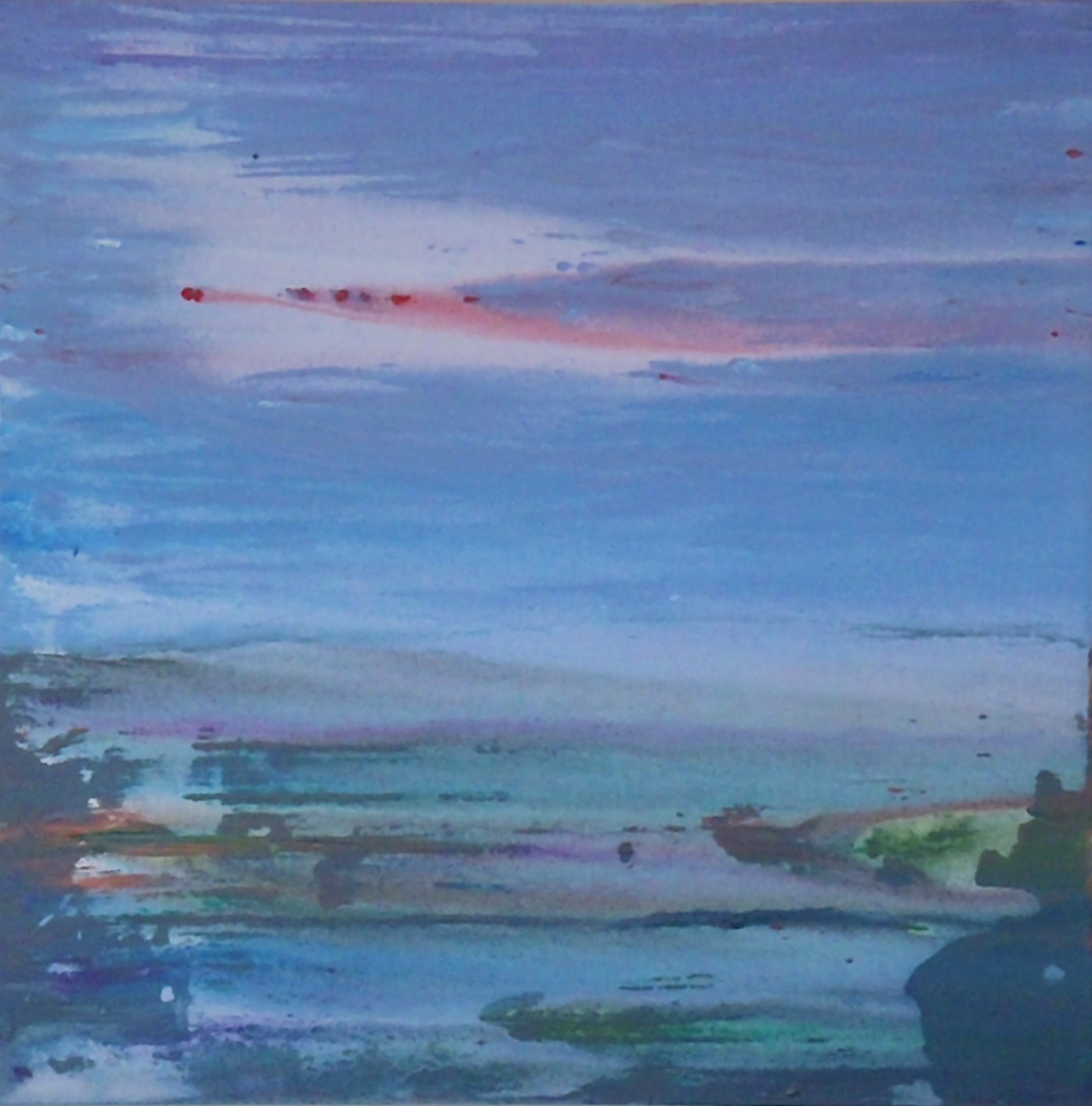
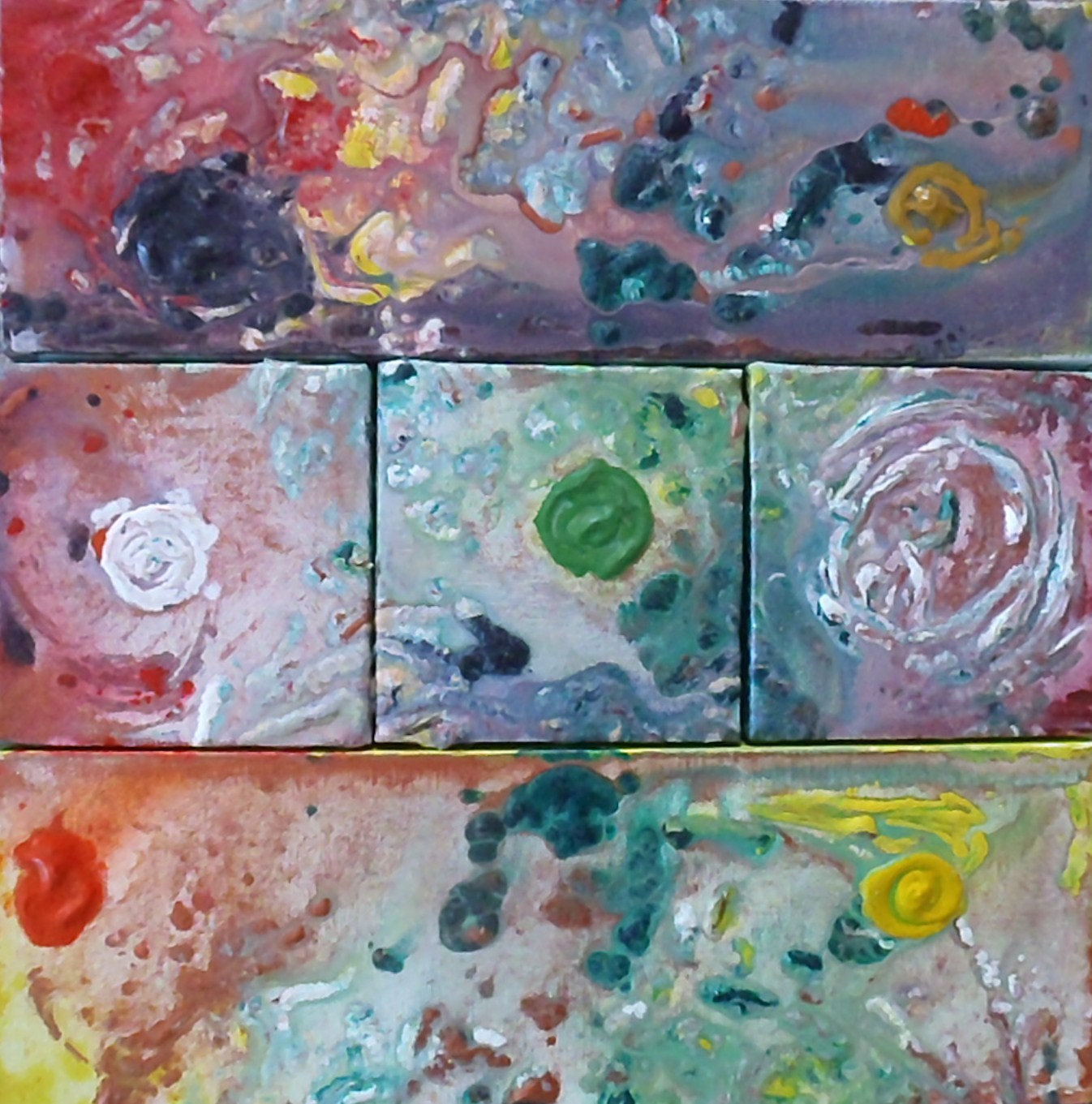
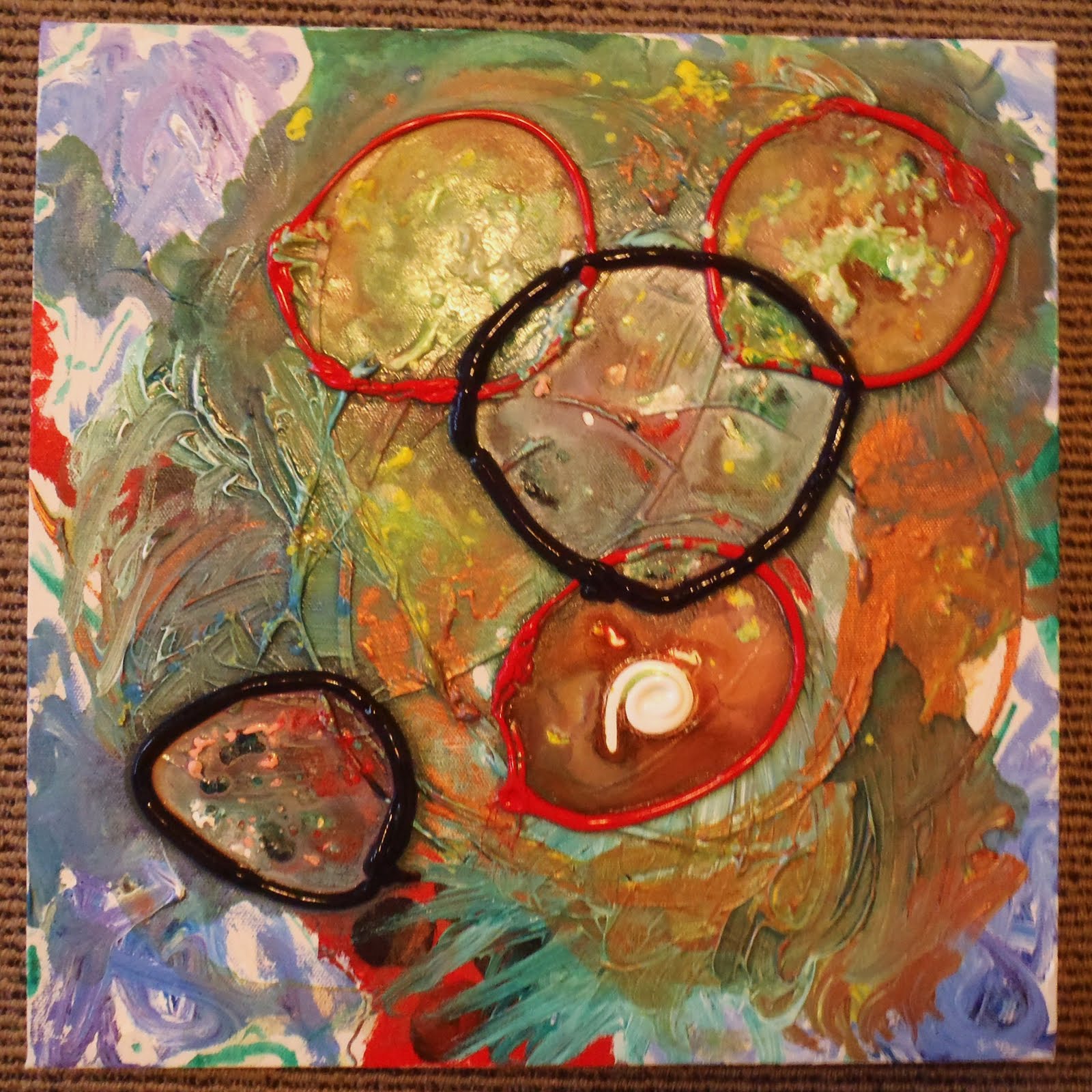
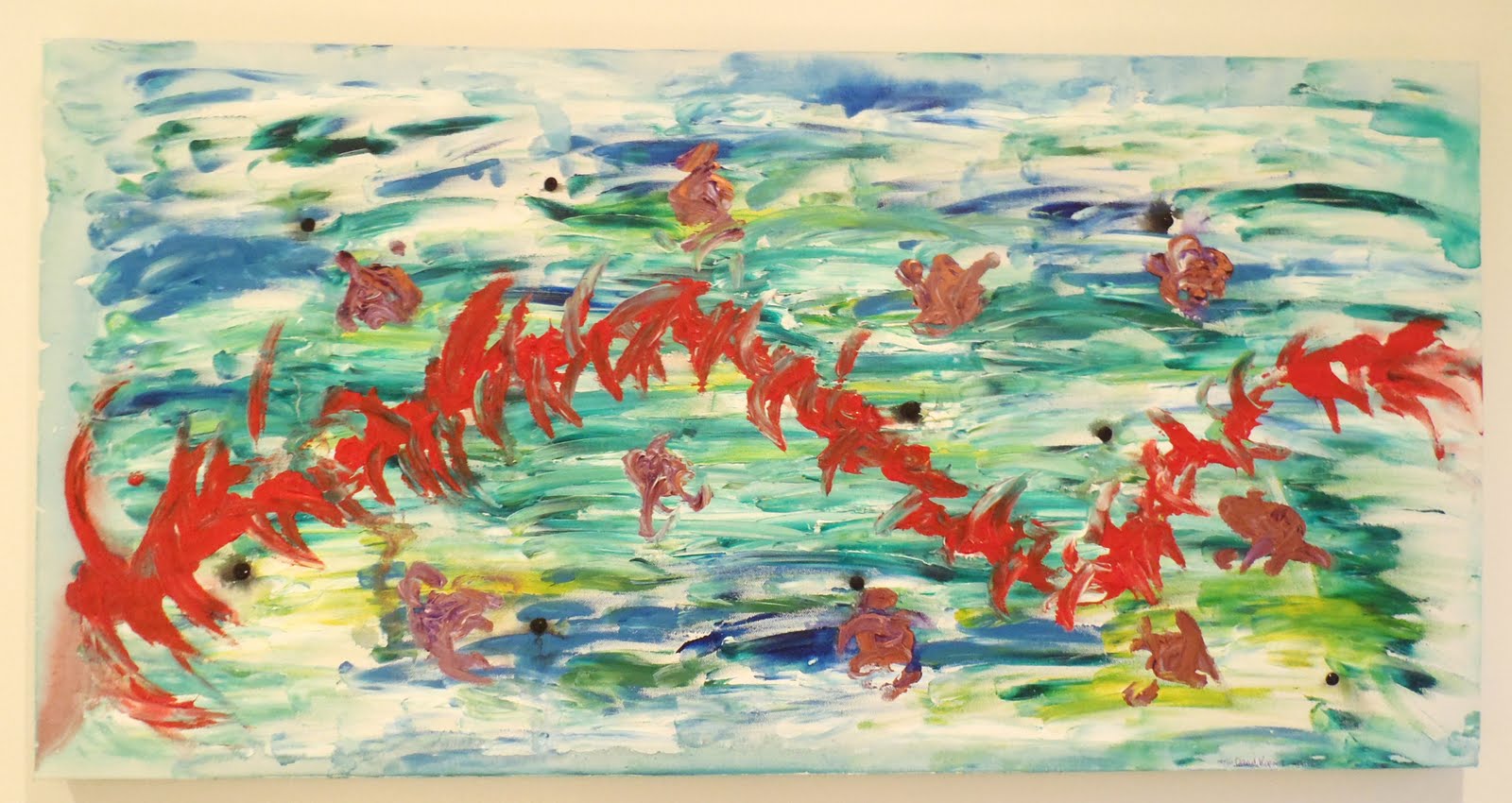
I just put up some new artwork (for more paintings, see my Website) that I have been doing since I’ve come to New Zealand. The style is different, partly due to have a different physical set up (and having to control the amount of paint splatter) and also these paintings seem to have picked up some of the aesthetic of New Zealand. The “abstract landscapes” are made by brushing in colours into the canvas and then turning the canvas on its side and using different intensities of water from a spray bottle to wash away the thickness of the paint. When the canvas is rotated back 90 degrees, they resemble landscapes. I do try to choose the colours to reflect Earth, Sea, and Sky, but the random element is how they combine as I spray the water on them.

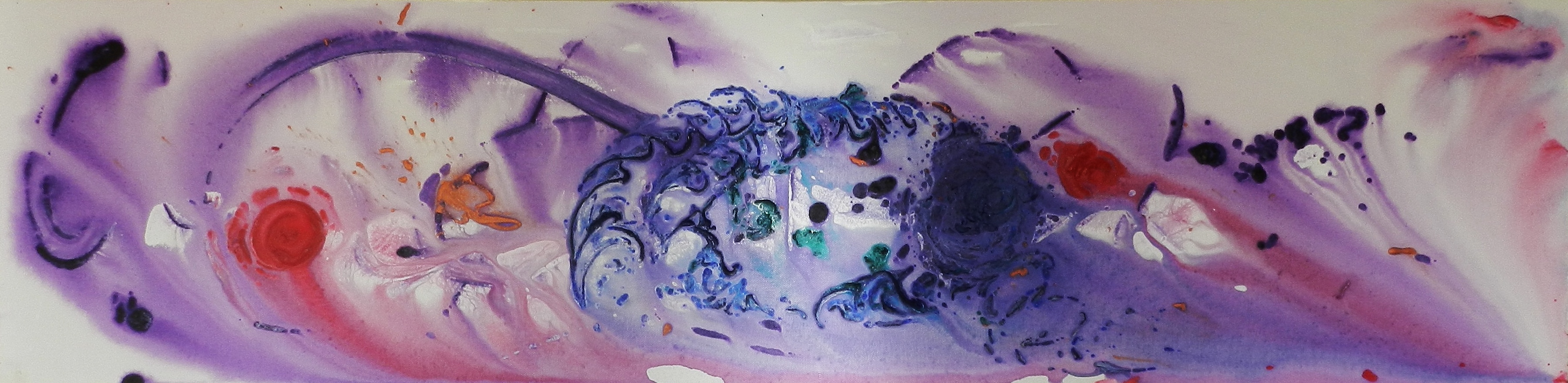
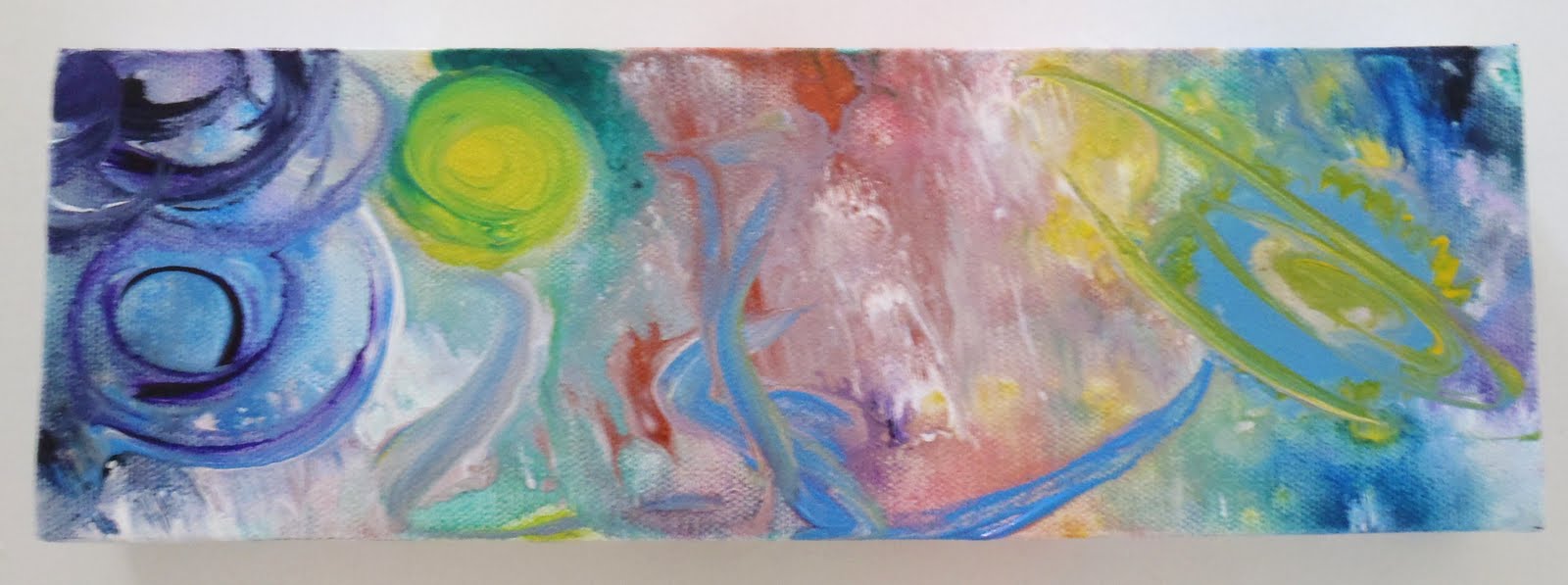
The long, purple painting reminds me of some of the Maori “totem pole” sculptures. I am not sure what they are called, but they remind me of Native American totem poles, in that they have various figures and faces on them. It was made with a similar technique, but not as covered with paint and with less water sprayed on to maintain some of the original paint pattern.

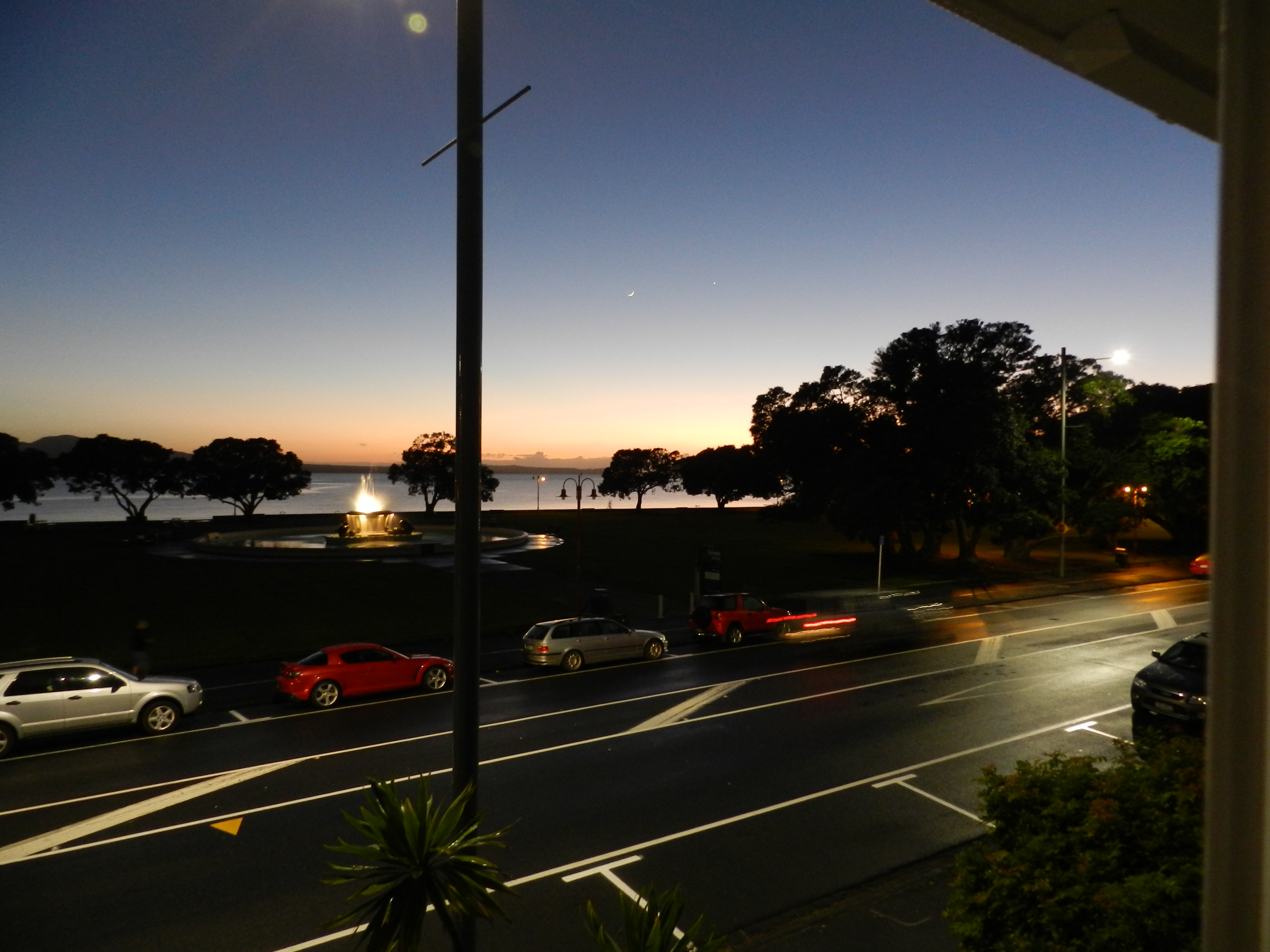
Photograph of sunrise with moon, you can see how this landscape inspires the paintings.

Photograph of sunrise with moon, you can see how this landscape inspires the paintings.

Overall I have been happy with my painting in New Zealand and it is always fun to watch as patterns and techniques evolve!

Some artwork from the first 5 months in New Zealand

Some artwork from the first 5 months in New Zealand

DSCN0206

Full Circle

FULL CIRCLE

I had a really great day today. I am currently at the American Psychiatric Association meeting in Hawaii. I feel like a lot of my professional life has been a critique of the mainstream of psychiatry, whether it has been studying psychotherapy (which according to a lecture today has “always been subversive,” because it challenges people’s understanding of themselves, their relationships, and it challenges the status quo), learning about trauma and bearing witness, or moving outside the confines of psychiatry into holistic medicine. The thing about living a critique is that it can start to get lonely, because I seem to continually question the fitness of the different treatment/personal growth philosophical systems that I put myself in. It is kind of like the dilemma of trying to find a group of people who don’t fit in and who form a community of “misfits.” Looking around at the conference today, I felt that old desire to be part of the group while also finding fault in the limitations of the dominant, evidence-based paradigm. I was slightly envious of the people who seemed to have built something in their lives over time as I compared myself to them. The thing with continually being open to new ideas and practices is that there is a risk of ending up intellectually homeless and unrecognized, another way of saying that I felt outside of the circle. With my recent move to New Zealand, I have faced this dilemma of wanting to fit in, but also wanting to follow my own passion and my own ethics and idealism.

FULL CIRCLE

Yesterday, I had this realization. I won’t bother putting it into words, it would sound incredibly simplistic, anyway, but it was just this felt sense of connection and meaning, even if I wasn’t feeling a clear sense of purpose. That is when I thought about blogging on the topic of coming full circle, which can mean so many things at so many different levels. On this trip, I brought along Maugham’s, The Razor’s Edge, a book I read a lot when I was in college and medical school. In some ways, the book is important and in some ways it is not, what is more important is re-connecting to things that I was interested in the past, and more important than intellectual things I was interested in, it was about connecting to the feeling of who I was when I was younger and what was important to me, including questioning, searching, and idealism. I had this sense of meeting an old friend, only the old friend was my younger self.

Part of what I was going to write about was a critique (or maybe just another chapter) of my article for PrivatePractice.MD, “Say Yes to Private Practice,” that I wrote as I was leaving private practice. I referenced the movie, “Yes Man,” which I just re-watched again when it was on TV. In the movie, Jim Carey’s character turns his life around by saying “yes” to every opportunity that came along. His life opened up and changed and became more rewarding when he said “yes,” and it closed down, became painful, or problematic when he refused to say “yes” to a new opportunity. In the movie, he hits a peak, though, in how useful this way of living is, everything starts to fall apart as he realizes that he can’t build a relationship if he is constantly saying yes to other things. He comes to learn a more sophisticated way of using this attitude, he learns to say yes only to things that he really, in his heart, wants to do. It isn’t about saying yes to everything, although that was a useful stage that helped him get unstuck in his life, but he learns discernment in choosing to say yes to what he is really passionate about. So that is where I have been feeling like I am lately, that I am at that point where I need to be more discriminating in what I say “yes” to, particularly after my first job in New Zealand where I feel like I burned out after about 2 months in the job and I took on a lot of challenges that were bigger than my own interests.

So, that is what I was going to write about, how I had so much growth in my life through saying “yes,” but that it was time to start reining all that in a bit and to start being more discerning in what I put my energy into and making sure that I am not just doing what needs doing, or jumping into an opportunity, but really practicing discernment and making sure my heart was in whatever I take on in the future. That said, today I had two really cool synchronicities that happened only because I said a few chance words. It was like the old accidental networking (which is what I used to call it) kicked in again. Things started to make sense, I felt more connection, more trust in myself and the universe. I think I won’t write about the actual events, the process is more important anyway. I will talk some about coming full circle, though.

FULL CIRCLE

I imagine that as a person goes through life, they have various circles that they go through. For one thing there is the grand circle of birth and death, that is really the foundation of life, I suppose, it is the most basic and incontrovertible fact. There are other circles, too, though.  For me, I just went through a training so that I can supervise psychiatry trainees in New Zealand (registrars, or what we would call residents in the US). In looking over the supervision pathways, I mentioned that I had done a lot of psychotherapy training, enough so as to be considered to have done a sub-specialty in it in New Zealand. So I mentioned it, and now I am also a psychotherapy supervisor and I already have been assigned my first registrar. Being at this conference also helped me to get excited about the role of psychotherapy in psychiatry. It is tending to get less and less attention and some training programs are even questioning whether it should be taught, but to me, it provides the humanitarian and ethical counter-point to guideline-driven medication management. I have also started doing some psychotherapy at my new job, whereas at the community mental health centre, it really wasn’t part of the work (at least not in a formal and in-depth way) and there were always so many patients that needed to be seen.

Here is what I have to say about this whole full circle thing, it can sometimes feel like you are going backwards when you are really just circling back to some important point in your life, from which you will venture off into another circle. I think of my colleague, Patte Randal’s, diagrams she uses in her work, making the distinction between “vicious cycles” and “victorious cycles.” I guess it is hard to know which kind of circle you are in sometimes. Looking at myself and my life, lately, I am amazed at how intensely I have felt that I am in the depth of either a vicious or a victorious cycle. That struggle and self-analysis, and self-critique, and continual striving to try to get from one kind of circle to the other has really been wearing me out lately. I guess that one way I can describe my realization, from yesterday, is that I am in both circles at the same time. Maybe anytime that I am feeling like I am just in one isolated circle, I will always feel lost and desperate and like the energy I am putting into my life is not going anywhere, building anything, or connecting to anything larger than myself. All circles are parts of other circles. I remember a painting I did called, “There is No Perfect Circle.” It had a bunch of lopsided circles on it that I kept trying to redraw to make “perfect,” finally, in exasperation, I wrote, “there is no perfect circle” on it and that seemed to complete something at the time.  ut, I suppose it might be true to say that every circle is perfect, that every circle is an interpretation of what it means to be a circle and all circles are manifestations of some kind of circle energy or circle template, and in this way, there is an inherent connection between all circles. And, then, I suppose, maybe life is all about continually drawing and re-drawing these circles and seeing how they interconnect and repeat and create things that seem entirely new, even as they might also seem totally commonplace. 

Getting back to Hawaii, the little bit I have seen so far is beautiful. I have met some really friendly birds and I’ll post a few pictures of them. I am trying to go swimming in the ocean every day, so I better circle back to hotel and the beach and go for a swim.

FULL CIRCLE

Making Things Better or Accepting Things as They Are?

Some artwork from the first 5 months in New Zealand

I suppose it is not fair to put this as a forced choice. I imagine there is some sort of yin and yang balance of a time for improvement and a time for acceptance. As an American, I know I can really get caught up in having the restless optimism to make things better. Americans don’t always have such a great track record in regards to the outcome of their attempts to make things better. Many of the wars we have fought in the past 60 years are the examples that come to mind. Also, I just read that the US government is starting several different law suits against BP and related companies for the oil spill damage in the gulf. I am sure that on some level presidents, congress, military professionals, and the general American public thought that war was a good way to make things better. I also imagine that in some way, all those oil executives imagined that there was some good that would come out of their decisions surrounding any decisions that led to increased risk regarding deep water oil well drilling – whether it was simply more profits, helping their investors, supplying cheaper oil, or helping to keep the world flush with oil.

Since moving to New Zealand, I have routinely found myself struggling with this question of should things be better or should I accept things the way they are. There are many things I have come across in business, safety, health care, and many organizational issues that would just not be tolerated in the United States, but here people don’t seem to get too fired up about them. There seem to be different cultural standards about how much can be changed, how much should be changed, and how much things can be accepted and how much things should be accepted. A 27 year old nurse died recently when she was riding her bicycle just a short ways from where we live. There are bicycle lanes on the road, but they are shared transit lanes for bicycle, motorcycle, bus, cars with 2 or more passengers, and even car parking. Some places along the road, there are separate bicycle lanes, but other places they seem to merge into this shared transit lane. Is it acceptable that 27 year old nurses die riding their bicycles on a supposed cycle lane? Is it an unavoidable accident, or is it a failure of planning that has created a dangerous situation. Should this be accepted or should there be an attempt to make the cycle path better?

I rode my bicycle for the first time in New Zealand this week. It was a short ride, less than 30 minutes. I rode past the place where the 27 year old nurse died, but I didn’t ride on the street. There is also a side walk bike lane. The side walk is painted down the middle and half of it is for pedestrians and half of it is for bicycles. It requires a lot of concentration and stopping and starting to ride on this off-road path, even at 6 AM. Groups of runners go 4 abreast and block the bike lane, people with their i-pods walk in the bike lane, you have to be aware of people walking their dogs so they dogs don’t get in the bike lane. Still, I’d rather have to slow down and ask people to move out of the way than be dead. I don’t really think that the on road bicycle lane is that safe and unless something major is changed with it (it is made better) I don’t think I’d ride in it.

Obviously, it is a good thing to make some things better. Obviously some things should be accepted as they are. I suppose that with a lot of things, you don’t really know until the dust settles whether or not it was a good thing to tear down that wall. There are other things that most people could say will not turn out well. Most examples of introducing some new species to make a problem better end up not working well, because the environment has so many complexes interlocking levels. Also, there are some things that you see and you just have to give it a go at changing them.

Maybe it is just because I am an American that I am constantly looking at the world, the businesses I interact with, and my job, and saying “how can this be made better?” Maybe it is really a culture clash in which I am putting my beliefs on other people who are perfectly happy to have things run they way they are. Maybe I shouldn’t get so worked up about a patient’s electronic notes being completely intermingled with another person’s notes who has the same name, or about a couple of pills of psychiatric medicine on the floor of a staff car, or about a client having a misdiagnosis, or about what seems like a tremendous waste of human potential with people sitting in meetings that have nothing to do with them or in a lack of efficient systems so that people spend big chunks of time doing things that could be stream-lined. Maybe all this is because I am an American Colonialist who wants to impose my “better” ideas on another culture. Maybe it is because I was born with something like 5 planets in Virgo and Virgos are driven to be service-oriented people concerned with self-improvement and improving things for others.

Sometimes I think about Paul Theroux’s book, The Mosquito Coast. In that book, Allie Fox seems like a restless American visionary. He is critical of the government, of people’s complacency, laziness, and blind acceptance of what they are given in a consumer-driven culture. To me, he starts off as a totally sympathetic character, a restless philosopher and mechanic, a practical dreamer. He takes his family to the Mosquito Coast in Central America. He works to make things better for the “natives.” He makes better houses, he tries to improve farming and food preparation, and he introduces civilization in the form of ice and refrigeration. Somewhere along the way, things start to go awry. What at first looks like selfless exercise in improving his family’s and other’s lives starts to slowly slip into a dangerous ego-trip that endangers the lives of many people and destroys the natural environment. As Allie Fox lies wounded in the bottom of a boat, asking his family, “are we still heading up stream,” his family lies to him and says, yes, as they head downstream and back to civilization. A cautionary tale about the restless desire to make the world a better place.

I remember a random psychotic man I met at a library in Edwardsville Illinois. He came up to me and asked, “Would you change the world if you knew how?” It was an interesting start to a conversation that had many interesting elements about John Stuart Mill’s philosophy, before it started to devolve into a paranoid rant in which this guy seemed to think he knew how to change the world, but that he would be the “child genius” and he needed a bunch of workers to do the heavy lifting of changing the world.

Many spiritual disciplines focus on acceptance. Sometimes Buddhism and Hinduism are critiqued as being passive and fatalistic. Classical Taoists, like Chuang Tzu and Lao Tzu teach that you are better off enjoying your life (running around like a weasel or a wildcat until you drop dead or are caught in a trap) than trying to improve your life or improve others or even to participate in the courtly society of China at that time. Better to be happy and alive, like a gnarled old oak, than useful and dead, like a sturdy, straight tree that would be great for lumber.

How do you really know when to accept something and when to try to change it? What if the “thing” you are contemplating is your self? I have definitely gotten too caught up in self-improvement schemes at times. Isn’t it ok to just be yourself sometimes, or do you have to constantly be striving to become better in some way?

I came to New Zealand to have an adventure, to learn something different, to see a beautiful part of the world, and to have some intensive cross-cultural experience. I am definitely accomplishing all those goals. What I struggle with on a daily basis is this constant questioning and doubting of myself, my desire to make things better, my desire to try something different and accept things as they are, my desire to just be who I am, and my desire to fit in and be accepted. If you have been reading along wondering how I will resolve this tension, I have to apologize; you will just have to live with it….

The Up Side of Burn Out

The Up Side of Burn Out

5 of the 9

5 of the 9

While most people think of burnout as a bad thing, maybe it is not always that bad. While burnout can lead to apathetic withdrawal and an acceptance of the status quo, it can also be a turning point where one decides that they are no longer going to put their energy into a system that is not functioning and resists change.

synthesis

I suppose you could map out the stages of burnout and I am sure that someone has. I suppose it could start with enthusiasm, idealism, active coping and problem-solving, then frustration, confusion, and then finally a kind of withdrawal from the situation while at the same time plodding along. Complete burnout might not be that great of a thing, but maybe some of the earlier stages can be useful in overall adaptation to a situation and also as a means to achieve a radical reorientation to a situation.

What do I mean by this?

I’ll give an example from clinical psychotherapy. Often times a clinical stalemate or equilibrium can happen, in which not much change happens because both the client and the therapist hit a comfortable way of dealing with or avoiding discomfort. In trying to be “nice, supportive, and understanding,” for example, a therapist could be contributing to and maintaining a pattern of interaction which actually resists change and insight. It is only on that bad, stressful day, when the therapist, often for other personal or professional reasons, can no longer maintain the facade of “niceness” and loses their temper, or in some other way breaks the equilibrium of the therapy, that at this point, something new and interesting and more real, open and honest can emerge. It is in the aftermath of this “failure of empathy” that real gains in understanding may really become possible.

Maybe this can be similar for dealing with a dysfunctional system. Maybe it is only at the point of burnout, where one can no longer handle trying to be polite and helpful and conscientious, that at this point, one can no longer put energy into a situation that is really not working on many levels. Maybe burnout is not all bad, as long as it doesn’t lead to complete withdrawal and nihilism.

journey

journey

journey

An interesting thing happened today. I was feeling really upset and angry and I flicked off the light switch at work, feeling like I just had to get out of there, and “POP” the overhead fluorscent light bulb blew. I thought, man, I must be pretty charged up about this. I flicked the light switch again to see if the light would go back on and “POP” the other bulb blew. Man, it was time to get out of there.

Tomorrow, I will request new light bulbs, and I imagine that when I get them in a few days, that if nothing else, new light will be shed on my situation.

generator

generator