The Up Side of Burn Out

5 of the 9

5 of the 9

While most people think of burnout as a bad thing, maybe it is not always that bad. While burnout can lead to apathetic withdrawal and an acceptance of the status quo, it can also be a turning point where one decides that they are no longer going to put their energy into a system that is not functioning and resists change.

synthesis

I suppose you could map out the stages of burnout and I am sure that someone has. I suppose it could start with enthusiasm, idealism, active coping and problem-solving, then frustration, confusion, and then finally a kind of withdrawal from the situation while at the same time plodding along. Complete burnout might not be that great of a thing, but maybe some of the earlier stages can be useful in overall adaptation to a situation and also as a means to achieve a radical reorientation to a situation.

What do I mean by this?

I’ll give an example from clinical psychotherapy. Often times a clinical stalemate or equilibrium can happen, in which not much change happens because both the client and the therapist hit a comfortable way of dealing with or avoiding discomfort. In trying to be “nice, supportive, and understanding,” for example, a therapist could be contributing to and maintaining a pattern of interaction which actually resists change and insight. It is only on that bad, stressful day, when the therapist, often for other personal or professional reasons, can no longer maintain the facade of “niceness” and loses their temper, or in some other way breaks the equilibrium of the therapy, that at this point, something new and interesting and more real, open and honest can emerge. It is in the aftermath of this “failure of empathy” that real gains in understanding may really become possible.

Maybe this can be similar for dealing with a dysfunctional system. Maybe it is only at the point of burnout, where one can no longer handle trying to be polite and helpful and conscientious, that at this point, one can no longer put energy into a situation that is really not working on many levels. Maybe burnout is not all bad, as long as it doesn’t lead to complete withdrawal and nihilism.

journey

journey

journey

An interesting thing happened today. I was feeling really upset and angry and I flicked off the light switch at work, feeling like I just had to get out of there, and “POP” the overhead fluorscent light bulb blew. I thought, man, I must be pretty charged up about this. I flicked the light switch again to see if the light would go back on and “POP” the other bulb blew. Man, it was time to get out of there.

Tomorrow, I will request new light bulbs, and I imagine that when I get them in a few days, that if nothing else, new light will be shed on my situation.

generator

generator

Finding Your Place in the World

FINDING YOUR PLACE IN THE WORLD
This is an oft used phrase that people use when they are looking at issues of personal identity, career, and family. The phrase has taken on new meaning for me in having moved to another country and having been in New Zealand just over 8 weeks, now.

This morning, I got up early. I haven’t been sleeping that well because I have been stressed about trying to figure out (at a mental level, but even more importantly, at a deep internal level) how my personal ethics and professionalism will fit into the contemporary New Zealand practice of psychiatry. This gets into the whole “better, different, worse” dimension from the last blog post.

This morning, I got up early because I was thinking and troubled. I thought, that’s it – I am not going to keep worrying about all this – I am going to start working on my books, to begin with Creating a Holistic Medical Practice (which when I opened the document today, I realized it has been 2 months, to the day, since I last wrote anything on this). So, I got up and thought, I’ll just head off to the café, get a latte bowl, and do some good old writing and that will help orient me and help me to feel I have a focus and purpose in whatever it is I am doing in New Zealand. 7 am. Of course, cafés here don’t seem to open until 8 am on Sunday, which is my cultural lesson for the day. So, that is ok, I am flexible and I haven’t taken a long walk along the beach in awhile, so I headed off, the sun shining brightly on the water.

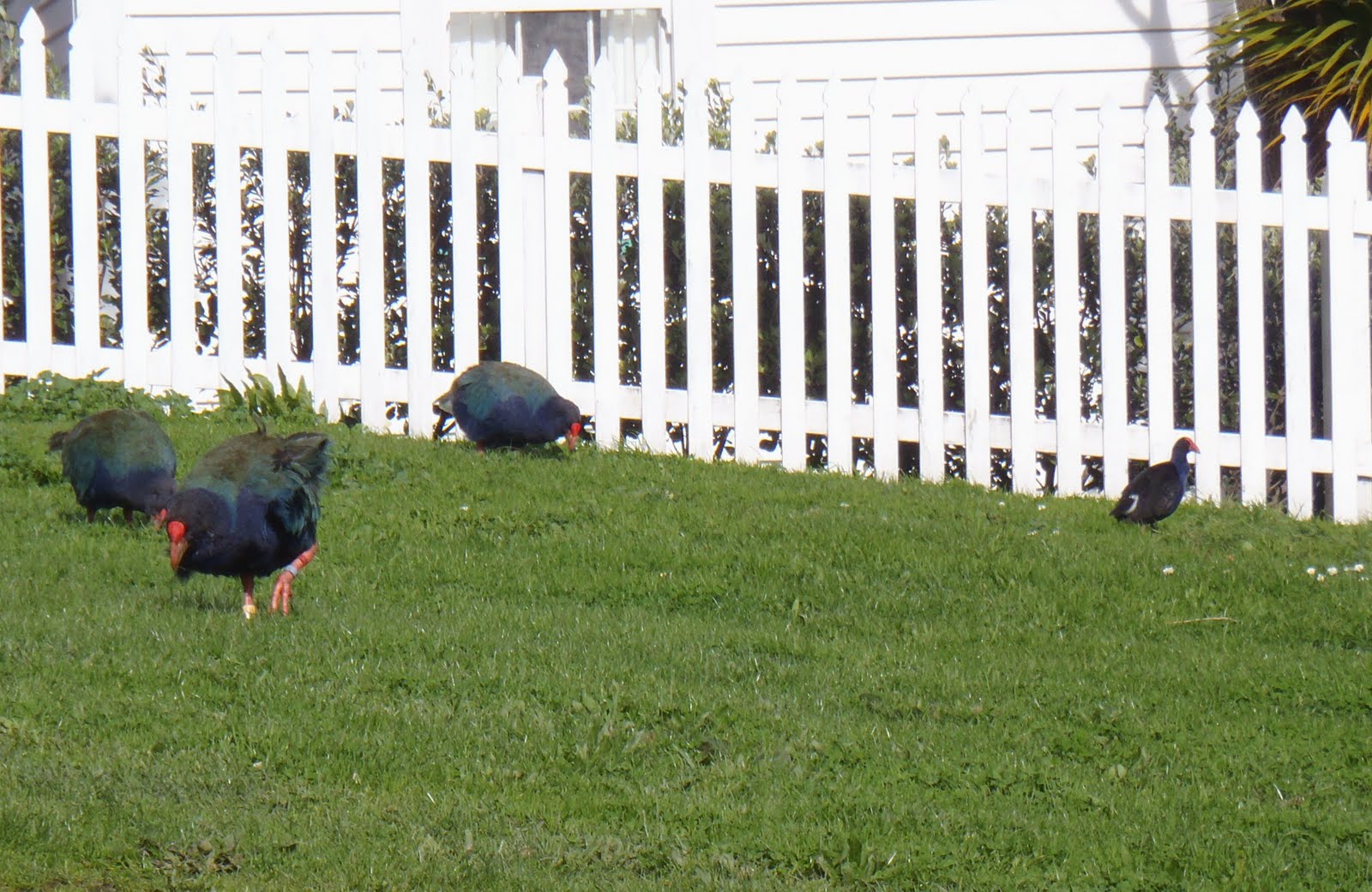
I saw a flock of Kakariki, or red crowned parakeets, about 5 or 6 of them. Amazing! I sat down along the path and watched them call to each other and dart in and out of the trees high up on the Cliffside above the road. A few NZ goldfinches, with red heads, joined in, twittering and flying in and out of the trees. After watching for awhile, I resumed my walk down the path, but decided I would head up a road winding up the hill to see if I could see the Kakariki from another angle. (Incidentally, when we went out to Tiritiri Matangi Island, the tour guide gave us each a Maori bird name to pronounce, and the one I was assigned was the Kakariki). I heard a bunch of birds calling in the trees, some of which I thought were the Kakariki. I saw a few pukeko grazing on the lawn. I couldn’t get a good view of the parakeets, so I gave up and walked on up the hill, pausing to look at some thrushes along the way. I got up to the top of the hill and sat down for awhile. Lo and behold, the Kakariki had come up the hill, one sat on a fence for a while and then a pair of them went off into a tree. I followed them and at times they seemed to follow me. They seemed kind of curious as I kept trying to get a picture with my camera phone (unsuccessfully), but it was alright, I got quite a few good views of them. Then I walked over and down the hill to the Sierra café and at 8 am got some breakfast (a very tasty plate of poached eggs, toast, boiled tomato, potatoes, and creamed mushrooms) and my latte in a bowl.

The thing I think I am struggling with is finding my place in the world, and more specifically finding my place in New Zealand, and more specifically yet, my place in Manaaki House and psychiatry at Auckland District Health Board. Some of this is adjusting to the “differentness” in the way things are done. Some of which seem “better” and some “worse” from my perspective. One of the things I am hitting, which I think is a cultural difference, is that I would like my role to be clearly defined, I would like to see the policy and procedure manual, so that I can see what the policy is for which staff are allowed to touch medication, to dispense medication, and what the rules are for how and where and under what kind of security medications are stored. I have almost learned, now, to stop asking for the written policy and procedure manuals. That doesn’t seem to be the way things are done here. I am still thinking there must be some policies on these things somewhere, but it doesn’t seem to be a simple thing for me to get them and I fear I have offended some people in my quest for written guidelines. I am trying to understand the de-emphasis on policy manuals as a more “laid back” approach to life and work in New Zealand, but it is very difficult for me to go against my orienting reflex of what are the rules, how are we supposed to be doing this? One person I spoke to mentioned that people are going to think he is “Hitler” because he wanted to update some policies. That is a pretty strong anti-policy sentiment. What I struggle with, is that from my perspective, an American who has worked in many different health care delivery systems and designed from scratch a small health care delivery model (private practice), it seems like a lack of organization and structure. For me this is a culture clash, because in my disorientation in Kiwi culture, my orientation reflex is to find the structuring and organizing principles, which creates a greater dissonance between me and the culture and the day to day work.

Another cultural difference that I am finding is that Kiwis, not just at work, but in many settings, banking and business (these being other settings that I am used to having clear cut rules, policies and guidelines) there is a tendency to avoid directly answering questions that in the US would have a very clear and direct answer. For instance, I was at the bank last week, activating my EFTPOS (electronic fund transfer point of service) card which is also a MasterCard, and I tried 3 times at the window and then back to the “ATM” machine and it wouldn’t work. Eventually, the teller asked if I would just like some money at the window. I did, but I also wanted my card to be able to work. We have already switched banks once and I keep getting in these situations where I don’t have access to money accept for using my US credit card, which costs more with currency exchange fees. So, I said yes, I’d like some money. The teller said I should just wait a little while on my card, that it was activated in the system, but that sometimes it takes the computer awhile to update. So I took my $100 and tried again at the ATM a few days later and it still didn’t work. So, I waited about 15 minutes for a teller, and then she was able to get my card activated both as an EFTPOS and a MasterCard. I asked about my balance on my credit card and there was a $3 fee for a cash advance from the day before when I got the $100. I said that I didn’t feel like that was fair, because I was in and out several times and when I got the money, I thought I was getting it from my account at the bank, not a cash advance on my credit card. ($3 isn’t a big deal, and this whole episode may seem kind of petty, but when you repeat similar interactions many times over a week on many different topics, some minor and some major, it starts to become clear that there is some kind of cultural issues at work). She said she understood, and that it was a mistake and that it was “fixed.” Having been in New Zealand for a little while now, I knew enough to ask what she meant when she said it was “fixed.” She said, it won’t happen again. I thanked her for that, and then said, I didn’t want to pay the $3. She said when I got my bill, I could address it then. I said, well, why can’t we address it right here. I am here, you are here, and we can both see the $3 on the screen and why on earth would I opt to get a cash advance and pay for that when I have money in my accounts. Yes, she could see my point, she was sorry, she said it is taken care of. I said, so I won’t have to pay the $3? She said, oh, no that fee is there, but it won’t happen again. I took a deep breath and settled in for a prolonged discussion on this. She glanced back at the ever lengthening line of customers, and said she would talk with her manager and get the $3 fee removed. We each took down each other’s details (another thing I have learned in NZ is to write down the name, date, and details of the interaction because what someone says doesn’t always turn out to be what someone does) and I went on my way.

What seems like a very positive thing in Kiwi culture is that no one in the line got angry or irritated, at least not that they showed. I observed a Fiji Indian bus driver spend what seemed like 5 minutes one day patiently working with an Asian woman who spoke minimal English to figure out where she wanted to go and to make sure she was on the correct bus. The customer behind her jumped in at some point to help as well and said that she knew the road and was travelling near there herself. The bus driver then said several times slowly and clearly, you stay with her (gesturing to the helpful woman), you stay with her and she will show you where to go. At the appropriate stop, the helpful woman got off the bus with the Asian woman and gave her some more directions. This patience and desire to help is a really great quality. I wonder sometimes if the flip side of it though, is (what appears to a hasty and restless American who always wants to make things “better”) that there is a lack of dissatisfaction with things that are not working well. It can seem almost apathetic to me sometimes, but I tell myself that it is the flip side of other positive cultural attitudes, but then I say, but when you are dealing with money, or medications that can kill someone or be mis-used, is that attitude “different” or is it “worse,” and can I go along with it or should I risk being seen as a busy-body, know-it-all, who says “where I come from, we don’t do it that way.” One thing I have read and been told is that the surest way to alienate a Kiwi is to criticize the way things are done or to compare them unfavorably to a larger country.

In moving to another country, there is probably always a prior feeling of not fitting in with your own country. I know for me, that I am often critical of the US and on many levels tend to feel like I don’t fit in. Also, I tend to drift toward the fringes and I tend to really enjoy other people who are eccentric or don’t fit in squarely into the culture. In moving to New Zealand, I think on some unconscious and maybe semi-conscious level, I think I was hoping I would find a place where I “fit in.” I think this is one the major internal issues I am working on. What if I don’t fit in here? What if then I don’t fit in back in the US? What do we do, move to a third country?

I know that many people in spiritual or psychological circles would say that everyone is an individual and that the important thing is to feel comfortable with oneself. If you fit into yourself, you will find a place in the world. I do ascribe to that view, although I don’t think that is the whole truth. At least, it sounds like a potentially lonely place without much connection to others. I have been reading some of Mason Durie’s books. He is a Maori psychiatrist who has written about Maori cultural attitudes and the lack of fit in a Westernized medical system. The Maori, he says, don’t have the sense of themselves as isolated individuals, but rather their sense of self is contextual, land, place, family, tribe, and spiritual realms and connections which also are often connected to places. He says that they have a more “holistic” view of health and identity. This is definitely different from the Westernized view of a sense of self that is “portable” and self-contained and self-referential. I see the pros and cons with both the Individualist and Collectivist orientations. I can create a narrative, as many others have, that in the West we have taken Individualism to the extreme that we no longer have a sense of connection to our environment and each other. The problem of alienation and nihilism can be traced back to the rupture of connection of the individual to self, to other, and to environment.

What is the solution? What is the problem? What are different ways that people find themselves in the world? How do people find their place in an ever changing world and human environment? Is meaning to be found in the individual’s relationship to their Self, or in the individual’s connection to the Other? Is there a way that all of this is true, that there are times that a connection to Self is most pressing and other times connection to Others is more salient? How important is it to be true to your Self and how important is it to fit in?


Better, Different, Worse

The Orientation Reflex

In moving to a different culture, one encounters many things, some familiar, some similar, some different, and some exotic. To orient oneself, there is a natural tendency to like what is familiar and to dislike what is unfamiliar. Even in a state of adaptation to a culture, under stress, one reverts to learned behaviours. For instance, if you grew up driving on the right side of the road and are learning to drive on the left side of the road, and you hit some panic or disorientation, there is a tremendous drive to go back to what is familiar and over-learned, the right side of the road. This orienting reflex is similar to what Laurence Gonzales writes about in his book, Deep Survival, when he describes the human tendency to respond to the known, even when one realizes that one is in an unknown situation. In a life and death situation, responding as if the unknown situation is known can be a fatal mistake. What Gonzales describes could be seen as an example of the orientation reflex, an attempt to apply a mismatched response to a situation that is causing disorientation. The stronger the sense of disorientation, the stronger the orientation reflex.

The orientation reflex could be seen as a form of psychological defense, although I am not sure that really does it justice. A defense is a fixed psychological state in response to a challenge or stress from the environment. There are differences in opinion as to whether a defense is always a distorted reaction or whether it was perhaps a valid reaction at one point, but is now no longer valid because it is out of date, from an earlier time in life, and therefore immature when compared to one’s present abilities. Either way, the orientation reflex is a mismatch between the current environment and the over-learned behaviour. The question is how to resolve the mismatch or whether to live with it.

In life and death situations, like Gonzales describes in his book, the orientation reflex can lead to death. Similarly, in trying to drive on the left side of the road, the orientation reflex could get you into a lot of trouble and maybe even get you killed. The challenging question arises in situations that are not life and death, but rather socio-cultural interactions between individuals with different over-learned behaviours or different orientation reflexes. At a certain point, if you are living in a different culture, you end up hitting a place where your sense of self and your orientation reflexes come into conflict with the host culture you are living in. At this point, the question is do you change yourself, do you adapt to the new host culture. The vast majority of people will choose to adapt somewhat, but it is a spectrum and people may find that they are comfortable with different places along the spectrum.

At the two extremes of the adaptation spectrum are the choice to not adapt at all, but rather to concretize one’s own culture and orientation reflexes, and at the other extreme, to fully adapt and blend with the new culture and to leave one’s previous sense of self and orientation reflexes behind (“going native”). The really challenging thing is that a person’s sense of self is also made up of these automatic orientation reflexes, and that to change these reflexes requires at the very least to re-wire your brain, so to speak, or to make major changes in your sense of self.

Better, Different, Worse?

One simple way that a person can respond to a new culture is to break down everything that is not familiar into the categories of Better, Different, or Worse. In a very real sense, everything that is not familiar in a new culture is Different. (Of course, even some of the things that seem similar could turn out to be different and this could be some of the most disorienting cultural interactions). Some of the things that are Different, may then be judged to be either Better or Worse. If someone voluntarily moves to another culture, there must have been at least some aspects of that culture that were thought to be Better than the culture being left. Even if one claims to just be seeking Different, I would guess that there is still a drive to find Different Better.

It may seem to not be politically correct to say that another culture is Better or Worse than another. I for one, do not believe that statement to be true. Part of being Different means that some things may just be plain Different (driving on the left vs. driving on the right), whereas other things may be Better or Worse. Even to go back to the old dimension of cultures being somewhere on the spectrum between Individualist and Collectivist will mean that certain cultures have more individualist strengths (such as a strong sense of self separate from the collective) and others will have more collectivist strengths (such as strong in-group and family bonds). A culture in which bribery is common could be said to be Worse – in that dimension – than a culture that does not have bribery.

In looking at cultures as having different strengths and weaknesses, different values and preferences, it follows that certain cultures will have different things that they do Better or Worse than others. Admittedly, to say that something is Better or Worse is to make a judgment from an outside perspective. Someone who grew up in a culture in which bribery is the way to get things done may very well think that is the best way to get things done, from a moral relativist position, it can be difficult to make any judgment of anyone or anything at all. However, there are certain elements of mutually agreed upon realities. Most of the people of the world would probably agree that torture, deceit, unfairness, cruelty, and discrimination are Worse than the opposite, or at least the attempts to have the opposites of those qualities.

On one level, there is this universal level where most people would consider something Better or Worse. Are these stereotypes or do stereotypes have an element of truth to them. Are the French Better cooks and the Germans Better engineers? Is it true that French culture places a higher value on good food and good living and German culture places a higher value on structure and order? Is it true or false that American culture is Better at some things and Worse at others?

Lately, I have found myself using this heuristic of breaking down challenging cultural situations into the Better, Different, Worse framework. I try to always remind myself that the reason something is disorienting is that it is Different. I hold off judgment as to whether something is Better or Worse until I have been able to have a series of situations in order to see some kind of larger pattern. Even once I decide that something is Better or Worse, I realize that this is still relative to me and my values and I try to see how what seems worse could be the weakness of a strength in another dimension. For instance, it would be difficult to have both very individualistic and collectivistic strengths in the same culture.

I am still working out patterns in New Zealand culture and how these are Different than patterns in US culture. While I have the luxury of taking an anthropological approach in certain areas, in my job, I have to function as a professional in a system that may very well have different concepts of what is professional and ethical behaviour. I face the dilemma of having to rapidly decide in what ways to adapt to the culture and in what ways to hold to my professional orienting reflexes. This is quite a challenge.

Going back in time: 2 weeks ago.

Going back in time: 2 weeks ago.

Going back in time: 2 weeks ago.

Going back in time: 2 weeks ago.

Going back in time: 2 weeks ago.

Ok, I realize I these last few posts are pretty sloppy, but I am getting behind in putting up some photos. I have some thoughts to put down about living and working in another country and culture, but they will have to wait.

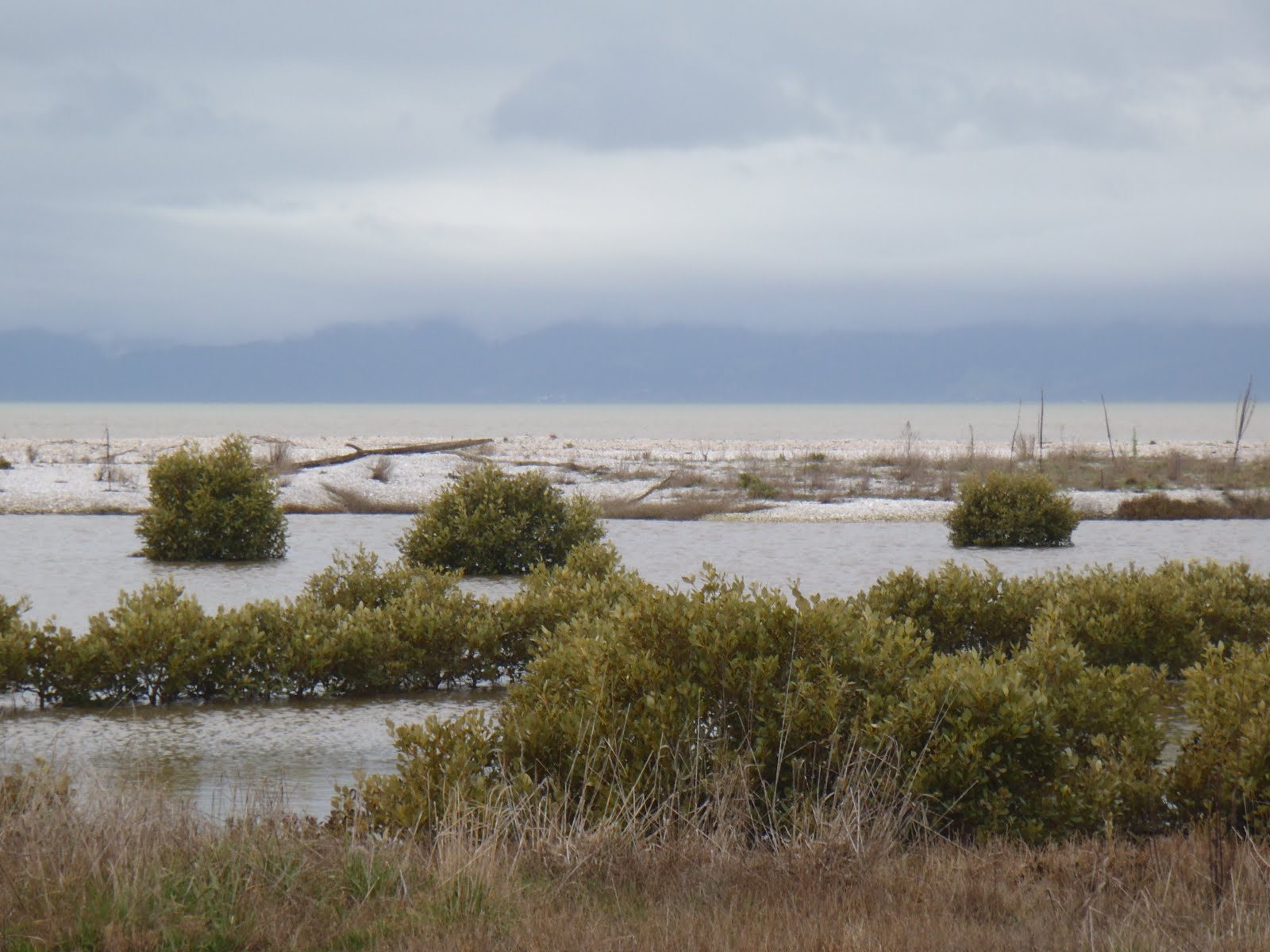
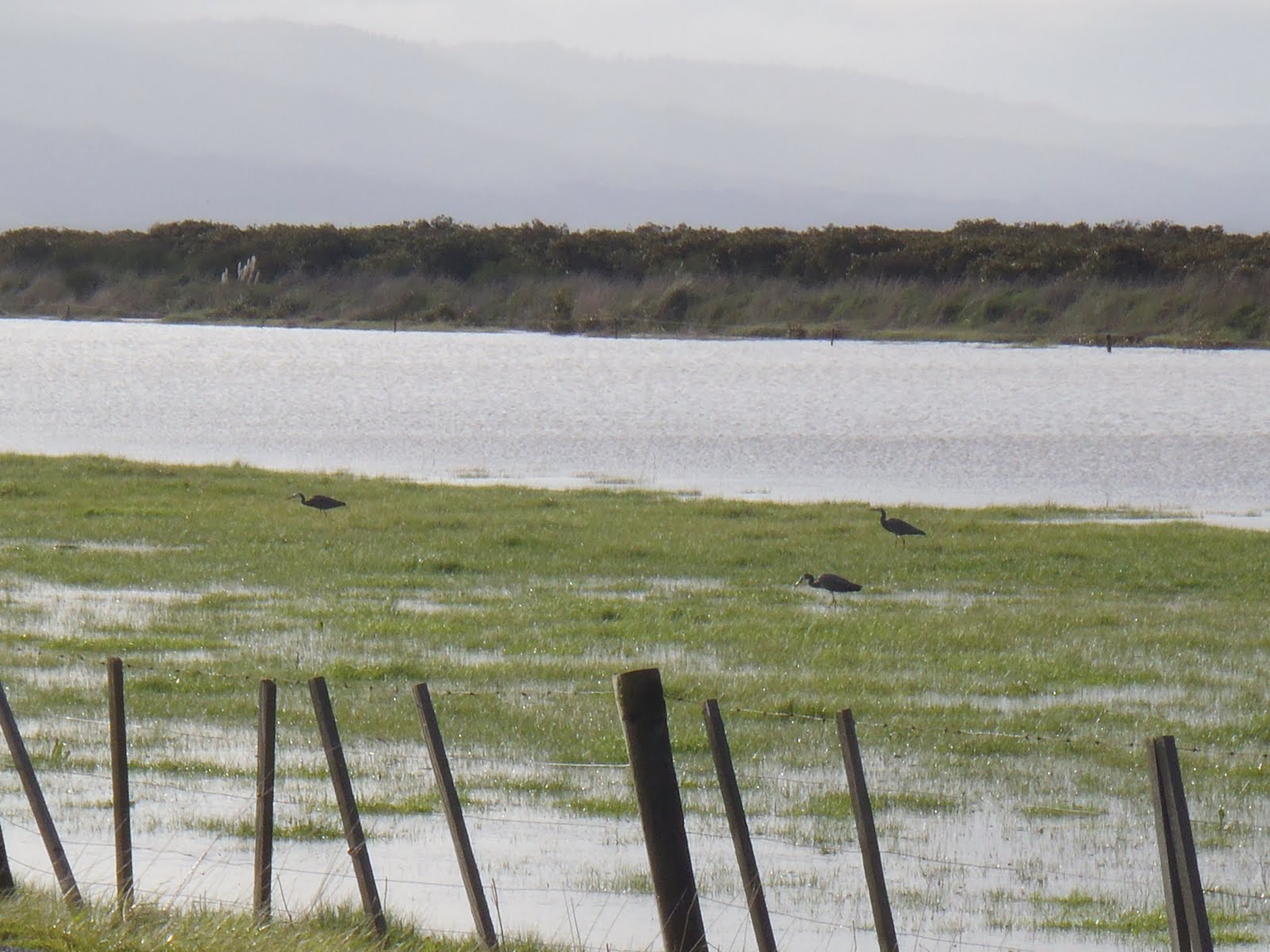
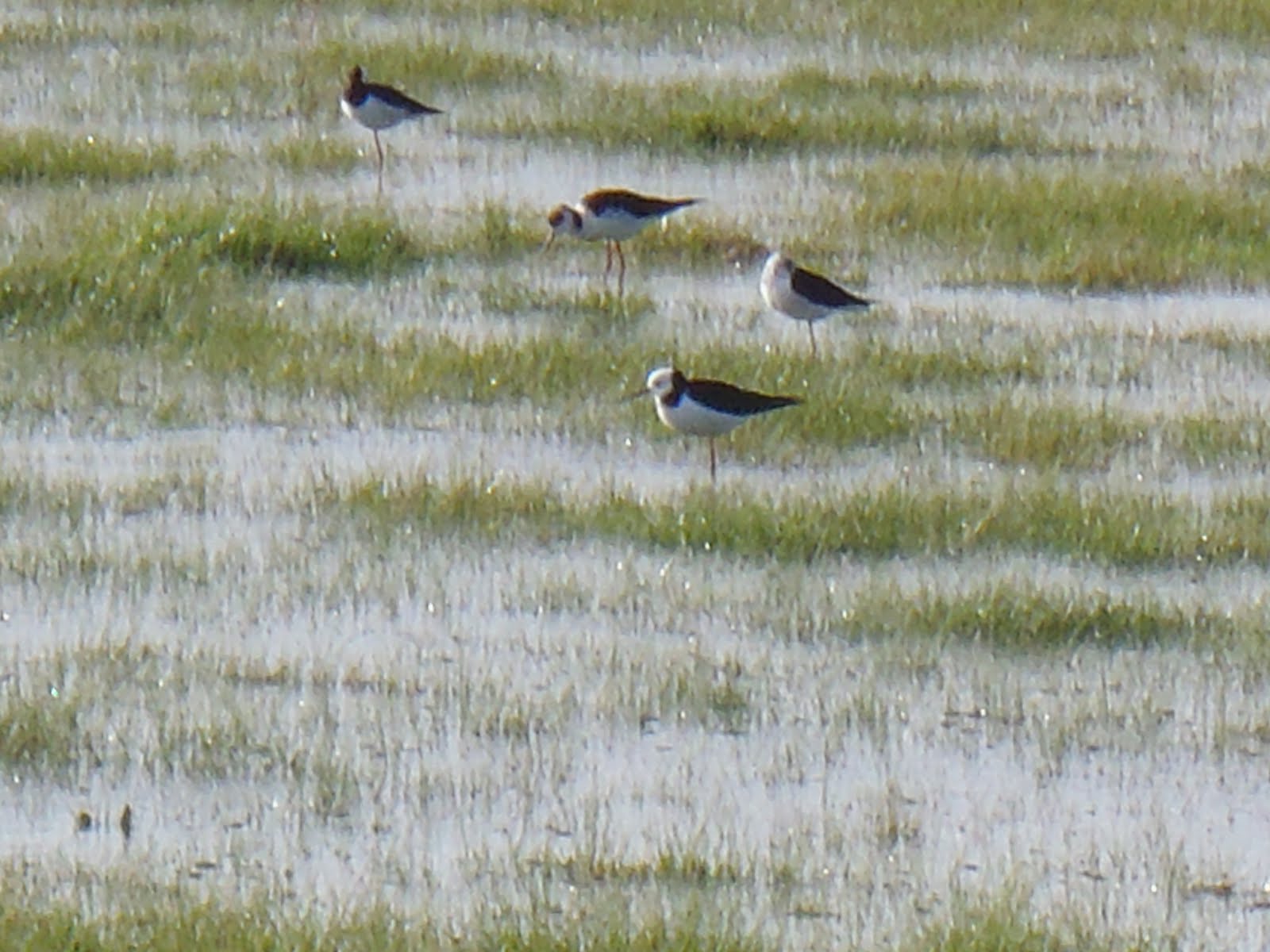
Here are some photos from a trip we took to the Miranda Shorebird Centre. It is about an hour drive from Auckland. It is across the Firth of Thames from Coromandel Penninsula. The area is apparently one of only a few in the world that is called a Chenier Plain. Over time, heaps of shells are washed up on the beach, the heaps get so high that they eventually cut off pools of water from the ocean. These pools fill with silt and eventually become swampy land. Over time, more and more of these heaps of shells build up, creating a series of shell hills with intervening silt flats. Mangroves grow in these areas. The best views of birds we had was in a flooded farmer’s field, rather than at the centre.

A few more photos from Miranda

Going back in time: 2 weeks ago.

Tiritiri Matangi

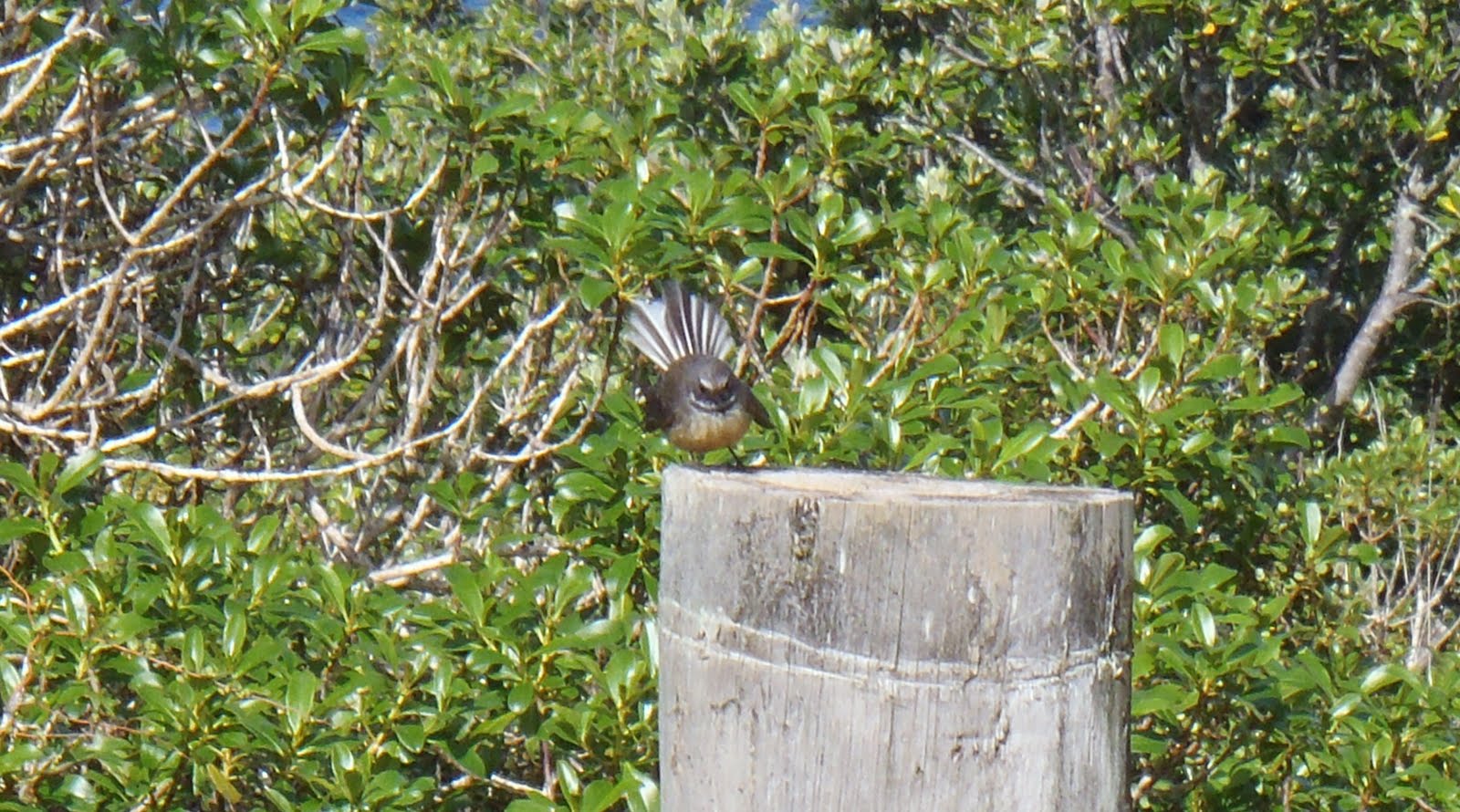
Fantail

Fantail

Greg the naughty Takahe

Greg the naughty Takahe

Brown Teal

Brown Teal

Cabbage Tree

Cabbage Tree

Hihi and Stitchbird

Hihi and Stitchbird

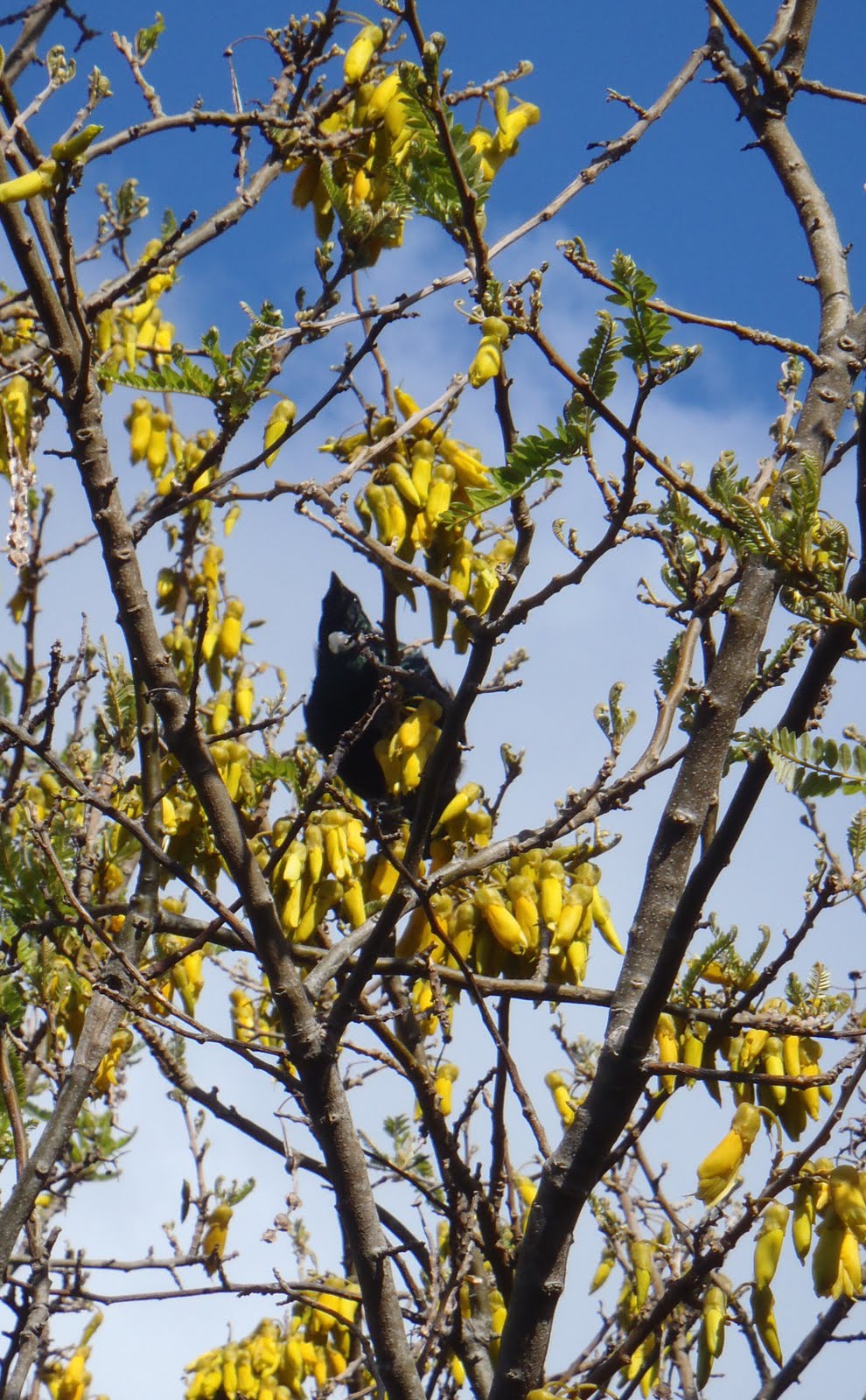
Mary Pat and I went out to Tiritiri Matangi Island this weekend. It was about an hour long boat trip out to the island. It is a scientific reserve and allows up to 150 visitors a day to tour the re-established ecosystem. It was a farm up until about the 1970s and then was bought out by the NZ goverment. The non-native species were trapped and native flora and birds were gradually introduced. It is really an amazing place and is amazingly beautiful. Here are a few photos:

A Short Trip From Auckland

McKinney Kauri

McKinney Kauri

After 4 weeks in Auckland, we finally made a short trip away from the city. Driving here still requires a lot of extra concentration to stay on the “correct” side of the road. We did take a trip to Maraetai, but it completely wiped us out, both driver and navigator!

Ponga (Silver Fern)

Ponga (Silver Fern)

A Short Trip From Auckland

Today we went up to Kauri Park, near Warkworth, about 60 km North of Auckland. Aside from the daily natural beauty of the ocean, we haven’t really gotten out into any forest. Kauri Park has two very large Kauri trees and a short forest walk through some amazing forest (bush, as they call it here). There were magnificent ferns and foliage. We heard some unusual birds, but didn’t catch a glimpse of them. We also heard some cows at some point, which seemed strange given the really rain forest-like feel of the ecosystem. We did see quite a few Pukeko birds on the drive, but I still haven’t gotten a photo of one, yet. The walk was very invigorating, not very demanding, just a really nice introduction to the native plants.

A Short Trip From Auckland

Tomorrow will be the start of my third week at work. There is so much to say about that, but I’ll just post some photos from the day for now.

A Short Trip From Auckland

New Zealand: 2 weeks and counting

Rangitoto Island

Rangitoto Island

Well, it has been just over 2 weeks in New Zealand. The second week was much different than the first – less exploring (in a touristy sort of way) and more practical settling (e.g. looking at cars, shopping for things for the flat, trying to figure out how to get from here to there while staying on the other side of the road).

We hit some culture shock this week. In my brief personal experience, culture shock seems to be a situation in which you encounter a way of doing things that is different than the way you are used to doing them. It seems to be a bigger shock when you hit something about which you did not even realize you had a belief about. The more automatic a behavior is, the more jarring it can be when the way you are trying to do something doesn’t seem to fit with the new culture in which you are trying to operate. For me, it has been a gradual collection of little things that led to me feeling more irritable and pissy this week. I’ll go through a few of the glitches, as examples. The details may be a bit boring, but it is the details which reveal the lack of fit between different ways of doing things.

In New Zealand, any internet use is gauged in terms of the amount of data you intend to use. For instance, my mobile (cell phone contract comes with complimentary internet use, but I had to choose between different plans based on how many gigs of data I wanted to use. I had no idea how much data I used in the States. I was told that using skype uses up a lot of data. I got an upper end plan and I haven’t run out of minutes, although I am still trying to figure out how to use the internet effectively on my phone. I also got a mobile internet stick for my laptop.

[An aside, we had been planning on staying in a hotel efficiency for two months until all our belongings arrived. We spoke with my new boss about some different places that we could gradually check out to live in. We took the bus back toward downtown from my work place in Panmure and we stopped in a suburb (which is technically in the city of Auckland, unlike suburbs in the US that are separate cities) and we stopped in with a realtor who gave us a list of places. We walked down to the first one and were standing on the street looking up at the beautiful second floor flat when, lo and behold, the owner of the place looked down, out the window, and waved us up. It turns out she was waiting to show the place to someone else. We hit it off and talked about having shared relatives in Minnesota. So, we ended up getting the flat that day. We then had to contend with the fact that we have no furniture for two months, but that is another story. The moral of this story is that plans change and each time a plan changes there is a ripple effect that changes many of the earlier plans you have made.]

New Zealand: 2 weeks and counting

A different sort of duck

Since we were originally planning to live in the hotel efficiency, I got the mobile internet stick on a month to month basis. Since we had free, unsecure internet at the hotel, I got a lower data plan on the stick, since I thought I would just use it for any secure needs, like checking bank balances and paying bills. Well, once we moved into the flat, we didn’t have any internet, so we were using the stick and now it has reached its data limit for the month. We have been trying to get internet service at our flat, but this has been a long, involved procedure. Mary Pat was trying to get internet without a landline, but she kept hitting problems with this. (In general, things are more expensive in New Zealand and we keep having to adjust to this. It would be nice if I could give side by side comparisons at this point, but I have to admit that my mind has been unable to hold all these variables in place. Suffice it to say that our phone plan with a certain upper end internet data use is NZ$100, about US$70, that is the base rate and then there are various, byzantine charges depending on where you are calling. Right now we can call a landline in the US for NZ$2 for 60 minutes, we can then hang up and call again for another $2 for an additional 60 minutes, but if we call a US cell phone, it is something like 35 cents a minute). Eventually, she did arrange a landline and internet through Vodafone. Again, though, we had to choose how much data we wanted on our internet plan. As I am writing these things, I realize that to the reader, this could sound like me complaining about the routine hassles of life. My point is that in another culture, the routine hassles of life takes on new meaning because each routine hassle takes 5-10 times more energy because you have to figure out what everyone else here takes for granted. When I was explaining to Brendan, our friend at Vodafone, that in the US there are no data limits on internet use, he couldn’t understand it and kept asking questions about whether this was just a deluxe plan. The concept of unlimited internet usage did not fit his view of how internet services worked, just as our view of internet services doesn’t fit the way things work in New Zealand.

New Zealand: 2 weeks and counting

Pigeons in the Domain

A break from this. Right now, I am sitting at my favourite café to read or work at. It has a second floor. I look up and see part of Rangitoto Island, which is a common view around Waitemata Harbour in Auckland. I can see a couple of kites against a mostly cloudy sky, some watercolour-like patches of grey, some white fluffy, a couple of patches of bright blue. There are a few evergreens across the street. My favourite is a tall, sparse pine, I am assuming it is a pine, but I am not sure. It is a conifer, but it has long, thick, finger-like “needles” that seem to like to reach upward. There are a few pigeons flying around. I have seen a number of more exotic birds, although they seem to be fairly common here. One variety is a Pukeko, I might not be spelling that correctly. It is a bird about the size of a duck, with longer legs, that walks like a chicken, and has a blue head, quite a pretty bird, I have seen it on various New Zealand tourist items. I have seen a couple of herons, white-faced, I think. A couple of Kingfishers, which I quite like. Yesterday we saw a couple of varieties of oyster-catcher-like birds, one type all black with a long, curved orange beak, the other, pretty similar except it has a white breast and underbelly. There are some large crow/magpie looking birds that have an off-key, humorous song. We’ve seen a few of the New Zealand goldfinches which have a red head. I have also seen a few little greenish coloured birds that have prominent eyes, like a vireo, but smaller, maybe a Rifleman? I haven’t done much reading or identifying on the birds. As in the US, pigeons and English Sparrows are the predominant birds. Close behind are a couple of thrush-like birds that seem to be in the Robin-niche. One variety has white splashes on its wings when it flies, the other doesn’t. They look similar enough that maybe they are male and female of the same species?

I am not sure if I have commented on the weather. It is winter here, but that means maybe 45-65 degrees F, (7.5 – 17.5 C). The first week we were here, it didn’t rain at all, and we were kind of surprised and perplexed by that. Since then, it has been grey and rainy for the majority of the time, but even so, there are periods of sun most days. Yesterday it didn’t rain at all. The day before it was sunny and rainy, sometimes at the same time. One rainbow, so far, but this type of sun and rain would lead one to expect that they are common here. The thing that is different here (aside from it being beautiful and green in the winter, and that there is water and hills everywhere) is that people are in relationship with the outdoors in a way that they are not in the US. Even in a light rain people are continuously walking along the beach. All the restaurants and cafes here have French doors or large windows that are open, even during the rain. (I had spoken with an American physician who lives in Northland, a couple of hours North of Auckland, and she said she wasn’t used to being cold indoors and spent her first winter miserable and cold the whole time).

I have bought some outdoor, moisture-wicking undershirts that seem to help. You have to be prepared that you might get wet and when you stop in a store or restaurant that the doors may be open, even if it is 50 degrees F and damp outside. Even when you go home, there is no central heat, no storm windows, and places where you can see the outdoors through gaps in the windows. There doesn’t seem to be a concern about keeping the outdoors out and the indoors in. I am gradually getting used to this. Mary Pat is probably getting tired of me quoting something I heard on the radio in the US that I liked, “there is no such thing as bad weather, just being improperly dressed.” In New Zealand, I have read that if you complain about the weather, people will say, “stop your whining and put on another jumper.” I have learned that a “jumper” is a pull-over sweater. People will comment on how bad the weather has been, but they still leave the shop door open. I have seen a couple of people at work wearing fingerless gloves. The attitude seems to be to adjust to the reality of the environment instead of trying to adjust the environment to suit you. I spoke with an Indian cab driver who has a brother in Michigan. This brother was explaining that in Michigan, you can stand in your shirtsleeves looking out at snow and freezing weather and still be quite warm. It seemed like a strange concept to the cab driver as well as to his brother, a unique experience to see the cold and not to feel it.

Tomorrow is my first day of work. I am excited about it, but it is also sad that this time of transition of not working for the past couple months is coming to an end. In some ways the big adventure seems like it is over. I know that is not true in some ways, but in some ways it is. That is what this past week has been more about, settling in to a place. There will still be plenty of exploring and learning ahead, but it will be from a more stable home base and not from a place of being a wanderer.

Birds of Paradise and Palm in Albert Park

Birds of Paradise and Palm in Albert Park

Photos from whale/dolphin cruise

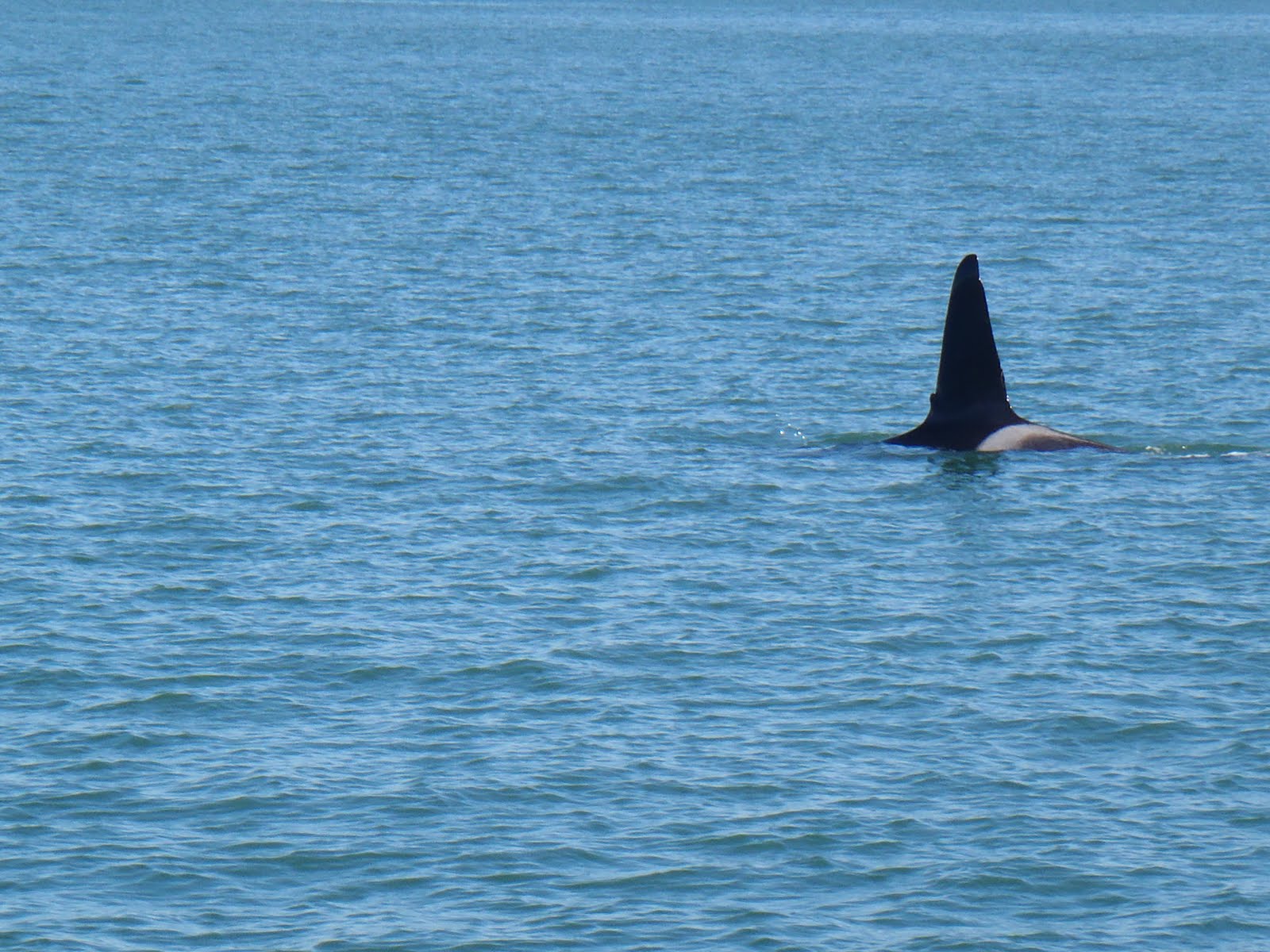
We saw a pod of Orcas, they were possibly eating sting rays in the shallows, the captain said.

The dolphins would “bow ride,” where they would race along under the boat and leap occasionally. They seemed to lose interest if we were going slow. The captain estimated we were seeing about a 1000 dolphins out feeding and he said this was a good sign for the health of the environment.

Photos from whale/dolphin cruise

Photos from whale/dolphin cruise

Photos from whale/dolphin cruise

Photos from whale/dolphin cruise

Photos from whale/dolphin cruise